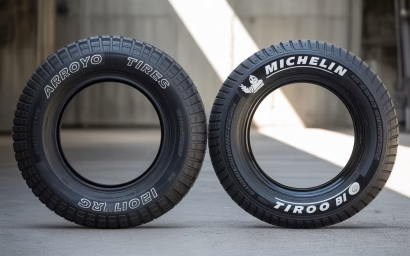

Are you ready to make the right choice between all-season and all-terrain tires? With so many options on the market, selecting the perfect tire for your vehicle can feel overwhelming. But fear not – we’re about to dive into everything you need to know to make an informed decision that will enhance your driving experience, whether you stick to city streets or regularly venture off the beaten path.
In this comprehensive guide, we’ll explore the key differences between all-season and all-terrain tires, breaking down their performance characteristics, durability, cost considerations, and suitability for various vehicles and driving conditions. You’ll discover how each tire type handles different weather scenarios, learn about their on-road and off-road capabilities, and gain insights into maintenance requirements to maximize your investment.
By the end of this article, you’ll have a clear understanding of which tire type aligns best with your specific needs, driving habits, and local environment. So buckle up and get ready to navigate the world of tire options with confidence – your perfect set of wheels is just around the corner.
Table of Contents
Understanding the Difference: All-Season vs All-Terrain Tires
When it comes to equipping your vehicle with the right set of tires, the choice between all-season and all-terrain options represents more than just a simple preference—it’s a decision that directly impacts your driving experience, safety, and vehicle performance. These two popular tire categories serve distinctly different purposes while sharing some overlapping capabilities.
All-season tires are designed as versatile everyday performers, engineered to provide reliable traction and handling in a variety of common road conditions. They represent the standard choice for most passenger vehicles, offering a balanced approach to wet roads, light snow, and dry pavement. Their design prioritizes a comfortable ride, reasonable fuel efficiency, and adequate year-round performance for drivers who primarily stick to paved surfaces.
In contrast, all-terrain tires embody a more specialized approach, built to handle both conventional roads and off-road adventures. With their aggressive tread patterns and robust construction, these tires deliver enhanced grip on unpaved surfaces like gravel, mud, and rocky terrain. They represent the middle ground between highway tires and dedicated off-road options, appealing to drivers who split their time between city streets and wilderness trails.
Understanding the fundamental differences between these tire types matters significantly because choosing incorrectly can lead to compromised safety, reduced vehicle performance, premature tire wear, and ultimately wasted money. The right choice aligns with your specific driving habits, local climate conditions, and the capabilities of your vehicle.
This comparison is particularly relevant for SUV and truck owners who need to match their tire selection to their lifestyle. Weekend adventurers, those living in rural areas with unpaved roads, commuters in regions with variable weather, and drivers seeking the optimal balance between on-road comfort and off-road capability all have a stake in making an informed decision between all-season and all-terrain tires.
What Are All-Season Tires? Features and Performance
All-season tires represent the versatile workhorses of the tire world, designed to deliver acceptable performance across a wide range of conditions throughout the year. These tires serve as the standard equipment on most passenger vehicles sold in North America, offering drivers a convenient “one-tire solution” for everyday driving.
At their core, all-season tires feature a balanced tread design that aims to provide adequate traction in both dry and wet conditions while offering reasonable performance in light winter conditions. The rubber compounds used in all-season tires are engineered to remain flexible across a moderate temperature range, typically performing best between 45°F and 90°F (7°C to 32°C).
The tread pattern of all-season tires typically features symmetrical or asymmetrical designs with moderate groove depths. These patterns include:
- Continuous center ribs that provide stability and consistent road contact
- Circumferential grooves that channel water away to prevent hydroplaning
- Interlocking tread blocks that enhance grip and handling
- Siping (tiny slits in the tread blocks) that improve traction on wet and light snowy surfaces
Materials used in all-season tires prioritize durability and longevity. Manufacturers blend natural and synthetic rubber with silica compounds to create a tire that resists wear while maintaining grip across varying temperatures. Modern all-season tires often incorporate specialized polymers that help maintain flexibility without sacrificing tread life.
On dry roads, all-season tires deliver predictable handling, responsive steering, and adequate braking performance for everyday driving situations. While they don’t match the cornering grip or precision of summer performance tires, they provide a comfortable and controlled driving experience that meets the needs of most drivers.
In wet conditions, the circumferential grooves and siping work together to evacuate water from beneath the tire’s contact patch, maintaining traction even during moderate rainfall. The balanced tread design helps resist hydroplaning at highway speeds, though extreme downpours may exceed their capabilities.
The “all-season” designation, however, comes with limitations. Despite the name, these tires offer only marginal performance in genuine winter conditions with significant snow accumulation or ice. The moderate tread depth and rubber compounds that excel in warmer weather simply cannot match the specialized design of winter tires when temperatures drop below freezing.
What Are All-Terrain Tires? Features and Performance
All-terrain tires represent the perfect middle ground between highway tires and aggressive off-road options. Designed for drivers who split their time between paved roads and unpaved adventures, these versatile tires offer a compelling balance of capabilities.
At their core, all-terrain tires are characterized by their distinctive, aggressive tread pattern. Unlike the relatively smooth design of all-season tires, all-terrains feature larger, chunkier tread blocks with wider spacing between them. This design serves a critical purpose: the deep grooves and open channels allow the tire to bite into loose surfaces like mud, gravel, and sand while effectively channeling debris and water away from the contact patch.
The sidewall construction of all-terrain tires is another defining characteristic. Manufacturers reinforce these sidewalls with additional rubber compounds and sometimes protective ridges or lugs. This reinforcement serves two purposes: it helps prevent punctures from rocks and other hazards encountered off-road, and it provides additional traction when driving in deep ruts or soft terrain where the sidewall might contact the ground.
Most all-terrain tires employ specialized rubber compounds that are designed to resist cutting and chipping when driven over sharp rocks and rough terrain. These compounds tend to be slightly harder than those found in pure highway tires, contributing to their enhanced durability in challenging conditions.
The shoulder area of all-terrain tires typically features aggressive tread blocks that extend partially down the sidewall. This design element significantly improves traction during off-camber driving situations and when traversing deep ruts where the tire’s shoulder makes contact with the terrain.
Despite their off-road prowess, modern all-terrain tires maintain reasonable on-road performance. Manufacturers have made significant strides in reducing road noise—historically a drawback of aggressive tread patterns—through computer-optimized tread block placement and noise-canceling technologies. While they won’t match the quiet comfort of dedicated highway tires, today’s all-terrain options provide acceptable road manners for daily driving.
The versatility of all-terrain tires comes with some performance trade-offs. Their more aggressive tread pattern typically results in slightly reduced fuel economy compared to highway-focused tires. Additionally, their harder compounds may deliver less grip on wet pavement than specialized all-season options. However, for drivers who regularly venture beyond the pavement, these compromises are often well worth the enhanced capability and peace of mind that all-terrain tires provide.
On-Road Performance Comparison: All-Season vs All-Terrain
When it comes to everyday driving on paved roads, the differences between all-season and all-terrain tires become immediately apparent. All-season tires clearly have the advantage in this environment, as they’re specifically designed for smooth surfaces.
Handling and Responsiveness
All-season tires provide superior handling on paved roads with more precise steering response and better cornering ability. The tread patterns of all-season tires feature continuous ribs that maintain consistent contact with the road surface, resulting in more predictable handling characteristics.
All-terrain tires, with their more aggressive tread patterns and larger voids between lugs, offer less contact patch with the road. This translates to a slightly mushier feel when cornering and less responsive steering. You’ll notice this difference particularly during quick lane changes or navigating winding roads.
Braking Distance
Safety-conscious drivers should note the significant difference in braking performance. All-season tires typically stop shorter on dry and wet pavement compared to all-terrain options. In emergency braking situations, this difference can be substantial:
- On dry pavement: All-season tires may stop 3-10 feet shorter
- On wet pavement: The gap widens further, with all-season tires potentially stopping 10-15 feet sooner
This difference stems from the specialized rubber compounds and tread designs in all-season tires that maximize grip on paved surfaces.
Comfort and Ride Quality
Ride comfort is another area where all-season tires excel. The continuous tread pattern absorbs small road imperfections more effectively, resulting in:
- Less vibration transmitted to the cabin
- Smoother ride over expansion joints and small potholes
- More composed handling over rough patches
All-terrain tires, with their stiffer sidewalls and chunkier tread blocks, tend to create a firmer, sometimes bouncy ride. While modern all-terrain designs have improved significantly, they still can’t match the plush comfort of a quality all-season tire.
Noise Levels
Perhaps the most noticeable on-road difference is noise. All-terrain tires are significantly louder at highway speeds, producing a distinctive humming or droning sound that increases with velocity. This noise comes from air moving through the larger tread voids and the impact of the tread blocks hitting the pavement.
All-season tires are engineered to minimize road noise with:
- Computer-optimized tread patterns to reduce sound waves
- Noise-canceling features like variable pitch tread blocks
- Continuous ribs that create less air disturbance
For drivers who spend long hours on highways or value a quiet cabin, this difference alone might be decisive.
Fuel Efficiency Impact
The rolling resistance of tires directly affects your vehicle’s fuel economy. All-season tires typically have 5-15% less rolling resistance than all-terrain alternatives, which can translate to meaningful fuel savings:
- For the average driver covering 15,000 miles annually, all-season tires might save 0.5-1 mpg
- This could amount to $100-200 in annual fuel savings, depending on your vehicle and driving habits
The additional weight of all-terrain tires and their aggressive tread pattern that “grabs” at the road surface both contribute to increased rolling resistance and reduced efficiency.
For daily commuters and those who spend the vast majority of their driving time on paved roads, all-season tires clearly provide superior on-road performance across all these metrics. However, this advantage must be weighed against the off-road capability that all-terrain tires bring to the table.
Off-Road Capability: Where All-Terrain Tires Shine
When the pavement ends, the true distinction between all-season and all-terrain tires becomes glaringly obvious. All-terrain tires are purpose-built for venturing beyond the asphalt, and this is where they truly excel over their all-season counterparts.
Traction on Varied Surfaces
All-terrain tires feature aggressive tread patterns with deeper grooves and wider spacing between tread blocks, allowing them to bite into challenging surfaces. On mud, these tires can self-clean by ejecting debris as they rotate, maintaining grip where all-season tires would quickly become clogged and ineffective. The specialized siping patterns create multiple edges that grip loose gravel, preventing slippage and maintaining control on unpredictable backroads.
When tackling sand, all-terrain tires perform significantly better thanks to their ability to “float” more effectively on the surface when properly aired down. The wider footprint distributes weight more evenly, reducing the likelihood of becoming stuck—a common fate for vehicles equipped with all-season tires in sandy conditions.
Rock Climbing Capability
The robust construction of all-terrain tires makes them formidable performers on rocky terrain. Their reinforced sidewalls can grip rock faces, allowing for controlled climbs over obstacles that would stop all-season tires in their tracks. Many all-terrain designs include “shoulder lugs”—specialized tread blocks that extend down the sidewall—providing additional traction points when navigating over larger rocks or when the tire is partially deflated for extreme terrain.
Puncture Resistance
Off-road adventures come with hazards like sharp rocks, hidden branches, and other debris that can easily puncture standard tires. All-terrain tires are constructed with reinforced rubber compounds and often feature additional protective layers beneath the tread. Many incorporate cut-resistant technology specifically designed to withstand impacts that would incapacitate an all-season tire. This enhanced durability means fewer trail-side tire changes and greater confidence when exploring remote areas.
Sidewall Strength
Perhaps one of the most critical advantages of all-terrain tires is their superior sidewall construction. These reinforced sidewalls resist cuts, abrasions, and impacts that commonly occur when navigating off-road obstacles. The thicker rubber composition and additional ply layers provide crucial protection against sidewall blowouts—a potentially dangerous failure mode in remote locations.
When traversing uneven terrain, all-terrain tires maintain their structural integrity even when subjected to lateral forces that would compromise all-season tires. This sidewall strength also allows for “airing down” (reducing tire pressure) to increase the contact patch for better traction, a technique that’s essential for serious off-roading but potentially damaging to all-season tires.
While all-season tires can handle the occasional gravel road or dirt path, they simply lack the specialized design features that make all-terrain tires the superior choice for any meaningful off-road excursion. For weekend warriors and serious off-road enthusiasts alike, the enhanced capabilities of all-terrain tires provide both performance and peace of mind when venturing beyond the pavement.
Weather Performance: How Each Tire Handles Different Conditions
When it comes to tackling various weather conditions, all-season and all-terrain tires show significant differences in performance that could make or break your driving experience.
Rain Performance
All-season tires typically excel in rainy conditions. Their tread patterns feature specialized grooves and sipes designed to channel water away from the tire’s contact patch, reducing the risk of hydroplaning. The rubber compounds used in all-season tires maintain flexibility and grip on wet roads, making them a reliable choice for daily commuting during rainy seasons.
All-terrain tires also perform admirably in rain, though for different reasons. Their aggressive tread patterns with wider channels can evacuate large volumes of water quickly. However, the stiffer rubber compounds and chunkier tread blocks may provide slightly less refined grip on slick pavement compared to all-season options.
Light Snow Handling
Despite their name, all-season tires offer only adequate performance in light snow. They can handle occasional winter driving and light dustings of snow but aren’t designed for consistent winter weather. Most all-season tires feature enough siping (tiny slits in the tread blocks) to provide some traction on light snow, but their capabilities diminish as snow depth increases.
All-terrain tires generally outperform all-season options in snow conditions. The deeper, more aggressive tread pattern can bite into snow more effectively, while wider spacing between tread blocks prevents snow from packing in the grooves. Many all-terrain tires also carry the Three-Peak Mountain Snowflake (3PMSF) symbol, indicating they’ve passed specific snow traction tests.
Ice Performance
Neither tire type truly excels on ice, though all-season tires often have the slight edge in this category. Their more pliable rubber compounds and specialized siping patterns can provide marginally better grip on icy surfaces. However, both tire types fall significantly short of dedicated winter tires when it comes to ice performance.
All-terrain tires, despite their aggressive appearance, don’t necessarily perform better on ice. Their stiffer compounds can actually reduce traction on slick, icy surfaces. When temperatures drop below freezing and roads ice over, drivers should exercise caution regardless of tire type.
Extreme Heat Management
In high-temperature environments, all-terrain tires typically have the advantage. Their robust construction and heat-resistant compounds help them withstand extreme heat without softening excessively. This makes them particularly suitable for desert driving or hot-weather off-road adventures.
All-season tires perform adequately in hot conditions but may experience faster wear rates when consistently driven on scorching pavement. Their rubber compounds, designed to remain somewhat pliable in colder weather, can sometimes become too soft in extreme heat, potentially affecting handling precision and tread life.
Seasonal Limitations
All-season tires face their biggest limitations during winter months in regions with regular snowfall or freezing temperatures. Once temperatures consistently drop below 45°F (7°C), their rubber compounds begin to harden, reducing grip even on dry pavement. In areas with severe winters, all-season tires simply can’t replace dedicated winter tires.
All-terrain tires have fewer seasonal limitations but still aren’t ideal for extreme winter conditions. Their main limitations appear during transitional seasons on wet roads, where they may not match the hydroplaning resistance of all-season tires. Additionally, their more aggressive design can create more road noise and reduce fuel efficiency year-round.
Understanding these weather performance differences is crucial when choosing between all-season and all-terrain tires. Your typical driving conditions and local climate should heavily influence your decision to ensure optimal safety and performance throughout the year.
Durability and Tread Life: Longevity Expectations
When investing in new tires, understanding how long they’ll last is crucial for evaluating their true cost and value. All-season and all-terrain tires offer different longevity profiles based on their design and intended use.
Average Tread Life Comparison
All-season tires typically deliver impressive longevity on paved roads, with most quality models offering 50,000 to 80,000 miles of tread life. Their compounds are optimized for wear resistance on asphalt and concrete, allowing them to maintain their performance characteristics over many miles of normal driving conditions.
All-terrain tires generally have a shorter lifespan, typically ranging from 40,000 to 65,000 miles. The more aggressive tread patterns and softer rubber compounds that make them excellent off-road performers also contribute to faster wear rates on paved surfaces. The trade-off for their versatility is a reduction in overall longevity.
Warranty Differences
Manufacturers’ confidence in their products is reflected in their warranty offerings. All-season tires frequently come with more generous treadwear warranties, often covering 70,000+ miles for premium models. These warranties provide peace of mind for drivers who primarily stick to highways and city streets.
All-terrain tire warranties tend to be more conservative, typically ranging from 45,000 to 60,000 miles. Some manufacturers offer tiered warranties based on the tire size and vehicle type, recognizing that heavier vehicles with larger tires may experience different wear patterns.
Factors Affecting Wear Rates
Several variables influence how quickly your tires will wear, regardless of type:
- Driving habits: Aggressive acceleration, hard braking, and high-speed cornering increase wear rates for both tire types, though all-terrain tires may show wear more quickly under these conditions.
- Road surfaces: All-season tires maintain consistent wear on smooth pavement but deteriorate quickly on rough terrain. All-terrain tires handle varied surfaces better but wear faster on highways, especially at sustained high speeds.
- Load capacity: Consistently driving at or near maximum load capacity accelerates wear for both tire types. All-terrain tires often have higher load ratings but may still wear more quickly when heavily loaded.
- Alignment and rotation: Improper wheel alignment or infrequent tire rotation dramatically reduces the lifespan of both tire types, creating uneven wear patterns that can’t be corrected.
Maintenance Requirements
Proper maintenance is essential for maximizing the lifespan of either tire type:
All-season tires require regular pressure checks, rotation every 5,000-7,000 miles, and alignment inspections. Their relatively simple tread patterns make visual inspections straightforward, allowing drivers to easily spot irregular wear patterns before they become problematic.
All-terrain tires demand more vigilant maintenance. Their complex tread patterns can trap stones and debris, which should be removed regularly to prevent damage. They typically require rotation every 4,000-6,000 miles and more frequent alignment checks, especially if the vehicle is taken off-road. The deeper tread depths also mean careful monitoring of tread wear indicators is necessary to maintain safe off-road performance.
For both tire types, maintaining proper inflation pressure is perhaps the single most important factor in extending tread life. Underinflated tires flex more, generating excess heat and accelerating wear, while overinflated tires reduce contact patch size, creating uneven center wear and compromising traction.
Cost Considerations: Initial Investment vs Long-Term Value
When comparing all-season and all-terrain tires, cost becomes a significant factor in the decision-making process. The price difference between these two tire types reflects their specialized design and intended use cases.
Initial Price Comparison
All-season tires typically range from $80 to $200 per tire for standard passenger vehicles, with premium brands reaching up to $300 per tire. Their mass production and widespread demand contribute to their relatively lower price point.
All-terrain tires, with their specialized construction and more complex tread patterns, generally command higher prices. Expect to pay between $150 to $400 per tire, with high-end models designed for extreme conditions reaching $500 or more per tire.
Value Proposition for Each Tire Type
All-season tires offer excellent value for drivers who stick primarily to paved roads and experience moderate weather conditions. Their lower initial cost combined with decent performance across multiple conditions makes them economically sensible for most daily drivers.
All-terrain tires, while more expensive upfront, deliver substantial value for those who regularly venture off-road or live in areas with challenging terrain or weather. The additional durability and specialized performance justify the higher price tag for these specific use cases.
Fuel Efficiency Impact
The cost equation extends beyond purchase price to ongoing expenses. All-season tires typically offer better fuel economy due to their lighter weight and lower rolling resistance. Drivers can expect approximately 2-3% better fuel efficiency compared to all-terrain alternatives.
All-terrain tires, with their aggressive tread patterns and heavier construction, create more rolling resistance that reduces fuel efficiency. This translates to roughly 1-2 mpg lower fuel economy on average, which adds up over thousands of miles of driving.
Replacement Frequency and Long-Term Costs
All-season tires generally last between 40,000 to 80,000 miles depending on driving conditions and maintenance. Their more even wear pattern contributes to their longevity on standard road surfaces.
All-terrain tires typically offer treadwear warranties between 40,000 to 60,000 miles. However, frequent off-road use can significantly reduce this lifespan. The trade-off comes in their superior durability against punctures and cuts, potentially saving money on premature replacements due to damage.
When calculating total ownership costs over 5 years, the equation becomes more complex than just the initial price difference. For primarily highway drivers, all-season tires remain the more economical choice when factoring in better fuel economy and comparable tread life. For those who regularly face rough terrain, the damage resistance and specialized performance of all-terrain tires might actually represent better long-term value despite higher initial costs and reduced fuel efficiency.
The ultimate value proposition depends heavily on your specific driving needs and conditions. Making the right choice requires honestly assessing your driving habits and prioritizing the performance aspects most important to your situation.
Noise and Comfort: The Ride Quality Factor
One of the most noticeable differences between all-season and all-terrain tires happens the moment you start driving—what you hear and feel. The ride quality factor significantly impacts your daily driving experience and deserves careful consideration before making your choice.
All-season tires are engineered with comfort in mind. Their tread patterns feature smaller, more uniform blocks with narrower grooves, creating less air displacement as they roll. This design choice translates to significantly reduced road noise—that persistent hum that can fatigue drivers on longer journeys. The smoother, more continuous contact patch also absorbs minor road imperfections rather than transmitting them to the cabin.
All-terrain tires tell a different story. Their aggressive tread patterns with larger blocks, wider voids, and pronounced shoulder lugs create more air compression and release as they rotate, resulting in a distinctive humming or droning sound that increases with speed. This road noise can be 3-5 decibels louder than comparable all-season tires—a difference most drivers will immediately notice.
The vibration characteristics differ substantially as well. All-season tires provide a smoother, more planted feel on paved surfaces. Their more flexible sidewalls and continuous tread design help absorb bumps and vibrations before they reach the vehicle’s suspension. Drivers often describe the ride as “floating” or “cushioned” compared to the more tactile experience of all-terrain options.
All-terrain tires, with their stiffer construction and chunky tread blocks, tend to transmit more road texture and vibration into the cabin. This increased feedback isn’t necessarily negative—many off-road enthusiasts appreciate the enhanced “road feel” and connection to the driving surface. However, on long highway drives, this additional vibration can contribute to driver fatigue.
Cabin noise impact extends beyond just tire hum. All-terrain tires can amplify other sounds by creating more resonance throughout the vehicle structure. Conversations may require slightly raised voices, and audio systems might need higher volumes to overcome the increased ambient noise level. All-season tires create a quieter environment where normal conversation and lower audio volumes remain comfortable.
For those particularly sensitive to noise or who spend significant time on highways, the difference in comfort between these tire types can be substantial enough to influence the final purchase decision, regardless of other performance factors.
Vehicle Types: Which Cars and SUVs Benefit from Each Tire Type
The relationship between your vehicle type and tire choice is more significant than many drivers realize. Different vehicles are designed with specific purposes in mind, and pairing them with the right tires can enhance their intended performance characteristics.
Sedans and Compact Cars
Most sedans, hatchbacks, and compact cars come factory-equipped with all-season tires, and for good reason. These vehicles primarily operate on paved roads and highways where all-season tires deliver:
- Comfortable, quiet rides suited to daily commuting
- Fuel efficiency through lower rolling resistance
- Adequate handling for typical driving conditions
All-terrain tires on smaller passenger vehicles are generally unnecessary and may actually diminish the driving experience through increased road noise, reduced fuel economy, and altered handling characteristics.
Crossovers and Small SUVs
The crossover segment represents an interesting middle ground where either tire type might be appropriate:
- All-season tires work well for crossovers used primarily for commuting, family transport, and occasional light off-pavement driving
- All-terrain tires become valuable for crossover owners who regularly venture onto gravel roads, camping sites, or moderate trails
Many crossover manufacturers (Honda CR-V, Toyota RAV4, Subaru Forester) ship vehicles with all-season tires but offer all-terrain options for adventure-oriented trim levels.
Mid-size and Full-size SUVs
As vehicles get larger and more capable, the case for all-terrain tires strengthens:
- SUVs like the Jeep Grand Cherokee, Toyota 4Runner, and Ford Explorer often benefit from all-terrain tires, especially when used for weekend adventures
- Family-oriented SUVs used primarily for urban and highway driving still function optimally with all-season tires
- Many manufacturers offer different tire packages based on trim level – base models typically feature all-season tires while “adventure” or “off-road” packages include all-terrain options
Trucks and Off-Road Vehicles
For pickup trucks and dedicated off-road vehicles, all-terrain tires often make the most sense:
- Work trucks that transition between job sites and highways benefit from the versatility of all-terrain tires
- Vehicles like the Jeep Wrangler, Toyota Tacoma TRD, and Ford F-150 Raptor come with all-terrain or even more aggressive tires as standard equipment
- Trucks used exclusively for highway driving and towing may still benefit from highway-focused all-season tires for better fuel economy and quieter operation
Manufacturer Recommendations
Vehicle manufacturers invest heavily in testing different tire combinations with their vehicles. Their recommendations typically reflect:
- The intended use case for specific vehicle models and trim levels
- Optimization for the vehicle’s suspension and handling characteristics
- Balance between performance, comfort, and efficiency
Many manufacturers now offer specialized trim packages specifically built around off-road capability (Ford’s Tremor, Toyota’s TRD, Jeep’s Trailhawk), which include upgraded all-terrain tires as part of the package.
When considering a tire switch from all-season to all-terrain or vice versa, consulting your vehicle’s manual and understanding the trade-offs for your specific model can help ensure you’re making a choice that complements your vehicle’s engineering rather than works against it.
Seasonal Considerations: Do You Need to Switch Tires?
Many drivers wonder if they need to swap out their tires as the seasons change, especially when winter approaches. The answer largely depends on which type of tire you’re using and where you live.
All-season tires are designed to provide adequate performance throughout the year in moderate climates. They offer a balanced blend of capabilities for wet roads, light snow, and dry conditions. However, they have their limitations. When temperatures drop below 45°F (7°C), the rubber compound in all-season tires begins to harden, reducing traction. In regions with heavy snowfall or frequent ice, all-season tires simply can’t provide the grip needed for safe winter driving.
All-terrain tires fare somewhat better in winter conditions thanks to their aggressive tread patterns. The deeper grooves and wider spacing between tread blocks allow them to bite into snow more effectively than all-season tires. However, they still lack the specialized rubber compounds found in dedicated winter tires that stay pliable in freezing temperatures.
For those living in regions with mild winters where temperatures rarely drop below freezing and snow is occasional, both all-season and all-terrain tires might suffice year-round. All-terrain tires generally offer better performance on snowy roads, while all-season tires provide better fuel economy and quieter operation during the rest of the year.
If you experience severe winters with regular snow, ice, or temperatures consistently below freezing, seasonal switching is highly recommended regardless of whether you use all-season or all-terrain tires. Dedicated winter tires with their specialized rubber compounds and tread patterns offer significantly improved braking, acceleration, and cornering in cold weather conditions.
The “3-3-3 rule” offers a practical guideline: consider winter tires when temperatures consistently stay below 45°F (7°C) for three consecutive months. Neither all-season nor all-terrain tires can match the performance of proper winter tires in these conditions, making the seasonal switch a worthwhile safety investment rather than an optional expense.
Popular Brands and Models Comparison
When shopping for tires, brand reputation and model-specific features can significantly influence your decision. Let’s examine some standout options in both the all-season and all-terrain categories.
Top-Rated All-Season Tires
Michelin CrossClimate2
- Price point: $200-$250 per tire
- Performance highlights: Exceptional wet and light snow traction, 60,000-mile warranty, and revolutionary V-shaped tread design that excels in varied conditions
- Best for: Drivers seeking premium year-round performance without compromise
Bridgestone Turanza QuietTrack
- Price point: $160-$220 per tire
- Performance highlights: Class-leading noise reduction technology, 80,000-mile warranty, and excellent wet braking
- Best for: Comfort-oriented drivers who value a quiet, smooth ride
- Price point: $130-$180 per tire
- Performance highlights: 80,000-mile warranty, EcoPlus Technology for improved fuel efficiency, and strong all-around performance
- Best for: Economical drivers seeking balance between performance and value
Goodyear Assurance WeatherReady
- Price point: $160-$210 per tire
- Performance highlights: Three-Peak Mountain Snowflake rating, Evolving Traction Grooves for maintained performance as the tire wears
- Best for: Drivers in variable climate regions with occasional winter weather
Top-Rated All-Terrain Tires
BFGoodrich All-Terrain T/A KO2
- Price point: $190-$350 per tire
- Performance highlights: Legendary off-road durability, 50,000-mile warranty, aggressive sidewall design for enhanced traction in deep mud and snow
- Best for: Serious off-roaders who also need highway performance
- Price point: $200-$300 per tire
- Performance highlights: Three-Peak Mountain Snowflake rating, self-cleaning shoulder blocks, and impressive traction in mud and snow
- Best for: Truck and SUV owners who encounter challenging winter conditions
- Price point: $150-$230 per tire
- Performance highlights: 55,000-mile warranty, heat diffuser technology in the lower sidewall, and exceptional stability under load
- Best for: Value-conscious buyers seeking reliable all-terrain performance
- Price point: $170-$280 per tire
- Performance highlights: 65,000-mile warranty, improved wet braking, and aggressive tread pattern that remains surprisingly quiet on highways
- Best for: Drivers seeking a balanced all-terrain tire with minimal road noise
The market continues to evolve with manufacturers constantly improving their offerings. While premium brands typically command higher prices, they often deliver superior performance characteristics and longer tread life, potentially offering better long-term value despite the higher initial investment. Mid-range options have significantly improved in recent years, narrowing the performance gap while maintaining more accessible price points.
When comparing models, consider not just the purchase price but also the warranty coverage, expected tread life, and specific performance attributes that match your driving environment and vehicle needs.
Making the Right Choice: Assessing Your Driving Needs
Selecting between all-season and all-terrain tires doesn’t have to be overwhelming. By asking yourself the right questions and honestly evaluating your driving habits, you can make a confident decision that enhances your driving experience and provides the best value for your investment.
Self-Assessment Questions
Start by considering these key questions:
- What percentage of your driving is on paved roads versus off-road?
- 90% or more on pavement: All-season tires are likely your best bet
- 70-90% on pavement: All-season tires with good reviews for occasional off-road use
- Less than 70% on pavement: All-terrain tires will serve you better
- What weather conditions do you regularly encounter?
- Primarily mild conditions with occasional light snow: All-season tires
- Frequent heavy rain, moderate snow, or muddy conditions: All-terrain tires
- Extreme winter conditions: Consider dedicated winter tires regardless of your other needs
- What type of vehicle do you drive?
- Sedan, crossover, or minivan: All-season tires (most all-terrain options aren’t even available)
- SUV or truck used mainly for commuting: All-season tires
- SUV or truck used for outdoor adventures: All-terrain tires
- What’s your driving style?
- Prioritize comfort, fuel economy, and quiet ride: All-season tires
- Value versatility and don’t mind some compromise on noise/comfort: All-terrain tires
Decision Framework
Based on your answers above, here’s a simple decision framework:
Choose All-Season Tires if:
- You drive primarily on highways and city streets
- Fuel economy is important to you
- You value a quiet, comfortable ride
- Your off-road adventures are limited to well-maintained gravel roads
- You live in an area with mild to moderate seasonal changes
Choose All-Terrain Tires if:
- You regularly drive on unpaved surfaces, gravel, dirt, or trails
- You encounter mud, sand, or rocky terrain
- You need dependable traction in adverse weather conditions
- You don’t mind trading some comfort for capability
- Your vehicle is a truck or SUV designed for some off-road use
Regional Considerations
Your geographic location plays a significant role in your tire choice:
- Urban/Suburban Areas: All-season tires typically provide everything you need
- Rural Areas: All-terrain tires may be beneficial if unpaved roads are common
- Mountain Regions: All-terrain tires offer better performance on varying surfaces and elevations
- Coastal Areas: Consider how each tire handles sand and salt exposure
- Regions with Distinct Seasons: All-terrain tires provide better year-round versatility
Remember that the “perfect” tire doesn’t exist—it’s about finding the right balance for your specific needs. Consider keeping two sets of tires if you experience extreme seasonal changes or if your driving habits vary significantly throughout the year.
Maintenance Tips for Maximizing Tire Performance and Lifespan
Whether you’ve invested in all-season or all-terrain tires, proper maintenance is crucial to maximize their performance and lifespan. While both tire types share some common maintenance needs, each has specific requirements worth noting.
Proper Inflation Practices
Maintaining correct tire pressure is perhaps the most critical yet overlooked maintenance task. For all-season tires, follow the manufacturer’s recommended PSI closely, as improper inflation can lead to uneven wear and reduced fuel economy. All-terrain tires often require different inflation pressures depending on your driving conditions—slightly lower pressure for off-road adventures to increase traction and higher pressure for highway driving to reduce rolling resistance and improve fuel efficiency. Keep a quality pressure gauge in your vehicle and check pressure at least monthly, preferably when tires are cold.
Rotation Schedules
All-season tires typically benefit from rotation every 5,000-7,000 miles following a standard cross pattern. All-terrain tires, which often experience more uneven wear due to their aggressive tread patterns and off-road use, may require more frequent rotation—every 4,000-5,000 miles. If you notice your all-terrain tires developing “scalloping” or uneven wear patterns, this is a clear signal that rotation is overdue. Consider using a five-tire rotation pattern if you have a matching spare for your all-terrain setup.
Alignment Importance
Proper wheel alignment is essential for both tire types but becomes even more critical with all-terrain tires. The larger contact patches and aggressive tread patterns of all-terrain tires can amplify alignment issues, causing accelerated and uneven wear. Schedule alignment checks after any significant off-road excursion with all-terrain tires, as rough terrain can knock alignment settings out of spec. All-season tires benefit from alignment checks once yearly or whenever you notice the vehicle pulling to one side.
Inspection Tips for Each Tire Type
For all-season tires, regularly check for even tread wear across the surface, paying special attention to feathering on the edges which indicates alignment issues. Look for the wear bars between tread grooves—when these become flush with surrounding rubber, replacement is necessary.
All-terrain tires require more thorough inspection. Check for embedded rocks and debris in the deeper tread grooves after off-road use, as these can work deeper into the tire over time. Inspect sidewalls for cuts or bulges, especially after rocky terrain driving. The chunky tread blocks of all-terrain tires can sometimes tear or chunk off during aggressive off-road use—regular inspection helps catch these issues before they worsen.
Seasonal Maintenance Considerations
All-season tires benefit from a thorough cleaning before winter to remove road oils that can make them slicker in cold conditions. For all-terrain tires, consider a slight pressure reduction (2-3 PSI) during winter months for better snow traction, but never go below the manufacturer’s minimum recommendation.
With proper maintenance, all-season tires typically deliver 50,000-70,000 miles of service, while quality all-terrain tires, despite their more aggressive tread, can still provide 40,000-60,000 miles when properly maintained. Remember that your driving habits and conditions will ultimately determine how long either tire type lasts on your vehicle.
Conclusion: Balancing Performance, Cost, and Convenience
Choosing between all-season and all-terrain tires ultimately comes down to understanding your specific driving needs and priorities. Throughout this guide, we’ve explored the fundamental differences between these two popular tire types, and now it’s time to bring those insights together to help you make an informed decision.
All-season tires excel in everyday driving conditions, offering a smooth, quiet ride with good fuel economy and longer tread life. They perform admirably on paved roads in most weather conditions except severe winter weather. If your driving rarely takes you off the beaten path and you prioritize comfort and economy, all-season tires represent the most practical choice.
All-terrain tires, by contrast, offer that crucial versatility for drivers who regularly venture beyond the pavement. With their aggressive tread patterns and robust construction, they provide the traction and durability needed for off-road adventures while still maintaining reasonable on-road performance. The trade-offs in road noise, fuel efficiency, and tread life are worthwhile investments for those who demand true versatility.
For urban commuters who occasionally take weekend trips to national parks or cabins, a high-quality all-season tire might suffice. However, if your adventures frequently include gravel roads, muddy trails, or rocky terrain, the capability of all-terrain tires becomes invaluable. Outdoor enthusiasts, rural residents, and those living in areas with frequent inclement weather will appreciate the added confidence and capability that all-terrain tires provide.
Remember that tire technology continues to advance, with newer models bridging the gap between categories. Some premium all-terrain tires now offer improved on-road manners, while certain all-season tires incorporate design elements that enhance light off-road capability. Consider these hybrid options if your needs fall somewhere in the middle.
Ultimately, the right choice reflects your driving reality—not just where you drive today, but where you might want to go tomorrow. By balancing performance requirements, budget considerations, and convenience factors, you can select the tire type that will serve you best through all your journeys, whether they take you across smooth highways or rugged backroads.
Frequently Asked Questions
Can I use all-terrain tires for daily city driving?
Yes, you can use all-terrain tires for daily city driving, but you’ll experience some trade-offs. While they provide excellent versatility and perform well in various conditions, all-terrain tires typically produce more road noise, reduce fuel efficiency, and offer a slightly firmer ride compared to all-season tires. If your daily driving rarely involves off-road conditions, all-season tires might be a more comfortable and economical choice for city use.
How do all-season tires perform in snow compared to all-terrain tires?
All-season tires provide adequate performance in light snow conditions but struggle in deeper snow or on ice. All-terrain tires generally offer better traction in snow due to their more aggressive tread patterns and wider spacing between tread blocks, which allow them to bite into snow more effectively. However, for severe winter conditions, neither type is a substitute for dedicated winter tires, which are specifically designed to perform in cold temperatures and on icy surfaces.
Will switching to all-terrain tires affect my fuel economy?
Yes, switching to all-terrain tires will likely decrease your fuel economy. The aggressive tread patterns and heavier construction of all-terrain tires create more rolling resistance, which requires more energy to overcome. On average, you can expect a reduction of about 1-2 mpg when switching from all-season to all-terrain tires. This difference can add up over time, especially for drivers who cover long distances regularly.
How long do all-season tires typically last compared to all-terrain tires?
All-season tires generally have a longer lifespan than all-terrain tires when used primarily on paved roads. Quality all-season tires can last between 50,000 to 80,000 miles under normal driving conditions. All-terrain tires typically offer treadwear warranties between 40,000 to 60,000 miles, but their actual lifespan can be shorter, especially with frequent off-road use. However, all-terrain tires often provide better durability against punctures and cuts, which can sometimes extend their useful life in challenging conditions.
Are all-terrain tires louder than all-season tires?
Yes, all-terrain tires are generally louder than all-season tires, especially at highway speeds. The aggressive tread patterns with larger blocks and wider voids in all-terrain tires create more air compression and release as they rotate, resulting in a distinctive humming or droning sound. This noise can be 3-5 decibels louder than comparable all-season tires, a difference most drivers will notice immediately. However, modern all-terrain tire designs have made significant improvements in reducing road noise compared to older models.
Can I use all-season tires for light off-road driving?
All-season tires can handle light off-road conditions such as well-maintained gravel roads or occasional dirt paths. However, they are not designed for more challenging off-road terrain. Their tread patterns and construction lack the aggressive features needed for reliable traction in mud, loose gravel, or rocky surfaces. For anything beyond very light off-road use, all-terrain tires are a much better choice, offering improved traction, durability, and performance in varied off-road conditions.
Do I need to change my driving habits when switching between all-season and all-terrain tires?
When switching between all-season and all-terrain tires, you may need to adjust some driving habits. All-terrain tires might require more attentive steering on highways due to their more aggressive tread patterns. You might also notice a slight decrease in fuel efficiency and an increase in road noise. In off-road conditions, all-terrain tires allow for more confident driving over obstacles and through challenging terrain. It’s important to be aware of these differences and adjust your driving style accordingly to maximize the benefits of each tire type in their intended environments.