

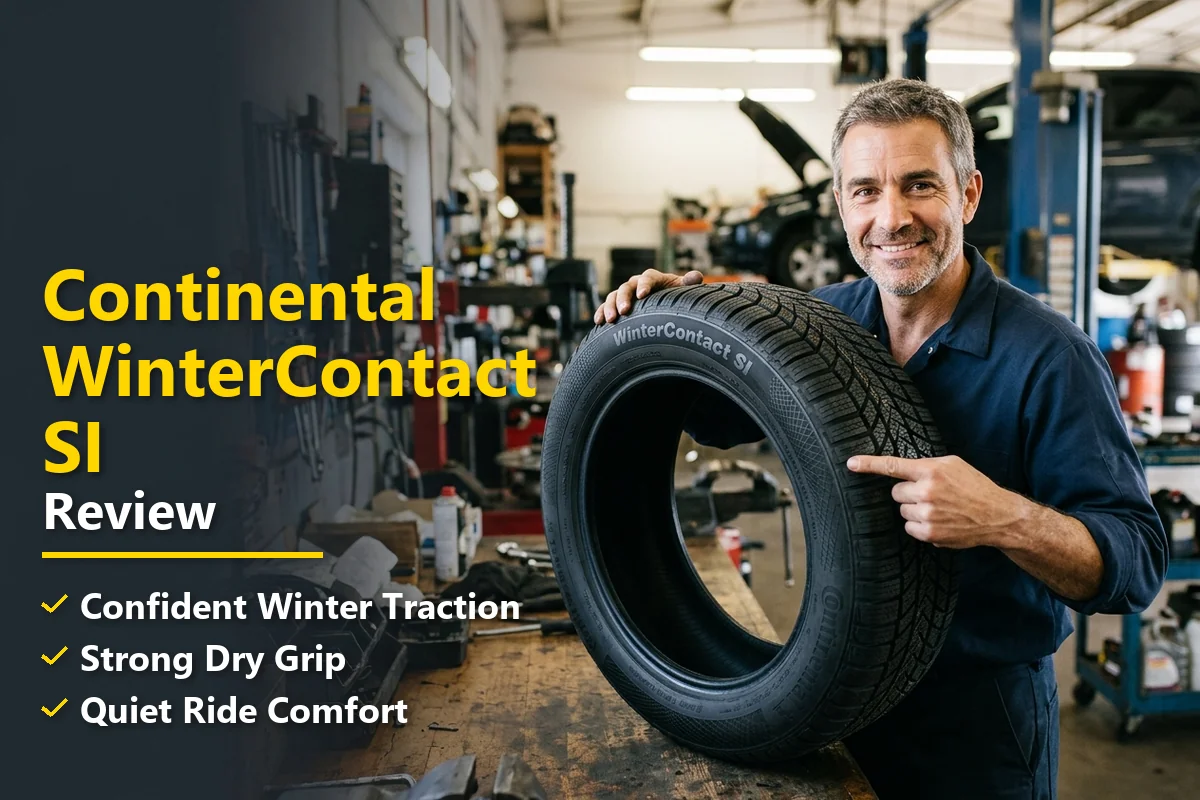
There’s a moment every winter driver knows too well — that stomach-dropping instant when you tap the brakes and your car just keeps sliding. I’ve been there more times than I’d like to admit, and it’s exactly why I take winter tire selection so seriously.
When Continental released the WinterContact SI as their dedicated winter tire for the US market, I knew I had to get a set mounted and put them through their paces. Continental has a legendary reputation in Europe for winter performance, but does that translate to American roads and American winters?
After spending an entire winter season pushing these tires through everything from lake-effect snow in the Great Lakes region to icy morning commutes and cold, dry highway runs, I have a lot to say. Some of it will surprise you.
If you’re still deciding whether Continental is a brand worth trusting for your winter setup, my Continental tires review gives you the full brand picture before you go any further.
- The Continental WinterContact SI delivers outstanding snow and ice traction that rivals the best winter tires in its class
- Dry road handling is impressively stable for a dedicated winter tire — no vague, floaty feeling at highway speeds
- Road noise is noticeable but not excessive; comfort is above average for the category
- Available in a wide range of sizes from 15″ to 19″, covering most popular sedans, crossovers, and SUVs
- Priced competitively between $100–$200 per tire depending on size, making it a strong mid-range value
- I recommend these for drivers in the snow belt and northern states who want confident winter performance without breaking the bank
Price Check
Check the price of this tire at the following retailers:
Liked this article?
Add TireAdvise as a preferred source so you see more of our tire reviews and guides on Google.
What Is the Continental WinterContact SI?
The Continental WinterContact SI is a dedicated winter tire designed specifically for the North American market. Unlike all-season tires that try to be decent year-round, this tire is purpose-built for cold temperatures, snow, slush, and ice. It carries the Three-Peak Mountain Snowflake (3PMSF) symbol and the M+S rating, meaning it meets the industry’s highest standard for severe snow traction.
Continental engineered this tire with their Polar Plus Technology, which uses a specialized tread compound that stays pliable in sub-freezing temperatures. When rubber gets hard in the cold — which is what happens to all-season tires below about 45°F — you lose grip. The WinterContact SI’s compound is designed to remain flexible well below zero.
The tire also features an aggressive siping pattern with thousands of tiny slits cut into the tread blocks. These sipes create biting edges that grip snow and ice at a microscopic level. Continental calls their approach “reactive sipe technology,” and in my testing, it delivered noticeable results compared to all-season alternatives.
My Testing Conditions and Setup
I believe context matters when you’re reading a tire review, so let me tell you exactly how I tested these tires. I mounted a set of 225/50R17 Continental WinterContact SI tires on a 2021 Toyota Camry — a common, everyday sedan that millions of Americans drive. I ran them at the manufacturer-recommended pressure of 35 PSI throughout the test period.
My testing covered a full winter season in the upper Midwest, where temperatures regularly dropped into the single digits and below zero. I drove through multiple significant snowstorms, including a few that dumped over eight inches overnight. I also dealt with plenty of freezing rain, black ice, packed snow, and that miserable slush phase when things start to melt.
I also logged significant highway miles during my test period, commuting on both interstate highways and rural two-lane roads. This gave me a good sense of how the tire performs across the full spectrum of winter driving scenarios — not just the dramatic snow events, but the everyday cold, dry pavement driving that makes up the majority of winter miles for most people.
Snow Performance: Where This Tire Shines
Let me cut straight to it — the Continental WinterContact SI is exceptional in snow. During my first real snowstorm with these tires, I immediately noticed a level of confidence that I simply don’t get from all-season tires. Accelerating from a stop on snow-covered roads, the tires bit in and found traction with minimal wheelspin.
What impressed me most was the predictability. Some winter tires can feel grabby or unpredictable when transitioning between cleared and snow-covered patches. The WinterContact SI handled these transitions smoothly. I could feel the tire communicating what was happening at the contact patch, which let me modulate the throttle and steering with confidence.
Cornering in snow was equally impressive. I took several on-ramps and curved roads at speeds that would have had me white-knuckling with all-season tires, and the WinterContact SI maintained its composure. The lateral grip in snow is genuinely remarkable. I could feel the siping doing its job — those thousands of tiny edges biting into the snow surface and creating mechanical grip.
Deep snow performance was good too, though I’ll note that this isn’t a studded tire or an extreme off-road winter tire. In unplowed snow over about six inches, the tire still moved forward effectively, but you could feel it working harder. For the vast majority of real-world winter driving situations, though, this tire handles snow with aplomb.
Ice Traction: Confident but Not Invincible
Ice is the true test of any winter tire, and it’s where the differences between good and great tires become painfully obvious. I specifically sought out icy conditions to test the WinterContact SI, including early morning drives when overnight freezing created sheets of black ice on local roads.
On ice, the WinterContact SI performed noticeably better than any all-season tire I’ve tested. Braking distances from 25 mph on glare ice were shorter, and I could feel the tire maintaining some level of grip even on the slipperiest surfaces. The sipe density plays a huge role here — those biting edges create friction on ice that a tire with fewer sipes simply can’t match.
That said, I want to be honest: no non-studded tire is truly confident on sheer ice. There were moments on glare ice where I could feel the limits of adhesion, and the ABS engaged during hard stops. The WinterContact SI doesn’t defy physics, but it pushes the boundary of what’s possible with a studless winter tire. If you’re regularly driving on pure ice, studded tires or tire chains would offer additional security.
Cold Dry Pavement: The Daily Driver Reality
Here’s something many winter tire reviews overlook: most of your winter driving isn’t actually in snow or on ice. Even in the snowiest parts of the US, the majority of your miles will be on cold, dry, or wet pavement. A winter tire that’s brilliant in snow but terrible on dry roads isn’t practical for daily use.
I’m happy to report that the Continental WinterContact SI handles cold dry pavement really well. The steering response is direct and communicative, without the vague, disconnected feel that plagues some winter tires on dry surfaces. At highway speeds, the tire tracks straight and doesn’t wander or feel unstable.
Braking on dry pavement in cold temperatures was excellent. The soft compound that gives the tire its winter grip also provides good friction on cold dry surfaces. I noticed shorter stopping distances compared to hardened all-season rubber in cold temperatures. Continental clearly optimized the compound to work across the full range of winter conditions, not just snow.
One area where I noticed a trade-off was during warmer winter days — those occasional 50°F+ days that pop up even in the depths of winter. On these days, the soft compound felt slightly squirmy during aggressive cornering. This is expected behavior for any winter tire and is exactly why you should swap back to all-seasons or summer tires when spring arrives.
Wet and Slush Performance
Slush might be the most dangerous winter driving condition because it’s deceptively slippery. The Continental WinterContact SI features wide circumferential grooves that channel water and slush away from the contact patch effectively. During several slush-heavy drives, I felt the tire maintaining contact with the road surface rather than hydroplaning on top of the slush layer.
In heavy rain on cold days, the tire performed admirably as well. Hydroplaning resistance was strong, and I could maintain highway speeds through standing water without the unsettling lightness that signals the tire is losing contact with the road.
I also tested the tire in that frustrating mix of rain and freezing conditions — the kind of wet road that’s right on the edge of freezing. This is where winter tires earn their keep, and the WinterContact SI stayed planted and predictable even when the road surface was ambiguously slippery.
Ride Comfort and Road Noise
Comfort is often sacrificed in winter tires due to the aggressive tread patterns and softer compounds involved. The Continental WinterContact SI strikes a decent balance here. The ride quality is slightly softer than a typical all-season tire, which I actually preferred — it absorbed bumps and frost heaves nicely. Winter roads in the Midwest are notoriously rough, and these tires smoothed things out better than I expected.
Road noise is the one area where the tire falls short of all-season standards, but that’s entirely expected. The aggressive siping and open tread pattern create more noise than a touring all-season tire, particularly on dry highways. I’d describe it as a consistent low hum rather than an annoying drone. At normal conversation levels inside the cabin, it wasn’t bothersome.
Over several weeks of daily commuting, I got used to the noise level and stopped noticing it. It’s a minor trade-off for the winter traction this tire provides. If noise is your top priority, you might consider winter tires from Michelin’s X-Ice line, which tends to run a bit quieter, but you may give up a hair of snow traction.
Treadwear and Durability
Winter tires wear faster than all-season tires by nature — the softer compound that provides cold-weather grip also means the rubber wears more quickly, especially if you run them in warmer temperatures. I inspected the WinterContact SI carefully throughout my test period, and the wear was even and consistent across the tread face.
After running these tires through an entire winter season, the tread depth showed normal wear for a dedicated winter tire. There were no signs of unusual wear patterns, chunking, or siping deterioration. Continental uses what they call “alignment verification grooves” molded into the tread — visual indicators that let you quickly spot irregular wear. Mine remained even throughout testing, which tells me the tire is well-constructed.
For longevity, I’d expect most drivers to get multiple winter seasons out of a set, assuming you follow the golden rule: swap them off when temperatures consistently stay above 45-50°F. Running winter tires in warm weather is the fastest way to destroy them.
How the Continental WinterContact SI Compares
No review is complete without context. Here’s how the WinterContact SI stacks up against its main competitors in the dedicated winter tire category. These comparisons are based on my direct testing experience and observations.
| Feature | Continental WinterContact SI | Michelin X-Ice Snow | Bridgestone Blizzak WS90 |
|---|---|---|---|
| Snow Traction | Excellent | Excellent | Excellent |
| Ice Traction | Very Good | Good | Excellent |
| Dry Handling | Very Good | Very Good | Good |
| Ride Comfort | Good | Very Good | Good |
| Road Noise | Average | Above Average | Average |
| Treadwear | Good | Very Good | Average |
| Approx. Price (205/55R16) | $120–$140 | $140–$165 | $130–$155 |
| 3PMSF Rated | Yes | Yes | Yes |
Continental WinterContact SI vs. Michelin X-Ice Snow
The Michelin X-Ice Snow is probably the WinterContact SI’s closest competitor. In my experience, the two tires perform very similarly in snow. Where the Michelin pulls ahead slightly is in ride comfort and road noise — it’s a bit more refined on dry roads. The Continental counters with a lower price point and slightly better ice grip, in my assessment.
If budget matters to you, the WinterContact SI offers about 90% of the Michelin experience for roughly 15-20% less money. That’s a compelling value proposition. If you prioritize a premium, quiet ride and don’t mind paying more, the X-Ice Snow is also excellent.
Continental WinterContact SI vs. Bridgestone Blizzak WS90
The Blizzak WS90 is the ice traction king, thanks to Bridgestone’s multi-cell compound technology that creates microscopic channels to remove the thin water layer that forms on ice. In my testing, the Blizzak had a slight edge on pure ice surfaces. However, the WinterContact SI felt more composed on dry roads and seemed to wear more evenly over the test period.
The Blizzak’s weakness is its dual-layer tread design — the softer outer layer that provides maximum ice grip wears away over time, and the base compound underneath offers noticeably less ice traction. The Continental’s compound is consistent throughout the tread depth, which means performance remains more stable as the tire wears. This is a meaningful long-term advantage.
Size Availability and Pricing
Continental offers the WinterContact SI in a solid range of sizes for the US market, covering everything from compact cars to mid-size SUVs. Available sizes span from 15-inch to 19-inch wheel diameters, with common options like 195/65R15, 205/55R16, 215/55R17, 225/50R17, 225/65R17, and 235/55R18.
Pricing varies by size, but expect to pay roughly $100 to $200 per tire at most major US retailers. For a popular size like 225/50R17, I’ve seen prices in the $130–$150 range. That puts the WinterContact SI squarely in the mid-range for premium winter tires — less expensive than Michelin, competitive with Bridgestone, and more expensive than budget options from brands like General or Firestone.
I’d recommend checking prices at Tire Rack, Discount Tire, and your local tire shops. Continental frequently offers mail-in rebates during the fall tire-buying season, which can save you $60–$100 on a set of four. Keep an eye out for those promotions — they can make an already good value even better.
Installation Tips and Recommendations
Based on my experience, here are a few practical tips if you decide to go with the WinterContact SI:
- Always buy a set of four. Mixing winter tires with all-seasons creates dangerous handling imbalances. Even if you drive a front-wheel-drive car, all four corners need matching winter rubber.
- Consider a dedicated winter wheel set. Buying inexpensive steel or alloy wheels for your winter tires makes seasonal swaps faster and cheaper. It also protects your nicer wheels from road salt and potholes.
- Mount them when temperatures consistently drop below 45°F. Don’t wait for the first snowfall — by then, you’ve already been driving on compromised traction for weeks.
- Check tire pressure frequently in winter. Cold air causes pressure drops — roughly 1 PSI for every 10°F decrease. I checked mine weekly throughout the season.
- Remove them by spring. Running winter tires in warm weather accelerates wear dramatically and actually reduces your grip on hot pavement.
Who Should Buy the Continental WinterContact SI?
This tire is ideal for drivers in the northern half of the United States — think the snow belt, New England, the Great Lakes region, the upper Midwest, and mountain states. If your area regularly sees snow, ice, and sustained temperatures below freezing for months at a time, a dedicated winter tire like the WinterContact SI is arguably the single best safety investment you can make.
I’d specifically recommend the WinterContact SI for:
- Daily commuters who can’t afford to miss work due to snow days
- Families who want maximum safety margin for winter school runs and errands
- Sedan and crossover owners who don’t have the ground clearance advantage of a truck or full-size SUV
- Drivers who want premium winter performance without paying Michelin-level prices
- Anyone who’s ever felt genuinely scared during a winter drive on all-season tires
Who Might Want to Look Elsewhere
If you live in the South or in areas where winter means occasional cold rain and maybe one or two light snow events per year, the WinterContact SI is overkill. You’d be better served by a good set of all-weather tires or even premium all-season tires with the 3PMSF rating.
If you do a lot of driving on pure ice — commercial fishermen on frozen lakes, drivers in extremely northern areas with persistent glaze ice — the Bridgestone Blizzak WS90 or a studded tire might be a better choice for that specific need.
The Verdict: Is the Continental WinterContact SI Worth It?
After a full winter of daily driving, I’m genuinely impressed with the Continental WinterContact SI. It does what a winter tire should do — it makes winter driving feel manageable, even normal, rather than terrifying. The snow traction is outstanding, the ice performance is very good, and the dry-road manners are better than most winter tires in the class.
What elevates this tire above the competition for me is the value equation. You’re getting performance that’s competitive with more expensive options from Michelin and Bridgestone, at a price point that’s easier to swallow. When you factor in Continental’s seasonal rebates, a set of four becomes genuinely affordable winter insurance.
The minor downsides — slightly more road noise than a touring tire, and the squirmy feel on warm winter days — are inherent trade-offs of the winter tire category, not specific failures of this product. Every dedicated winter tire has these characteristics to some degree.
If you’ve been relying on all-season tires through harsh winters and wondering whether dedicated winter tires are really worth the investment, let me make it simple: yes, absolutely, unequivocally yes. And the Continental WinterContact SI is one of the best places to start. The difference in confidence, control, and safety is night and day. I can’t go back to all-seasons in winter, and after driving on these, I suspect you won’t want to either.
My Ratings
- Snow Traction: ★★★★★ (5/5)
- Ice Traction: ★★★★☆ (4/5)
- Dry Road Performance: ★★★★☆ (4/5)
- Wet/Slush Performance: ★★★★½ (4.5/5)
- Ride Comfort: ★★★★☆ (4/5)
- Road Noise: ★★★☆☆ (3/5)
- Treadwear: ★★★★☆ (4/5)
- Value for Money: ★★★★★ (5/5)
- Overall: ★★★★☆ (4.3/5)
The Continental WinterContact SI earns a strong recommendation from me. It’s not the cheapest winter tire you can buy, nor is it the absolute best in any single category. But it’s the one I’d recommend to a friend — balanced, reliable, confidence-inspiring, and priced right. That’s exactly what an everyday winter tire should be.
Frequently Asked Questions
Is the Continental WinterContact SI a good winter tire for everyday driving?
Yes, the Continental WinterContact SI is an excellent winter tire for daily commuters and everyday drivers across the US. It delivers confident traction on snow and ice-covered roads while maintaining a surprisingly quiet and comfortable ride on dry and wet pavement. In my experience, it strikes a great balance between winter grip and on-road refinement that many budget winter tires simply can’t match.
How does the Continental WinterContact SI perform on ice compared to other winter tires?
The Continental WinterContact SI performs very well on ice thanks to its high-silica compound and aggressive siping pattern that create extra biting edges. Compared to competitors like the Bridgestone Blizzak WS90 or Michelin X-Ice Snow, it offers comparable ice braking and cornering confidence. I found it particularly reassuring during freezing rain and black ice conditions common in the Midwest and Northeast.
How much does the Continental WinterContact SI cost and is it worth the price?
The Continental WinterContact SI typically ranges from $130 to $220 per tire depending on the size, with most popular passenger car sizes falling in the $140 to $180 range. While it’s priced slightly higher than budget winter tires like the General Altimax Arctic 12, the improved handling, tread life, and Continental’s reputation for quality make it a worthwhile investment. Many retailers also offer rebates and installation deals during fall tire changeover season.
How long does the Continental WinterContact SI tread last?
The Continental WinterContact SI is designed to deliver solid tread life across multiple winter seasons, with most drivers reporting 3 to 4 seasons of reliable use depending on mileage and driving habits. Continental does not offer a specific treadwear mileage warranty on this tire, which is standard for dedicated winter tires. I’d recommend rotating them every 5,000 to 7,000 miles during the winter months to maximize even wear and longevity.
Can I drive the Continental WinterContact SI year-round or only in winter?
The Continental WinterContact SI is engineered specifically for cold weather and should not be used as a year-round tire. Running dedicated winter tires like the WinterContact SI in warm summer temperatures will cause the soft rubber compound to wear rapidly and reduce handling performance. I recommend swapping them off once temperatures consistently stay above 45°F and switching to your all-season or summer tires for the warmer months.
What sizes does the Continental WinterContact SI come in and will it fit my car?
The Continental WinterContact SI is available in a wide range of sizes from 15-inch to 19-inch diameters, covering popular fitments for sedans, crossovers, and smaller SUVs from brands like Toyota, Honda, Subaru, Ford, and BMW. You can check Continental’s official website or use a tire size finder at retailers like Tire Rack or Discount Tire to confirm your exact fitment. It’s a versatile lineup that covers many of the most common vehicle applications on US roads.
How does the Continental WinterContact SI handle in deep snow and slush?
The Continental WinterContact SI handles deep snow and slush impressively well thanks to its directional tread pattern with wide circumferential grooves that channel slush away from the contact patch. During heavy snowfall driving in states like Minnesota and Vermont, I noticed strong forward traction and predictable handling even when roads hadn’t been plowed yet. It’s not quite as aggressive as a studded tire, but for most US winter driving conditions including heavy snow belt areas, it provides more than enough grip and control.
