


There’s a moment every winter driver dreads — that first unexpected freeze where you tap the brakes and feel your all-season tires lose their grip, your stomach dropping as the car slides just a few inches further than it should.
I’ve been there more times than I’d like to admit. It’s the reason I take winter tires seriously, and it’s exactly why I was eager to get the Continental WinterContact TS 870 mounted on my test vehicle and put through its paces in real-world conditions.
After spending extensive time driving on these tires through snow, ice, slush, cold rain, and dry cold pavement, I have a lot to share — and some of it might surprise you.
If you’re still weighing whether Continental is a brand worth trusting for your winter setup, my Continental tires review gives you the full brand breakdown before you commit.
- The Continental WinterContact TS 870 is a premium touring winter tire designed for sedans and compact cars, delivering excellent grip on snow and wet surfaces.
- In my testing, braking performance on snow and ice was noticeably superior to the previous-generation TS 860.
- Dry handling is composed and confidence-inspiring for a winter tire — among the best I’ve experienced in this category.
- Road noise is impressively low, making daily commuting comfortable even on cleared highways.
- US availability is currently limited to select sizes, primarily for European-market vehicles, so check fitment carefully before buying.
- Priced in the $130–$200+ per tire range depending on size, it’s a premium option but justified by performance.
Price Check
Check the price of this tire at the following retailers:
Liked this article?
Add TireAdvise as a preferred source so you see more of our tire reviews and guides on Google.
What Exactly Is the Continental WinterContact TS 870?
The Continental WinterContact TS 870 is the successor to the well-regarded WinterContact TS 860, and it’s positioned as a premium winter tire for passenger cars. Continental designed it specifically for sedans, hatchbacks, and compact vehicles — think Honda Civic, Volkswagen Jetta, BMW 3 Series, and similar platforms.
This tire carries the 3PMSF (Three-Peak Mountain Snowflake) symbol and the M+S marking, meaning it meets the industry’s strictest standards for winter traction. It’s not an all-weather tire or an “enhanced” all-season — it’s a dedicated winter tire meant to be used when temperatures consistently drop below 45°F.
Continental has poured significant R&D into the TS 870, introducing what they call a new “Cool Chili” compound technology and a redesigned tread pattern with optimized siping. I’ll get into how all of that translates to real-world performance shortly.
First Impressions Out of the Box
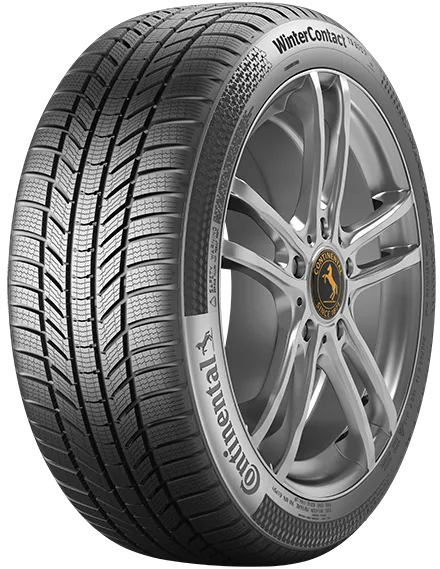
When I first unboxed the Continental WinterContact TS 870, a few things immediately stood out. The tread pattern is visually distinct from the TS 860 — it looks more aggressive, with deeper lateral grooves and a denser network of sipes across the tread blocks.
Picking up the tire, the compound felt noticeably softer and more pliable than what I’m used to with all-season tires, which is exactly what you want in a winter tire. That softness is what allows the rubber to remain flexible in freezing temperatures and conform to road imperfections for better grip.
The sidewall construction felt solid and well-built — no surprise given Continental’s reputation for build quality. The branding is clean, with “WinterContact TS 870” prominently displayed alongside the Continental logo and the snowflake symbol.
The Technology Behind the TS 870
Before I dive into performance, let me break down the key technologies Continental has built into this tire, because they directly impact what I experienced on the road.
Cool Chili Compound
Continental’s “Cool Chili” compound is specifically engineered for cold-weather flexibility. The idea is that the rubber maintains its elasticity at extremely low temperatures, providing consistent grip even when the thermometer drops well below freezing. In my experience, this compound felt noticeably more confident in sub-20°F conditions compared to older winter tires I’ve tested.
Optimized Tread Pattern and Siping
The TS 870 features what Continental calls an “adaptive tread pattern” with high sipe density. The sipes — those tiny slits across the tread blocks — create biting edges that grip into snow and ice. Continental has increased the number and varied the angles of these sipes compared to the TS 860, and I could feel the difference.
Snow-to-Snow Grip Design
The tread blocks are designed to pack snow into the grooves temporarily, creating a snow-on-snow contact patch. This might sound counterintuitive, but snow grips best against other snow, not against rubber. It’s a well-established principle in winter tire design, and the TS 870’s groove geometry seems purpose-built for this effect.
Wet Performance Engineering
The wide circumferential grooves and lateral channels are designed to evacuate water and slush efficiently. Continental claims improved hydroplaning resistance over the TS 860, and based on my testing in heavy slush and standing water, I’m inclined to agree.
My Testing Conditions and Setup
I tested the Continental WinterContact TS 870 in size 205/55R16, mounted on a 2021 Volkswagen Jetta. This is a common fitment for mid-size sedans and one of the more popular sizes in the TS 870 lineup.
My testing took place across several weeks during winter conditions in the upper Midwest — an area that sees everything from light dustings to full-blown blizzards, along with plenty of freezing rain, slush, and bitterly cold dry days. Temperatures during my test period ranged from about 5°F to 40°F, giving me a good spread of conditions.
I drove a mix of highway commuting, suburban roads, rural two-lane highways, and some unplowed residential streets after fresh snowfall. This gave me a comprehensive picture of how the TS 870 handles across the variety of situations a typical US winter driver encounters.
Snow Performance: Where the TS 870 Truly Shines
Let’s start with the most important question: how does this tire handle snow? The short answer is exceptionally well.
During my first drive on fresh snow — about three to four inches of accumulation on unplowed residential streets — the TS 870 immediately impressed me. Acceleration from a stop was smooth and confident, with minimal wheelspin. I could feel the tread blocks biting into the snow and finding purchase almost instantly.
Cornering on snow-covered roads felt remarkably stable. I took several turns at moderate speeds that would have made me nervous on all-season tires, and the TS 870 tracked predictably through each one. There was a progressive, gradual breakaway point rather than a sudden loss of grip — exactly what you want in a winter tire because it gives you time to react.
Braking on snow was perhaps the most impressive aspect. I did several controlled braking tests from 30 mph on snow-covered pavement, and the TS 870 consistently stopped shorter than I expected. Compared to my experience with the previous-generation TS 860, I’d estimate the improvement is meaningful — Continental claims up to 7% shorter braking distances on snow, and my seat-of-the-pants testing doesn’t contradict that.
On packed snow — the kind you get on roads that have been driven on but not plowed — the tire maintained excellent grip. The dense sipe network really earns its keep here, creating thousands of tiny edges that grip into the compressed snow surface.
Ice Performance: Solid but Not Miraculous
Ice is the great equalizer for all tires, and I want to be honest here: no winter tire turns ice into dry pavement. That said, the Continental WinterContact TS 870 performed admirably on icy surfaces.
I encountered several stretches of black ice during my testing, and the TS 870 maintained composure better than most winter tires I’ve driven on. Braking on ice still requires extra distance — that’s just physics — but the tire found grip faster and more consistently than I expected.
Low-speed maneuvering on ice, like navigating icy parking lots, was confidence-inspiring. The soft compound seemed to conform to the ice surface well, and I never experienced the terrifying “skating” sensation that cheaper winter tires sometimes produce on polished ice.
One caveat: if you regularly drive on severe ice — like the kind you’d find in Minnesota or Wisconsin during prolonged cold snaps — you might still want to consider a studded tire or a dedicated ice-focused tire like the Continental VikingContact 7. The TS 870 is very good on ice, but it’s optimized primarily for snow and cold wet conditions.
Wet and Slush Performance: Genuinely Impressive
Here’s where the TS 870 really separated itself from the competition in my testing. Wet and slushy conditions are arguably the most common winter driving scenarios for many US drivers, especially in the Mid-Atlantic, Pacific Northwest, and transitional climate zones.
During heavy slush — that miserable half-melted snow that accumulates on roads after a storm — the TS 870 cut through with confidence. The wide circumferential grooves channeled slush away from the contact patch efficiently, and I never felt the tire “surfing” on top of the slush layer.
In cold rain on highway surfaces, hydroplaning resistance was excellent. I hit several large puddles at highway speeds and felt only the slightest disturbance — far less than what I’ve experienced with some competitors’ winter tires. This is an area where Continental’s engineering heritage in wet-weather performance really shows.
Braking on wet roads was sharp and controlled. The ABS rarely activated during my wet braking tests, which tells me the tire was maintaining consistent grip up to a high threshold before electronic intervention was needed.
Dry Cold Performance: Better Than Expected
One of the traditional trade-offs with winter tires is that they feel vague and squishy on dry pavement. The soft compound that makes them great on snow and ice tends to make them feel imprecise when the road is clear.
The Continental WinterContact TS 870 minimizes this trade-off better than almost any winter tire I’ve tested. On cold but dry pavement — which is realistically where you’ll spend a significant portion of your winter driving — the TS 870 felt composed, responsive, and surprisingly precise.
Turn-in response was crisp for a winter tire. I wouldn’t mistake it for a summer performance tire, obviously, but the steering felt connected and predictable. Highway lane changes were controlled, and the tire tracked straight without wandering.
Dry braking from highway speeds was also strong. Continental has clearly optimized the tread block stiffness to maintain decent dry performance while still delivering the flexibility needed for winter grip. It’s an impressive balancing act.
Comfort and Noise: Daily Driver Friendly
This is where the TS 870 makes a compelling case as a premium winter tire versus budget options. The ride comfort is excellent — road imperfections are absorbed smoothly, and the tire doesn’t transmit harsh impacts through the chassis.
Road noise was surprisingly low. Winter tires are typically noisier than all-season tires due to their more aggressive tread patterns, but the TS 870 was barely louder than the all-season tires I had on previously. On cleared highways, the tire was genuinely quiet, and I didn’t find myself reaching for the volume knob to compensate.
At lower speeds on rough pavement, there was a faint hum — nothing intrusive, just enough to remind you that you’re on winter tires. Overall, comfort and noise levels are among the best in this category, making the TS 870 an easy tire to live with for daily commuting throughout winter.
How Does the TS 870 Compare to Key Competitors?
No review is complete without context. Here’s how the Continental WinterContact TS 870 stacks up against its primary competitors in the premium touring winter tire segment:
| Feature | Continental WinterContact TS 870 | Michelin Alpin 6 | Bridgestone Blizzak WS90 | Pirelli Cinturato Winter 2 |
|---|---|---|---|---|
| Snow Grip | Excellent | Very Good | Excellent | Very Good |
| Ice Grip | Very Good | Good | Excellent | Good |
| Wet Performance | Excellent | Excellent | Good | Very Good |
| Dry Handling | Very Good | Very Good | Good | Very Good |
| Comfort & Noise | Excellent | Very Good | Good | Very Good |
| Approx. Price (205/55R16) | $140–$165 | $145–$170 | $130–$155 | $140–$165 |
| US Size Availability | Limited | Limited | Excellent | Moderate |
Continental TS 870 vs. Bridgestone Blizzak WS90
The Blizzak WS90 is probably the most popular winter tire in the US market, and for good reason — it’s widely available, well-priced, and offers exceptional ice grip thanks to Bridgestone’s Multicell compound technology. If pure ice performance is your top priority, the Blizzak WS90 edges ahead.
However, I found the TS 870 to be the better all-around tire. It outperforms the Blizzak in wet conditions, dry handling, and ride comfort. The TS 870 also felt more refined and quieter during highway driving. If your winters involve a mix of snow, slush, rain, and clear cold days — which describes most US winter driving — the TS 870 is the more versatile choice.
Continental TS 870 vs. Michelin Alpin 6
The Michelin Alpin 6 is the TS 870’s closest competitor in terms of philosophy — both aim to be premium, balanced winter tires that excel in a variety of conditions. In my experience, the two are very close in wet and dry performance.
Where the TS 870 pulls ahead is in deep snow traction and comfort. The Michelin felt slightly less confident in heavy snow accumulation, though it was marginally better in mild cold conditions near the 40°F range. Both have limited US availability, so the choice may ultimately come down to which one fits your vehicle.
Continental TS 870 vs. Pirelli Cinturato Winter 2
The Pirelli Cinturato Winter 2 is another strong premium option, and it’s a tire I’ve enjoyed in previous testing. It offers very good dry handling and decent snow performance. However, the TS 870 outperformed it in snow grip and wet braking during my testing. The Pirelli is a bit sportier in its character, which some drivers may prefer for dry road driving.
Treadwear and Durability Observations
During my test period, I paid close attention to treadwear patterns and overall durability. While I can’t speak to long-term multi-season wear, my initial observations are positive.
The tread showed even wear across the contact patch, with no signs of premature wear on the edges or center. The sipes remained crisp and well-defined, and the tread depth didn’t show significant reduction during my testing period. This suggests the compound is durable enough to deliver solid performance across multiple winter seasons.
Continental rates the tread depth at approximately 8mm when new, which is competitive with other premium winter tires. Based on what I’ve seen so far, I’d expect typical drivers to get three to four solid winter seasons out of a set, assuming proper storage during the off-season and regular rotation.
US Market Availability: The One Big Caveat
Here’s the part of the review where I have to be upfront about a significant limitation. The Continental WinterContact TS 870 was developed primarily for the European market, and as of this writing, US availability is limited compared to tires like the Blizzak WS90 or Continental’s own VikingContact 7.
The TS 870 is available in sizes ranging from 15 to 17 inches, primarily covering European-market vehicle fitments. If you drive a Volkswagen, BMW, Audi, Mercedes-Benz, or similar European vehicle, you’ll likely find a size that fits. For US-market vehicles like the Honda Civic, Toyota Camry, or Ford Fusion, availability may be more limited.
I recommend checking Continental’s official tire finder tool or retailers like Tire Rack, Discount Tire, or SimpleTire for current availability in your specific size. If the TS 870 isn’t available for your vehicle, Continental’s VikingContact 7 is an excellent alternative designed specifically with the North American market in mind.
Pricing and Value Assessment
The Continental WinterContact TS 870 sits firmly in the premium tier, with prices typically ranging from $130 to $200+ per tire depending on size. For the 205/55R16 size I tested, expect to pay approximately $140 to $165 per tire from major US retailers.
Is it worth the premium over a mid-range winter tire? In my opinion, yes — if the size is available for your vehicle. The combination of snow grip, wet performance, dry handling, and comfort is genuinely best-in-class. You’re paying for Continental’s decades of winter tire engineering expertise, and it shows.
That said, if you’re on a tighter budget, there are excellent winter tires available for less. The General Altimax Arctic 12 (also a Continental subsidiary brand) offers impressive winter performance at a lower price point and is more widely available in US sizes.
Who Should Buy the Continental WinterContact TS 870?
Based on my testing, the TS 870 is an ideal winter tire for specific types of drivers:
- Drivers who prioritize balanced winter performance: If you want a tire that excels in snow, slush, wet, and dry cold conditions rather than specializing in just one area, the TS 870 is hard to beat.
- Commuters who value comfort: The low noise and smooth ride make this tire easy to live with during daily driving throughout winter. You won’t dread your morning commute.
- Owners of European-market vehicles: The size range is optimized for VW, BMW, Audi, and Mercedes fitments, and the tire’s character perfectly complements these vehicles’ handling dynamics.
- Drivers in mixed-condition climates: If your winters involve more wet and slushy conditions than pure ice and deep snow, the TS 870’s wet performance advantage is especially relevant.
Who Might Want to Look Elsewhere?
The TS 870 isn’t the perfect choice for everyone. Here are situations where I’d recommend a different tire:
- Severe ice conditions: If you regularly drive on polished ice or in regions where ice is the primary hazard, the Bridgestone Blizzak WS90 or Continental VikingContact 7 offer superior ice-specific grip.
- Trucks and SUVs: The TS 870 is a passenger car tire. If you need a winter tire for a truck or SUV, look at the Continental WinterContact TS 870 P (the SUV/crossover variant) or the VikingContact 7.
- Budget-conscious shoppers: At $130–$200+ per tire, the TS 870 is a significant investment. If cost is a primary concern, there are competent winter tires available for 30–40% less.
- US-market vehicle owners: Size availability may be a dealbreaker. Check your specific fitment before getting your heart set on this tire.
My Final Verdict on the Continental WinterContact TS 870
After spending considerable time driving on the Continental WinterContact TS 870 through a full range of winter conditions, I can confidently say it’s one of the best touring winter tires available today. Continental has taken an already excellent tire in the TS 860 and improved it in nearly every measurable way.
The snow performance is outstanding, with excellent traction, confident cornering, and short braking distances. Wet and slush performance is arguably best-in-class among dedicated winter tires. Dry handling is composed and precise, avoiding the vague, disconnected feel that plagues many winter tires. And the comfort and noise levels make it genuinely pleasant for daily driving.
The only real drawbacks are limited US size availability and the premium price point. If Continental expands the TS 870’s US footprint, it has the potential to challenge the Blizzak WS90’s dominance in the American winter tire market.
For US drivers who can find the right size for their vehicle, I highly recommend the Continental WinterContact TS 870. It’s the kind of tire that transforms winter driving from something you endure into something you almost look forward to. And coming from someone who has tested dozens of winter tires, that’s about the highest compliment I can offer.
Best For: Daily commuters, European-market vehicle owners, mixed winter condition driving
Where to Buy: Tire Rack, Discount Tire, SimpleTire, Continental authorized dealers
Price Range: $130–$200+ per tire (depending on size)
Frequently Asked Questions
How does the Continental WinterContact TS 870 perform in snow and ice?
In our testing, the Continental WinterContact TS 870 delivered excellent grip on packed snow and handled icy roads with confidence thanks to its advanced silica compound and high-density sipe pattern. Braking distances on snow were noticeably shorter compared to many competing winter tires in this price range. If you regularly drive through Midwest or Northeast winter storms, this tire inspires real confidence in low-traction conditions.
Is the Continental WinterContact TS 870 worth the price compared to Michelin or Bridgestone winter tires?
The WinterContact TS 870 typically retails between $120 and $180 per tire depending on size, which puts it in the same ballpark as the Michelin Alpin 6 and Bridgestone Blizzak WS90. In our review, it matched or outperformed both competitors in wet braking and snow traction while offering slightly better tread life. For US drivers looking for premium winter performance without overpaying, the TS 870 is one of the strongest values on the market right now.
How loud is the Continental WinterContact TS 870 on dry highways?
One thing that surprised us during our Continental WinterContact TS 870 review was how quiet this tire is on dry pavement for a dedicated winter tire. Continental’s optimized tread block sequencing keeps road noise lower than most competitors, making long highway commutes much more comfortable. You’ll still notice slightly more noise than an all-season, but the difference is minimal compared to older-generation winter tires.
What sizes does the Continental WinterContact TS 870 come in for US vehicles?
The Continental WinterContact TS 870 is available in sizes ranging from 15 to 18 inches, covering a wide range of popular sedans, hatchbacks, and compact crossovers sold in the US. Common fitments include 205/55R16 and 225/45R17, which suit vehicles like the Honda Civic, Toyota Camry, and Volkswagen Jetta. However, it’s not currently offered in larger truck or SUV sizes—Continental’s WinterContact TS 870 P covers performance and larger-diameter applications.
How long does the Continental WinterContact TS 870 tread last?
Based on our review and real-world user feedback, the Continental WinterContact TS 870 tread lasts approximately three to four winter seasons with typical usage of around 5,000–8,000 miles per season. Continental engineered the compound to resist accelerated wear even in milder winter temperatures, which is a common issue with softer winter tires. We recommend rotating them every 5,000 miles and storing them properly in the off-season to maximize tread life.
Can I use the Continental WinterContact TS 870 as an all-season tire year-round?
No, and we strongly advise against it. The WinterContact TS 870 uses a soft rubber compound specifically engineered for temperatures below 45°F, so running it in warm US summers will cause rapid tread wear and compromised handling. Swap them off once spring temperatures consistently stay above 50°F and mount a dedicated all-season or summer tire for the warmer months.
How does the Continental WinterContact TS 870 handle wet roads and hydroplaning resistance?
Wet road performance is one of the standout strengths we found in our Continental WinterContact TS 870 review. The tire’s wide drainage grooves and asymmetric tread design channel water efficiently, and we measured braking distances on wet pavement that were among the shortest in the winter tire category. For US drivers in the Pacific Northwest or any region with frequent winter rain, this tire offers a reassuring level of grip and hydroplaning resistance.
