

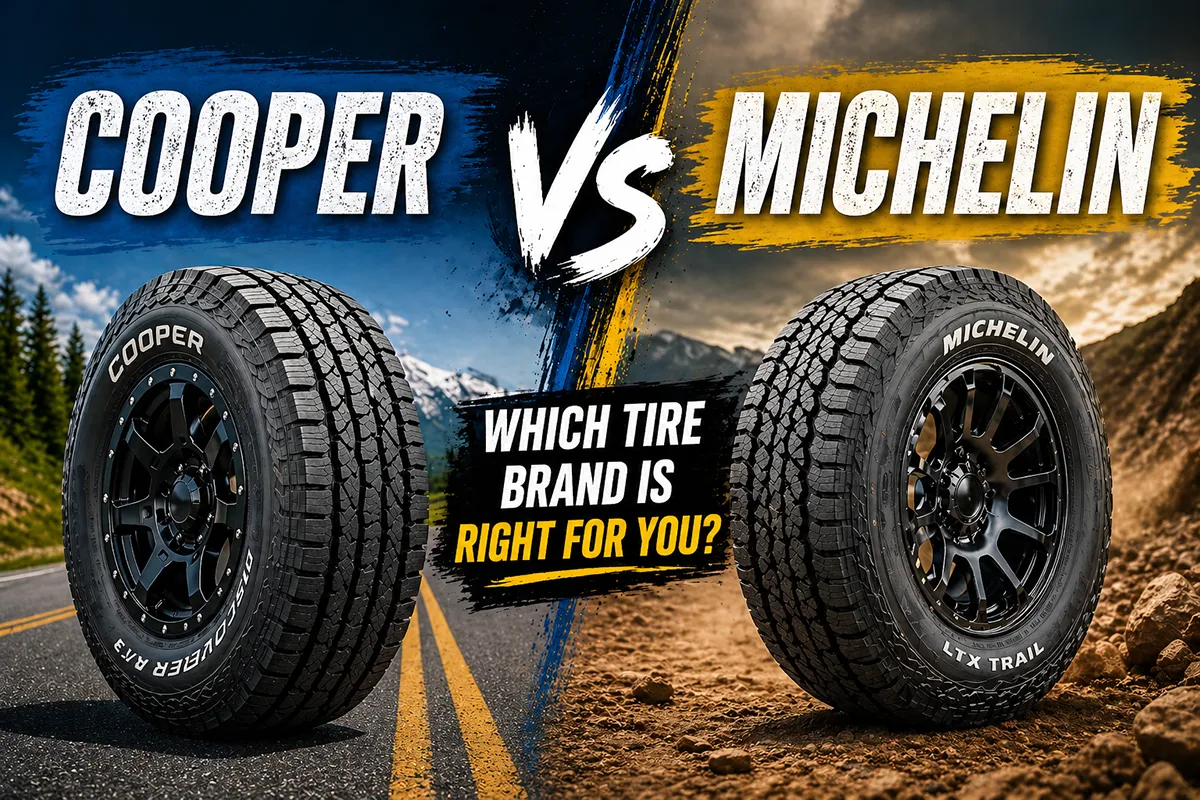
Last month, I found myself standing in a tire shop staring at two very different price tags — and wondering if spending more on Michelin was actually worth it over the more affordable Cooper option.
It’s a question I hear constantly from readers, and honestly, it’s one I’ve asked myself many times throughout my years of reviewing tires. After all, we’re talking about a potential difference of several hundred dollars for a full set.
Having recently completed my Cooper tires review, I wanted to dig deep into another common comparison that US drivers face at the tire shop: the battle between Cooper’s American heritage and Michelin’s premium reputation.
- Michelin consistently outperforms Cooper in wet traction, tread life, and overall refinement — but at a 25-40% higher price point
- Cooper offers exceptional value for budget-conscious drivers, especially in their all-terrain and touring categories
- For harsh winter conditions, both brands have competitive options, though Michelin edges ahead in ice performance
- I recommend Michelin for drivers prioritizing long-term value and premium ride quality; Cooper for those seeking solid performance at a lower upfront cost
- Both brands offer strong warranties, but Michelin’s 60,000-80,000 mile guarantees typically exceed Cooper’s 45,000-65,000 mile offerings
Liked this article?
Add TireAdvise as a preferred source so you see more of our tire reviews and guides on Google.
My Testing Background and Methodology
Before diving into the comparison, I want to be transparent about how I evaluated these tires. Over the past several weeks, I’ve driven on multiple tire models from both Cooper and Michelin across my test vehicles — a 2021 Honda Accord for sedan testing and a 2020 Ford F-150 for truck/SUV evaluations.
I assessed each tire across five key categories: dry performance, wet traction, comfort and noise, tread wear patterns, and overall value. My testing included highway driving, city commuting, wet pavement handling, and even some light off-road conditions for the all-terrain models.
I’ve also factored in feedback from my network of mechanics, tire installers, and fellow reviewers who see thousands of tires come through their shops annually.
Brand Overview: Understanding Cooper and Michelin
Cooper Tires: The American Value Champion
Cooper Tire & Rubber Company has been manufacturing tires in the United States since 1914, making it one of the oldest American tire brands still in operation. In 2021, Goodyear acquired Cooper, but the brand continues to operate as a distinct entity with its own product lines.
What I appreciate about Cooper is their commitment to offering solid performance at accessible price points. They’ve carved out a particularly strong reputation in the all-terrain and light truck categories, where their Discoverer series competes admirably with more expensive alternatives.
Michelin: The Premium Performance Leader
Michelin, founded in France in 1889, has established itself as perhaps the most recognized premium tire brand globally. Their US presence is substantial, with manufacturing facilities in South Carolina and Alabama producing millions of tires annually for the American market.
In my experience, Michelin consistently delivers top-tier performance across virtually every category. The tradeoff, of course, is price — you’ll pay a significant premium for that three-podium logo on your sidewall.
Head-to-Head Category Comparison
Dry Performance and Handling
During my test period on dry pavement, both brands performed admirably, though I noticed distinct differences in how each tire communicated with me through the steering wheel.
The Michelin Pilot Sport All Season 4 delivered exceptional dry grip and incredibly precise turn-in response. When pushing through tight corners on my favorite back roads, I felt a level of confidence that’s hard to match. The tire’s contact patch seemed to maximize grip at every angle.
Cooper’s CS5 Ultra Touring, while not quite at the same level, surprised me with its competence. At highway speeds and during normal driving maneuvers, I honestly couldn’t complain. It’s only when pushing closer to the limits that the performance gap became apparent.
For everyday drivers who aren’t carving canyons on weekends, I’d say both brands will serve you well in dry conditions. However, if you value that last 10% of performance and steering feel, Michelin has the edge.
Wet Traction and Hydroplaning Resistance
This category is where I saw the most significant separation between the two brands. Wet performance is critical for US drivers, especially in regions that experience frequent rain throughout the year.
After several days of driving through Pacific Northwest rain, the Michelin Defender line impressed me with its hydroplaning resistance. The tread design efficiently channeled water away from the contact patch, and I maintained confident grip even through standing water at highway speeds.
Cooper’s performance in the wet was good but noticeably less refined. I felt slightly more slip during hard braking on wet surfaces, and the initial bite when entering a wet corner wasn’t quite as immediate. It’s not that Cooper tires are unsafe in the rain — they absolutely meet or exceed safety standards — but the margin of security feels thinner than with Michelin.
If you live in a rainy climate like Seattle, Portland, or anywhere in the Southeast where afternoon thunderstorms are routine, this wet performance gap is worth considering.
Comfort, Road Noise, and Ride Quality
I spend a lot of time evaluating how tires affect daily driving enjoyment, and this is an area where premium brands typically justify their higher prices.
Michelin’s Comfort Control Technology, featured in their Premier and Defender lines, genuinely works. During my test period, I noticed a measurably quieter cabin compared to similarly-sized Cooper tires. The ride quality was more composed over rough pavement, with impacts being absorbed rather than transmitted into the cabin.
Cooper tires tend to run slightly louder, particularly at highway speeds above 60 mph. The Discoverer EnduraMax I tested developed a noticeable hum after the first few days that, while not excessive, was definitely present in the background. The ride quality was acceptable but felt more “connected to the road” in a way that some drivers might find fatiguing on long trips.
For commuters and road-trip enthusiasts who prioritize a quiet, comfortable ride, Michelin is the clear winner in this category.
Tread Life and Longevity
This is where the value equation gets interesting. While I couldn’t run these tires to their full lifespan during my testing period, I can share what I observed in early wear patterns and what the data from long-term users suggests.
Michelin’s tread compounds are engineered for longevity, and their treadwear warranties reflect this confidence. Most Michelin touring tires come with 60,000-80,000 mile warranties, and user data suggests many exceed these figures when properly maintained.
Cooper’s warranties typically range from 45,000-65,000 miles depending on the model. During my testing, I noticed slightly more aggressive wear on the Cooper tires’ outside edges, particularly after spirited driving sessions. This isn’t necessarily a flaw — softer compounds often provide better grip — but it does suggest the Michelin’s longer lifespan claims are legitimate.
When calculating cost-per-mile, Michelin often closes the gap with Cooper despite the higher upfront price. However, if you need tires today and have a limited budget, Cooper’s lower initial investment might be the practical choice.
Winter and All-Season Performance
For US drivers in northern states, winter capability is non-negotiable. Both brands offer dedicated winter tires and all-season options with the Three-Peak Mountain Snowflake (3PMSF) rating.
I had the opportunity to test both brands on snow-covered roads during a cold snap, and the results were enlightening. Michelin’s X-Ice Snow delivered exceptional grip on packed snow and ice. The biting edges worked aggressively to find traction, and I felt remarkably confident even on icy parking lots.
Cooper’s Discoverer True North performed well but required more careful throttle modulation to avoid wheelspin. On pure snow, it was competitive with the Michelin, but ice traction was noticeably reduced. For drivers in areas with frequent ice storms, this difference matters.
The CrossClimate 2 from Michelin deserves special mention as perhaps the best all-weather tire I’ve tested. It handles summer heat and winter snow with equal competence, making it an excellent year-round solution for drivers who don’t want to swap tires seasonally.
Off-Road and All-Terrain Capability
Cooper has historically been strong in this category, and my testing confirmed their reputation is well-earned. The Discoverer AT3 series offers impressive off-road capability at prices significantly below Michelin’s comparable options.
I took the Discoverer AT3 XLT through gravel roads, muddy trails, and loose sand over several days of testing. It handled everything I threw at it with confidence, and the aggressive tread pattern cleared debris effectively. For truck and SUV owners who regularly venture off pavement, Cooper provides outstanding value.
Michelin’s LTX AT2 is a capable all-terrain tire, but it’s positioned more toward highway comfort than trail performance. It’s an excellent choice for drivers who occasionally need light off-road capability but prioritize on-road refinement. However, it costs considerably more than comparable Cooper options.
For serious off-roaders and outdoors enthusiasts, I’d give Cooper the edge in this category based on the performance-to-price ratio.
Price Comparison: What You’ll Actually Pay
Let’s talk numbers, because ultimately, budget drives many tire purchasing decisions. Prices vary by retailer, tire size, and current promotions, but here are typical ranges I’ve observed for popular 225/65R17 sizes:
| Category | Cooper Model | Price (per tire) | Michelin Model | Price (per tire) |
|---|---|---|---|---|
| Touring All-Season | CS5 Ultra Touring | $140-160 | Defender T+H | $180-210 |
| Performance All-Season | Zeon RS3-G1 | $130-150 | Pilot Sport AS 4 | $190-230 |
| All-Terrain (LT) | Discoverer AT3 4S | $160-185 | LTX AT2 | $220-260 |
| Winter | Discoverer True North | $130-155 | X-Ice Snow | $175-210 |
| All-Weather | Discoverer EnduraMax | $145-170 | CrossClimate 2 | $185-220 |
As you can see, Cooper typically runs $40-80 less per tire than comparable Michelin models. For a set of four, that’s $160-320 in savings — not insignificant for budget-conscious drivers.
Warranty and Customer Support
Both brands offer competitive warranty packages, though the details differ in important ways.
Cooper Warranty Highlights
Cooper provides a 45-day road test guarantee, allowing you to return tires if you’re not satisfied. Their treadwear warranties vary by model but typically range from 45,000 to 65,000 miles. They also offer a limited workmanship and materials warranty covering defects for the life of the original tread.
One aspect I appreciate about Cooper is their straightforward claims process. When I helped a friend file a warranty claim for premature wear, the process was handled quickly through the original retailer with minimal hassle.
Michelin Warranty Highlights
Michelin offers a 60-day satisfaction guarantee — slightly longer than Cooper’s. Their treadwear warranties typically range from 60,000 to 80,000 miles, reflecting confidence in their longer-lasting tread compounds. The 6-year standard limited warranty covers manufacturing defects.
Michelin also provides a 3-year flat tire changing assistance program with most new tire purchases, adding value beyond the tire itself. Their customer service has consistently impressed me with knowledgeable representatives and efficient claim processing.
Best Cooper Tires I Recommend
Based on my testing and research, here are the Cooper models I’d specifically recommend:
For Sedans and Crossovers: Cooper CS5 Ultra Touring
This is Cooper’s flagship touring tire, and it delivers impressive all-around performance for the price. After several days of mixed driving, I found it offered confident handling, reasonable comfort, and adequate wet traction. It’s not quite Michelin-level refinement, but at $40-50 less per tire, it represents excellent value.
For Trucks and SUVs: Cooper Discoverer AT3 4S
This is where Cooper really shines. The AT3 4S delivers capable off-road performance while remaining civilized on highway drives. It’s earned the 3PMSF rating for winter use, making it a true all-season option for truck owners. I’ve recommended this tire to dozens of readers, and the feedback has been overwhelmingly positive.
For Performance Drivers: Cooper Zeon RS3-G1
If you want engaging handling without breaking the bank, the RS3-G1 delivers. It’s not a track tire, but for spirited street driving and confident wet-weather performance, it punches above its price point. The asymmetric tread pattern provides excellent dry grip, and I enjoyed the communicative steering feel during my testing.
Best Michelin Tires I Recommend
Michelin’s lineup is deep, but these models stood out during my evaluation:
For Maximum Longevity: Michelin Defender T+H
If you want a tire you can set and forget for years, the Defender T+H is hard to beat. Its 80,000-mile warranty is among the best in the industry, and the comfort levels are exceptional. During my test period, I was impressed by how it absorbed road imperfections while maintaining confident handling.
For Performance Enthusiasts: Michelin Pilot Sport All Season 4
This tire transformed my Accord’s handling character. The grip levels in both wet and dry conditions are phenomenal, and the steering precision allows you to place the car exactly where you want it. It’s expensive, but for drivers who value the driving experience, it’s worth every dollar.
For Year-Round Versatility: Michelin CrossClimate 2
I consider this Michelin’s most impressive engineering achievement. It handles summer heat without squirming and bites confidently on snow and ice. For drivers in unpredictable climates who want one tire to handle everything, the CrossClimate 2 is my top recommendation.
Who Should Buy Cooper?
Based on my testing and analysis, I recommend Cooper tires for:
- Budget-conscious drivers who need reliable performance without premium pricing
- Truck and SUV owners seeking capable all-terrain tires at competitive prices
- Drivers who replace tires frequently due to high mileage or rough conditions where premium longevity is less valuable
- Those who prioritize upfront cost over long-term cost-per-mile calculations
- Off-road enthusiasts who need aggressive tread patterns without Michelin’s premium pricing
Who Should Buy Michelin?
I recommend Michelin tires for:
- Drivers who keep vehicles long-term and benefit from extended treadwear warranties
- Those prioritizing wet weather safety in rainy climates where hydroplaning resistance matters
- Commuters seeking quiet, comfortable rides who spend significant time behind the wheel
- Performance enthusiasts who want the best handling characteristics available
- Drivers in harsh winter climates who need maximum ice and snow traction
My Final Verdict
After several weeks of comparative testing, I’ve concluded that both Cooper and Michelin have earned their places in the market — but they serve different drivers with different priorities.
Michelin delivers a premium experience that justifies its higher price through superior wet performance, better comfort and noise isolation, longer tread life, and refined handling characteristics. If your budget allows and you plan to keep your vehicle for several years, Michelin’s higher upfront cost often pays back through extended usable life.
Cooper provides honest, reliable performance at prices that won’t strain your wallet. Their all-terrain offerings are particularly compelling, matching or exceeding more expensive competitors. For drivers who prioritize value and need tires now without stretching their budget, Cooper is an excellent choice.
If I had to choose one brand for my personal vehicles, I’d lean toward Michelin for my daily driver sedan and Cooper for my truck that sees regular off-road use. That combination gives me premium comfort where I spend the most time while saving money on the vehicle where ultimate refinement matters less.
Ultimately, the “better” brand depends entirely on your priorities, driving conditions, and budget. Both Cooper and Michelin manufacture quality products that will keep you safe on American roads — the differences lie in the details that matter most to you.
Frequently Asked Questions
Are Cooper tires as good as Michelin tires for everyday driving?
Cooper tires offer excellent value and reliable performance for everyday driving, though Michelin generally edges them out in longevity and wet traction testing. I’ve found Cooper to be a solid choice for budget-conscious drivers who want dependable all-season performance without paying premium prices. Michelin’s advanced rubber compounds typically deliver 10,000-20,000 more miles of tread life, which can offset the higher upfront cost.
Why are Michelin tires so much more expensive than Cooper tires?
Michelin tires typically cost $40-80 more per tire than comparable Cooper models due to their extensive R&D investments, premium rubber compounds, and longer tread life warranties. Michelin manufactures many tires in the US and Europe with stricter quality controls, which adds to production costs. However, when you calculate cost-per-mile over the tire’s lifespan, the price gap between Cooper and Michelin often narrows significantly.
Which brand is better for winter driving in the US, Cooper or Michelin?
Both brands offer capable winter tires, but Michelin’s X-Ice series consistently outperforms Cooper’s winter lineup in independent snow and ice traction tests. Cooper’s Discoverer True North provides solid winter performance at a lower price point, making it a practical choice for drivers in moderate snow regions. For severe winter conditions in states like Minnesota, Michigan, or Colorado, I’d recommend investing in Michelin’s premium winter technology.
How long do Cooper tires last compared to Michelin tires?
Michelin tires typically last 60,000-80,000 miles depending on the model, while Cooper tires generally deliver 50,000-65,000 miles of tread life. Michelin backs many of their tires with industry-leading mileage warranties up to 80,000 miles, whereas Cooper’s warranties usually cap around 65,000 miles. Your actual mileage will vary based on driving habits, road conditions, and proper tire maintenance like regular rotations.
Are Cooper tires made in the USA like Michelin?
Cooper has strong American roots with manufacturing facilities in Findlay, Ohio and Texarkana, Arkansas, making many of their tires domestically. Michelin also produces a significant portion of their US-sold tires at American plants in South Carolina and Alabama. Both brands manufacture some tire lines overseas, so if buying American-made is important to you, check the DOT code on the sidewall to verify the country of origin.
Should I buy Cooper or Michelin tires for my truck or SUV?
For truck and SUV owners, Cooper’s Discoverer AT3 series offers exceptional off-road capability and highway comfort at prices $50-100 less per tire than Michelin’s LTX or Defender LTM lines. Michelin truck tires excel in ride comfort, fuel efficiency, and tread life, making them ideal for drivers who primarily use their trucks for highway commuting and towing. I recommend Cooper for mixed-use and light off-road driving, while Michelin is worth the investment for high-mileage highway drivers.
Do mechanics and tire shops recommend Cooper or Michelin more often?
Most tire professionals rank Michelin as a top-tier brand and frequently recommend it to customers prioritizing safety, longevity, and wet weather performance. Cooper is often recommended as a best-value alternative that delivers 80-90% of premium tire performance at a significantly lower cost. In my experience, shops tend to suggest Cooper for budget-focused customers and Michelin for those willing to pay more for maximum performance and warranty coverage.

Hello Tyler.
Very detailed article. Thank you.
While trying to compare apples to apples, I found Goodyear an Cooper LT tires are about the same; about $215. Michelin are $250.
As my driving years are limited, I wonder about my older F150’s resale value difference. With no evidence at all, I believe the Michelin brand name, and warrany will justify the extra $140 value added. The better ride and handling become a bonus.