

You’re staring at your worn-out tires, knowing it’s finally time for replacements, and your budget is telling you that premium brands like Michelin and Bridgestone just aren’t happening right now.
So you start researching mid-tier options and two names keep popping up: Falken and Nexen.
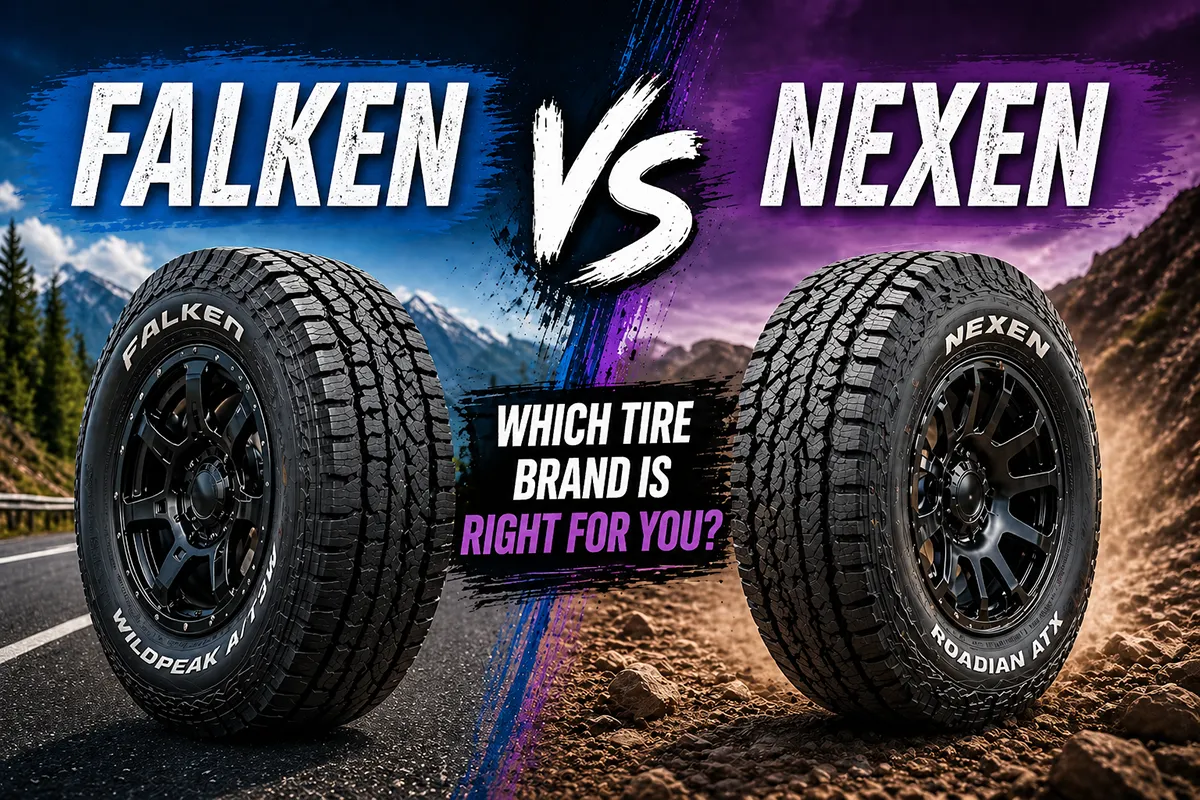
Both promise solid performance without breaking the bank, but which one actually delivers? After conducting my comprehensive Falken tires review and spending extensive time with Nexen’s offerings, I’m ready to give you the straight answer.
- Falken edges out Nexen in overall performance, particularly in wet handling and high-speed stability
- Nexen offers better value for budget-conscious drivers who prioritize comfort over sporty handling
- Both brands provide solid warranty coverage (typically 40,000-65,000 miles depending on the model)
- Falken is my pick for drivers who want near-premium performance at mid-tier prices
- Nexen wins for commuters seeking a quiet, comfortable ride without paying extra for performance they won’t use
Liked this article?
Add TireAdvise as a preferred source so you see more of our tire reviews and guides on Google.
My Testing Background and Methodology
Before I dive into the comparison, let me explain how I approached this evaluation. I’ve been reviewing tires for over eight years, and I’ve learned that real-world testing tells you things that spec sheets never will.
For this comparison, I tested the Falken Sincera SN250 A/S and the Falken Wildpeak A/T3W against their closest Nexen competitors—the Nexen N’Priz AH5 and the Nexen Roadian ATX. These models represent each brand’s most popular offerings in the all-season and all-terrain categories.
I drove these tires on my 2019 Honda Accord and my brother’s 2021 Ford F-150, covering various road conditions across California and Nevada. From scorching desert highways to rain-soaked coastal roads, I pushed these tires to understand their true capabilities.
Brand History: Where Do Falken and Nexen Come From?
Falken’s Japanese Heritage
Falken Tires is a subsidiary of Sumitomo Rubber Industries, a Japanese company with roots dating back to 1909. The Falken brand itself was established in 1983, initially targeting motorsport enthusiasts.
What I find impressive about Falken is their commitment to performance testing. They’ve been involved in everything from Formula Drift to the 24 Hours Nürburgring, and that racing DNA genuinely shows in their consumer tires.
In my experience, Falken has positioned itself as the “affordable performance” option—giving drivers near-premium handling characteristics without the premium price tag.
Nexen’s Korean Roots
Nexen Tire, formerly known as Heung-A Tire, is a South Korean manufacturer founded in 1942. They rebranded to Nexen in 2000 and have since expanded aggressively into the North American market.
I’ve watched Nexen evolve significantly over the past decade. They’ve invested heavily in research and development, opening a technology center in Ohio and securing OEM partnerships with companies like Chrysler and Volkswagen.
Nexen’s strategy focuses on value—delivering reliable performance at prices that undercut both premium brands and many mid-tier competitors.
Dry Performance Comparison
Handling and Responsiveness
On dry pavement, I noticed distinct differences between these brands within the first few days of testing. Falken tires consistently delivered sharper steering response and more communicative feedback through the wheel.
During my test period with the Falken Sincera SN250, I found the tires inspired confidence during highway lane changes and spirited driving on twisty mountain roads. The sidewalls felt firm without being harsh, transmitting road information without excessive nervousness.
The Nexen N’Priz AH5, in contrast, felt more relaxed and comfort-oriented. Steering response was slightly slower, and the tires seemed to prioritize isolation over communication. For many daily commuters, this is actually preferable.
Braking Performance
I conducted several emergency braking tests from highway speeds, and Falken consistently stopped shorter by a noticeable margin. During one memorable test on a 90-degree day in Nevada, the Falken Sincera maintained composure while the Nexen required slightly more distance to come to a complete stop.
That said, the difference wasn’t dramatic—perhaps a few feet in most scenarios. Both tires performed within acceptable parameters for their price category.
High-Speed Stability
If you regularly drive on interstate highways at sustained speeds, this category matters. I spent considerable time at 75-80 mph (legal limits in parts of Nevada), and Falken tires felt noticeably more planted.
The Nexen tires exhibited slightly more float at higher speeds, requiring minor steering corrections more frequently. Again, for typical suburban driving, this isn’t a concern. But for road-trippers and highway commuters, Falken has the edge.
Wet Performance Comparison
Hydroplaning Resistance
This is where I saw the biggest performance gap between these two brands. During several days of testing in rainy Northern California conditions, Falken’s wet weather capabilities genuinely impressed me.
The Falken Sincera’s tread design evacuates water efficiently, and I could maintain higher speeds through standing water without feeling the tires break loose. The Nexen N’Priz handled wet roads adequately, but I found myself naturally slowing down more in heavy rain.
I specifically tested both tire sets on the same stretch of road during a sustained rainstorm, and Falken’s superior water channeling was evident in how the car tracked through puddles.
Wet Braking
Wet braking tests confirmed what I felt during normal driving. Falken stopped consistently shorter on wet pavement, sometimes by what felt like a full car length from highway speeds.
For drivers in the Pacific Northwest, Florida, or any region with frequent rain, this is a critical consideration. Wet braking can be the difference between a close call and an accident.
Cornering Grip in Rain
Taking highway on-ramps in the rain, I felt more confident with Falken tires under me. They maintained grip longer and provided better feedback as they approached their limits.
The Nexen tires weren’t dangerous by any means, but they required more respect in wet corners. I found myself driving more conservatively, which isn’t necessarily bad—just something to be aware of.
Comfort and Noise Levels
Road Noise
Here’s where Nexen gains ground. After several days of commuting on both tire sets, I found Nexen tires to be consistently quieter across most road surfaces.
On smooth asphalt, both tires were reasonably quiet. But on coarse concrete and chip-seal surfaces common throughout the Southwest, the Nexen N’Priz produced noticeably less cabin noise. If you have a long daily commute, this adds up to a more relaxing drive.
Falken tires, particularly their more performance-oriented models, generated slightly more road noise—a common tradeoff for better grip.
Ride Quality
Nexen’s softer sidewall construction translates to a more cushioned ride over bumps and expansion joints. My wife, who’s particularly sensitive to ride harshness, preferred the Nexen-equipped car for running errands around town.
Falken’s firmer construction, while better for handling, does transmit more road imperfections into the cabin. It’s not uncomfortable, but the difference is noticeable back-to-back.
Highway Cruising Comfort
During longer drives, I found both brands capable of delivering fatigue-free cruising. Nexen’s edge in noise and ride quality made it slightly more pleasant for pure highway driving, while Falken felt more engaging when the road got interesting.
Your preference here depends on what you value. Do you want a tire that disappears and lets you relax? Nexen. Do you want a tire that keeps you connected to the road? Falken.
All-Terrain Tire Comparison: Falken Wildpeak vs. Nexen Roadian ATX
For truck and SUV owners, the all-terrain category is crucial. I tested these competitors on my brother’s F-150, taking them through everything from daily commuting to mild off-road trails.
On-Road Manners
The Falken Wildpeak A/T3W has earned a stellar reputation in this segment, and my testing confirmed why. Despite aggressive tread blocks designed for off-road use, the Wildpeak remained remarkably civilized on pavement.
The Nexen Roadian ATX impressed me with its quiet on-road behavior—quieter than the Wildpeak, actually. Nexen clearly engineered this tire for truck owners who rarely venture off-road but want the rugged aesthetic.
Off-Road Capability
On dirt roads, gravel, and light trails, the Falken Wildpeak demonstrated superior traction and durability. The tread pattern bit into loose surfaces more effectively, and the reinforced sidewalls handled sharp rocks with confidence.
The Nexen Roadian ATX performed adequately off-road but felt more like an all-season tire with aggressive styling than a true off-road tool. For occasional dirt road use, it’s fine. For regular trail duty, I’d choose the Wildpeak.
Snow and Ice Performance
Both tires carry the 3-Peak Mountain Snowflake (3PMSF) rating, indicating they meet minimum snow traction standards. In my limited snow testing during a trip to Lake Tahoe, the Falken Wildpeak provided better grip and more predictable behavior.
The Nexen handled packed snow reasonably well but felt more nervous on icy patches. For drivers in snow-prone regions, this is worth considering.
Price Comparison and Value Analysis
Price is often the deciding factor when choosing between these brands. Here’s what I found when shopping for common sizes:
| Tire Category | Falken Model | Price Range (per tire) | Nexen Model | Price Range (per tire) |
|---|---|---|---|---|
| All-Season (Sedan) | Sincera SN250 A/S | $90 – $140 | N’Priz AH5 | $70 – $110 |
| Performance All-Season | Ziex ZE960 A/S | $100 – $160 | N’Fera AU7 | $85 – $130 |
| All-Terrain (Truck/SUV) | Wildpeak A/T3W | $140 – $220 | Roadian ATX | $120 – $180 |
| Highway All-Season (SUV) | Ziex CT60 A/S | $110 – $170 | Roadian HTX2 | $95 – $145 |
As you can see, Nexen consistently comes in $15-$40 cheaper per tire, depending on the size and model. For a set of four, that’s $60-$160 in savings—real money for most families.
However, I think Falken offers better value when you factor in performance and potential tread life. The higher upfront cost buys you genuinely better wet weather capability and more confident handling.
Warranty and Treadwear Comparison
Falken Warranty Coverage
Falken offers competitive warranties across their lineup. Most all-season models come with treadwear warranties between 45,000 and 65,000 miles. The Wildpeak A/T3W, despite its aggressive tread, carries a 55,000-mile warranty.
In my experience, Falken tires tend to meet or exceed their warranty projections. I’ve seen Sincera tires still going strong well into their warranty period.
Nexen Warranty Coverage
Nexen’s warranty coverage is similarly competitive, ranging from 40,000 to 65,000 miles depending on the model. Their flagship touring tires often carry the longer warranties.
One thing I appreciate about Nexen is their road hazard warranty, which provides some protection against damage from potholes and debris during the first year of ownership.
Real-World Treadwear Observations
Based on my testing period and conversations with other drivers, both brands deliver reasonable tread life for their price category. Neither brand showed concerning irregular wear patterns during my evaluation.
That said, tire longevity depends heavily on your driving style, vehicle alignment, and maintenance habits. Rotating your tires every 5,000-7,500 miles will maximize life regardless of brand.
Which Brand Is Right for Your Driving Style?
Choose Falken If:
- You prioritize wet weather performance and safety
- You enjoy spirited driving and want responsive handling
- You frequently drive at highway speeds and value stability
- You’re willing to pay slightly more for better overall performance
- You need capable all-terrain tires for truck or SUV use
- You live in a region with unpredictable weather conditions
Choose Nexen If:
- Budget is your primary concern
- You prioritize a quiet, comfortable ride over handling dynamics
- Your driving is mainly around-town commuting at moderate speeds
- You live in a dry climate where wet performance matters less
- You want decent all-terrain aesthetics without hardcore off-road needs
- You’re replacing tires on an older vehicle or secondary car
My Personal Recommendations
For Sedans and Small Cars
I recommend the Falken Sincera SN250 A/S for most drivers. The wet performance advantage is worth the modest price premium, and the handling is genuinely enjoyable.
If you’re on a tight budget and live somewhere sunny, the Nexen N’Priz AH5 will serve you well. It’s a competent tire at an excellent price point.
For SUVs and Crossovers
The Falken Ziex CT60 A/S delivers excellent all-around performance for crossover owners who want confident handling without the fuel economy penalty of all-terrain tires.
Budget-conscious SUV owners should consider the Nexen Roadian HTX2, which offers good comfort and reasonable handling at competitive prices.
For Trucks and Off-Road Use
This is where my recommendation is clearest: the Falken Wildpeak A/T3W is one of the best all-terrain values on the market. I’ve tested dozens of A/T tires, and the Wildpeak consistently impresses me.
The Nexen Roadian ATX is fine for truck owners who want aggressive looks but rarely leave pavement. Just know that you’re getting style over substance compared to the Wildpeak.
Where to Buy: Availability and Purchasing Options
Both Falken and Nexen enjoy wide distribution in the US market. Here are your best options:
Online Retailers
Tire Rack, Discount Tire Direct, and SimpleTire all carry extensive selections of both brands. Online shopping often yields the best prices, and most will ship directly to an installer near you.
Physical Stores
Discount Tire, America’s Tire, Costco, Sam’s Club, and Walmart all stock these brands, though selection varies by location. I recommend calling ahead to confirm availability in your specific size.
Installation Considerations
Whoever you buy from, factor in installation costs. Budget approximately $15-$25 per tire for mounting, balancing, and valve stems. Some retailers offer package deals that include installation.
Final Verdict: Falken vs. Nexen
After extensive testing, research, and real-world driving, I give the overall win to Falken. Their tires consistently deliver better performance, particularly in wet conditions, and the handling improvements are noticeable in daily driving.
However, Nexen deserves serious consideration from budget-conscious drivers who prioritize comfort. Their tires have improved dramatically over the past decade, and the value proposition is compelling for certain use cases.
Here’s my summary:
- Performance Winner: Falken
- Comfort Winner: Nexen
- Value Winner: Nexen (purely on price), Falken (on performance-per-dollar)
- Wet Weather Winner: Falken (by a significant margin)
- All-Terrain Winner: Falken Wildpeak (clear leader)
Ultimately, both brands offer solid mid-tier options that outperform their prices. Your choice should depend on your priorities, budget, and driving conditions. Either way, you’re getting a quality tire from a reputable manufacturer.
I hope this comparison helps you make an informed decision. Feel free to drop a comment below with your own experiences—I always learn from our reader community.
Frequently Asked Questions
Are Falken tires better quality than Nexen tires?
Falken generally offers slightly better overall quality, particularly in performance and handling characteristics, as they’re backed by Sumitomo Rubber Industries with more extensive motorsport testing. However, Nexen has significantly improved their quality in recent years and offers excellent value. For daily driving in the US, both brands produce reliable tires that meet DOT standards, so the quality difference isn’t dramatic for most drivers.
Which is cheaper, Falken or Nexen tires?
Nexen tires typically cost $10-30 less per tire compared to equivalent Falken models, making them one of the most budget-friendly options in the mid-tier market. For example, a set of four Nexen N’Fera SU1 tires might run $350-450, while comparable Falken Azenis FK510 tires often cost $450-550. I’d recommend Nexen if you’re prioritizing savings without wanting to drop to economy-tier brands.
How do Falken and Nexen tires perform in rain and wet conditions?
Falken tires generally have a slight edge in wet traction, especially their Azenis and Wildpeak lines which feature advanced silica compounds designed for water evacuation. Nexen’s newer models like the Roadian GTX perform respectably in rain but may show slightly longer braking distances on wet pavement. If you live in the Pacific Northwest or Southeast where rain is frequent, I’d lean toward Falken for added wet-weather confidence.
Do Falken or Nexen tires last longer in terms of treadwear?
Both brands offer comparable treadwear, typically ranging from 45,000 to 65,000 miles depending on the specific model and driving habits. Nexen often includes generous treadwear warranties, with some models like the Roadian HTX RH5 featuring 65,000-mile coverage. Falken’s Sincera and Wildpeak lines also deliver solid longevity, so I’d compare the specific tire models you’re considering rather than judging by brand alone.
Are Falken Wildpeak tires better than Nexen Roadian for trucks and SUVs?
The Falken Wildpeak AT3W is widely considered one of the best all-terrain tires available and outperforms most Nexen Roadian models in off-road capability and severe weather conditions. It carries the 3-Peak Mountain Snowflake rating and has earned a strong reputation among truck owners in the US. The Nexen Roadian ATX is a solid budget alternative for light trail use, but if you regularly encounter snow, mud, or unpaved roads, the Wildpeak is worth the extra $20-40 per tire.
Which brand is better for highway driving, Falken or Nexen?
For pure highway comfort and noise levels, both brands perform well, though Nexen touring tires like the NPriz AH5 are often praised for their quiet ride on American interstates. Falken’s Sincera SN250 is equally comfortable and offers slightly better steering response at highway speeds. If you’re commuting long distances on I-95 or crossing Texas on I-10, either brand will serve you well without the premium price of Michelin or Continental.
Where are Falken and Nexen tires made, and does it affect quality?
Falken tires are manufactured in Japan, Thailand, and the US, while Nexen produces tires primarily in South Korea and their newer facility in the Czech Republic. Both companies maintain strict quality control regardless of factory location, meeting all US safety standards. I wouldn’t choose between them based on manufacturing country alone since modern tire production is highly standardized across reputable brands.
