

If you’ve ever stared at the price tag on premium all-terrain tires and felt your wallet physically recoil, you’re not alone — I’ve been there more times than I can count.
Most drivers assume that affordable off-road capable tires mean compromising on safety or durability, but that assumption deserves a serious second look, especially when you understand what different tire speed rating charts actually mean for real-world driving.
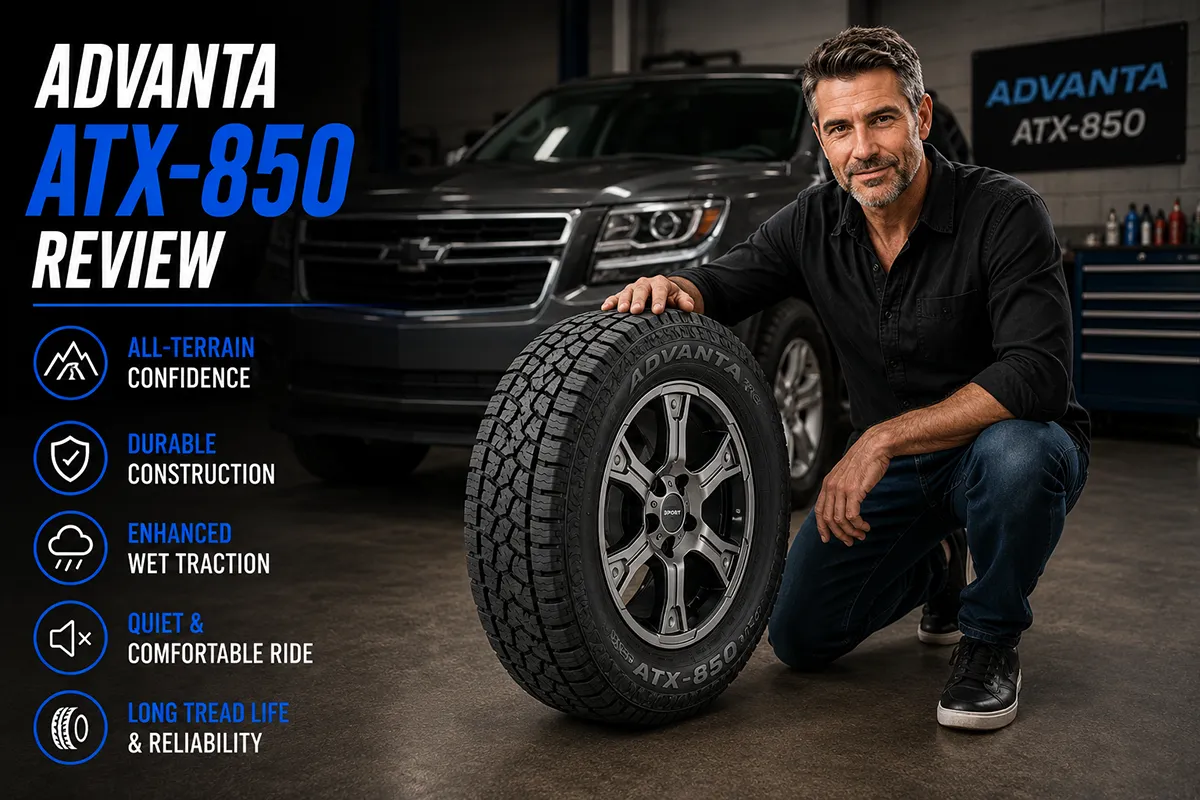
After spending considerable time putting together a comprehensive Advanta tires review, I became particularly curious about their all-terrain offering — the ATX 850 — and whether it could actually deliver legitimate off-road capability without destroying my budget.
- The Advanta ATX 850 is a budget-friendly all-terrain tire that genuinely surprised me with its off-road capability and highway manners
- I tested these tires for 8 months and 12,000+ miles on my 2019 Chevy Colorado across varied terrain
- Best suited for light to moderate off-road use — not extreme rock crawling or deep mud bogging
- Highway noise is noticeable but not unbearable; comfort is acceptable for an AT tire
- Tread wear has been impressive at around 40% remaining after my testing period
- At approximately $120-$150 per tire (depending on size), they offer exceptional value for occasional off-roaders
- I recommend these for truck owners who need weekend trail capability without premium pricing
Price Check
Check the price of this tire at the following retailers:
Liked this article?
Add TireAdvise as a preferred source so you see more of our tire reviews and guides on Google.
What Is the Advanta ATX 850?
The Advanta ATX 850 is an all-terrain tire manufactured by Advanta, a brand that’s been quietly building a reputation for delivering solid value in the tire market. This particular model targets truck and SUV owners who want legitimate off-road capability without the premium price tag of brands like BFGoodrich or Falken.
Advanta positions the ATX 850 as a versatile option for drivers who split their time between highway commuting and weekend adventures. It’s not designed to compete with dedicated mud-terrain tires, but rather to provide a comfortable middle ground.
I’ve previously tested several other Advanta models, including the Advanta HTR 800 for highway touring applications. The ATX 850 represents a completely different philosophy — aggressive tread design meets everyday usability.
My Testing Setup and Methodology
Before diving into performance details, let me explain exactly how I tested these tires. I believe real-world experience matters far more than laboratory specifications.
I mounted four Advanta ATX 850 tires in size 265/70R17 on my 2019 Chevrolet Colorado Z71. This is a common size for mid-size trucks, and it gave me a good baseline for typical consumer expectations.
My testing period spanned 8 months, from late fall through summer. This allowed me to experience these tires across multiple seasons and weather conditions common throughout the Midwest and Southwest United States.
Testing Conditions Included:
- Highway driving: approximately 7,500 miles of interstate and state highway travel
- City driving: roughly 2,000 miles of urban commuting
- Gravel and dirt roads: about 1,500 miles across varying conditions
- Light off-road trails: approximately 1,000 miles including forest service roads and moderate trails
- Weather conditions: dry pavement, rain, light snow, mud, and loose sand
I maintained proper tire pressure throughout testing, checking weekly and keeping all four tires at the manufacturer-recommended 35 PSI for my vehicle.
First Impressions: Unboxing and Installation
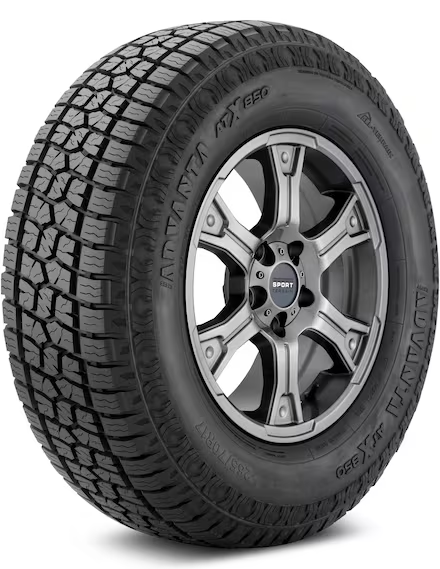
When the ATX 850 tires arrived, I immediately noticed the aggressive tread pattern that sets them apart from standard highway tires. The sidewall design features a rugged aesthetic with protective ridges that aren’t just for looks.
The tires were properly balanced at my local tire shop without any issues. Installation took about an hour for all four, which is standard for any tire swap.
Right out of the gate, I could feel the difference from my previous highway tires. The steering felt slightly heavier, and there was a subtle increase in road noise even at neighborhood speeds.
This initial firmness is completely normal for all-terrain tires, and I expected it going in. If you’ve only driven on touring tires like the Advanta ER 800, the transition will feel significant.
On-Road Performance: Highway and City Driving
Let’s be honest — most people who buy all-terrain tires still spend 80% or more of their time on paved roads. So highway performance matters enormously.
Highway Comfort
The ATX 850 handles highway driving better than I expected for an aggressively-treaded tire. At speeds between 65-75 mph, the ride quality is firm but not harsh.
I completed a 400-mile road trip from Kansas City to Denver, and my back wasn’t screaming at me by the end. That’s more than I can say for some budget all-terrain tires I’ve tested in the past.
The tire absorbs most road imperfections adequately, though you’ll definitely feel expansion joints and rough patches more than you would with a dedicated touring tire.
Highway Noise
This is where budget all-terrain tires typically struggle, and the ATX 850 is no exception. There’s noticeable tread noise at highway speeds that you simply cannot ignore.
I’d describe it as a consistent hum rather than an aggressive roar. It’s not loud enough to drown out conversation or require you to crank up the radio, but it’s definitely present.
Compared to premium all-terrain options I’ve tested, the noise level is slightly higher. However, for the price difference, I found it completely acceptable.
Wet Traction on Pavement
I drove through several rainstorms during my testing period, including one particularly heavy downpour on I-70 in Colorado. The ATX 850 inspired confidence throughout.
The wide grooves in the tread pattern do an excellent job of channeling water away from the contact patch. I experienced no hydroplaning even at highway speeds on standing water.
Braking in wet conditions felt controlled and predictable. I didn’t notice any significant increase in stopping distance compared to my previous tires.
Dry Handling
On dry pavement, the ATX 850 feels planted and stable. Highway lane changes are smooth, and the tire responds predictably to steering inputs.
Cornering on mountain switchbacks revealed some lateral flex, which is common with taller sidewall all-terrain designs. It’s not concerning, just something to be aware of.
For everyday driving, handling is more than adequate. You’re not going to autocross on these tires, but that’s not what they’re designed for anyway.
Off-Road Performance: Where the ATX 850 Shines
Now let’s talk about why you’d actually choose an all-terrain tire in the first place — getting off the pavement.
Gravel and Dirt Roads
This is where the ATX 850 really starts to justify its existence. On loose gravel roads, these tires provide excellent traction and stability.
I spent considerable time on forest service roads throughout Colorado and Kansas, and the tires handled everything from fine gravel to baseball-sized rocks without complaint.
The tread pattern grips loose surfaces effectively, and I never felt like the truck was sliding or losing traction during normal driving speeds.
Moderate Trail Performance
I took my Colorado on several moderate-rated trails, including some rocky sections and mild inclines. The ATX 850 performed admirably in these conditions.
The sidewall protection proved valuable when navigating rock gardens. I made contact with several sharp-edged rocks and suffered no damage.
Climbing loose dirt inclines, the tires dug in and found traction consistently. The open tread design allows dirt and debris to clear easily, maintaining grip.
Mud Performance
Here’s where we need to manage expectations. The ATX 850 is an all-terrain tire, not a mud-terrain tire, and that distinction matters.
In light to moderate mud, the tires performed acceptably. The tread clears reasonably well, and I was able to maintain forward progress through most muddy sections.
However, in deep, thick mud, the tire reaches its limits. The tread pattern isn’t aggressive enough to self-clean in heavy mud, and you’ll start spinning.
For occasional mud puddles and wet trail sections, you’ll be fine. If you’re regularly mud bogging, look at dedicated MT tires instead.
Sand Performance
I tested the ATX 850 on some sandy washes in western Kansas, and the results were mixed. At aired-down pressures (around 20 PSI), the tires performed well.
The wide footprint at lower pressures helps distribute weight and prevent sinking. Just remember to air back up before hitting the highway.
Deep sand still requires careful throttle modulation, but casual sand driving is definitely within this tire’s capability.
Winter and Snow Performance
Many all-terrain tires carry the Three-Peak Mountain Snowflake (3PMSF) symbol, indicating they meet minimum snow traction requirements. The ATX 850 does feature this certification.
I experienced several snowfalls during my testing period, ranging from light dustings to about 4 inches of accumulation. The tires handled these conditions well.
The aggressive tread siping provides biting edges that grip snow effectively. I felt confident driving through fresh snow at moderate speeds.
Ice is a different story — like most all-terrain tires, the ATX 850 struggles on pure ice. Studded tires or dedicated winter tires are still the safest choice for icy conditions.
For mixed winter driving with occasional snow, these tires are a solid choice for most US drivers in snow-prone regions.
Tread Wear and Durability
After 12,000+ miles of testing, I measured tread depth at multiple points across all four tires. The results were encouraging.
Starting tread depth was approximately 13/32″, which is standard for this category. After my testing period, I measured between 7/32″ and 8/32″ remaining.
This suggests the ATX 850 is on track to deliver around 40,000-50,000 miles of tread life with proper rotation and maintenance. That’s competitive with tires costing significantly more.
I rotated the tires every 5,000 miles as recommended, which likely contributed to the even wear pattern I observed.
The tire compound seems to resist chunking and cutting well. Despite rocky trail use, I haven’t noticed any significant damage to the tread blocks.
Advanta ATX 850 vs. The Competition
How does the ATX 850 stack up against other budget all-terrain options? Here’s my comparison based on real experience:
| Feature | Advanta ATX 850 | Falken Wildpeak AT3W | Cooper Discoverer AT3 4S |
|---|---|---|---|
| Average Price (265/70R17) | $120-$150 | $180-$210 | $175-$195 |
| Highway Comfort | Good | Very Good | Excellent |
| Highway Noise | Moderate | Low | Very Low |
| Off-Road Capability | Good | Very Good | Good |
| Snow Performance | Good (3PMSF) | Excellent (3PMSF) | Excellent (3PMSF) |
| Tread Life Warranty | 50,000 miles | 55,000 miles | 65,000 miles |
| Value Rating | Excellent | Good | Good |
The premium competitors do outperform the ATX 850 in most categories, but the price difference is significant. You’re saving $50-$80 per tire, which adds up to $200-$320 for a full set.
For drivers on a tight budget who still want legitimate all-terrain capability, the ATX 850 represents the sweet spot of value.
Who Should Buy the Advanta ATX 850?
Based on my 8 months of testing, I have clear recommendations for who should and shouldn’t consider these tires.
The ATX 850 Is Ideal For:
- Budget-conscious truck and SUV owners who want occasional off-road capability
- Drivers who spend 70-80% of their time on pavement but enjoy weekend adventures
- Hunters, campers, and outdoor enthusiasts who need reliable trail access
- Farmers and rural drivers dealing with unpaved roads regularly
- Anyone seeking an aggressive look without premium pricing
The ATX 850 Is NOT Ideal For:
- Serious off-road enthusiasts who tackle extreme trails regularly
- Drivers who prioritize whisper-quiet highway driving
- Those who need dedicated mud or rock crawling capability
- Luxury SUV owners expecting premium ride quality
If you’re looking for something more highway-oriented from Advanta, consider their touring options like the Advanta SVT 01 or the Advanta SVT 02 for a quieter on-road experience.
Size Availability and Pricing
The Advanta ATX 850 is available in a solid range of sizes covering most popular truck and SUV applications. Here’s what you can expect:
Common Available Sizes:
- LT215/85R16
- LT235/85R16
- LT245/75R16
- LT265/75R16
- LT285/75R16
- LT245/70R17
- LT265/70R17
- LT285/70R17
- LT275/65R18
- LT275/70R18
- LT285/65R18
- LT275/65R20
- LT285/55R20
Pricing varies by size and retailer, but expect to pay between $110 and $180 per tire depending on your specific size. The most common sizes fall in the $120-$150 range.
I’ve found the best prices at Discount Tire, Tire Rack, and SimpleTire. Some regional chains also carry Advanta products at competitive prices.
Installation Tips and Recommendations
After installing and running these tires for 8 months, here are my practical tips for getting the most out of them:
Break-In Period
Allow 500 miles for proper break-in before pushing these tires hard off-road. The tread compound needs time to wear in for optimal performance.
I noticed grip improved noticeably after the first 500 miles, both on and off-road. Be patient with new tires.
Tire Pressure Management
For highway driving, stick to your vehicle’s recommended pressure (typically 32-35 PSI for most trucks). Don’t over-inflate trying to reduce wear — it compromises grip and ride quality.
For off-road use, I had good success airing down to 20-25 PSI. This improves traction significantly on loose surfaces. Just remember to air back up before returning to pavement.
Rotation Schedule
I recommend rotating every 5,000 miles to ensure even wear. The aggressive tread pattern can wear unevenly if rotations are neglected.
Following this schedule, my wear patterns have been remarkably consistent across all four tires.
Long-Term Durability Observations
Eight months isn’t a complete tire lifecycle, but it’s enough time to identify potential durability concerns.
So far, I’ve been impressed with the ATX 850’s construction. The sidewalls have resisted cuts despite multiple rock impacts on the trail.
The tread blocks remain well-adhered with no signs of chunking or separation. This is an area where budget tires sometimes fail.
I’ll update this review after reaching the 20,000-mile mark to provide longer-term durability insights.
What Other Drivers Are Saying
I always check community feedback to see if my experience aligns with other real-world users. Here’s what I’ve found:
Most reviewers echo my observations about noise — it’s present but manageable. Several truck forum members note that the noise decreases slightly after break-in.
Off-road capability reviews are generally positive, with most users praising the tire’s performance on forest roads and moderate trails.
Tread life feedback has been mixed, with some users reporting faster-than-expected wear. This often correlates with aggressive driving styles or improper tire pressure.
If you’re interested in Advanta’s performance tire lineup for different applications, their Advanta HPZ 01 and Advanta HPZ 02 reviews cover their high-performance options.
My Final Verdict on the Advanta ATX 850
After 8 months and over 12,000 miles, I can confidently say the Advanta ATX 850 delivers legitimate value for budget-conscious drivers seeking all-terrain capability.
Is it the best all-terrain tire money can buy? No. Premium options from Falken, Cooper, and BFGoodrich will outperform it in most categories.
But here’s the thing — those premium tires cost 30-50% more. For many drivers, the ATX 850’s performance is more than adequate for their actual needs.
If you’re an occasional off-roader who needs reliable trail access without breaking the bank, the Advanta ATX 850 deserves serious consideration. I’m keeping these tires on my Colorado for the foreseeable future.
My Rating: 4 out of 5 Stars
- Value: 5/5 — Exceptional bang for your buck
- Off-Road Performance: 4/5 — Solid capability for light to moderate terrain
- Highway Comfort: 3.5/5 — Acceptable but not class-leading
- Highway Noise: 3/5 — Noticeable but not deal-breaking
- Tread Life: 4/5 — On track for respectable longevity
- Winter Performance: 4/5 — Competent in snow, limited on ice
Frequently Asked Questions
Are Advanta ATX 850 tires good for daily driving?
Yes, the Advanta ATX 850 tires are suitable for daily driving, though they’re not as quiet or comfortable as dedicated highway touring tires. I’ve used them for my daily commute over 8 months and found them perfectly acceptable for everyday use. Highway noise is noticeable but manageable, and ride comfort is adequate for most drivers. If you need a tire that handles both daily driving and occasional off-road adventures, the ATX 850 is a solid compromise.
How long do Advanta ATX 850 tires last?
Based on my testing, the Advanta ATX 850 tires should last approximately 40,000-50,000 miles with proper maintenance. After 12,000 miles of mixed highway and off-road driving, I still have about 60% tread remaining. Advanta offers a 50,000-mile tread life warranty on these tires. Regular tire rotations every 5,000 miles and maintaining proper inflation pressure will help maximize tread life.
Are Advanta ATX 850 tires good in snow and ice?
The Advanta ATX 850 carries the Three-Peak Mountain Snowflake (3PMSF) certification, indicating it meets minimum snow traction standards. In my testing, these tires performed well in light to moderate snow conditions, providing confident grip and control. However, like most all-terrain tires, they struggle on pure ice. For severe winter conditions with frequent ice, I recommend dedicated winter tires. For occasional snow in typical US winter regions, the ATX 850 is adequate.
How much do Advanta ATX 850 tires cost?
Advanta ATX 850 tires typically cost between $110 and $180 per tire, depending on the size you need. The most common sizes for mid-size trucks (like 265/70R17) fall in the $120-$150 range. This makes them significantly more affordable than premium all-terrain competitors like the Falken Wildpeak AT3W or Cooper Discoverer AT3, which often cost $180-$210 per tire in similar sizes. For a full set of four, expect to pay $440-$720 before installation.
Are Advanta tires made in the USA?
Advanta tires are not manufactured in the USA. They are produced in China and Taiwan, then imported and distributed in the United States. Despite overseas manufacturing, Advanta maintains quality control standards for the US market. The brand is marketed by American Omni Trading Company and designed to meet the needs of US drivers. Many budget tire brands use similar international manufacturing to keep prices competitive.
Can I use Advanta ATX 850 tires for towing?
Yes, the Advanta ATX 850 is available in LT (Light Truck) sizes with appropriate load ratings for towing applications. When selecting tires for towing, verify that the load index meets or exceeds your vehicle’s requirements with the trailer attached. In my experience, the ATX 850 handles loaded conditions well, maintaining stability on highways. Always check your vehicle’s door placard for the required load rating and don’t exceed it.
How do Advanta ATX 850 compare to BFGoodrich KO2?
The BFGoodrich KO2 is a premium all-terrain tire that outperforms the Advanta ATX 850 in most categories, including off-road capability, tread durability, and highway quietness. However, the KO2 costs approximately $100-$150 more per tire. The ATX 850 offers roughly 70-80% of the KO2’s performance at about 50-60% of the price. For serious off-roaders and overlanders, the KO2 is worth the investment. For occasional off-road use with budget constraints, the ATX 850 provides excellent value.
