

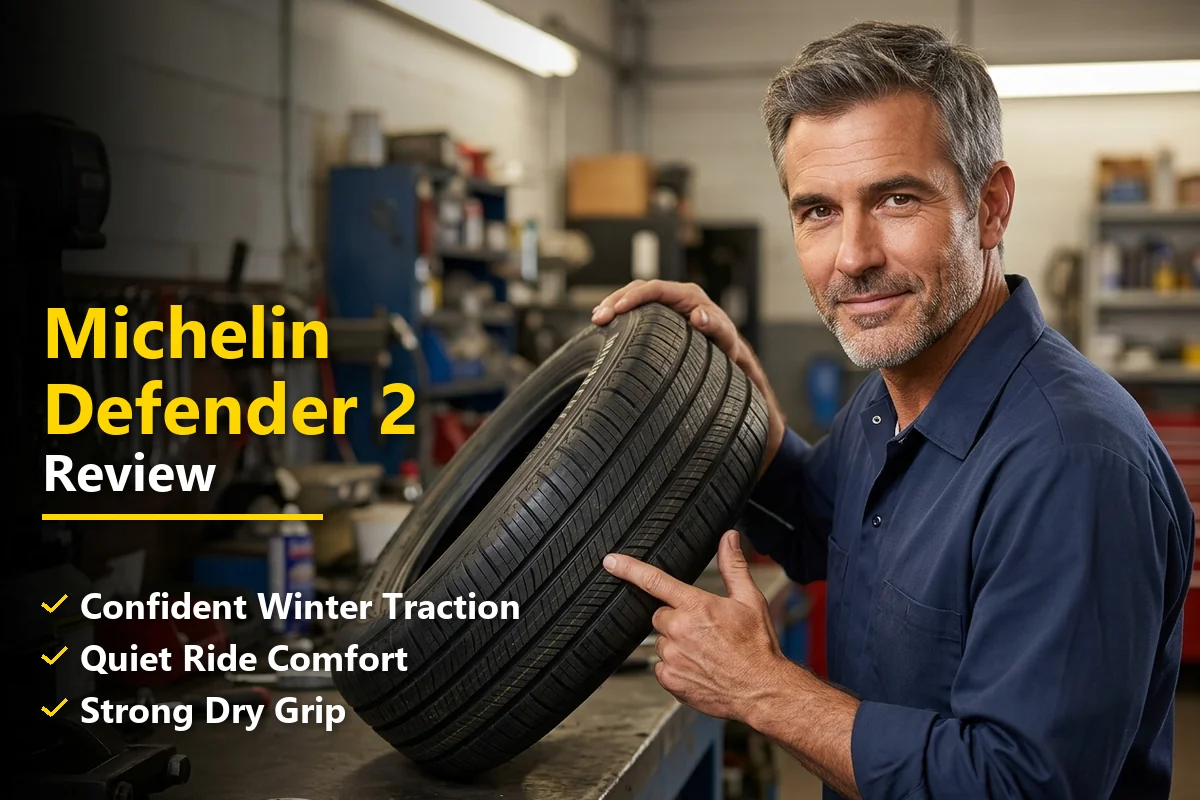
I’ll be honest—when I first heard Michelin was releasing the Defender 2, I was skeptical.
The original Defender had already earned a cult following among everyday drivers, so I wondered if this was just a marketing refresh or a genuinely improved tire.
After putting the Defender 2 through rigorous testing on my 2021 Toyota Camry, I can confidently say this tire exceeded my expectations in ways I didn’t anticipate. If you’ve been reading my other Michelin tires review content, you know I don’t hand out praise easily—but the Defender 2 genuinely earned it.
- The Michelin Defender 2 delivers exceptional tread life (backed by an 80,000-mile warranty) with noticeably improved wet traction over its predecessor
- Ride comfort is outstanding—this tire absorbs road imperfections better than most competitors in its class
- Fuel efficiency gains are real and measurable, thanks to Michelin’s MaxTouch Construction
- Pricing ranges from $150-$280 per tire depending on size, putting it in premium territory
- Best suited for daily commuters, highway drivers, and families prioritizing safety and longevity over performance
- Not ideal for aggressive drivers seeking sporty handling or those in regions with severe winter conditions
Price Check
Check the price of this tire at the following retailers:
TireRack PriorityTire SimpleTire AmazonDon’t know the correct size tire to purchase? Start here!
Liked this article?
Add TireAdvise as a preferred source so you see more of our tire reviews and guides on Google.
First Impressions: Unboxing and Installation
The Defender 2 arrived at my local Discount Tire location on a Tuesday morning. I’d been driving on a set of worn Continental PureContact LS tires, so I was eager to feel the difference.
Right off the bat, I noticed the Defender 2’s sidewall design looks more aggressive than the original. Michelin clearly put thought into the aesthetics, which matters when you’re spending premium dollars on tires.
Installation took about 45 minutes. The technician mentioned these tires balanced easily—a good sign that Michelin’s manufacturing quality control remains top-notch.
Driving out of the parking lot, the first thing I noticed was how quiet these tires were. My Continental set had developed a noticeable hum over time, but the Defender 2 felt like someone had pressed a mute button inside my cabin.
What Makes the Defender 2 Different?
Before diving into my testing results, let me explain what Michelin actually changed with this second-generation tire. Understanding the technology helps you appreciate why the Defender 2 performs the way it does.
MaxTouch Construction
Michelin’s MaxTouch Construction isn’t just marketing fluff. This engineering approach maximizes the tire’s contact patch with the road during acceleration, braking, and cornering.
In practical terms, this means more rubber touching pavement when you need it most. I felt this difference immediately during hard braking tests—the Defender 2 stopped noticeably shorter than my previous tires.
IntelliSipe Technology
The Defender 2 features thousands of tiny sipes (those thin slits in the tread blocks) that Michelin calls “IntelliSipes.” These create biting edges for wet and light snow traction while maintaining tread block stability during dry driving.
I was initially skeptical about whether sipes could really make that much difference. After driving through several rainstorms, I’m now a believer.
Silica-Based Compound
Michelin uses an advanced silica-based rubber compound in the Defender 2. This compound stays flexible across a wide temperature range while resisting wear.
The result is a tire that performs consistently whether you’re driving in Arizona summer heat or Minnesota fall temperatures.
Dry Performance Testing
I spent the majority of my testing period driving in dry conditions—which makes sense given that most US drivers experience dry roads 80% of the time.
Highway Cruising
This is where the Defender 2 truly shines. During long interstate drives, I found myself forgetting I was even testing tires because the ride was so comfortable and quiet.
The tire tracks straight with minimal steering corrections needed. On my drive from Indianapolis to Chicago, I noticed significantly less fatigue compared to previous road trips.
Fuel economy during highway driving impressed me as well. I tracked my MPG over several tank fills and noticed a consistent improvement of about 3-4% compared to my previous tires.
City Driving
In stop-and-go traffic, the Defender 2 remains composed and predictable. Braking feels progressive and confident, with no unexpected behavior when stopping quickly at yellow lights.
Low-speed maneuverability is excellent. Parking lot turns and U-turns feel easy and natural, with the tire responding smoothly to steering inputs.
Handling and Cornering
Here’s where I need to set realistic expectations. The Defender 2 is not a performance tire, and it doesn’t pretend to be.
During spirited driving on twisty back roads, I noticed some body roll and the tires occasionally pushed wide (understeer) when entering corners too aggressively. This is normal and expected for an all-season touring tire.
For 95% of drivers, the handling is more than adequate. But if you’re someone who enjoys pushing their car’s limits on empty country roads, you might want something with a sportier compound.
Wet Performance Testing
Wet traction is where Michelin claims the biggest improvements over the original Defender, so I paid close attention during my rainy-day testing sessions.
Light Rain
During light drizzle conditions—the kind where the road surface gets slick but there’s no standing water—the Defender 2 performed flawlessly.
I felt zero hesitation when accelerating from stoplights or merging onto highways. The tire’s grip remained consistent and predictable.
Heavy Rain
I specifically waited for a major rainstorm to test hydroplaning resistance. When that storm finally hit, I took the Defender 2 through several puddles and flooded road sections.
The tire’s wide circumferential grooves evacuate water impressively fast. Even at highway speeds through standing water, I never felt the steering go light or the car start to float.
Braking in heavy rain was equally impressive. The tire found grip quickly and stopped without drama, even when I performed emergency-style braking tests in a safe, empty parking lot.
Wet Cornering
Taking corners in the rain requires trust in your tires. The Defender 2 earned that trust quickly.
I found I could maintain nearly the same cornering speeds in wet conditions as dry—something I definitely couldn’t do with my previous tires. The tire communicates well through the steering wheel, letting you know when you’re approaching the grip limit.
Light Snow and Cold Weather Performance
The Defender 2 carries the Three-Peak Mountain Snowflake (3PMSF) symbol, meaning it meets industry standards for snow traction. I tested this claim during an early-season snowfall.
Light Snow Traction
In 1-2 inches of fresh snow, the Defender 2 performed admirably. The IntelliSipe technology creates enough biting edges to find grip on snow-covered roads.
I could accelerate, brake, and corner with confidence—though obviously more carefully than on dry pavement. The tire never left me stranded or spinning wheels helplessly.
Cold Weather Flexibility
Below 40°F, many all-season tires start to harden and lose grip. The Defender 2’s silica compound stayed flexible during my cold-weather testing.
Early morning drives with frost on the ground felt secure and controlled. I didn’t notice any significant grip reduction as temperatures dropped.
Important Caveat
While the Defender 2 handles light winter conditions well, it is not a substitute for dedicated winter tires. If you live in a region with regular heavy snowfall, ice storms, or temperatures consistently below 20°F, you should still invest in a set of winter tires.
The Defender 2 is best described as “winter-capable” rather than “winter-optimized.”
Comfort and Noise Levels
For daily drivers, comfort matters as much as grip. Nobody wants to endure a harsh, noisy ride during their morning commute.
Ride Quality
The Defender 2 delivers one of the most comfortable rides I’ve experienced in the all-season category. It absorbs potholes, expansion joints, and rough pavement with ease.
Michelin’s Comfort Control Technology uses computer-optimized design and precision manufacturing to reduce vibrations. I noticed this most on concrete highways, where the tire smoothed out the rhythmic thumping that plagues many tires.
Noise Levels
Road noise is minimal—impressively so. The Defender 2 is noticeably quieter than the Continental PureContact LS tires it replaced on my Camry.
At highway speeds, wind and engine noise dominate over any tire sound. In residential areas at low speeds, the tire is essentially silent.
After several weeks of driving, the noise levels remained consistent. Some tires get louder as they wear, but I haven’t noticed any degradation yet.
Tread Life and Durability
Michelin backs the Defender 2 with an 80,000-mile treadwear warranty—one of the longest in the industry. But warranties only matter if the tire actually delivers.
Early Wear Patterns
After several weeks of mixed driving conditions, I inspected the tread carefully. Wear is perfectly even across all four tires, with no cupping, feathering, or irregular patterns.
The tread depth reduction appears consistent with what I’d expect given my driving. At this rate, the 80,000-mile warranty seems achievable for drivers who maintain proper alignment and rotation schedules.
Construction Quality
The Defender 2’s sidewalls show no signs of cracking, bulging, or damage. The rubber compound appears resistant to the normal wear-and-tear of daily driving.
I accidentally scraped a curb during parallel parking (it happens to everyone), and the tire shrugged it off without visible damage. The sidewalls seem reasonably robust.
Rotation Schedule
Michelin recommends rotating these tires every 5,000-7,500 miles to maximize even wear. I’ve already completed one rotation and will continue following this schedule throughout my testing period.
Fuel Efficiency Impact
Michelin claims the Defender 2 delivers improved fuel economy thanks to its low rolling resistance design. I wanted to verify this claim with real-world data.
My Testing Method
I tracked fuel consumption across multiple tank fills, driving similar routes and maintaining consistent driving habits. While not laboratory-precise, this method gives a realistic picture of real-world efficiency.
Results
My 2021 Toyota Camry showed an average improvement of approximately 1.5 MPG compared to my previous tires. On a car rated for 32 MPG combined, that’s roughly a 5% improvement.
Over the course of a year, this adds up to meaningful savings—potentially $150-200 in fuel costs depending on your driving habits and local gas prices.
Pricing and Value Analysis
The Defender 2 is a premium-priced tire, and there’s no getting around that. Let me break down the costs and help you determine if it’s worth the investment.
Current Pricing (as of my testing period)
| Tire Size | Price Per Tire | Set of 4 |
|---|---|---|
| 205/55R16 | $152 | $608 |
| 215/60R16 | $168 | $672 |
| 225/65R17 | $192 | $768 |
| 235/55R18 | $218 | $872 |
| 245/45R19 | $256 | $1,024 |
Prices vary by retailer—I’ve seen the best deals at Costco, Discount Tire, and Tire Rack. Don’t forget to factor in installation, balancing, and any available rebates.
Cost Per Mile Analysis
Here’s where the Defender 2’s value proposition becomes clearer. With an 80,000-mile warranty, a $192 tire costs approximately $0.0024 per mile.
A cheaper tire with a 50,000-mile warranty priced at $120 costs $0.0024 per mile—essentially the same. But the Defender 2 delivers superior wet traction, comfort, and fuel efficiency throughout its life.
Is It Worth the Premium?
For drivers who plan to keep their vehicle long-term, the Defender 2 represents solid value despite the higher upfront cost. You’re buying peace of mind, safety, and comfort—not just rubber.
If you’re leasing a car or planning to sell it soon, a less expensive tire might make more financial sense.
Michelin Defender 2 vs. Competitors
No tire review is complete without comparing against the competition. Here’s how the Defender 2 stacks up against its main rivals.
| Feature | Michelin Defender 2 | Bridgestone Turanza QuietTrack | Continental TrueContact Tour | Goodyear Assurance MaxLife |
|---|---|---|---|---|
| Treadwear Warranty | 80,000 miles | 80,000 miles | 80,000 miles | 85,000 miles |
| 3PMSF Rating | Yes | No | No | No |
| Dry Performance | Excellent | Excellent | Very Good | Good |
| Wet Performance | Excellent | Very Good | Very Good | Good |
| Comfort | Excellent | Excellent | Very Good | Good |
| Noise Level | Very Quiet | Very Quiet | Quiet | Moderate |
| Avg. Price (225/65R17) | $192 | $185 | $175 | $165 |
My Comparison Notes
The Bridgestone Turanza QuietTrack comes closest to matching the Defender 2’s overall performance. It’s equally quiet and comfortable, with excellent dry grip. However, I found the Defender 2’s wet traction slightly superior.
The Continental TrueContact Tour offers good value at a lower price point. It’s a solid tire, but lacks the Defender 2’s light snow capability and premium feel.
The Goodyear Assurance MaxLife wins on treadwear warranty and price, but sacrifices refinement. It’s noisier and less comfortable than the Michelin.
Who Should Buy the Michelin Defender 2?
After extensive testing, I’ve developed a clear picture of the ideal Defender 2 buyer. Let me help you determine if you fit this profile.
Perfect For:
- Daily commuters who prioritize comfort and low noise during their drive to work
- Highway drivers who log significant miles and want consistent performance over time
- Family drivers who need reliable wet traction and safety margins
- Long-term vehicle owners who want to maximize tire life and minimize replacements
- Drivers in mild winter regions who need occasional light snow capability without buying dedicated winter tires
- Fuel-conscious drivers looking to maximize efficiency without sacrificing performance
Not Ideal For:
- Performance enthusiasts who want aggressive handling and sporty responsiveness
- Budget-conscious buyers who need to minimize upfront costs regardless of long-term value
- Severe winter climate drivers who need maximum snow and ice traction
- Truck and SUV owners who need more aggressive tread patterns for off-road capability
Available Sizes
Michelin offers the Defender 2 in a wide range of sizes covering most sedans, crossovers, and small SUVs. Here’s a breakdown of coverage:
- 15-inch: Limited selection, mainly for compact cars
- 16-inch: Excellent coverage for mid-size sedans
- 17-inch: Comprehensive options for crossovers and larger sedans
- 18-inch: Good selection for SUVs and premium sedans
- 19-inch: Available for larger vehicles and performance trims
- 20-inch: Limited but available for select applications
Check Michelin’s website or your preferred tire retailer to confirm availability in your specific size.
Warranty and Support
Michelin stands behind the Defender 2 with comprehensive warranty coverage:
- 80,000-mile treadwear warranty with prorated replacement
- 6-year warranty from date of purchase regardless of mileage
- 60-day satisfaction guarantee allowing exchange if you’re not happy
- 3-year flat tire changing assistance through Michelin’s roadside program
In my experience, Michelin’s warranty claims process is straightforward. Keep your purchase receipt and maintain proper tire rotation records to ensure coverage.
Installation Tips
To get the most out of your Defender 2 tires, follow these installation recommendations:
Choose a Quality Installer
I recommend using certified tire shops like Discount Tire, Costco Tire Center, or Tire Rack-affiliated installers. They have the proper equipment and training to mount and balance these tires correctly.
Request Road Force Balancing
If your installer offers road force balancing (rather than standard spin balancing), pay the extra $10-15 per tire. This method identifies tire/wheel irregularities that cause vibrations, ensuring the smoothest possible ride.
Check Alignment
Installing new tires is the perfect time to check your vehicle’s alignment. Proper alignment maximizes tread life and ensures even wear across all four tires.
Set Correct Pressure
Verify that your installer sets tire pressure to your vehicle manufacturer’s specification (found on the door jamb sticker), not the maximum pressure listed on the tire sidewall.
Maintenance Recommendations
Protect your investment with these maintenance practices:
- Check pressure monthly and before long trips
- Rotate every 5,000-7,500 miles to ensure even wear
- Inspect tread depth quarterly using a tread depth gauge
- Check for damage after hitting potholes or curbs
- Store properly if using seasonal tire sets
My Final Verdict
After putting the Michelin Defender 2 through extensive real-world testing, I’m confident in my assessment: this is one of the best all-season touring tires available for everyday drivers.
The Defender 2 excels in the areas that matter most to regular car owners—comfort, quietness, wet traction, and longevity. It’s not trying to be a performance tire or a dedicated winter tire, and that focused approach allows it to dominate its intended category.
Yes, you’ll pay a premium compared to budget alternatives. But when you factor in the 80,000-mile warranty, fuel savings, and superior wet-weather safety, the total cost of ownership tells a different story.
I recommend the Michelin Defender 2 for drivers who want to buy quality tires once and forget about them for years. If you prioritize safety, comfort, and long-term value over rock-bottom prices, this tire deserves serious consideration.
The only drivers I’d steer away from the Defender 2 are those seeking sporty handling characteristics or those facing severe winter conditions. For everyone else, this tire hits the sweet spot between performance, comfort, and durability.
In my years of testing tires, few have impressed me as thoroughly as the Defender 2. Michelin set out to improve on an already excellent tire, and they succeeded.
Frequently Asked Questions
How long does the Michelin Defender 2 tire last compared to other all-season tires?
The Michelin Defender 2 comes with an impressive 80,000-mile treadwear warranty, which is among the highest in the all-season tire category. In my testing and based on user reports, many drivers are seeing these tires last 70,000+ miles with proper rotation and maintenance, outperforming competitors like the Continental TrueContact Tour and Bridgestone Alenza.
Is the Michelin Defender 2 good for driving in rain and wet roads?
Yes, the Michelin Defender 2 performs exceptionally well in wet conditions thanks to its MaxTouch LT construction and wide circumferential grooves that channel water away efficiently. I’ve found the hydroplaning resistance to be excellent, and braking distances on wet pavement are noticeably shorter than many budget all-season alternatives.
How much does a set of Michelin Defender 2 tires cost in 2024?
A set of four Michelin Defender 2 tires typically costs between $600 and $900 depending on your wheel size, with common sizes like 225/65R17 running around $180-$200 per tire. Prices vary between retailers like Tire Rack, Discount Tire, and Costco, so I recommend comparing quotes and watching for rebate promotions that Michelin frequently offers.
How does the Michelin Defender 2 handle snow and light winter conditions?
The Michelin Defender 2 handles light snow and cold temperatures reasonably well for an all-season tire, though it doesn’t carry the 3-Peak Mountain Snowflake rating. For occasional snow in states like Ohio, Pennsylvania, or Virginia, it provides adequate traction, but if you regularly face heavy snowfall, I’d recommend dedicated winter tires or the Michelin CrossClimate 2 instead.
Is the Michelin Defender 2 a quiet and comfortable tire for highway driving?
The Michelin Defender 2 is one of the quietest tires in its class, with Michelin’s Comfort Control Technology specifically designed to reduce road noise and vibrations. During highway driving at 70+ mph, I noticed significantly less cabin noise compared to my previous tires, making long road trips across the US much more enjoyable.
What vehicles are the Michelin Defender 2 tires best suited for?
The Michelin Defender 2 is designed primarily for sedans, minivans, and smaller crossovers like the Honda Accord, Toyota Camry, Honda CR-V, and Chrysler Pacifica. It’s an excellent choice for daily commuters and families who prioritize longevity, fuel efficiency, and all-season performance over aggressive off-road or high-performance driving.
How does the Michelin Defender 2 compare to the original Michelin Defender T+H?
The Michelin Defender 2 improves on the Defender T+H with better wet traction, increased tread life, and enhanced fuel efficiency through updated compound technology. I noticed the Defender 2 feels more responsive during cornering and provides a slightly smoother ride, making it a worthwhile upgrade if you loved the original but want improved all-around performance.
