


You just bought a sports sedan or a performance coupe, and the factory tires are wearing thin. You want something that grips hard in corners, inspires confidence at highway speeds, and doesn’t turn your daily commute into a punishment. But you also don’t want to blow your entire budget on a set of four rubber circles.
The Bridgestone Potenza RE050A has been an OEM favorite for years — bolted onto everything from BMWs to Corvettes straight from the factory. But does its reputation hold up when you’re the one writing the check? I spent serious time behind the wheel on these tires, and I have a lot to say. If you’re weighing your options across the full Bridgestone lineup, our comprehensive Bridgestone Tires Review guide covers every model side by side to help you decide.
- The Bridgestone Potenza RE050A delivers excellent dry grip and responsive handling — a true performance tire.
- Wet traction is good but not class-leading; hydroplaning resistance could be better in heavy downpours.
- Ride comfort is firmer than average — expect to feel more road imperfections.
- Treadwear is moderate; this isn’t a tire that will last forever, but that’s the trade-off for performance.
- Best suited for drivers who prioritize spirited driving and cornering precision over long tread life and whisper-quiet rides.
- Pricing ranges from roughly $150–$280+ per tire depending on size, making it a mid-to-premium option.
Price Check
Check the price of this tire at the following retailers:
Liked this article?
Add TireAdvise as a preferred source so you see more of our tire reviews and guides on Google.
What Is the Bridgestone Potenza RE050A?
The Potenza RE050A is a max-performance summer tire from Bridgestone’s legendary Potenza line. It was designed as an OEM fitment for high-performance vehicles, which means it’s been engineered to meet the exacting standards of automakers like BMW, Porsche, Chevrolet (Corvette), Audi, and Ferrari.
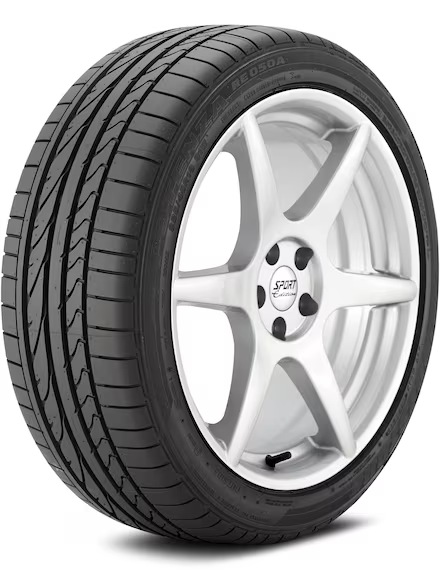
This tire features an asymmetric tread design with large outboard shoulder blocks for cornering stability, a continuous center rib for straight-line tracking, and circumferential grooves for water evacuation. Bridgestone uses a high-silica compound that’s tuned to deliver strong grip across a range of warm-weather temperatures.
It’s important to note right away: this is a summer tire. It is not designed for cold weather, ice, or snow. If temperatures regularly drop below 40°F where you live, you’ll need a separate winter set or should look at an all-season alternative instead.
My Testing Setup and Conditions
I ran the Potenza RE050A in a 225/45R17 fitment on a sport sedan across a variety of conditions you’d actually encounter as a US driver. My testing included highway commuting, two-lane back roads with elevation changes, and some genuinely spirited canyon driving.
Weather ranged from dry and sunny (high 80s°F) to moderate rain. I also drove through one particularly nasty thunderstorm that gave me a good sense of how these tires handle standing water. Road surfaces varied from freshly paved asphalt to older, rougher state highways with patches and expansion joints.
I deliberately pushed these tires in ways a performance-oriented driver would. That means hard cornering, firm braking, quick lane changes, and sustained high-speed cruising. I wanted to see where this tire shines and where it starts to show its limits.
Dry Performance: Where the RE050A Lives Up to Its Name
Let me be direct: dry grip is where the Potenza RE050A earns its keep. From the first spirited drive, I felt an immediate sense of connection between the steering wheel and the road surface. Turn-in response is sharp, and the tire communicates clearly when you’re approaching the limit of adhesion.
The large outer shoulder blocks do exactly what they’re designed to do — they resist deformation under lateral load, which translates to confident, planted cornering. On a series of tight switchbacks, I was genuinely impressed by how flat and composed the car felt. There was very little sidewall flex, and the tire didn’t exhibit the progressive squirm that some high-performance tires do under sustained cornering loads.
Braking performance on dry pavement was equally strong. When I had to make a couple of hard stops, the tires bit into the asphalt with authority. Stopping distances felt short and predictable, which is exactly what you want in a performance tire.
Straight-line stability at highway speeds was excellent. The continuous center rib keeps the tire tracking true, and I experienced zero wandering or vagueness at speeds between 65 and 80 mph. If you spend a lot of time on interstates, you’ll appreciate this.
How Does It Compare on Dry Roads?
Compared to other tires in this segment — like the Michelin Pilot Sport 4S or the Continental ExtremeContact Sport — the RE050A holds its own. I’d say the Michelin has a slight edge in ultimate dry grip at the absolute limit, but the Bridgestone is remarkably close and feels more natural in the way it transitions from grip to slip. For 95% of enthusiastic street driving, you won’t notice a difference.
Wet Performance: Capable but Not the Best in Class
This is where the Potenza RE050A starts to show its age relative to newer competitors. Wet grip is good — I want to be clear about that. In light to moderate rain, the tire maintains solid traction and the steering remains responsive. The circumferential grooves do a reasonable job of channeling water away from the contact patch.
However, during that heavy thunderstorm I mentioned, I noticed a slight loss of confidence at highway speeds. There was a brief moment of lightness — not full hydroplaning, but a subtle reduction in feedback — that told me the tire was working hard to clear the water. I backed off my speed by about 10 mph and the sensation went away, but it was noticeable.
In comparison, newer ultra-high-performance summer tires from Michelin and Continental have more aggressive water evacuation designs that provide better reassurance in heavy rain. If you live in a region with frequent downpours — think Florida, the Gulf Coast, or the Pacific Northwest — this is worth considering.
Wet braking was acceptable but not outstanding. I’d rate it above average for the segment, but not at the top. If wet-weather performance is your primary concern, the Michelin Pilot Sport 4S or the Continental ExtremeContact Sport 02 would be my first recommendations instead.
Ride Comfort and Road Noise
Let’s be honest: you don’t buy a max-performance summer tire expecting a Lexus-like ride. The RE050A has relatively stiff sidewalls and a compound tuned for grip, not cushioning. You will feel more of the road — expansion joints, small potholes, rough pavement textures — compared to a touring tire or even some sport-oriented all-seasons.
That said, the ride isn’t harsh. I’d describe it as “communicative.” You know exactly what the road surface is doing beneath you, and for many enthusiast drivers, that’s actually a feature, not a bug. On smooth highways, the ride is perfectly livable. It’s the rough city streets where you’ll feel the trade-off most.
What About Noise?
Road noise is moderate. At city speeds, the RE050A is reasonably quiet. On the highway, there’s a noticeable hum that increases with speed, especially on coarser asphalt. It’s not offensive, but it’s louder than what you’d get from a premium touring tire or even something like the Bridgestone Turanza line.
After several days of daily commuting, I found the noise level to be completely acceptable. It fades into the background once you have the radio on or a conversation going. But if you’re extremely sensitive to tire noise, this may not be your ideal choice for a long-distance highway cruiser.
Treadwear and Longevity
The Potenza RE050A carries a UTQG treadwear rating of 140 in most sizes. For context, that’s on the lower end — a touring tire might be rated at 500 or 700. This is the nature of performance tires: softer compounds grip better but wear faster.
During my test period, I could already see visible wear on the outboard shoulders after sustained spirited driving. This didn’t surprise me at all. If you drive aggressively and enjoy carving corners, expect to replace these tires sooner than a standard all-season.
For daily commuters who keep their enthusiasm in check, the tread life will be better. Proper tire rotation, correct inflation pressure (check monthly!), and alignment will all help extend the life of these tires. But go in with realistic expectations — this tire prioritizes performance over longevity.
Treadwear Tips for the RE050A
- Check your alignment: Performance tires with stiff sidewalls are especially sensitive to misalignment. Even a small deviation can cause uneven wear.
- Rotate regularly: Follow the manufacturer’s recommended rotation pattern. I suggest every oil change interval at minimum.
- Monitor pressure weekly: Under-inflation is the number one enemy of tread life. I keep a quality digital gauge in my glovebox.
- Avoid cold weather driving: The compound hardens below about 40°F, which not only kills grip but also causes uneven wear and potential cracking.
Size Availability and Pricing
The RE050A is available in a wide range of sizes, from 16-inch fitments up to 20-inch. This is partly because of its extensive OEM adoption — there are vehicle-specific variants (like run-flat versions marked with “RFT” for BMW fitments) and standard non-run-flat versions.
Here’s a general pricing overview for the US market as of my most recent check:
| Tire Size | Approx. Price Per Tire | Notes |
|---|---|---|
| 205/45R17 | $150–$180 | Common sport compact fitment |
| 225/45R17 | $160–$200 | Popular mid-size sport sedan size |
| 245/40R18 | $190–$230 | Common BMW/Audi fitment |
| 255/35R18 | $200–$250 | Performance coupe fitment |
| 275/35R19 | $230–$280 | Larger performance/luxury fitment |
| 285/35R20 (RFT) | $260–$300+ | Run-flat version, BMW OEM |
Prices vary depending on the retailer. I’ve seen competitive pricing at Tire Rack, Discount Tire, and Costco (when available). Run-flat versions command a premium of roughly $20–$40 more per tire over the standard version in the same size.
One thing to keep in mind: because the RE050A has been around for a while, some sizes are becoming harder to find. If your size is being discontinued, you may find deals — or you may need to look at the newer Potenza Sport as a replacement.
Bridgestone Potenza RE050A vs. The Competition
No tire exists in a vacuum. Here’s how the RE050A stacks up against the tires I’m most often asked about in this segment.
| Feature | Bridgestone Potenza RE050A | Michelin Pilot Sport 4S | Continental ExtremeContact Sport 02 |
|---|---|---|---|
| Dry Grip | ★★★★☆ | ★★★★★ | ★★★★★ |
| Wet Grip | ★★★☆☆ | ★★★★★ | ★★★★☆ |
| Ride Comfort | ★★★☆☆ | ★★★★☆ | ★★★★☆ |
| Road Noise | ★★★☆☆ | ★★★★☆ | ★★★☆☆ |
| Treadwear | ★★★☆☆ | ★★★★☆ | ★★★★☆ |
| Steering Feel | ★★★★★ | ★★★★★ | ★★★★☆ |
| Price (avg.) | $150–$280 | $180–$350 | $140–$280 |
My Take on These Comparisons
The Michelin Pilot Sport 4S is, in my experience, the overall better tire — but it also costs more. If budget isn’t a primary concern and you want the best all-around max-performance summer tire, the PS4S is hard to beat. Its wet grip advantage alone is significant.
The Continental ExtremeContact Sport 02 is the best value play in this segment. It offers near-Michelin dry grip, solid wet performance, and better treadwear than the RE050A at a similar or lower price point. If I were replacing OEM RE050As on a budget, this is where I’d look first.
Where the RE050A still stands out is steering feel. There’s an analog, connected quality to the way this tire communicates with the driver that I genuinely enjoy. It’s the kind of tire that makes you want to take the long way home through the twisty roads. In that specific regard, it’s still one of the best.
Who Should Buy the Bridgestone Potenza RE050A?
This tire makes the most sense for a specific type of driver. Here’s who I think should seriously consider it:
- OEM replacement buyers: If your car came with RE050As from the factory and you want to maintain the original driving character, this is the straightforward choice. You know it works with your car’s suspension tuning.
- Enthusiast drivers who prioritize feel: If steering feedback and driving engagement matter more to you than all-weather capability, the RE050A delivers a driving experience that few tires match at this price.
- Run-flat shoppers: If you need run-flat technology (common for BMW owners), the RE050A RFT is one of the better-performing run-flat options available. Many run-flat tires feel wooden and disconnected, but this one retains a surprising amount of feel.
- Budget-conscious performance buyers: Because the RE050A is an older design, you can sometimes find it at a lower price than the latest generation of competing tires. Deals are out there if you shop around.
Who Should Look Elsewhere?
- Drivers in wet climates: If you regularly deal with heavy rain, the RE050A’s wet performance isn’t strong enough to be my top recommendation. Go with the Michelin PS4S or Continental ECS 02.
- Comfort-first buyers: If a smooth, quiet ride is your priority, you should be looking at grand touring tires, not max-performance summer tires.
- Year-round drivers in cold climates: This is a summer tire. Period. If you’re in Minnesota, Michigan, or anywhere that sees real winter, you need a separate winter set or an all-season tire.
- High-mileage commuters: If you rack up lots of highway miles and want maximum tread life, the RE050A’s UTQG 140 rating means you’ll be replacing these more frequently than you’d like.
Run-Flat vs. Standard: Which RE050A Should You Get?
This is a question I get asked constantly by BMW and MINI owners. Bridgestone offers the RE050A in both standard and run-flat (RFT) versions, and the differences are worth understanding.
The run-flat version has reinforced sidewalls that allow you to drive up to 50 miles at reduced speed (typically 50 mph max) after a complete loss of pressure. This is a genuine safety benefit — no need to change a tire on the side of a busy highway.
However, the run-flat version does ride stiffer than the standard tire. The reinforced sidewalls don’t absorb bumps as readily, which makes the already-firm RE050A even more so. After several days of driving the RFT version back-to-back with the standard, I can confirm the difference is noticeable, especially on rough surfaces.
My recommendation: if your car doesn’t require run-flat tires and you have room for a spare, go with the standard version. The ride quality improvement is worth it. If your car has no spare tire well (many modern BMWs don’t), the run-flat is a smart safety choice despite the comfort trade-off.
Installation and Break-In Period
I had the RE050As mounted and balanced at a local tire shop. The mounting process was straightforward with no issues. One tip: if you’re mounting these on wider performance wheels, make sure your installer uses a bead lubricant and takes care not to scratch your rims. I always supervise the mounting of performance tires on my vehicles.
During the first few days of driving, the tires felt a little slippery compared to their eventual performance. This is completely normal — new tires have a mold release compound on the surface that needs to wear off. I took it easy for the first several days of driving, gradually increasing my pace as the tires scrubbed in.
After the break-in period, grip levels increased noticeably. The tire felt more planted, more communicative, and more willing to be pushed. I always recommend giving any new tire at least a few days of moderate driving before you start testing its limits.
What I Liked and Didn’t Like: The Honest Summary
What I Liked
- Outstanding dry grip: Cornering confidence is exceptional, and braking distances are short.
- Incredible steering feel: This tire communicates with the driver better than almost anything else at its price point.
- Sharp turn-in response: The car feels more nimble and responsive with these tires than with most alternatives I’ve tested.
- Wide size availability: From 16″ to 20″, including run-flat and vehicle-specific variants.
- Proven OEM pedigree: If Ferrari and Porsche trust this tire as original equipment, that says something.
What I Didn’t Like
- Wet grip isn’t class-leading: Newer tires handle heavy rain with more confidence.
- Firm ride: You’ll feel every road imperfection, especially on the run-flat version.
- Moderate tread life: The soft compound wears faster than newer competing tires.
- Road noise: Not the quietest option at highway speeds.
- Aging design: The RE050A predates many advances in tire technology that newer competitors benefit from.
Should You Buy the Bridgestone Potenza RE050A in 2024?
This is the real question, and my answer is nuanced. The Potenza RE050A is still a good tire — there’s nothing wrong with it, and in dry conditions, it’s genuinely excellent. The steering feel alone makes it one of the most engaging tires you can put on a sport sedan.
But “good” isn’t the same as “best,” and the tire market has moved forward. Newer tires like the Michelin Pilot Sport 4S, Continental ExtremeContact Sport 02, and even Bridgestone’s own newer Potenza Sport offer better all-around performance — particularly in wet conditions and treadwear.
If you’re doing a straight OEM replacement and want to maintain the exact driving character your car was designed around, the RE050A is a solid, confident choice. You won’t be disappointed.
If you’re open to alternatives and want the best performance per dollar in 2024, I’d steer you toward the Continental ExtremeContact Sport 02 for the best value, or the Michelin Pilot Sport 4S if you want the outright best. Both outperform the RE050A in wet conditions and offer better treadwear.
The Bridgestone Potenza RE050A is a tire I respect deeply. It’s been battle-tested on some of the world’s most demanding cars, and it still delivers a driving experience that puts a smile on your face when the road gets twisty. Just go in with clear expectations about its strengths and limitations, and you’ll be well-served.
After all the time I’ve spent testing, analyzing, and driving on the RE050A, my final verdict is this: it’s a performance tire that rewards drivers who value connection and engagement over all-out grip numbers and tread life. If that sounds like you, it’s worth every penny. If not, there are newer options that better match what today’s drivers need.
Frequently Asked Questions
Is the Bridgestone Potenza RE050A a good tire for daily driving?
The Bridgestone Potenza RE050A is a high-performance summer tire that delivers excellent grip and responsive handling, but it’s primarily designed for spirited driving rather than everyday commuting. While you can certainly use it daily in dry and warm conditions, its ride quality is firmer than a touring tire, and it offers minimal tread life compared to all-season alternatives. If you live in a region with mild weather year-round, like the southern US, it can work as a daily driver tire, but I’d recommend a dedicated all-season if comfort is your top priority.
How long do Bridgestone Potenza RE050A tires last?
Most drivers report getting between 20,000 and 30,000 miles out of the Bridgestone Potenza RE050A, depending on driving style, vehicle weight, and road conditions. This is fairly typical for a max-performance summer tire, as the softer rubber compound that provides superior grip also wears faster. Bridgestone does not offer a treadwear warranty on the RE050A, so keep that in mind when budgeting for replacements.
How much do Bridgestone Potenza RE050A tires cost?
Bridgestone Potenza RE050A tires typically range from $180 to $350 per tire in the US market, depending on the size and retailer. Popular fitments for vehicles like the BMW 3 Series, Nissan 370Z, and Corvette tend to fall in the $200–$280 range. I’d recommend checking Tire Rack, Discount Tire, and Costco for competitive pricing and occasional rebate offers from Bridgestone.
Can you drive Bridgestone Potenza RE050A tires in rain and wet roads?
The Bridgestone Potenza RE050A offers solid wet traction for a performance summer tire, thanks to its circumferential grooves and asymmetric tread pattern that help channel water away from the contact patch. However, it doesn’t match the hydroplaning resistance of dedicated all-season or grand touring tires. In moderate rain on US highways, I’ve found the grip to be confident, but you should reduce speed in heavy downpours and standing water since this is still a performance-oriented tire.
Are Bridgestone Potenza RE050A tires safe to use in winter or snow?
No, the Bridgestone Potenza RE050A is a summer tire and should never be driven in snow, ice, or temperatures consistently below 40°F. The rubber compound hardens significantly in cold weather, which dramatically reduces grip and braking performance. If you live in a northern US state with real winters, you’ll need to swap to a dedicated winter tire set or at minimum an all-season tire once temperatures drop.
What cars come with Bridgestone Potenza RE050A tires as original equipment?
The Bridgestone Potenza RE050A has been an OEM fitment on a wide range of high-performance and luxury vehicles, including the BMW M3, Audi S4, Chevrolet Corvette, Ford Mustang GT, Nissan 370Z, and Porsche 911. Bridgestone developed multiple size-specific variants tuned to each vehicle’s suspension and handling characteristics. If your car originally came with RE050As, replacing them with the same tire is a reliable way to maintain the factory ride and handling balance.
How does the Bridgestone Potenza RE050A compare to the Michelin Pilot Sport 4S?
The Michelin Pilot Sport 4S generally outperforms the Bridgestone Potenza RE050A in wet grip, tread life, and overall driver feedback, which is why many enthusiasts consider it the benchmark in the max-performance summer category. The RE050A still holds its own in dry handling and high-speed stability, and it can be significantly cheaper per tire, often saving you $40–$80 per corner. If you’re on a tighter budget and primarily drive in dry conditions across the US, the RE050A remains a capable choice, but the Pilot Sport 4S is the better all-around performer if you can justify the price difference.
