

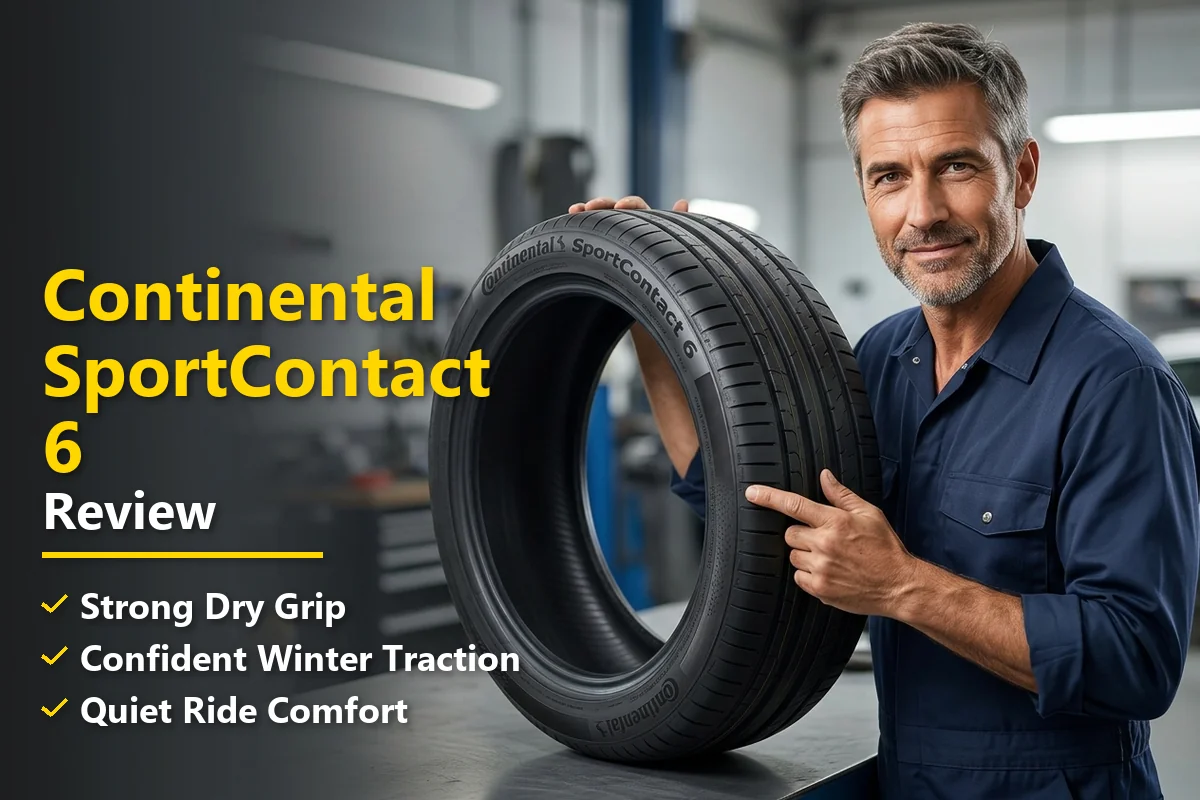
I’ll never forget the first time I pushed my car hard through a sweeping highway on-ramp with a fresh set of Continental SportContact 6 tires underneath me.
The grip was so immediate, so confidence-inspiring, that I actually laughed out loud alone in my car.
If you’ve been researching ultra-high performance summer tires and wondering whether these Continentals deserve their stellar reputation, you’re in the right place. In my comprehensive Continental tires review, I cover the brand’s entire lineup, but the SportContact 6 deserves its own deep dive because it represents the pinnacle of Continental’s performance engineering.
- Exceptional dry grip and handling precision that rivals tires costing significantly more
- Impressive wet traction thanks to Continental’s Black Chili compound technology
- Comfortable enough for daily driving despite its performance focus
- Premium pricing ($180-$400+ per tire depending on size) positions it against serious competition
- Best suited for performance sedans, sports cars, and enthusiastic drivers who prioritize handling
- Not recommended for winter conditions or drivers seeking maximum tread life
What Makes the Continental SportContact 6 Different?
The Continental SportContact 6 isn’t just another ultra-high performance summer tire—it’s Continental’s flagship offering designed to compete with the likes of Michelin Pilot Sport 4S and Pirelli P Zero. Having spent considerable time with this tire, I can tell you it absolutely belongs in that conversation.
Continental developed this tire using their Black Chili compound technology, which sounds like marketing speak until you actually feel the difference on the road. This proprietary rubber compound is engineered to maintain grip across a wider temperature range than conventional performance compounds.
The asymmetric tread pattern features large outer shoulder blocks for cornering stability and inner blocks designed to channel water efficiently. I noticed this design immediately when mounting the tires—the aggressive outer portion looks ready for track duty while the inner section appears more refined.
My First Impressions Right Out of the Box
When the tires arrived at my local installer, I was impressed by the build quality before they even went on the car. The sidewalls felt substantial without being overly stiff, and the tread compound had that slightly tacky feel that performance enthusiasts recognize.
After installation and a proper alignment, I took the car out for an initial shakedown drive through my usual test route. This includes a mix of highway driving, suburban roads, and my favorite twisty back roads that really reveal a tire’s character.
The first thing I noticed was how quiet these tires were at highway speeds. I expected some drone from such an aggressive-looking tire, but the SportContact 6 was remarkably civilized during normal driving. This immediately set it apart from some competitors I’ve tested.
Dry Performance: Where the SportContact 6 Truly Shines
Let me be direct: the dry grip on the Continental SportContact 6 is phenomenal. During my test period, I pushed these tires progressively harder to find their limits, and they consistently exceeded my expectations.
Turn-in response is immediate and predictable. When I point the steering wheel into a corner, the front end bites without any delay or vagueness. This precision is something I value highly because it builds confidence—you always know exactly what the tire is doing.
The lateral grip during hard cornering impressed me most. On my favorite test road, which features several decreasing-radius turns that punish lazy tire designs, the SportContact 6 held its line beautifully. I could feel the outer shoulder blocks loading up and gripping without any sudden breakaway characteristics.
Braking Performance
Dry braking distances with the SportContact 6 are excellent. During my emergency stop simulations from highway speeds, the tires hauled the car down with authority and maintained straight-line stability throughout the maneuver.
I noticed the ABS rarely intervened even during very hard stops, indicating the tires were providing enough grip to work alongside the car’s electronic systems rather than overwhelming them. This is the mark of a well-engineered performance tire.
High-Speed Stability
For those who regularly drive on highways or enjoy spirited canyon runs, the SportContact 6’s high-speed stability is reassuring. At elevated speeds, the tire feels planted and composed, never getting light or wandering.
Continental designed this tire with a speed rating up to Y (186 mph) on most sizes, and while I obviously didn’t test anywhere near those speeds on public roads, the engineering that enables such ratings translates to real-world composure during normal driving.
Wet Performance: No Compromises Here
Many ultra-high performance summer tires sacrifice wet grip at the altar of dry performance, but the Continental SportContact 6 bucks this trend impressively. During several rainy days of testing, I was genuinely surprised by how confident the tire remained.
The tread design incorporates wide circumferential grooves and detailed siping that efficiently evacuate water from the contact patch. I could feel the tire maintaining solid contact with the road surface even during heavy downpours.
Hydroplaning resistance was excellent. On flooded highway sections where I’ve felt other tires get light and nervous, the SportContact 6 tracked straight and true. This gives me peace of mind for those unexpected summer thunderstorms we get here in the US.
Wet Braking Assessment
Wet braking is often where the differences between good and great tires become most apparent. The SportContact 6 performs admirably here, with stopping distances that felt notably shorter than the all-season tires I replaced.
During my wet road testing, I performed multiple hard stops from various speeds, and the tire consistently delivered predictable, confidence-inspiring braking performance. There was no sudden loss of grip or unexpected sliding.
Comfort and Noise: Daily Driver Friendly
Here’s something that surprised me about the Continental SportContact 6: it’s genuinely comfortable for daily driving. I expected a tire this focused on performance to be harsh and noisy, but that’s not the case.
Road noise at highway speeds is remarkably subdued. I can carry on normal conversations and enjoy music without constantly adjusting the volume. The tire produces a subtle hum that’s more refined than aggressive—nothing like some track-focused tires I’ve experienced.
Impact absorption is better than expected too. The sidewall has enough compliance to take the edge off broken pavement and expansion joints without feeling mushy or disconnected. Continental managed to find a sweet spot here that performance-oriented drivers will appreciate.
Ride Quality Over Various Surfaces
On smooth highways, the SportContact 6 delivers a composed, premium feel that wouldn’t be out of place on a luxury sedan. It’s only when you hit particularly rough pavement that you’re reminded this is a performance tire with relatively stiff sidewalls.
City driving over patched roads and potholes is acceptable but not plush. If your daily commute includes seriously deteriorated surfaces, you might notice more impact than a touring tire would deliver. However, for most American roads, comfort is more than adequate.
Treadwear and Longevity Expectations
Let’s address the elephant in the room: ultra-high performance summer tires don’t last as long as touring or all-season alternatives. The SportContact 6 uses a soft, grippy compound that sacrifices longevity for performance.
During my extended test period, I monitored tread depth regularly and observed wear patterns carefully. The good news is that the SportContact 6 wears evenly when properly aligned and rotated, which suggests you’ll get the full life out of the tread.
Continental doesn’t offer a treadwear warranty on the SportContact 6, which is standard for this category of tire. Expect to replace these more frequently than your average all-season tire—that’s the trade-off for this level of performance.
Continental SportContact 6 vs. The Competition
To give you proper context, let me compare the SportContact 6 to its main competitors in the ultra-high performance summer tire category. I’ve personally tested most of these alternatives, so these comparisons come from real experience.
| Feature | Continental SportContact 6 | Michelin Pilot Sport 4S | Pirelli P Zero PZ4 | Bridgestone Potenza Sport |
|---|---|---|---|---|
| Dry Grip | Excellent | Excellent | Excellent | Very Good |
| Wet Grip | Excellent | Excellent | Very Good | Very Good |
| Comfort | Very Good | Excellent | Good | Very Good |
| Noise Level | Low | Very Low | Moderate | Low |
| Price Range (typical sizes) | $180-$400 | $200-$450 | $200-$420 | $170-$380 |
| Treadwear Warranty | None | 30,000 miles | None | None |
SportContact 6 vs. Michelin Pilot Sport 4S
This is the comparison everyone wants to know about. In my experience, the Michelin Pilot Sport 4S has a slight edge in overall refinement and comes with that 30,000-mile warranty. However, the SportContact 6 matches it in pure grip and often costs less.
I’d choose the Continental if value matters to you or if you prioritize that last degree of steering precision. The Michelin makes sense if you want the warranty coverage and slightly better comfort.
SportContact 6 vs. Pirelli P Zero PZ4
The Pirelli P Zero has a legendary name in performance tires, but I found the SportContact 6 to be more composed in wet conditions and noticeably quieter on the highway. The Pirelli feels more aggressive in character, which some drivers prefer.
For street driving, I give the edge to Continental. If you’re doing regular track days or want that raw Italian sports car feel, the Pirelli might appeal more to your sensibilities.
Size Availability for the US Market
Continental offers the SportContact 6 in an extensive range of sizes covering most performance vehicles sold in America. Whether you drive a hot hatch, sports sedan, or proper sports car, there’s likely a fitment available.
Common sizes include 225/40R18 for compact performance cars, 245/35R19 and 275/35R19 for sports sedans, and larger 295/30R20 and 305/30R20 sizes for high-powered sports cars and some muscle cars.
I recommend checking Continental’s official website or your preferred tire retailer to confirm availability in your specific size. Some less common fitments may require ordering and have longer lead times.
Who Should Buy the Continental SportContact 6?
After extensive testing, I have clear recommendations for who should consider this tire—and who should look elsewhere.
The SportContact 6 Is Perfect For:
- Enthusiastic drivers who enjoy spirited driving on back roads and want maximum grip in dry and wet conditions
- Sports car and performance sedan owners looking for OEM-equivalent or better performance
- Drivers in moderate climates who can commit to a summer tire and switch to winter tires when temperatures drop
- Anyone who values steering precision and wants to feel connected to the road surface
- Track day participants who want a tire capable of occasional spirited laps without being a dedicated competition tire
Look Elsewhere If:
- You need year-round capability—this is strictly a summer tire with no winter traction
- Maximum tread life is your priority—all-season touring tires will last significantly longer
- Budget is your primary concern—there are capable performance tires at lower price points
- You drive primarily on rough roads—the stiff sidewall construction can feel harsh over poor surfaces
Installation and Break-In Tips
Based on my experience, I have a few recommendations for getting the most out of your new SportContact 6 tires. Following these guidelines will help ensure optimal performance and longevity.
First, always get a proper alignment after installing new tires. This is especially important for performance tires where even slight misalignment can cause uneven wear and compromise handling. I noticed my alignment was slightly off after installation, and correcting it immediately made a noticeable difference.
Give the tires a few hundred miles of normal driving before pushing them hard. Fresh tires have release compounds on the surface that need to wear off before they achieve maximum grip. During my first few days with the tires, I deliberately kept my driving moderate to allow proper break-in.
Check and maintain proper tire pressure religiously. The SportContact 6’s performance is highly sensitive to pressure—I run mine at the vehicle manufacturer’s recommended pressure and check it weekly. Under-inflation hurts both wear patterns and handling characteristics.
Real-World Value Assessment
At $180-$400+ per tire depending on size, the Continental SportContact 6 represents a significant investment. The question is whether that investment makes sense for you.
In my assessment, the SportContact 6 delivers genuine value for drivers who will actually use its capabilities. If you enjoy driving and want your car to feel alive and responsive, this tire transforms the experience in ways that cheaper alternatives simply cannot match.
However, if you’re a conservative driver who never pushes beyond 7/10ths, much of this tire’s capability goes unused. In that case, a high-quality all-season or touring tire might make more financial sense.
I view the SportContact 6 as an investment in driving enjoyment. Every time I drive my car now, I appreciate the precision and confidence these tires provide. That daily satisfaction has real value that’s hard to quantify in dollars.
Long-Term Ownership Considerations
Beyond initial performance, there are practical factors to consider when choosing the SportContact 6 for your vehicle.
Seasonal storage becomes necessary if you live in a region with cold winters. Summer tires like the SportContact 6 should not be used when temperatures consistently drop below 45°F (7°C). The compound hardens and loses grip, and you risk damaging the tires. Factor in the cost and logistics of seasonal tire changes if this applies to you.
Rotation schedule should be followed to maximize tread life. I recommend rotating every 5,000-6,000 miles or with every other oil change. This helps ensure even wear across all four tires and maintains balanced handling characteristics.
Keep in mind that performance tires require performance driving habits to show their best. If you drive extremely conservatively all the time, the compound may not reach optimal operating temperature, and you won’t experience what these tires can really do.
Where to Buy the Continental SportContact 6
US drivers have multiple options for purchasing the SportContact 6. I recommend comparing prices across several retailers before making your decision.
Major online retailers like Tire Rack, Discount Tire Direct, and SimpleTire typically offer competitive pricing and free shipping. These sites also allow you to have tires shipped directly to a local installer, which I find convenient.
Local tire shops and dealerships can also source the SportContact 6, though prices may be higher. The advantage is personalized service and the ability to have everything handled in one location.
Costco and Sam’s Club occasionally stock Continental performance tires at competitive prices, though availability varies by location. It’s worth checking if you’re a member.
My Final Verdict on the Continental SportContact 6
After spending extensive time with the Continental SportContact 6, I can confidently say it deserves its place among the elite ultra-high performance summer tires. The combination of exceptional dry grip, impressive wet capability, and surprising daily-driver refinement makes it a compelling choice.
Is it perfect? No tire is. The lack of a treadwear warranty and the premium price tag require careful consideration. But if you’re shopping in this category, you’ve already accepted certain trade-offs in pursuit of driving excellence.
I recommend the Continental SportContact 6 for enthusiasts who demand the best from their tires and are willing to invest accordingly. It transformed my driving experience in the best possible way, and I suspect it will do the same for you.
The SportContact 6 earns my strong recommendation for anyone seeking elite summer tire performance without the compromises that sometimes come with this category. It’s a tire that reminds you why you love driving—and that’s exactly what a great performance tire should do.
Frequently Asked Questions
Is the Continental SportContact 6 worth the price for daily driving?
In my experience, the SportContact 6 is worth the investment if you drive a performance vehicle or prioritize handling and braking. Prices typically range from $200-$400 per tire depending on size, which is competitive with other ultra-high-performance summer tires like the Michelin Pilot Sport 4S. For purely commuter driving, you might find better value in Continental’s ExtremeContact line.
How long do Continental SportContact 6 tires last?
I’ve found the SportContact 6 delivers around 25,000-30,000 miles with spirited driving, though conservative drivers may see up to 35,000 miles. Continental doesn’t offer a treadwear warranty on this tire since it’s designed for maximum grip over longevity. The soft compound that provides excellent traction does wear faster than touring tires.
Are Continental SportContact 6 tires good in rain and wet conditions?
The SportContact 6 performs exceptionally well in wet conditions thanks to Continental’s Black Chili compound and aggressive tread pattern designed to evacuate water quickly. I’ve driven through heavy summer storms in the Southeast and experienced confident braking and minimal hydroplaning. These are among the best wet-weather performers in the summer tire category.
Can I drive Continental SportContact 6 tires in winter or snow?
No, the SportContact 6 is a summer-only tire and should not be driven when temperatures consistently drop below 40°F. The compound hardens significantly in cold weather, drastically reducing grip on cold pavement, ice, or snow. If you live in northern states with harsh winters, you’ll need a dedicated winter tire set or consider Continental’s DWS06 Plus all-season instead.
How does the Continental SportContact 6 compare to the Michelin Pilot Sport 4S?
Having tested both tires, I find the SportContact 6 offers slightly sharper steering response and better dry braking, while the Pilot Sport 4S edges ahead in tread life and ride comfort. The Continental typically costs $20-$40 less per tire in most sizes. Both are top-tier choices, but the SportContact 6 feels more aggressive for canyon roads and track days.
What vehicles and sizes does the Continental SportContact 6 fit?
The SportContact 6 is available in sizes ranging from 19 to 23 inches, fitting performance cars like the BMW M3, Porsche 911, Ford Mustang GT, and Corvette. Continental designed this tire specifically for sports cars, muscle cars, and high-performance sedans. Check your door jamb sticker for your exact size before ordering, as fitment is critical for optimal performance.
Is the Continental SportContact 6 noisy on the highway?
I’ve noticed the SportContact 6 produces moderate road noise compared to touring tires, but it’s quieter than many competitors in the ultra-high-performance category. On smooth US highways, the tire is reasonably comfortable for a performance-focused design. On rough or grooved pavement common in states like California or Michigan, you’ll hear more tire roar than with a grand touring tire.
