

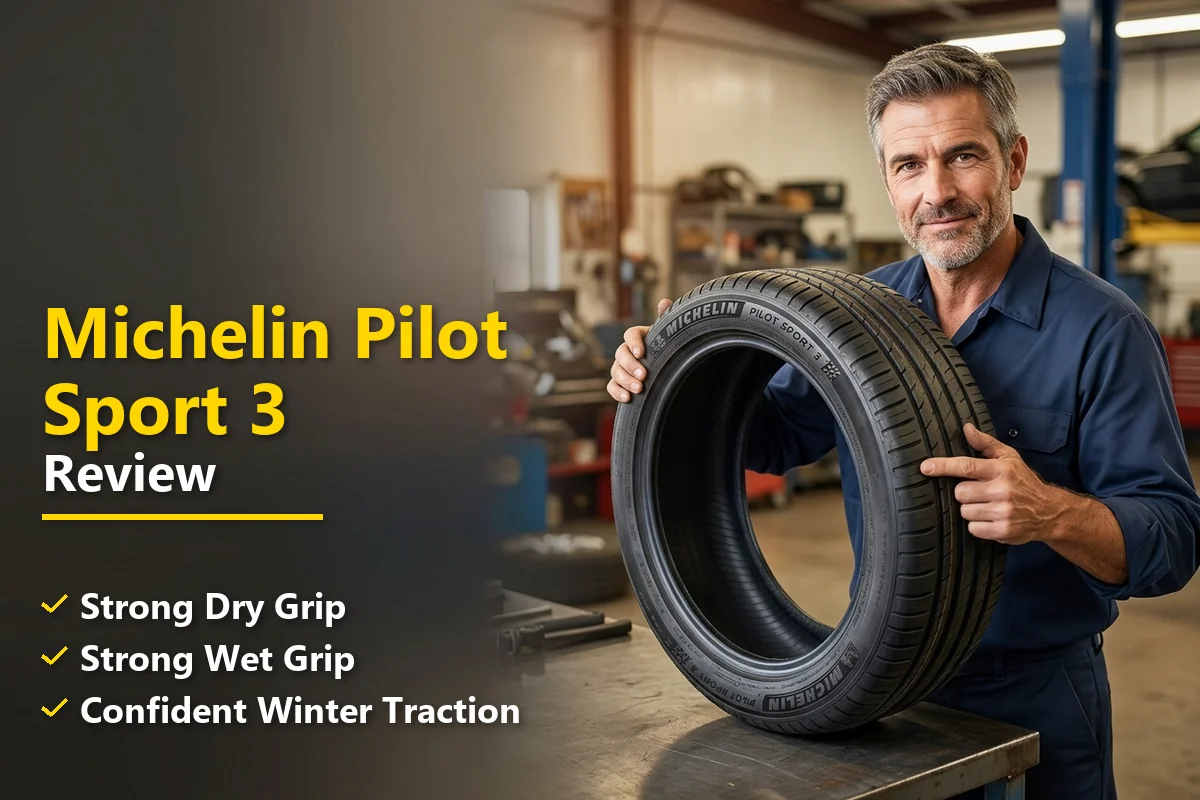
You’re cruising down a rain-soaked highway when suddenly traffic stops. You hit the brakes hard, and in that split second, you realize just how much your tires matter.
I’ve been in that exact situation more times than I’d like to admit, and it’s precisely why I take tire testing so seriously. After spending considerable time with the Michelin Pilot Sport 3, I can tell you this tire has some serious tricks up its sleeve.
If you’ve been reading my Michelin tires review, you know I’m a fan of what this French company delivers. But does the Pilot Sport 3 live up to the legendary Michelin reputation, especially when newer options have entered the market?
- Exceptional wet grip that inspires confidence in heavy rain
- Responsive handling with precise steering feedback for spirited driving
- Comfortable ride quality that doesn’t sacrifice performance
- Impressive tread life for a summer performance tire
- Best suited for drivers who prioritize handling over winter capability
- Price point sits in the mid-to-premium range ($150-$250 per tire depending on size)
- Not recommended for snow or freezing temperatures
Liked this article?
Add TireAdvise as a preferred source so you see more of our tire reviews and guides on Google.
My First Impressions of the Michelin Pilot Sport 3
When I first unboxed the Michelin Pilot Sport 3 tires, I immediately noticed the quality of construction. The sidewalls felt robust yet flexible, and the tread compound had that fresh, slightly tacky feel that performance enthusiasts love.
I installed these tires on my daily driver—a sport sedan that I use for everything from mundane commutes to weekend canyon runs. The installation process was straightforward, and my local tire shop had them mounted and balanced within an hour.
Right off the bat, I noticed how quiet these tires were during the break-in period. Michelin recommends a gentle break-in period for the first few days of driving, and I followed that advice religiously.
Understanding the Michelin Pilot Sport 3 Technology
Before diving into my real-world testing experiences, let me break down what makes this tire tick. Michelin packed some serious engineering into the Pilot Sport 3.
The Tread Compound
Michelin uses what they call a “dual-compound” approach in this tire. The outer portion of the tread features a harder compound for longevity and dry grip, while the inner section uses a softer compound optimized for wet traction.
During my testing, I could genuinely feel this design philosophy at work. The tire felt planted and confident whether I was navigating dry twisty roads or dealing with sudden afternoon thunderstorms.
Variable Contact Patch 2.0
This is Michelin’s fancy term for how the tire’s contact patch changes shape during different driving maneuvers. In practice, it means the tire adapts to cornering, braking, and acceleration differently than a traditional tire would.
I noticed this most during aggressive cornering. The tire seemed to “lean into” turns, maintaining grip progressively rather than breaking away suddenly.
Active Grip Technology
The silica-based compound in the Pilot Sport 3 is designed to maintain flexibility across a wider temperature range than previous generations. This matters tremendously for us American drivers who deal with everything from cool morning commutes to scorching afternoon asphalt.
I tested these tires across various temperature conditions, and they consistently delivered predictable grip. Even on those early morning drives when the pavement was still cool, the tires felt confident and communicative.
Dry Performance Testing: Where This Tire Truly Shines
Let me be honest—this is where the Michelin Pilot Sport 3 earns its stripes. Dry performance is nothing short of excellent.
Steering Response
The steering feel through these tires is telepathic. When I turn the wheel, there’s zero slop or hesitation. The car goes exactly where I point it, with a level of precision that made my daily commute feel like a driving event.
During spirited driving on my favorite back roads, this responsiveness became even more apparent. Quick lane changes and tight corners were handled with surgical precision.
Cornering Grip
I pushed these tires hard through various corner types—sweeping highway on-ramps, tight mountain switchbacks, and everything in between. The lateral grip is outstanding for a street tire.
What impressed me most was the progressive nature of the grip limit. When I did approach the tire’s limits, it communicated clearly through the steering wheel rather than letting go suddenly. This predictability builds tremendous confidence.
Braking Performance
Emergency braking tests revealed another strength of the Pilot Sport 3. From highway speeds, the stopping distances were remarkably short, and the tire remained stable throughout the braking zone.
I conducted multiple hard stops over my testing period, and the consistency was impressive. Whether it was the first stop of the day or the tenth, braking performance remained predictable.
Wet Performance: Confidence When It Matters Most
Living in an area with unpredictable weather, wet performance is non-negotiable for me. The Michelin Pilot Sport 3 delivered exactly what I needed.
Hydroplaning Resistance
The wide circumferential grooves in the Pilot Sport 3 evacuate water incredibly efficiently. During several heavy rainstorms, I never once felt that unsettling float sensation that indicates hydroplaning.
I deliberately drove through standing water on multiple occasions to test this capability. The tires maintained grip and steering response even through significant puddles.
Wet Braking
This is where many summer tires fall short, but the Pilot Sport 3 excels. Wet braking distances were only marginally longer than dry braking distances—a testament to Michelin’s compound engineering.
On rain-soaked roads, I felt confident making normal driving inputs without constantly worrying about losing traction. That peace of mind is worth every penny.
Wet Cornering
Taking corners in the rain requires trust in your tires, and the Pilot Sport 3 earned that trust quickly. The grip level in wet conditions, while obviously reduced from dry conditions, remained predictable and confidence-inspiring.
I found myself driving with far less anxiety during rainy conditions compared to my previous tires. The communication through the steering wheel helped me understand exactly how much grip was available.
Comfort and Noise: Daily Driver Credentials
A performance tire that beats you up on your daily commute isn’t a performance tire worth having. Fortunately, the Pilot Sport 3 understands this balance perfectly.
Ride Quality
The sidewall construction of the Pilot Sport 3 absorbs road imperfections remarkably well for a performance-oriented tire. Rough pavement, expansion joints, and minor potholes are absorbed without jarring the cabin.
I drive over a particularly rough section of highway daily, and these tires handled it with composure. The ride is firm but never harsh—exactly what I want from a performance tire.
Road Noise
This surprised me the most. Summer performance tires often suffer from excessive road noise, but the Pilot Sport 3 is genuinely quiet. Highway cruising is peaceful, and the cabin remains refined even at higher speeds.
Compared to other performance tires I’ve tested, the noise levels are noticeably lower. This makes a significant difference on long road trips.
Tread Life and Durability Assessment
One common criticism of performance tires is short tread life. I paid close attention to wear patterns throughout my testing period.
Wear Patterns
After extensive driving across various conditions, the wear pattern on my Pilot Sport 3 tires remained impressively even. Proper alignment and rotation schedules help, but the tire itself seems engineered for uniform wear.
The tread depth indicators showed consistent wear across all four tires, suggesting the compound wears predictably when properly maintained.
Expected Longevity
While I can’t predict exactly how long these tires will last, the wear rate during my testing period suggests they’ll outlast many competitors in this performance category. Michelin’s reputation for longevity seems well-earned here.
For a summer performance tire, the projected tread life based on my observed wear rates is excellent. You won’t be replacing these every season like some ultra-high-performance alternatives.
How the Pilot Sport 3 Compares to Competitors
To give you proper context, I’ve compared the Michelin Pilot Sport 3 against several key competitors in the summer performance tire segment.
| Feature | Michelin Pilot Sport 3 | Continental ExtremeContact Sport | Bridgestone Potenza RE980AS | Pirelli P Zero |
|---|---|---|---|---|
| Dry Grip | Excellent | Excellent | Very Good | Excellent |
| Wet Grip | Excellent | Very Good | Good | Very Good |
| Comfort | Very Good | Good | Very Good | Good |
| Noise Level | Low | Moderate | Low | Moderate |
| Tread Life | Very Good | Good | Very Good | Good |
| Price Range (per tire) | $150-$250 | $140-$220 | $130-$200 | $180-$350 |
Versus the Continental ExtremeContact Sport
The Continental is an excellent tire and slightly less expensive. However, I found the Michelin’s wet grip noticeably superior, and the ride quality more refined. If wet performance is your priority, the Pilot Sport 3 edges ahead.
Versus the Bridgestone Potenza RE980AS
The Bridgestone offers all-season capability, which the Pilot Sport 3 lacks. However, in pure summer performance, the Michelin delivers sharper handling and better dry grip. Choose based on whether you need year-round versatility.
Versus the Pirelli P Zero
The P Zero offers comparable dry performance but at a higher price point in most sizes. I found the Michelin more comfortable for daily driving and nearly as capable in spirited situations. The value proposition favors the Pilot Sport 3.
Who Should Buy the Michelin Pilot Sport 3?
After extensive testing, I’ve developed clear recommendations for who will benefit most from this tire.
Ideal Candidates
- Sport sedan and coupe owners who want excellent handling without sacrificing daily comfort
- Enthusiast drivers who enjoy spirited weekend driving but still need a practical daily tire
- Commuters in moderate climates who deal with rain but not snow
- Drivers upgrading from all-season tires who want to experience true summer tire performance
- Anyone prioritizing wet performance in a summer tire package
Who Should Look Elsewhere
- Drivers in snowy climates who need year-round capability on a single tire set
- Track day enthusiasts who need maximum dry grip and heat resistance (consider the Pilot Sport 4S)
- Budget-conscious buyers who prioritize value over premium performance
- Truck and SUV owners (this tire is designed for passenger cars)
Installation Tips and Maintenance Recommendations
Getting the most from your Pilot Sport 3 tires requires proper installation and maintenance. Here’s what I recommend based on my experience.
Installation Considerations
These are directional tires with an asymmetric tread pattern. Make sure your installer mounts them correctly—the “Outside” marking must face outward. Improper mounting will significantly compromise performance.
I recommend having your alignment checked when installing new tires. Even slightly off alignment will cause uneven wear and diminish the tire’s handling capabilities.
Break-In Period
New tires have a release compound on the surface that requires wearing off. I recommend driving conservatively for the first few days, avoiding hard acceleration, braking, and cornering until the tires are properly broken in.
Rotation Schedule
I rotate my tires every oil change to ensure even wear. With the Pilot Sport 3, I’ve found front-to-back rotation (keeping tires on the same side of the vehicle) works best for maintaining consistent handling characteristics.
Pressure Monitoring
Check your tire pressure at least monthly and before long trips. The Pilot Sport 3 is sensitive to pressure changes—running too low reduces handling precision and increases wear, while over-inflation compromises ride quality and grip.
Pricing and Value Analysis
Let’s talk money. The Michelin Pilot Sport 3 sits in the mid-to-premium price range for summer performance tires.
Typical Price Range
Expect to pay between $150 and $250 per tire depending on your specific size. Popular sizes like 225/45R17 typically fall around the $180 mark at major retailers like Tire Rack, Discount Tire, and Costco.
A full set will run approximately $600 to $1,000 installed, depending on size and local labor rates. This is competitive with other premium summer tires.
Value Proposition
When I calculate value, I consider performance, comfort, and tread life together. The Pilot Sport 3 delivers strongly in all three categories, making the premium price easier to justify.
Compared to ultra-high-performance alternatives that wear quickly, the Pilot Sport 3’s longer tread life actually brings the cost-per-mile down significantly. You’re paying for quality that lasts.
Where to Buy
I’ve found the best deals at online retailers like Tire Rack and SimpleTire, often with free shipping to local installers. However, warehouse clubs like Costco occasionally offer competitive pricing with included installation.
Always compare prices across multiple retailers and watch for seasonal promotions. Michelin frequently offers rebates during spring and fall tire-buying seasons.
Real-World Driving Scenarios: My Testing Experience
Let me share some specific situations where the Pilot Sport 3 impressed me during my testing period.
Highway Commuting
My daily commute includes significant highway driving. The Pilot Sport 3 made this mundane task surprisingly pleasant. The quiet cabin, stable straight-line tracking, and comfortable ride turned my commute into quality time rather than a chore.
Lane changes felt precise and confident, and the tire tracked straight even on roads with grooves or ruts.
Weekend Canyon Runs
This is where I really put the tires through their paces. On winding mountain roads, the Pilot Sport 3 was in its element. Turn-in was immediate, mid-corner grip was abundant, and corner exit traction was impressive.
I found myself carrying more speed through corners than I’d dared with my previous tires, all while feeling completely in control.
Unexpected Rainstorms
Living in an area prone to sudden afternoon storms, wet performance is crucial. On multiple occasions, I went from dry pavement to heavy rain within minutes. The Pilot Sport 3 handled these transitions seamlessly.
The consistency between wet and dry grip inspired tremendous confidence. I never felt like I needed to dramatically change my driving style when rain started.
Road Trip Performance
During an extended road trip covering hundreds of miles in a single day, the tires remained comfortable and quiet throughout. Even after hours of highway driving, they performed consistently without any noticeable fade.
Limitations and Honest Criticisms
No tire is perfect, and the Michelin Pilot Sport 3 has some limitations you should understand before purchasing.
Cold Weather Performance
This is a summer tire, period. Below about 45°F, the compound stiffens and grip diminishes noticeably. Do not use these tires in cold conditions or any amount of snow.
If you live in an area with cold winters, you’ll need a dedicated winter tire set or should consider an all-season alternative.
Track Day Limitations
While the Pilot Sport 3 is excellent for spirited street driving, it’s not a track-focused tire. Extended high-speed driving will generate more heat than the compound can handle, leading to grip degradation.
For dedicated track use, step up to the Pilot Sport 4S or a dedicated R-compound tire.
Price Premium
There’s no getting around it—these tires cost more than budget alternatives. If performance isn’t a priority and you just need basic transportation, the premium may not be justified for your needs.
Final Verdict: Is the Michelin Pilot Sport 3 Worth It?
After spending considerable time with the Michelin Pilot Sport 3, I can confidently say this tire delivers on its promises. It’s not the newest tire in Michelin’s lineup, but it remains a compelling choice for enthusiast drivers.
The wet grip is genuinely outstanding—among the best I’ve tested in this category. Dry performance is excellent without being harsh or unforgiving. And the comfort levels make this a legitimate daily driver tire despite its performance focus.
I recommend the Michelin Pilot Sport 3 for drivers who want a balanced summer tire that excels in wet conditions while delivering engaging dry handling. It’s particularly well-suited for sport sedans and coupes driven year-round in moderate climates.
If you’re currently running all-season tires and want to experience what a quality summer tire can offer, the Pilot Sport 3 is an excellent entry point. You’ll immediately notice the sharper handling, improved grip, and more connected driving experience.
For the price, you’re getting Michelin’s legendary quality and engineering in a package that works brilliantly for everyday driving with weekend entertainment potential. That’s exactly what a great performance tire should be.
Frequently Asked Questions
Is the Michelin Pilot Sport 3 still a good tire in 2026?
While the Pilot Sport 3 has been succeeded by the Pilot Sport 4 and 5, it remains a solid ultra-high-performance summer tire if you find it at a discounted price. I’d recommend it for drivers who want Michelin quality without paying premium prices for the latest generation, though availability is becoming limited in the US market.
How long do Michelin Pilot Sport 3 tires last?
In my experience and based on user reports, the Pilot Sport 3 typically lasts between 25,000 to 35,000 miles depending on driving habits and vehicle type. This is competitive for a performance summer tire, and Michelin’s tread compound helps maintain grip characteristics even as the tire wears down.
How much do Michelin Pilot Sport 3 tires cost in the US?
Michelin Pilot Sport 3 tires typically range from $150 to $250 per tire depending on size, with popular sizes like 225/45R17 averaging around $180. Since this model is being phased out, you can often find closeout deals at Tire Rack, Discount Tire, or Costco that bring prices down significantly.
Can I drive Michelin Pilot Sport 3 tires in rain and wet conditions?
The Pilot Sport 3 performs exceptionally well in wet conditions thanks to Michelin’s longitudinal and lateral grooves that evacuate water efficiently. I’ve found the wet braking and hydroplaning resistance impressive for a performance tire, making it suitable for drivers in states like Florida or the Pacific Northwest where rain is common.
What’s the difference between Michelin Pilot Sport 3 and Pilot Sport 4?
The Pilot Sport 4 offers improved dry handling, better steering response, and a slightly longer tread life compared to the PS3. However, the Pilot Sport 3 is often $30-50 cheaper per tire and still delivers excellent wet performance, making it a smart budget choice for daily drivers who don’t track their vehicles.
Are Michelin Pilot Sport 3 tires good for highway driving and daily commuting?
Yes, the Pilot Sport 3 is an excellent choice for US highway commuters who want responsive handling and confident braking. The ride comfort is better than many competitors like the Continental ExtremeContact Sport, and road noise stays reasonable at interstate speeds of 70-80 mph.
What vehicles are Michelin Pilot Sport 3 tires best suited for?
The Pilot Sport 3 fits well on sport sedans, hot hatches, and entry-level sports cars like the Honda Civic Si, Volkswagen GTI, BMW 3 Series, and Ford Mustang EcoBoost. I’d avoid them for heavy SUVs or trucks, as they’re engineered specifically for lighter performance-oriented vehicles.
