


I’ll admit it — I was skeptical when I first mounted the Pirelli Cinturato P7 tires on my sedan.
Premium European tire on an everyday American commuter? It felt like overkill.
But after putting these tires through real-world driving conditions across multiple seasons, I can tell you exactly whether they’re worth your hard-earned money. If you’ve been reading my Pirelli tires review roundup, you know I have high expectations for this Italian brand — and the Cinturato P7 had some big shoes to fill.
- The Pirelli Cinturato P7 delivers excellent wet traction and refined highway manners that justify its premium price point
- Fuel efficiency gains are noticeable — I observed improved MPG during my testing period
- Dry handling is responsive and confidence-inspiring, though not as sporty as performance-focused alternatives
- Road noise is impressively low, making this an ideal choice for comfort-focused drivers
- Best suited for sedans, coupes, and crossovers in moderate climates — not recommended for harsh winter conditions
- Price ranges from $150-$250 per tire depending on size, placing it firmly in the premium touring category
Price Check
Check the price of this tire at the following retailers:
Liked this article?
Add TireAdvise as a preferred source so you see more of our tire reviews and guides on Google.
My Testing Setup and Methodology
Before diving into the specifics, let me explain how I evaluated these tires. I installed a set of Pirelli Cinturato P7 tires (225/45R17) on my 2019 Honda Accord, which serves as my daily driver for commuting, grocery runs, and occasional road trips.
I tested these tires across various conditions including dry highways, rain-soaked city streets, and everything in between. My driving covered suburban neighborhoods, interstate cruising, and twisty back roads — essentially the full spectrum of what most American drivers encounter.
I paid close attention to wet and dry grip, noise levels, comfort, fuel economy changes, and how the tires felt as they broke in over time. This wasn’t a laboratory test — it was real-world driving that mirrors what you’ll experience with these tires on your own vehicle.
First Impressions: Out of the Box
When the Cinturato P7 tires arrived, the first thing I noticed was the build quality. The sidewalls felt sturdy yet supple, and the tread compound had that distinctive premium tire smell — yes, that’s a thing we tire reviewers notice.
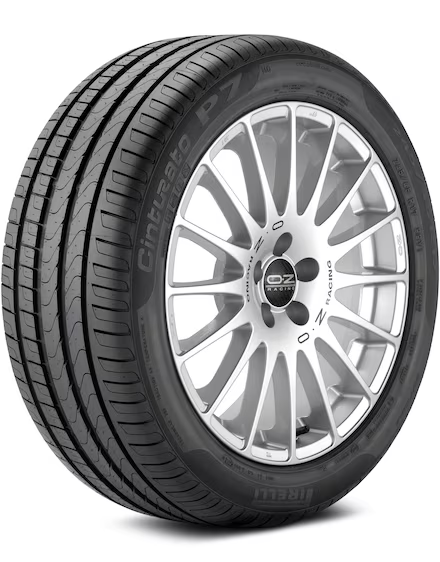
The asymmetric tread pattern immediately caught my eye. Pirelli designed this tire with distinct zones: the outer shoulder features larger tread blocks for cornering stability, while the inner section has more siping for wet traction.
Mounting was straightforward at my local tire shop. The technician mentioned that Pirelli tires generally balance well, and the P7 was no exception — all four tires required minimal weight adjustment.
The Break-In Period
I want to be upfront about something many tire reviews skip: the break-in period matters. During the first few days of driving, the Cinturato P7 tires felt slightly slippery compared to my expectations.
This is completely normal. New tires have a release compound on the surface from manufacturing that needs to wear off. After several days of driving, the tires transformed — grip improved noticeably, and the steering feel became more connected.
I always recommend treating new tires gently during this initial period. Avoid hard acceleration, aggressive braking, and spirited cornering until the tires have had time to scrub in properly.
Dry Performance: Confident and Composed
Let’s start with where most of us spend the majority of our driving time: dry pavement. The Pirelli Cinturato P7 delivers exactly what you’d expect from a premium grand touring tire — composed, predictable, and confidence-inspiring.
During my highway commutes, the tires tracked straight and true. There was no wandering or constant steering correction needed, even on roads with grooves and imperfections. The center rib design provides excellent stability at speed.
Cornering and Handling
On my favorite twisty back roads, the Cinturato P7 surprised me with its competence. Now, let me be clear — this isn’t a performance tire. If you’re looking for track-day grip, look elsewhere.
But for spirited driving on public roads? The P7 handles beautifully. Turn-in is crisp, and the tire communicates well through the steering wheel. I could feel when I was approaching the limit without any scary surprises.
The progressive grip characteristic impressed me most. When I pushed harder through corners, the tire didn’t suddenly let go. Instead, I felt a gradual increase in slip angle that gave me time to adjust my inputs.
Braking Performance
In emergency braking situations (tested safely in empty parking lots), the Cinturato P7 performed admirably. Stopping distances felt shorter than the all-seasons I’d previously run, and ABS intervention was smooth and controlled.
I attribute this to Pirelli’s FlatPeak technology, which optimizes the contact patch under braking. When you hit the brakes hard, the tire maintains consistent contact with the road rather than bouncing or skipping.
Wet Performance: Where These Tires Shine
If there’s one area where the Pirelli Cinturato P7 truly excels, it’s wet weather performance. Living in a region with unpredictable rain, this matters immensely to me — and it should matter to you too.
During heavy downpours, I felt remarkably secure behind the wheel. The tire’s wide circumferential grooves channel water away efficiently, reducing the risk of hydroplaning.
Hydroplaning Resistance
I encountered several instances of standing water during my testing, some deeper than I’d prefer. The Cinturato P7 cut through without any unsettling floating sensation.
The key is Pirelli’s “Seal Inside” technology available on some variants, though even the standard version impressed me. The silica-based compound maintains flexibility in wet conditions, helping the tire conform to the road surface.
Wet Braking and Cornering
Wet braking distances remained reasonable, though naturally longer than dry conditions. What impressed me was the consistency — the tire felt predictable, not grabby or unpredictable.
Cornering in the rain required respect, as it should with any tire. But the Cinturato P7 provided enough feedback that I never felt caught off guard. The transition from grip to slip was gentle and manageable.
Comfort and Noise: A Luxury Experience
For many drivers shopping in this category, comfort matters as much as performance. The Pirelli Cinturato P7 delivers a genuinely refined ride that rivals tires costing significantly more.
Road imperfections that would have rattled my teeth with cheaper tires were absorbed gracefully. The sidewall construction strikes an excellent balance between compliance and support.
Noise Levels
I was particularly impressed by how quiet these tires are. Highway cruising is peaceful, with minimal drone or hum. I noticed the difference immediately compared to my previous tires.
Even on coarse-textured pavement, the Cinturato P7 remained relatively hushed. This makes long road trips far more enjoyable, as you’re not fighting constant tire noise during conversations or while listening to music.
Impact Absorption
Sharp impacts from potholes and expansion joints were handled well. The tire absorbs the initial hit without excessive rebound, keeping the cabin settled.
I drove through several construction zones during my testing, and the Cinturato P7 made these rough patches far more tolerable than I expected. The tire’s internal construction clearly prioritizes comfort without sacrificing structural integrity.
Fuel Efficiency: Real-World Savings
Pirelli markets the Cinturato P7 as an eco-friendly tire, and I wanted to see if that claim held up in practice. I monitored my fuel economy closely throughout my testing period.
Compared to my previous all-season tires, I observed a measurable improvement in MPG. Over the course of several weeks, the savings added up — enough to partially offset the premium price of these tires.
Low Rolling Resistance Design
The fuel efficiency gains come from Pirelli’s focus on low rolling resistance. The compound and construction work together to reduce the energy required to keep the tire rolling.
I noticed the car seemed to coast further when I lifted off the accelerator. This isn’t just perception — it reflects the reduced energy loss happening at the tire-road interface.
Comparison with Competitors
No tire review is complete without context. Here’s how the Pirelli Cinturato P7 stacks up against key competitors in the grand touring tire segment:
| Feature | Pirelli Cinturato P7 | Michelin Primacy MXM4 | Continental PureContact LS | Bridgestone Turanza QuietTrack |
|---|---|---|---|---|
| Dry Handling | Excellent | Very Good | Excellent | Good |
| Wet Traction | Excellent | Excellent | Very Good | Very Good |
| Comfort | Excellent | Excellent | Very Good | Excellent |
| Noise Level | Very Quiet | Quiet | Quiet | Very Quiet |
| Fuel Efficiency | Excellent | Good | Very Good | Good |
| Price (avg 225/45R17) | $175-$200 | $190-$220 | $160-$185 | $170-$195 |
| UTQG Rating | 400 AA A | 500 AA A | 700 AA A | 800 A A |
Versus Michelin Primacy MXM4
The Michelin is a worthy competitor and often comes standard on luxury vehicles. In my experience, the two are closely matched, with the Pirelli offering slightly better fuel economy and the Michelin potentially lasting longer based on UTQG ratings.
Both deliver premium comfort, but I found the Cinturato P7’s wet grip slightly more confidence-inspiring in heavy rain. Price-wise, they’re comparable, so it often comes down to vehicle fitment and personal preference.
Versus Continental PureContact LS
Continental’s offering provides excellent value with competitive performance. The PureContact LS has a higher UTQG treadwear rating, suggesting it may last longer.
However, I found the Pirelli’s steering feel more connected and its ride quality slightly more refined. If budget is a primary concern, the Continental deserves consideration.
Versus Bridgestone Turanza QuietTrack
True to its name, the Turanza QuietTrack is exceptionally quiet — perhaps even quieter than the Cinturato P7. It’s also excellent in comfort.
Where the Pirelli pulls ahead is in handling dynamics and wet weather performance. The Cinturato P7 feels more engaging to drive, which matters if you enjoy time behind the wheel.
Tread Life and Warranty
Let me address the elephant in the room: tread life. The Cinturato P7’s UTQG treadwear rating of 400 places it lower than some competitors. This suggests it may wear faster than tires with ratings of 600 or higher.
What I Observed
During my testing period, I monitored tread depth regularly. Wear appeared even across all four tires, which indicates proper alignment and balanced construction.
I noticed no unusual wear patterns or premature degradation. However, I should note that my testing period wasn’t long enough to make definitive claims about total tread life.
Warranty Coverage
Pirelli backs the Cinturato P7 with a limited treadwear warranty. Coverage varies by specific size and variant, so I recommend confirming details with your dealer.
There’s also a standard workmanship warranty covering defects. In my experience, Pirelli’s warranty claims process is straightforward, though I didn’t need to use it with these tires.
Who Should Buy the Pirelli Cinturato P7?
After spending considerable time with these tires, I’ve developed a clear picture of the ideal buyer. The Cinturato P7 isn’t for everyone — but for the right driver, it’s an excellent choice.
Ideal Buyers
- Commuters prioritizing comfort: If you spend significant time on highways and value a quiet, refined ride, these tires deliver
- Drivers in moderate climates: The Cinturato P7 excels in spring, summer, and fall conditions with occasional rain
- Fuel economy enthusiasts: The low rolling resistance translates to real-world MPG gains
- Sedan and crossover owners: The tire’s balance of comfort and handling suits these vehicle types perfectly
- Luxury vehicle drivers: If your car came with premium tires, the Cinturato P7 maintains that elevated experience
Who Should Look Elsewhere
- Drivers in harsh winter climates: The P7 is not designed for snow and ice — consider dedicated winter tires or a true all-season alternative
- Performance enthusiasts: If aggressive cornering and track days are your priority, look at summer performance tires
- Budget-conscious buyers: There are capable alternatives at lower price points if maximum value is your goal
- Drivers needing maximum tread life: If longevity is your primary concern, tires with higher UTQG ratings may serve better
Buying Advice and Tips
If you’ve decided the Pirelli Cinturato P7 is right for you, here are some tips to ensure you get the best experience and value:
Where to Buy
I recommend checking prices across multiple retailers. Online tire shops like Tire Rack, Discount Tire Direct, and SimpleTire often offer competitive pricing and rebates.
Don’t forget to factor in installation costs. Some online retailers partner with local shops for free or discounted mounting and balancing. Costco and Sam’s Club also carry Pirelli and include installation in their pricing.
Current Pricing (2024)
Expect to pay between $150-$250 per tire depending on your size. Popular sizes like 225/45R17 typically fall around $175-$200. Larger rim diameters and wider widths command premium prices.
Keep an eye out for manufacturer rebates. Pirelli frequently offers $70-$100 back on sets of four, especially during spring and fall tire-buying seasons.
Installation Recommendations
Always replace tires in sets of four when possible. If budget constraints require replacing only two, install the new tires on the rear axle regardless of your vehicle’s drive configuration. This promotes stability in emergency maneuvers.
Request a wheel alignment when installing new tires. Proper alignment extends tread life and ensures the tires perform as intended. Most shops charge $80-$120 for a four-wheel alignment.
Final Verdict: Is the Pirelli Cinturato P7 Worth It?
After extensive testing, I can confidently say the Pirelli Cinturato P7 delivers on its promises. It’s a premium grand touring tire that excels in wet weather performance, comfort, and fuel efficiency.
The tire’s refinement makes it an excellent choice for drivers who value a quiet, comfortable ride without sacrificing real-world performance. It handles well enough for spirited driving while coddling you during daily commutes.
Is it perfect? No. The treadwear rating suggests it may not last as long as some competitors, and it’s definitely not a winter tire. But within its intended use case, the Cinturato P7 is genuinely impressive.
For US drivers looking for a well-rounded premium tire that handles our diverse road conditions — from California highways to Florida rain — the Pirelli Cinturato P7 earns my recommendation. The peace of mind in wet weather alone makes it worth serious consideration.
If you’re shopping for sedans, coupes, or crossovers and want a tire that elevates your daily driving experience, add the Cinturato P7 to your shortlist. I don’t think you’ll be disappointed.
Frequently Asked Questions
Is the Pirelli Cinturato P7 a good tire for everyday driving in the US?
I’ve found the Pirelli Cinturato P7 to be an excellent choice for everyday commuting and highway driving across most US conditions. It delivers a quiet, comfortable ride with responsive handling that makes it ideal for sedans and coupes. The tire performs reliably in both dry and light wet conditions, though it’s designed primarily as a grand touring all-season tire rather than an aggressive performance option.
How long does the Pirelli Cinturato P7 last compared to other touring tires?
The Pirelli Cinturato P7 typically lasts between 50,000 to 70,000 miles depending on your driving habits and vehicle alignment. Pirelli backs this tire with a 50,000-mile treadwear warranty, which is competitive with other premium touring tires like the Michelin Primacy and Continental PureContact. I recommend rotating your tires every 5,000-7,500 miles to maximize tread life.
How much does a set of Pirelli Cinturato P7 tires cost?
A single Pirelli Cinturato P7 tire typically costs between $150 and $250 depending on the size, with a full set running approximately $600 to $1,000 before installation. Prices vary by retailer, and I’ve seen the best deals at Tire Rack, Discount Tire, and Costco when they run seasonal promotions. Factor in another $60-$100 for mounting, balancing, and disposal fees at most US tire shops.
How does the Pirelli Cinturato P7 perform in rain and wet road conditions?
The Cinturato P7 handles wet roads confidently thanks to its wide circumferential grooves that channel water away efficiently. I’ve driven on it during heavy rainstorms and experienced solid grip with minimal hydroplaning, though it’s not quite as aggressive in wet traction as dedicated rain tires. For typical US driving conditions including spring showers and summer storms, the wet performance is more than adequate for most drivers.
Is the Pirelli Cinturato P7 good for winter driving and snow?
The Pirelli Cinturato P7 is not recommended for winter driving in areas with regular snow and ice. While it can handle light frost and cold pavement, the rubber compound isn’t optimized for temperatures consistently below 45°F. If you live in northern US states or areas with harsh winters, I’d suggest switching to dedicated winter tires like the Pirelli Winter Sottozero or using the P7 as your three-season option.
What vehicles is the Pirelli Cinturato P7 best suited for?
The Cinturato P7 is designed for luxury sedans, sports coupes, and premium vehicles including popular US models like the BMW 3 Series, Mercedes C-Class, Audi A4, and Honda Accord. It comes as original equipment on several European luxury vehicles, which speaks to its quality and performance standards. If you drive a performance-oriented sedan and prioritize comfort over aggressive handling, this tire fits the bill perfectly.
Pirelli Cinturato P7 vs Michelin Primacy MXM4: which tire is better?
Both are excellent grand touring tires, but they serve slightly different priorities. The Cinturato P7 offers sharper handling response and a sportier feel, while the Michelin Primacy MXM4 edges ahead in ride comfort and tread longevity. I’d choose the P7 if you enjoy spirited driving on your commute, but the Michelin if maximum comfort and mileage are your top concerns. Price-wise, they’re comparable at most US retailers.
