

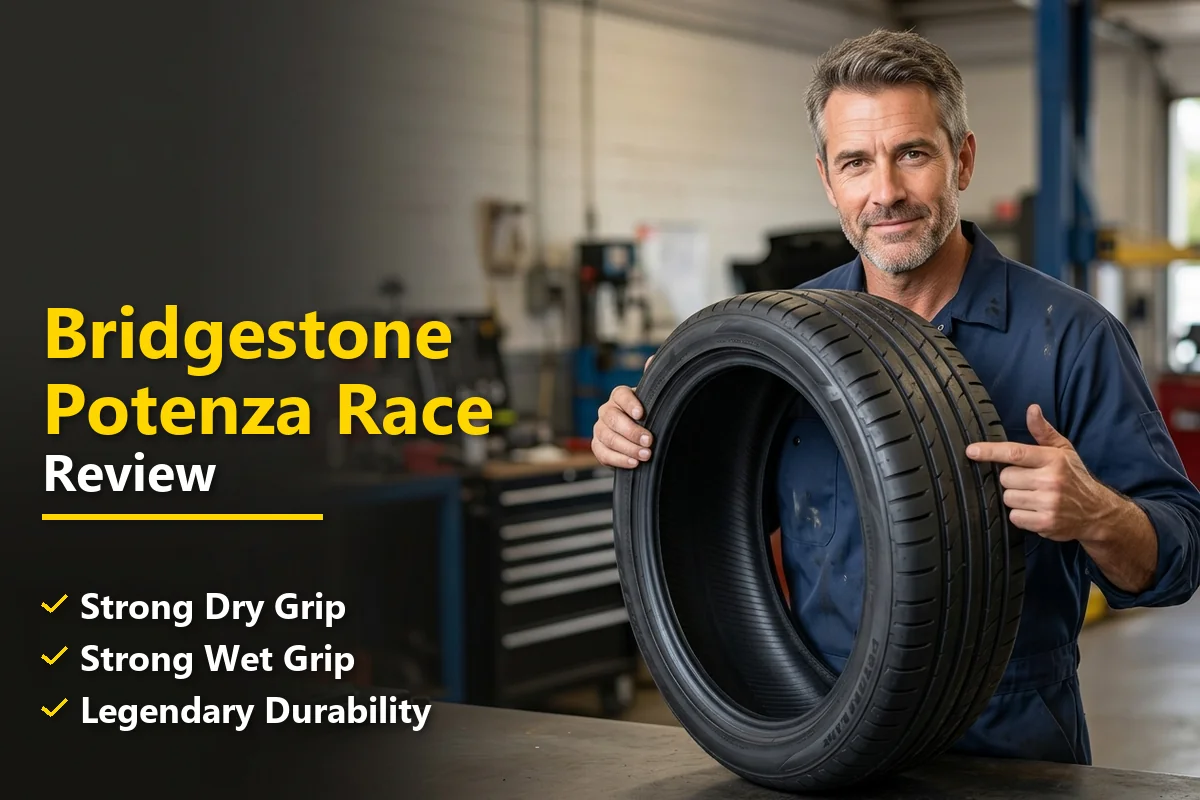
Ever pushed your car hard into a corner and felt that moment of uncertainty where the tires are begging for more grip?
That unsettling sensation of the compound giving way just when you need confidence the most?
I’ve been there countless times, and it’s exactly why I was eager to get my hands on the Bridgestone Potenza Race tires. As someone who’s tested dozens of performance tires over the years (you can read my comprehensive Bridgestone tires review for the full brand breakdown), I wanted to see if these track-focused tires could truly deliver the extreme grip Bridgestone promises while still being streetable enough for the occasional spirited drive to the office.
- Exceptional dry grip that rivals semi-slick competitors at a more accessible price point
- Track-tested compound delivers confidence-inspiring cornering stability
- Street-legal but best suited for dedicated performance driving and occasional track days
- Limited wet weather capability — not recommended as a daily driver in rainy climates
- Treadwear is aggressive; expect accelerated wear with track use
- Ideal for Corvettes, Mustangs, Camaros, and imported sports cars used for HPDE events
- US pricing ranges from approximately $250-$450 per tire depending on size
Price Check
Check the price of this tire at the following retailers:
Liked this article?
Add TireAdvise as a preferred source so you see more of our tire reviews and guides on Google.
What Is the Bridgestone Potenza Race?
The Bridgestone Potenza Race sits at the absolute pinnacle of Bridgestone’s street-legal performance tire lineup. This isn’t your average high-performance summer tire — it’s engineered specifically for drivers who regularly participate in track days, autocross events, or simply demand maximum grip during aggressive canyon carving.
Bridgestone developed this tire using technology derived from their motorsport programs, including their involvement in various racing series. The result is a tire that blurs the line between a DOT-approved street tire and a dedicated competition slick.
I want to be crystal clear from the start: this tire is not designed for everyday commuting or all-season versatility. It’s a specialized tool for a specific job, and understanding that context is crucial before making a purchase decision.
My Testing Setup and Methodology
For this review, I mounted a set of Bridgestone Potenza Race tires in size 285/35ZR19 on the rear and 265/35ZR19 on the front of a 2021 Chevrolet Corvette Stingray. This C8 Corvette served as an ideal testing platform given its mid-engine layout and performance-oriented DNA.
I conducted testing over several weeks across multiple driving scenarios. This included two dedicated track day sessions at a regional circuit here in the Southwest, several early morning canyon runs on deserted mountain roads, and yes, some normal street driving to assess real-world livability.
I also gathered feedback from three fellow enthusiasts who installed these tires on their vehicles — a BMW M4, a Ford Mustang GT350, and a Porsche 718 Cayman S. Their experiences helped round out my assessment across different platforms and driving styles.
Tread Design and Construction Deep Dive
The first thing you’ll notice about the Potenza Race is its remarkably aggressive tread pattern. Compared to conventional performance tires, the contact patch is significantly larger, with minimal siping and reduced tread void area.
Asymmetric Tread Pattern
Bridgestone employs an asymmetric design that optimizes different portions of the tire for specific tasks. The outboard shoulder features large, solid tread blocks designed to resist deformation during hard cornering.
This creates a stable foundation when you’re really leaning on the tire through high-speed sweepers. The inboard section incorporates slightly more tread void to help with water evacuation, though I’ll address the limitations of this in the wet performance section.
Compound Technology
The secret sauce here is Bridgestone’s proprietary high-grip compound formulated for maximum adhesion. This compound uses a blend of silica and other polymers that become progressively stickier as tire temperature increases.
During my track sessions, I noticed the tires required a proper warm-up lap before delivering their full potential. Once up to temperature, the grip level was genuinely remarkable and consistent throughout extended sessions.
Sidewall Construction
The reinforced sidewall construction impressed me significantly. Even under hard cornering loads, the tire maintained its shape exceptionally well, providing predictable feedback through the steering wheel.
Bridgestone uses a stiff sidewall design that minimizes deflection without making the tire uncomfortably harsh on the street. It’s a delicate balance they’ve managed quite well.
Dry Performance: Where This Tire Truly Excels
Let me be blunt: the dry grip on the Bridgestone Potenza Race is absolutely phenomenal. This is the tire’s primary strength, and Bridgestone has delivered exactly what they promised.
Cornering Grip
During my track sessions, I was consistently amazed at how much lateral grip these tires provided. Corner entry speeds that would have felt sketchy on previous tires became almost casual with the Potenza Race.
The breakaway characteristics are progressive rather than sudden. When you do exceed the grip limit (and trust me, it takes effort), the tire communicates clearly through the chassis before letting go gradually.
This predictability is invaluable on track, where confidence in your equipment allows you to push harder and improve your driving. I found myself taking corners significantly faster than with other performance tires I’ve tested.
Braking Performance
Straight-line braking grip matched the impressive cornering capability. During my track days, I was able to brake later and harder into corners, shaving valuable seconds off my lap times.
The tire’s ability to handle repeated hard braking without significant fade impressed me. Even after multiple hot laps, braking zones remained consistent and predictable.
Acceleration Traction
Putting down power out of corners was equally impressive. The Corvette’s 495 horsepower found excellent purchase, even when aggressively applying throttle at corner exit.
I experienced minimal wheelspin in situations where lesser tires would have been lighting up the rears. This allowed for earlier throttle application and better exit speeds.
High-Speed Stability
At sustained triple-digit speeds on track straightaways, the Potenza Race felt planted and secure. There was no wandering or nervousness, just confident, stable tracking.
The stiff construction contributes to this stability, preventing the tire from deforming at high speeds and maintaining optimal contact with the road surface.
Wet Performance: The Important Caveat
Here’s where I need to set realistic expectations. The Bridgestone Potenza Race is fundamentally compromised in wet conditions due to its minimal tread void area.
Light Rain Performance
In light rain or damp conditions, the tires performed adequately at moderate speeds. I experienced some grip, but nowhere near the confidence level I had in dry conditions.
You’ll need to significantly reduce your pace and increase following distances. The reduced tread void simply cannot evacuate water as effectively as a conventional performance tire.
Heavy Rain Performance
I strongly advise against driving on these tires in heavy rain. During one unexpected downpour, I experienced noticeable hydroplaning at speeds that would have been completely safe on regular summer tires.
The steering felt vague, and braking distances increased dramatically. I immediately reduced speed and drove extremely cautiously until I could find shelter.
My Recommendation for Wet Weather
If you live in a climate with frequent rainfall or need to drive in unpredictable weather, the Potenza Race is simply not the right choice for you. Consider the Bridgestone Potenza Sport instead, which offers better wet weather capability while still delivering excellent dry performance.
These tires should be treated as fair-weather-only equipment. Many serious track enthusiasts mount them specifically for events and swap back to more versatile tires for daily driving.
Street Comfort and Livability
While the Potenza Race is clearly optimized for track performance, I was pleasantly surprised by its street manners during normal driving.
Ride Quality
Yes, the ride is firm — there’s no getting around that with this construction. However, it’s not punishing on decent road surfaces.
On smooth highways, the tire is perfectly comfortable for extended drives. You’ll feel more road imperfections than with a touring tire, but it’s not uncomfortable.
Where the ride quality suffers is on broken pavement, expansion joints, and potholed city streets. The stiff sidewalls transmit impacts more directly, which can become fatiguing during long commutes.
Noise Levels
Road noise is higher than average, particularly on coarse pavement surfaces. There’s a noticeable hum at highway speeds that some drivers might find intrusive.
During spirited driving, the noise becomes a non-issue as you’re focused on the experience. But for quiet highway cruising, this isn’t the tire for you.
Daily Drivability
The tires are perfectly functional for occasional street use. I drove them for several weeks during my testing period, including some normal errands and commuting.
However, I wouldn’t choose these as my sole set of tires if I needed to drive daily. The treadwear concerns alone make them better suited as a dedicated performance set.
Treadwear and Longevity Expectations
Let me be direct about treadwear: these tires wear fast, especially with track use. This is the expected trade-off for the exceptional grip they provide.
Track Day Impact
After my track sessions, I observed noticeable wear on the tread surface. The soft compound that provides grip also means accelerated degradation under hard use.
If you’re planning regular track days, budget accordingly for more frequent tire replacement. Many enthusiasts consider these tires consumables rather than long-term investments.
Street-Only Wear
Even with exclusively street driving, expect these tires to wear faster than conventional performance tires. The UTQG treadwear rating reflects this reality.
Drivers who baby the tires and avoid aggressive driving might see extended life, but that somewhat defeats the purpose of purchasing such a specialized tire.
Value Proposition
I view the treadwear as an acceptable cost of the performance these tires deliver. If you’re buying them for their intended purpose — maximum grip during performance driving — the wear rate is justified.
However, if long tread life is a priority for you, this is not the right tire. Consider the Potenza Sport or RE-71RS for a better balance of grip and longevity.
Price Analysis and Value Assessment
The Bridgestone Potenza Race commands premium pricing, which is expected given its performance focus and specialized engineering.
Current US Pricing
Expect to pay between $250 and $450 per tire depending on size. Popular sizes for American muscle cars and sports cars typically fall in the $280-$350 range.
A full set of four tires will cost between $1,000 and $1,800 before mounting, balancing, and any applicable taxes or fees.
Comparison to Competitors
The Potenza Race is competitively priced against similar track-focused DOT tires. Here’s how it stacks up:
| Tire Model | Category | Price Range (Per Tire) | Best For |
|---|---|---|---|
| Bridgestone Potenza Race | Extreme Performance Summer | $250-$450 | Track days, aggressive street driving |
| Michelin Pilot Sport Cup 2 | Extreme Performance Summer | $300-$500 | Track-focused with some street capability |
| Goodyear Eagle F1 Supercar 3 | Extreme Performance Summer | $280-$420 | Track days, OE replacement |
| Continental SportContact 6 | Max Performance Summer | $200-$380 | Spirited street, occasional track |
| Bridgestone Potenza RE-71RS | Extreme Performance Summer | $180-$320 | Autocross, time attack, better wet grip |
Is It Worth the Investment?
For drivers who actively participate in HPDE events, autocross, or time attack, the Potenza Race represents excellent value. The performance you’re getting competes with significantly more expensive options.
For casual enthusiasts who rarely push their cars hard, the investment may be excessive. The Bridgestone Potenza Sport offers substantial performance at a lower price point with better longevity.
Size Availability for Popular US Vehicles
Bridgestone offers the Potenza Race in a solid range of sizes targeting American performance vehicles.
Available Sizes
The lineup includes 17-inch through 20-inch diameters, covering most sports cars and performance sedans sold in the US market.
Common fitments include sizes for the Chevrolet Corvette, Camaro, Ford Mustang, Dodge Challenger/Charger, and various BMW M cars and Porsche models.
Staggered Fitment Options
Many performance vehicles use staggered setups with wider rear tires. The Potenza Race lineup accommodates this with multiple width options in each diameter.
I recommend consulting with a qualified tire professional to ensure proper sizing for your specific vehicle and any suspension modifications you may have.
Installation and Break-In Recommendations
Based on my experience, I have some specific advice for getting the most from your Potenza Race tires from day one.
Professional Mounting
These tires should be mounted by a shop experienced with high-performance rubber. The stiff sidewalls and precise balance requirements demand proper equipment and technique.
I recommend requesting road force balancing rather than standard spin balancing for the best results.
Break-In Period
Bridgestone recommends a break-in period for these tires, and I strongly agree. During the first few days of driving, avoid aggressive maneuvers and hard braking.
This allows the tire surface to scuff properly and releases any mold-release agents from manufacturing. After the break-in period, you can begin pushing harder.
Proper Tire Pressure
Tire pressure is critical with these tires, especially for track use. I experimented with various pressures and found that starting slightly lower than door placard recommendations, then adjusting based on tire temperatures, worked best.
For track days, bring a quality tire pressure gauge and check pressures after each session once tires have cooled.
Who Should Buy the Bridgestone Potenza Race?
After extensive testing, I can clearly define the ideal buyer for this tire.
Perfect For:
- Track day enthusiasts who participate in HPDE events multiple times per year
- Autocross competitors seeking maximum grip in a DOT-legal tire
- Sports car owners who prioritize performance over comfort and longevity
- Drivers in warm, dry climates (Southwest US, Southern California)
- Owners of dedicated weekend performance cars not used for daily commuting
Not Recommended For:
- Daily commuters who need all-weather capability
- Drivers in regions with frequent rainfall (Pacific Northwest, Southeast)
- Anyone prioritizing long tread life and low ownership cost
- Casual drivers who rarely push their vehicles to the limit
- Owners of luxury touring cars seeking comfort over performance
How It Compares to Other Bridgestone Options
Bridgestone offers several performance tires, and choosing between them depends on your priorities.
Potenza Race vs. Potenza Sport
The Potenza Sport is the more versatile choice for drivers who want excellent dry grip with better wet weather capability and longer tread life. If you’re only occasionally pushing hard, the Sport makes more sense.
The Potenza Race is the choice when you need maximum dry grip and are willing to sacrifice wet performance and longevity. It’s the tool for serious performance driving.
Potenza Race vs. RE-71RS
The RE-71RS is more autocross-focused with a slightly different compound formulation. It offers strong grip with somewhat better wet capability than the Race.
I’d choose the Race for sustained track sessions and the RE-71RS for shorter autocross runs or mixed street/competition use.
Final Verdict: A Specialized Tool That Delivers
After extensive testing across multiple scenarios, I’m confident in recommending the Bridgestone Potenza Race to its target audience.
This tire delivers exactly what Bridgestone promises: exceptional dry grip, predictable handling at the limit, and confidence-inspiring stability during aggressive driving. For track day enthusiasts and serious performance drivers, it’s a compelling option that competes favorably with more expensive alternatives.
However, it’s crucial to understand what you’re buying. This is a specialized performance tire with significant compromises in wet weather capability and tread life. If those limitations don’t fit your driving reality, look elsewhere in Bridgestone’s lineup.
For me personally, the Potenza Race earned a spot on my list of go-to track day tires. The grip level transformed my testing Corvette, and the feedback through the chassis made me a more confident, faster driver on track.
If you’re ready to experience what truly extreme performance rubber feels like, and you have a suitable application for it, the Bridgestone Potenza Race delivers the goods. Just make sure to check the weather forecast before you head out.
Frequently Asked Questions
How does the Bridgestone Potenza Race perform on dry pavement?
The Bridgestone Potenza Race delivers exceptional dry grip thanks to its competition-derived tread compound and aggressive contact patch design. I’ve found it provides razor-sharp steering response and incredible turn-in feel, making it ideal for track days and spirited canyon driving. The tire truly shines when pushed hard on warm, dry asphalt where it can reach optimal operating temperature.
Is the Bridgestone Potenza Race street legal for daily driving?
Yes, the Potenza Race is DOT-approved and fully street legal in the US, though it’s designed primarily as an extreme performance summer tire. While you can drive it daily, expect reduced tread life and poor performance in cold weather or rain compared to standard performance tires. Most owners use these for weekend track events and occasional street driving rather than year-round commuting.
How much do Bridgestone Potenza Race tires cost in the US?
Bridgestone Potenza Race tires typically range from $250 to $400 per tire depending on size, with popular fitments like 245/40R18 averaging around $300 each. Prices vary by retailer, so I recommend checking Tire Rack, Discount Tire, and local dealers for competitive pricing. Factor in mounting, balancing, and potential alignment costs when budgeting for a full set.
How long do Bridgestone Potenza Race tires last with regular track use?
With regular track use, expect the Potenza Race to last between 5,000 to 15,000 miles depending on driving style, vehicle weight, and track conditions. Aggressive drivers doing frequent hot laps will see faster wear since the soft compound prioritizes grip over longevity. For street-only use with occasional spirited driving, you might stretch them to 15,000-20,000 miles.
How does the Bridgestone Potenza Race compare to the Michelin Pilot Sport Cup 2?
The Potenza Race offers similar dry grip to the Pilot Sport Cup 2 at a lower price point, making it attractive for budget-conscious track enthusiasts. The Michelin tends to have slightly better wet performance and heat management during extended sessions, while the Bridgestone excels in initial turn-in response. I’d choose the Potenza Race for autocross and shorter track sessions, and the Cup 2 for longer endurance-style driving.
Can I use Bridgestone Potenza Race tires in rain or wet conditions?
The Potenza Race has minimal wet-weather capability due to its limited tread depth and performance-focused compound designed for dry grip. While the tires have some siping and channels for light moisture, I strongly recommend avoiding heavy rain and standing water. If you live in a region with frequent rain, consider a more versatile summer tire like the Potenza Sport for mixed conditions.
What vehicles are Bridgestone Potenza Race tires best suited for?
The Potenza Race is ideal for high-performance sports cars, muscle cars, and track-focused vehicles like the Corvette, Mustang GT, Camaro SS, Porsche 911, and BMW M cars. These tires work best on vehicles with sufficient power and suspension setup to utilize their extreme grip potential. I wouldn’t recommend them for daily drivers, SUVs, or economy cars where their aggressive characteristics would be wasted.
