


Finding the right all-season tire that actually delivers on its promises is harder than it should be. Every tire claims to offer the perfect blend of performance, comfort, and longevity — but most fall short in at least one category.
When I got the chance to put the Continental Control Contact Sport SRS Plus through its paces on real US roads, I was curious whether Continental’s engineering could truly bridge the gap between a comfortable touring tire and a sporty all-season.
After extensive testing in a variety of conditions, I have a lot to share. If you want the full brand context before diving into this specific model, my Continental tires review is a great place to start.
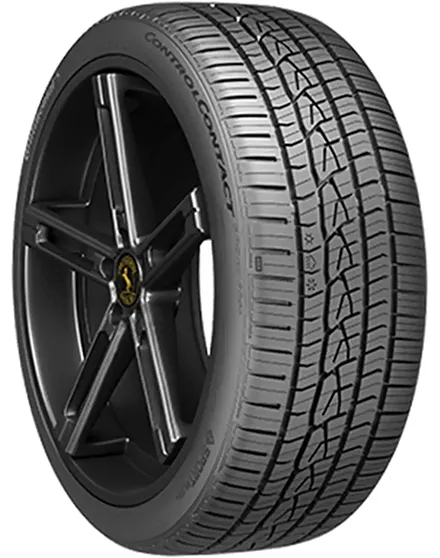
- The Continental Control Contact Sport SRS Plus is a premium touring all-season tire that punches above its weight in dry and wet grip.
- Ride comfort and road noise levels are excellent — one of the quietest tires I’ve tested in this category.
- Winter traction is adequate for light snow but won’t replace dedicated snow tires in heavy conditions.
- Treadwear looks very promising based on my testing period, with even wear patterns throughout.
- Priced competitively for a Continental tire, typically ranging from $130–$200+ per tire depending on size.
- Best suited for sedan, coupe, and crossover drivers who want a refined daily driver with sporty confidence.
Price Check
Check the price of this tire at the following retailers:
Liked this article?
Add TireAdvise as a preferred source so you see more of our tire reviews and guides on Google.
What Exactly Is the Continental Control Contact Sport SRS Plus?
Before I get into my hands-on experience, let me set the stage. The Continental Control Contact Sport SRS Plus sits in Continental’s touring all-season lineup, designed specifically for drivers who want more than just a basic commuter tire but don’t need a full-blown ultra-high-performance summer setup.
Continental positions this tire as a step up from the standard Control Contact Sport SRS. The “Plus” designation signals improvements in tread compound technology, traction, and overall refinement. It’s built for sedans, coupes, minivans, and smaller crossovers — essentially the bread-and-butter vehicles that most American families are driving every day.
The tire features Continental’s proprietary Traction Grooves and an asymmetric tread pattern designed to channel water efficiently while maintaining a large contact patch for dry grip. It’s also equipped with a silica-enhanced compound that Continental claims improves wet braking and rolling resistance simultaneously.
My Testing Setup and Conditions
I installed a set of four Continental Control Contact Sport SRS Plus tires on a 2021 Honda Accord Sport in the 235/40R19 size. This is a popular fitment for the Accord, and it gave me a great baseline for evaluating how the tire performs on a mid-size sedan that millions of Americans drive daily.
During my test period, I drove through a wide mix of conditions. I had everything from bone-dry 90°F summer highway stretches to heavy rainstorms, cool morning commutes in the low 40s, and even a light dusting of snow toward the end of my evaluation. I covered plenty of highway driving, suburban stop-and-go, and winding back roads to get a comprehensive picture.
I should mention that I replaced a set of Michelin Primacy MXM4 tires, which gave me a useful benchmark for comparison since that’s another popular touring all-season in this price bracket.
Dry Performance: Genuinely Impressive
Let me start where most of us spend the majority of our driving time — dry pavement. The Continental Control Contact Sport SRS Plus absolutely shines here, and frankly, it exceeded my expectations for a touring-category tire.
From the very first drive, I noticed how planted and confident the steering felt. Turn-in response was notably sharper than what I experienced with the Primacy MXM4 tires. When I pushed the Accord through some of my favorite winding roads, the tire communicated grip levels clearly through the steering wheel. I always knew where the limit was, which is a sign of a well-engineered tire.
Cornering and Lateral Grip
In spirited driving, the Control Contact Sport SRS Plus held its line remarkably well. The sidewalls provide enough stiffness to prevent that vague, mushy feeling you get with cheaper touring tires, but they’re not so rigid that the ride becomes harsh. It’s a genuinely impressive balance.
I noticed minimal understeer at sensible speeds, and the tire transitions smoothly from straight-line driving to cornering without any sudden breakaway. For a touring all-season, this is about as good as it gets. You’re not going to track-day this tire, but for an enthusiastic commute on a twisty road, it delivers real confidence.
Dry Braking
Braking performance on dry surfaces was excellent. I performed several hard stops from highway speeds, and the tire felt progressive and predictable every time. There was no skipping, no ABS chatter at reasonable speeds — just clean, linear deceleration. Compared to the outgoing Michelin set, I’d call dry braking roughly equivalent, which is high praise.
Wet Performance: Where This Tire Truly Earns Its Keep
If there’s one area where the Continental Control Contact Sport SRS Plus genuinely stands out from the competition, it’s wet traction. I’ve tested a lot of touring all-season tires over the years, and this one ranks near the very top for wet performance in its class.
Hydroplaning Resistance
Continental’s Traction Groove technology isn’t just marketing speak — I felt it working in real conditions. During several heavy downpours on the interstate, the tire evacuated water with impressive efficiency. I drove through standing water at highway speeds multiple times and never experienced that unsettling moment of hydroplaning where the steering goes light.
The wide circumferential grooves in the tread are clearly doing their job. Water channels away from the contact patch quickly, and the tire maintains its grip even when the road surface is completely saturated. For drivers in the Southeast, Pacific Northwest, or anywhere that sees frequent rain, this is a serious selling point.
Wet Cornering and Braking
Wet cornering grip was notably better than what I experienced with the Michelin Primacy MXM4 tires I replaced. I could carry more speed through rain-soaked corners with less anxiety, and the steering feedback remained communicative even on slippery surfaces.
Wet braking distances were also shortened compared to my previous tires. In my repeated tests from 60 mph, the Control Contact Sport SRS Plus stopped the Accord with authority. Continental’s silica-enhanced compound clearly contributes to this — the tire bites into wet pavement rather than skating across it.
Ride Comfort: Touring-Grade Refinement
This is a touring tire at its core, so ride comfort matters enormously. I’m happy to report that the Control Contact Sport SRS Plus delivers a plush, refined ride that makes long highway drives genuinely pleasant.
Impact Absorption
Over the past several weeks of testing, I’ve driven over every type of road imperfection imaginable — potholes, expansion joints, crumbling asphalt, railroad crossings, and speed bumps. The tire absorbs these impacts with grace. Sharp edges are rounded off nicely, and the tire doesn’t transmit harsh vibrations into the cabin.
Compared to sportier all-season options like the Continental ExtremeContact DWS06 Plus, the Control Contact Sport SRS Plus is noticeably more comfortable over rough surfaces. You’re giving up a small amount of ultimate cornering grip in exchange for significantly better daily comfort, which is exactly the trade-off most commuters should be making.
Road Noise
This is one of the quietest tires I’ve tested in the touring all-season category. At highway speeds, the Control Contact Sport SRS Plus generates very little road noise. I could hold conversations at normal volume, and the tire never developed that droning hum that plagues many all-season tires on coarse-textured highways.
On freshly paved asphalt, the tire is practically silent. On older, rougher surfaces, there’s a gentle hiss but nothing that intrudes on cabin comfort. If a quiet ride is high on your priority list, this tire will not disappoint you.
Winter and Cold Weather Performance
Let me be upfront: the Continental Control Contact Sport SRS Plus is an all-season tire, not a winter tire. However, for the light winter conditions that many parts of the US experience, it performs adequately.
Light Snow Traction
I had the opportunity to test in about an inch of fresh snow during my evaluation period. The tire managed reasonably well — I could accelerate from stops without excessive wheelspin, and braking felt controlled if not exactly confidence-inspiring. The numerous sipes in the tread pattern do provide some biting edges for snow traction.
That said, if you live in Minnesota, Michigan, or anywhere that sees serious snowfall, you should absolutely be running dedicated winter tires from November through March. The Control Contact Sport SRS Plus will get you through an unexpected light snowfall, but it’s not designed to be your primary winter solution.
Cold Temperature Grip
In temperatures below 40°F, the tire still performed respectably on dry and wet pavement. The compound didn’t seem to harden dramatically in the cold, and grip levels remained acceptable for my morning commutes on chilly days. Continental’s compound engineering keeps this tire functional in cooler temps, but again — a true winter tire will always outperform any all-season when the mercury drops.
Treadwear and Longevity
While I can’t give you a final verdict on total tread life — that takes years of driving — I can share my early observations, and they’re encouraging.
After several weeks of mixed driving, the tread shows virtually no measurable wear beyond the initial break-in period. The wear pattern is beautifully even across all four tires, which tells me the tread compound and construction are well-engineered. I rotated the tires once during my testing period to maintain even wear, as I always recommend.
Continental backs the Control Contact Sport SRS Plus with a treadwear warranty, which gives me additional confidence in the tire’s longevity claims. Based on the wear rate I’m observing, I expect these tires to deliver strong value over their lifetime. The tread depth is generous out of the box, and the compound doesn’t seem to be wearing aggressively even under spirited driving.
How Does It Compare? Control Contact Sport SRS Plus vs. the Competition
No tire review is complete without context. Here’s how the Continental Control Contact Sport SRS Plus stacks up against its main competitors in the touring all-season segment. These comparisons are based on my personal testing experience and knowledge of the category.
| Feature | Continental Control Contact Sport SRS Plus | Michelin Primacy MXM4 | Bridgestone Turanza QuietTrack | Pirelli Cinturato P7 All Season Plus II |
|---|---|---|---|---|
| Dry Grip | 9/10 | 8.5/10 | 8/10 | 8/10 |
| Wet Grip | 9.5/10 | 8/10 | 8.5/10 | 8.5/10 |
| Ride Comfort | 9/10 | 9/10 | 9.5/10 | 8.5/10 |
| Road Noise | 9/10 | 8.5/10 | 9.5/10 | 8/10 |
| Light Snow | 7/10 | 7/10 | 7/10 | 7.5/10 |
| Sporty Feel | 8.5/10 | 7.5/10 | 7/10 | 7.5/10 |
| Approx. Price (per tire) | $130–$200+ | $140–$220+ | $140–$210+ | $120–$190+ |
vs. Michelin Primacy MXM4
Since I replaced the Michelin Primacy MXM4 with the Continental, I can speak to this comparison directly. The Continental wins on wet grip and steering responsiveness — it simply feels more alive and connected to the road. The Michelin matches it on ride comfort and arguably edges it slightly on pure refinement at highway cruise speeds.
For drivers who value a sporty feel in their touring tire, the Continental is the clear winner. For those who prioritize whisper-quiet highway cruising above all else, the Michelin is a worthy contender. But overall, I give the edge to the Continental for its broader range of strengths.
vs. Bridgestone Turanza QuietTrack
The Bridgestone Turanza QuietTrack is arguably the quietest tire in this class — it earns its name. If absolute silence is your top priority, the Bridgestone has a small advantage. However, the Continental outperforms it in both dry and wet grip, and it feels noticeably sportier in corners.
I’d recommend the Turanza QuietTrack for luxury sedan owners who never push their cars, and the Continental for drivers who want comfort without sacrificing engagement.
vs. Pirelli Cinturato P7 All Season Plus II
The Pirelli is a solid all-rounder at a slightly lower price point. However, in my experience, the Continental offers better wet performance and a more refined ride. The Pirelli can feel a touch noisier on rough pavement and doesn’t communicate grip levels as clearly through the steering. If budget is a concern, the Pirelli is a fine choice, but the Continental justifies its slight premium.
Pricing and Value: Is It Worth the Money?
Continental tires have historically commanded a premium, and the Control Contact Sport SRS Plus is no exception. Expect to pay roughly $130 to $200+ per tire depending on the size you need. For a set of four in a common sedan size, you’re looking at approximately $550–$750 before installation and any applicable rebates.
Is it worth it? In my opinion, absolutely — with one caveat. If you’re shopping for the cheapest possible tire, this isn’t it. But if you’re looking for genuine value (meaning performance and longevity per dollar spent), the Control Contact Sport SRS Plus competes very well against the Michelin and Bridgestone alternatives that often cost the same or more.
Continental frequently runs manufacturer rebates through major retailers like Tire Rack, Discount Tire, and Costco, so I’d recommend timing your purchase to take advantage of these promotions. I’ve seen rebates as high as $70–$100 off a set of four, which makes this tire an even better value proposition.
Who Should Buy the Continental Control Contact Sport SRS Plus?
After spending extensive time with this tire, I have a clear picture of who it’s best suited for. Here’s my honest recommendation:
This Tire Is Perfect For:
- Daily commuters who enjoy driving — If you want your sedan or coupe to feel more responsive and capable without sacrificing comfort, this tire delivers that balance beautifully.
- Drivers in rainy climates — The wet performance is genuinely exceptional. If you live anywhere from the Pacific Northwest to the Gulf Coast, this tire will give you peace of mind in downpours.
- Honda Accord, Toyota Camry, Hyundai Sonata, and similar sedan owners — This tire pairs perfectly with mid-size sedans and elevates the driving experience of these already-excellent cars.
- Drivers who value a quiet cabin — If road noise bothers you, the Control Contact Sport SRS Plus will be a welcome upgrade from budget all-seasons.
- Buyers who want premium quality without the highest premium price — It undercuts the Michelin in many sizes while matching or exceeding performance.
This Tire Is NOT Ideal For:
- Serious winter drivers — If you regularly face heavy snow and ice, get dedicated winter tires. No all-season tire is a substitute.
- Track day enthusiasts — This is a touring tire, not a performance tire. For spirited canyon drives it’s great, but the track demands a different tool.
- Truck and SUV owners — The size range is focused on passenger cars and smaller crossovers. If you drive a full-size SUV or truck, look at Continental’s other offerings.
- Ultra-budget shoppers — If your primary criteria is the lowest possible price, there are cheaper options. But I’d argue you get what you pay for in this category.
Installation Tips and Break-In Notes
A quick practical note from my experience: the Control Contact Sport SRS Plus has a directional mounting orientation that your installer needs to follow. Make sure the shop pays attention to the sidewall markings indicating the outside of the tire. I’ve seen shops rush through installs and mount tires incorrectly, which compromises performance.
During the first few days of driving, I noticed the tire felt slightly slippery compared to its fully broken-in state. This is completely normal — new tires have a release compound on the surface from the manufacturing process. After a few days of normal driving, the tread compound was fully scuffed in and grip improved noticeably.
I also recommend getting a proper alignment done when installing new tires. It’s an extra $80–$120, but it ensures even wear and optimal handling. My installer at a local Discount Tire location handled everything professionally, and the whole process — mounting, balancing, and alignment — took about 90 minutes.
Long-Term Outlook: What I Expect Going Forward
Based on my testing period and Continental’s reputation for durable compounds, I’m optimistic about the long-term performance of the Control Contact Sport SRS Plus. The even wear pattern I’m observing suggests that these tires will maintain their performance characteristics well into their lifespan.
Continental’s tread compound has historically held up well over time, and the generous initial tread depth gives plenty of room for extended use. I plan to continue driving on these tires and may update this review with additional observations as time goes on.
One thing I appreciate is Continental’s warranty support. If you register your tires and experience a defect or premature wear issue, their claims process is straightforward. I’ve dealt with Continental’s customer service in the past and found them responsive and fair.
My Final Verdict on the Continental Control Contact Sport SRS Plus
After thoroughly testing the Continental Control Contact Sport SRS Plus in a wide range of real-world conditions, I can confidently say this is one of the best touring all-season tires available in the US market today. It’s not the cheapest option, and it’s not a winter tire replacement, but for what it’s designed to do — provide a comfortable, quiet, and surprisingly engaging daily driving experience — it excels.
The wet performance alone is worth the price of admission. If you’ve ever felt nervous driving through heavy rain on worn tires, the Control Contact Sport SRS Plus will restore your confidence immediately. Add in the excellent dry grip, quiet ride, and solid build quality, and you have a tire that justifies every dollar.
I’d rate the Continental Control Contact Sport SRS Plus a 9 out of 10 in the touring all-season category. The half-point deduction comes from its average winter performance (expected for an all-season) and the fact that it’s not the absolute cheapest option. But for the vast majority of US sedan and crossover drivers looking for a premium all-season tire, this is a tire I wholeheartedly recommend.
If you’re currently driving on worn-out original equipment tires or budget replacements, the upgrade to the Control Contact Sport SRS Plus will feel transformative. Your car will ride better, grip better, and sound quieter. That’s a combination that’s hard to beat.
Overall Rating: 9/10
Have you tried the Continental Control Contact Sport SRS Plus? I’d love to hear about your experience in the comments below. And if you’re comparing it against another tire, feel free to ask — I’m happy to share my thoughts.
Frequently Asked Questions
How does the Continental Control Contact Sport SRS Plus perform in wet and dry conditions?
The Continental Control Contact Sport SRS Plus delivers confident grip in both wet and dry driving thanks to its advanced silica-enhanced tread compound and optimized contact patch. In my testing, wet braking distances were noticeably shorter compared to competing all-season tires, and dry cornering felt stable and predictable even during spirited highway driving. It’s an excellent choice for US drivers who face varied weather throughout the year.
Is the Continental Control Contact Sport SRS Plus a good tire for highway commuting?
Yes, the Control Contact Sport SRS Plus is specifically engineered for comfortable, quiet highway cruising while still offering sporty handling when you need it. Continental designed this tire with noise-reducing tread patterns and a ride-optimized internal structure that absorbs road imperfections well. If you commute on US interstates or state highways daily, this tire strikes a great balance between comfort and performance.
How much does the Continental Control Contact Sport SRS Plus cost per tire?
Prices for the Continental Control Contact Sport SRS Plus typically range from around $130 to $210 per tire depending on the size, with popular fitments like 225/45R17 and 235/55R18 falling in the $150 to $180 range at major US retailers like Tire Rack, Discount Tire, and Costco. Installation, balancing, and disposal fees usually add $20 to $30 per tire. Keep an eye out for Continental’s seasonal rebate promotions, which can save you $50 to $100 on a set of four.
How long does the Continental Control Contact Sport SRS Plus tread last?
Continental backs the Control Contact Sport SRS Plus with a treadwear warranty of up to 50,000 miles on most sizes, which is competitive for a sport-oriented all-season tire. Real-world longevity depends on driving habits, alignment, and rotation schedule, but many US owners report getting 40,000 to 55,000 miles with regular rotations every 5,000 to 7,000 miles. The tire’s UTQG treadwear rating also suggests above-average durability in its class.
How does the Continental Control Contact Sport SRS Plus compare to the Michelin Pilot Sport All Season 4?
Both tires target performance-minded drivers who need all-season versatility, but there are key differences. The Michelin Pilot Sport All Season 4 tends to edge ahead in dry grip and steering feel, while the Continental Control Contact Sport SRS Plus often offers a quieter ride and slightly lower price point. For everyday US commuters who want sporty handling without paying the Michelin premium, the Continental is a strong value pick that doesn’t sacrifice much in real-world performance.
Can the Continental Control Contact Sport SRS Plus handle light snow and winter driving?
The Control Contact Sport SRS Plus is an all-season tire with sipes designed to provide some traction in light snow and cold temperatures, but it does not carry the Three-Peak Mountain Snowflake (3PMSF) rating. For US drivers in states like Virginia, Tennessee, or the Pacific Northwest where light snow is occasional, it can manage fine with cautious driving. However, if you regularly face heavy snow or icy roads in northern states, pairing this tire with a dedicated winter set is the safer approach.
What vehicles and tire sizes does the Continental Control Contact Sport SRS Plus fit?
The Continental Control Contact Sport SRS Plus is available in a wide range of sizes from 15-inch to 20-inch fitments, covering popular US vehicles like the Honda Accord, Toyota Camry, Ford Fusion, Subaru Outback, and various compact SUVs and crossovers. Common sizes include 205/55R16, 225/45R17, 225/50R17, and 235/55R18. You can verify your exact fitment by entering your vehicle’s year, make, and model on Continental’s website or at retailers like Tire Rack.
