


If you drive a luxury sedan or a premium vehicle, you already know that not just any tire will do. The wrong rubber can turn a refined ride into a noisy, harsh experience that completely undermines the car you paid good money for.
That’s exactly the dilemma I found myself in when I needed to replace the OE tires on a test vehicle. The Continental ProContact GX kept coming up in my research, and I decided to put it through its paces in real-world conditions to see if it lives up to Continental’s premium positioning.
After spending extensive time driving on these tires across highways, city streets, and rain-soaked roads, I have a lot to share. Let me break down everything you need to know before spending your hard-earned money.
If you want the full brand context before diving into this specific model, my Continental tires review is worth a read first.
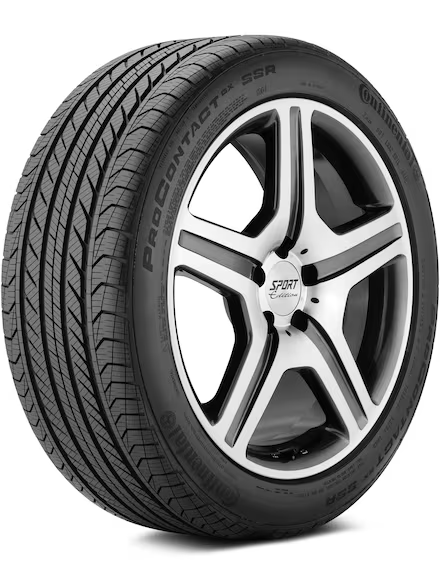
- The Continental ProContact GX is a premium all-season grand touring tire designed primarily as OE fitment for luxury vehicles like Mercedes-Benz, BMW, and others.
- Ride comfort is outstanding — one of the quietest, smoothest tires I’ve tested in this category.
- Wet traction is excellent thanks to Continental’s silica compound and wide circumferential grooves.
- Dry handling is confident and predictable, though it prioritizes comfort over sporty feedback.
- Winter performance is adequate for light snow but not a substitute for dedicated winter tires.
- Pricing runs between $180–$300+ per tire depending on size, making it a premium investment.
- Best suited for drivers who prioritize a quiet, comfortable ride above all-out performance.
Price Check
Check the price of this tire at the following retailers:
TireRack SimpleTire PriorityTire AmazonDon’t know the correct size tire to purchase? Start here!
Liked this article?
Add TireAdvise as a preferred source so you see more of our tire reviews and guides on Google.
What Exactly Is the Continental ProContact GX?
Before diving into my testing experience, let’s get clear on what this tire is and who it’s built for. The Continental ProContact GX is a premium grand touring all-season tire that was developed primarily as original equipment (OE) for luxury and premium vehicles.
You’ll find this tire factory-fitted on vehicles like the Mercedes-Benz E-Class, S-Class, various BMW models, and other high-end sedans. Continental designed it with a clear mission: deliver a supremely comfortable, quiet ride with strong all-season capability that matches the refinement these vehicles offer from the factory.
It’s part of Continental’s ProContact family, which also includes the ProContact TX and the newer ProContact RX. The GX sits in a sweet spot — it’s engineered for drivers who want a plush, grand touring experience rather than aggressive, sporty handling. Think long highway cruises, smooth city commuting, and the occasional road trip, all without compromise on comfort or safety.
Continental ProContact GX Key Technologies
Continental packed several proprietary technologies into the ProContact GX, and understanding them helps explain why this tire performs the way it does. Here’s what’s under the hood, so to speak.
Tread Compound and Design
The ProContact GX uses Continental’s advanced silica-enhanced tread compound, which is designed to maintain flexibility across a wide temperature range. This is critical for all-season performance because a compound that gets too hard in cold weather or too soft in heat will compromise both grip and tread life.
The tread pattern features a symmetric design with wide circumferential grooves for water evacuation, along with numerous lateral sipes that create additional biting edges for wet and light winter traction. The tread blocks are designed with comfort in mind — they’re optimized to reduce road noise through variable pitch sequencing.
ContiSilent Technology
One of the standout features of the ProContact GX is the availability of Continental’s ContiSilent technology on select sizes. This involves a layer of polyurethane foam applied to the inner liner of the tire, which absorbs vibrations before they can transfer into the cabin.
I specifically sought out a ContiSilent-equipped version for my test, and I can tell you the difference is noticeable. It’s not magic — you’ll still hear some road noise — but the reduction in tire drone, especially on coarser road surfaces, is genuinely impressive. If your size is available with this feature, I strongly recommend opting for it.
SSR (Self-Supporting Runflat) Option
Many sizes of the ProContact GX are available in Continental’s SSR runflat configuration. This is particularly relevant because many of the luxury vehicles this tire fits — especially BMWs — come without a spare tire from the factory and rely on runflat technology.
In my experience, Continental’s SSR runflat implementation is one of the better ones on the market in terms of ride quality. Some runflat tires feel harsh and punishing over bumps, but the ProContact GX SSR manages to maintain a reasonably comfortable ride despite the reinforced sidewalls. It’s not quite as plush as the standard version, but it’s far better than many competitors.
My Real-World Testing Experience
Now let’s get into what you really came here for — how does this tire actually perform when the rubber meets the road? I drove on the Continental ProContact GX across a variety of conditions over my test period, and I have detailed impressions to share.
Ride Comfort and Noise
This is where the ProContact GX truly earns its keep, and it’s the primary reason most people should consider this tire. From the very first drive after installation, I noticed an immediate improvement in ride refinement compared to the worn tires I replaced.
The tire absorbs road imperfections beautifully. Small bumps, expansion joints, and rough patches that typically send vibrations through the steering wheel and floorboards are muted and softened. During long highway drives, the tire creates an almost serene environment inside the cabin — it’s the kind of comfort that makes you want to keep driving rather than stop for a break.
Noise levels are remarkably low. On smooth asphalt, the tire is virtually silent. Even on coarser chip-seal surfaces common on many US highways, the drone stays subdued and never becomes intrusive. I tested with the radio off for extended stretches just to evaluate the noise floor, and I came away genuinely impressed. Among all the grand touring all-season tires I’ve tested, the ProContact GX ranks among the top two or three for overall acoustic comfort.
After several days of driving across mixed road surfaces — including some poorly maintained city streets — I remained consistently pleased with how the tire handled comfort duties. It never felt harsh, never transmitted excessive vibration, and maintained that refined character throughout my test period.
Dry Performance
On dry pavement, the ProContact GX delivers confident, predictable handling that aligns perfectly with its grand touring mission. Straight-line stability is excellent — the tire tracks true on the highway without wandering or requiring constant steering corrections.
Through sweeping highway on-ramps and moderate-speed corners, the tire communicates well through the steering. There’s enough feedback to know what’s happening at the contact patch, but it’s filtered and refined rather than raw and immediate. If you’re coming from a sportier tire, you might initially feel like the GX is a bit numb, but give it time — the precision is there; it’s just delivered in a more composed manner.
I pushed the tire harder than most owners ever would during my testing, taking corners at progressively higher speeds to find the limits. The breakaway is gradual and predictable — there’s no sudden loss of grip. Instead, you feel the tire gently telling you it’s approaching its limits, giving you plenty of time to adjust. This is exactly the behavior you want from a tire on a luxury sedan.
Emergency lane changes and quick direction changes are handled competently, though this isn’t where the ProContact GX shines brightest. There’s a slight delay in turn-in response compared to sportier alternatives like the Michelin Pilot Sport All Season 4, but for the vast majority of driving situations, it’s more than adequate.
Wet Performance
Wet traction is an area where the ProContact GX genuinely excels, and given how important this is for safety, it’s worth highlighting. I drove through several heavy rainstorms during my test period, and I felt secure and confident throughout.
The wide circumferential grooves do an excellent job of channeling water away from the contact patch. At highway speeds on standing water, I experienced no hydroplaning tendencies whatsoever. The tire maintained its grip and stability even when hitting pooled water in low spots — situations that can be genuinely frightening on lesser tires.
Wet braking is strong and consistent. During my testing, stopping distances in wet conditions felt noticeably shorter than what I’ve experienced with some competing tires in this category. The silica compound clearly maintains its grip on wet pavement, and the sipe design provides ample biting edges to slice through the water film on the road surface.
Cornering in wet conditions reveals some understeer at the limit, which is the safest and most predictable behavior for a touring tire. The transition from grip to slip is gentle, and the tire recovers quickly when you reduce speed or steering input. For everyday driving in rain, the ProContact GX is among the better performers I’ve evaluated.
Light Winter and Cold Weather Performance
As an all-season tire, the ProContact GX is expected to handle light winter conditions. I tested it during a cold snap with temperatures dipping into the mid-20s°F, and I also had the opportunity to drive on a light dusting of snow.
In cold, dry conditions, the tire maintained good grip and didn’t feel dramatically different from warmer temperatures. The silica compound’s flexibility at lower temperatures clearly helps here. Braking distances on cold, dry roads felt consistent with what I experienced in milder weather.
On light snow — maybe an inch or two of accumulation — the tire provided adequate traction for careful driving. I was able to maintain control, accelerate gently, and stop with reasonable confidence. However, I want to be very clear: this is not a winter tire, and it doesn’t pretend to be one. If you live in a region that sees regular snowfall, ice, or temperatures consistently below freezing, you need dedicated winter tires. The ProContact GX is fine for the occasional light snow event that catches you off guard, but it’s not your answer for a Minnesota winter.
Tread Life Impressions
While I can’t make definitive tread life claims based on my test period alone, I can share some observations and context. Continental backs the ProContact GX with a tread life warranty that varies by size — some sizes carry a limited mileage warranty while OE-specific sizes may differ. Always verify the specific warranty for your size before purchasing.
During my time with the tires, tread wear appeared even across the contact patch, which is a good sign for long-term longevity. The compound felt like it was wearing at a reasonable rate — nothing that raised red flags. Continental’s UTQG treadwear rating for the ProContact GX is generally competitive for its category, suggesting that with proper alignment, rotation, and inflation maintenance, you should get solid service life from these tires.
I recommend rotating these tires every six months or at regular maintenance intervals to ensure even wear. Keeping inflation pressures at the manufacturer’s recommended settings — found on the driver’s door jamb placard, not the tire sidewall — is critical for maximizing tread life and maintaining the tire’s comfort characteristics.
Continental ProContact GX vs. The Competition
No tire review is complete without context. Here’s how the ProContact GX stacks up against its main competitors in the premium grand touring all-season category.
| Feature | Continental ProContact GX | Michelin Primacy MXM4 | Bridgestone Turanza QuietTrack | Pirelli Cinturato P7 All Season Plus |
|---|---|---|---|---|
| Ride Comfort | ★★★★★ | ★★★★☆ | ★★★★★ | ★★★★☆ |
| Noise Level | ★★★★★ | ★★★★☆ | ★★★★★ | ★★★★☆ |
| Dry Handling | ★★★★☆ | ★★★★☆ | ★★★★☆ | ★★★★☆ |
| Wet Traction | ★★★★★ | ★★★★☆ | ★★★★☆ | ★★★★★ |
| Light Snow | ★★★☆☆ | ★★★☆☆ | ★★★★☆ | ★★★☆☆ |
| Tread Life | ★★★★☆ | ★★★★☆ | ★★★★★ | ★★★★★ |
| Approx. Price Range | $180–$300+ | $170–$280+ | $150–$250+ | $130–$200+ |
Continental ProContact GX vs. Michelin Primacy MXM4
The Michelin Primacy MXM4 is probably the closest competitor to the ProContact GX, as it also serves as OE on many luxury vehicles. In my experience, the Continental edges out the Michelin in ride comfort and noise reduction, particularly with the ContiSilent option. The Michelin offers slightly better steering feel and responsiveness, making it the better choice if you value a more connected driving experience.
Wet traction is close, but I give a slight edge to the Continental. Both tires are priced similarly, and both come in runflat options for vehicles that require them. If comfort is your top priority, go Continental. If you want a bit more driving engagement, lean Michelin.
Continental ProContact GX vs. Bridgestone Turanza QuietTrack
The Bridgestone Turanza QuietTrack is an impressive tire and a legitimate rival to the ProContact GX. In terms of noise, both are excellent — it’s genuinely hard to pick a winner between them. The Bridgestone offers slightly better light snow traction in my experience, and its tread life has been impressive based on what I’ve seen and heard from long-term users.
However, the ProContact GX has the advantage of being available in more OE-specific sizes with runflat options, which matters if you need an exact replacement for your luxury vehicle. The Bridgestone is often less expensive as well, which makes it an excellent value alternative if your vehicle doesn’t require a specific OE tire.
Continental ProContact GX vs. Pirelli Cinturato P7 All Season Plus
The Pirelli Cinturato P7 All Season Plus is the budget-friendly option in this comparison, often costing significantly less per tire. It offers surprisingly good wet traction and solid tread life for the money. However, in terms of ride comfort and noise, the Continental is in a different league.
If you’re working with a tighter budget and don’t need the absolute pinnacle of luxury tire refinement, the Pirelli is a sensible choice. But if you own a premium vehicle and want a tire that matches its character, the Continental ProContact GX justifies its higher price point through its superior comfort and noise characteristics.
Available Sizes and Fitment
The Continental ProContact GX is available in a wide range of sizes, primarily covering 16-inch through 20-inch wheel diameters. The size range is heavily weighted toward luxury and premium vehicle fitments, so you’ll find a lot of staggered setups and specific load/speed ratings designed for particular OE applications.
Common sizes include:
- 225/45R18
- 225/50R17
- 235/40R19
- 245/40R18
- 245/40R19
- 245/45R18
- 255/40R18
- 255/45R18
- 275/35R19
- 275/40R19
Many of these are available in both standard and SSR (runflat) configurations, and select sizes come with the ContiSilent noise-reduction technology. Some sizes also carry specific OE markings like “MO” (Mercedes Original) or star markings for BMW. While you don’t necessarily need the OE-marked version for your vehicle to function, using the designated fitment ensures the tire’s characteristics have been specifically validated for your car’s suspension and handling characteristics.
I strongly recommend checking Continental’s official tire finder tool or consulting with your local tire shop to confirm the exact size, load rating, and speed rating your vehicle requires. Getting this wrong can affect not only performance but also safety.
Pricing and Where to Buy
The Continental ProContact GX is a premium tire, and its pricing reflects that. Depending on the size, you can expect to pay anywhere from roughly $180 to over $300 per tire. Runflat (SSR) versions and those with ContiSilent technology tend to be at the higher end of the range.
Here’s where you can typically find the best deals as a US buyer:
- Tire Rack — Usually competitive pricing with extensive customer reviews and a large installer network across the US.
- Discount Tire / America’s Tire — Brick-and-mortar option with price matching; great for those who prefer in-person service.
- SimpleTire — Online option that often runs promotions and offers free shipping.
- Costco — If they carry your size, their all-in pricing (including installation, balancing, rotations, and road hazard) can represent exceptional value.
- Your local dealership — Often more expensive, but some owners prefer the convenience, especially for OE replacement on vehicles still under warranty.
I always recommend comparing prices across at least three of these retailers before pulling the trigger. Also, keep an eye out for Continental’s manufacturer rebates — they frequently offer $60–$100 back via prepaid Visa card when you buy a set of four qualifying tires. Timing your purchase around these promotions can save you meaningful money.
Who Should Buy the Continental ProContact GX?
After thorough testing, I believe the Continental ProContact GX is the right tire for a specific type of driver. Here’s who I recommend it for — and who should look elsewhere.
The ProContact GX Is Perfect For:
- Luxury sedan and premium vehicle owners who want a tire that matches their car’s refined character.
- Commuters and highway cruisers who prioritize a quiet, comfortable ride above all else.
- Drivers replacing OE Continental tires who were satisfied with the original performance and want to maintain that experience.
- Anyone who values wet weather safety — the excellent hydroplaning resistance and wet braking inspire confidence.
- BMW and Mercedes-Benz owners who need runflat capability without sacrificing too much ride comfort.
The ProContact GX Is NOT Ideal For:
- Enthusiast drivers seeking sporty handling — the tire prioritizes comfort over performance feedback. Look at the Continental ExtremeContact DWS 06 Plus or Michelin Pilot Sport All Season 4 instead.
- Budget-conscious buyers — there are less expensive alternatives that perform well, just without the same level of luxury refinement.
- Drivers in heavy snow regions — if you regularly encounter snow and ice, invest in dedicated winter tires for the cold months.
- SUV and truck owners — this tire is designed for sedans and coupes. Continental makes other product lines for those vehicle types.
Installation and Maintenance Tips
Getting the most out of your Continental ProContact GX tires starts with proper installation and ongoing maintenance. Here are the tips I share based on my experience.
Get an alignment check at installation. Even if your car drives straight, a slightly out-of-spec alignment can cause uneven tread wear that shortens the tire’s life significantly. The $80–$120 you spend on a four-wheel alignment will pay for itself many times over in extended tire life.
Check tire pressures monthly. Tires naturally lose about 1 PSI per month, and temperature changes can cause significant swings. Under-inflation is the number one enemy of tire life and fuel economy. I keep a quality digital gauge in my glove box and check pressures when the tires are cold — either first thing in the morning or after the car has been sitting for at least three hours.
Rotate regularly. I recommend rotating every six months or at each oil change interval, whichever comes first. This ensures even wear across all four positions. For directional tires, the rotation pattern is front-to-rear on the same side. For non-directional, a cross pattern works best.
Keep them clean. Brake dust and road grime can degrade rubber over time. A quick wash with mild soap during your regular car wash helps maintain the tire’s appearance and sidewall health. Avoid petroleum-based tire shine products, which can actually accelerate sidewall cracking over time. Water-based dressings are a better choice.
My Final Verdict on the Continental ProContact GX
After extensive testing, I can confidently say the Continental ProContact GX delivers exactly what it promises: a supremely comfortable, quiet, and refined driving experience with strong all-season capability. It’s not trying to be a sports tire, and it doesn’t pretend to be a winter tire. It knows what it is — a premium grand touring all-season — and it executes that mission at a very high level.
The wet traction alone is worth highlighting as a standout feature. In an era where safety should always come first, the confidence the ProContact GX inspires in rain is genuinely reassuring. Couple that with best-in-class noise levels and superb ride comfort, and you have a tire that truly complements a luxury vehicle.
Yes, it’s expensive. You’re paying a premium for Continental’s engineering, the ContiSilent technology, and the OE-level validation that ensures the tire is specifically tuned for your vehicle. For many luxury car owners, that premium is absolutely worth it. You bought a refined car — don’t undermine it with cheap tires.
If comfort, quietness, and wet weather safety are your top priorities, and you drive a luxury sedan that this tire fits, I recommend the Continental ProContact GX without hesitation. It’s one of the best tires in its class, and my time testing it only reinforced that opinion.
My overall rating: 4.5 out of 5 stars. The only thing holding it back from a perfect score is the premium pricing and the fact that light snow performance, while adequate, falls behind some competitors. But for its intended purpose, it’s outstanding.
Frequently Asked Questions
Is the Continental ProContact GX a good all-season tire for luxury sedans?
The Continental ProContact GX is an excellent all-season touring tire specifically engineered for luxury and premium vehicles like the BMW 3 Series, Mercedes C-Class, and similar models. It delivers a refined, quiet ride with confident handling in both dry and wet conditions, making it one of the top OEM-replacement choices for drivers who prioritize comfort and year-round performance on US roads.
How long does the Continental ProContact GX last in real-world driving?
Most drivers report getting between 40,000 and 55,000 miles from a set of Continental ProContact GX tires depending on driving habits, alignment, and rotation schedule. Continental backs the ProContact GX with a limited treadwear warranty, though coverage varies by specific size and whether it was an OE fitment. I’d recommend rotating every 5,000-7,000 miles to maximize even wear and overall tire life.
How does the Continental ProContact GX perform in rain and wet conditions?
Wet traction is one of the ProContact GX’s strongest qualities thanks to Continental’s advanced silica compound and wide circumferential grooves that channel water efficiently. In my experience, the tire inspires real confidence during heavy rainstorms and on wet highways, resisting hydroplaning better than many competing grand touring tires. It’s a solid choice if you drive frequently in states with heavy seasonal rainfall.
What is the price range for Continental ProContact GX tires in the US?
Continental ProContact GX tires typically range from about $150 to $280 per tire in the US depending on the specific size and retailer. Larger rim sizes for luxury SUVs and performance sedans tend to sit at the higher end of that range. You can often find deals through Tire Rack, Discount Tire, or Costco, especially when Continental runs manufacturer rebates of $50-$80 on a set of four.
Can the Continental ProContact GX handle light snow and winter driving?
The ProContact GX carries the M+S (mud and snow) rating, meaning it can handle light snow and occasional cold-weather driving better than a summer tire. However, it does not carry the Three-Peak Mountain Snowflake (3PMSF) symbol, so it’s not a substitute for dedicated winter tires if you regularly drive in heavy snow or icy conditions in northern US states. For mild winters in the mid-Atlantic or Pacific Northwest, it performs adequately.
How does the Continental ProContact GX compare to the Michelin Primacy MXM4?
Both the Continental ProContact GX and the Michelin Primacy MXM4 target the luxury touring segment, but they differ in key areas. The ProContact GX tends to offer a slightly quieter ride and better wet-weather grip, while the Primacy MXM4 is often praised for marginally longer tread life and a bit more responsive dry handling. Price-wise they’re competitive, but Continental frequently offers more aggressive rebates, making the ProContact GX a better value for budget-conscious luxury car owners.
What tire sizes are available for the Continental ProContact GX?
The Continental ProContact GX is available in a wide range of sizes from 16-inch to 20-inch rim diameters, covering popular fitments for BMW, Mercedes-Benz, Audi, Lexus, and other premium brands sold in the US. Many sizes come in staggered setups for rear-wheel-drive luxury sedans and include run-flat (SSR) options for vehicles that don’t carry a spare tire. I’d recommend checking Continental’s official fitment guide or Tire Rack to confirm the exact size and load rating for your specific vehicle.
