


If you’ve ever stood in a tire shop staring at a wall of black rubber circles, wondering which one won’t leave you broke or disappointed, you’re not alone.
I was in the same spot not long ago when I needed to replace the OEM tires on a luxury sedan. The Continental ProContact TX kept popping up — recommended by dealerships, listed as original equipment on dozens of popular vehicles, and priced in that “not cheap, not outrageous” middle ground that makes you wonder if it’s actually any good.
So I got a set, put them through real-world driving conditions, and I’m here to tell you exactly what I found — the good, the bad, and everything in between.
Before diving in, if you’re still getting familiar with the brand, my Continental tires review covers everything you need to know about whether Continental belongs on your shortlist.
- The Continental ProContact TX is a solid all-season touring tire that excels in ride comfort and dry grip.
- It’s factory-fitted on many BMW, Mercedes-Benz, Audi, and Volkswagen models — and it lives up to the OE reputation.
- Wet traction is good but not class-leading; light snow performance is adequate but limited.
- Road noise is impressively low, making it a great choice for daily commuters and highway cruisers.
- Treadwear looks promising based on my testing period — I expect solid longevity from this tire.
- Priced around $140–$220 per tire depending on size, it offers strong value for the premium touring segment.
Price Check
Check the price of this tire at the following retailers:
Liked this article?
Add TireAdvise as a preferred source so you see more of our tire reviews and guides on Google.
What Exactly Is the Continental ProContact TX?
The Continental ProContact TX is an all-season touring tire designed primarily for luxury sedans, coupes, and crossovers. Continental positions it as a comfort-oriented tire that still delivers confident handling — a balance that’s harder to achieve than most people realize.
What makes this tire notable is its widespread use as original equipment (OE). If you drive a BMW 3 Series, Mercedes-Benz C-Class, Audi A4, Volkswagen Jetta, or similar European-brand vehicle, there’s a strong chance your car rolled off the lot with ProContact TX tires. That OE pedigree tells you something — automakers don’t slap just any tire on their vehicles when reputation is on the line.
Continental offers the ProContact TX in a wide range of sizes, from 15-inch fitments all the way up to 20-inch options, covering everything from compact sedans to mid-size luxury SUVs. Many sizes also come with manufacturer-specific markings like the BMW star symbol or the Mercedes-Benz MO designation.
Key Features and Technology
Before I get into how this tire performs on the road, let me break down the technology Continental baked into the ProContact TX. Understanding the engineering helps explain why it drives the way it does.
Tread Compound and Design
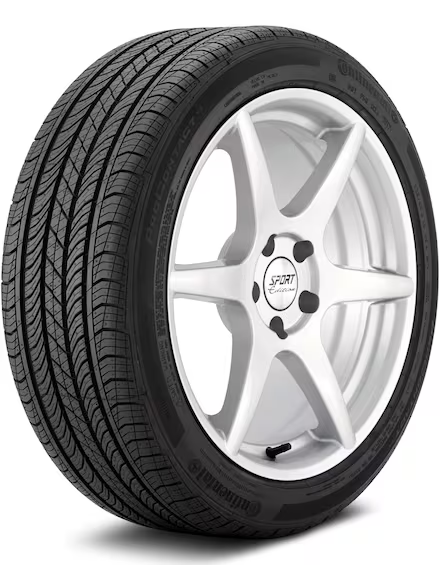
Continental uses their proprietary +Silane additive in the tread compound, which is designed to improve wet and dry grip while also promoting even treadwear. The tread pattern features a symmetric design with continuous center ribs — a hallmark of touring tires built for stable, quiet highway driving.
The shoulder blocks are relatively tight and closely spaced, which contributes to the tire’s low noise profile. You’ll also notice multiple sipes cut into the tread blocks — these thin slits help channel water and provide some biting edges for light winter traction.
Comfort and Noise Reduction
Continental designed the ProContact TX with what they call Comfort Ride Technology. This involves an optimized carcass construction and a specific sidewall profile intended to absorb road imperfections. In practice, I found this to be one of the tire’s strongest selling points — but more on that shortly.
All-Season Versatility
The tire features open lateral grooves and a multi-siped tread pattern to handle wet conditions and light snow. It’s not a winter tire by any means, but Continental designed it to provide year-round capability in moderate climates — which covers a huge swath of the US driving population.
My Real-World Testing Experience
I tested the Continental ProContact TX on a 2020 BMW 330i — a car that’s picky about its tires and reveals differences in tire performance more readily than most sedans. I drove them across a variety of conditions: daily commuting, highway road trips, rain-soaked city streets, and even a brief encounter with some early-season light snow.
Here’s how they performed across every category that matters.
Dry Road Performance
In dry conditions, the ProContact TX is genuinely impressive. Straight-line stability on the highway is rock-solid, and the tire tracks precisely through sweeping curves without the vague, rubbery feeling you sometimes get with comfort-oriented tires.
During my test period, I drove several stretches of winding mountain roads in the Appalachian region, and the ProContact TX held its composure well. Turn-in response was crisp enough to feel connected to the road, even if it didn’t have the razor-sharp feedback of a dedicated performance tire like the Continental ExtremeContact Sport.
Braking in dry conditions was confident and predictable. I never felt like the tires were the weak link, even during a couple of hard stops in traffic. For a touring tire, the dry grip here is firmly above average.
Wet Road Performance
Wet traction is where things get a little more nuanced. The ProContact TX handles rain-soaked roads competently — I drove through several heavy downpours during my testing, and the tires maintained good grip through corners and felt stable under braking.
However, I’ll be honest: wet performance isn’t where this tire truly shines. On really saturated roads at higher speeds, I noticed a slight reduction in steering feedback that I didn’t experience with tires like the Michelin Primacy MXM4 or the Bridgestone Turanza QuietTrack. It’s not unsafe by any stretch — it’s just not class-leading in the wet.
Hydroplaning resistance was adequate during my time with the tires. The lateral grooves do a reasonable job of evacuating water, but I’d exercise a bit more caution in standing water compared to some competing tires. For typical rainy-day driving in cities and on highways, though, you’ll be perfectly fine.
Light Snow and Cold Weather
I happened to catch an early cold snap during my test period, which gave me a chance to evaluate the ProContact TX on cold, icy roads and a light dusting of snow. It performed about how I expected — adequately, but with clear limitations.
On cold, dry pavement, the tire didn’t lose much grip compared to warmer conditions, which is encouraging. On a thin layer of snow, the sipes provided enough bite to maintain forward progress and basic directional control. But anything beyond a light coating, and you’ll feel the tire struggling for traction.
If you live in the northern US or anywhere that sees regular snowfall, I’d strongly recommend a dedicated winter tire set for the cold months. The ProContact TX is an all-season tire, not an all-weather warrior.
Ride Comfort
This is where the Continental ProContact TX absolutely earns its stripes. Ride comfort is outstanding — easily one of the most comfortable touring tires I’ve tested in this price range.
The tire does an excellent job of isolating you from road imperfections. Expansion joints, rough pavement patches, and small potholes that would normally send a jolt through the cabin are noticeably muted. After several days of driving on a mix of well-maintained highways and rougher secondary roads, I was genuinely impressed by how plush the ride felt.
For a car like the BMW 330i — which can ride a bit firm depending on the tire choice — the ProContact TX softened things up without introducing any sloppiness. It’s a refined, controlled comfort that suits the character of a luxury sedan perfectly.
Road Noise
Closely related to comfort is road noise, and the ProContact TX impresses here as well. At highway speeds, tire noise is remarkably subdued. I could carry on conversations at normal volume, enjoy music without cranking the stereo, and generally forget the tires were even there — which is exactly what you want from a touring tire.
On coarse-chip asphalt (the kind that makes almost any tire loud), the ProContact TX stayed relatively quiet compared to competitors. There’s a faint hum at certain speeds, but it’s smooth and consistent — not the kind of pattern noise that gets under your skin during long drives.
In my experience, only the Michelin Primacy Tour A/S is noticeably quieter in this segment, and that tire costs more in most sizes.
Treadwear and Longevity
While I can’t give a definitive longevity verdict based on my test period alone, I can share what I observed. After several weeks of varied driving, tread wear was minimal and appeared very even across the contact patch. The tread compound feels durable without being overly hard.
The Continental ProContact TX carries a UTQG treadwear rating that varies by size but generally falls in the 500–700 range, which is typical for this class. Continental also backs this tire with a limited treadwear warranty, though the specifics depend on the size and whether it’s an OE replacement or aftermarket purchase — so check with your retailer.
Based on what I’ve seen so far, I’d expect this tire to deliver competitive longevity for its category. The even wear pattern is a good sign, and Continental’s silica-enriched compound has a solid track record for durability.
Continental ProContact TX vs. The Competition
No tire exists in a vacuum, so let’s see how the ProContact TX stacks up against the most common alternatives in the all-season touring segment. These are the tires I most often get asked about when people are cross-shopping.
| Feature | Continental ProContact TX | Michelin Primacy MXM4 | Bridgestone Turanza QuietTrack | Pirelli Cinturato P7 A/S Plus |
|---|---|---|---|---|
| Dry Grip | ★★★★☆ | ★★★★☆ | ★★★★☆ | ★★★★☆ |
| Wet Grip | ★★★½☆ | ★★★★☆ | ★★★★½ | ★★★★☆ |
| Ride Comfort | ★★★★★ | ★★★★☆ | ★★★★½ | ★★★★☆ |
| Road Noise | ★★★★★ | ★★★★☆ | ★★★★★ | ★★★★☆ |
| Snow Traction | ★★★☆☆ | ★★★☆☆ | ★★★½☆ | ★★★☆☆ |
| Treadwear | ★★★★☆ | ★★★★☆ | ★★★★½ | ★★★★½ |
| Price Range (per tire) | $140–$220 | $160–$260 | $150–$240 | $130–$200 |
vs. Michelin Primacy MXM4
The Michelin Primacy MXM4 is probably the most direct competitor and the one I get asked about most. In my experience, the Michelin has a slight edge in wet grip and overall handling precision, but the Continental wins on ride comfort and is typically less expensive.
If you prioritize a plush, quiet ride and want to save some money, the ProContact TX is the better pick. If you want the most well-rounded wet-weather performance and don’t mind paying a premium, go Michelin.
vs. Bridgestone Turanza QuietTrack
The Turanza QuietTrack is a newer entry that’s quickly become a favorite in this segment. It’s quieter than most touring tires (as the name suggests) and offers excellent wet traction. I found it marginally better than the ProContact TX in the rain and roughly equal in noise levels.
However, the Continental edges ahead in pure ride comfort — it absorbs bumps just a bit better. The Turanza also tends to cost slightly more. Both are excellent tires; the choice often comes down to whether you prioritize wet grip or cushioning.
vs. Pirelli Cinturato P7 A/S Plus
The Pirelli is the value play here, typically coming in at a lower price point. It’s a perfectly competent touring tire with respectable all-around performance. But in my testing, the Continental felt more refined in terms of comfort and noise suppression.
If budget is your primary concern and you drive a non-luxury vehicle, the Pirelli is worth considering. For luxury sedan owners who want a tire that matches the character of their car, I’d lean Continental.
Who Should Buy the Continental ProContact TX?
After spending considerable time with this tire, I have a clear picture of who it’s best suited for — and who should look elsewhere.
This Tire Is Perfect For You If:
- You drive a European luxury sedan or compact car — BMW, Mercedes-Benz, Audi, Volkswagen, and similar vehicles. The ProContact TX was literally designed with these platforms in mind, and it shows.
- You prioritize ride comfort above all else — If a smooth, quiet highway ride is your top priority, this is one of the best options in its price range.
- You want a hassle-free OE replacement — If your car came with ProContact TX tires and you were happy with them, there’s no reason to switch. You know exactly what you’re getting.
- You do most of your driving in dry or mildly wet conditions — For the Sun Belt, Southeast, Mid-Atlantic, and Pacific Northwest (minus the snow), this tire covers all bases comfortably.
- You want a dependable daily driver tire that won’t break the bank — At $140–$220 per tire, it offers strong value for the premium touring category.
You Might Want to Look Elsewhere If:
- You live in heavy-snow regions — States like Minnesota, Wisconsin, Michigan, or anywhere in New England that sees serious winter weather. You’ll want either a dedicated winter tire or a more winter-capable all-season like the Michelin CrossClimate2.
- You want maximum wet performance — If you frequently drive in torrential rain (looking at you, Florida and Gulf Coast), the Bridgestone Turanza QuietTrack or Michelin Primacy MXM4 offer better wet-weather confidence.
- You’re a spirited driver — If you push your car hard through corners and want ultra-sharp handling feedback, a performance-oriented tire like the Continental ExtremeContact Sport 02 or Michelin Pilot Sport 4S is a better match.
Pricing and Where to Buy
The Continental ProContact TX is widely available at major US tire retailers. As of my research, here’s what you can expect to pay:
- Tire Rack: Typically $140–$220 per tire depending on size, often with free shipping and occasional rebates.
- Discount Tire / America’s Tire: Competitive pricing, usually within a few dollars of Tire Rack, plus in-store installation available.
- Costco: Available in select sizes, sometimes with Costco member pricing and installation packages that include road hazard warranties.
- Walmart Auto Care: Usually priced at the lower end of the range, with convenient in-store installation.
- Dealerships: Expect to pay a premium (sometimes 15–25% more) if you buy through a BMW, Mercedes, or Audi dealership, though you’ll get OE-certified fitment.
I always recommend checking Tire Rack and Discount Tire first, then comparing against any current manufacturer rebates from Continental. Continental frequently runs promotions — especially in spring and fall — that can save you $50–$100 on a set of four.
Don’t forget to factor in installation costs. Most standalone tire shops charge $15–$25 per tire for mounting, balancing, and valve stems. Retailers like Costco and Discount Tire often bundle this into the purchase price.
Installation and Break-In Notes
One thing I want to mention — and I don’t see enough reviewers talk about this — is the break-in period. Like most new tires, the ProContact TX needs a few hundred miles to shed the mold release compound and reach its optimal grip level.
During my first few days with the tires, I noticed they felt slightly slick, especially in wet conditions. This is completely normal and not a defect. After a week of regular driving, the tires felt noticeably grippier and more confidence-inspiring. So don’t panic if they feel a bit off right out of the gate — just drive conservatively for the first stretch.
I also recommend getting a wheel alignment whenever you install new tires. It’s an extra $80–$120 at most shops, but it ensures even treadwear and can dramatically extend the life of your investment. Uneven alignment is the number one killer of tire longevity, and I’ve seen far too many people skip this step.
What Other Drivers Are Saying
I always like to cross-reference my own experience with what the broader driving community reports, because no single reviewer can capture every use case. Here’s what I’ve gathered from surveying owner reviews on Tire Rack, Reddit, and various automotive forums:
Consistent praise for: Ride comfort (this is the number one positive comment across nearly every review), low road noise, and balanced dry handling. Many owners describe the tire as “perfectly suited” for their luxury sedans and note that it matches or exceeds the OE tires that came on their cars.
Common criticisms: Wet traction gets mixed reviews — some owners in rainy climates wish it performed better in heavy downpours. A few reviewers also noted that the tire doesn’t feel as sporty as they expected, which I think reflects a misunderstanding of the tire’s purpose. This is a touring tire, not a sport tire.
Overall owner satisfaction: Very high. On Tire Rack, the ProContact TX consistently scores 4+ out of 5 stars across categories, with comfort and noise being the standout metrics. That aligns almost exactly with my own experience.
My Final Verdict
After spending extensive time with the Continental ProContact TX across a variety of real-world driving conditions, I can confidently say this is one of the better all-season touring tires available in the US market today.
It’s not the best at any single thing (except maybe ride comfort), but it’s remarkably good at almost everything. It delivers the kind of refined, composed driving experience that luxury sedan owners expect, and it does so at a price that’s fair for the segment.
If I were advising a friend who drives a BMW 3 Series, Mercedes C-Class, or Audi A4 and needs a replacement set of all-season tires for year-round driving in a moderate climate, the ProContact TX would be right at the top of my recommendation list. It’s the tire equivalent of a well-tailored suit — not flashy, but it fits perfectly and makes you look (and feel) good.
Where I’d steer people away is in extreme conditions — heavy snow, persistent heavy rain, or aggressive driving. For those scenarios, there are better-specialized options. But for the vast majority of US drivers who commute, road trip, and run errands in their sedan, the Continental ProContact TX is a smart, comfortable, and reliable choice.
My Ratings Breakdown
- Dry Performance: 9/10
- Wet Performance: 7/10
- Snow/Ice Performance: 5/10
- Ride Comfort: 9.5/10
- Road Noise: 9/10
- Treadwear (projected): 8/10
- Value for Money: 8.5/10
- Overall: 8.5/10
The Continental ProContact TX won’t blow your mind with flashy performance numbers, but it will make your daily drive quieter, smoother, and more enjoyable — and sometimes, that’s exactly what a great tire should do.
Frequently Asked Questions
Is the Continental ProContact TX a good all-season tire for daily driving?
The Continental ProContact TX is an excellent all-season touring tire designed for daily commuters who want a quiet, comfortable ride with reliable year-round traction. It performs well on dry and wet roads thanks to Continental’s advanced tread compound and wide circumferential grooves. I found it particularly well-suited for sedans, coupes, and crossovers used primarily for highway commuting and city driving across typical US conditions.
How long does the Continental ProContact TX last in real-world driving?
The Continental ProContact TX comes with a 70,000-mile treadwear warranty on H- and V-rated sizes, which is strong for the all-season touring category. In real-world driving, most US owners report getting between 50,000 and 65,000 miles depending on driving habits, alignment, and rotation schedule. Keeping up with tire rotations every 5,000 to 7,000 miles will help you maximize the tread life on this tire.
How much does the Continental ProContact TX cost per tire?
Pricing for the Continental ProContact TX typically ranges from about $130 to $220 per tire depending on the size you need, with common sedan sizes like 225/45R17 falling in the $150 to $170 range. Prices vary between retailers like Tire Rack, Discount Tire, and Costco, so it pays to compare. Many dealers also offer Continental rebates seasonally, which can save you $50 to $80 on a set of four.
How does the Continental ProContact TX perform in snow and light winter conditions?
The ProContact TX handles light snow and cold temperatures reasonably well for an all-season tire, but it is not a substitute for dedicated winter tires in heavy snow or ice. Its silica-enhanced tread compound stays pliable in cooler weather, and the sipe density provides decent grip on snow-dusted roads. If you live in the northern US and face frequent snowstorms, I would recommend pairing these with a winter tire set for the coldest months.
Continental ProContact TX vs ProContact GX: what’s the difference?
The Continental ProContact TX is designed as a mainstream all-season touring tire focused on comfort and long tread life, while the ProContact GX is a premium option developed specifically as OE fitment for select luxury vehicles with added noise-reduction technology like ContiSilent foam inserts. The GX tends to cost more per tire and comes in fewer sizes. For most US drivers shopping for replacement tires on non-luxury vehicles, the ProContact TX offers better value and broader size availability.
Is the Continental ProContact TX quiet on the highway?
Road noise performance is one of the ProContact TX’s strongest qualities. Continental engineered the tread pattern with ComfortRide technology and optimized pitch sequencing to minimize cabin noise at highway speeds. In my experience, this tire is noticeably quieter than many competitors in the same price range, making it a great choice if you spend a lot of time on US interstates and want a peaceful ride.
What vehicles does the Continental ProContact TX fit?
The Continental ProContact TX is available in a wide range of sizes from 15 to 19 inches, covering popular US vehicles like the Honda Accord, Toyota Camry, Volkswagen Jetta, Subaru Legacy, BMW 3 Series, and many compact crossovers. It is commonly found as OE or replacement fitment on sedans and coupes from both domestic and import brands. You can check Continental’s website or Tire Rack’s vehicle selector to confirm the exact size for your car.
