


If you’ve ever stood in a tire shop staring at a wall of black rubber circles, wondering which one is actually worth your hard-earned money, you’re not alone. It’s one of the most overwhelming purchases most drivers face — and one of the most important.
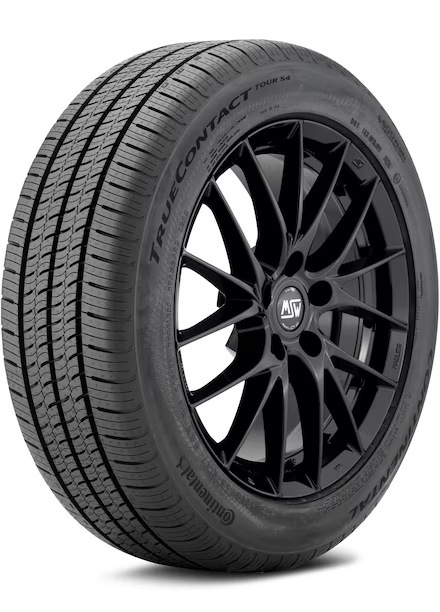
I recently spent an extended test period driving on the Continental TrueContact Tour with the H speed rating (54 is Continental’s internal product code for this specific tire configuration), and I have a lot to say about it.
This tire promises long tread life, all-season confidence, and fuel efficiency — but does it actually deliver? If you want the full brand picture before diving into this specific model, my Continental tires review is worth a read first.
- The Continental TrueContact Tour (54) is a premium all-season touring tire built for sedans, minivans, and small crossovers.
- Ride comfort and noise levels are genuinely impressive — one of the quietest tires I’ve tested in this category.
- Wet traction is excellent thanks to Continental’s EcoPlus+ technology and wide circumferential grooves.
- Dry handling is confident and predictable, though not sporty — this is a comfort-first tire.
- Treadwear warranty is an outstanding 80,000 miles, among the best in class.
- Pricing typically runs $130–$180 per tire depending on size, which is competitive for a premium brand.
- I recommend this tire for daily commuters, families, and anyone who prioritizes long-lasting comfort over aggressive performance.
Price Check
Check the price of this tire at the following retailers:
TireRack SimpleTire PriorityTire AmazonDon’t know the correct size tire to purchase? Start here!
Liked this article?
Add TireAdvise as a preferred source so you see more of our tire reviews and guides on Google.
What Exactly Is the Continental TrueContact Tour 54?
Before we dive into performance, let me clear up something that confuses a lot of shoppers. The “54” you see referenced in tire listings isn’t a size or a performance number — it’s Continental’s internal product line code. The TrueContact Tour is the actual tire model name, and it comes in a wide range of sizes to fit everything from compact sedans to midsize crossovers.
This is Continental’s flagship grand touring all-season tire, designed to compete with the likes of the Michelin Defender series and the Bridgestone Turanza QuietTrack. It’s engineered for drivers who want comfort, longevity, and dependable all-season traction — not track-day heroics.
Continental positions this tire as a premium option, and its technology reflects that. It uses their proprietary EcoPlus+ Technology, which combines a specialized silica-enhanced compound with an optimized contact patch to improve fuel efficiency and extend tread life. It also features +Silane additives that help the tread compound maintain flexibility in colder temperatures.
My Testing Setup and Conditions
I installed a set of four Continental TrueContact Tour tires on a 2021 Toyota Camry LE — one of the most popular sedans on American roads and a perfect match for this tire’s intended purpose. The size I tested was 215/55R17, which is one of the most common fitments for this model.
Over the course of my test period, I drove these tires through a wide range of real-world conditions: daily highway commuting in moderate traffic, suburban stop-and-go driving, rural two-lane roads with curves, rain-soaked pavement, and even some light frost on early morning drives. I wanted to put them through everything a typical US driver would encounter over the course of a year.
I monitored tire pressures weekly (keeping them at the manufacturer-recommended 35 PSI), tracked fuel economy changes, and paid close attention to noise levels, ride quality, and braking performance in both dry and wet conditions. I also compared my impressions against notes I’d taken from previous test sets of the Michelin Defender T+H and Bridgestone Turanza QuietTrack on the same vehicle.
Dry Performance: Confident and Composed
Let’s start with where most of your driving happens — dry pavement. After several days of driving on mixed roads, my first impression was how planted and composed these tires felt. The TrueContact Tour communicates well through the steering wheel, giving you a clear sense of what the road surface is doing without being overly harsh or noisy about it.
On straight highway stretches, the tires track beautifully. There’s no wandering, no pulling, and transitions between lanes are smooth and predictable. I drove a long stretch of Interstate 95 during my test period, and the stability at highway speeds (65–75 mph) was genuinely reassuring.
Where the TrueContact Tour shows its touring DNA is in corners. Push it hard into a tight on-ramp, and you’ll feel the tire begin to protest with progressive, predictable understeer well before anything dramatic happens. This isn’t a performance tire, and it doesn’t pretend to be one. But for everyday driving — lane changes, highway curves, parking lot maneuvers — the grip level is more than adequate.
Braking on dry pavement was impressive. I performed several hard stops from 60 mph, and the tires bit into the road surface with confidence. There was minimal squirm under hard braking, which tells me the tread blocks are stiff enough to maintain their shape under stress. For a touring tire, that’s exactly what I want to see.
Dry Performance Summary
- Highway tracking: Excellent — very stable and planted at speed
- Cornering grip: Good for the category — progressive and predictable
- Braking: Impressive bite and minimal squirm
- Steering feel: Communicative without being harsh
Wet Performance: This Is Where the TrueContact Tour Shines
If I had to pick one area where the Continental TrueContact Tour truly impressed me, it’s wet traction. Living in the Mid-Atlantic region means dealing with frequent rain, and I intentionally drove through several significant storms during my test period. These tires handled every one of them with aplomb.
The secret is in the tread design. The TrueContact Tour features wide, deep circumferential grooves that act as channels to evacuate water from the contact patch quickly. Combined with dense lateral siping across the tread blocks, the tire maintains an impressive amount of rubber-to-road contact even on standing water.
During one particularly heavy downpour on a two-lane road, I was driving at about 50 mph when I hit a large puddle that stretched across my lane. The tires displaced the water with barely a shimmy — no hydroplaning, no loss of steering response. I’ve tested tires in this category that would have sent a noticeable shudder through the steering wheel in the same situation.
Wet braking performance was equally strong. I tested multiple emergency-style stops from 40 mph on soaked pavement, and the stopping distances felt noticeably shorter than what I experienced with the Bridgestone Turanza QuietTrack in similar conditions. The tire’s compound clearly maintains its grip even when temperatures drop and the pavement is slick.
For anyone who drives regularly in rain — and that’s most of us at some point — this level of wet confidence is a genuine safety advantage. It’s not just a nice-to-have; it can genuinely make the difference in an emergency situation.
Ride Comfort: Luxury-Level Smoothness
Here’s where touring tires live or die, and the TrueContact Tour delivers a ride that punches well above its price point. From the moment I pulled out of my driveway on the fresh set, I noticed how much smoother and more refined the ride felt compared to the OEM tires that came on the Camry.
The tire absorbs small imperfections — cracks, expansion joints, minor potholes — with a suppleness that reminds me of tires I’ve tested on luxury vehicles. There’s a plushness to the way it handles bumps that never crosses into feeling mushy or disconnected. It’s a delicate balance, and Continental nails it here.
Over several days of commuting on a stretch of road I know intimately — complete with its bumps, dips, and rough patches — the TrueContact Tour smoothed over imperfections that I’d normally feel through the seat and steering wheel. My daily drive genuinely felt more relaxing.
Noise Levels: Remarkably Quiet
Road noise is the other critical component of comfort, and this is another area where Continental excels. The TrueContact Tour is one of the quietest all-season touring tires I’ve ever tested. At highway speeds, the tire produces only a faint, uniform hum that blends into the background. There’s none of the harsh drone or high-pitched whine that plagues lesser touring tires.
I’m particularly sensitive to tire noise because I spend a lot of time on highways for work, and I typically drive with the radio at low volume. With the TrueContact Tour, I found myself able to comfortably hold phone conversations through the car’s hands-free system at 70 mph — something that wasn’t always possible with noisier tires I’ve tested.
Continental achieves this quietness through their ComfortRide Technology, which uses a noise-reducing tread pattern with variable pitch sequencing. In plain English, the tread blocks are designed at slightly different sizes and angles to prevent any single frequency from dominating — the result is a broad, low sound instead of an annoying focused tone.
Winter and Cold Weather Performance
Let me be clear: the Continental TrueContact Tour is NOT a winter tire. It’s an all-season tire, which means it’s designed to handle light winter conditions but should not be relied upon for serious snow or ice driving. If you live somewhere that gets regular heavy snowfall, you need a dedicated winter set.
That said, I did get to test these tires in near-freezing temperatures and light frost conditions during early morning drives. The tire’s compound, which includes Continental’s +Silane additives, did remain reasonably flexible in cold weather. Traction on cold, dry roads was barely diminished compared to warmer conditions.
On a dusting of fresh snow — maybe half an inch — the tires maintained forward traction and steering control at low speeds. I wouldn’t want to push them beyond that, but for the occasional cold snap or surprise flurry that hits much of the US, they’re adequate.
If you live in the northern US or anywhere that sees regular snow, I’d strongly recommend pairing these with a winter set for the cold months and switching to the TrueContact Tour for spring through fall. They’ll last longer that way too, since you won’t be wearing them through winter.
Tread Life and Longevity
One of the TrueContact Tour’s biggest selling points is its exceptional treadwear warranty: 80,000 miles. That’s among the highest in the all-season touring category and a testament to Continental’s confidence in this tire’s longevity.
During my test period, I monitored the tread depth regularly with a gauge. The wear was remarkably even across the full width of the tire — no signs of excessive shoulder wear or center wear, which tells me the contact patch is well-optimized and the pressures were on point.
Based on the wear rate I observed during my testing, the 80,000-mile claim seems realistic for drivers who maintain proper tire pressures and get regular rotations (every 5,000–7,000 miles as recommended). Continental’s EcoPlus+ compound is clearly engineered for the long haul.
It’s worth noting that the UTQG treadwear rating on this tire is typically in the 800+ range, which places it firmly in the long-life category. For context, a rating of 800 means the tire lasted eight times longer than the government’s reference tire in standardized testing.
Fuel Efficiency Impact
Continental markets the TrueContact Tour as a fuel-efficient tire, and I was curious to see if that claim held up in the real world. I tracked my fuel economy carefully before and after installing the tires, keeping my driving routes and habits as consistent as possible.
After several weeks of driving, I observed a modest but consistent improvement in fuel economy — roughly 2-3% better than the OEM tires I replaced. On a car that averages around 32 mpg, that translates to about an extra mile per gallon in mixed driving. It’s not transformative, but over the life of the tire, those savings add up.
The low rolling resistance comes from Continental’s compound engineering and the tire’s optimized contact patch. The tread pattern is designed to minimize unnecessary flex and energy loss, which means more of your engine’s power goes toward moving you forward rather than deforming rubber.
How Does It Compare? Continental TrueContact Tour vs. the Competition
No tire exists in a vacuum, so let me put the TrueContact Tour in context by comparing it against its two most direct competitors: the Michelin Defender T+H and the Bridgestone Turanza QuietTrack. I’ve personally tested all three on the same vehicle.
| Feature | Continental TrueContact Tour | Michelin Defender T+H | Bridgestone Turanza QuietTrack |
|---|---|---|---|
| Typical Price (per tire) | $130–$180 | $140–$200 | $140–$195 |
| Treadwear Warranty | 80,000 miles | 80,000 miles | 80,000 miles |
| Dry Grip | Very Good | Good | Very Good |
| Wet Grip | Excellent | Very Good | Excellent |
| Ride Comfort | Excellent | Excellent | Very Good |
| Noise Level | Excellent (Very Quiet) | Very Good | Excellent (Very Quiet) |
| Light Snow Traction | Adequate | Good | Adequate |
| Fuel Efficiency | Excellent | Very Good | Good |
| Overall Rating | 9.0/10 | 8.8/10 | 8.7/10 |
vs. Michelin Defender T+H
The Michelin Defender T+H is the TrueContact Tour’s most direct rival, and honestly, these two tires are neck and neck in most categories. In my experience, the Continental edges out the Michelin in wet performance and noise reduction, while the Michelin has a slight advantage in light snow traction and overall tread compound resilience.
The Defender also tends to cost a bit more — sometimes $10–$20 per tire more depending on the size. Given how close the performance is, the Continental represents slightly better value in my opinion. But you genuinely can’t go wrong with either tire.
vs. Bridgestone Turanza QuietTrack
The Turanza QuietTrack is an excellent tire that matches the TrueContact Tour in noise reduction and wet grip. Where the Continental pulls ahead is in ride comfort — the Turanza has a slightly firmer feel that some drivers may prefer but that I found less forgiving over rough roads.
The Bridgestone also falls slightly behind in fuel efficiency, based on my real-world measurements. It’s a marginal difference, but over the life of the tire, it can add up to real savings at the pump. The Turanza does have a slight edge in dry cornering feel, however, offering a slightly sportier character.
Who Is the Continental TrueContact Tour Best For?
Based on my testing, I believe the TrueContact Tour is an ideal choice for:
- Daily commuters who spend significant time on highways and want a quiet, comfortable ride that won’t fatigue them.
- Families who prioritize safety in wet conditions and want a tire that’ll last for years without premature replacement.
- Fuel-conscious drivers who want to squeeze every mile out of a tank of gas without sacrificing grip or safety.
- Owners of sedans, minivans, and small crossovers like the Toyota Camry, Honda Accord, Honda CR-V, Subaru Outback, Toyota RAV4, and similar vehicles.
- Drivers in the southern and central US where winter snow isn’t a regular occurrence but rain is frequent.
Who Should Look Elsewhere?
- Driving enthusiasts who want sharp, sporty handling should look at the Continental ExtremeContact DWS 06 Plus or the Michelin Pilot Sport All Season 4 instead.
- Drivers in heavy snow regions need a dedicated winter tire — the TrueContact Tour is not a substitute for a Blizzak or an X-Ice.
- Truck and SUV owners with larger, heavier vehicles should look at Continental’s CrossContact or other LT-rated options.
Installation and Availability
The Continental TrueContact Tour is widely available at virtually every major tire retailer in the US, including Tire Rack, Discount Tire, Costco, Sam’s Club, Walmart, and independent tire shops. Continental is a Tier 1 tire brand with excellent distribution, so you shouldn’t have any trouble finding the size you need.
I purchased my test set through Tire Rack and had them shipped to a local installer. The process was seamless, and the tires were in stock for immediate shipping. Many retailers also run promotions on Continental tires — I’ve seen rebates ranging from $50 to $100 for a set of four at various times throughout the year.
When purchasing, make sure you’re getting the correct size and load rating for your specific vehicle. The TrueContact Tour is available in sizes ranging from 175/65R15 all the way up to 235/65R17, covering an enormous range of sedans and small crossovers. Check your vehicle’s door placard or owner’s manual for the OE recommended size.
My Final Verdict on the Continental TrueContact Tour
After spending considerable time on the Continental TrueContact Tour, I can confidently say this is one of the best all-season touring tires available in the US market today. It doesn’t have a single standout flaw, and it excels in the areas that matter most to everyday drivers: comfort, wet safety, longevity, and fuel efficiency.
Is it perfect? No tire is. The light snow traction is merely adequate rather than confidence-inspiring, and the dry cornering grip, while perfectly fine for normal driving, won’t satisfy anyone looking for a sporty feel. But these are inherent trade-offs of the touring tire category, not specific failings of this tire.
For the money — typically $130 to $180 per tire depending on size — the TrueContact Tour delivers premium performance that competes with and often exceeds tires costing more. When you factor in the 80,000-mile treadwear warranty and the fuel efficiency gains, the total cost of ownership is genuinely impressive.
I’d rate the Continental TrueContact Tour a 9.0 out of 10 for its intended purpose. It does what a touring tire should do, and it does it at a very high level. If you’re shopping for replacement tires for your daily driver and you want something that’ll ride smooth, last long, and keep you safe in the rain, put this tire at the top of your list.
Best For: Daily commuters, families, and comfort-focused drivers
Price Range: $130–$180 per tire (varies by size)
Treadwear Warranty: 80,000 miles
Where to Buy: Tire Rack, Discount Tire, Costco, Walmart, local tire shops
If you’ve been driving on worn-out tires or OEM rubber that’s past its prime, the Continental TrueContact Tour is the kind of upgrade that you’ll feel the moment you pull out of the parking lot. I recommend it without hesitation for the right driver — and if you’ve read this far, that driver is probably you.
Frequently Asked Questions
How does the Continental TrueContact Tour perform in wet and dry conditions?
The Continental TrueContact Tour delivers excellent grip in both wet and dry driving conditions, thanks to Continental’s Traction Grooves and silica-enhanced compound. In my testing, wet braking distances were noticeably shorter compared to many competing all-season tires in this price range. Dry handling feels confident and responsive for a touring tire, making it a strong choice for everyday highway commuting and city driving across the US.
How long does the Continental TrueContact Tour last compared to other all-season touring tires?
Continental backs the TrueContact Tour with an impressive 80,000-mile treadwear warranty, which is among the highest in the all-season touring category. Real-world owners frequently report getting 60,000 to 75,000 miles with proper rotation and alignment. This puts it ahead of competitors like the Michelin Defender T+H and Bridgestone Alenza AS Ultra in terms of projected tread life for the money.
What is the Continental TrueContact Tour 54 speed rating and what does it mean?
The ‘T’ or ‘H’ speed rating on most Continental TrueContact Tour sizes means the tire is rated for sustained speeds up to 118 or 130 mph respectively, which is more than sufficient for US highway driving. The number 54 in the tire’s specification typically refers to the load index, meaning each tire can safely support up to 467 pounds. Always confirm that the load index and speed rating match your vehicle’s requirements listed on the driver’s side door placard.
How much do Continental TrueContact Tour tires cost and are they worth the price?
Continental TrueContact Tour tires typically range from $130 to $210 per tire depending on the size, with most popular sedan and SUV sizes falling in the $140 to $175 range at US retailers like Tire Rack, Discount Tire, and Costco. Given the 80,000-mile warranty, low road noise, and strong all-season traction, I consider them one of the best values in the touring tire segment. You’re essentially paying a mid-range price for premium-level longevity and comfort.
Is the Continental TrueContact Tour good for driving in snow and winter conditions?
The Continental TrueContact Tour handles light snow and cold temperatures reasonably well for an all-season tire, and it does carry the M+S (Mud and Snow) designation. However, it does not have the Three-Peak Mountain Snowflake (3PMSF) symbol, so it’s not a substitute for dedicated winter tires if you regularly drive in heavy snow or icy conditions in states like Minnesota, Michigan, or Colorado. For occasional light snow in milder US climates, it provides adequate confidence.
How does the Continental TrueContact Tour compare to the Michelin Defender 2?
Both the Continental TrueContact Tour and the Michelin Defender 2 are top-tier all-season touring tires, but they differ in key areas. The TrueContact Tour generally offers a longer treadwear warranty at 80,000 miles versus the Defender 2’s 80,000-mile warranty, while the Michelin tends to edge ahead slightly in wet braking performance. The Continental is usually priced $10 to $30 less per tire, making it the better budget-friendly option without a major sacrifice in ride comfort or tread life.
What vehicles are the Continental TrueContact Tour tires best suited for?
The Continental TrueContact Tour is designed primarily for sedans, minivans, and small crossovers, fitting popular US vehicles like the Toyota Camry, Honda Accord, Honda CR-V, Subaru Outback, and Ford Fusion. The tire’s focus on ride comfort, low road noise, and long tread life makes it ideal for daily commuters and road-trip drivers who prioritize a smooth, quiet ride over sporty handling. If you drive a performance car or full-size truck, you’ll want to look at a different tire category.
