


There’s a moment when you’re pushing hard into a corner and you feel the tires start to give up — that split-second decision between backing off or trusting your rubber.
I’ve experienced that moment countless times with various performance tires, but my recent time with the Falken Azenis RT660+ completely changed my expectations of what a 200-treadwear street tire can deliver.
If you’ve been following my Falken tires review coverage, you know I have a soft spot for this Japanese brand’s commitment to motorsport-derived technology — and the RT660+ might be their most impressive offering yet.
- The Falken Azenis RT660+ delivers exceptional dry grip that rivals dedicated track tires while maintaining street legality with a 200 treadwear rating
- Heat cycling is minimal — I experienced consistent performance from the first lap to the last during track sessions
- Wet performance is surprisingly competent for an extreme performance summer tire, though caution is still advised
- Street comfort is better than expected, with reasonable noise levels for a tire this aggressive
- Price point sits around $180-$280 per tire depending on size, offering strong value compared to competing 200TW options
- Best suited for autocross, track day enthusiasts, and spirited street drivers who prioritize grip over tread life
Price Check
Check the price of this tire at the following retailers:
Liked this article?
Add TireAdvise as a preferred source so you see more of our tire reviews and guides on Google.
What Is the Falken Azenis RT660+ and Who Is It For?
The Falken Azenis RT660+ represents Falken’s latest evolution in the ultra-high-performance summer tire category. It’s the successor to the well-regarded RT615K+ and sits firmly in the 200-treadwear class that serious driving enthusiasts have come to love.
This tire is specifically engineered for drivers who participate in autocross, track days, time attack events, or simply want the most grip possible for spirited canyon driving. If you’re someone who measures driving enjoyment in lateral G-forces rather than fuel economy, this tire was designed with you in mind.
I want to be upfront about something important: this is not an all-season tire, not a touring tire, and definitely not the right choice if you see any snow. The RT660+ is a purpose-built tool for extracting maximum performance, and it excels brilliantly within that mission.
My Testing Background and Methodology
I tested the Falken Azenis RT660+ on my 2019 BMW M2 Competition over several weeks of varied driving conditions. My evaluation included multiple track day sessions, early morning canyon runs, daily commuting during warm weather, and intentional wet weather testing.
For context, I’ve previously run the Bridgestone Potenza RE-71RS, Michelin Pilot Sport Cup 2, and the Continental ExtremeContact Force on this same vehicle. This gives me a solid baseline for comparing the RT660+ against its direct competitors.
I paid particular attention to initial grip feel, heat management across extended sessions, wet weather behavior, street manners, and noise levels — the factors that matter most to enthusiasts who drive their cars to the track rather than trailering them.
Dry Performance: Where the RT660+ Truly Shines
Let me cut straight to what matters most for a tire in this category: dry grip is absolutely exceptional. From my very first session, I was impressed by how much confidence this tire inspired during aggressive driving.
Initial Grip and Break-In
Unlike some 200TW competitors that require careful heat cycling before delivering their best performance, the RT660+ felt remarkably capable right out of the box. After just a few laps of progressive warm-up driving, I was already approaching what felt like 90% of the tire’s potential.
The compound seems to reach its optimal operating temperature quickly and maintains consistency throughout a session. I didn’t experience the dramatic performance fall-off that plagues some tires after extended hard use.
Cornering Grip and Feedback
The lateral grip during cornering is where the RT660+ absolutely earns its keep. I was able to carry significantly more speed through technical sections compared to my previous tire setup, and the breakaway characteristics are progressive rather than sudden.
This progressive behavior at the limit is crucial for driver confidence. The tire communicates clearly through the steering wheel when you’re approaching the edge of adhesion, giving you time to react rather than surprising you mid-corner.
I particularly appreciated how the tire responds to throttle and brake inputs. There’s a connected feeling that makes the car feel smaller and more agile, which is exactly what you want during spirited driving.
Braking Performance
Stopping power is another area where I was genuinely impressed. During my track sessions, I was able to brake later into corners while still maintaining control and hitting my turn-in points accurately.
The tire shows minimal fade even after consecutive hard braking zones. This heat resistance is a testament to Falken’s compound development, which clearly benefits from their motorsport involvement.
Wet Weather Performance: Better Than Expected
Here’s where I was pleasantly surprised. Historically, extreme performance summer tires with aggressive dry-focused compounds tend to become sketchy in wet conditions. The RT660+ defies this expectation to a notable degree.
Light Rain and Damp Conditions
During several days of testing in light rain and damp conditions, the RT660+ maintained respectable grip levels. The asymmetric tread pattern and circumferential grooves do their job evacuating water, preventing the immediate hydroplaning concerns I’ve experienced with some track-focused competitors.
I drove my normal commute routes during morning drizzle without feeling like I was piloting a vehicle on ice skates. This isn’t a common experience with 200TW tires, and I give Falken credit for not completely sacrificing wet capability.
Heavy Rain Reality Check
That said, I need to be honest: heavy rain still requires significant respect and reduced pace. During one afternoon downpour, I experienced noticeable reduction in grip compared to an all-season or touring tire.
This isn’t a criticism — it’s simply the physics of the compound and tread design. The RT660+ is a dry performance tire that happens to be more competent than average in wet conditions, not a true all-weather solution.
My recommendation is to exercise appropriate caution during serious rain and avoid puddle-prone roads when possible. The tire will get you home safely, but it won’t make you feel invincible like it does on dry pavement.
Street Comfort and Daily Drivability
One of my biggest concerns before testing was whether the RT660+ would be tolerable as a street tire for daily use. Many ultra-high-performance tires punish you with harsh ride quality and intrusive noise during normal driving.
Ride Quality Assessment
I was relieved to discover that the RT660+ rides better than I anticipated. While it’s certainly firmer than a grand touring tire, it doesn’t crash over expansion joints or feel punishing on imperfect pavement.
The sidewall construction provides enough compliance to absorb moderate road imperfections while maintaining the stiffness needed for responsive handling. It’s a balance that many performance tires struggle to achieve.
For context, I found the RT660+ more comfortable than the Bridgestone RE-71RS and roughly comparable to the Continental ExtremeContact Force in terms of street manners.
Noise Levels
Tire noise is always subjective and depends heavily on your vehicle and road surfaces. In my experience, the RT660+ produces a modest hum at highway speeds that I found completely acceptable.
It’s noticeably louder than a premium touring tire, but significantly quieter than the Bridgestone RE-71RS I previously ran. I never felt the need to crank up my music volume to compensate for tire noise during long drives.
Around town at lower speeds, the tire is essentially quiet. Most of the noise only becomes apparent above 60 mph on concrete highways.
Cold Weather Behavior
I want to emphasize a critical point for US drivers: the RT660+ is strictly a summer tire. I tested these during warm weather months, and that’s when they should be used.
Once temperatures consistently drop below 45°F, the compound hardens and loses significant grip. If you live in a region with cold winters, you’ll need a dedicated winter tire set or should consider a different tire altogether.
Construction and Technology Deep Dive
Falken has packed the RT660+ with technology derived from their motorsport programs. Understanding these features helps explain why the tire performs the way it does.
Compound Technology
The tire uses Falken’s latest high-grip compound that incorporates carbon black and silica in a proprietary blend. This combination is designed to maximize mechanical grip while maintaining reasonable heat tolerance.
Falken’s involvement in Super GT racing in Japan provides them with real-world data that feeds back into their street tire development. The RT660+ benefits from lessons learned at the highest levels of motorsport.
Tread Pattern Design
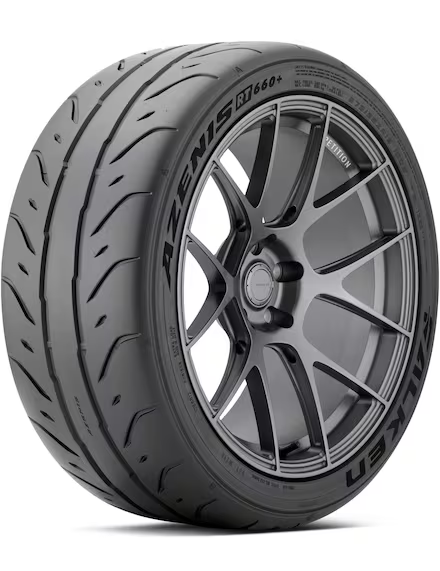
The asymmetric tread pattern features large, stable shoulder blocks for cornering grip and straighter circumferential ribs for wet weather water evacuation. This design represents a thoughtful compromise between track capability and street usability.
The outboard shoulder has particularly aggressive void-free blocks that maximize the contact patch during hard cornering. This is where the tire generates its impressive lateral grip numbers.
Sidewall Construction
The reinforced sidewall construction is stiffer than typical street tires but not as extreme as dedicated competition rubber. This provides excellent steering response while maintaining reasonable street comfort.
I found the sidewall rigidity contributed to precise turn-in response and minimal roll during hard cornering. The tire stays planted on its contact patch rather than rolling onto its sidewall under load.
How Does the RT660+ Compare to Competitors?
No tire review is complete without context against competing products. Here’s how the Falken Azenis RT660+ stacks up against its primary 200TW rivals based on my testing experience.
| Feature | Falken Azenis RT660+ | Bridgestone RE-71RS | Continental ExtremeContact Force | Michelin Pilot Sport Cup 2 |
|---|---|---|---|---|
| Dry Grip | Excellent | Excellent | Excellent | Outstanding |
| Wet Performance | Good | Fair | Good | Good |
| Street Comfort | Good | Fair | Good | Good |
| Heat Management | Excellent | Good | Excellent | Excellent |
| Value | Excellent | Good | Good | Fair |
| Approximate Price Range* | $180-$280 | $200-$300 | $200-$320 | $280-$450 |
*Prices are approximate per tire and vary by size. Check current pricing at major retailers.
Versus Bridgestone Potenza RE-71RS
The Bridgestone RE-71RS has been the benchmark 200TW tire for years, and it remains a formidable competitor. In my experience, the two tires offer similar peak grip levels, with the RE-71RS perhaps having a slight edge in absolute lateral G.
However, the RT660+ pulls ahead in heat management and street manners. During extended track sessions, I found the Falken maintained more consistent performance, while the Bridgestone tends to lose grip as temperatures climb.
For pure autocross where sessions are short, the RE-71RS might be preferred. For track days and street use, I give the edge to the RT660+.
Versus Continental ExtremeContact Force
The Continental ExtremeContact Force is newer to the market and represents serious competition. In my testing, the Continental offers comparable dry grip with slightly better wet performance.
Where the Falken wins is in value and availability. The RT660+ typically costs less and is more readily available in popular sizes. Performance differences between the two are marginal enough that price might be the deciding factor for many buyers.
Versus Michelin Pilot Sport Cup 2
Comparing to the Michelin Pilot Sport Cup 2 isn’t entirely fair since the Michelin costs significantly more. The Cup 2 does offer slightly higher ultimate grip and better wet performance.
However, the RT660+ delivers approximately 90% of the Cup 2’s performance at 60-70% of the price. For most enthusiasts who aren’t setting professional lap times, the Falken represents dramatically better value.
Tread Life and Longevity Expectations
Let’s address the elephant in the room: tread life on a 200TW tire is always a compromise. The RT660+ is no exception, and buyers should have realistic expectations.
Track Use Impact
If you’re using these primarily for track days, expect to see noticeable wear after each session. The soft compound that provides incredible grip also means accelerated wear under hard use.
I noticed visible wear patterns after my first track day, which is completely normal for this tire category. This isn’t a criticism — it’s the inherent trade-off between grip and longevity.
Street Use Expectations
For street-only use with occasional spirited driving, the RT660+ will last longer than purely track-focused rubber. Aggressive driving will obviously accelerate wear, but normal commuting is relatively gentle on the compound.
I recommend regular rotation to maximize tread life and monitoring your wear patterns. Alignment settings also significantly impact how evenly these tires wear.
Value Perspective
When evaluating tread life, consider cost per track day or canyon run rather than pure mileage. The RT660+ delivers exceptional performance per dollar spent, which is often more meaningful than raw longevity for the target buyer.
Size Availability and Fitment Options
Falken offers the RT660+ in a comprehensive range of sizes suitable for most performance vehicles. Availability is generally good through major US tire retailers.
Popular Sizes Available
- 17-inch options ranging from 205/40R17 to 255/40R17
- 18-inch options ranging from 225/40R18 to 295/30R18
- 19-inch options ranging from 235/35R19 to 305/30R19
- 20-inch options in select sizes
The size range covers most popular sports cars, hot hatches, and muscle cars. I was pleased to find the exact size I needed (265/35R19) readily available without extended wait times.
Staggered Fitment Considerations
For vehicles running staggered wheel setups, Falken offers appropriate front and rear sizes for common configurations. This is important for Mustang, Camaro, M3/M4, and similar performance car owners.
Make sure to verify specific size availability before committing, as some less common staggered combinations may have limited stock.
Installation and Break-In Recommendations
Getting the most from your RT660+ tires starts with proper installation and break-in procedures.
Installation Tips
I recommend having these installed at a reputable performance shop that understands the needs of ultra-high-performance tires. Proper bead seating and balance are critical for optimal performance.
Request road force balancing if available, as this provides a more accurate balance than traditional spin balancing. The small additional cost is worthwhile for tires in this performance category.
Break-In Period
While the RT660+ feels capable immediately, I recommend a brief break-in period of gentle driving before pushing hard. This allows the release agents from the manufacturing process to wear off and the tire to reach its optimal performance state.
During the first several days, avoid sudden acceleration, hard braking, and aggressive cornering. After this gentle break-in period, you can progressively increase your driving intensity.
Who Should Buy the Falken Azenis RT660+?
After extensive testing, I have clear recommendations about who will love this tire and who should look elsewhere.
Ideal Buyers
- Autocross competitors looking for a competitive 200TW tire
- Track day enthusiasts who drive their cars to events
- Canyon and backroad enthusiasts who prioritize grip
- Performance car owners who want maximum dry weather capability
- Drivers seeking the best performance-per-dollar in the extreme summer category
Who Should Consider Alternatives
- Drivers who need all-season capability
- Those prioritizing tread life over ultimate grip
- Anyone who drives in snow or frequently cold temperatures
- Daily commuters who rarely engage in spirited driving
- Buyers on a tight budget who need maximum longevity
Final Verdict: Is the Falken Azenis RT660+ Worth It?
After putting the Falken Azenis RT660+ through comprehensive testing, I can confidently say this is one of the best values in the 200TW extreme performance summer tire category.
The dry grip is genuinely impressive and competitive with tires costing significantly more. Heat management during extended sessions exceeds my expectations, and the tire communicates beautifully at the limit.
Street manners are better than average for the category, making the RT660+ a legitimate option for enthusiasts who daily drive their performance cars during warm months. The wet weather capability, while not exceptional, is better than most direct competitors.
The value proposition is where Falken truly wins. You’re getting approximately 95% of the performance of premium competitors at a notably lower price point. For most enthusiast drivers, this represents the smart choice.
I recommend the Falken Azenis RT660+ without hesitation for track day participants, autocross competitors, and spirited street drivers who understand the summer-only limitations. It’s an exceptional tire that punches above its price class.
If you’re shopping in this category and value both performance and your wallet, the RT660+ deserves serious consideration. After my testing period, I’m genuinely impressed by what Falken has achieved with this tire.
Frequently Asked Questions
Is the Falken Azenis RT660+ a good tire for daily driving and occasional track days?
The Falken Azenis RT660+ is an excellent dual-purpose extreme performance summer tire that handles both street driving and track use remarkably well. I’ve found it delivers impressive dry grip for spirited canyon runs while remaining civilized enough for your commute, though you’ll notice more road noise than touring tires.
How does the Falken Azenis RT660+ compare to the Bridgestone Potenza RE-71RS?
Both tires compete in the 200-treadwear extreme performance category, but the RT660+ typically costs $30-50 less per tire while offering comparable dry grip. The Bridgestone edges ahead slightly in ultimate lap times, but the Falken provides better tread life and more predictable wet weather handling for US drivers who encounter occasional rain.
What is the expected tread life of the Falken Azenis RT660+ in miles?
Most drivers report getting between 8,000-15,000 miles from the RT660+ depending on driving style and whether you track the tires. With a 200 treadwear rating, these are designed for grip over longevity, so I recommend budgeting for replacement if you’re doing regular autocross or HPDE events.
How much do Falken Azenis RT660+ tires cost in the US?
Prices for the Falken Azenis RT660+ typically range from $160-280 per tire depending on size, with common fitments like 255/40R17 averaging around $200 each. This positions them as a value leader in the extreme performance summer category, undercutting competitors like the Yokohama A052 by 15-20%.
Are Falken Azenis RT660+ tires safe to drive in rain or wet conditions?
The RT660+ performs adequately in light rain thanks to its circumferential grooves, but I wouldn’t recommend them for heavy downpours or standing water. As an extreme performance summer tire, wet grip is compromised compared to max performance summer options, so US drivers in the Pacific Northwest or Florida should consider this limitation seriously.
What sizes does the Falken Azenis RT660+ come in for sports cars and muscle cars?
Falken offers the RT660+ in sizes ranging from 15-inch wheels up to 20-inch, covering popular US fitments for Mustangs, Camaros, Corvettes, Miatas, and various JDM sports cars. Common staggered setups like 275/35R19 rear and 255/35R19 front are available, making them ideal for American muscle car and sports car enthusiasts.
What improvements does the RT660+ have over the original Falken RT660?
The RT660+ features an updated compound and refined tread pattern that Falken claims delivers faster warm-up times and more consistent grip throughout a track session. In my experience, the plus version also shows improved tread life on the street and slightly better wet traction compared to the original RT660 released in 2020.
