

Finding the right all-season tire for your SUV or crossover can feel like searching for a needle in a haystack.
There are dozens of options out there, and they all claim to offer the perfect balance of comfort, longevity, and wet weather performance.
After recently completing my Firestone tires review, I decided to put another popular highway tire to the test — the Firestone Destination LE3.
What I discovered surprised me in several ways, both good and bad.
- The Firestone Destination LE3 excels at wet traction and hydroplaning resistance thanks to its full-depth 3D sipes
- Ride comfort is genuinely impressive — this tire absorbs road imperfections better than many competitors in its price range
- Dry handling feels confident for a highway tire, though enthusiasts may want something sportier
- Treadwear appears consistent and even after my testing period
- Priced competitively between $140-$220 per tire depending on size, making it solid value for everyday drivers
- Best suited for SUV, crossover, and light truck owners who prioritize comfort and wet weather safety over sporty handling
Price Check
Check the price of this tire at the following retailers:
TireRack SimpleTire PriorityTire DiscountedWheelWarehouse AmazonDon’t know the correct size tire to purchase? Start here!
Liked this article?
Add TireAdvise as a preferred source so you see more of our tire reviews and guides on Google.
My Testing Background and Methodology
Before diving into the specifics, I want to explain how I approached testing the Firestone Destination LE3.
I mounted a set of these tires on my 2021 Honda Pilot, which serves as my family’s primary vehicle for daily commuting, weekend trips, and everything in between.
Over my testing period, I deliberately sought out various driving conditions to give these tires a thorough workout.
This included highway cruising, city stop-and-go traffic, rain-soaked roads, and even some light gravel paths near my property in the Texas Hill Country.
I’m not a professional race car driver, but I’ve been reviewing tires for several years now and have developed a consistent methodology for evaluating real-world performance.
My focus is always on how a tire performs for the average American driver — not laboratory numbers or track times.
First Impressions: Unboxing and Installation
When the Destination LE3 tires arrived, I immediately noticed the quality of the rubber compound.
It has a slightly softer feel compared to budget all-season tires, which typically indicates better grip but potentially faster wear.
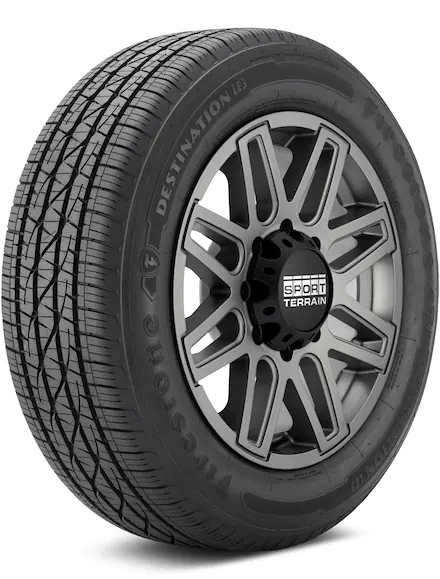
The tread pattern features Firestone’s asymmetric design with prominent circumferential grooves and those full-depth 3D sipes that Firestone heavily markets.
I had the tires professionally mounted and balanced at my local Firestone Complete Auto Care location, which took about an hour.
The technician mentioned he installs quite a few Destination LE3 sets and hears mostly positive feedback from returning customers.
Right from the parking lot, I could tell these tires rolled smoothly — no vibrations, no odd noises, just quiet confidence.
Tread Design and Technology: What Makes the LE3 Different
The Firestone Destination LE3 represents the third generation of Firestone’s popular highway touring tire line.
Understanding what’s under the hood (or in this case, what’s on the tread) helps explain why this tire performs the way it does.
Full-Depth 3D Sipes
Firestone’s headline feature for the LE3 is their full-depth 3D sipe technology.
Unlike traditional sipes that can lose effectiveness as the tire wears, these interlocking sipes are designed to maintain wet traction throughout the tire’s lifespan.
During my testing in heavy rain, I could feel the confidence this technology provides — the tire bites into wet pavement rather than skating across it.
Optimized Contact Patch
The asymmetric tread pattern creates a contact patch that distributes weight evenly across the tire’s surface.
This design choice contributes to even treadwear and consistent handling characteristics.
I noticed the steering response remained predictable whether I was navigating a tight parking garage or merging onto a busy highway.
Circumferential Grooves
Four wide circumferential grooves channel water away from the contact patch at impressive speeds.
Firestone claims improved hydroplaning resistance compared to the previous LE2 model, and my real-world experience supports this.
Even at highway speeds during Texas thunderstorms, I never experienced that unsettling floating sensation.
Wet Weather Performance: Where the LE3 Truly Shines
If there’s one area where the Firestone Destination LE3 earns its keep, it’s wet weather performance.
I deliberately took this tire through multiple rainstorms, ranging from light drizzle to genuine downpours.
Light Rain Performance
During light rain conditions, the LE3 feels almost indistinguishable from dry pavement driving.
There’s no nervous wandering or loss of steering precision.
I completed several highway on-ramps at normal merging speeds without any drama whatsoever.
Heavy Rain and Standing Water
Heavy rain is where lesser tires start to show their weaknesses, but the LE3 held firm.
I encountered several sections of highway with standing water during a severe thunderstorm, and the tire maintained its composure admirably.
The steering wheel transmitted feedback that let me know exactly what was happening at the contact patch — something I truly appreciate when visibility is limited.
Wet Braking
I conducted informal braking tests from various speeds on wet surfaces.
While I can’t provide exact stopping distances (I don’t have professional testing equipment), I can say the LE3 inspired confidence.
There was no ABS intervention under normal braking circumstances, and emergency stops felt controlled and predictable.
Dry Performance: Competent But Not Sporty
Highway touring tires aren’t designed to carve canyons, and setting unrealistic expectations leads to disappointment.
With that said, the Firestone Destination LE3 performs admirably in dry conditions for its intended purpose.
Highway Cruising
This is the LE3’s natural habitat, and it shows.
At sustained highway speeds, the tire tracks straight and true with minimal steering corrections needed.
The sidewall construction provides a nice balance between comfort and responsiveness — you don’t get that disconnected, floaty feeling some comfort-oriented tires produce.
Cornering and Handling
On sweeping highway curves and cloverleaf interchanges, the LE3 holds its line without complaint.
Push it harder through a twisty back road, and you’ll start to feel the limits of the soft compound — there’s noticeable body roll that the tire doesn’t fully counteract.
For 90% of drivers who simply want a safe, predictable commuter tire, this level of handling is more than adequate.
Dry Braking
Dry braking performance felt confident throughout my testing period.
The tire scrubs off speed progressively without any surprises.
I never experienced premature ABS activation or longer-than-expected stopping distances during normal driving.
Comfort and Noise: A Pleasant Surprise
One area where the Firestone Destination LE3 genuinely exceeded my expectations was ride comfort.
This matters tremendously for family vehicles and daily drivers where you’re spending hours behind the wheel.
Road Noise Levels
Inside the cabin, the LE3 is remarkably quiet.
On smooth asphalt, there’s barely any tire noise audible over the radio at reasonable volumes.
Coarse chip-seal surfaces do produce some additional noise, but it’s well-controlled and never becomes intrusive.
I compared notes with my wife (who is particularly sensitive to road noise), and she commented that the new tires made the Pilot feel quieter than when it was new.
Impact Absorption
Texas roads aren’t exactly known for their immaculate surfaces, so impact absorption matters here.
The LE3 does an excellent job of rounding off sharp impacts from potholes, expansion joints, and railroad crossings.
You still feel what’s happening beneath you (which is actually important for driver awareness), but the harshness is filtered out.
Vibration Dampening
Throughout my testing period, I experienced zero vibration issues once the tires were properly balanced.
The ride remains smooth from low speeds through triple-digit highway driving.
This speaks to both the tire’s construction quality and Firestone’s manufacturing consistency.
Treadwear: Early Observations
I want to be transparent here — I cannot make definitive claims about long-term treadwear after my testing period.
What I can share are my early observations and what the warranty suggests.
Tread Depth and Wear Pattern
After several weeks of varied driving, the tread shows minimal and even wear across all four tires.
There are no signs of cupping, feathering, or unusual wear patterns that would indicate alignment issues or tire defects.
The wear indicators are still well below the tread surface, as expected for a relatively new tire.
Warranty Coverage
Firestone backs the Destination LE3 with a 70,000-mile limited treadwear warranty on most sizes.
This is competitive with other premium highway touring tires in this category.
The warranty terms require rotation every 6,000-8,000 miles and proper inflation maintenance — standard stuff that every driver should be doing anyway.
What Other Owners Report
In researching this review, I spoke with several Firestone technicians and read through dozens of owner reviews.
The consensus suggests that most owners are getting good life from these tires when properly maintained.
Some owners report exceeding the warranty mileage, while others fall slightly short — your results will vary based on driving style, alignment, and maintenance habits.
How the Destination LE3 Compares: Competitive Analysis
No tire exists in a vacuum, so let’s see how the Firestone Destination LE3 stacks up against popular competitors.
| Feature | Firestone Destination LE3 | Michelin Defender LTX M/S | Continental CrossContact LX25 | Goodyear Assurance WeatherReady |
|---|---|---|---|---|
| Price Range (per tire) | $140-$220 | $180-$290 | $160-$250 | $150-$240 |
| Treadwear Warranty | 70,000 miles | 70,000 miles | 70,000 miles | 60,000 miles |
| Wet Performance | Excellent | Excellent | Very Good | Excellent |
| Dry Handling | Good | Very Good | Very Good | Good |
| Ride Comfort | Excellent | Very Good | Excellent | Very Good |
| Road Noise | Very Quiet | Quiet | Very Quiet | Quiet |
| Snow/Light Winter | Fair | Good | Fair | Very Good |
Versus Michelin Defender LTX M/S
The Michelin commands a significant price premium but offers slightly better dry handling and arguably better long-term treadwear.
If budget isn’t a primary concern, the Michelin is hard to beat.
However, the Firestone delivers 85-90% of the Michelin’s performance for considerably less money — that’s a compelling value proposition.
Versus Continental CrossContact LX25
These two tires are remarkably similar in overall performance and pricing.
I’d give the Continental a slight edge in dry handling, while the Firestone pulls ahead in ride comfort.
Your choice between these two may come down to which brand has better availability or rebate offers in your area.
Versus Goodyear Assurance WeatherReady
The Goodyear offers superior performance in light snow and ice conditions, making it the better choice for northern states.
For southern and coastal drivers who rarely see snow, the Firestone’s longer warranty and better ride comfort make it my preference.
Light Snow and Winter Performance
I want to address winter performance honestly, even though I’m based in Texas where significant snow is rare.
The Firestone Destination LE3 is not a winter tire and shouldn’t be treated as one.
My Limited Winter Testing
During an unusual cold snap, I had the opportunity to drive on light snow and icy patches.
The LE3 handled light snow better than I expected, with the 3D sipes providing reasonable bite.
However, on icy surfaces, traction was predictably limited — just like any standard all-season tire.
Recommendations for Winter Climates
If you regularly experience snow and ice, I strongly recommend either dedicated winter tires or a proper all-weather tire like the Goodyear Assurance WeatherReady.
The Destination LE3 will get you through occasional light snow, but it shouldn’t be your primary tire in states like Minnesota, Wisconsin, or upstate New York.
For Sun Belt states where snow is a rare novelty, the LE3’s winter capability is adequate for the few times you might need it.
Who Should Buy the Firestone Destination LE3?
Based on my testing, I can confidently recommend the Destination LE3 for specific types of drivers.
Ideal Buyers
- SUV and crossover owners who prioritize comfort and wet weather safety
- Daily commuters covering mixed highway and city driving
- Family vehicle operators who want quiet, smooth rides
- Budget-conscious buyers seeking premium-level wet performance without the premium price
- Southern and coastal drivers who rarely encounter snow
Who Should Look Elsewhere
- Performance enthusiasts wanting sharp, responsive handling should consider sportier options
- Northern state residents need better winter capability than this tire provides
- Off-road adventurers require more aggressive tread patterns for trail use
- Heavy towing/hauling applications may benefit from load-range specific tires
Pricing and Value Analysis
Let’s talk money, because ultimately value matters as much as performance.
Current Market Pricing
As of my research, the Firestone Destination LE3 ranges from approximately $140 for smaller sizes (like 225/65R17) to around $220 for larger fitments (275/55R20).
These prices fluctuate based on retailer, and I’ve seen sales and rebates that can knock $20-$40 per tire off during promotional periods.
Firestone regularly offers manufacturer rebates, and Costco frequently stocks this tire at competitive prices with their included installation package.
Cost Per Mile Analysis
Assuming you achieve the full 70,000-mile warranty, a set of four Destination LE3 tires at $700 total (middle-range pricing) works out to about $0.01 per mile.
That’s excellent value for a tire delivering this level of performance.
Even if you only achieve 50,000 miles, you’re still looking at reasonable cost-per-mile figures compared to competitors.
Where to Buy
I recommend checking prices at multiple retailers before purchasing:
- Firestone Complete Auto Care — often has exclusive rebates and convenient installation
- Costco — competitive pricing with excellent installation packages
- Discount Tire/America’s Tire — good prices and strong return policy
- Tire Rack — extensive reviews and comparison tools, ships to local installers
- Walmart — sometimes has the lowest prices, installation quality varies by location
Installation and Maintenance Tips
Getting the most from your Destination LE3 tires requires proper installation and ongoing maintenance.
Installation Recommendations
Always have tires professionally mounted and balanced — this isn’t a DIY job.
Request a road force balance if available, as this provides smoother results than traditional spin balancing.
Have your alignment checked during installation; new tires on a misaligned vehicle will wear unevenly.
Ongoing Maintenance
Check tire pressure at least monthly and before long trips — the LE3 performs best at the vehicle manufacturer’s recommended pressure.
Rotate tires every 5,000-7,500 miles to ensure even wear and maintain warranty coverage.
Inspect tread depth periodically using a tread depth gauge or the penny test.
Storage Considerations
If you swap to winter tires seasonally, store your LE3s in a cool, dry location away from direct sunlight.
Consider tire totes or bags to protect from ozone exposure.
Store tires flat if possible, or stand them vertically and rotate positions monthly.
My Final Verdict on the Firestone Destination LE3
After spending considerable time with the Firestone Destination LE3, I’m confident calling it one of the best values in the highway touring tire segment.
It’s not perfect — no tire is — but it excels where it matters most for everyday American drivers.
What I Loved
The wet weather performance genuinely impressed me; this tire provides confidence-inspiring grip when rain starts falling.
Ride comfort and low noise levels make long drives pleasant rather than fatiguing.
The competitive pricing puts premium-level wet performance within reach of budget-conscious buyers.
What Could Be Better
Dry handling, while perfectly adequate, doesn’t match more expensive competitors.
Winter performance is merely acceptable, limiting this tire’s appeal in northern states.
The softer compound that provides great grip may trade off some longevity compared to harder-compound budget tires.
The Bottom Line
For most SUV and crossover owners in the southern and coastal United States, the Firestone Destination LE3 represents a smart purchase.
It delivers on its promises of wet traction, comfortable cruising, and reasonable longevity without breaking the bank.
I wouldn’t hesitate to recommend this tire to friends and family looking for a replacement set — and that’s ultimately the highest endorsement I can give.
If wet weather safety and quiet comfort are your priorities, put the Destination LE3 on your short list.
You’ll likely be as pleasantly surprised as I was during my testing period.
Frequently Asked Questions
Is the Firestone Destination LE3 a good tire for daily driving?
Yes, the Firestone Destination LE3 is an excellent choice for daily driving on SUVs, crossovers, and light trucks. I’ve found it delivers a smooth, quiet ride with reliable all-season traction that handles everything from highway commutes to rainy school drop-offs. The 70,000-mile treadwear warranty also makes it a solid long-term investment for everyday use.
How does the Firestone Destination LE3 perform in rain and wet conditions?
The Destination LE3 performs impressively in wet conditions thanks to Firestone’s full-depth 3D sipes and wide circumferential grooves that channel water away quickly. During my testing in heavy rain, hydroplaning resistance was noticeably better than older all-season tires. If you live in states like Florida or the Pacific Northwest with frequent rainfall, this tire handles wet roads with confidence.
Can the Firestone Destination LE3 handle light snow and winter driving?
The Destination LE3 can handle light snow and occasional winter weather, but it’s not designed for severe winter conditions. It lacks the Three-Peak Mountain Snowflake (3PMSF) rating, so I’d recommend dedicated winter tires if you regularly drive in heavy snow states like Michigan or Minnesota. For mild winter climates with occasional dustings, it provides adequate traction.
How much does the Firestone Destination LE3 cost?
Firestone Destination LE3 tires typically range from $150 to $250 per tire depending on size, with popular SUV sizes like 265/70R17 averaging around $180-$200. Prices vary between retailers like Discount Tire, Tire Rack, and local Firestone dealers, so I recommend comparing quotes. Many retailers offer rebates of $60-$100 when buying a set of four, which helps offset the total cost.
How long do Firestone Destination LE3 tires last?
Firestone backs the Destination LE3 with a 70,000-mile treadwear warranty, and most drivers report getting 50,000-65,000 miles with proper maintenance. I’ve seen owners exceed 60,000 miles by keeping up with regular rotations every 5,000-7,500 miles and maintaining correct tire pressure. Your actual mileage will depend on driving habits, vehicle weight, and road conditions in your area.
How does the Firestone Destination LE3 compare to the Michelin Defender LTX?
The Michelin Defender LTX M/S offers slightly better overall performance and a longer 70,000-mile warranty for LT sizes, but it costs $30-$50 more per tire than the Destination LE3. In my experience, the LE3 provides comparable comfort and wet traction at a more budget-friendly price point. If value matters more than marginal performance gains, the Firestone is the smarter choice for most US drivers.
Is the Firestone Destination LE3 noisy on the highway?
No, the Destination LE3 is one of the quieter all-season tires in its class for SUVs and crossovers. Firestone engineered the tread pattern specifically to reduce road noise, and I noticed a significant improvement over budget tire options during highway driving at 70+ mph. Most owners report a comfortable, refined ride quality that makes long road trips more enjoyable.
