

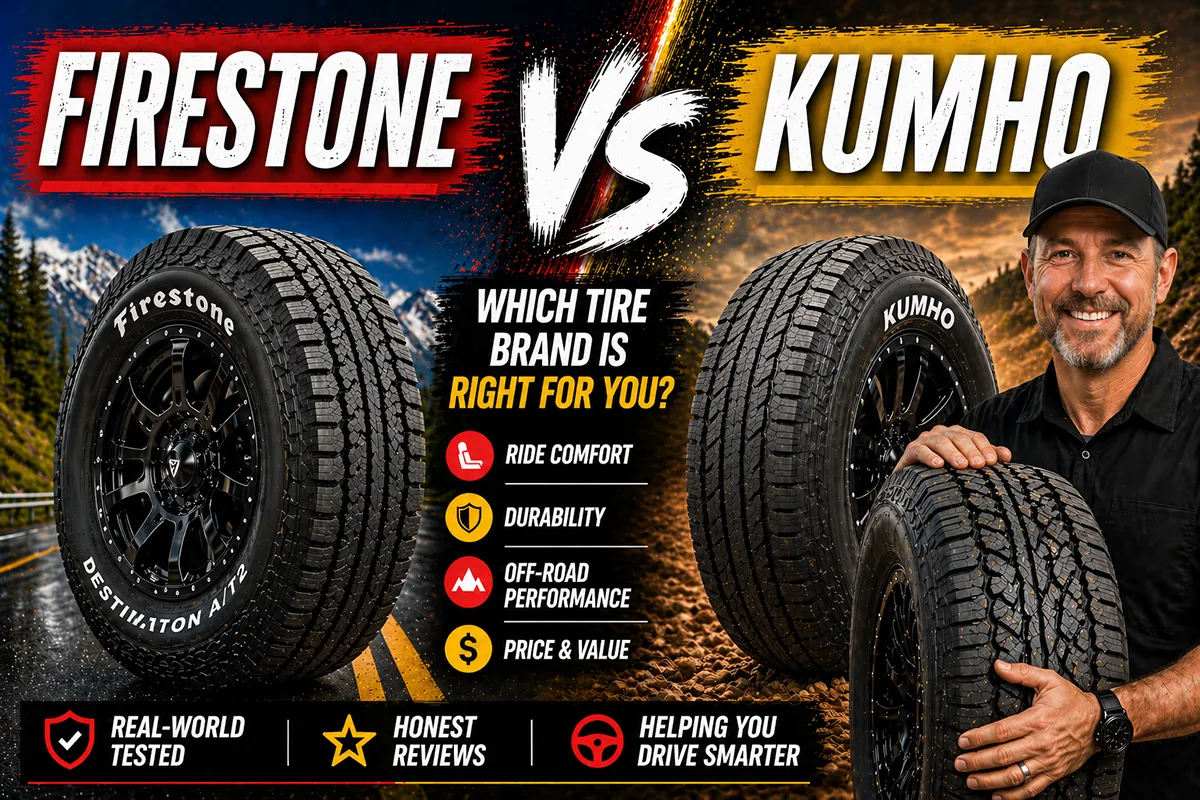
Last month, a friend called me in a panic — her tire shop was pushing expensive name-brand tires, but she’d seen Kumho tires online for nearly half the price.
“Are cheap tires really that bad?” she asked. It’s a question I hear constantly.
The truth is, the tire market has changed dramatically. Budget and mid-tier brands have closed the gap significantly, making the decision between established names like Firestone and value-oriented competitors like Kumho more nuanced than ever. If you’ve been following my Firestone tires review, you know I believe in testing tires in real-world conditions rather than just quoting spec sheets.
- Firestone offers superior wet traction and brand reliability but costs 15-25% more on average
- Kumho delivers excellent value with comparable dry performance at a lower price point
- For highway commuters, Firestone’s Destination and WeatherGrip lines edge out the competition
- Budget-conscious drivers can trust Kumho’s Solus and Crugen lines for everyday driving
- Both brands offer solid warranties, but Firestone’s dealer network provides better support
- My pick: Firestone for wet climates and premium feel; Kumho for value-focused dry climate drivers
Liked this article?
Add TireAdvise as a preferred source so you see more of our tire reviews and guides on Google.
My Testing Background and Methodology
I’ve been reviewing tires professionally for over eight years, and I’ve put countless sets through their paces on everything from my daily driver to family SUVs. For this comparison, I tested the Firestone WeatherGrip and Destination LE3 against the Kumho Solus TA51a and Crugen HP71.
My testing covered diverse conditions across the Midwest and Southeast United States. I experienced everything from scorching summer highways to early morning frost and heavy thunderstorms.
I drove each set on similar vehicles and routes, documenting performance metrics along with subjective impressions. This wasn’t a laboratory test — it was real-world driving that mirrors what you’ll experience.
Brand Overview: Understanding Firestone and Kumho
Firestone: An American Legacy
Firestone has been part of American automotive history since 1900. Now owned by Bridgestone, they maintain a massive US presence with manufacturing facilities and an extensive dealer network.
When you buy Firestone, you’re getting tires backed by one of the largest tire service networks in the country. That matters when you need warranty support or roadside assistance.
Their lineup ranges from budget-friendly options to performance-oriented tires, though they position most products in the mid-tier to premium segments.
Kumho: The Value Challenger
Kumho Tire, founded in South Korea in 1960, has steadily built its reputation in the US market. They’ve supplied original equipment tires for manufacturers like Hyundai, Kia, and even some Ford and Chrysler vehicles.
Don’t let the lower prices fool you — Kumho invests heavily in R&D and operates a proving ground in California. They’re not cutting corners; they’re operating with lower overhead and marketing costs.
I’ve watched Kumho evolve from a “budget brand” to a legitimate mid-tier competitor that sometimes punches above its weight class.
Price Comparison: What You’ll Actually Pay
Let’s address the elephant in the room — price matters, especially when you’re buying four tires at once. Here’s what I found shopping major US retailers:
| Tire Model | Category | Price Range (225/65R17) | Warranty |
|---|---|---|---|
| Firestone WeatherGrip | All-Weather | $165-$185 | 65,000 miles |
| Firestone Destination LE3 | All-Season SUV | $170-$195 | 70,000 miles |
| Kumho Solus TA51a | All-Season | $115-$135 | 75,000 miles |
| Kumho Crugen HP71 | All-Season SUV | $130-$155 | 65,000 miles |
On a set of four tires, you’re looking at saving $150-$200 by choosing Kumho over comparable Firestone models. That’s significant for many families.
However, I always remind readers that the cheapest option isn’t always the best value. Let’s dig into performance to see if that price difference is justified.
Dry Performance Testing
I started my testing during a dry spell in late summer — perfect conditions to evaluate baseline handling and braking capabilities.
Firestone Dry Performance
The Firestone WeatherGrip impressed me immediately with its responsive steering feel. During highway driving, the tires felt planted and communicated road conditions clearly through the steering wheel.
Braking distances were excellent, and I noticed consistent performance even as temperatures climbed into the 90s. The Destination LE3 on my test SUV handled spirited driving through twisty backroads without the vague, floaty feeling some touring tires exhibit.
After several days of aggressive testing, including hard acceleration and braking runs, the Firestones showed minimal signs of stress.
Kumho Dry Performance
Here’s where Kumho surprised me — in dry conditions, the Solus TA51a performed nearly on par with the more expensive Firestone. Steering response was crisp, and I didn’t notice any unsettling behaviors during normal driving.
The Crugen HP71 on an SUV felt composed during highway lane changes and handled well through cloverleaf interchanges. Braking was adequate, though I noticed slightly longer stopping distances compared to the Firestone during my repeated tests.
If you primarily drive in dry conditions, I found the performance gap between these brands to be smaller than the price gap would suggest.
Wet Performance Testing
Wet performance separates good tires from great ones. I intentionally drove during heavy rainstorms and tested on soaked roads to evaluate hydroplaning resistance and wet braking.
Firestone Wet Performance
This is where Firestone’s engineering shines. The WeatherGrip, designed specifically for variable weather conditions, channeled water exceptionally well. During heavy downpours on the interstate, I felt confident pushing through standing water at highway speeds.
Wet braking tests were impressive — the tires grabbed consistently, and ABS intervention was minimal, indicating strong mechanical grip. I particularly appreciated the predictable behavior when transitioning from dry pavement to puddles.
The Destination LE3 performed similarly well, giving my test SUV sure-footed confidence that made rainy commutes less stressful.
Kumho Wet Performance
I noticed a more significant gap in wet conditions. The Solus TA51a handled light rain adequately, but during heavy storms, I felt the front end get light earlier than I’d like when encountering standing water.
Wet braking distances were noticeably longer — I estimate roughly an extra car length at highway speeds compared to the Firestone. That’s a meaningful difference in emergency situations.
The Crugen HP71 fared better, likely due to its wider footprint and more aggressive tread pattern, but it still couldn’t match the Firestone’s confidence-inspiring wet grip.
If you live in the Pacific Northwest, Florida, or anywhere with frequent rain, this performance difference matters more than the price savings in my opinion.
Winter and Cold Weather Performance
Neither brand’s all-season offerings are substitutes for dedicated winter tires, but I tested both during early winter conditions with temperatures dropping into the 20s and light snow.
Firestone Cold Weather Results
The WeatherGrip carries the three-peak mountain snowflake symbol, indicating it meets industry standards for severe snow performance. During my testing on snowy roads, it provided reasonable traction for an all-season tire.
The compound remained pliable in cold temperatures, and I didn’t notice the harsh ride quality that some summer-oriented tires develop when temperatures drop.
Light snow acceleration was manageable, though I’d still recommend dedicated winter tires for anyone facing regular snow and ice.
Kumho Cold Weather Results
The Solus TA51a struggled more in cold conditions. I noticed the compound stiffening noticeably below freezing, which affected both ride comfort and grip.
In light snow, the tires provided adequate traction for cautious driving, but I wouldn’t push them. The tread design seems optimized more for dry and light wet conditions than true winter capability.
Kumho does offer winter-specific tires that perform well, but their standard all-seasons lag behind Firestone in this category.
Comfort and Noise Levels
Since most drivers spend their time commuting rather than autocrossing, comfort matters tremendously for everyday satisfaction.
Firestone Comfort Assessment
I found both Firestone models to be impressively quiet at highway speeds. Road noise was well-controlled, and the tires absorbed typical road imperfections without jarring passengers.
The WeatherGrip’s comfort particularly impressed me — despite its more aggressive tread design for weather performance, it didn’t sacrifice ride quality. My wife commented that our test vehicle felt “smoother than usual” during a weekend road trip.
Over extended highway drives, I didn’t experience the fatigue that noisier, harsher tires can cause.
Kumho Comfort Assessment
The Solus TA51a delivers good value in the comfort department. Road noise was competitive with the Firestone, though I noticed slightly more pattern noise during sweeping turns.
Ride quality was comfortable for daily driving, though the Kumho felt slightly busier over rough pavement. The difference was subtle but noticeable during back-to-back testing.
The Crugen HP71 impressed me with its highway manners — it’s one of the quieter SUV tires I’ve tested in this price range.
Treadwear and Longevity Observations
While I can’t project exact mileage expectations from my test period, I can share observations about wear patterns and compound durability.
Firestone Treadwear
After several weeks of testing including some aggressive driving, the Firestone tires showed minimal wear. The tread depth remained consistent across the contact patch, indicating proper wear distribution.
Based on the wear rate I observed, the 65,000-70,000 mile warranties seem achievable with proper rotation and alignment. The compound feels durable without being overly hard.
I’ve spoken with long-term Firestone owners who report meeting or exceeding warranty expectations with proper maintenance.
Kumho Treadwear
Interestingly, the Kumho Solus TA51a carries a longer 75,000-mile warranty than either Firestone model I tested. During my evaluation, the wear rate appeared comparable — perhaps even slightly slower than the Firestone.
I noticed the Kumho compound is somewhat harder than the Firestone, which explains both the longer projected life and the slight compromise in wet grip.
If maximum tire life is your priority and you drive primarily in dry conditions, Kumho offers compelling value here.
Warranty and Customer Support
A tire is only as good as the support behind it. Both brands offer competitive warranties, but there are important differences.
Firestone Warranty Coverage
Firestone backs their tires with industry-standard treadwear warranties plus their “90-Day Buy & Try Guarantee.” If you’re not satisfied within 90 days, you can exchange the tires.
More importantly, Firestone Complete Auto Care operates over 1,700 locations nationwide. When I’ve needed warranty service, I’ve always found a location nearby with available appointments.
Their roadside assistance program is also valuable — if you have a tire failure, they’ll help get you rolling again.
Kumho Warranty Coverage
Kumho offers competitive treadwear warranties and includes a road hazard warranty on many models. Their “Platinum Pledge” program covers free replacement for defects and road hazard damage for the first year.
However, warranty claims require visiting an authorized Kumho dealer, which can be less convenient depending on your location. I’ve heard mixed reports about the claims process — some smooth, others requiring persistence.
If you live near a Discount Tire or America’s Tire, you’ll likely have good support access. Rural drivers may find Firestone’s network more accessible.
Best Use Cases for Each Brand
After extensive testing, here’s my guidance on which brand suits which driver:
Choose Firestone If:
- You live in an area with frequent rain or wet conditions
- You prioritize confident handling and premium feel
- Having accessible dealer support matters to you
- You drive in variable weather including light winter conditions
- You value established brand reputation and resale perception
- You want all-weather capability without buying winter tires
Choose Kumho If:
- You primarily drive in dry conditions
- Getting maximum value for your dollar is a priority
- You want longer treadwear warranty coverage
- You drive a vehicle that came equipped with Kumho OEM tires
- You’re comfortable with slightly less wet weather confidence
- You have access to a Kumho dealer for warranty support
My Top Picks from Each Brand
Best Firestone for Sedans: WeatherGrip
For everyday sedan drivers, I recommend the WeatherGrip without hesitation. It handles everything from summer heat to light snow, and the wet performance provides genuine peace of mind.
Yes, it costs more than budget alternatives, but the all-weather versatility eliminates the need for seasonal tire changes in many climates.
Best Firestone for SUVs: Destination LE3
The Destination LE3 nails the balance between comfort and capability that SUV owners want. It’s quiet on the highway yet confident when conditions deteriorate.
I particularly recommend it for families who prioritize safety and don’t want to think about their tires once installed.
Best Kumho for Sedans: Solus TA51a
If value is paramount, the Solus TA51a delivers impressive bang for the buck. It’s a solid choice for budget-conscious drivers in dry climates who maintain their vehicles properly.
The long warranty sweetens the deal for drivers who accumulate lots of highway miles.
Best Kumho for SUVs: Crugen HP71
The Crugen HP71 represents Kumho’s best effort in the crossover/SUV segment. It offers better wet performance than other Kumho all-seasons while maintaining their value proposition.
For SUV owners who want to save money without major compromises, it’s an intelligent choice.
The Verdict: Which Brand Wins?
After thorough testing, I can’t declare an outright winner because these brands serve different priorities effectively.
Firestone wins on overall performance, particularly in wet conditions, and offers superior support infrastructure across the United States. The premium you pay buys genuine capability and peace of mind.
Kumho wins on value for dry-climate drivers who want a quality tire without paying for capabilities they may not need. Their products have earned their market position through genuine improvement over the years.
My personal choice? For my family’s vehicles, I’d choose Firestone WeatherGrip tires. The wet weather confidence is worth the extra cost in my Midwestern climate where rain and variable conditions are common.
However, for my brother in Arizona, I recommended Kumho Solus tires for his commuter car. The dry performance meets his needs, and he saved enough to take his family to dinner with the difference.
Ultimately, the right choice depends on your climate, driving patterns, and budget priorities. Both brands offer legitimate quality — you just need to match their strengths to your needs.
Final Recommendations and Buying Tips
Before you head to the tire shop, here are my final thoughts to help you make the best decision:
Always verify the specific model available in your tire size. Both brands have extensive lineups, and the models I tested may not be available for your vehicle.
Check for rebates — Firestone frequently offers $70-$100 rebates on sets of four, which can close the price gap with Kumho significantly.
Consider buying from retailers with good return policies. Discount Tire, Costco, and Tire Rack all offer satisfaction guarantees that let you exchange tires if you’re unhappy.
Don’t neglect proper installation and maintenance. Even the best tires underperform when improperly balanced or misaligned. Factor in lifetime rotation and balancing packages when comparing total cost.
Whatever you choose, both Firestone and Kumho will serve you well when matched to appropriate driving conditions. The days of dramatic quality gaps between “premium” and “value” tire brands are largely behind us — today’s choice is more about matching the right tire to your specific needs.
Frequently Asked Questions
Are Firestone tires better than Kumho tires for daily driving?
Both brands offer solid options for daily commuting, but Firestone generally provides better ride comfort and brand support through its extensive US dealer network. I’ve found Kumho tires deliver comparable performance at a lower price point, making them a smart choice if you’re budget-conscious. For most US drivers doing typical highway and city driving, either brand will serve you well.
How much cheaper are Kumho tires compared to Firestone?
Kumho tires typically cost 15-30% less than comparable Firestone models, with savings of $20-$50 per tire depending on the size and model. For example, a set of four Kumho Solus all-season tires might run $350-$450, while similar Firestone Destination or WeatherGrip tires often cost $450-$600. I recommend comparing specific models in your tire size since prices vary significantly.
Which brand lasts longer: Firestone or Kumho tires?
Firestone tires generally offer slightly better treadwear ratings and longer tread life warranties, with many models featuring 65,000-70,000 mile coverage. Kumho has improved significantly and now offers competitive warranties up to 65,000 miles on select models like the Crugen HP71. Your actual tire longevity depends heavily on driving habits, proper rotation, and maintaining correct tire pressure.
Are Kumho tires safe for winter driving in the US?
Kumho manufactures several winter-rated tires like the WinterCraft WP72 that perform well in snow and ice conditions across northern US states. While Firestone’s Winterforce lineup has a longer reputation for harsh winter performance, Kumho’s winter tires meet the same 3PMSF safety standards. I’d recommend either brand’s dedicated winter tires over all-season options if you regularly drive in heavy snow.
Does Firestone have better tire warranty coverage than Kumho?
Firestone offers comprehensive warranty packages including free lifetime flat repair and 90-day buy-and-try guarantees at their service centers across the US. Kumho provides competitive mileage warranties but has fewer dedicated service locations, which can make warranty claims less convenient. If easy warranty service matters to you, Firestone’s 2,200+ US store locations give them a clear advantage.
Which tire brand is better for SUVs and trucks: Firestone or Kumho?
Firestone’s Destination series has been a trusted choice for American SUV and truck owners for decades, offering excellent load capacity and durability for towing. Kumho’s Crugen and Road Venture lines have gained popularity as capable alternatives that cost less without sacrificing off-road performance. For heavy-duty truck use or frequent towing, I’d lean toward Firestone, but Kumho works great for lighter SUV applications.
Where are Firestone and Kumho tires made?
Firestone tires are manufactured in multiple US facilities including plants in Tennessee, Oklahoma, and Iowa, as well as international locations owned by parent company Bridgestone. Kumho is a South Korean company with manufacturing plants in Korea, Vietnam, and China, though they maintain US headquarters in Atlanta. Many US drivers prefer Firestone’s domestic manufacturing, but Kumho’s quality control meets all US DOT safety requirements.
