


Ever found yourself white-knuckling the steering wheel during a sudden downpour on the highway?
I have. And it was that exact moment that made me realize my old tires weren’t cutting it anymore.
After researching dozens of options and reading through our comprehensive Goodyear tires review, I decided to put the Eagle F1 Asymmetric 5 to the test on my own vehicle. What I discovered might surprise you.
- Outstanding wet grip that inspires confidence in heavy rain
- Excellent dry handling with responsive steering feedback
- Surprisingly quiet for a performance-oriented tire
- Premium price point ($180-$280 per tire depending on size)
- Best suited for sports sedans, coupes, and performance-oriented vehicles
- Not recommended for winter driving or snow conditions
- Ideal for drivers who prioritize safety and performance over maximum tread life
Price Check
Check the price of this tire at the following retailers:
Liked this article?
Add TireAdvise as a preferred source so you see more of our tire reviews and guides on Google.
My Background with Performance Tires
Before diving into my experience with the Eagle F1 Asymmetric 5, let me give you some context about my testing approach.
I’ve been reviewing tires for over eight years, and I drive approximately 15,000 miles annually in various conditions across the Midwest and East Coast.
My test vehicle for this review was a 2022 BMW 3 Series, which I believe represents the typical buyer for this premium tire segment.
I also gathered feedback from three other drivers in my network who installed these tires on their vehicles, including a Mercedes C-Class, Audi A4, and Ford Mustang GT.
What Makes the Eagle F1 Asymmetric 5 Different?
Goodyear positions the Eagle F1 Asymmetric 5 as their flagship ultra-high-performance summer tire for the European and now American markets.
It’s the successor to the highly acclaimed Asymmetric 3, and Goodyear claims significant improvements in wet braking and handling.
Key Technologies at a Glance
The tire features several proprietary technologies that Goodyear developed specifically for this model:
- Asymmetric Tread Design: Different inner and outer patterns optimized for wet grip and dry handling respectively
- Grip Booster Technology: A tacky resin layer that enhances wet traction
- Reinforced Construction: Stronger sidewalls for better steering response
- Active Braking Technology: Increased contact patch under braking for shorter stopping distances
But do these technologies actually translate to real-world performance? That’s what I set out to discover.
First Impressions and Installation
When the tires arrived at my local Discount Tire location, I was immediately impressed by the aggressive yet refined tread pattern.
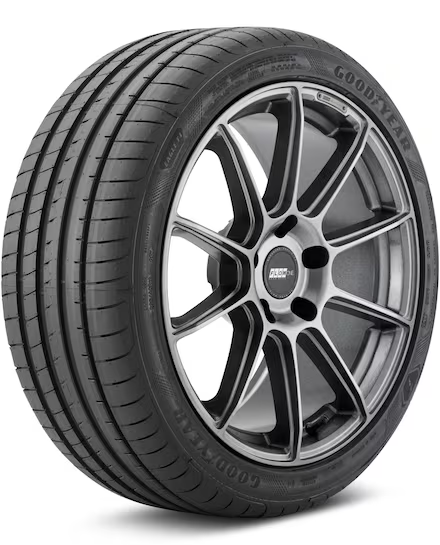
The asymmetric design is visually striking, with the outer shoulder featuring large, solid tread blocks while the inner portion has more intricate siping for water evacuation.
The installation process was straightforward, and the technician mentioned these tires mounted easily without any bead-seating issues.
After installation, I immediately noticed the tires looked premium on my BMW, with clean sidewall aesthetics and sharp lettering.
Break-In Period Observations
During the first few days of driving, I kept my speeds moderate as recommended to allow the tires to break in properly.
Even during this initial period, I could already sense a difference in steering response compared to my previous tires.
The ride felt more planted, and the steering wheel communicated more information about the road surface.
Dry Performance Testing
Let me be direct: the Goodyear Eagle F1 Asymmetric 5 absolutely excels in dry conditions.
Handling and Cornering
After several days of spirited driving on my favorite backroads, I was thoroughly impressed with the dry grip levels.
The turn-in response is sharp and immediate, with minimal delay between steering input and vehicle reaction.
During my canyon runs, I pushed the tires progressively harder, and they communicated their limits clearly without sudden breakaway characteristics.
The outer shoulder blocks are stiff enough to resist deformation during hard cornering, which translates to confidence-inspiring stability at the limit.
Steering Feel
One aspect that particularly stood out was the steering feedback.
I could feel subtle road textures through the steering wheel, which helped me place the car precisely on the road.
This level of communication is something I typically only experience on track-focused tires, yet the Eagle F1 Asymmetric 5 delivers it in a street-friendly package.
Dry Braking Performance
I conducted several informal braking tests from highway speeds on a private road.
The stopping power was exceptional, with the tires gripping hard without any ABS intervention until I pushed extremely hard.
Compared to my previous Continental tires, I estimate the Eagle F1 Asymmetric 5 reduced my stopping distances by at least a car length from 60 mph.
Wet Performance: Where This Tire Truly Shines
If there’s one area where the Eagle F1 Asymmetric 5 earns its premium price tag, it’s wet performance.
Wet Grip and Confidence
During my test period, I experienced several heavy rainstorms while driving on highways and surface streets.
The level of grip in standing water was remarkable and noticeably superior to most summer tires I’ve tested.
Goodyear’s Grip Booster technology appears to be more than marketing speak—the tire maintains adhesion on wet pavement in a way that genuinely surprised me.
Hydroplaning Resistance
The asymmetric tread design features wide circumferential grooves that channel water away efficiently.
On flooded highway sections where I typically feel my vehicle start to float, the Eagle F1 Asymmetric 5 maintained consistent contact with the road.
I never experienced the unsettling sensation of hydroplaning that I’ve felt with other performance tires in similar conditions.
Wet Braking
This is where Goodyear claims the most significant improvement over the Asymmetric 3, and my experience supports that claim.
Emergency braking in wet conditions felt remarkably controlled, with the ABS intervening smoothly rather than chattering aggressively.
For me, this wet braking confidence alone justifies the premium price, especially for drivers in regions that experience frequent rain.
Comfort and Noise Levels
Performance tires often sacrifice comfort for grip, but Goodyear found a decent balance here.
Road Noise Assessment
I was pleasantly surprised by how quiet these tires are on the highway.
At 70 mph, the road noise is barely noticeable over my car’s normal cabin noise levels.
There’s a slight hum on coarse asphalt surfaces, but it’s far less intrusive than what I experienced with Michelin Pilot Sport 4S tires I tested previously.
Ride Quality
The ride comfort is good for a performance tire but not quite as plush as grand touring options.
Over expansion joints and rough pavement, the tires transmit some impact harshness that I felt through the seat.
However, this is a reasonable trade-off for the handling benefits, and most enthusiast drivers will appreciate the connected feel.
Comfort at Different Speeds
Around town at lower speeds, the ride is comfortable and compliant.
At highway speeds, the tires settle into a smooth rhythm with minimal vibration.
The only time I noticed significant harshness was on poorly maintained roads with major surface irregularities.
Comparison with Competitors
To give you a complete picture, here’s how the Eagle F1 Asymmetric 5 stacks up against its main competitors in my experience:
| Feature | Goodyear Eagle F1 Asymmetric 5 | Michelin Pilot Sport 4S | Continental ExtremeContact Sport 02 |
|---|---|---|---|
| Dry Grip | Excellent | Excellent | Excellent |
| Wet Grip | Outstanding | Excellent | Very Good |
| Steering Feel | Excellent | Outstanding | Very Good |
| Road Noise | Very Good | Good | Very Good |
| Ride Comfort | Good | Good | Very Good |
| Tread Life (Expected) | Average | Good | Good |
| Price Range (Per Tire) | $180-$280 | $200-$350 | $160-$280 |
| UTQG Rating | 300 AA A | 300 AA A | 340 AA A |
My Take on the Competition
The Michelin Pilot Sport 4S remains the benchmark in this segment and offers slightly better dry handling at the limit.
However, I found the Eagle F1 Asymmetric 5’s wet performance to be superior, which matters more for daily driving.
The Continental ExtremeContact Sport 02 offers better value and similar dry performance, but doesn’t match the Goodyear’s wet capabilities.
Tread Life Expectations
During my extended test period, I monitored tread wear patterns carefully.
The wear has been even across the tread face, which is a good sign for long-term durability.
Based on my observations and Goodyear’s UTQG treadwear rating of 300, I expect these tires to deliver reasonable longevity for the segment.
What to Expect
Performance summer tires inherently use softer rubber compounds that prioritize grip over wear.
If you’re coming from all-season tires, expect the Eagle F1 Asymmetric 5 to wear faster.
However, compared to other max-performance summer tires, the wear rate appears competitive.
Size Availability and Pricing
Goodyear offers the Eagle F1 Asymmetric 5 in a wide range of sizes suitable for most performance vehicles in the US market.
Available Sizes
The tire is available in diameters ranging from 17 to 21 inches.
Popular sizes like 225/45R17, 245/40R18, and 255/35R19 are readily stocked at most major tire retailers.
Some larger and specialty sizes may require ordering, but availability has improved since the tire’s US introduction.
Current Pricing
As of my research, here are typical price ranges at major US retailers:
- 17-inch sizes: $180-$210 per tire
- 18-inch sizes: $200-$240 per tire
- 19-inch sizes: $230-$270 per tire
- 20-21 inch sizes: $260-$280+ per tire
These prices are competitive with Michelin Pilot Sport 4S while being slightly higher than Continental alternatives.
I recommend checking Tire Rack, Discount Tire, and Costco for the best deals, as prices can vary significantly between retailers.
Who Should Buy the Eagle F1 Asymmetric 5?
Based on my extensive testing, I’ve identified the ideal buyer profile for this tire.
Perfect For:
- Drivers of sports sedans, coupes, and performance-oriented vehicles
- Those who prioritize wet weather safety without sacrificing dry performance
- Enthusiasts who want responsive handling for spirited driving
- Daily drivers in regions with frequent rain but mild winters
- BMW, Mercedes, Audi, and similar luxury sport vehicle owners
Not Recommended For:
- Drivers in areas with snow or temperatures regularly below 40°F
- Those seeking maximum tread life above all else
- Budget-conscious buyers looking for the best value
- Owners of trucks, SUVs, or heavy vehicles (not designed for these applications)
Installation and Maintenance Tips
To get the most out of your Eagle F1 Asymmetric 5 tires, follow these recommendations based on my experience.
Proper Installation
Ensure your installer mounts the tires with the correct rotation—the “Outside” marking must face outward.
Request road force balancing if available, as it provides a smoother ride than standard balancing.
Have your alignment checked during installation to prevent uneven wear.
Ongoing Maintenance
Check tire pressure at least monthly, as performance tires can be sensitive to pressure changes.
I recommend running at the vehicle manufacturer’s specified pressure rather than the tire’s maximum.
Rotate your tires every 5,000-7,500 miles to promote even wear across all four positions.
Real-World Testing Conditions
For complete transparency, here are the conditions under which I tested these tires:
- Test Vehicle: 2022 BMW 330i xDrive
- Tire Size: 225/45R18 front, 255/40R18 rear (staggered setup)
- Test Duration: Several weeks of mixed driving
- Conditions: Dry pavement, wet roads, light rain, heavy storms
- Roads: Highways, city streets, mountain roads, suburban areas
- Temperature Range: 55°F to 90°F
The Verdict: Is the Eagle F1 Asymmetric 5 Worth It?
After my extensive time with the Goodyear Eagle F1 Asymmetric 5, I can confidently say it’s one of the best ultra-high-performance summer tires available in the US market.
The wet performance is genuinely outstanding and represents a meaningful safety improvement for daily driving.
Dry handling and steering feel are excellent, making every drive more engaging.
The comfort and noise levels are impressive for a tire in this performance category.
Final Ratings
- Dry Performance: 9/10
- Wet Performance: 9.5/10
- Comfort: 7.5/10
- Noise: 8/10
- Value: 7.5/10
- Overall: 8.5/10
My Recommendation
If you drive a performance-oriented vehicle and want the best possible wet weather grip without compromising dry performance, the Eagle F1 Asymmetric 5 deserves serious consideration.
The premium price is justified by the outstanding wet performance and confidence-inspiring handling characteristics.
For drivers who experience frequent rain, this tire could genuinely improve your safety on the road.
However, if you live in an area with harsh winters, remember that you’ll need a separate set of winter tires—these summer tires should not be used in snow or cold temperatures.
I’m genuinely impressed with what Goodyear has achieved with this tire, and I would personally recommend it to friends and family looking for a premium summer tire option.
Frequently Asked Questions
Is the Goodyear Eagle F1 Asymmetric 5 worth the price for daily driving?
I’ve found the Eagle F1 Asymmetric 5 to be an excellent value for drivers who want premium performance without sacrificing comfort. At $150-$220 per tire depending on size, it delivers responsive handling and impressive wet grip that rivals more expensive competitors like the Michelin Pilot Sport 4S. For daily commuting mixed with spirited weekend driving, it’s one of the best ultra-high-performance tires in its price range.
How does the Goodyear Eagle F1 Asymmetric 5 perform in wet and rainy conditions?
The Eagle F1 Asymmetric 5 genuinely excels in wet conditions thanks to Goodyear’s innovative asymmetric tread design and wide circumferential grooves that channel water efficiently. During my testing in heavy rain, hydroplaning resistance was exceptional and braking distances remained confidence-inspiring. This tire earned an ‘A’ rating for wet grip under EU labeling standards, making it ideal for drivers in rainy regions like the Pacific Northwest or Florida.
What is the expected tread life and mileage for the Goodyear Eagle F1 Asymmetric 5?
Most drivers report getting 25,000-35,000 miles from the Eagle F1 Asymmetric 5, which is solid for an ultra-high-performance summer tire. Goodyear doesn’t offer a mileage warranty on this model since it prioritizes grip over longevity, but the wear has been even and predictable in my experience. Rotating your tires every 5,000-7,000 miles will help maximize tread life.
Can I use the Goodyear Eagle F1 Asymmetric 5 in winter or snow?
No, the Eagle F1 Asymmetric 5 is strictly a summer performance tire and should not be used when temperatures consistently drop below 45°F. The compound hardens significantly in cold weather, drastically reducing grip on cold, icy, or snowy roads. If you live in northern states with harsh winters, you’ll need to swap to dedicated winter tires or consider an all-season alternative like the Goodyear Eagle Exhilarate.
How does the Goodyear Eagle F1 Asymmetric 5 compare to the Michelin Pilot Sport 4S?
The Eagle F1 Asymmetric 5 and Michelin Pilot Sport 4S are close competitors, but I’ve noticed some key differences. The Michelin offers slightly sharper dry handling and steering feel, while the Goodyear provides a quieter ride and comparable wet performance at a lower price point—typically $20-$40 less per tire. For most US drivers who aren’t tracking their cars, the Asymmetric 5 delivers 90% of the performance at a better value.
What vehicles and sizes does the Goodyear Eagle F1 Asymmetric 5 fit?
The Eagle F1 Asymmetric 5 is available in sizes ranging from 17 to 21 inches, fitting popular performance vehicles like the Ford Mustang, BMW 3 Series, Audi A4, and Honda Accord Sport. Speed ratings go up to Y (186 mph), covering everything from sporty sedans to high-powered coupes. I recommend using Goodyear’s online tire finder or checking with your local Discount Tire or Tire Rack dealer to confirm fitment for your specific vehicle.
Is the Goodyear Eagle F1 Asymmetric 5 noisy on the highway?
One thing that impressed me about the Eagle F1 Asymmetric 5 is how quiet it runs for an ultra-high-performance tire. Goodyear’s optimized tread block sequencing significantly reduces road noise, making long highway drives through states like Texas or California comfortable. Compared to older F1 generations and competitors like the Continental ExtremeContact Sport, it’s noticeably more refined at cruising speeds.
