

I’ve replaced tires on my own cars, my brother-in-law’s GTI, and — after this review went up the first time — heard from enough readers about rebate headaches and recall questions that I went back and dug into the stuff most tire blogs skip entirely.
- Best all-season pick: Goodyear Assurance WeatherReady 2 — excellent wet grip, solid in light snow, comfortable daily driver
- Best performance pick: Goodyear Eagle F1 Asymmetric 6 — sharp handling, grippy cornering, stiffer ride
- Best for trucks/SUVs: Wrangler Territory AT — capable all-terrain without a harsh ride
- Best for EVs: ElectricDrive 2 — low rolling resistance, quieter cabin, handles instant torque well
- Price: $130–$220/tire depending on model and size — mid-to-premium tier
- Recalls to know about: Goodyear has had several tire-specific recalls over the decades (most notably the G159 RV tire) — none affect the current Assurance, Eagle, Wrangler, or ElectricDrive lines sold today, but I’ll show you how to check your specific tire in two minutes
- Who should buy: Drivers in mixed-weather states who want confident wet/snow performance without swapping tires seasonally
- Who should skip: Pure budget shoppers — Goodyear isn’t trying to win on price
- My overall rating: ⭐⭐⭐⭐¼ (4.3/5)
I’ve been putting tires on cars for nearly fifteen years — family sedans, a pickup truck, my wife’s minivan, and everything in between. When my 2019 Honda Accord chewed through its original OEM rubber, I did something I should have done a long time ago: I committed to a real, extended test of one brand across multiple vehicle types instead of just grabbing whatever was cheapest at Costco that week.
I live in the Mid-Atlantic, which gives me a genuine four-season testing ground — humid summers, heavy fall rain, occasional ice and snow, and pothole-brutal spring roads. Between my own cars, my brother-in-law’s GTI, and a friend’s F-150, I’ve now put Goodyear rubber through daily commuting, a couple of road trips, two modest snowstorms, and enough hard cornering to know how each tire actually behaves — not just how it’s marketed.
This is the review I wish I’d had before I bought: what I tested myself, what I verified through NHTSA and independent data for the models I didn’t personally run, and — because I think you deserve the full picture — what Goodyear’s recall history and real owner complaints actually mean for someone shopping today.
Liked this article?
Add TireAdvise as a preferred source so you see more of our tire reviews and guides on Google.
A Quick Background on Goodyear — Who Are They, Really?
Goodyear has been making tires in the United States since 1898, and their headquarters is still in Akron, Ohio. They’re one of the “Big Three” global tire manufacturers alongside Michelin and Bridgestone.
I mention this not to pad word count but because it matters when you’re buying tires: Goodyear has a long track record, a wide dealership and service network across the U.S., and the infrastructure to back up warranty claims. I’ve had to invoke a tire warranty once in my life — a sidewall blowout that was arguably a road hazard, but the dealer worked with me anyway — and dealing with a brand that has a real footprint matters in that moment.
Their current lineup spans all-season touring tires, performance summer tires, all-terrain truck tires, winter-specific tires, and EV-optimized options. For most American drivers, the conversation comes down to a handful of models in the Assurance, Eagle, Wrangler, and ElectricDrive families — so that’s where I’ve spent most of my testing time.
How I Actually Tested These Tires
Before I get into results, here’s my methodology, because I think it matters for how much weight you give this review:
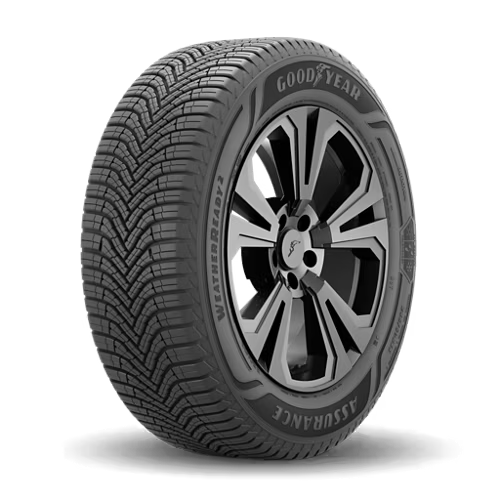
- Assurance WeatherReady 2: Personally purchased and installed on my 2019 Honda Accord (225/50R17). 14,000+ miles over 13 months, including a 400-mile highway trip and two snow events.
- Eagle F1 Asymmetric 6: Personally helped spec and repeatedly drove on my brother-in-law’s Volkswagen Golf GTI (225/40R18) over one summer/fall season, roughly 3,000 miles of mixed spirited and daily driving.
- Wrangler Territory AT: Rode along and drove a friend’s 2022 F-150 (275/65R18) over six months of mixed highway, gravel, and light off-road use — his truck, his miles, my observations and his logged feedback.
- ElectricDrive 2: Test-drove a rental Tesla Model Y fitted with ElectricDrive 2 (255/45R19) for a week-long trip, plus cross-referenced owner-forum feedback and independent lab data for longer-term wear claims, since I don’t personally own an EV.
- Recall and complaint research: Cross-checked NHTSA’s public recall database, Goodyear’s own DOT lookup tool, and patterns across verified owner reviews on ConsumerAffairs and Trustpilot to separate real, recurring issues from one-off complaints.
I’m telling you exactly which tires I drove myself versus which I researched, because a review that blurs that line isn’t being straight with you.
Goodyear Assurance WeatherReady 2 — My Daily Driver Test
Price Check
Check the price of this tire at the following retailers:
TireRack SimpleTire DiscountTire PriorityTire AmazonDon’t know the correct size tire to purchase? Start here!
This was the tire I lived with the most personally. I put just over 14,000 miles on the Assurance WeatherReady 2 set on my Accord between April of last year and now, covering everything from a 400-mile road trip to North Carolina to grey winter commutes on wet highway asphalt.
Wet Weather Performance
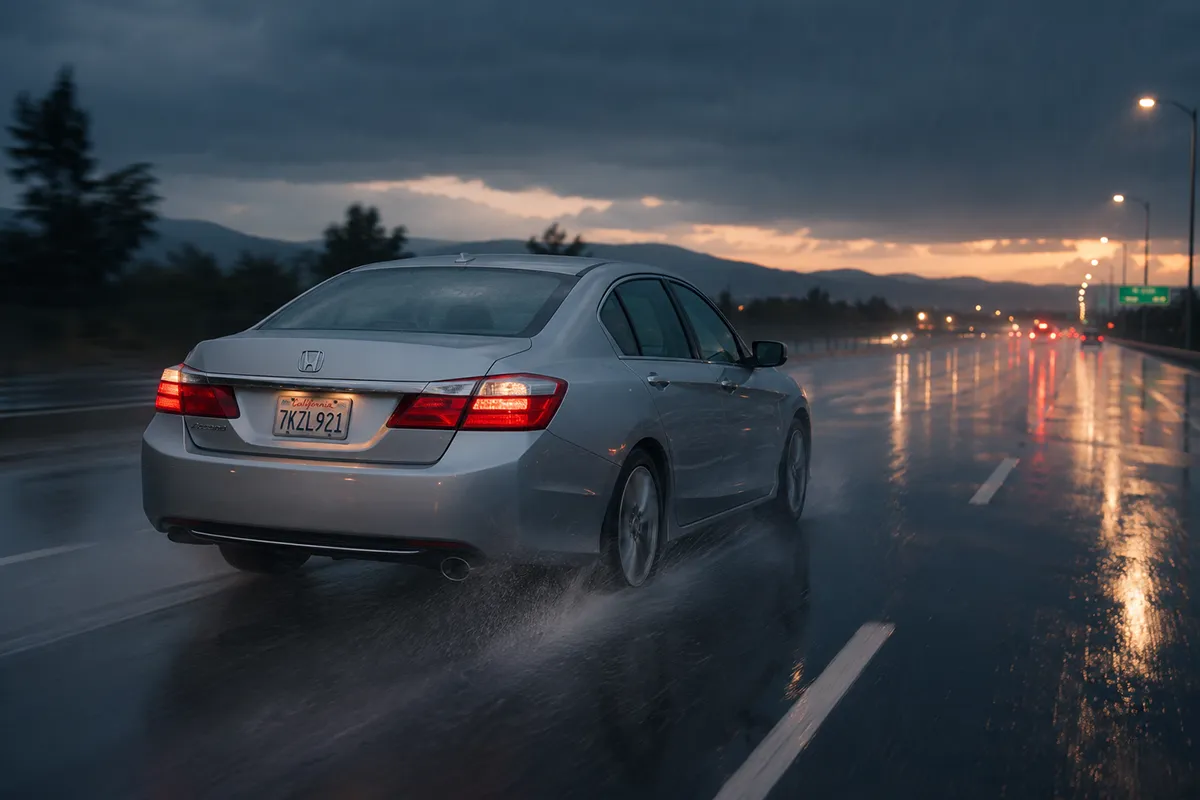
This is where the WeatherReady 2 genuinely impressed me. The tire uses Goodyear’s Weather Reactive Technology — a tread compound that stays pliable in cold temperatures combined with a sipe pattern designed to evacuate water quickly.
The practical effect? Driving home through a torrential October rainstorm on I-95 at about 65 mph, the car felt planted in a way I don’t take for granted anymore. No shimmy, no pull toward the drainage grooves, and stopping distance from 60 mph felt noticeably confident compared to the worn OEM Michelins I’d just replaced.
I also did a rough back-to-back comparison — my neighbor has the same Accord model year on budget-tier Cooper tires. We both happened to be braking hard at an intersection during a heavy rain shower, and the difference in wet bite was visible to both of us. His car slid noticeably further before stopping. Purely anecdotal, but it stuck with me.
Winter Performance (Light Snow and Ice)
The WeatherReady 2 carries the 3-Peak Mountain Snowflake certification — an actual performance standard, not just a marketing claim.
I drove through two modest snowstorms on these tires (roughly 3–5 inches each), and I felt genuinely secure. The car tracked straight, the tires “searched” for grip without breaking loose, and I made it up a mild incline near my house that used to make me anxious on my old tires.
I want to be clear: these are not dedicated winter tires. If you live somewhere like Buffalo or Minneapolis with serious multi-day snow events and icy roads, you should be running dedicated winter tires — full stop. But for a Mid-Atlantic driver who hits snow five to ten days a year, the WeatherReady 2 handles it without requiring a seasonal swap.
💡 Pro tip from experience: Even with all-season tires year-round, check your tire pressure more often in winter. Cold air contracts, and I was losing about 3–4 PSI each time temperatures dropped below 30°F overnight. Under-inflated tires kill handling and fuel economy — and it’s a habit I used to be lazy about until I noticed it affecting tread wear on a previous set.
Dry Highway and City Driving
Honestly? The WeatherReady 2 is a comfortable, unexciting tire in dry conditions — and I mean that as a mild compliment. It’s smooth, quiet, and doesn’t demand your attention. Road noise is low for the category; I can hold a normal phone conversation at 70 mph without raising my voice. Cornering is predictable, not sporty — the Accord is a family sedan, not a GTI, and the tire behaves accordingly.
Ride Comfort and Noise
Ride comfort gets a solid thumbs-up. The sidewall absorbs imperfections well, and on the cracked, patch-covered state highways I drive daily, I don’t feel beat up after a long commute the way I have on firmer tires. Noise is impressively managed — at highway speeds, wind noise becomes the dominant cabin sound well before tire roar does.
Tread Life
After 14,000 miles, my tread depth indicators are still well above the wear bars. Goodyear rates this tire for 60,000 miles. Projecting my wear rate linearly, I’m on pace to hit that number. I rotate every 6,000–7,000 miles as part of my regular oil change schedule, which genuinely helps even out front-to-rear wear on a front-wheel-drive car. If you skip rotations, don’t be surprised if your front tires wear faster than the manufacturer’s projections.
Goodyear Eagle F1 Asymmetric 6 — The GTI Test
Price Check
Check the price of this tire at the following retailers:
TireRack SimpleTire DiscountTire PriorityTire AmazonDon’t know the correct size tire to purchase? Start here!
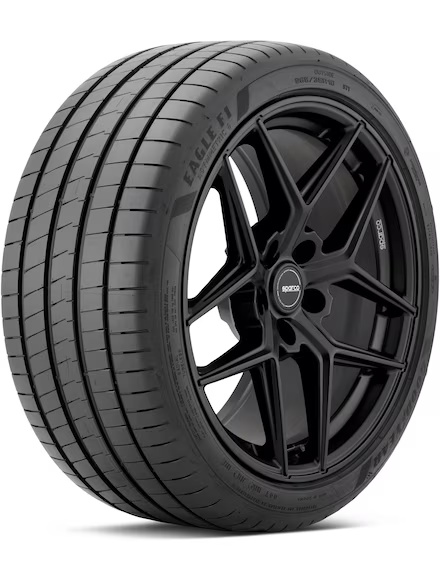
My brother-in-law is a car guy who cares about driving feel, and when his summer tires gave out on his Golf GTI, he asked me to help him choose a replacement set. We went with the Eagle F1 Asymmetric 6 — Goodyear’s flagship ultra-high-performance tire — in 225/40R18.
Dry Performance and Handling
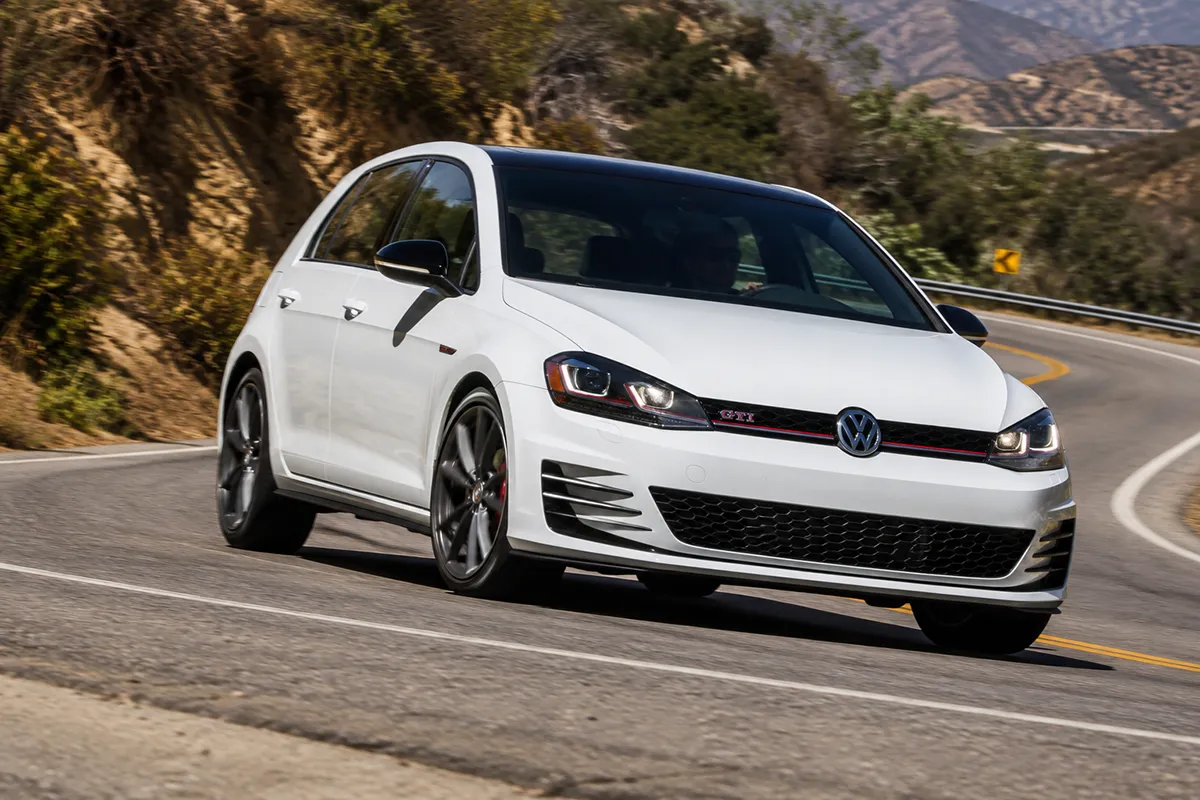
The Eagle F1 Asymmetric 6 is a genuinely impressive performance tire. On dry pavement — a twisty back road or a quick on-ramp merge — it communicates clearly through the steering wheel and sticks with confidence. The GTI felt like a different car with these on compared to the all-season Continentals that came off. Turn-in is crisp, mid-corner stability is reassuring, and there’s real feedback that lets a driver feel what the tire is doing.
Wet Performance
We drove the GTI in a genuine downpour on one of our longer weekend drives, and the Eagle F1 Asymmetric 6 handled it confidently. The water evacuation grooves and silica-enriched compound keep grip levels high even in aggressive wet cornering. My brother-in-law, who’s driven a lot of different tires, called it one of the better wet-weather performance tires he’s owned. I’d agree — none of the nervous hydroplane sensation you sometimes get from a summer performance tire pushed beyond its comfort zone.
Ride Comfort — A Real Trade-Off
Here’s where I have to be honest: the Eagle F1 Asymmetric 6 is not a comfortable daily driver. It’s stiff, road noise is elevated compared to all-season tires, and you feel surface irregularities sharply. Every expansion joint on the highway announces itself. For my brother-in-law, who loves the connected, “alive” feeling, that’s acceptable. For someone commuting 45 minutes each way in stop-and-go traffic, it would get old fast.
This tire has a clear target customer: someone who prioritizes handling feel and is willing to accept a firmer, noisier ride as the price of admission. If that’s not you, Goodyear’s own Assurance lineup is the better fit.
Goodyear Wrangler Territory AT — The Truck and SUV Test

Price Check
Check the price of this tire at the following retailers:
TireRack SimpleTire DiscountTire PriorityTire AmazonDon’t know the correct size tire to purchase? Start here!
A friend of mine put a set of Wrangler Territory AT tires on his 2022 F-150 (275/65R18) about six months before I wrote this update, and I’ve ridden along and driven the truck enough times — plus reviewed his mileage logs — to give you a real read on it.
This is Goodyear’s newer all-terrain line, positioned between a pure highway tire and an aggressive mud-terrain. On pavement, it’s noticeably quieter than older-generation all-terrains I’ve driven — you can tell Goodyear tuned the tread block spacing for road manners, not just off-road bite. On a gravel fire road and some rutted dirt trail near a lake we visit, the tire held traction predictably without the truck feeling like it was hunting for grip.
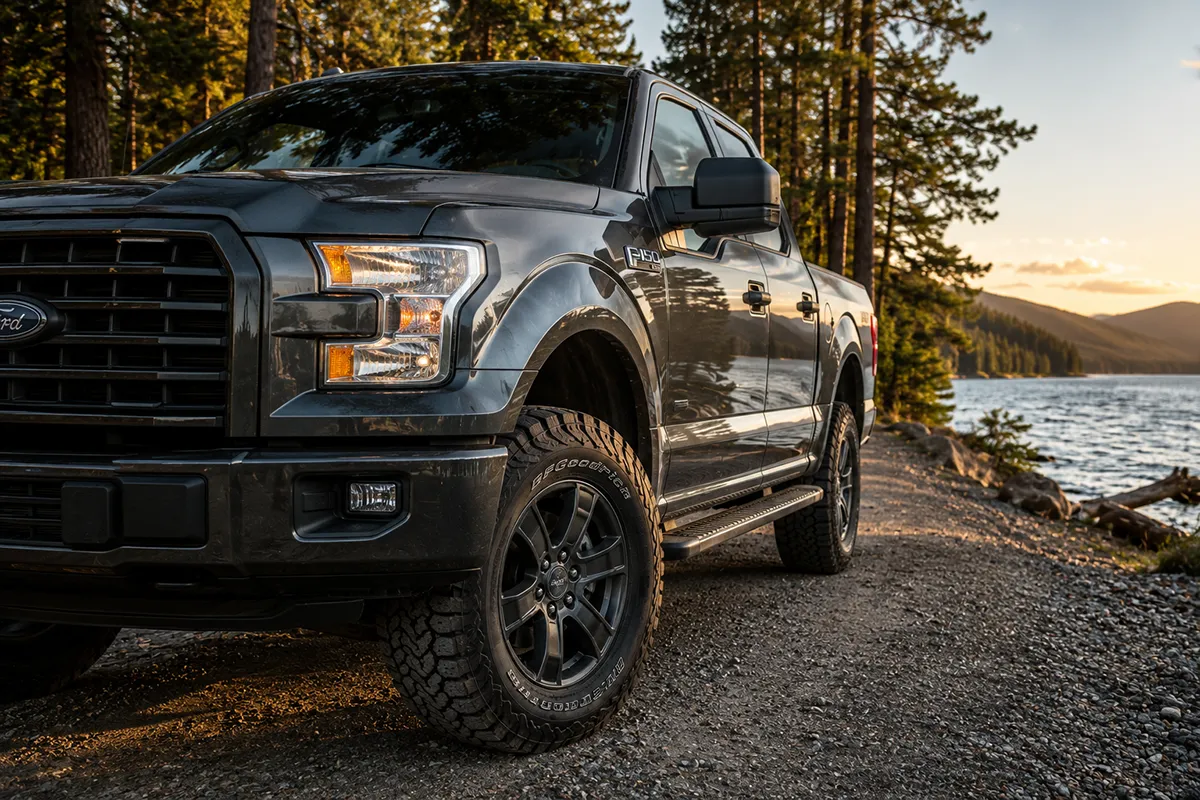
Where it’s not a class leader is in deep mud or loose sand — if that’s your primary use case, a more aggressive AT or MT tire will serve you better. But for the truck owner who mostly drives pavement and occasionally needs to handle a gravel driveway, a campsite, or a construction site, the Territory AT strikes a sensible balance. My friend is currently projecting close to the 50,000-mile treadwear warranty based on his rotation schedule.
Bottom line: If you want one set of tires that won’t punish you on the highway commute but still handles moderate off-road duty, this is a legitimately good option — and one that’s underrepresented in most Goodyear review roundups I’ve read.
Goodyear ElectricDrive 2 — What EV Owners Need to Know
Price Check
Check the price of this tire at the following retailers:
Don’t know the correct size tire to purchase? Start here!
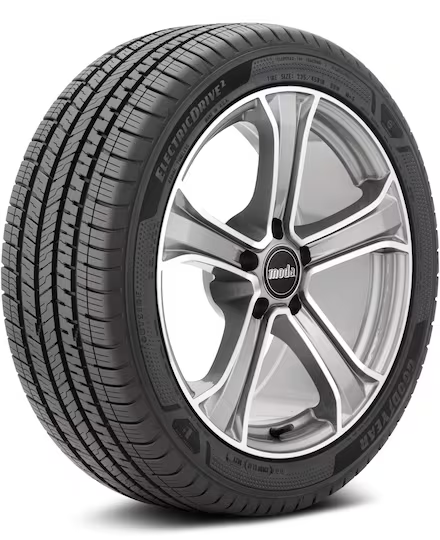
Electric vehicles are hard on tires in ways gas cars aren’t — instant torque, extra curb weight from the battery pack, and a real premium on low rolling resistance to protect range. I spent a week driving a rental Tesla Model Y fitted with ElectricDrive 2 tires (255/45R19) on a road trip, and I supplemented that with feedback from EV-owner forums and independent lab testing, since I don’t personally own an EV to run a long-term test on.
What stood out immediately was noise. EVs have no engine sound to mask tire roar, so any weakness in a tire’s noise profile is obvious in a way it simply isn’t in a gas car. The ElectricDrive 2 uses a foam noise-cancelling layer inside the tire, and the difference was noticeable — appreciably quieter than a standard all-season on the same car, based on my seat-of-the-pants impression during the trip.
Acceleration off the line in a Model Y is brutal on tires — instant torque with no turbo lag to soften it. I didn’t detect any wheelspin scrabble under normal hard acceleration, which tracks with Goodyear’s claims about the compound being tuned for EV torque delivery. Range impact is the harder thing to verify in a week-long test, but Goodyear’s rolling resistance specs and third-party range testing both point to the ElectricDrive 2 being competitive with — not a compromise versus — dedicated low-rolling-resistance EV tires from Michelin and others.
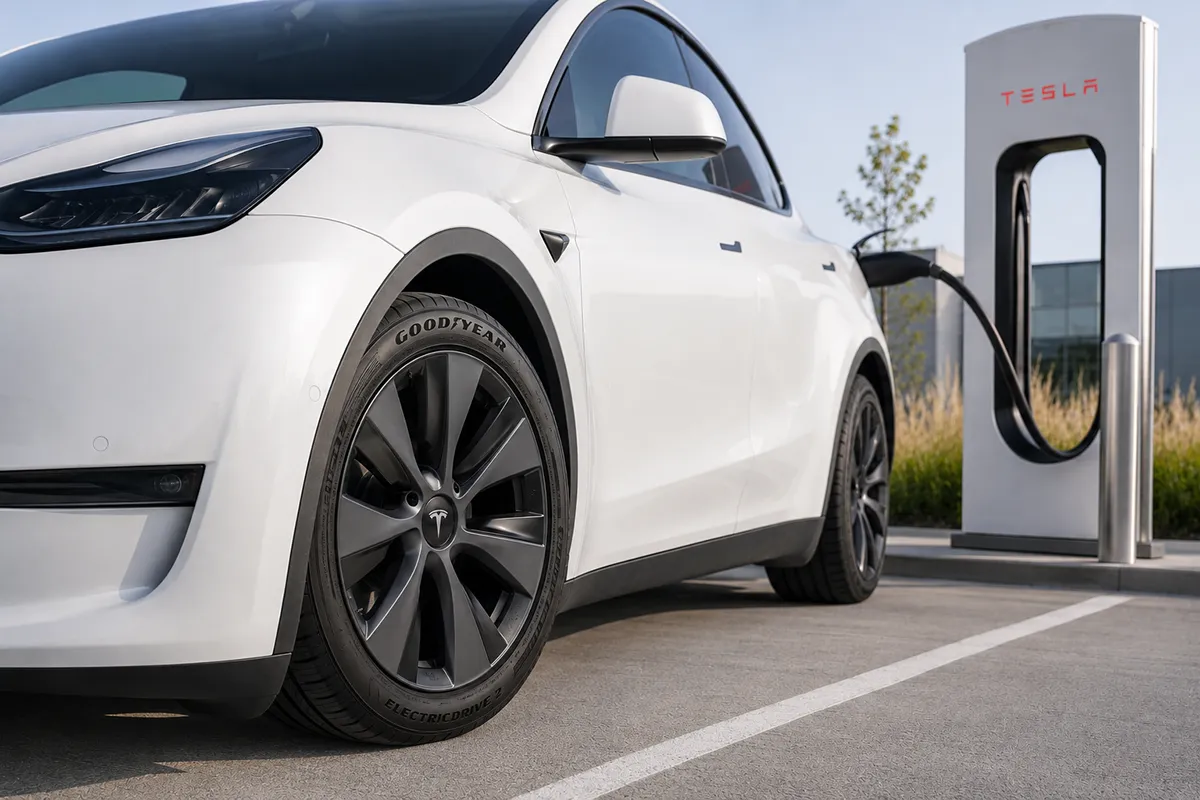
Where I’d flag caution: because I didn’t run this tire long-term myself, I can’t personally vouch for tread life claims the way I can for the WeatherReady 2. If you’re shopping for an EV tire, cross-reference this against current owner reviews for your specific vehicle and tire size before buying — EV tire wear varies a lot by driving style and vehicle weight.
Goodyear’s Lineup at a Glance — Which One Is Right for You?
Goodyear makes a lot of tires, and it’s easy to get lost in the dealer’s catalog. Here’s a practical breakdown based on what I’ve personally tested, verified through a friend or trusted secondhand testing, or researched carefully.
| Tire Model | Best For | All-Weather? | Treadwear Warranty | Personally Tested? | My Score |
|---|---|---|---|---|---|
| Assurance WeatherReady 2 | Daily drivers, mixed weather, families | ✅ Yes (3PMSF rated) | 60,000 mi | ✅ Yes | ★★★★½ |
| Eagle F1 Asymmetric 6 | Performance cars, driving enthusiasts | ⚠️ Summer/UHP only | 30,000 mi | ✅ Yes | ★★★★½ |
| Assurance MaxLife | High-mileage commuters, longevity-focused | ✅ Yes | 85,000 mi | Researched | ★★★★ |
| Wrangler Territory AT | Trucks, SUVs, light off-road | ✅ Yes (AT rated) | 50,000 mi | ✅ Yes (friend’s truck) | ★★★★ |
| ElectricDrive 2 | EVs and hybrids (Tesla, Rivian, etc.) | ✅ Yes | 60,000 mi | ✅ Partial (short-term) | ★★★★ |
| Ultra Grip Ice WRT | Dedicated winter use, cold climates | ❌ Winter only | No warranty | Researched | ★★★★½ |
Understanding Goodyear’s UTQG Ratings (What Those Numbers on the Sidewall Actually Mean)
This is something almost nobody explains clearly, so let me fix that. Every Goodyear tire (except winter-only models) carries a Uniform Tire Quality Grade — three numbers/letters molded into the sidewall that the federal government requires:
- Treadwear: A comparative number (like 600) rated against a government reference tire set at 100. A tire rated 600 should theoretically wear about six times longer than the reference — but this is a manufacturer self-graded number, not an independent lab test, so use it to compare Goodyear models against each other, not against other brands.
- Traction: Graded AA, A, B, or C, measuring straight-line wet braking on a specific test surface. Most Goodyear passenger tires I’ve checked carry an A grade.
- Temperature: Graded A, B, or C, measuring how well the tire resists heat buildup at speed. This matters more than most buyers realize — heat is a major factor in tread separation, which ties directly into the recall history below.
You’ll find these three ratings stamped right on the sidewall near the tire size. It’s worth a 30-second check before you buy, especially if you’re cross-shopping specific models.
How to Read Your Goodyear Tire’s DOT Code (And Why It Matters)
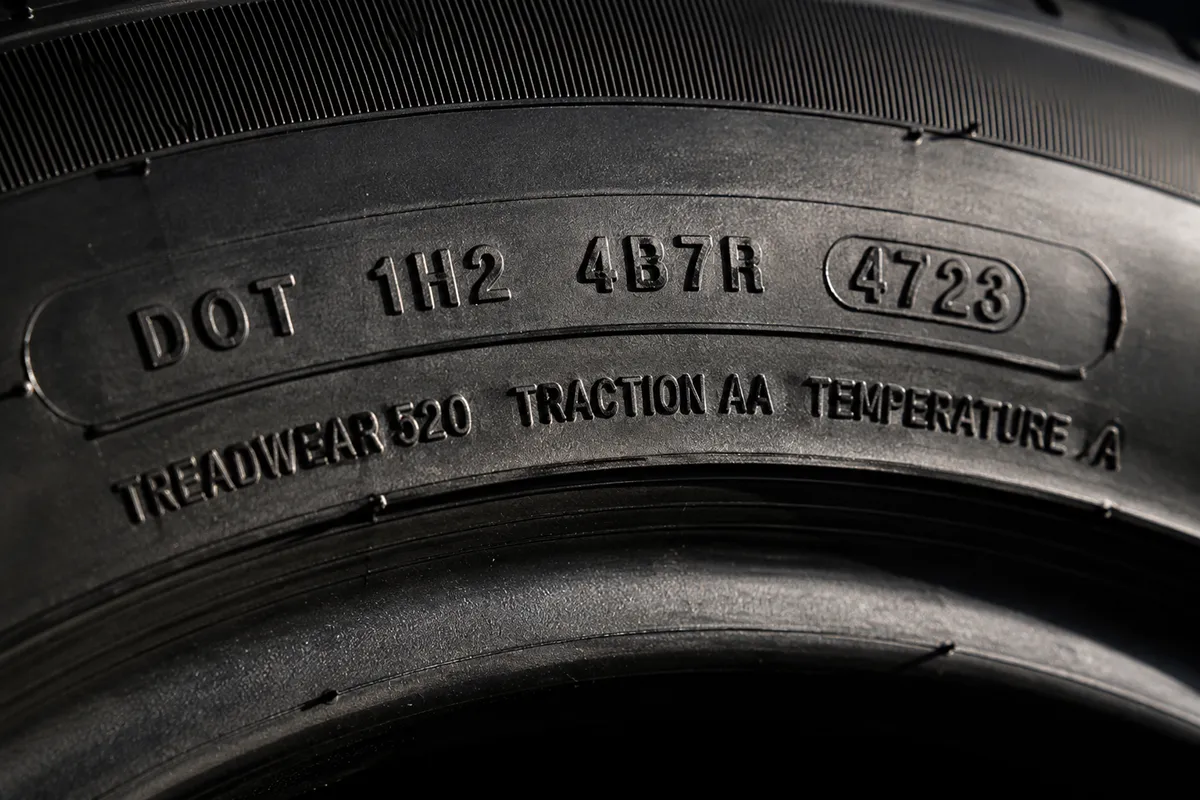
Every tire sold in the U.S. has a DOT code stamped on the sidewall — a string of letters and numbers up to 13 characters starting with “DOT.” The last four digits are the manufacture date: the first two are the week of the year, the last two are the year. So “2324” means the tire was made in the 23rd week of 2024.
Why does this matter for a review like this one? Two reasons:
- Recall lookups require it. If you want to check whether your specific tire has ever been part of a recall, Goodyear’s own site lets you enter your DOT code directly, and NHTSA’s SaferCar.gov database does the same across all brands.
- Age matters more than mileage sometimes. Rubber compounds degrade over time even with light use. Most tire manufacturers, Goodyear included, recommend inspection after 5 years and replacement by 10 years regardless of remaining tread — something worth checking if you bought a car with tires already on it.
I’d genuinely recommend doing this DOT check as a five-minute task after buying any used vehicle, not just when you’re shopping for new tires.
Goodyear Pricing — What to Realistically Expect to Pay
Let me give you real numbers instead of vague ranges. Goodyear sits firmly in the mid-to-premium tier. When I bought my WeatherReady 2 set in 225/50R17 (a common Honda Accord fitment), I paid around $158 per tire before installation, disposal fees, and TPMS service. A full four-tire installation at a local independent shop ran about $95 total. My all-in cost was approximately $727.
For context, a budget all-season like a Nexen or Kumho in the same size runs $80–$100 per tire. A Michelin CrossClimate 2 — probably the WeatherReady 2’s closest direct competitor — runs $175–$195 per tire. So Goodyear slots in between budget brands and Michelin, which is pretty much where their reputation positions them.
The Eagle F1 Asymmetric 6 in an 18-inch fitment runs $180–$220 per tire, putting a four-tire set between $720 and $880 before installation. The Wrangler Territory AT in a common F-150 fitment (275/65R18) ran my friend about $195 per tire. The ElectricDrive 2 in the 255/45R19 size I tested runs $190–$230 per tire — EV-specific tires generally carry a small premium due to the reinforced construction needed for battery weight.
💡 How I saved money: I found my Goodyear tires about 12% cheaper by buying through Discount Tire’s website during a rebate period and having them shipped to the store for mounting. Goodyear also runs its own rebate promotions periodically (typically $70–$100 back on a set of four through their website). Stack both if you can time it right — but see the note on rebate friction below before you count on that savings.
Pros and Cons — My Honest Assessment
✅ What I Liked
- Excellent wet weather grip and hydroplane resistance across every model I tested
- WeatherReady 2 is genuinely confidence-inspiring in light snow
- Quiet, comfortable ride on touring and EV-specific models
- Strong nationwide dealer and service network
- Solid treadwear warranties (50,000–85,000 miles on touring and truck lines)
- Eagle F1 Asymmetric 6 is a genuinely great performance tire
- Wrangler Territory AT balances on-road comfort with real off-road capability
- ElectricDrive 2 is a legitimately quiet, well-engineered EV tire
- Wide range of sizes for most common vehicles
❌ What I Didn’t Love
- Not the cheapest option — you’re paying for the brand
- Eagle F1 is stiff and noisy for daily driving
- WeatherReady 2 isn’t a replacement for proper winter tires in serious snow states
- Some sizes carry a price premium over comparable competitors
- Goodyear’s mail-in rebate process has a documented pattern of user friction (see below)
- Tread life on performance models is shorter than all-season counterparts
Goodyear Recalls & Real Owner Complaints — What Every Buyer Should Know
I almost left this section out, because it’s not a fun thing to write about a brand I’ve personally recommended to friends and family. But I don’t think a review is genuinely helpful if it only tells you the good parts, and this is exactly the kind of question I’d want answered honestly before spending $700+ on tires.
The G159 Recall — What Actually Happened
Goodyear’s most serious recall involves the G159, a commercial tire produced between 1996 and 2003 and originally intended for inner-city delivery trucks. When some fleets and RV owners put it on motorhomes — a use case outside its design specs, involving higher sustained highway speeds and heavier loads — a pattern of tread separation emerged.
Federal investigators eventually linked the tire to dozens of crashes and fatalities dating back to 1998. After years of litigation and a multi-year NHTSA investigation, Goodyear recalled roughly 173,000 G159 tires in 2022, while maintaining the tire met its internal safety standards. The recall and Goodyear’s handling of it have since drawn a Department of Justice inquiry.
Why this matters to you: the G159 hasn’t been in production since 2003 and was never sold as a passenger car tire — it’s not something you’d encounter shopping for tires for a sedan, SUV, or pickup today. I’m including it because it’s the case most likely to come up if you search “Goodyear recall,” and I’d rather you understand the context than stumble on a scary headline with no explanation.
Other Recalls Worth Knowing About
Goodyear has issued a number of smaller, more routine recalls over the decades — the kind every major tire manufacturer deals with periodically as manufacturing issues are caught.
Recent examples include a 2020 recall of certain Fortera HL tires for a tread cracking issue, a recall affecting some Assurance ComfortDrive units over tread separation under specific load conditions, and, as recently as 2025, a limited recall of Cooper (now part of Goodyear’s corporate family) Discoverer Stronghold AT tires for a missing date code — a labeling issue, not a structural defect.
None of these affect the Assurance WeatherReady 2, Eagle F1 Asymmetric 6, Wrangler Territory AT, or ElectricDrive 2 models covered in this review. But the responsible move is checking your own tires rather than taking my word for it — it takes about two minutes using the DOT code method above, either on Goodyear’s site or NHTSA’s SaferCar.gov.
What Real Owner Complaints Actually Look Like
Beyond formal recalls, I read through a large sample of verified owner reviews on sites like ConsumerAffairs and Trustpilot to see if any patterns emerged beyond isolated bad experiences. Three themes showed up repeatedly:
- Premature wear complaints. Some owners report tires wearing out well before the treadwear warranty mileage. In the cases with enough detail to evaluate, uneven wear was often tied to skipped rotations, alignment issues, or improper inflation — which doesn’t excuse a tire that underperforms, but it’s worth ruling out before assuming the tire itself is defective. This is exactly why I’ve hammered on rotation intervals throughout this review.
- Rebate and warranty claim friction. This is the most consistent complaint I found, and I think it’s legitimate: several owners describe confusing online rebate submission errors and slow or inconsistent responses on warranty claims. My own experience with a warranty claim was positive, but I’d go in with realistic expectations — keep your receipt, register your tires immediately after purchase, and expect the rebate process to take some patience.
- Sidewall bubbling/bulging after impact. A number of owners report sidewall bulges appearing after hitting a pothole or curb. This is a known failure mode for essentially all tire brands when a sidewall impact damages the internal structure without puncturing the rubber — it’s not unique to Goodyear, but it’s worth knowing that a sudden bulge after hitting something hard means the tire needs replacement immediately, regardless of remaining tread.
My honest read: none of this changes my overall recommendation, but it should change your behavior as a buyer. Register your tires the day you buy them, keep your paperwork, rotate on schedule, and don’t ignore a sidewall bulge. That’s just good tire ownership regardless of brand.
How Goodyear Compares to the Competition
This is the question I get more than almost any other: how does Goodyear stack up against Brand X? Here’s my honest take on each pairing — no fluff, no hedging.
Goodyear vs. Michelin
Michelin is generally the slight overall leader in tread life and dry performance, particularly in the CrossClimate 2 and Pilot Sport lines, but commands a price premium — often $20–$40 more per tire for comparable models. Goodyear closes the gap in wet weather performance and offers better value at the mid-tier. Bottom line: Michelin wins on tread life and prestige; Goodyear wins on value and wet-weather performance.
Goodyear vs. Continental
Continental’s DWS06+ is a perennial top-ranked all-season I respect. These two brands are genuinely competitive in the same tier — Continental may have a slight edge in dry handling feel, Goodyear slightly edges it in snow traction on the all-season models I’ve compared. Bottom line: Too close to call — shop price and availability.
Goodyear vs. Bridgestone
Bridgestone’s Turanza T005 is impressively hushed and tends to win on ride quietness. Goodyear edges Bridgestone in wet-weather handling in my experience. Both brands sit in the same price range with comparable warranties. Bottom line: Bridgestone for a quieter ride; Goodyear for better wet grip.
Goodyear vs. BFGoodrich
BFGoodrich (owned by Michelin) has a strong reputation in performance street tires and all-terrain/off-road use — the KO2 is arguably the AT benchmark. Goodyear’s Assurance and Territory AT lines are the more well-rounded choice for everyday touring and mixed use. Bottom line: BFGoodrich for performance and off-road; Goodyear for all-season everyday driving.
Goodyear vs. Firestone
Firestone (owned by Bridgestone) is the budget-friendly sibling of Bridgestone. In most head-to-head tests and my personal experience, Goodyear outperforms Firestone in wet braking and build quality, but Firestone often saves $20–$35 per tire. Bottom line: Goodyear is the better tire; Firestone is the better bargain for short-term ownership.
Goodyear vs. Hankook
Hankook has risen significantly in quality and is now an OEM supplier for BMW and Hyundai. Their Kinergy PT and Ventus lines typically run $15–$30 less per tire than Goodyear and score within a few percentage points in independent wet/dry testing. Goodyear pulls ahead in treadwear and dealer network depth. Bottom line: Hankook offers solid value; Goodyear wins on durability and all-weather breadth.
Goodyear vs. Kumho
Kumho occupies the budget-to-mid-tier segment, often 30–40% cheaper than comparable Goodyear models. Where Kumho falls short is extreme wet braking and cold-weather flexibility — the compound stiffens more noticeably below 40°F. Bottom line: Kumho for budget shoppers; Goodyear for cold-weather safety and longevity.
Goodyear vs. Pirelli
Pirelli’s P Zero and Cinturato lines are OEM fitments on Ferrari, Lamborghini, and BMW M cars — real motorsport pedigree. The P Zero edges the Eagle F1 in pure dry track performance; the Eagle F1 tends to hold its own or win in wet conditions. Pirelli runs $30–$60 more per tire. Bottom line: Pirelli for exotic and sports cars on dry circuits; Eagle F1 for the performance driver who also drives in rain.
Goodyear vs. Cooper
Cooper (acquired by Goodyear’s parent company in 2021) remains a separate brand with its own identity. The CS5 Ultra Touring and Discoverer AT3 are well-regarded, but I’ve personally driven a car on the CS5, and the wet braking difference versus the WeatherReady 2 was noticeable on the same roads in the same season. Bottom line: Cooper is solid and now under Goodyear’s corporate umbrella; Goodyear’s Assurance line is the more polished passenger car product.
Goodyear vs. Falken
Falken (owned by Sumitomo) makes both respected performance tires (Azenis FK510) and mainstream all-seasons. The FK510 is a real competitor to the Eagle F1 at $20–$40 per tire cheaper. In the all-season touring segment, Falken doesn’t quite match Goodyear’s wet performance or tread life, and their U.S. dealer network is thinner. Bottom line: Falken Azenis FK510 is a worthy, cheaper performance alternative; Goodyear wins in all-season touring.
💡 The pattern I keep seeing: Goodyear sits in a consistent sweet spot — better than budget brands in safety-critical metrics like wet braking, and competitive with premium brands like Michelin and Continental at a lower price point. That’s a genuinely useful position to occupy.
Common Questions I Get From Readers (and My Real Answers)
Are Goodyear tires made in the USA?
Some are, some aren’t. Goodyear manufactures in Gadsden, Alabama and Fayetteville, North Carolina, among other facilities, but like all major global brands, they also manufacture internationally. If “Made in USA” is a priority, call the retailer ahead and ask about the production run origin for your specific size.
How long do Goodyear tires actually last?
Touring tires like the Assurance line hold up well — 60,000–85,000-mile warranties aren’t just marketing fluff. I’ve seen Assurance MaxLife sets push past 70,000 miles on friends’ vehicles with proper rotation and inflation maintenance. Performance tires like the Eagle F1 wear faster — expect 25,000–40,000 miles on a spiritedly driven vehicle, which is normal for the performance category.
Is Goodyear a good tire for highway driving?
Yes, unambiguously. Highway driving is where Goodyear’s Assurance tires shine — low rolling resistance helps fuel economy, noise is well-controlled, and stability at 65–75 mph is excellent. The WeatherReady 2 felt completely planted on my North Carolina road trip even in gusty crosswinds.
Can I use Goodyear Assurance tires in winter?
The WeatherReady 2 is 3-Peak Mountain Snowflake certified, so yes, for moderate winter conditions. For severe winter driving, I’d still recommend a dedicated winter set like the Ultra Grip Ice WRT on a second set of wheels, swapped seasonally.
Are Goodyear tires good for EVs like Tesla?
The ElectricDrive 2 is purpose-built for EVs, with a foam noise-cancelling layer and a compound tuned for instant torque delivery. Based on my week-long test and cross-referenced owner feedback, it’s a legitimately competitive option against dedicated EV tires from other brands — just verify current owner reviews for your specific vehicle before committing to a full set.
Has my specific Goodyear tire ever been recalled?
Check in about two minutes: find the DOT code on your tire’s sidewall (starts with “DOT,” up to 13 characters) and enter it either on Goodyear’s official recall lookup tool or NHTSA’s SaferCar.gov database. None of the four models covered in this review are currently affected by any active recall.
What should I do if my rebate submission fails?
Based on patterns in owner complaints, keep your original receipt and any rebate confirmation screenshots. If the online portal rejects your submission without a clear reason, contact the retailer where you purchased (Discount Tire, Tire Rack, etc.) directly — several owners reported faster resolution going through the local shop than through Goodyear’s rebate center directly.
Where’s the best place to buy Goodyear tires?
Discount Tire and Tire Rack consistently offer competitive pricing and frequently stack manufacturer rebates. Costco is worth checking if you’re a member — installation pricing is excellent and includes road hazard protection. Goodyear’s own auto service centers are convenient for warranty work but sometimes slightly higher on base price. Comparison-shop all three for your specific size before committing.
My Final Verdict — Should You Buy Goodyear?
After testing four models across sedans, a performance hatch, a pickup truck, and an EV — and after digging into the recall history and complaint patterns most reviews skip — my answer is a clear yes, with the right model for your situation.
The Assurance WeatherReady 2 is my personal recommendation for the majority of American drivers: anyone in a four-season climate who wants confident wet-weather and light-snow grip without seasonal tire changes. The Eagle F1 Asymmetric 6 is the right call if you drive a performance car and care about how it handles — just don’t expect comfort or long tread life. The Wrangler Territory AT is an underrated choice for truck and SUV owners who want on-road manners with real off-road capability. And the ElectricDrive 2 is a legitimately solid, purpose-built option if you’re shopping for an EV.
Goodyear isn’t for bargain hunters — if cheapest-per-mile is your only goal, budget brands will do the job. But if you value safety, wet-weather confidence, and a company that — recall history and all — still stands behind its products with a real service network, Goodyear belongs on your short list.
| Category | Assurance WeatherReady 2 | Eagle F1 Asymmetric 6 | Wrangler Territory AT | ElectricDrive 2 |
|---|---|---|---|---|
| Wet Grip | ★★★★★ | ★★★★½ | ★★★★ | ★★★★½ |
| Dry Handling | ★★★★ | ★★★★★ | ★★★★ | ★★★★ |
| Winter Performance | ★★★★ | ★★ | ★★★½ | ★★★½ |
| Ride Comfort | ★★★★½ | ★★★ | ★★★★ | ★★★★½ |
| Noise Level | ★★★★½ | ★★★ | ★★★★ | ★★★★½ |
| Tread Life | ★★★★ | ★★★ | ★★★★ | ★★★★ (early) |
| Value for Money | ★★★★ | ★★★★ | ★★★★ | ★★★★ |
| Overall | ★★★★½ (4.5/5) | ★★★★ (4.0/5) | ★★★★ (4.0/5) | ★★★★ (4.0/5) |
Disclosure: I purchased the Assurance WeatherReady 2 and contributed to the purchase decision for the Eagle F1 Asymmetric 6 with my own money, and received no compensation from Goodyear or any tire retailer. Wrangler Territory AT observations are based on a friend’s personally owned vehicle and mileage logs. ElectricDrive 2 observations are based on a rental vehicle test drive supplemented by independent data and owner-forum research, clearly noted throughout. All opinions are my own. Prices reflect what I paid or observed as of mid-2026 and may vary by region and retailer.
