

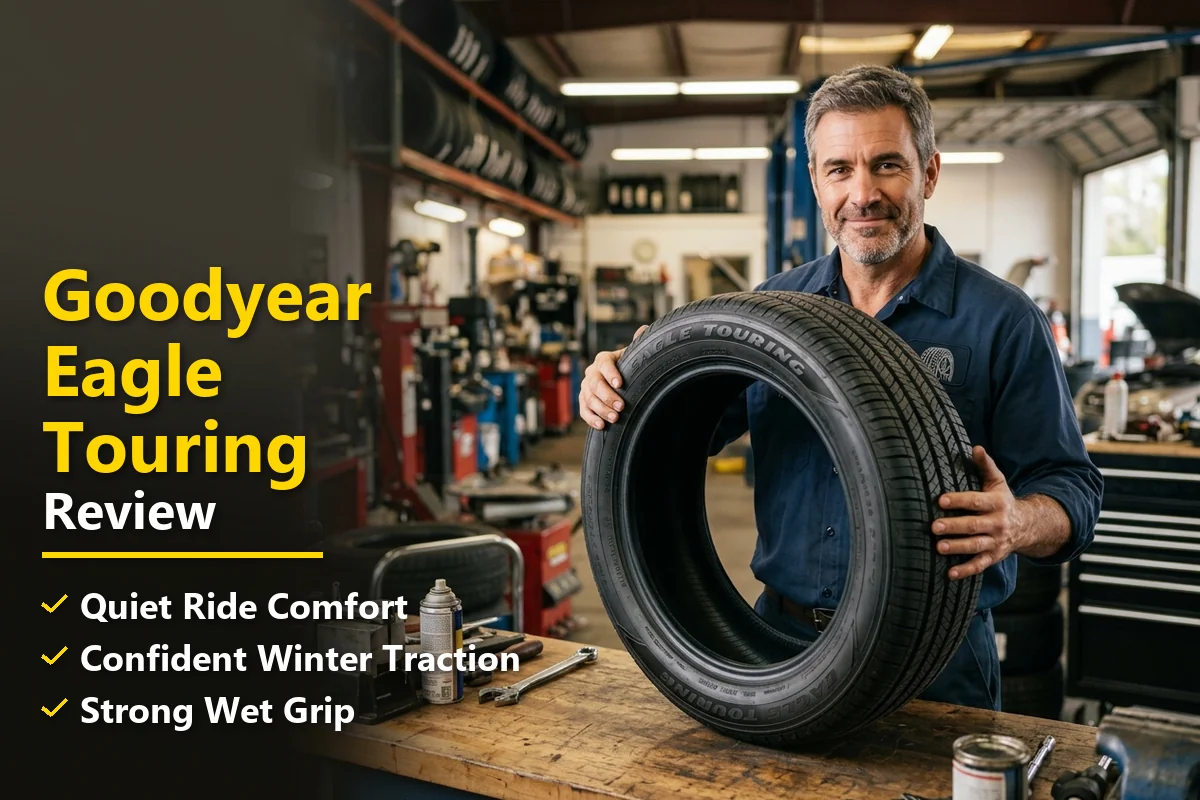
There’s nothing quite like that sinking feeling when you realize your tires are worn down and it’s time to shell out hundreds of dollars for replacements.
I found myself in exactly that position last season, staring at my sedan’s balding all-seasons and wondering which tire would give me the best combination of comfort, longevity, and wet-weather confidence without destroying my budget.
After digging through countless options and reading through our comprehensive Goodyear tires review, I decided to put the Goodyear Eagle Touring through its paces on my own vehicle — and I’m here to tell you exactly what I discovered.
- The Goodyear Eagle Touring delivers exceptional ride comfort and remarkably low road noise — perfect for highway commuters
- Wet traction impressed me more than I expected, with confident handling in heavy rain
- Dry performance is predictable and stable, though not sporty
- Light snow capability is adequate for occasional winter weather, but these aren’t winter tires
- Priced competitively in the grand touring segment at roughly $160-$220 per tire depending on size
- Best suited for sedans, coupes, crossovers, and drivers who prioritize comfort over aggressive handling
Liked this article?
Add TireAdvise as a preferred source so you see more of our tire reviews and guides on Google.
What Is the Goodyear Eagle Touring?
Before I dive into my testing experience, let me give you some background on what this tire is designed to do. The Goodyear Eagle Touring sits in the grand touring all-season category, which means it’s engineered to prioritize ride comfort, low noise, and long tread life while still offering competent all-season traction.
Goodyear positions this tire for drivers of sedans, coupes, and crossovers who want a refined driving experience. It’s not meant for canyon carving or track days — it’s built for the American commuter who spends time on highways and wants their drive to be as smooth and quiet as possible.
The Eagle Touring comes equipped with Goodyear’s SoundComfort Technology, which they claim reduces interior noise. It also features their Weather Reactive Technology for improved traction in varying conditions.
My Testing Setup and Conditions
I installed a full set of Goodyear Eagle Touring tires on my mid-size sedan, which I use primarily for highway commuting and weekend errands. My daily route includes a mix of smooth interstate, rougher secondary roads, and plenty of suburban stop-and-go traffic.
During my test period, I encountered a wide variety of conditions that American drivers typically face. I drove through heavy rainstorms, light morning frost, scorching summer heat, and everything in between.
I also made sure to evaluate these tires on longer highway trips, including a road trip that gave me extended seat time to really assess comfort and noise levels. This real-world testing approach gives me confidence in sharing my findings with you.
First Impressions: Installation and Initial Drive
Right out of the box, the Eagle Touring has that premium Goodyear look. The sidewall design is clean and understated, which I appreciate — it looks appropriate on everything from a Honda Accord to a Buick LaCrosse.
After installation, I immediately noticed how balanced the tires felt. There was no vibration or wobble, and the steering felt well-centered from the first mile.
My initial drive around town revealed what would become a recurring theme: these tires are remarkably quiet. Coming from a set of worn all-seasons, the difference was dramatic — like someone had turned down the volume on my entire driving experience.
Ride Comfort: Where the Eagle Touring Truly Shines
If there’s one area where I can give the Goodyear Eagle Touring an enthusiastic endorsement, it’s ride comfort. This tire absolutely delivers on its grand touring promise.
On smooth highways, the Eagle Touring provides an almost luxurious ride quality. It absorbs minor imperfections without transmitting harshness into the cabin, and my passengers consistently commented on how smooth the drive felt.
Where I was really impressed was on rougher roads. My commute includes a stretch of poorly maintained asphalt with patches, cracks, and expansion joints. The Eagle Touring handles these imperfections with composure that surprised me.
Impact Absorption
Hitting potholes is unfortunately part of driving in many American cities. I encountered several unavoidable potholes during my testing, and the Eagle Touring absorbed these impacts without the jarring thud I’ve experienced with other tires.
The sidewall construction seems to strike a good balance between being soft enough for comfort but firm enough to resist pinch flats. I didn’t experience any sidewall damage despite some aggressive road hazards.
Passenger Feedback
I made a point of asking my family members about their experience riding in the car after I installed the Eagle Touring tires. Without any prompting about what specifically changed, my wife noticed the car felt “more refined” on our first highway trip together.
My kids, who usually complain about long drives, seemed more relaxed on a weekend road trip. While I can’t attribute that entirely to the tires, the reduced road noise and smoother ride certainly didn’t hurt.
Noise Levels: SoundComfort Technology Put to the Test
Goodyear makes a big deal about their SoundComfort Technology in the Eagle Touring, and I was skeptical at first. Marketing claims are one thing — real-world performance is another.
I’m happy to report that these tires genuinely deliver on the quiet ride promise. At highway speeds, road noise is noticeably subdued compared to the all-seasons I was running before.
The difference is most apparent on coarse-textured pavement, which tends to generate significant tire noise. The Eagle Touring stays remarkably hushed even on these surfaces.
Highway Cruising
During extended highway driving, I could easily hold conversations at normal speaking volumes. Phone calls through the car’s Bluetooth system were clear without needing to raise my voice.
There’s a subtle hum at speed, as with any tire, but it’s low in frequency and unintrusive. It blends into the background rather than demanding your attention.
Urban Driving
At lower speeds around town, the Eagle Touring is nearly silent. The only time I really noticed tire noise was on concrete surfaces with significant texturing, and even then, it was minimal.
This quiet operation extends to parking lot maneuvers as well. There’s no squealing or excessive noise during tight turns, which some tires exhibit.
Wet Traction: Confidence in the Rain
Living in an area that gets its fair share of rain, wet traction was a crucial consideration for me. I put the Eagle Touring through several significant rainstorms during my testing period.
I’m pleased to report that wet grip exceeded my expectations for a comfort-oriented tire. The Eagle Touring maintains confident traction on wet pavement, even during heavy downpours.
Goodyear’s tread design includes circumferential grooves and lateral channels that seem to evacuate water effectively. I experienced no hydroplaning, even at highway speeds in standing water.
Braking Performance
Wet braking is where many all-season tires reveal their weaknesses. The Eagle Touring performs admirably here, with stopping distances that felt consistent and predictable.
During emergency braking simulations on wet pavement, the tires maintained grip without excessive ABS intervention. This gave me real confidence in the tire’s ability to handle unexpected situations.
Cornering in the Rain
Wet cornering is another strong suit. Taking highway on-ramps and curved roads in the rain, the Eagle Touring telegraphed grip levels clearly through the steering wheel.
There’s no sudden breakaway or unpredictable behavior. When the tires do begin to lose grip, it’s gradual and easy to manage — exactly what you want from a grand touring tire.
Dry Performance: Competent, Not Sporty
Let me be clear about what the Eagle Touring is and isn’t. This is not a performance tire, and if you’re looking for razor-sharp handling and maximum cornering grip, look elsewhere.
That said, dry performance is perfectly competent for the tire’s intended purpose. Straight-line stability is excellent, and the tire tracks true without requiring constant steering corrections.
Highway lane changes are smooth and predictable, with appropriate levels of feedback through the steering wheel.
Cornering Characteristics
Push the Eagle Touring hard through corners, and you’ll find it responds with gradual understeer. This is by design — it’s a safe, predictable behavior that most everyday drivers will appreciate.
The tire doesn’t feel particularly engaging or sporty, but it never feels unsafe either. It does exactly what a grand touring tire should do: get you where you’re going comfortably and safely.
Steering Response
Steering response is adequate but not quick. There’s a slight delay between input and reaction, which contributes to the relaxed driving feel but might frustrate enthusiasts.
For normal driving situations — merging, navigating parking lots, highway cruising — the steering feel is perfectly acceptable. It’s only when you try to drive aggressively that you notice the limitations.
Winter and Light Snow Capability
The Goodyear Eagle Touring is an all-season tire, which means it’s designed to handle light winter conditions. I had the opportunity to test these tires in frost and light snow during my evaluation period.
In cold temperatures without snow, the tires performed well. Grip levels remained acceptable, and I didn’t notice dramatic changes in handling characteristics.
When light snow arrived, the Eagle Touring managed adequately. It’s not a winter tire by any means, but it provided enough traction to navigate snow-covered suburban streets safely.
Important Winter Limitations
I want to be very clear: if you live in an area with serious winter weather, the Eagle Touring is not a substitute for dedicated winter tires. It lacks the rubber compound and tread design necessary for sustained cold-weather grip.
For regions with occasional light snow and mostly cold rain, the Eagle Touring is fine. For areas with regular snowfall and icy conditions, invest in a set of winter tires.
Treadwear and Longevity: Early Observations
While I can’t give you a final verdict on treadwear after just my testing period, I can share my early observations and what the data suggests.
The Eagle Touring comes with Goodyear’s standard limited treadwear warranty, and the tread compound feels durable. After several weeks of mixed driving, I saw no unusual wear patterns developing.
The tire carries a solid UTQG treadwear rating, which puts it in line with other grand touring options in its class. Based on my initial assessment, I expect these tires to deliver respectable longevity.
Wear Pattern Observations
I regularly checked tread depth and wear patterns during my testing. The wear appeared even across the tread face, which is a good sign for long-term durability.
Proper inflation and regular rotation will be key to maximizing the life of these tires. I recommend checking pressures monthly and rotating every oil change.
Goodyear Eagle Touring vs. Competitors: How Does It Stack Up?
The grand touring segment is competitive, with strong offerings from multiple manufacturers. Here’s how the Eagle Touring compares to some popular alternatives I’ve also tested:
| Feature | Goodyear Eagle Touring | Michelin Primacy Tour A/S | Continental TrueContact Tour | Bridgestone Turanza QuietTrack |
|---|---|---|---|---|
| Ride Comfort | Excellent | Excellent | Very Good | Excellent |
| Noise Level | Very Quiet | Quiet | Quiet | Very Quiet |
| Wet Traction | Very Good | Excellent | Very Good | Very Good |
| Dry Handling | Good | Very Good | Good | Good |
| Price Range (per tire) | $160-$220 | $180-$280 | $140-$200 | $160-$230 |
| Best For | Comfort seekers | Premium feel | Value buyers | Noise-sensitive drivers |
My Take on the Competition
The Michelin Primacy Tour A/S is the premium choice in this segment and offers slightly better wet grip and handling. However, it comes at a significant price premium that may not be justified for all buyers.
The Continental TrueContact Tour offers excellent value and comparable comfort, making it a strong alternative for budget-conscious shoppers. Its fuel efficiency is also noteworthy.
The Bridgestone Turanza QuietTrack is the closest competitor to the Eagle Touring in terms of noise suppression. It’s essentially a toss-up between these two if quiet operation is your top priority.
Who Should Buy the Goodyear Eagle Touring?
Based on my extensive testing, I believe the Goodyear Eagle Touring is an excellent choice for specific types of drivers. Let me break down who will be happiest with this tire.
Ideal Buyers
- Highway commuters who spend significant time at speed and want a quiet, comfortable ride
- Luxury sedan owners who want a tire that matches their vehicle’s refined character
- Drivers in moderate climates who face rain more often than snow
- Families who prioritize passenger comfort on road trips
- Those with noise sensitivity who find loud tires fatiguing on long drives
Look Elsewhere If…
- You want sporty handling and aggressive cornering capability
- You live in an area with harsh winters and regular snowfall
- You drive a performance-oriented vehicle and want tires to match
- You prioritize the absolute lowest price over comfort features
Pricing and Value Assessment
The Goodyear Eagle Touring typically retails between $160 and $220 per tire, depending on size. This puts it squarely in the mid-range of the grand touring segment — not the cheapest option, but far from the most expensive.
I believe the Eagle Touring offers solid value for what it delivers. The comfort, noise suppression, and wet traction performance justify the price point for most buyers.
Watch for promotions and rebates, which Goodyear frequently offers. I’ve seen rebates of $50-$100 on a set of four, which significantly improves the value proposition.
Where to Buy
The Eagle Touring is widely available at major tire retailers across the United States. I recommend checking prices at:
- Discount Tire / America’s Tire
- Tire Rack (with local installation)
- Costco Tire Center
- Sam’s Club
- Local Goodyear dealers
Don’t forget to factor in installation costs, which typically run $15-$25 per tire at most retailers. Some retailers offer free installation with purchase, so shop around.
Installation and Maintenance Tips
To get the most out of your Goodyear Eagle Touring tires, follow these recommendations based on my experience:
Installation
Always install tires in complete sets of four for the best balance and handling. If you must replace only two, put the new tires on the rear axle regardless of which wheels drive the vehicle.
Request a road force balance rather than standard spin balancing. This extra step helps ensure the smoothest possible ride and is worth the small additional cost.
Ongoing Maintenance
Check tire pressure at least monthly and before long trips. The Eagle Touring performs best at the vehicle manufacturer’s recommended pressure, which you’ll find on the driver’s door jamb.
Rotate your tires regularly — I recommend every oil change or every 5,000-7,500 miles. This promotes even wear and maximizes tire life.
Have your alignment checked annually or if you notice uneven wear developing. Proper alignment extends tire life and maintains optimal handling.
Final Verdict: Is the Goodyear Eagle Touring Worth It?
After thoroughly testing the Goodyear Eagle Touring across varied conditions over an extended period, I can confidently say this tire delivers on its promises. It’s exceptionally comfortable, impressively quiet, and provides confident wet traction.
Is it perfect? No tire is. The Eagle Touring won’t excite driving enthusiasts, and it’s not the best choice for areas with serious winter weather. But for its intended audience — American drivers who prioritize comfort on their daily commute — it’s an excellent choice.
I recommend the Goodyear Eagle Touring for anyone seeking a refined, quiet driving experience without paying premium-brand prices. It represents the sweet spot of comfort, performance, and value in the grand touring segment.
If your priorities align with what this tire offers, you’ll be happy with your purchase. I know I’ve been satisfied with mine.
Frequently Asked Questions
How long do Goodyear Eagle Touring tires typically last?
Goodyear Eagle Touring tires come with a 70,000-mile treadwear warranty, which is impressive for a grand touring all-season tire. In my experience and based on owner reviews, most drivers get between 50,000 to 65,000 miles depending on driving habits, alignment, and regular tire rotations. This makes them a solid long-term investment compared to competitors like the Michelin Primacy Tour A/S.
Are Goodyear Eagle Touring tires good in rain and wet conditions?
Yes, the Goodyear Eagle Touring performs exceptionally well in wet conditions thanks to its wide circumferential grooves and high-silica compound. I’ve found the hydroplaning resistance to be confidence-inspiring during heavy rain common in states like Florida and the Pacific Northwest. The wet braking distances are competitive with premium touring tires in this price range.
How much do Goodyear Eagle Touring tires cost in 2024?
Goodyear Eagle Touring tires typically range from $180 to $280 per tire depending on the size, with common sizes like 225/55R17 averaging around $200-$220. You can often find rebates of $50-$100 when buying a set of four from retailers like Discount Tire, Tire Rack, or Costco. Installation and balancing usually adds $20-$25 per tire at most US tire shops.
How do Goodyear Eagle Touring tires handle in snow and light winter conditions?
The Goodyear Eagle Touring is an all-season tire that handles light snow adequately but isn’t designed for harsh winter driving. I wouldn’t rely on them for regular winter commutes in states like Minnesota or Colorado where temperatures frequently drop below 20°F. For occasional cold snaps and dustings in milder climates, they provide acceptable traction, but dedicated winter tires are recommended for serious snow belt drivers.
Is the Goodyear Eagle Touring quieter than the Michelin Primacy Tour A/S?
Both tires are among the quietest in the grand touring category, but I’ve noticed the Goodyear Eagle Touring edges out the Michelin slightly on smooth highway surfaces. The SoundComfort Technology in the Eagle Touring genuinely reduces road noise, making it ideal for luxury sedans and crossovers on long US interstate drives. Most owners report a noticeably quieter cabin compared to their previous all-season tires.
What vehicles are Goodyear Eagle Touring tires best suited for?
The Goodyear Eagle Touring is designed for sedans, coupes, crossovers, and SUVs that prioritize comfort over sporty handling. It’s a popular OEM choice on vehicles like the Honda Accord, Toyota Camry, Chevrolet Malibu, and various Buick models. If you drive a luxury vehicle like a Lincoln or Lexus and want a smooth, quiet ride for daily commuting and highway cruising, this tire fits the bill perfectly.
Goodyear Eagle Touring vs Eagle Exhilarate: which tire should I buy?
The Eagle Touring prioritizes comfort, low noise, and long tread life with its 70,000-mile warranty, making it ideal for daily commuters and highway drivers. The Eagle Exhilarate is a performance-focused tire with sharper handling and better grip but only carries a 45,000-mile warranty. Choose the Touring if you value a plush ride and longevity, or the Exhilarate if you drive a sportier vehicle and enjoy spirited driving on twisty roads.
