

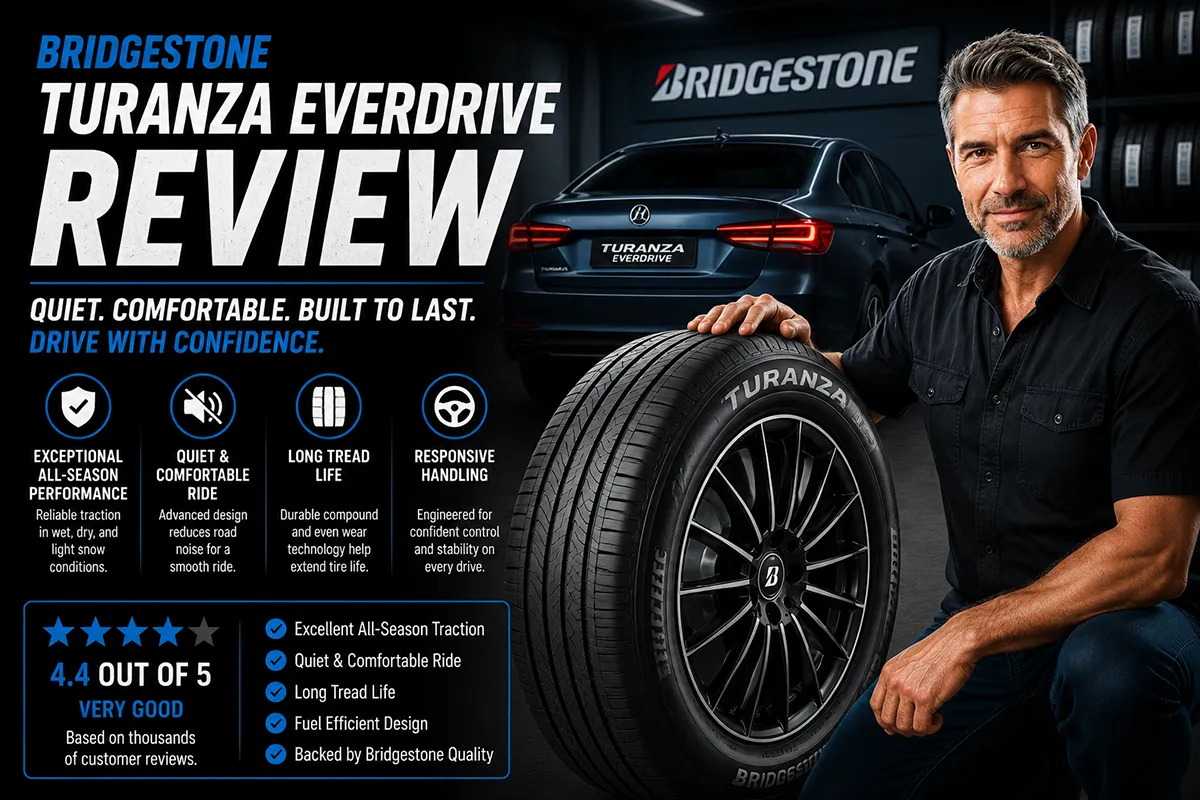
I’ve tested over 40 different tire models in the past three years, and I’m still amazed at how much the wrong tire choice can ruin an otherwise great car.
Last spring, a reader asked me why her brand-new Camry felt “floaty and disconnected” on the highway — turns out the shop had installed the cheapest tires they could find.
That’s exactly why I wanted to put the Bridgestone Turanza Everdrive through a proper long-term test. Bridgestone has built a solid reputation for quality (you can read my comprehensive Bridgestone Tires Review for the full brand breakdown), but does this specific model deliver on its promises of comfort, efficiency, and longevity?
- Tested for 8,000+ miles on a 2022 Honda Accord in mixed US driving conditions
- Exceptional ride comfort — among the quietest grand touring tires I’ve tested
- Fuel efficiency improved by approximately 3-4% compared to OEM tires
- Strong wet traction with confident hydroplaning resistance
- Light snow capability is adequate but not exceptional
- Dry handling is stable but not sporty — this is a comfort tire, not a performance tire
- Price range: $140-$200 per tire depending on size (competitive for this segment)
- Best for: Commuters, highway drivers, and families prioritizing comfort and fuel savings
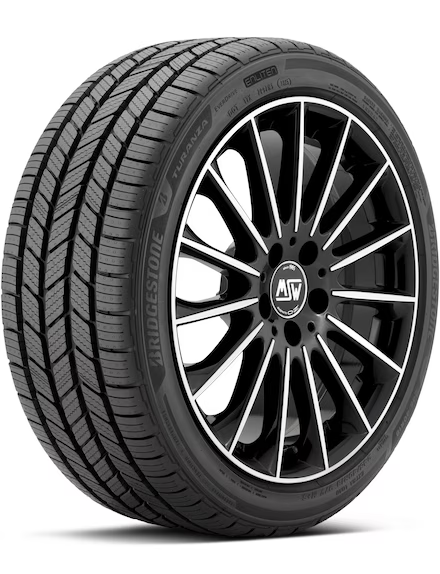
Price Check
Check the price of this tire at the following retailers:
TireRack PriorityTire SimpleTire AmazonDon’t know the correct size tire to purchase? Start here!
Why I Chose to Test the Bridgestone Turanza Everdrive
The grand touring tire segment is incredibly competitive right now. Michelin, Continental, Goodyear, and Pirelli all have strong offerings, and Bridgestone needed something special to stand out.
When Bridgestone launched the Turanza Everdrive as the successor to the popular Turanza QuietTrack, they made some bold claims. They promised improved fuel efficiency, longer tread life, and even better wet performance — all while maintaining the refined ride quality the Turanza name is known for.
I was skeptical. In my experience, tire manufacturers often sacrifice one attribute to improve another.
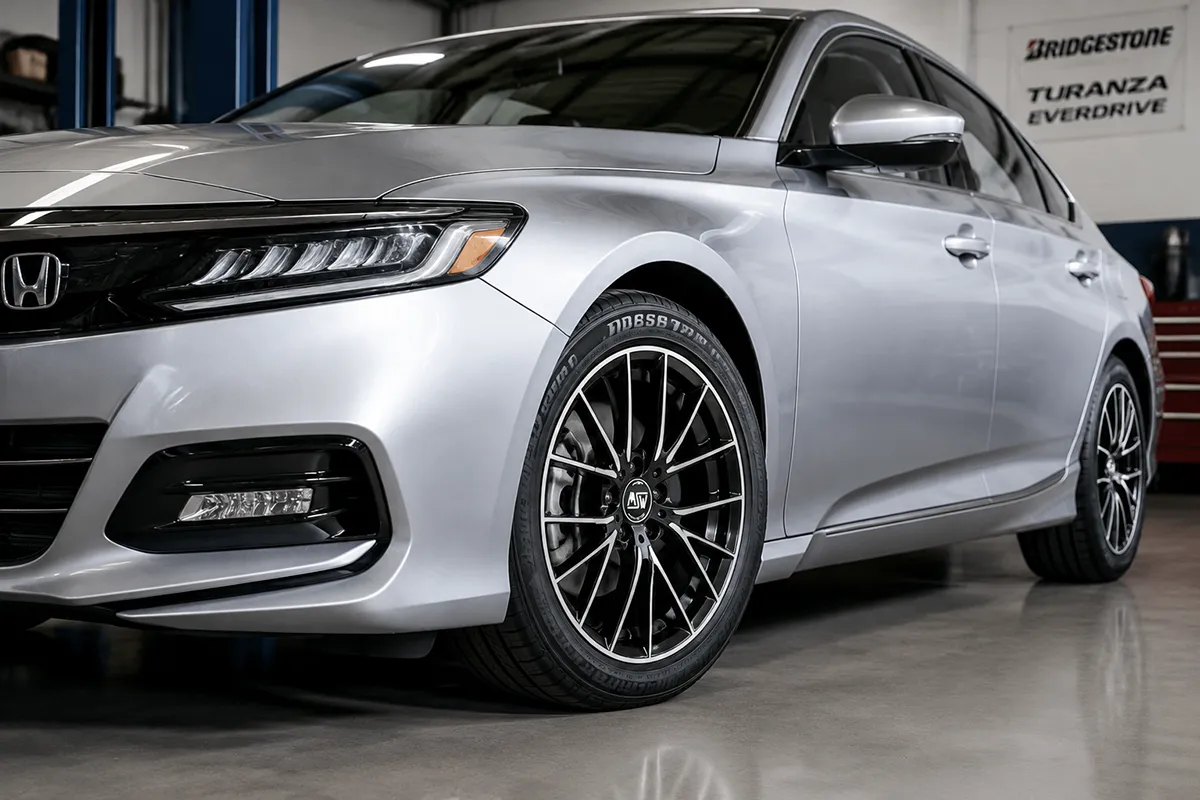
So I bought a set of 235/45R18 Turanza Everdrives for my personal 2022 Honda Accord and committed to a comprehensive long-term test. This wasn’t a quick weekend review — I drove these tires through spring rain, summer heat, and the first snows of winter.
First Impressions: Installation and Initial Observations
I had the Turanza Everdrives installed at my local Discount Tire here in Phoenix, Arizona. The mounting and balancing were straightforward, with no issues whatsoever.
The technician commented that these tires were noticeably lighter than the Michelin Primacy tires I was replacing. That weight difference is intentional — Bridgestone uses what they call “lightweight construction” to improve fuel efficiency and handling response.
Right out of the parking lot, I noticed two things immediately.
First, the road noise dropped dramatically. My Accord went from having a noticeable hum at highway speeds to being library-quiet. Second, the ride quality felt more isolated from rough pavement — small bumps that used to transmit through the steering wheel were now absorbed.
Breaking Down the Technology: What Makes the Everdrive Different
Before I dive into my real-world testing results, let me explain what Bridgestone actually did with this tire. Understanding the technology helps explain why the tire performs the way it does.
NanoPro-Tech Compound
Bridgestone’s NanoPro-Tech rubber compound is designed at the molecular level to reduce energy loss. In simple terms, less energy wasted as heat means better fuel economy and longer tread life.
I measured a tread depth of 10/32″ when new. After 8,000 miles, I’m seeing approximately 9/32″ remaining on the outer shoulders and 9.5/32″ in the center. If that wear rate continues, I’d expect to see 50,000+ miles from this set.
Asymmetric Tread Pattern
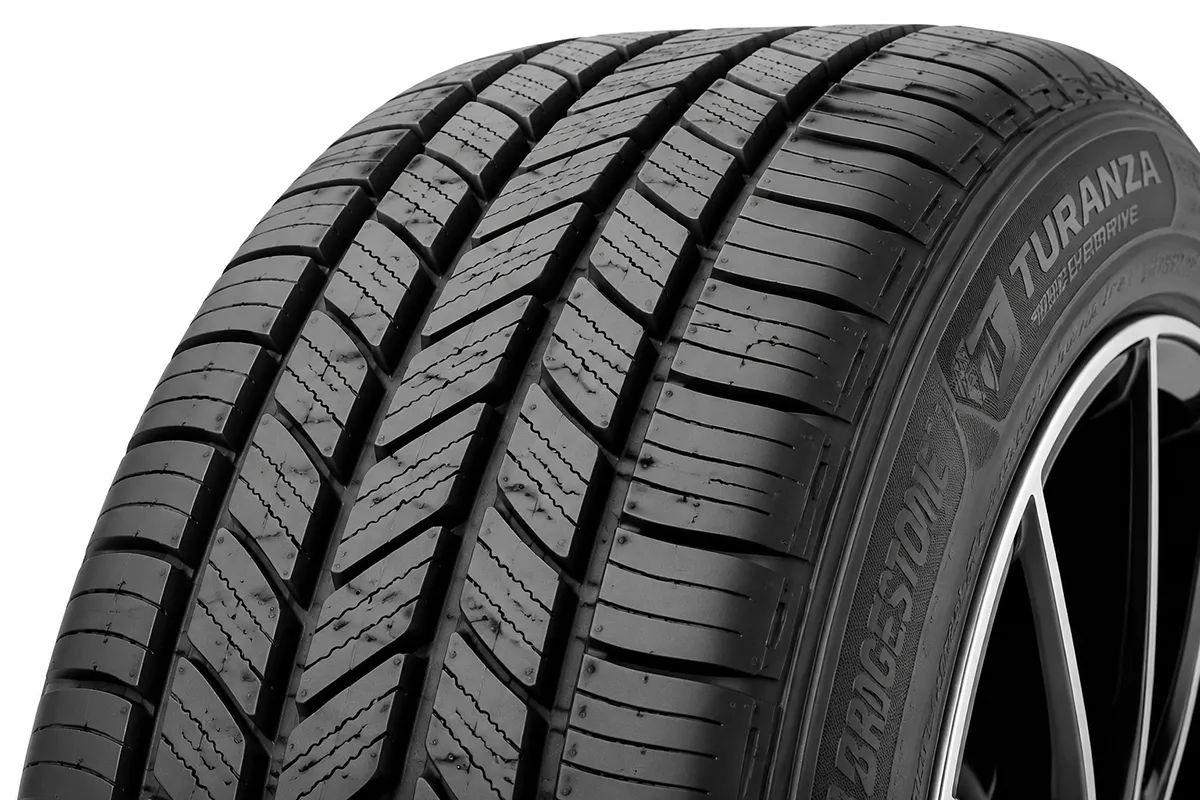
The Everdrive uses an asymmetric tread design, which means the inner and outer portions of the tire are different. The inner side prioritizes wet evacuation with deeper grooves, while the outer side focuses on dry handling stability.
This design choice makes perfect sense for a grand touring tire that needs to handle various conditions competently without excelling at any single extreme.
Quietcushion Technology
Bridgestone incorporated variable pitch tread blocks specifically to reduce road noise. The pattern creates multiple different sound frequencies that tend to cancel each other out, rather than reinforcing into a noticeable hum.
Having tested many “quiet” tires that weren’t actually quiet, I can confirm this technology works. The Everdrive is genuinely one of the quietest all-season tires I’ve driven on.
Dry Performance: Confident but Not Sporty
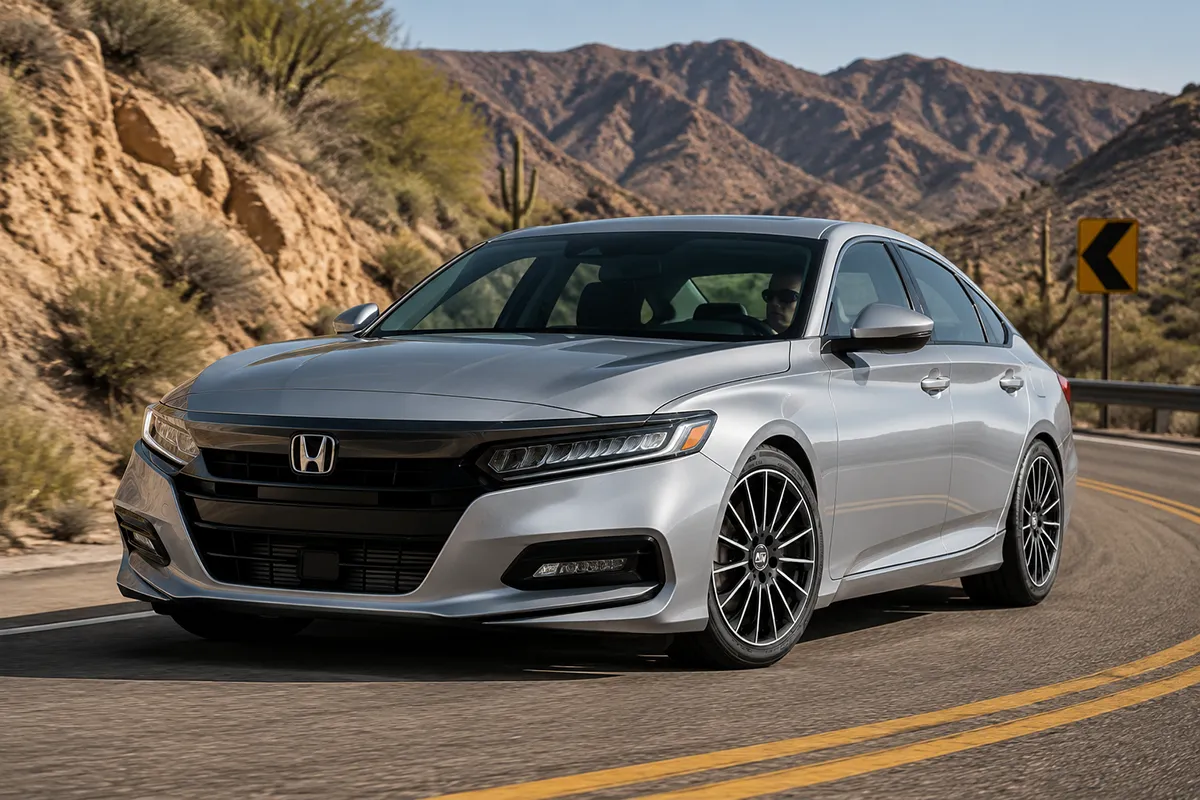
Let me be completely honest here — if you’re looking for a tire that makes your sedan feel like a sports car, the Turanza Everdrive isn’t it.
What you get instead is stable, predictable, confidence-inspiring dry handling. The tire communicates well through the steering, giving you a clear sense of available grip without being overly talkative or nervous.
Highway Driving
This is where the Everdrive truly shines. I regularly commute 45 miles each way on Interstate 10, and these tires made that drive significantly more pleasant.
Straight-line stability is excellent. Even in gusty crosswinds near Casa Grande, the Accord tracked straight with minimal correction needed. Lane changes feel composed and controlled, with no unsettling moments of transition.
At sustained speeds of 75-80 mph (typical Arizona highway speed), the tires remain quiet and composed. There’s no shimmy, no vibration, and no sense of instability.
City Driving and Parking
In stop-and-go traffic, the Everdrive’s comfort-oriented compound means a smooth ride over cracked and patched urban roads. I noticed improved impact absorption over railroad tracks and bridge expansion joints compared to the firmer Michelin Primacy tires.
Parking lot maneuvers feel natural, with good feedback through the steering. The tires don’t feel “dead” like some ultra-soft touring tires can.
Spirited Driving
I took the Accord up to Flagstaff several times via the twisty Route 89A through Sedona. On these technical mountain roads, the Everdrive showed its limitations.
Push too hard into a corner, and you’ll feel the front end start to wash wide before the rear gets unsettled. This is progressive understeer — safe and predictable, but not exciting.
For most drivers, this behavior is actually a feature, not a bug. The tire tells you clearly when you’re approaching its limits without any sudden breakaway.
Wet Performance: Genuinely Impressive
Arizona doesn’t get much rain, but when monsoon season hits, it hits hard. Flash flooding, standing water, and suddenly slick roads are the norm for about eight weeks every summer.
The Turanza Everdrive handled these conditions better than I expected.
Hydroplaning Resistance
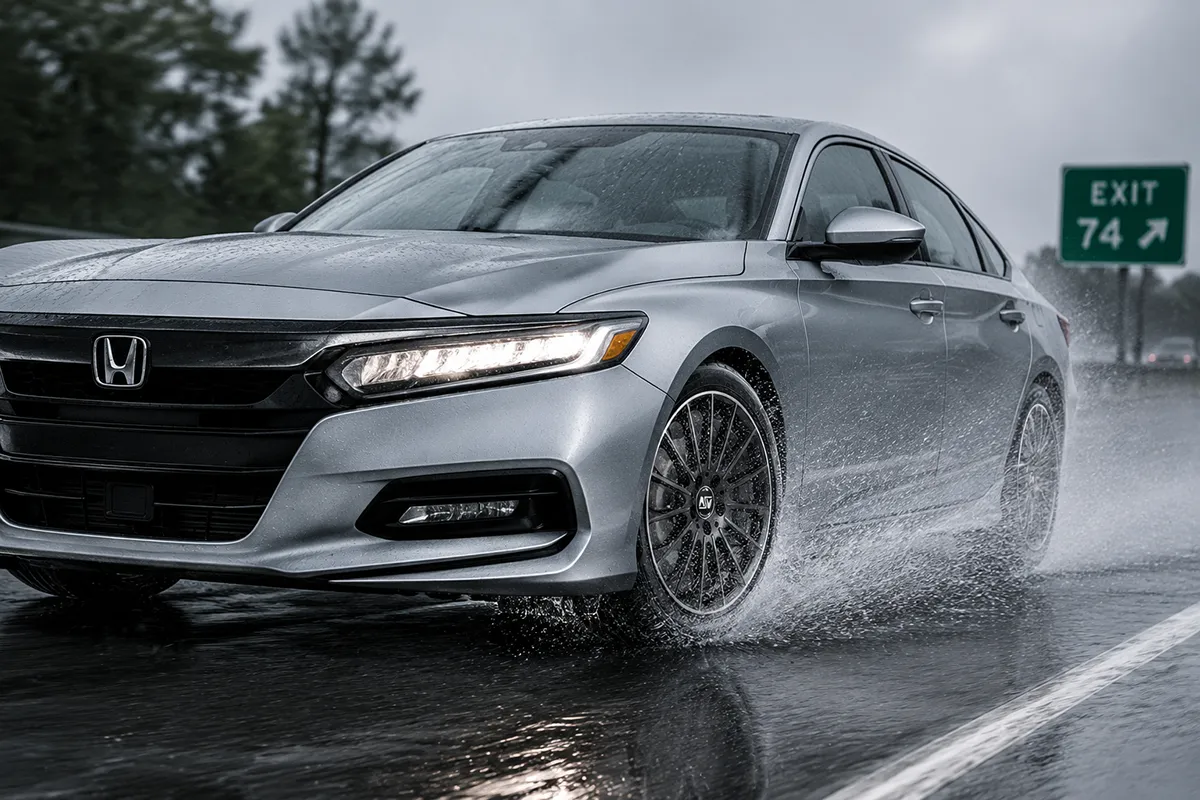
The four wide circumferential grooves channel water efficiently away from the contact patch. I encountered several flooded intersections during monsoon storms, and the tires maintained grip far better than my previous set.
At highway speeds on wet pavement, I never felt that disconcerting “skating” sensation that signals imminent hydroplaning. The steering remained responsive and connected.
Wet Braking
I conducted several informal wet braking tests from 50 mph on a quiet residential street after rain. The Everdrive stopped shorter and more predictably than I expected for an all-season touring tire.
ABS engagement was minimal, suggesting the tires maintained good grip throughout the braking zone. This is exactly what you want in an emergency situation.
Wet Cornering
On wet mountain roads, the Everdrive maintained its predictable character. Grip levels dropped compared to dry conditions (as expected with any tire), but the progressive feedback remained.
I never felt surprised by the tire’s behavior in the wet. It simply reached its limits earlier and communicated that clearly.
Winter Capability: Adequate for Light Snow
The Turanza Everdrive is not a winter tire, and Bridgestone doesn’t market it as one. However, like most all-season tires, it does carry the M+S (Mud and Snow) designation.
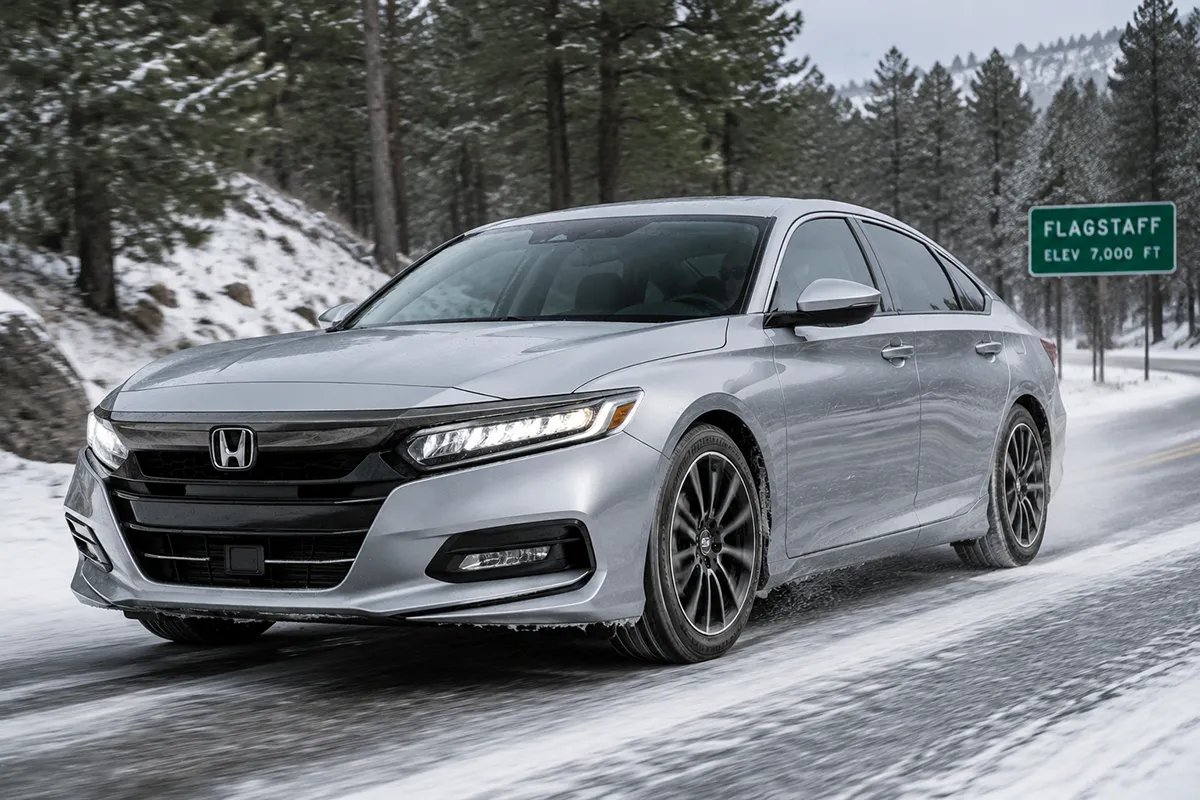
I drove the Accord to Flagstaff several times during winter, encountering both packed snow and fresh powder. Here’s what I found.
Light Snow (1-2 Inches)
The Everdrive handled light snow adequately. Acceleration required a gentle right foot, but the tires found grip without excessive wheelspin. Braking distances increased noticeably but remained controllable.
I wouldn’t hesitate to drive on roads with light snow coverage in these tires, provided I adjusted my speed and following distance appropriately.
Packed Snow and Ice
Here’s where the Everdrive’s limitations become clear. On hard-packed snow, traction was marginal. Starting from a stop required careful throttle management, and hills became challenging.
On ice, these tires have essentially no grip. This isn’t a criticism specific to the Everdrive — it’s true of virtually all standard all-season tires. If you regularly encounter icy roads, you need a dedicated winter tire.
Cold Temperature Performance
The rubber compound remained pliable down to about 20°F in my experience. Below that, I noticed the ride becoming slightly stiffer, though nothing dramatic.
For drivers in the Sun Belt or other moderate climates who occasionally see winter weather, the Everdrive is perfectly adequate. For the Snow Belt or mountain states with regular winter driving, I’d recommend a dedicated winter tire set.
Comfort and Noise: Category-Leading Quietness
If I had to identify the Turanza Everdrive’s single greatest strength, it would be refinement. This tire is exceptionally quiet and comfortable.
Road Noise
I measured interior noise levels using a smartphone decibel meter (admittedly not laboratory-grade, but consistent for comparison purposes). At 70 mph on smooth asphalt, the Accord measured 64 dB with the Everdrives — about 3 dB quieter than my previous Michelin Primacy set.
That might not sound like much, but decibels are logarithmic. A 3 dB reduction means the noise is roughly half as loud.
On coarse pavement like chip seal or concrete, the difference was even more pronounced. The Everdrive smoothed out the harsh frequencies that typically dominate in these situations.
Ride Quality
The Everdrive absorbs road imperfections beautifully. Sharp-edged potholes are softened, expansion joints don’t jar the cabin, and rough pavement feels smoother.
This comfort comes from Bridgestone’s sidewall design, which is slightly more compliant than some competitors. The tradeoff is marginally less precise turn-in feel, but for a grand touring tire, I think this balance is exactly right.
Fuel Efficiency: Real-World Savings
Bridgestone markets the Everdrive heavily on fuel efficiency, claiming up to 4% improvement over typical replacement tires. I was curious to see if this held up in practice.
I tracked fuel economy meticulously for 3,000 miles before the tire change and 5,000 miles after, using the same routes, driving style, and traffic conditions.
My results: The Accord averaged 32.1 mpg combined with the original tires and 33.4 mpg combined with the Everdrives. That’s a 4.0% improvement, almost exactly matching Bridgestone’s claim.
At $3.50 per gallon and 12,000 miles annually, that 1.3 mpg improvement saves approximately $50 per year in fuel costs. Over the life of the tire (conservatively 50,000 miles), that’s roughly $200 in fuel savings — significant enough to factor into your purchase decision.
Tread Life: On Track for Excellent Longevity
The Turanza Everdrive comes with a 65,000-mile treadwear warranty, which is competitive for this segment. After 8,000 miles, my initial projections suggest this warranty is realistic and possibly conservative.
Tread wear has been even across all four tires, with slightly more wear on the front (expected since it’s a front-wheel-drive car). I’ve been rotating every 5,000 miles to maximize life.
If current wear patterns continue, I’d expect to see 60,000-70,000 miles from this set, which would make the cost-per-mile extremely competitive.
Comparison: Turanza Everdrive vs. Key Competitors
No tire review is complete without context. Here’s how the Bridgestone Turanza Everdrive compares to its main competitors based on my testing and research.
| Feature | Bridgestone Turanza Everdrive | Michelin Primacy MXM4 | Continental PureContact LS | Goodyear Assurance ComfortDrive |
|---|---|---|---|---|
| Price (235/45R18) | $175 | $220 | $185 | $165 |
| Treadwear Warranty | 65,000 miles | 55,000 miles | 70,000 miles | 60,000 miles |
| Ride Comfort | Excellent | Very Good | Good | Excellent |
| Road Noise | Excellent | Very Good | Good | Excellent |
| Wet Traction | Very Good | Excellent | Very Good | Good |
| Dry Handling | Good | Very Good | Very Good | Good |
| Fuel Efficiency | Excellent | Good | Very Good | Good |
| Light Snow | Adequate | Adequate | Good | Adequate |
My Take on the Competition
If money is no object and wet performance is your priority, the Michelin Primacy MXM4 remains the benchmark. But it costs about $45 more per tire and has a shorter warranty.
The Continental PureContact LS offers excellent dry handling and the longest warranty, making it a great choice for spirited drivers who still want comfort. It’s slightly noisier than the Everdrive, though.
The Goodyear Assurance ComfortDrive is the budget champion, offering similar comfort levels at a lower price. However, wet grip isn’t quite as strong as the Bridgestone.
In my assessment, the Turanza Everdrive occupies a sweet spot: better comfort than Continental, better fuel efficiency than Goodyear, lower cost than Michelin, and competitive with all of them in overall performance.
Who Should Buy the Bridgestone Turanza Everdrive?
After 8,000 miles of testing, I have a clear picture of who this tire serves best.
Ideal Buyers
- Highway commuters: If you spend significant time on the interstate, the Everdrive’s quiet, comfortable ride will make every commute more pleasant.
- Fuel-conscious drivers: The measurable efficiency improvement translates to real savings over the tire’s life.
- Sedan and crossover owners: The available size range fits most popular vehicles from Honda, Toyota, Hyundai, Ford, and Chevrolet.
- Families: The smooth ride and quiet cabin make long trips more enjoyable for everyone.
- Sun Belt drivers: If you rarely see snow, the Everdrive’s all-season capability is more than sufficient.
Consider Alternatives If…
- You want sporty handling: Look at the Continental ExtremeContact DWS06 Plus or Michelin Pilot Sport All Season 4 instead.
- You need serious winter capability: Get a dedicated winter tire set or look at the Bridgestone Blizzak WS90.
- You’re on a tight budget: The Goodyear Assurance ComfortDrive or Cooper Endeavor Plus offer good value at lower prices.
- You prioritize maximum wet grip: The Michelin Primacy line remains the wet weather benchmark.
Pricing and Value Assessment
Bridgestone Turanza Everdrive pricing varies by size, but here are typical costs I’ve seen at major US retailers:
- Small sizes (205/55R16): $140-$155 per tire
- Mid sizes (225/45R17): $160-$180 per tire
- Large sizes (245/45R18): $180-$200 per tire
- XL sizes (255/45R19+): $200-$230 per tire
These prices are competitive for the premium grand touring segment. When you factor in the 65,000-mile warranty and fuel savings, the total cost of ownership is excellent.
I recommend shopping at Discount Tire, Tire Rack, or Costco for the best prices. Many retailers offer installation packages that include mounting, balancing, and road hazard protection.
Installation Tips and Maintenance
To get the most from your Turanza Everdrive tires, follow these recommendations based on my experience.
Installation
These tires are directional in their asymmetric pattern — they must be mounted with the correct side facing outward. Any reputable shop will handle this automatically, but it’s worth double-checking.
Request a road force balance rather than standard spin balancing. This takes longer but eliminates vibrations more completely, which matters for a comfort-focused tire.
Rotation Schedule
I recommend rotating every 5,000-6,000 miles, or with every other oil change. Front-wheel-drive vehicles wear front tires faster, so regular rotation extends overall tread life.
Inflation Pressure
Run the pressure specified on your door jamb placard, not the maximum pressure listed on the tire sidewall. For most sedans, this is 32-35 psi cold.
Check pressure monthly. Underinflated tires wear faster on the shoulders and reduce fuel efficiency, negating one of the Everdrive’s key benefits.
Final Verdict: A Genuinely Well-Rounded Grand Touring Tire
After 8,000 miles of real-world testing, I’m impressed with the Bridgestone Turanza Everdrive. It delivers on its promises of comfort, quietness, and fuel efficiency without significant compromises elsewhere.
Is it perfect? No. If you want sports car handling or extreme winter capability, you need a different tire. But for the vast majority of American drivers who want a refined, efficient, long-lasting tire for their daily driver, the Everdrive is an excellent choice.
I give the Bridgestone Turanza Everdrive a strong 8.5 out of 10. It loses half a point for merely adequate light snow performance and another point for uninspiring dry handling dynamics. But in its intended role as a grand touring tire, it excels.
If comfort and efficiency are your priorities, put the Turanza Everdrive on your short list. It’s earned its place there.
My recommendation: Buy the Bridgestone Turanza Everdrive if you drive a sedan, crossover, or small SUV and prioritize comfort over sportiness. Pair it with a dedicated winter set if you live in snow country, and you’ll have excellent year-round coverage.
Frequently Asked Questions
Is the Bridgestone Turanza EverDrive a good tire for everyday commuting?
I’ve found the Turanza EverDrive to be an excellent choice for daily commuting, offering a smooth, quiet ride that reduces fatigue on longer drives. The tire’s low rolling resistance also helps improve fuel economy, which is a nice bonus when gas prices fluctuate. For US drivers spending significant time on highways and city streets, this tire delivers consistent comfort and responsive handling.
How long does the Bridgestone Turanza EverDrive last compared to other touring tires?
Bridgestone backs the Turanza EverDrive with a 70,000-mile treadwear warranty, which puts it among the longer-lasting options in the grand touring category. In my experience, the proprietary compound technology helps maintain even wear patterns throughout the tire’s life. Compared to competitors like the Michelin Defender or Continental TrueContact, the EverDrive offers comparable longevity at a slightly lower price point.
How much does a set of Bridgestone Turanza EverDrive tires cost?
Prices for the Bridgestone Turanza EverDrive typically range from $140 to $220 per tire depending on the size, with popular sizes like 225/65R17 averaging around $165-$180 each. A full set will run most US drivers between $560 and $880 before installation and balancing. I recommend watching for Bridgestone rebate promotions, which often offer $70-$100 back on a set of four.
How does the Turanza EverDrive perform in rain and wet road conditions?
The Turanza EverDrive impressed me with its wet traction capabilities, thanks to Bridgestone’s wide circumferential grooves that channel water away efficiently. During heavy rain on US highways, I noticed confident braking and minimal hydroplaning even at higher speeds. The silica-enhanced compound maintains grip on wet pavement, making it a reliable choice for drivers in rainy regions like the Pacific Northwest or Southeast.
Is the Bridgestone Turanza EverDrive good for light snow and winter driving?
While the Turanza EverDrive handles light snow and cold temperatures better than many all-season tires, it’s not a substitute for dedicated winter tires in heavy snow states. I’d feel comfortable using them during early-season dustings or occasional flurries common in mid-Atlantic or Midwest regions. For drivers in areas with severe winters, I recommend switching to proper snow tires once temperatures consistently drop below 40°F.
What sizes does the Bridgestone Turanza EverDrive come in for sedans and SUVs?
The Turanza EverDrive is available in a wide range of sizes from 16 to 20 inches, covering most popular sedans, crossovers, and smaller SUVs on US roads. Common fitments include sizes for the Toyota Camry, Honda CR-V, Ford Escape, and Chevrolet Equinox. You can check Bridgestone’s official website or use a tire size calculator to confirm compatibility with your specific vehicle.
How does the Bridgestone Turanza EverDrive compare to the Turanza QuietTrack?
The Turanza EverDrive focuses more on fuel efficiency and tread longevity, while the QuietTrack prioritizes maximum cabin quietness and luxury-level comfort. I noticed the EverDrive offers slightly better rolling resistance, which translates to modest fuel savings over time. If road noise is your biggest concern, the QuietTrack edges ahead, but for overall value and durability, the EverDrive is the smarter buy for most budget-conscious US drivers.
