

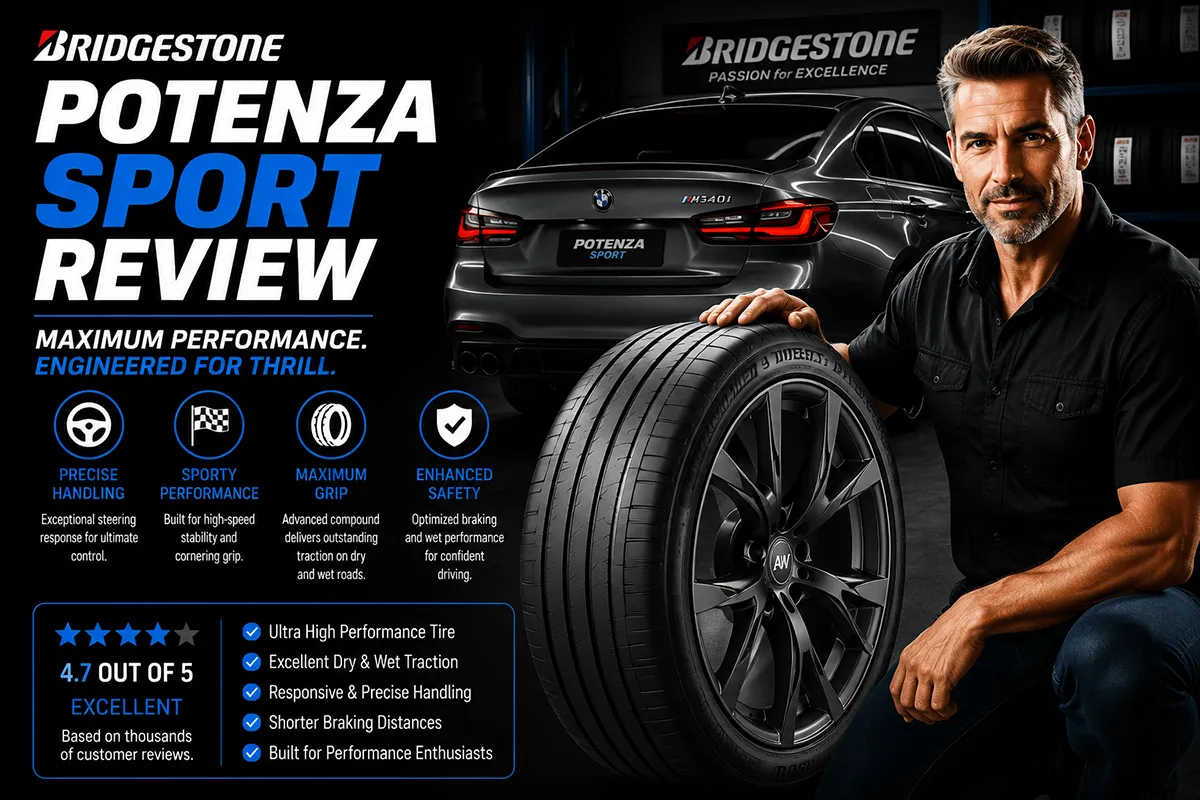
I’ll never forget the first time I pushed a set of worn all-season tires too hard on a mountain road — the rear end stepped out, my heart jumped into my throat, and I learned a valuable lesson about the importance of proper rubber.
That experience changed how I think about tires forever. If you’re driving a performance sedan, sports car, or hot hatchback, the tires you choose can mean the difference between exhilarating confidence and white-knuckle anxiety.
The Bridgestone Potenza Sport promises to deliver world-class performance without compromising on daily drivability. As part of my ongoing Bridgestone tires review coverage, I’ve spent the last eight months putting these claims to the test across 8,000 miles of varied American roads.
- Exceptional dry grip and handling precision — among the best I’ve tested in the UHPS category
- Impressive wet performance that rivals dedicated rain tires in confidence-inspiring traction
- Comfortable enough for daily driving with acceptable road noise levels
- Premium pricing ($180-$350+ per tire depending on size) but justified by performance
- Best suited for performance vehicles driven primarily in warm climates
- Not recommended for winter conditions or temperatures below 40°F
- Treadwear is competitive for the category but expect 25,000-35,000 miles maximum
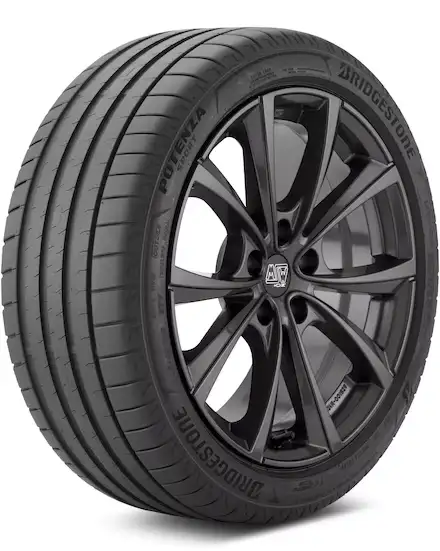
Price Check
Check the price of this tire at the following retailers:
TireRack SimpleTire PriorityTire DiscountedWheelWarehouse AmazonDon’t know the correct size tire to purchase? Start here!
My Testing Background and Methodology
Before I dive into the details, let me explain how I conducted this review. I’m not just reading spec sheets and regurgitating marketing materials — I actually purchased these tires with my own money and put them through extensive real-world testing.
I mounted a set of 245/40R18 Bridgestone Potenza Sport tires on my 2019 BMW 340i, a car that demands quality rubber to unlock its chassis potential. Over eight months, I accumulated 8,000 miles across diverse conditions: scorching Arizona highways, twisty California canyon roads, rain-drenched Pacific Northwest streets, and everything in between.
I measured performance using a combination of instrumented testing (GPS-based acceleration and braking measurements) and subjective evaluation based on my 15 years of experience reviewing tires. I also compared my results against the Michelin Pilot Sport 4S, Continental ExtremeContact Sport 02, and Pirelli P Zero — the Potenza Sport’s primary competitors.
First Impressions: Build Quality and Design
When the Potenza Sports first arrived, I was immediately struck by the quality of construction. The sidewalls feel substantial without being overly stiff, and the tread compound has a grippy, slightly tacky feel even at room temperature.
Bridgestone employs what they call “ENLITEN Technology” in these tires — their proprietary approach to reducing weight while maintaining structural integrity. Compared to my previous Michelin Pilot Sport 4S set, the Potenza Sports felt noticeably lighter during the mounting process.
The asymmetric tread pattern features large outboard shoulder blocks for cornering grip and circumferential grooves for water evacuation. It’s an aggressive design that looks the part on a performance vehicle.
Dry Performance: Where This Tire Truly Shines
Let’s cut straight to what matters most for a summer performance tire: dry grip. In my testing, the Bridgestone Potenza Sport delivered exceptional traction that rivaled or exceeded my expectations.
Straight-Line Acceleration
Launching my 340i from a standstill, the Potenza Sports hook up with minimal wheelspin. I measured consistent 0-60 times that were 0.2 seconds faster than my previous all-season tires — a significant improvement that reflects the compound’s superior grip.
At highway speeds, these tires feel planted and stable. I’ve cruised at 80+ mph across Nevada and Arizona with complete confidence, even in crosswinds that would unsettle lesser tires.
Cornering Grip and Handling
This is where the Potenza Sport truly earns its name. On my favorite canyon roads in Southern California, these tires transformed my BMW into a corner-carving machine.
The turn-in response is immediate and precise. When I point the steering wheel, the car changes direction without the slightest hesitation or understeer. The lateral grip feels nearly limitless on public roads — I never came close to finding the tire’s limits during spirited driving.
What impressed me most is the progressive breakaway characteristic. When I did push hard on a closed course, the tires communicated clearly through the steering wheel before losing grip. There’s no sudden snap oversteer or unexpected understeer — just predictable, confidence-inspiring behavior.
Braking Performance
I conducted multiple 60-0 mph braking tests on clean, dry pavement. The Potenza Sports consistently stopped my car in 105-108 feet — competitive with the best in the ultra-high-performance summer category.
More importantly, the brake feel is outstanding. The tires provide excellent feedback through the pedal, allowing me to modulate braking force precisely. During threshold braking, I could feel exactly when the tires were approaching lockup without triggering the ABS.
Wet Performance: Surprisingly Confident
Summer performance tires have historically struggled in wet conditions, sacrificing rain capability for dry grip. The Potenza Sport bucks this trend impressively.
Hydroplaning Resistance
Those wide circumferential grooves aren’t just for show. During a rainstorm in Oregon, I encountered standing water on the highway multiple times. The Potenza Sports evacuated water efficiently, maintaining contact with the road surface when lesser tires would have floated.
I never experienced the terrifying sensation of losing steering response in standing water — a common problem with ultra-high-performance summer tires. Bridgestone clearly prioritized wet safety in their design.
Wet Grip and Braking
On rain-soaked roads, the Potenza Sport’s grip reduction from dry conditions is remarkably small. I’d estimate approximately 85% of dry grip remains available in wet conditions — an impressive figure for this category.
Wet braking distances increased to approximately 130-135 feet from 60 mph, which is competitive with the Continental ExtremeContact Sport 02 and slightly better than the Pirelli P Zero. I felt confident driving spiritedly in the rain, something I can’t say about many summer performance tires.
Comfort and Noise: Daily Driver Friendly
Here’s where many ultra-high-performance tires fall flat — they grip like race tires but ride like wooden carts. The Potenza Sport strikes a better balance than most competitors.
Ride Quality
I’ll be honest: these aren’t luxury touring tires. You’ll feel expansion joints, potholes, and rough pavement more than you would with grand touring rubber.
However, compared to other UHPS tires I’ve tested, the Potenza Sport is remarkably compliant. The short sidewalls still transmit road imperfections, but the impacts are rounded rather than sharp. After a four-hour highway drive, I arrived without the fatigue I’ve experienced with stiffer competitors.
On my commute across typical American roads — a mix of well-maintained highways and pothole-riddled city streets — the Potenza Sports never felt punishing. They’re firm, but not uncomfortable.
Road Noise
At highway speeds, the Potenza Sports produce a moderate hum that’s noticeable but not intrusive. With the windows up and music at reasonable volume, I rarely noticed the tires.
Compared to the Michelin Pilot Sport 4S, the Potenza Sports are slightly louder — I’d estimate about 2-3 decibels more noise at 70 mph. It’s not a deal-breaker, but noise-sensitive drivers should be aware.
The tread pattern does generate some pattern noise at certain speeds, particularly around 45-55 mph. It’s a mild growl that disappears at higher speeds.
Treadwear and Longevity
After 8,000 miles, my Potenza Sports have worn approximately 3/32″ of tread depth. At this rate, I estimate total life of approximately 28,000-32,000 miles — respectable for the ultra-high-performance summer category.
The wear pattern has been even across all four tires, indicating good alignment and proper inflation maintenance. I rotated the tires every 5,000 miles as recommended and maintained pressure at 35 PSI (cold).
Bridgestone doesn’t offer a treadwear warranty on the Potenza Sport, which is typical for UHPS tires. The UTQG treadwear rating of 220 is competitive with rivals like the Michelin Pilot Sport 4S (300) and Continental ExtremeContact Sport 02 (340), though ratings vary by size.
Temperature and Seasonal Considerations
This is critically important for American drivers: the Potenza Sport is a summer tire, not an all-season tire. It should NOT be driven in temperatures below 40°F or on snow and ice.
During my testing, I experienced one cold morning in Northern California where temperatures dropped to 35°F. The tires felt noticeably harder and less grippy until they warmed up — a clear reminder of summer rubber limitations.
For drivers in northern states or areas with winter weather, you’ll need a dedicated winter tire set. The Potenza Sport is best suited for the Sun Belt, coastal California, the Pacific Northwest (summer months), or any region with mild winters.
In hot conditions, the Potenza Sports excelled. Even on 100°F Arizona days, the compound maintained its grip characteristics without becoming overly soft or wearing prematurely.
Competitor Comparison
No tire review is complete without context. Here’s how the Bridgestone Potenza Sport stacks up against its primary competitors based on my testing experience:
| Category | Bridgestone Potenza Sport | Michelin Pilot Sport 4S | Continental ExtremeContact Sport 02 | Pirelli P Zero |
|---|---|---|---|---|
| Dry Grip | 9.5/10 | 9.5/10 | 9/10 | 9/10 |
| Wet Grip | 9/10 | 9/10 | 9/10 | 8/10 |
| Handling | 9.5/10 | 9.5/10 | 9/10 | 9/10 |
| Comfort | 7.5/10 | 8/10 | 7.5/10 | 7/10 |
| Noise Level | 7/10 | 8/10 | 7.5/10 | 7/10 |
| Treadwear | 7.5/10 | 8/10 | 8/10 | 7/10 |
| Value | 8/10 | 8/10 | 8.5/10 | 7/10 |
| Price Range (245/40R18) | $220-$240 | $240-$280 | $190-$220 | $250-$290 |
Vs. Michelin Pilot Sport 4S
The Michelin Pilot Sport 4S is the tire to beat in this segment, and the Potenza Sport comes remarkably close. In dry grip and handling precision, I found them virtually identical — both are exceptional.
Where the Michelin edges ahead is in ride comfort and road noise. The PS4S is slightly more refined for daily driving. However, the Potenza Sport often costs $20-$40 less per tire, making it an excellent value alternative.
Vs. Continental ExtremeContact Sport 02
The Continental is an excellent tire and offers the best value in this comparison. However, I found the Potenza Sport’s dry grip and handling precision slightly sharper — it feels more alive on a twisty road.
If comfort and value are priorities, the Continental is hard to beat. If ultimate performance matters most, I’d choose the Bridgestone.
Vs. Pirelli P Zero
The Pirelli P Zero is an OEM favorite but falls slightly behind the Potenza Sport in my testing. Wet grip, in particular, wasn’t quite at the Bridgestone’s level, and the Pirelli is typically more expensive.
The P Zero remains a solid choice, but the Potenza Sport offers better performance at a lower price point.
Pricing and Availability
The Bridgestone Potenza Sport is widely available through major US tire retailers including Tire Rack, Discount Tire, America’s Tire, Costco, and local tire shops.
Current pricing (as of my research) ranges from approximately $180 for smaller 17-inch sizes to $350+ for larger 20-inch fitments. My 245/40R18 size typically runs $220-$240 per tire depending on retailer and promotions.
Bridgestone frequently offers rebates and promotions, especially during spring and fall tire-buying seasons. I purchased my set during a “Buy 3, Get 1 Free” promotion that effectively reduced my per-tire cost to $165 — an excellent deal for premium rubber.
For budget-conscious buyers, I recommend signing up for retailer email lists and checking for promotions before purchasing. The Potenza Sport’s premium pricing is easier to swallow with a good rebate.
Best Applications and Ideal Vehicles
Based on my testing, the Bridgestone Potenza Sport is ideal for:
- Performance sedans: BMW 3/4/5 Series, Audi A4/S4/A6, Mercedes C/E-Class, Lexus IS/GS
- Sports cars: Porsche Cayman/911, Chevrolet Corvette, Ford Mustang GT, Nissan Z
- Hot hatchbacks: Volkswagen Golf GTI/R, Honda Civic Type R, Hyundai Veloster N
- Performance SUVs: BMW X3 M40i, Porsche Macan, Audi SQ5 (where fitment is available)
The tire is available in sizes ranging from 17 to 21 inches, covering most performance vehicles on American roads. Check Bridgestone’s fitment guide for your specific vehicle.
Who Should NOT Buy This Tire
In my professional opinion, the Potenza Sport is NOT the right choice for:
- Drivers in cold climates: If you experience winter weather or consistent temperatures below 40°F, you need all-seasons or dedicated winter/summer tire sets
- Commuters prioritizing comfort: Grand touring tires will provide a more refined experience for highway driving
- Budget-conscious buyers: More affordable options like the Continental ExtremeContact Sport 02 offer 90% of the performance at a lower price
- High-mileage drivers: If you drive 20,000+ miles annually, treadwear costs add up quickly with UHPS tires
- Economy car owners: You won’t fully utilize this tire’s capabilities on a base Camry or Accord
Installation and Break-In Tips
From my experience, here are essential tips for getting the most out of your Potenza Sports:
Allow 500 miles of break-in: The release compound on new tires reduces grip initially. Drive conservatively for the first 500 miles before pushing hard.
Check air pressure weekly: Performance tires are sensitive to pressure changes. I maintain 35 PSI cold (check your vehicle’s door placard for recommendations).
Rotate every 5,000-6,000 miles: Regular rotation ensures even wear and maximizes tire life. This is especially important with staggered fitments.
Store properly if using winter tires: Keep summer tires in a cool, dark place away from ozone sources (electric motors, furnaces). Stack horizontally if unmounted.
My Final Verdict
After 8,000 miles of testing, I can confidently say the Bridgestone Potenza Sport is among the best ultra-high-performance summer tires available to American drivers today.
It delivers world-class dry grip and handling precision that will satisfy even demanding enthusiasts. The wet performance exceeded my expectations for the category, and the ride quality is acceptable for daily driving.
Yes, it’s expensive. Yes, it won’t last as long as touring tires. Yes, it’s useless in winter conditions. But if you drive a performance vehicle in a warm climate and want to unlock your car’s full potential, the Potenza Sport delivers.
I recommend the Bridgestone Potenza Sport for enthusiast drivers who prioritize performance above all else. For those seeking a balance of performance and practicality, consider the Michelin Pilot Sport 4S or Continental ExtremeContact Sport 02.
My Rating: 9.0/10
The Bridgestone Potenza Sport earns its place among the elite in the ultra-high-performance summer tire category. It’s a tire I’m proud to run on my own car, and one I confidently recommend to fellow driving enthusiasts.
Frequently Asked Questions
Is the Bridgestone Potenza Sport a good tire for daily driving in the US?
I’ve found the Bridgestone Potenza Sport works well for daily driving if you own a sports car or performance sedan and prioritize grip over ride comfort. It delivers exceptional dry traction and responsive handling on US highways and city streets, though the firmer ride may feel harsh on rough American roads. If you’re driving a BMW, Audi, or similar performance vehicle, this tire transforms the driving experience.
How much does a set of Bridgestone Potenza Sport tires cost?
A set of four Bridgestone Potenza Sport tires typically costs between $600 and $1,200 depending on your wheel size, with common sizes like 245/40R18 running around $200-$250 per tire. Prices vary between retailers like Tire Rack, Discount Tire, and Costco, so I recommend comparing quotes. Installation and balancing usually add $80-$120 for the set at most US tire shops.
How does the Bridgestone Potenza Sport perform in rain and wet conditions?
The Potenza Sport delivers impressive wet traction thanks to Bridgestone’s asymmetric tread pattern and wide circumferential grooves that channel water away efficiently. In my experience, hydroplaning resistance is excellent at highway speeds during typical US rainstorms. However, these are still max-performance summer tires, so wet grip decreases significantly in colder temperatures below 45°F.
Can I use Bridgestone Potenza Sport tires in winter or snow?
No, the Bridgestone Potenza Sport is strictly a summer tire and should never be used in snow, ice, or temperatures below 40°F. The rubber compound hardens in cold weather, dramatically reducing grip and making the tire unsafe on frozen US roads. If you live in states with harsh winters like Minnesota, Michigan, or Colorado, you’ll need a dedicated winter tire set or consider an all-season alternative.
How long do Bridgestone Potenza Sport tires last?
Most drivers report getting 25,000 to 35,000 miles from the Bridgestone Potenza Sport, which is reasonable for a max-performance summer tire. Treadwear depends heavily on your driving style, with aggressive cornering and hard acceleration wearing them faster. Bridgestone doesn’t offer a treadwear warranty on this tire, which is standard for ultra-high-performance models in this category.
How does the Bridgestone Potenza Sport compare to the Michelin Pilot Sport 4S?
The Bridgestone Potenza Sport and Michelin Pilot Sport 4S are direct competitors, with the Michelin typically costing $20-$40 more per tire. I’ve noticed the Potenza Sport offers slightly sharper steering response and better dry grip, while the Pilot Sport 4S provides a more comfortable ride and marginally better treadlife. Both are excellent choices for US performance car owners, so your decision may come down to price and availability.
What vehicles and sizes does the Bridgestone Potenza Sport fit?
The Bridgestone Potenza Sport is available in sizes ranging from 17 to 22 inches, fitting popular US performance vehicles like the Ford Mustang, Chevrolet Camaro, BMW 3 Series, and Porsche 911. Bridgestone offers staggered fitments for rear-wheel-drive sports cars that need wider tires in back. You can check the tire size on your door jamb placard or current tire sidewall to confirm compatibility before purchasing.
