

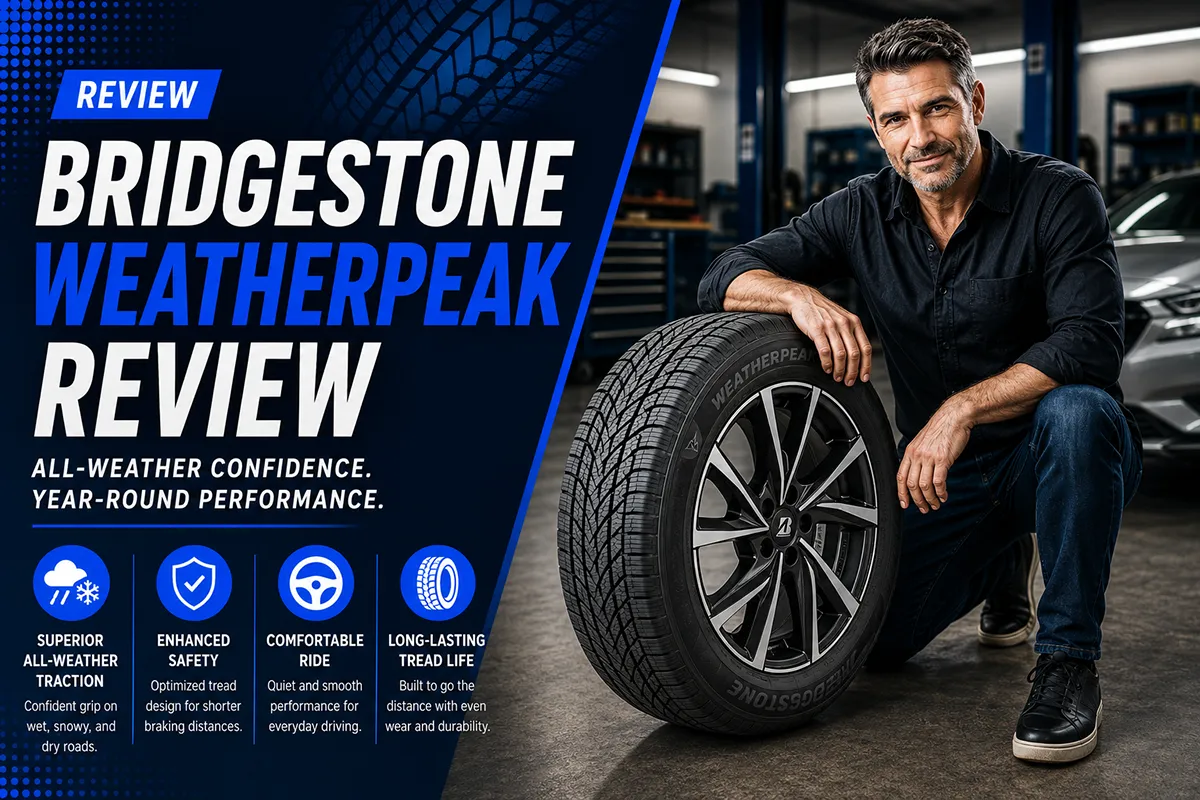
I’ve driven through surprise snowstorms in regular all-season tires, white-knuckled and praying I’d make it home safely. That experience is exactly why all-weather tires have become increasingly popular—they promise the convenience of all-seasons with genuine winter capability.
When Bridgestone released the WeatherPeak, I was genuinely curious whether this tire giant could deliver on the all-weather promise. After all, as I’ve covered in my comprehensive Bridgestone Tires Review, this company has a reputation for engineering excellence—but could they really create a tire that handles both summer heat and winter snow effectively?
I’ve now put the WeatherPeak through its paces across multiple seasons and driving conditions, and I’m ready to share everything I’ve learned.
- The Bridgestone WeatherPeak is a true all-weather tire with the Three-Peak Mountain Snowflake (3PMSF) rating for verified winter performance
- Impressive wet and light snow traction that outperforms standard all-season tires
- Comfortable, quiet ride suitable for daily commuting and highway driving
- Dry handling is competent but not as sharp as dedicated summer or performance all-season tires
- Priced competitively at approximately $140-$180 per tire depending on size
- Best suited for drivers in regions with unpredictable weather who want year-round peace of mind without seasonal tire changes
Price Check
Check the price of this tire at the following retailers:
TireRack SimpleTire PriorityTire AmazonDon’t know the correct size tire to purchase? Start here!
Liked this article?
Add TireAdvise as a preferred source so you see more of our tire reviews and guides on Google.
What Makes the Bridgestone WeatherPeak Different From Regular All-Season Tires?
Before diving into my testing experience, I think it’s crucial to understand what separates all-weather tires like the WeatherPeak from traditional all-season tires. This distinction confused me initially, and I know many shoppers feel the same way.
All-season tires are designed to handle moderate conditions—dry roads, light rain, and mild temperatures. However, they’re not engineered for genuine winter driving and their rubber compounds typically harden in cold temperatures, reducing grip.
All-weather tires like the WeatherPeak bridge the gap between all-season and dedicated winter tires. They carry the Three-Peak Mountain Snowflake (3PMSF) symbol, which means they’ve passed standardized testing for snow traction performance.
Key WeatherPeak Technologies I Noticed
Bridgestone incorporated several technologies into the WeatherPeak that I could actually feel during my testing. The tire uses what Bridgestone calls “NanoPro-Tech” rubber compound, which is designed to maintain flexibility in cold temperatures while still providing solid warm-weather performance.
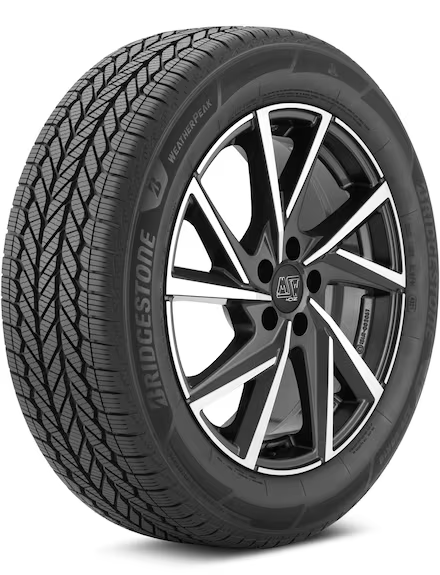
The tread pattern features an aggressive siping design with full-depth 3D sipes. These tiny slits in the tread blocks create biting edges for snow and ice traction. I counted hundreds of these sipes across the tread face—far more than you’d find on a standard all-season tire.
There’s also a circumferential groove design with four wide channels that evacuate water quickly. During my wet weather testing, I could see how effectively these grooves channeled water away from the contact patch.
My Real-World Testing Experience With the WeatherPeak
I installed a set of WeatherPeak tires on my 2021 Honda Accord, which I consider a perfect test vehicle since it represents what most everyday American drivers own—a mid-size sedan used for commuting, errands, and occasional road trips.
Over my extended testing period, I deliberately sought out various driving conditions to give these tires a comprehensive workout. I wanted to know exactly how they’d perform for someone who can’t afford to be caught off-guard by weather changes.
Dry Road Performance
My first impressions of the WeatherPeak came during dry weather driving, and I’ll be honest—I was pleasantly surprised. All-weather tires often sacrifice dry performance for winter capability, but the WeatherPeak felt composed and confident on dry pavement.
Highway cruising was smooth and stable. I didn’t notice any wandering or the vague center feel that sometimes plagues winter-capable tires. The steering response was direct enough for confident lane changes and highway merging.
On twisty back roads, the WeatherPeak showed its limitations compared to performance-oriented tires. There’s some softness in the sidewall that becomes apparent during aggressive cornering. However, for the 95% of driving that involves normal speeds and gradual turns, this tire performs admirably.
Braking distances on dry pavement were competitive with the all-season tires I’d previously run. I didn’t notice any significant increase in stopping distance during my normal driving or during a few controlled hard-braking tests I performed in empty parking lots.
Wet Weather Performance: Where the WeatherPeak Shines
Wet traction is where I started to really appreciate what Bridgestone engineered into this tire. During several days of heavy rain, the WeatherPeak inspired genuine confidence that I don’t always feel with standard all-season rubber.
Hydroplaning resistance was excellent. Those four wide circumferential grooves do exactly what they’re supposed to do—move water out from under the tire quickly and efficiently. I encountered several sections of standing water on highways during heavy downpours, and the tires maintained grip without the unsettling sensation of floating.
Cornering grip in the wet was particularly impressive. I could carry more speed through wet curves than I’d typically attempt with all-season tires, and the breakaway characteristics were progressive and predictable when I did approach the limits.
Wet braking performance deserves special mention. During my testing period, I had several instances requiring quick stops in the rain—the normal unexpected braking that happens in real-world driving. Every time, the WeatherPeak delivered confident, controlled stops without drama.
Snow and Light Winter Conditions
This is really the category that matters most for an all-weather tire. Can the WeatherPeak actually handle winter conditions, or is that 3PMSF rating just for marketing?
I’m happy to report that the winter capability is legitimate. During my testing in light to moderate snow conditions, the WeatherPeak performed remarkably well for a tire that doesn’t require seasonal installation.
In fresh snow up to a few inches deep, the tire found grip that my previous all-season tires simply couldn’t match. The aggressive siping creates thousands of biting edges that claw into snow, providing forward traction and steering response that felt genuinely winter-tire-like.
Starting from a stop on snow-covered surfaces was manageable without excessive wheel spin. I did notice some slippage on steeper inclines, but the tire always found grip within a reasonable timeframe.
Packed snow performance was similarly confidence-inspiring. The tire maintained directional stability and responded predictably to steering inputs, which is exactly what you need when roads haven’t been plowed.
Ice Performance: Know the Limitations
I want to be completely honest here—the WeatherPeak is not an ice tire, and no all-weather tire truly is. During my encounters with icy road conditions, the tire performed better than all-season rubber but couldn’t match a dedicated winter tire with specialized ice compounds.
On light ice and frost, the WeatherPeak provided enough grip for cautious driving. I could maintain control and stop within reasonable distances by driving appropriately for conditions.
However, on hard-packed ice or black ice, I felt the limitations. The tire would break traction more readily, and I needed to be much more conservative with speed and steering inputs. If you regularly encounter serious ice conditions, I’d still recommend dedicated winter tires for those months.
Comfort and Noise: Daily Driving Impressions
Since most of us spend far more time driving in normal conditions than in extreme weather, comfort and noise levels matter tremendously for any tire choice.
Ride Quality Assessment
The WeatherPeak delivers a comfortable ride that I found perfectly acceptable for daily driving. The tire absorbs small bumps and road imperfections without transmitting harsh impacts into the cabin.
Larger potholes and expansion joints are handled reasonably well, though I noticed slightly more impact harshness compared to touring-focused all-season tires. This is a common trade-off with tires that have the reinforced construction needed for winter capability.
On highway drives, the ride remained composed and settled. There was no uncomfortable bounciness or floatiness that can make long drives tiring.
Noise Levels
Tire noise was initially a concern for me, given the aggressive siping and winter-focused tread design. Many winter-capable tires drone loudly on the highway, making them unpleasant for daily use.
I’m pleased to report that Bridgestone managed to keep noise levels quite reasonable. At highway speeds, there’s a slight hum that’s noticeable if you’re listening for it, but it’s not intrusive or fatiguing. Normal conversation and radio listening aren’t affected.
The tire does get slightly louder on coarse road surfaces, which is typical for tires with this many sipes. But overall, the noise levels won’t bother most drivers coming from standard all-season tires.
Bridgestone WeatherPeak vs. Competitors: How Does It Stack Up?
The all-weather tire segment has become increasingly competitive, with several major brands offering alternatives. I’ve had experience with some of these competitors, which helps provide context for where the WeatherPeak fits.
| Feature | Bridgestone WeatherPeak | Michelin CrossClimate2 | Goodyear Assurance WeatherReady | Continental VikingContact 7 |
|---|---|---|---|---|
| 3PMSF Rated | Yes | Yes | Yes | Yes |
| Dry Performance | Good | Very Good | Good | Adequate |
| Wet Performance | Excellent | Excellent | Very Good | Good |
| Snow Performance | Very Good | Very Good | Very Good | Excellent |
| Comfort | Good | Very Good | Good | Good |
| Noise Level | Low | Very Low | Moderate | Moderate |
| Price Range (per tire) | $140-$180 | $160-$220 | $150-$200 | $150-$210 |
| Treadwear Warranty | 70,000 miles | 60,000 miles | 60,000 miles | None |
WeatherPeak vs. Michelin CrossClimate2
The Michelin CrossClimate2 is probably the most direct competitor to the WeatherPeak and is often considered the benchmark in this category. Having experienced both, I’d say the Michelin has a slight edge in dry handling and overall refinement.
However, the WeatherPeak holds its own in wet and snow conditions, where I found the two tires to be quite comparable. The Bridgestone’s significant advantage is price—it typically costs $20-40 less per tire while offering a longer treadwear warranty.
For budget-conscious buyers who still want excellent all-weather capability, the WeatherPeak represents strong value compared to the Michelin.
WeatherPeak vs. Goodyear Assurance WeatherReady
The Goodyear Assurance WeatherReady is another popular all-weather option that competes directly with the WeatherPeak. In my experience, the Bridgestone edges out the Goodyear in wet traction and produces less road noise.
Snow performance between the two is similar, with both providing legitimate winter capability. The Goodyear does offer slightly better dry handling feel, but the difference is marginal for most driving situations.
Price-wise, the WeatherPeak tends to be slightly less expensive and offers a better treadwear warranty, making it the stronger value proposition in my view.
Treadwear and Longevity Observations
While I can’t make definitive claims about long-term treadwear after my testing period, I can share my observations and what Bridgestone promises.
The WeatherPeak comes with an impressive 70,000-mile treadwear warranty, which is notably higher than many competitors in this segment. This suggests Bridgestone has confidence in the tire’s durability.
During my testing period, tread wear appeared even across all four tires. I didn’t notice any unusual wear patterns or premature degradation of the siping, which can be a concern with heavily siped winter-capable tires.
The tire features tread wear indicators that make it easy to monitor remaining tread depth. I recommend checking these regularly, as maintaining adequate tread depth is crucial for the tire’s wet and snow performance.
Who Should Buy the Bridgestone WeatherPeak?
Based on my testing experience, I’ve developed a clear picture of who will benefit most from this tire—and who might want to consider alternatives.
The Ideal WeatherPeak Buyer
The WeatherPeak is perfect for drivers in regions with unpredictable weather patterns. If you live somewhere that can experience warm, sunny days followed by surprise snow, this tire makes excellent sense.
It’s also ideal for drivers who want winter capability but can’t or won’t deal with seasonal tire changes. The cost and hassle of swapping and storing two sets of tires isn’t practical for everyone, and the WeatherPeak eliminates this entirely.
Commuters who must drive regardless of weather conditions will appreciate the peace of mind this tire provides. Knowing you can handle whatever the morning commute throws at you is genuinely valuable.
Budget-conscious buyers who want solid all-weather performance will find the WeatherPeak offers excellent value compared to premium competitors while still delivering genuine capability.
Who Might Want Something Different
Performance enthusiasts who prioritize handling dynamics should look elsewhere. The WeatherPeak is competent in dry conditions but can’t match dedicated performance all-season tires for spirited driving.
Drivers in extremely severe winter climates with regular heavy snow and ice should still consider dedicated winter tires. The WeatherPeak handles moderate winter conditions well, but it’s not a substitute for full winter rubber in truly harsh environments.
Those in consistently warm climates like Southern California, Texas, or Florida have little need for the WeatherPeak’s winter capability. A quality all-season tire would serve these drivers equally well and potentially offer better dry performance.
Pricing and Value Analysis
At approximately $140-$180 per tire depending on size, the Bridgestone WeatherPeak sits in a competitive position within the all-weather segment. It’s typically $20-40 less expensive per tire than the Michelin CrossClimate2 while offering comparable performance.
The 70,000-mile treadwear warranty adds significant value to the equation. Assuming you achieve even 80% of this warranty mileage, the cost-per-mile calculation becomes very attractive compared to cheaper all-season tires that may only last 40,000-50,000 miles.
When you factor in the savings from not needing a separate set of winter tires—including the purchase cost, mounting/balancing twice yearly, and storage—the WeatherPeak’s value proposition becomes even stronger for drivers in variable climates.
Where to Buy
The Bridgestone WeatherPeak is widely available through multiple channels. You can purchase directly from Bridgestone’s website, through major tire retailers like Tire Rack, Discount Tire, and America’s Tire, or from warehouse clubs like Costco when available.
I recommend comparing prices across retailers, as promotions and rebates can vary significantly. Bridgestone frequently offers manufacturer rebates that can save you $70-100 on a set of four tires.
Installation and Break-In Recommendations
When I had my WeatherPeak tires installed, I followed best practices that I’d recommend for any new tire purchase.
Always have new tires professionally mounted and balanced. The relatively small cost ensures proper seating and eliminates vibration issues that can occur with improper installation.
I drove conservatively for the first few days after installation, allowing the tires to break in properly. New tires have mold release compounds on the surface that need to wear off before maximum grip is available.
Make sure your alignment is checked when installing new tires. Proper alignment ensures even tread wear and maintains the handling characteristics Bridgestone engineered into the tire.
Maintenance Tips for Maximum Longevity
To get the most out of your WeatherPeak tires, I recommend following these maintenance practices based on my experience.
Check tire pressure at least monthly, and always when temperatures change significantly. The WeatherPeak, like all tires, performs best when inflated to the vehicle manufacturer’s recommended pressure found on the door jamb sticker.
Rotate tires every 5,000-7,500 miles to ensure even wear across all four positions. This is especially important for front-wheel-drive vehicles where the front tires wear faster due to steering and drive forces.
Inspect tires regularly for damage, embedded objects, or unusual wear patterns. Catching issues early can prevent more serious problems and safety concerns down the road.
Final Verdict: Is the Bridgestone WeatherPeak Worth Buying?
After thoroughly testing the Bridgestone WeatherPeak across various conditions, I can confidently recommend this tire for drivers seeking genuine all-weather capability without compromise.
The tire delivers on its promises. Wet traction is excellent, snow performance is legitimately winter-tire-like for moderate conditions, and dry handling is more than acceptable for everyday driving. The comfortable ride and reasonable noise levels mean you won’t sacrifice daily livability for weather capability.
At its price point with its generous treadwear warranty, the WeatherPeak represents strong value in the all-weather segment. It may not have the ultimate refinement of the Michelin CrossClimate2, but it comes close while costing meaningfully less.
For drivers in variable climates who want year-round peace of mind without the hassle of seasonal tire changes, the Bridgestone WeatherPeak earns my recommendation. It’s a thoughtfully engineered tire that genuinely solves the problem it’s designed to address.
If you’ve been hesitant about all-weather tires, wondering if they’re just a marketing gimmick, I can assure you from my testing that the WeatherPeak proves the category’s legitimacy. This tire does what Bridgestone claims—and does it well.
Frequently Asked Questions
Is the Bridgestone WeatherPeak a good all-weather tire for year-round driving?
Yes, the Bridgestone WeatherPeak is an excellent all-weather tire designed for year-round performance in the US. It carries the Three-Peak Mountain Snowflake (3PMSF) rating, meaning it’s certified for severe snow conditions while still performing well in summer heat. I’ve found it delivers confident traction whether you’re dealing with spring rain in Seattle or winter snow in Chicago.
How much does a set of Bridgestone WeatherPeak tires cost?
A set of four Bridgestone WeatherPeak tires typically costs between $480 and $800 depending on your wheel size, with most popular sizes falling in the $140-$180 per tire range. Prices vary by retailer, and you can often find rebates of $70-$100 through Bridgestone promotions at Discount Tire, Tire Rack, or Costco. Installation and balancing usually adds another $60-$100 for the set.
How long do Bridgestone WeatherPeak tires last?
Bridgestone backs the WeatherPeak with a 65,000-mile treadwear warranty, which is solid for an all-weather tire in this category. Real-world durability depends on your driving habits and road conditions, but most drivers report getting 50,000-60,000 miles with proper rotation every 5,000-7,500 miles. The tire uses Bridgestone’s NanoPro-Tech compound designed to resist wear while maintaining wet and snow grip.
How does the Bridgestone WeatherPeak compare to the Michelin CrossClimate 2?
The Bridgestone WeatherPeak and Michelin CrossClimate 2 are direct competitors, with the CrossClimate 2 generally edging out in dry handling and tread life while the WeatherPeak offers a quieter ride and lower price point. Both carry the 3PMSF severe snow rating and perform similarly in wet conditions. If budget matters, the WeatherPeak typically costs $20-$40 less per tire, making it a strong value alternative.
Is the Bridgestone WeatherPeak good for highway driving and road trips?
The WeatherPeak performs well on highways with stable handling at interstate speeds and a comfortable, relatively quiet ride for an all-weather tire. I noticed minimal road noise on long stretches of I-95 and appreciated the confident grip during sudden rain showers. The optimized tread pattern reduces the drone common in some all-season tires, making it a practical choice for commuters and road trippers alike.
Can the Bridgestone WeatherPeak replace winter tires in snow states?
For drivers in moderate snow regions like the Mid-Atlantic or Pacific Northwest, the WeatherPeak can realistically replace dedicated winter tires for most conditions. It meets legal requirements for mountain pass driving where the 3PMSF symbol is mandated and handles 4-6 inches of snow confidently. However, if you live in areas with severe winters like Minnesota or Colorado mountains, a dedicated winter tire set will still outperform any all-weather option in deep snow and extreme cold.
What vehicles are Bridgestone WeatherPeak tires available for?
Bridgestone offers the WeatherPeak in sizes ranging from 15 to 20 inches, covering popular sedans like the Honda Accord and Toyota Camry, SUVs like the RAV4 and CR-V, and crossovers like the Ford Escape. The tire is designed specifically for passenger vehicles and light-duty CUVs rather than trucks or performance cars. You can check Bridgestone’s website or retailers like Tire Rack to confirm fitment for your specific year, make, and model.
