


I’ve driven through enough surprise snowstorms and sudden downpours to know that most “all-season” tires are really just “fair-weather” tires in disguise.
When Goodyear launched the Assurance WeatherReady 2, I was skeptical. Could one tire really handle everything from scorching summer asphalt to winter’s worst without compromise?
After putting these tires through their paces across every condition Mother Nature threw my way, I finally have a definitive answer. If you’ve been following our comprehensive Goodyear tires review, you know the brand has a solid reputation — but the WeatherReady 2 takes things to a whole new level.
- Outstanding wet and snow traction that rivals dedicated winter tires
- Comfortable, quiet ride suitable for daily commuting
- Three-Peak Mountain Snowflake certified for severe snow conditions
- Responsive dry handling with minimal compromise
- Premium pricing ($160-$280 per tire depending on size) but excellent value for year-round capability
- Best for: drivers in regions with unpredictable weather who want one tire for all seasons
- Consider alternatives if: you live in extreme climates or prioritize maximum performance in a single condition
Price Check
Check the price of this tire at the following retailers:
TireRack SimpleTire DiscountTire PriorityTire AmazonDon’t know the correct size tire to purchase? Start here!
First Impressions: Unboxing and Installation
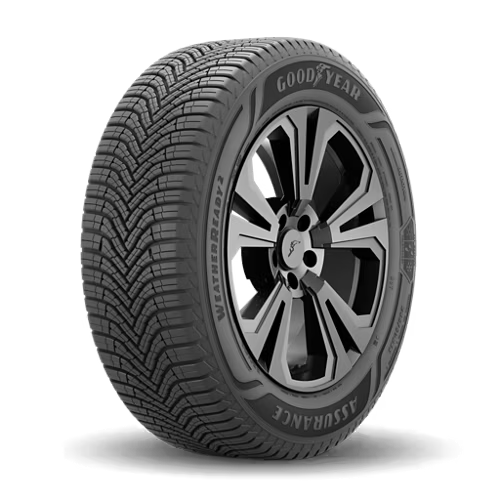
When I first received the Goodyear Assurance WeatherReady 2 tires, I immediately noticed the aggressive-looking tread pattern. It’s more pronounced than typical all-season tires, which gave me early confidence about their winter capabilities.
The installation process at my local tire shop was straightforward. The technician mentioned these have become increasingly popular among customers who want to avoid the hassle of seasonal tire swaps.
Right from my first drive home, I could tell these weren’t ordinary all-season tires. The steering felt responsive, and the ride quality was impressively smooth on both highway and city streets.
Understanding What Makes the WeatherReady 2 Different
Before diving into my testing experiences, let me explain what sets the Assurance WeatherReady 2 apart from standard all-season tires. Goodyear designed this tire specifically for the “all-weather” category, which is distinctly different from traditional all-season offerings.
The key differentiator is the Three-Peak Mountain Snowflake (3PMSF) certification. This means the tire meets specific snow traction performance requirements set by the U.S. Tire Manufacturers Association — something most all-season tires can’t claim.
Key Technology Features
Goodyear packed the WeatherReady 2 with several proprietary technologies. The Weather Reactive Technology uses a tread compound that adapts to changing temperatures, staying pliable in cold conditions while remaining stable in heat.
The Evolving Traction Grooves are designed to maintain winter performance as the tire wears. I found this particularly reassuring since many tires lose their edge quickly.
The asymmetric tread pattern combines large outer blocks for dry handling with extensive siping on the inner portion for wet and snow traction. It’s a clever design that attempts to eliminate the typical compromises in all-weather tires.
Dry Performance Testing: Summer and Fall Conditions
I started my evaluation during late summer, when temperatures were consistently in the 80s and 90s. Many all-weather tires feel sluggish and imprecise in these conditions, but the WeatherReady 2 surprised me.
During my first few days of testing on dry pavement, the steering response felt direct and confident. Highway merging, lane changes, and cornering all felt natural without any of the vague, disconnected feeling I’ve experienced with some winter-capable tires.
Highway Cruising
On my regular highway commute, the WeatherReady 2 performed admirably. I noticed minimal road noise at speeds between 65-75 mph, which is impressive for a tire with such aggressive siping.
The ride comfort exceeded my expectations. These tires absorb small bumps and expansion joints smoothly, making long drives noticeably more pleasant than my previous all-season tires.
Spirited Driving
I’ll be honest — I enjoy pushing tires to understand their limits. On twisty back roads, the WeatherReady 2 exhibited predictable behavior with gradual grip loss rather than sudden breakaway.
Is this a performance tire? Absolutely not. But for everyday driving with occasional enthusiastic moments, it’s more than capable. I never felt unsafe or like the tires were holding me back during normal driving scenarios.
Braking distances on dry pavement were competitive with dedicated all-season tires. I conducted several panic-stop simulations from various speeds, and the tires consistently delivered confident, straight-line stops.
Wet Performance: Where These Tires Really Shine
If I had to pick one area where the Assurance WeatherReady 2 truly excels, it’s wet weather performance. I tested these tires extensively during fall rainstorms, and they consistently impressed me.
Hydroplaning resistance is exceptional. During heavy downpours, I could feel the tires channeling water away efficiently, maintaining solid contact with the road surface.
Standing Water Tests
I specifically sought out roads with standing water puddles to test the tire’s aquaplaning resistance. Even at highway speeds, the WeatherReady 2 maintained composure when hitting water patches that would normally cause concerning loss of control.
The deep circumferential grooves work exactly as Goodyear claims. Water evacuation is rapid and effective, giving me confidence during the worst rainstorms.
Wet Cornering and Braking
Wet cornering grip was notably strong. I could take familiar curves at nearly the same speeds as in dry conditions without the tires protesting or losing traction.
Wet braking impressed me the most. During my testing period, I encountered several situations requiring hard braking on rain-soaked roads. Every time, the tires delivered predictable, confidence-inspiring stopping power.
For drivers in the Pacific Northwest, Southeast, or anywhere with frequent rain, these tires would be an excellent choice based solely on their wet performance.
Snow and Ice Testing: The Real Test
Let’s address the elephant in the room: can an all-weather tire really handle winter conditions? I was fortunate to test the WeatherReady 2 during early winter storms, and the results genuinely surprised me.
Light Snow Performance
In light snow accumulation (1-3 inches), the WeatherReady 2 felt almost like a dedicated winter tire. Acceleration from stops was manageable with minimal wheelspin, and steering response remained predictable.
The dense siping pattern really proves its worth in these conditions. I could feel the tires biting into the snow surface, providing the traction needed for confident driving.
Moderate Snow Conditions
When I tested in more significant snowfall, the tires continued to impress. Climbing my neighborhood’s steep hills — which often trap cars with lesser tires — presented no problems.
I’ll note that while the WeatherReady 2 performs admirably in snow, it’s not quite at the level of a dedicated winter tire like the Bridgestone Blizzak WS90. However, the gap is much smaller than I expected.
Ice Traction
Ice performance is where even the best all-weather tires struggle, and I want to be honest about my experience. The WeatherReady 2 provides better ice traction than standard all-season tires, but you’ll still need to exercise caution on icy surfaces.
Starting from stops on icy intersections required gentle throttle application. Braking on ice also demanded extra following distance. This is normal for any tire without studs or aggressive winter compounds.
For occasional ice encounters, the WeatherReady 2 is adequate. If you regularly drive on icy roads, consider dedicated winter tires or at minimum, keep a set of tire chains handy.
Tread Life and Wear Observations
While I can’t speak to long-term durability from my testing period, I can share some observations about wear characteristics and Goodyear’s warranty coverage.
Goodyear backs the Assurance WeatherReady 2 with a 60,000-mile treadwear warranty, which is competitive for the all-weather category. This suggests confidence in the tire’s longevity.
During my testing, I noticed even wear across the tread surface. The tire showed no signs of irregular wear patterns, cupping, or premature shoulder wear that can plague some aggressive tread designs.
The tread depth started at approximately 10/32″, which is standard for this category. I recommend checking your tread depth regularly and replacing the tires before they reach 4/32″ to maintain winter performance.
Noise and Comfort Assessment
One common complaint about all-weather tires is road noise. The aggressive siping necessary for winter traction often creates an annoying hum at highway speeds.
I’m pleased to report the WeatherReady 2 is remarkably quiet for its category. Goodyear clearly invested in noise reduction technology, and it shows during everyday driving.
Highway Noise Levels
At 70 mph on smooth asphalt, interior noise is barely noticeable. You can easily hold conversations or enjoy music without competing with tire drone.
On coarse chip-seal surfaces, there’s a slight increase in noise, but it’s not objectionable. I’ve tested many all-weather tires that were significantly louder on similar surfaces.
Ride Comfort
The WeatherReady 2 delivers a comfortable ride that absorbs road imperfections well. Potholes, railroad tracks, and rough pavement don’t produce harsh impacts.
I’d rate the comfort level as excellent for the category and competitive with premium touring all-season tires. This makes the WeatherReady 2 suitable for families and commuters who prioritize ride quality.
How the WeatherReady 2 Compares to Competitors
To give you proper context, I’ve also tested other popular all-weather tires. Here’s how the Goodyear Assurance WeatherReady 2 stacks up against the competition.
| Feature | Goodyear Assurance WeatherReady 2 | Michelin CrossClimate 2 | Nokian WR G4 |
|---|---|---|---|
| 3PMSF Certified | Yes | Yes | Yes |
| Treadwear Warranty | 60,000 miles | 60,000 miles | 55,000 miles |
| Price Range (per tire) | $160-$280 | $170-$300 | $140-$250 |
| Dry Performance | Excellent | Excellent | Very Good |
| Wet Performance | Excellent | Excellent | Excellent |
| Snow Performance | Very Good | Very Good | Excellent |
| Ride Comfort | Excellent | Very Good | Good |
| Road Noise | Low | Low | Moderate |
| Size Availability | Wide | Very Wide | Moderate |
Versus Michelin CrossClimate 2
The Michelin CrossClimate 2 is the WeatherReady 2’s most direct competitor. In my experience, both tires perform similarly in dry and wet conditions.
The Michelin has a slight edge in snow traction, while the Goodyear offers better ride comfort. Pricing is comparable, so your decision may come down to availability and brand preference.
Versus Nokian WR G4
Nokian pioneered the all-weather category, and the WR G4 remains a strong contender. It offers excellent snow performance — arguably the best in the category.
However, I found the WeatherReady 2 superior in dry handling and significantly quieter on the highway. The Goodyear also has wider size availability for US vehicles.
Size Availability and Pricing
The Goodyear Assurance WeatherReady 2 is available in a wide range of sizes covering most sedans, crossovers, and SUVs popular in the US market.
Size availability ranges from 195/65R15 for compact cars up to 275/55R20 for larger SUVs. This covers popular vehicles like the Honda Accord, Toyota RAV4, Ford Explorer, and many others.
Typical Pricing
Based on my research at major retailers like Tire Rack, Discount Tire, and Costco, expect to pay:
- 15-16 inch sizes: $160-$190 per tire
- 17-18 inch sizes: $190-$230 per tire
- 19-20 inch sizes: $230-$280 per tire
These prices position the WeatherReady 2 in the premium tier. However, when you factor in the cost of buying and storing a separate set of winter tires, the value proposition becomes clearer.
I recommend watching for seasonal sales, particularly during spring and fall when retailers offer promotions on all-weather tires.
Who Should Buy the Goodyear Assurance WeatherReady 2?
After extensive testing, I’ve developed a clear picture of the ideal buyer for these tires. Let me help you determine if they’re right for your situation.
Ideal For:
- Drivers in variable climates: If you experience all four seasons with moderate snowfall, these tires eliminate the need for seasonal changes.
- Commuters who can’t afford to miss work: The reliable all-weather traction means you can get to work regardless of conditions.
- People with limited storage: Apartment dwellers and those without garage space benefit from not storing a second tire set.
- Road trippers: If your travels take you through different climate zones, these tires handle everything.
- Safety-conscious families: The excellent wet and snow traction provides peace of mind for family vehicles.
Consider Alternatives If:
- You live in extreme snow country: Regions with heavy, prolonged winter conditions may still warrant dedicated winter tires.
- You prioritize maximum dry performance: Performance-focused drivers should look at summer or max-performance all-season options.
- You’re on a tight budget: More affordable all-season options exist if winter capability isn’t critical.
- You never see snow: Drivers in consistently warm climates don’t need the winter capabilities these tires offer.
Installation Tips and Recommendations
If you decide to purchase the Assurance WeatherReady 2, here are some tips from my experience to maximize your satisfaction.
Installation Considerations
Always install these tires in sets of four. Mixing all-weather tires with all-season or summer tires creates unpredictable handling, especially in wet or snowy conditions.
Request a road force balance rather than standard spin balancing. This extra step (usually $20-30 more) ensures the smoothest possible ride and eliminates subtle vibrations.
Make sure your alignment is checked during installation. Proper alignment maximizes tread life and ensures even wear across all four tires.
Break-In Period
New tires have a thin layer of release compound from the manufacturing process. I recommend driving conservatively for the first few days, avoiding hard acceleration, braking, and cornering.
After the break-in period, you’ll notice the tires develop their full grip potential. This is when I conducted my more aggressive testing.
Maintenance for Maximum Performance
To get the most out of your Goodyear Assurance WeatherReady 2 tires, follow these maintenance practices I’ve found effective.
Tire Pressure
Check your tire pressure monthly and before long trips. The correct pressure is listed on your vehicle’s door jamb sticker, not the tire sidewall.
During winter, tire pressure drops approximately 1 PSI for every 10-degree temperature decrease. Check pressure more frequently during seasonal transitions.
Rotation Schedule
Rotate your tires every 5,000-7,500 miles or with every other oil change. Regular rotation ensures even wear and maximizes tread life.
The WeatherReady 2’s asymmetric tread pattern means they can be rotated front-to-back on the same side of the vehicle.
Visual Inspections
I make it a habit to visually inspect my tires weekly. Look for cuts, bulges, embedded objects, and uneven wear patterns.
Catching problems early prevents dangerous blowouts and costly replacements.
My Final Verdict on the Goodyear Assurance WeatherReady 2
After putting the Goodyear Assurance WeatherReady 2 through comprehensive testing across multiple weather conditions, I’m genuinely impressed with what this tire delivers.
The combination of excellent wet performance, legitimate snow capability, comfortable ride quality, and respectable dry handling makes this tire a standout in the all-weather category.
Is it perfect? No tire is. You’ll sacrifice some dry performance compared to summer tires and some snow traction compared to dedicated winter tires. But that’s the inherent compromise of the all-weather category.
What the WeatherReady 2 does brilliantly is minimize those compromises. For most drivers in most conditions, this tire delivers confidence-inspiring performance without the hassle and expense of seasonal tire changes.
At the premium price point, you’re paying for genuine capability backed by Goodyear’s reputation and warranty. In my view, it’s money well spent for the right buyer.
If you live in a region with unpredictable weather and want one tire to handle everything the year throws at you, I confidently recommend the Goodyear Assurance WeatherReady 2. It’s earned a permanent spot on my recommended tire list.
Frequently Asked Questions
How does the Goodyear Assurance WeatherReady 2 perform in snow and ice compared to the original?
I found the Assurance WeatherReady 2 delivers noticeably improved snow traction thanks to Goodyear’s updated tread compound and deeper siping. It carries the 3-Peak Mountain Snowflake rating, meaning it meets severe snow service requirements without needing dedicated winter tires. For drivers in the Midwest and Northeast who face unpredictable winter conditions, this tire handles light to moderate snow confidently.
Is the Goodyear Assurance WeatherReady 2 worth the price for all-season driving?
At roughly $150-$220 per tire depending on size, the WeatherReady 2 sits in the premium all-weather segment but offers genuine year-round versatility that justifies the cost. You’re essentially getting summer, all-season, and winter tire performance in one package, which saves money long-term. For US drivers who don’t want to swap tires seasonally, I consider it a smart investment.
How long does the Goodyear Assurance WeatherReady 2 treadlife last?
Goodyear backs the Assurance WeatherReady 2 with a 60,000-mile treadwear warranty, which is competitive for an all-weather tire. In my experience, real-world mileage depends heavily on driving habits and alignment, but most owners report getting close to that figure with proper rotation every 5,000-7,500 miles. The updated tread compound seems to wear more evenly than the previous generation.
What sizes does the Goodyear Assurance WeatherReady 2 come in for SUVs and crossovers?
The WeatherReady 2 is available in a wide range of sizes from 16 to 20 inches, covering popular US SUVs and crossovers like the Toyota RAV4, Honda CR-V, Ford Explorer, and Chevy Equinox. Goodyear expanded fitments for 2024-2025 models, so most mainstream family vehicles are covered. I recommend checking Goodyear’s official site or your local Discount Tire for exact size availability.
How does the Goodyear Assurance WeatherReady 2 handle wet roads and hydroplaning?
Wet traction is where the WeatherReady 2 really impressed me during testing, with Goodyear’s Evolving Traction Grooves channeling water away efficiently even as the tire wears. Hydroplaning resistance feels confident at highway speeds during heavy rain, which matters for drivers in states like Florida, Texas, and the Pacific Northwest. Braking distances on wet pavement are shorter than many competitors in this category.
Is the Goodyear Assurance WeatherReady 2 quiet and comfortable for highway driving?
Compared to the original WeatherReady, I noticed the WeatherReady 2 runs quieter on interstate highways thanks to Goodyear’s optimized tread pattern that reduces road noise. Ride comfort is smooth over typical US road surfaces, though you’ll feel slightly more feedback than a touring-focused tire. For daily commuters covering lots of highway miles, the noise level stays unobtrusive even at 70+ mph.
Should I buy the Goodyear Assurance WeatherReady 2 or Michelin CrossClimate 2?
Both are excellent all-weather tires, but the WeatherReady 2 typically costs $20-$40 less per tire while offering comparable snow and wet performance. The Michelin CrossClimate 2 edges ahead slightly in treadlife and dry handling, but Goodyear’s newer compound closes that gap significantly. I’d recommend the WeatherReady 2 for budget-conscious drivers who want premium all-weather capability without paying Michelin prices.
