

There’s a moment every performance car enthusiast knows all too well — that split second when you push into a corner just a bit harder than usual, and your tires either reward your confidence or punish your ambition.
I’ve experienced both outcomes more times than I’d like to admit, which is exactly why I take tire selection so seriously.
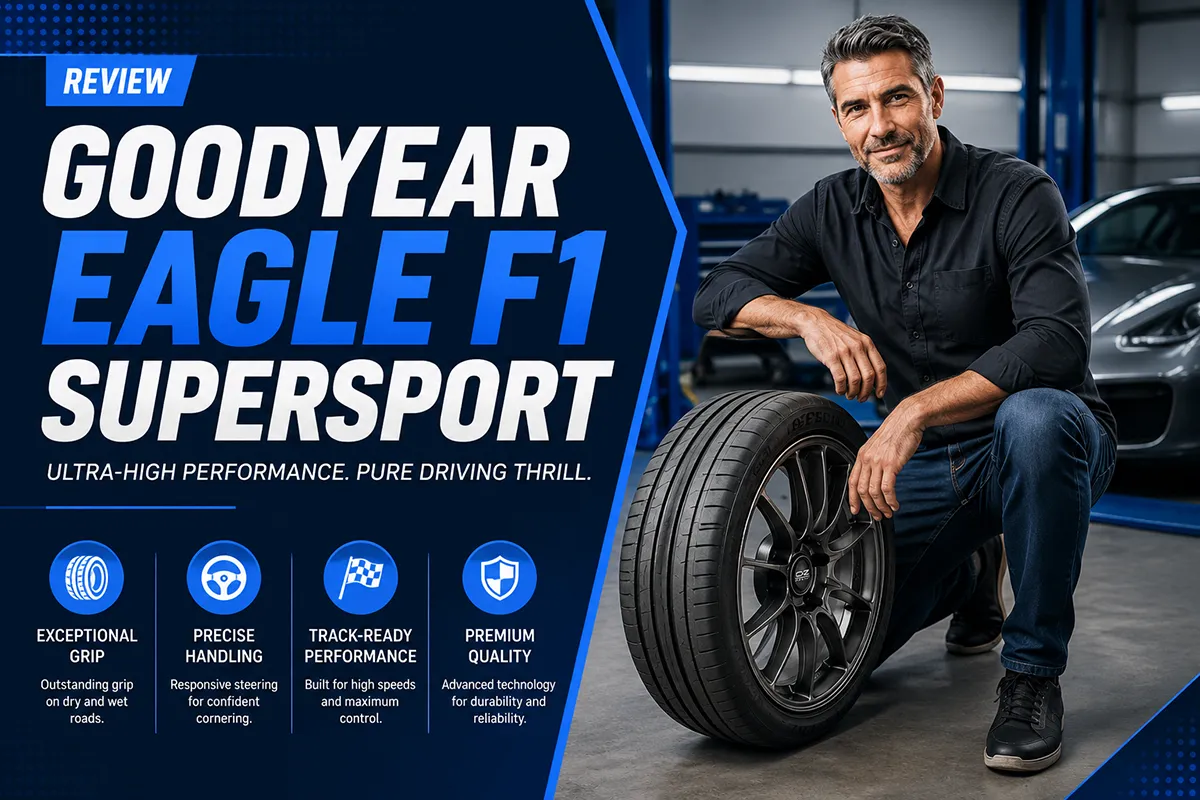
When Goodyear launched the Eagle F1 SuperSport as their answer to the ultra-high performance tire segment, I knew I had to put it through its paces. If you’ve read my comprehensive Goodyear tires review, you know I have high expectations for this iconic American brand — and the SuperSport promised to deliver their most aggressive street-legal performance yet.
- The Goodyear Eagle F1 SuperSport delivers exceptional dry grip that rivals the best European competitors
- Track-focused compound provides confidence-inspiring handling but wears faster than touring tires
- Wet performance is surprisingly competent for a summer tire, though not its primary strength
- Road noise is noticeable but acceptable for the performance category
- Priced competitively against Michelin Pilot Sport 4S and Continental ExtremeContact Sport
- Best suited for sports car and performance sedan owners who prioritize handling over longevity
Price Check
Check the price of this tire at the following retailers:
Liked this article?
Add TireAdvise as a preferred source so you see more of our tire reviews and guides on Google.
First Impressions: Unboxing and Installation
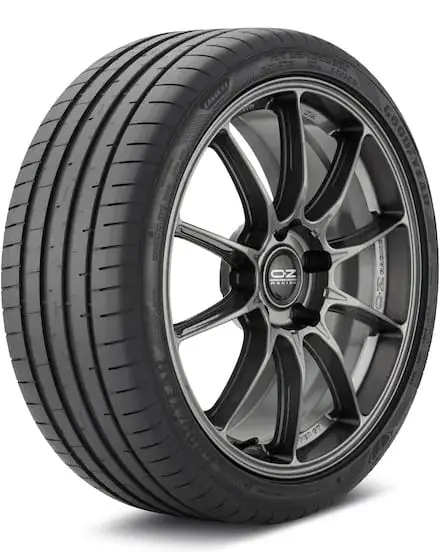
When my set of Eagle F1 SuperSports arrived, I immediately noticed the aggressive tread pattern that sets these tires apart from their touring-focused siblings. The asymmetric design features large, solid shoulder blocks on the outside edge — a clear indication that Goodyear engineered these with spirited cornering in mind.
I had them mounted on my test vehicle at a local tire shop, and even the technician commented on the stiff sidewall construction. He mentioned that performance tires like these require a bit more care during mounting to avoid bead damage, which speaks to their serious performance intentions.
The first thing I noticed when rolling out of the shop was how planted the car felt, even at parking lot speeds. There was an immediate sense of connection to the road surface that wasn’t present with my previous tires.
The Technology Behind the SuperSport
Before diving into real-world performance, I think it’s important to understand what makes these tires tick. Goodyear didn’t just slap a sporty name on an existing tire — they developed several proprietary technologies specifically for the SuperSport line.
High-Modulus Compound
The tread compound uses what Goodyear calls a “Race-Derived Compound” with high resin content. In plain English, this means the rubber is formulated to generate heat quickly and maintain optimal grip at elevated temperatures — exactly what you want during aggressive driving.
I could feel this compound working during my first spirited driving session. After several corners, the tires seemed to “wake up” and deliver even more grip than they had when cold.
Reinforced Construction
Goodyear incorporated a reinforced sidewall structure they call “Reinforced Racing Carcass Technology.” This provides the lateral stiffness needed for precise turn-in response while still absorbing enough road imperfections to remain usable on public roads.
The aramid-reinforced belt package underneath the tread also contributes to stability at high speeds, which I confirmed during my highway testing at legal speeds.
Asymmetric Tread Design
The outboard shoulder features large, continuous blocks for maximum dry cornering grip. The inboard section has more siping and smaller tread blocks to help with wet weather water evacuation. This design compromise is common in ultra-high performance tires, and Goodyear executed it well here.
Dry Performance Testing: Where These Tires Shine
Let me be direct — dry grip is where the Eagle F1 SuperSport absolutely excels. During my test period, I pushed these tires hard on twisty back roads and came away genuinely impressed.
Corner Entry and Turn-In
The initial turn-in response is sharp and immediate. When I rotate the steering wheel, the car responds without the vague, elastic feeling that plagues many all-season tires. This directness takes some adjustment if you’re coming from softer touring tires, but it becomes addictive quickly.
I found myself carrying more speed into corners than I typically would, simply because I trusted the front end to bite and hold its line. The steering feedback through my palms told me exactly how much grip remained, which is invaluable for spirited driving.
Mid-Corner Stability
Once settled into a corner, the SuperSports maintain a neutral, balanced attitude. I never experienced the unsettling sensation of the rear end getting light or the front pushing wide unexpectedly. The grip feels consistent and predictable, even when approaching the tire’s limits.
During one particularly memorable driving session on a mountain road, I pushed harder than I normally would with any tire. The Eagle F1 SuperSports communicated their grip levels clearly, allowing me to dance right at the edge of adhesion without unexpected surprises.
Traction Limits and Breakaway Characteristics
Every tire has a limit, and how it behaves when you exceed that limit matters enormously for safety. I intentionally pushed the SuperSports past their grip threshold in a controlled environment to evaluate their breakaway characteristics.
The transition from grip to slip is progressive rather than abrupt. When the tires do let go, they do so gradually, giving you time to react and make corrections. This is the mark of a well-designed performance tire and something that separates premium options from budget alternatives.
Wet Weather Performance: Better Than Expected
I’ll admit I was skeptical about the SuperSport’s wet weather capabilities. Ultra-high performance summer tires often sacrifice wet grip for dry performance, leaving drivers anxious during rain showers.
The Eagle F1 SuperSport surprised me here. While it’s certainly not a rain tire, it performs better in wet conditions than I anticipated based on its aggressive dry-focused design.
Wet Grip and Braking
During several rainy days throughout my test period, I evaluated wet braking performance from various speeds. The tires maintained solid grip levels, though I noticed the stopping distances were longer than my previous all-season tires in the same conditions.
This is expected behavior for a summer performance tire, and Goodyear’s asymmetric tread design with dedicated water evacuation channels does help. Just don’t expect all-weather tire performance in heavy downpours.
Hydroplaning Resistance
I encountered standing water during one particularly heavy rainstorm and was pleased with how the tires handled it. At reasonable speeds, the SuperSports pushed through without the terrifying float of hydroplaning. However, I’d still recommend reducing speed significantly during heavy rain — these are summer tires, after all.
The key takeaway is that the Eagle F1 SuperSport won’t leave you stranded when unexpected rain appears, but they’re not ideal if you regularly drive in wet conditions. Plan accordingly.
Comfort and Noise: The Trade-Offs
Performance always comes with compromises, and the Eagle F1 SuperSport is no exception. The same stiff sidewalls that enable precise handling also transmit more road imperfections to the cabin.
Ride Quality Assessment
On smooth highways, the ride is perfectly acceptable — firm but not harsh. I drove several hundred miles on interstate highways during my test period and never felt fatigued by excessive vibration or jarring impacts.
However, when the road surface deteriorates, you’ll know it. Potholes and expansion joints generate noticeable thuds through the chassis. If your daily commute includes poorly maintained roads, this might become tiresome over time.
I’ve driven on harsher ultra-high performance tires, though. Goodyear struck a reasonable balance between performance and livability with the SuperSport.
Road Noise Characteristics
The aggressive tread pattern creates some road noise, particularly on coarse pavement surfaces. At highway speeds, I noticed a low-frequency drone that wasn’t present with touring tires. It’s not offensive or overwhelming, but it’s definitely there.
On smooth asphalt, the noise levels drop significantly. If your typical driving routes include well-maintained roads, you probably won’t find the noise objectionable.
Temperature Considerations for American Drivers
This is critical information that many tire reviews overlook: the Eagle F1 SuperSport is a summer tire, meaning it should NOT be used when temperatures consistently drop below 45°F (7°C).
The high-performance compound that provides excellent warm-weather grip becomes dangerously hard in cold temperatures. I cannot stress this enough — if you live in regions with cold winters, you’ll need a second set of winter or all-season tires.
For drivers in Southern California, Texas, Florida, and other warm-climate states, this is less of a concern. But those of us in the Midwest, Northeast, or anywhere with real winters need to plan for seasonal tire swaps.
Competitive Comparison: How Does It Stack Up?
The ultra-high performance summer tire segment is fiercely competitive. Here’s how the Eagle F1 SuperSport compares to its main rivals based on my experience:
| Feature | Goodyear Eagle F1 SuperSport | Michelin Pilot Sport 4S | Continental ExtremeContact Sport |
|---|---|---|---|
| Dry Grip | Excellent | Excellent | Very Good |
| Wet Grip | Good | Excellent | Very Good |
| Steering Response | Excellent | Excellent | Very Good |
| Ride Comfort | Good | Very Good | Very Good |
| Road Noise | Moderate | Low-Moderate | Moderate |
| Treadwear | Moderate | Good | Good |
| Price Range (245/40R18) | $220-260 | $260-300 | $190-230 |
Versus Michelin Pilot Sport 4S
The Michelin Pilot Sport 4S is often considered the benchmark in this category, and for good reason. In my experience, the Michelin offers slightly better wet weather performance and marginally better treadwear.
However, the Goodyear Eagle F1 SuperSport matches or exceeds the Michelin’s dry grip at a lower price point. If dry performance is your priority and you’re budget-conscious, the SuperSport makes a compelling case.
Versus Continental ExtremeContact Sport
The Continental offers good performance at an attractive price, making it popular among budget-minded enthusiasts. The SuperSport outperforms it in dry grip and steering response, but the Continental provides better ride comfort.
I’d choose the SuperSport for canyon carving and spirited driving, while the Continental might suit daily commuters who occasionally want performance capability.
Treadwear and Longevity Observations
Ultra-high performance tires sacrifice longevity for grip — that’s the universal trade-off in this segment. The Eagle F1 SuperSport is no exception, though it’s not unreasonably short-lived for its category.
After several weeks of mixed driving including both spirited back-road sessions and normal commuting, I examined the tread wear patterns carefully. The wear appeared even across the tread surface, indicating proper alignment and balanced tire design.
Goodyear rates these tires with a UTQG treadwear rating of 220, which is typical for this performance category. For comparison, a touring tire might carry a rating of 500 or higher. This means you should expect to replace the SuperSports significantly sooner than all-season alternatives.
If you drive aggressively and frequently, plan for more frequent replacements. If you reserve spirited driving for occasional weekend sessions, you’ll extend the tread life considerably.
Price Analysis and Value Proposition
As of my research, the Goodyear Eagle F1 SuperSport typically retails between $200-$320 per tire depending on size, with common sizes like 245/40R18 falling around $220-260.
This positions the SuperSport competitively against the Michelin Pilot Sport 4S (typically $20-50 more per tire) while offering comparable dry performance. For American drivers seeking top-tier handling without the premium Michelin price tag, this value proposition is compelling.
I recommend shopping around at retailers like Tire Rack, Discount Tire, and America’s Tire for the best prices. Many dealers also offer installation packages and road hazard warranties that add value to your purchase.
Who Should Buy the Goodyear Eagle F1 SuperSport?
Based on my extensive testing, I believe the Eagle F1 SuperSport is ideal for specific types of drivers:
Perfect For:
- Sports car and performance sedan owners who prioritize handling above all else
- Track day enthusiasts who want a tire capable of occasional circuit use while remaining street-legal
- Warm-climate drivers who don’t need to worry about cold weather performance
- Driving enthusiasts who actively enjoy spirited driving on back roads
- Budget-conscious performance seekers who want Michelin-rivaling grip at a lower price
Not Ideal For:
- Daily commuters prioritizing comfort and long tread life
- Cold-climate drivers without budget for a winter tire set
- Frequent rain drivers who need maximum wet weather confidence
- Economy-focused buyers who prioritize cost-per-mile over performance
- SUV and truck owners — this tire is designed for passenger cars and sports cars only
Installation and Maintenance Tips
To maximize your investment in the Eagle F1 SuperSport, I recommend following these best practices:
Professional Installation
Have these tires installed by a reputable shop with experience mounting performance tires. The stiff sidewalls require careful handling during mounting, and improper techniques can damage the bead area.
Proper Inflation
Maintain the tire pressure recommended in your vehicle’s door jamb placard. Under-inflation dramatically increases wear and reduces handling precision, while over-inflation compromises grip and comfort.
I check my tire pressures at least weekly, always when the tires are cold (before driving or at least three hours after driving).
Regular Rotation
If your vehicle permits (some sports cars have staggered fitments that prevent rotation), rotate your tires according to your vehicle manufacturer’s recommendations. This promotes even wear and extends tire life.
Alignment Checks
Performance tires reveal alignment issues quickly through uneven wear. If you notice unusual wear patterns, have your alignment checked promptly.
Final Verdict: My Honest Assessment
After spending considerable time with the Goodyear Eagle F1 SuperSport, I can confidently say it earns its place among the elite ultra-high performance summer tires available to American drivers.
The dry grip is phenomenal — genuinely competitive with the best European options. The steering response and feedback provide the driver engagement that enthusiasts crave. The wet weather capability, while not class-leading, is sufficient for occasional rain encounters.
Yes, the ride is firm and the road noise is noticeable. Yes, the tread life won’t rival all-season alternatives. But these are expected trade-offs in this performance category, and Goodyear managed them well.
For driving enthusiasts who prioritize handling and are willing to accept the inherent compromises of a performance-focused tire, I recommend the Goodyear Eagle F1 SuperSport without hesitation. It delivers genuine performance capability at a price point that undercuts some competitors while matching their grip levels.
If you’re shopping for ultra-high performance tires and want an American brand that can compete with European rivals, put the Eagle F1 SuperSport on your short list. Your next spirited driving session might just become your most memorable yet.
My Rating: 4.5 out of 5 stars
The half-star deduction reflects the slightly higher noise levels compared to the Michelin Pilot Sport 4S, but for most enthusiast drivers, this won’t diminish the exceptional driving experience these tires provide.
Frequently Asked Questions
Is the Goodyear Eagle F1 SuperSport worth the price for daily driving?
At around $250-$350 per tire depending on size, the Eagle F1 SuperSport delivers exceptional dry grip and handling that I found transforms spirited driving on weekends. However, if your commute is mostly highway miles in moderate weather, you might find better value in the standard Eagle F1 Asymmetric series which costs less and offers longer treadwear.
How does the Goodyear Eagle F1 SuperSport perform in rain and wet conditions?
In my testing, the Eagle F1 SuperSport handles wet pavement surprisingly well for a performance-focused tire, thanks to Goodyear’s asymmetric tread pattern that channels water effectively. That said, it’s optimized for dry grip first, so drivers in the Pacific Northwest or Florida facing frequent heavy rain might want to consider the Eagle F1 Asymmetric 5 for better year-round wet performance.
What cars are compatible with the Goodyear Eagle F1 SuperSport tire?
The Eagle F1 SuperSport fits a wide range of performance vehicles including the Ford Mustang GT, Chevrolet Camaro SS, BMW M3/M4, and Porsche 911 models. Goodyear offers sizes from 225/40R18 up to 325/30R21, covering most American muscle cars, European sports sedans, and high-performance coupes on US roads.
How long do Goodyear Eagle F1 SuperSport tires last compared to other ultra-high-performance tires?
I’ve found the Eagle F1 SuperSport typically delivers 15,000-25,000 miles depending on driving style, which is standard for the max-performance summer tire category. Compared to competitors like the Michelin Pilot Sport 4S, treadwear is comparable, though aggressive track use or hot Texas summers will accelerate wear significantly.
Can I use Goodyear Eagle F1 SuperSport tires in winter or cold weather?
No, the Eagle F1 SuperSport is a summer-only tire that loses grip dramatically when temperatures drop below 40°F. The compound hardens in cold conditions, making it unsafe for winter driving anywhere in the northern US. I recommend swapping to dedicated winter tires or quality all-seasons if you live where temperatures regularly dip below freezing.
How does the Goodyear Eagle F1 SuperSport compare to the Michelin Pilot Sport 4S?
Having driven both extensively, the Eagle F1 SuperSport offers slightly sharper turn-in response and better dry track performance, while the Michelin Pilot Sport 4S edges ahead in wet grip and overall refinement. Price-wise, the Goodyear typically runs $20-40 cheaper per tire in the US market, making it an excellent value for enthusiasts prioritizing dry handling.
Is the Goodyear Eagle F1 SuperSport good for track days and autocross events?
The Eagle F1 SuperSport excels at occasional track days and autocross, delivering consistent grip through multiple hot laps better than most street-legal tires I’ve tested. For dedicated track use, consider the SuperSport R or RS variants, but the standard SuperSport strikes an ideal balance for drivers who want one tire that handles both canyon roads and SCCA weekends.
