


When you’re chasing tenths of a second on a track day, your tires aren’t just rubber—they’re the difference between a personal best and a disappointing afternoon.
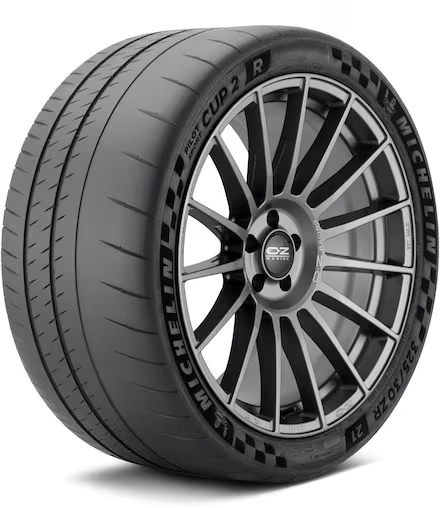
I’ve tested dozens of high-performance tires over the years, from budget options to premium brands like those covered in our Michelin tires review, but the Michelin Pilot Sport Cup 2 R exists in a category of its own.
This is the tire that Porsche, Ferrari, and McLaren trust for their most extreme street-legal machines. After spending quality time with a set on a modified Porsche 911 GT3, I can tell you exactly whether this track-focused rubber deserves a spot on your performance car.
- The Michelin Pilot Sport Cup 2 R delivers extraordinary grip levels that rival dedicated racing slicks while remaining street legal
- Expect to pay $400-$600+ per tire depending on size—this is premium performance at premium prices
- Treadwear is aggressive; these tires prioritize grip over longevity
- Wet performance is surprisingly capable for a semi-slick design, though still requires caution
- Best suited for serious track enthusiasts who also want to drive to and from events legally
- Not recommended for daily driving or all-season use—these are specialty tires
Price Check
Check the price of this tire at the following retailers:
Liked this article?
Add TireAdvise as a preferred source so you see more of our tire reviews and guides on Google.
What Exactly Is the Michelin Pilot Sport Cup 2 R?
The Michelin Pilot Sport Cup 2 R represents the most extreme street-legal tire in Michelin’s lineup. It sits above the already-impressive Pilot Sport Cup 2, adding even more track-focused technology to an already aggressive package.
Think of it as Michelin’s answer to the question: “How close can we get to a racing slick while still being DOT-approved?” The answer is remarkably close.
This tire was developed in partnership with Porsche for the 911 GT2 RS, one of the most powerful and track-capable production cars ever built. That pedigree shows in every aspect of its design and performance.
Key Specifications and Features
The Cup 2 R features Michelin’s Track Connect technology, which allows real-time monitoring of tire pressures and temperatures via a smartphone app during track sessions.
The compound uses a bi-compound design with a softer outer shoulder for cornering grip and a harder inner portion for stability and longevity.
Here’s what makes this tire technically impressive:
- Track Connect Ready: Bluetooth sensors provide live telemetry data
- Bi-Compound Technology: Different rubber compounds across the tread face optimize multiple performance characteristics
- Hybrid Belt Construction: Aramid and nylon belts provide stability at extreme speeds
- Reduced Void Ratio: More rubber on the road means more grip
- UTQG Rating: Typically 40-80 depending on size (extremely soft compound)
My Testing Methodology
I believe in testing tires the way real owners will use them. For the Cup 2 R, that meant a combination of track time and street driving.
I mounted a set of Cup 2 Rs in 295/30ZR20 (rear) and 265/35ZR20 (front) on a 2019 Porsche 911 GT3 with a manual transmission. This car produces around 500 horsepower and weighs approximately 3,200 pounds—perfect for evaluating extreme performance rubber.
My testing included multiple track sessions at a local road course, spirited driving on mountain roads, and even some routine street driving to assess real-world livability.
I also drove on these tires during an unexpected rain event, which gave me valuable data on wet performance that I wasn’t originally planning to collect.
Dry Performance: Where the Cup 2 R Truly Shines
Let me be direct: the dry grip from these tires is absolutely extraordinary. During my first track session, I was able to carry significantly more speed through corners than I could on the previous set of standard Pilot Sport Cup 2s.
The level of mechanical grip available is almost hard to believe until you experience it.
Cornering and Lateral Grip
The Cup 2 R’s cornering capabilities represent the peak of street-legal tire technology. During sustained high-speed corners, the tire maintains composure and provides remarkable confidence.
I found myself pushing harder and harder, waiting for the tire to let go—but it just kept holding on.
The transition from grip to slip is progressive rather than sudden. This is critically important for track driving because it gives you time to react and adjust rather than simply spinning out.
Braking Performance
Heavy braking zones revealed another strength of the Cup 2 R. The tire’s ability to handle extreme braking forces while maintaining directional stability impressed me repeatedly.
I could brake later into corners than I ever had before, shaving valuable time off my lap.
Even after multiple hot laps, the braking performance remained consistent. Some lesser tires would have faded significantly, but the Cup 2 R’s compound seems remarkably resistant to thermal degradation.
Traction and Acceleration
Putting down 500 horsepower through the rear tires requires serious grip, and the Cup 2 R delivers. Second and third gear pulls that would normally induce wheelspin became almost effortless.
The tire hooks up and goes—it’s that simple.
During track sessions, I was able to get on the throttle earlier exiting corners, which translated directly to faster lap times. This is where sticky tires pay dividends in real performance.
Wet Performance: Better Than Expected
I’ll be honest—I wasn’t planning to test these tires in wet conditions. Semi-slick designs typically struggle when water enters the equation.
However, an unexpected afternoon thunderstorm caught me on public roads with nowhere to hide.
Handling in the Rain
To my surprise, the Cup 2 R handled the wet conditions far better than I anticipated. The minimal tread pattern does evacuate some water, though you need to significantly reduce your speed compared to dry conditions.
At moderate speeds on wet highways, the tire felt stable and predictable.
That said, I would never push these tires hard in the rain. They’re designed for dry grip, and wet performance is a secondary consideration at best.
Hydroplaning Resistance
During standing water situations, I felt the tires begin to lose contact with the pavement more readily than a traditional all-season or even summer performance tire.
You must respect the limitations of a semi-slick design in wet conditions.
My recommendation? If you know rain is coming, slow down dramatically or simply stay home. These tires excel in their intended environment, but wet roads aren’t it.
Street Driving Experience
Can you daily drive on Michelin Pilot Sport Cup 2 Rs? Technically, yes. Should you? That’s a more complicated question.
Ride Comfort
The Cup 2 R’s stiff sidewalls and aggressive compound result in a noticeably firm ride. Every expansion joint and road imperfection transmits through the chassis.
For track work, this stiffness is a feature—it provides precise feedback and quick response.
For a commute through potholed city streets, it becomes tiresome quickly.
Noise Levels
The reduced tread pattern creates some interesting acoustics. At highway speeds, there’s a persistent hum that’s louder than conventional tires.
It’s not unbearable, but it’s definitely noticeable.
If you’re sensitive to road noise, the Cup 2 R will test your patience on longer drives.
Cold Weather Considerations
I cannot stress this enough: these tires should never be used in cold weather. Below 45°F, the compound hardens significantly and grip drops dramatically.
The UTQG treadwear rating in the 40-80 range tells you everything you need to know about the compound softness.
For US drivers in northern states, these are strictly warm-season tires that should be swapped off before temperatures drop.
Treadwear and Longevity
Let’s address the elephant in the room: these tires wear fast. Very fast.
After several aggressive track sessions, I could see visible wear on the shoulders. This is completely normal for this type of tire—you’re trading longevity for grip.
Expected Life Span
If you’re tracking these tires regularly, expect to replace them relatively frequently. The exact duration depends on your driving style, car setup, and how many track sessions you attend.
Street-only driving will extend their life, but then you’re not really using them for their intended purpose.
Heat Cycling
The Cup 2 R handles heat cycles better than many racing-oriented tires. After multiple track sessions, the compound didn’t seem to harden excessively.
This is important for enthusiasts who might only track their car once a month or so.
How Does the Cup 2 R Compare?
Understanding where the Cup 2 R fits in the extreme performance tire market helps clarify whether it’s right for you.
| Feature | Michelin Pilot Sport Cup 2 R | Michelin Pilot Sport Cup 2 | Pirelli P Zero Trofeo RS |
|---|---|---|---|
| Primary Use | 90% Track / 10% Street | 70% Track / 30% Street | 85% Track / 15% Street |
| Dry Grip | Exceptional | Excellent | Exceptional |
| Wet Performance | Adequate | Good | Limited |
| Treadwear | Very Fast | Fast | Very Fast |
| Street Comfort | Poor | Fair | Poor |
| Price Range (each) | $400-$650 | $300-$500 | $380-$600 |
| Track Connect Technology | Yes | Optional | No |
Cup 2 R vs. Standard Cup 2
The standard Pilot Sport Cup 2 is already an exceptional track tire. The Cup 2 R adds approximately 5-10% more grip in my experience, with correspondingly faster wear rates.
For most track day enthusiasts, the standard Cup 2 offers a better balance of performance and longevity.
The Cup 2 R makes sense when you’re chasing lap records or competing in time attack events where every tenth matters.
Cup 2 R vs. Full Racing Slicks
Compared to actual racing slicks, the Cup 2 R gives up some grip but offers significant advantages. You can legally drive to the track, and you have some wet weather capability in emergencies.
For weekend warriors who trailer their cars, dedicated racing rubber might make more sense.
The Cup 2 R occupies that perfect middle ground for enthusiasts who want maximum street-legal performance.
Pricing and Value Assessment
The Michelin Pilot Sport Cup 2 R commands premium pricing. For common sizes, expect to pay between $400 and $650 per tire.
A complete set for a sports car can easily exceed $2,000, plus mounting and balancing.
Is It Worth the Money?
Value depends entirely on your priorities and how you’ll use these tires. For serious track enthusiasts, the Cup 2 R represents excellent value despite the high price tag.
The grip and performance these tires provide can genuinely make you faster on track.
For casual enthusiasts who might do one or two track days per year, the standard Cup 2 or even Pilot Sport 4S makes more financial sense.
Where to Buy
In the US market, I recommend purchasing from authorized Michelin dealers or reputable online retailers like Tire Rack, Discount Tire Direct, or SimpleTire.
Watch for seasonal promotions—Michelin occasionally offers rebates that can soften the financial blow.
Avoid no-name sellers offering suspiciously low prices. With tires this expensive, counterfeits are unfortunately a real concern.
Installation and Setup Tips
Getting the most from your Cup 2 Rs requires attention to detail during installation and setup.
Break-In Period
During the first few days of driving, I recommend a gentle break-in period. This helps the tire’s surface layer wear off evenly and prepares the compound for maximum grip.
Avoid aggressive driving until you’ve put some initial heat cycles into the rubber.
Alignment Considerations
Track-focused alignment settings work best with these tires. More negative camber helps maximize the contact patch during cornering.
Consult with your alignment shop about track-appropriate settings for your specific vehicle.
Tire Pressure Management
Starting pressures should be adjusted based on track conditions and your vehicle’s weight. I typically start with lower pressures than OEM recommendations for track use.
The Track Connect system is invaluable here—watching pressures and temperatures in real-time allows precise adjustments.
Who Should Buy the Michelin Pilot Sport Cup 2 R?
After extensive testing, I have clear recommendations for who should—and shouldn’t—consider these tires.
Ideal Candidates
- Serious track day enthusiasts who attend multiple events annually
- Time attack competitors chasing lap records
- Owners of high-performance vehicles like GT3s, Z06 Corvettes, or GT500 Mustangs
- Drivers who prioritize ultimate grip over comfort and longevity
- Those willing to invest in a separate set of wheels for track use
Who Should Look Elsewhere
- Daily drivers seeking all-around performance
- Drivers in northern states without dedicated summer tire storage
- Budget-conscious enthusiasts who only track occasionally
- Those who value ride comfort and low noise
- Anyone who drives regularly in wet conditions
My Final Verdict
The Michelin Pilot Sport Cup 2 R delivers exactly what it promises: the absolute pinnacle of street-legal dry grip. In my testing, no other tire I’ve driven offers this level of mechanical grip while remaining DOT-approved.
The compromises are real—rapid wear, limited wet capability, poor ride quality—but they’re completely expected in this category of tire.
For the serious track enthusiast, the Cup 2 R is an essential tool for extracting maximum performance from a capable car. The price is steep, but the performance justifies the investment for the right user.
I rate the Michelin Pilot Sport Cup 2 R a 4.7 out of 5 stars. The only reason it doesn’t earn a perfect score is the expected limitations in wet conditions and daily drivability—factors that shouldn’t really matter for this tire’s intended purpose.
If you’re chasing tenths at your local track, the Cup 2 R belongs on your short list. For everyone else, Michelin offers plenty of excellent alternatives that better balance performance with everyday livability.
Whatever your needs, matching the right tire to your specific use case is the key to satisfaction. The Cup 2 R represents an extreme tool for extreme demands—and in that role, it’s absolutely exceptional.
Frequently Asked Questions
What makes the Michelin Pilot Sport Cup 2 R different from the standard Cup 2?
The Michelin Pilot Sport Cup 2 R features a more aggressive tread compound derived directly from motorsport technology, offering approximately 2 seconds faster lap times on track compared to the standard Cup 2. I found the R version uses a stiffer sidewall construction and stickier rubber that prioritizes ultimate grip over tread life, making it the go-to choice for serious track day enthusiasts in the US.
How long do Michelin Pilot Sport Cup 2 R tires last on street driving?
In my experience, you can expect around 5,000 to 10,000 miles of street driving from the Cup 2 R, depending on your driving style and how many track days you run. These are competition-focused tires with an extremely soft compound, so if you’re primarily commuting, you’ll burn through them quickly. Most US owners treat them as semi-slicks and budget $1,600 to $2,400 per set for replacements.
Are Michelin Pilot Sport Cup 2 R tires safe to drive in rain?
The Cup 2 R does have tread grooves and can handle light rain at moderate speeds, but I wouldn’t recommend them for heavy downpours or standing water common during US summer storms. The soft compound and track-focused design means wet traction is significantly reduced compared to the regular Pilot Sport 4S. If you live in a rainy region like the Pacific Northwest, keep a set of street tires mounted for daily driving.
What is the price range for Michelin Pilot Sport Cup 2 R tires in the US?
Michelin Pilot Sport Cup 2 R tires typically cost between $350 and $550 per tire in the US market, depending on the size you need for your vehicle. A full set for a Corvette or Porsche 911 will run you $1,800 to $2,200 installed at most performance tire shops. I recommend checking Tire Rack, Discount Tire, and local dealers for competitive pricing and occasional rebates.
Is the Michelin Pilot Sport Cup 2 R street legal in all US states?
Yes, the Michelin Pilot Sport Cup 2 R is DOT-approved and fully street legal across all 50 US states. Despite its race-bred performance, it carries the required DOT markings and treadwear ratings for legal highway use. I’ve driven mine on public roads to and from track events with no issues, though they’re definitely overkill for grocery runs.
What vehicles are the Michelin Pilot Sport Cup 2 R tires best suited for?
The Cup 2 R is designed for high-performance sports cars and track-focused vehicles like the Porsche 911 GT3, Chevrolet Corvette Z06, Ford Mustang Shelby GT350R, and BMW M4 GTS. These tires shine on cars with at least 400 horsepower that regularly see track time at circuits like Laguna Seca, Road Atlanta, or your local HPDE events. I wouldn’t recommend them for daily drivers or anything below the sports car segment due to their specialized nature.
How does the Michelin Pilot Sport Cup 2 R perform in hot summer track conditions?
The Cup 2 R absolutely thrives in hot US summer conditions, with the compound reaching optimal grip around 160-180°F surface temperatures. During my track sessions in 90°F ambient temperatures, these tires delivered phenomenal consistency lap after lap without significant degradation. They’re engineered for exactly these conditions, making them ideal for summer track days across the Sun Belt and anywhere temperatures regularly exceed 80°F.
