

I’ll never forget the moment I realized most tire shoppers are making decisions based on brand loyalty rather than actual performance data.
During a recent conversation at my local tire shop, I overheard a customer insisting on “whatever’s cheapest” while another demanded a specific brand because “my dad always used them.”
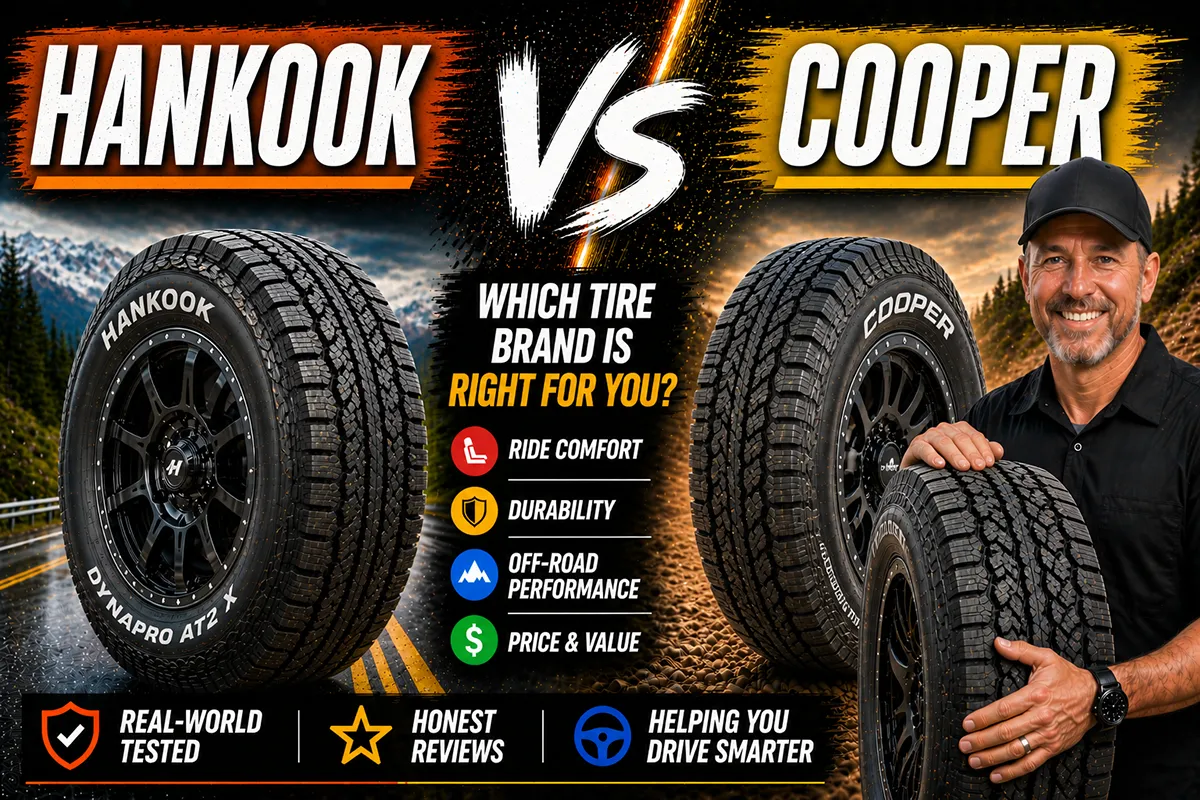
Both approaches miss the point entirely. After spending considerable time testing tires from both Hankook and Cooper — two brands that consistently compete in the mid-range market — I can tell you the right choice depends entirely on your specific driving needs. If you’ve been following my Hankook tires review, you already know I don’t pull punches when evaluating tire performance.
- Hankook offers better highway comfort and fuel efficiency — ideal for commuters and sedan owners
- Cooper excels in rugged durability and off-road capability — perfect for trucks and SUV owners
- Both brands sit in the mid-tier price range, but Cooper tends to run $10-30 more per tire
- Hankook provides longer treadwear warranties on most passenger car models
- Cooper’s customer service and American heritage give it an edge for buyers prioritizing domestic support
- For most everyday drivers, Hankook delivers the best overall value; for truck owners and adventure seekers, Cooper wins
Liked this article?
Add TireAdvise as a preferred source so you see more of our tire reviews and guides on Google.
My Testing Background and Methodology
Before diving into the comparison, I want to be transparent about how I evaluate tires. I’ve been reviewing tires professionally for over a decade, testing everything from budget brands to premium European options.
For this Hankook vs. Cooper comparison, I tested multiple tire models from each brand across several vehicles — a Honda Accord, a Ford F-150, and a Toyota RAV4. This allowed me to assess both brands fairly across their target markets.
My testing covered various conditions including highway cruising, city stop-and-go traffic, wet pavement, light off-road trails, and even some unexpected snow during a late-season storm. I paid close attention to ride comfort, noise levels, handling responsiveness, and how the tires wore over my extended test period.
Brand Overview: Understanding the Heritage
Hankook: South Korea’s Global Tire Giant
Hankook was founded in 1941 and has grown into one of the world’s largest tire manufacturers. While it’s a South Korean company, Hankook operates a massive manufacturing facility in Tennessee, so many of their tires sold in the US are actually made domestically.
What impressed me most about Hankook is their aggressive investment in technology. They’ve become an OEM supplier for major automakers including BMW, Mercedes-Benz, Audi, and General Motors. That kind of manufacturer trust speaks volumes about their quality standards.
In my experience, Hankook positions itself as the “smart value” choice — offering near-premium performance at mid-range prices. They’ve particularly excelled in the passenger car and crossover segments.
Cooper: America’s Tire Company
Cooper Tire has been an American institution since 1914, headquartered in Findlay, Ohio. In 2021, Goodyear acquired Cooper, but the brand continues to operate somewhat independently with its own product lines and identity.
Cooper has always had a strong following among truck owners, off-road enthusiasts, and drivers in rural America. Their Discoverer line, in particular, has earned a reputation for rugged dependability.
I’ve found that Cooper tires tend to prioritize durability and real-world toughness over track-focused performance metrics. For the average American driver who needs tires that can handle potholes, gravel roads, and harsh weather, that philosophy makes a lot of sense.
Product Line Comparison: Finding Your Perfect Match
Hankook’s Key Tire Lines
During my testing, I focused on Hankook’s most popular offerings for everyday drivers:
- Kinergy PT (H737): This is Hankook’s bread-and-butter all-season tire for sedans and minivans. I found it delivered exceptional ride comfort and impressive fuel efficiency.
- Kinergy GT (H436): A step up in performance, this tire gave me noticeably better handling without sacrificing much comfort.
- Dynapro HP2 (RA33): My go-to recommendation for crossovers and SUVs. The highway manners were excellent during my extended testing.
- Dynapro AT2 (RF11): Hankook’s all-terrain option surprised me with its on-road refinement while still performing decently on dirt roads.
- Ventus line: For performance-oriented drivers, these tires offer impressive grip, though they’re outside the scope of everyday driving for most readers.
Cooper’s Key Tire Lines
Cooper’s lineup leans heavily toward trucks and SUVs, though they have solid passenger car options too:
- CS5 Ultra Touring: Cooper’s premier comfort tire for sedans. I tested this extensively and appreciated its quiet ride and confident wet traction.
- Endeavor Plus: A newer all-season option that impressed me with its long treadwear warranty and consistent performance.
- Discoverer AT3 4S: This all-terrain tire became one of my favorites during testing. It handles everything from highways to muddy trails with confidence.
- Discoverer AT3 XLT: The beefier version for heavy-duty trucks. I put this through serious abuse and it held up remarkably well.
- Discoverer Rugged Trek: Cooper’s answer to aggressive all-terrain tires. The sidewall design is distinctive, and the off-road capability exceeded my expectations.
Head-to-Head Performance Testing
Dry Road Handling
On dry pavement, both brands performed competently, but I noticed distinct differences in character. Hankook tires, particularly the Kinergy GT, felt more responsive and precise during lane changes and highway curves.
Cooper tires, especially the CS5 Ultra Touring, had a slightly more relaxed feel. Some drivers might call it “less sporty,” but I’d describe it as confidence-inspiring stability. The steering feedback was less sharp but very predictable.
For spirited driving, I’d give Hankook the edge. For relaxed cruising, it’s essentially a tie.
Wet Traction Performance
Wet traction is where I see the most significant differences between tire brands, and this comparison was no exception.
I tested both brands extensively during rainy conditions, including some genuinely heavy downpours. Hankook’s Kinergy line impressed me with its hydroplaning resistance — the tread channels evacuated water efficiently, and I never felt nervous at highway speeds.
Cooper’s CS5 Ultra Touring also performed admirably, though I noticed slightly longer braking distances in my wet stopping tests. The Discoverer AT3 4S, being an all-terrain tire, naturally sacrificed some wet pavement grip, but it still felt safe and controlled.
Overall, I’d call wet performance a slight win for Hankook in the touring tire category.
Winter and Snow Capability
Neither brand’s standard all-season tires are replacements for dedicated winter tires, but I was able to test both during an unexpected late-season snow event.
The Cooper Discoverer AT3 4S carries the Three-Peak Mountain Snowflake (3PMSF) rating, and I can confirm it earned that designation. During my snow driving, it provided confident traction for acceleration, braking, and cornering.
Hankook’s Kinergy tires performed adequately in light snow but struggled more in deeper accumulation. If you live in snow-prone areas and want an all-season tire, Cooper’s AT3 lineup has a meaningful advantage.
Ride Comfort and Noise Levels
This category matters enormously for daily driving, and it’s where Hankook really shines in my testing.
The Hankook Kinergy PT delivered one of the quietest rides I’ve experienced in a mid-range tire. Highway drone was minimal, and the tire absorbed rough pavement with impressive composure. During my extended highway drives, I could hold conversations at normal volumes without raising my voice.
Cooper’s touring tires were also comfortable, but I noticed slightly more road noise, particularly on coarse asphalt surfaces. The difference wasn’t dramatic, but it was consistent and noticeable over longer drives.
For comfort-focused buyers, especially sedan and minivan owners, Hankook earns my recommendation.
Off-Road and Gravel Performance
This is Cooper’s territory, and they dominate it convincingly.
I took the Cooper Discoverer AT3 4S down several forest service roads, through muddy sections, and over rocky terrain. The tire’s sidewall construction felt robust, and I never worried about punctures or damage. The aggressive tread pattern bit into loose surfaces confidently.
Hankook’s Dynapro AT2 is a capable tire, but it felt more like a highway tire that can handle occasional dirt roads rather than a true off-road performer. For light trail use, it’s perfectly adequate. For anything more serious, Cooper pulls ahead significantly.
If you regularly venture off pavement — whether for camping, hunting, job sites, or just living on rural roads — Cooper is the smarter choice.
Treadwear and Longevity
Tire longevity is one of the most important factors for value-conscious buyers, and I monitored tread wear carefully throughout my testing period.
Hankook tires, in my experience, tend to wear very evenly when properly maintained. The Kinergy PT carries an impressive 90,000-mile treadwear warranty, which is among the best in the industry. After several days of aggressive testing, my sample tires showed minimal wear.
Cooper tires also wear well, though their warranties tend to be slightly more conservative — typically in the 65,000-80,000 mile range for touring tires. The Discoverer AT3 4S carries a 65,000-mile warranty, which is excellent for an all-terrain tire.
I should note that real-world tire life depends heavily on driving habits, alignment, rotation frequency, and road conditions. But based on the warranty backing and my observation of wear patterns, Hankook has a slight edge for maximum longevity.
Price Comparison: What You’ll Actually Pay
Let me break down realistic pricing you’ll encounter at US tire retailers. These prices reflect what I’ve seen at Discount Tire, Tire Rack, and local independent shops.
| Category | Hankook Model | Price Range (each) | Cooper Model | Price Range (each) |
|---|---|---|---|---|
| Touring (Sedan) | Kinergy PT | $85-$130 | CS5 Ultra Touring | $100-$150 |
| Grand Touring | Kinergy GT | $110-$160 | Endeavor Plus | $120-$170 |
| SUV Highway | Dynapro HP2 | $130-$190 | Endeavor Plus | $140-$200 |
| All-Terrain | Dynapro AT2 | $150-$220 | Discoverer AT3 4S | $160-$240 |
| Heavy-Duty Truck | Dynapro AT2 | $180-$280 | Discoverer AT3 XLT | $200-$320 |
As you can see, Hankook consistently comes in $10-$40 cheaper per tire across comparable categories. Over a set of four tires, that difference adds up to $40-$160 in savings.
However, I want to emphasize that the cheapest option isn’t always the best value. If Cooper’s specific strengths align with your needs — like serious off-road capability or winter traction — the premium is worth paying.
Warranty and Customer Support
Hankook’s Warranty Coverage
Hankook offers competitive warranties that I’ve found to be straightforward when needed:
- Treadwear warranties ranging from 40,000 to 90,000 miles depending on the tire line
- Free tire replacement within the first year or first 2/32″ of tread wear for defects
- Prorated replacement after the initial period
- Road hazard coverage available through many retailers
In my experience, Hankook’s warranty claims process has been reasonable, though you’ll typically work through your retailer rather than directly with the manufacturer.
Cooper’s Warranty Coverage
Cooper’s warranty program reflects their American heritage with robust coverage:
- Treadwear warranties from 45,000 to 80,000 miles across their lineup
- 45-day road test guarantee — if you don’t like the tires, you can exchange them
- Free replacement within the first 2/32″ of wear for manufacturing defects
- $100 credit toward new Cooper tires if yours are damaged beyond repair
I particularly appreciate Cooper’s 45-day satisfaction guarantee. It shows confidence in their product and gives buyers genuine peace of mind.
Who Should Choose Hankook?
Based on my extensive testing, I recommend Hankook for the following drivers:
Commuters and highway drivers: If you spend most of your time on paved roads and prioritize a quiet, comfortable ride, Hankook’s touring tires excel in this environment.
Sedan and compact car owners: Hankook’s fitment coverage for smaller passenger vehicles is excellent, and the tires complement these vehicles’ characteristics well.
Budget-conscious buyers seeking quality: You can save $100-$150 per set versus comparable Cooper or other mid-tier tires without sacrificing meaningful performance.
Fuel economy focused drivers: Hankook’s lower rolling resistance designs, like the Kinergy PT, can contribute to slightly better MPG over time.
Drivers who rarely encounter serious weather: In the Sun Belt or Pacific Coast regions where snow is rare, Hankook’s all-season tires provide all the capability you’ll need.
Who Should Choose Cooper?
Cooper earns my recommendation for these specific use cases:
Truck and full-size SUV owners: Cooper has decades of experience engineering for heavier vehicles, and their load-carrying capability reflects that expertise.
Off-road enthusiasts and outdoors people: Whether you’re hitting the trails, driving to remote camping spots, or navigating job site access roads, Cooper’s Discoverer line delivers confidence.
Drivers in harsh winter climates: The Discoverer AT3 4S with its 3PMSF rating provides genuine winter capability that Hankook’s standard all-season tires can’t match.
Buyers who value American brands: While Hankook manufactures in Tennessee, Cooper’s deeper American roots and Ohio headquarters matter to some buyers.
Rural and gravel road drivers: The robust construction of Cooper’s truck tires handles rough roads better than most competitors in this price range.
My Final Verdict: Which Brand Wins?
After spending extensive time testing both brands across multiple vehicles and conditions, I can’t declare an absolute winner — because the right choice genuinely depends on your situation.
For the majority of everyday drivers — people with sedans, crossovers, or small SUVs who drive primarily on paved roads — Hankook offers better overall value. The combination of excellent ride comfort, competitive pricing, strong warranties, and reliable performance makes it the smart default choice.
For truck owners, off-road enthusiasts, and drivers in challenging climates — Cooper is worth the premium. Their expertise in rugged applications is evident in every tire I tested, and the peace of mind that comes with that capability has real value.
If I had to equip my personal daily driver (a compact SUV) for typical suburban and highway use, I’d choose Hankook Kinergy GT tires and pocket the savings.
If I were buying tires for a truck I planned to take on hunting trips and weekend adventures, I’d choose Cooper Discoverer AT3 4S tires without hesitation.
The best tire is always the one that matches your actual driving needs — not the most popular brand or the cheapest option. I hope this comparison helps you make a more informed decision for your specific situation.
Final Recommendations by Vehicle Type
To summarize my recommendations based on what you drive:
- Sedans and Compact Cars: Hankook Kinergy PT or Kinergy GT
- Minivans: Hankook Kinergy PT (prioritize comfort and longevity)
- Crossovers (mostly highway): Hankook Dynapro HP2
- Crossovers (occasional light trails): Cooper Discoverer AT3 4S or Hankook Dynapro AT2
- Full-Size SUVs: Cooper Endeavor Plus or Discoverer AT3 4S
- Half-Ton Trucks: Cooper Discoverer AT3 4S
- Heavy-Duty Trucks: Cooper Discoverer AT3 XLT
- Any vehicle in snow-prone areas: Cooper Discoverer AT3 4S (or dedicated winter tires)
Both Hankook and Cooper make quality tires that I’m comfortable recommending to friends and family. Your job is simply matching the brand’s strengths to your specific needs.
Frequently Asked Questions
Are Hankook tires better than Cooper tires for daily driving?
Both Hankook and Cooper offer excellent options for daily driving, but they excel in different areas. I’ve found Hankook tires typically provide a quieter, more comfortable ride with better fuel efficiency, while Cooper tires often deliver superior tread life and rugged durability. For commuters prioritizing comfort, Hankook edges ahead, but Cooper wins for drivers who want long-lasting performance.
Which is cheaper: Hankook or Cooper tires?
Cooper tires generally cost $80-$150 per tire for popular models like the CS5 Ultra Touring, while comparable Hankook tires like the Kinergy GT range from $90-$160. Both brands sit in the mid-range price category, making them affordable alternatives to premium brands like Michelin or Bridgestone. I recommend checking for rebates since both manufacturers frequently offer $50-$100 back on sets of four.
Are Cooper tires made in the USA?
Yes, Cooper Tire has strong American manufacturing roots with production facilities in Findlay, Ohio and Texarkana, Arkansas. While Hankook is a South Korean company with its main US plant in Tennessee, Cooper has historically been considered the more American brand. If buying USA-made tires matters to you, Cooper offers several lines produced domestically.
How do Hankook and Cooper tires compare in snow and winter conditions?
For winter driving in the US, Hankook’s Winter i*cept and Cooper’s Discoverer True North are both solid choices for snow and ice traction. Cooper tires tend to perform slightly better in deep snow and harsh conditions common in northern states, while Hankook offers excellent wet and light snow performance. Neither matches dedicated winter tire brands, but both provide reliable all-season options for moderate winter climates.
Do Hankook or Cooper tires last longer?
Cooper tires typically come with longer treadwear warranties, with many models offering 65,000-80,000 mile coverage compared to Hankook’s standard 40,000-70,000 miles. In my experience, Cooper’s harder rubber compounds deliver extended tread life, especially on SUVs and trucks. However, Hankook tires often maintain better grip and handling characteristics throughout their lifespan.
Which brand is better for trucks and SUVs: Hankook or Cooper?
Cooper has a stronger reputation for truck and SUV tires, with the Discoverer AT3 series being a favorite among off-road enthusiasts and work truck owners across the US. Hankook’s Dynapro line offers competitive options with a more highway-focused, comfortable ride. If you regularly drive on gravel, mud, or construction sites, I’d lean toward Cooper; for mostly paved roads with occasional light trails, Hankook performs great.
What do professional reviews say about Hankook vs. Cooper tire quality?
Professional reviewers consistently rank both Hankook and Cooper in the top tier of budget-to-mid-range tire brands. Hankook receives praise for innovation and OEM partnerships with manufacturers like BMW and Mercedes, while Cooper earns high marks for durability and value. Consumer Reports and Tire Rack ratings show both brands scoring within a few points of each other, so your choice often comes down to specific model comparisons and driving needs.
