

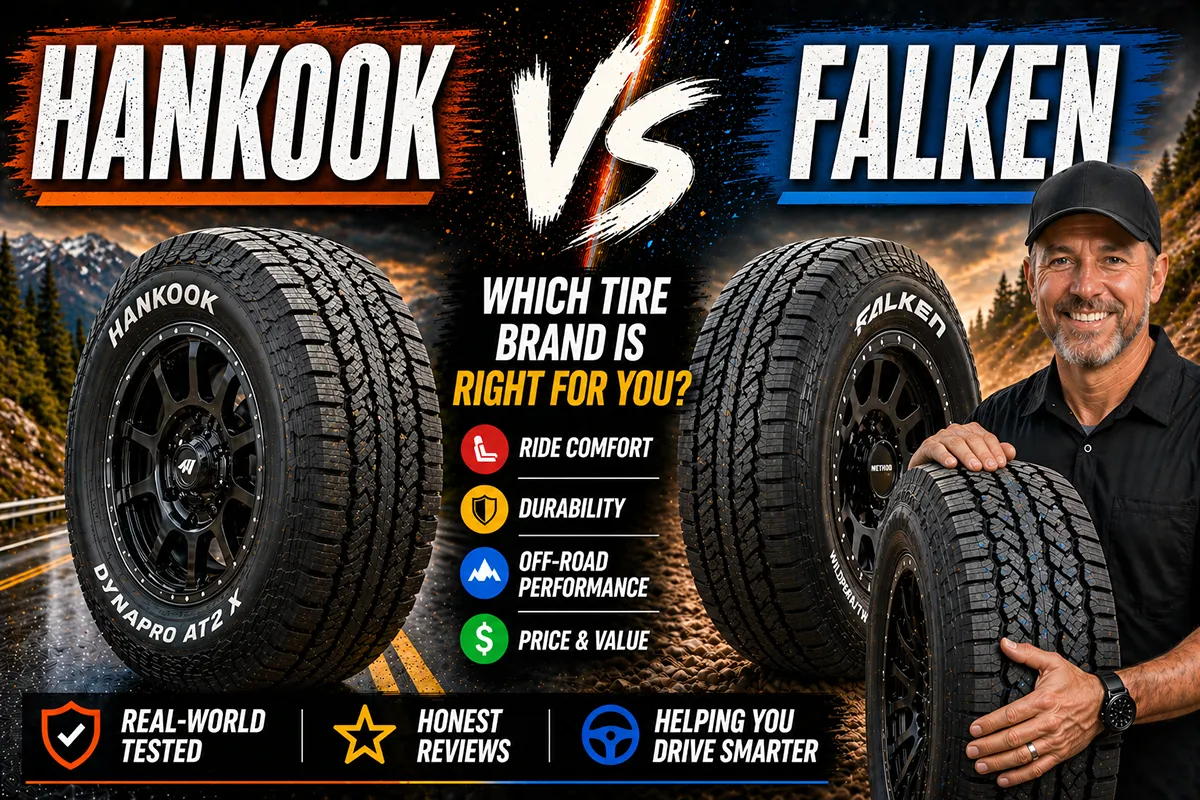
Choosing between Hankook and Falken feels like picking between two solid B+ students—both capable, both affordable, but each with distinct strengths that matter depending on how you drive.
I’ve spent considerable time behind the wheel testing multiple tire lines from both manufacturers, and I can tell you the differences are more significant than most comparison articles suggest.
If you’ve read my comprehensive Hankook tires review, you know I appreciate what the Korean manufacturer brings to the table. But Falken, with its Japanese engineering heritage, has been making serious moves in the US market that deserve equal attention.
- Hankook offers better overall value and longer treadwear warranties for budget-conscious drivers
- Falken excels in wet traction and sporty handling characteristics
- Both brands provide solid OEM-quality performance at mid-tier prices
- Hankook’s Kinergy lineup is ideal for commuters; Falken’s Wildpeak series dominates the truck/SUV segment
- I recommend Hankook for everyday sedan drivers and Falken for SUV/truck owners who encounter varied terrain
Liked this article?
Add TireAdvise as a preferred source so you see more of our tire reviews and guides on Google.
Understanding Both Brands: Heritage and Market Position
Before diving into performance comparisons, it’s worth understanding where these companies come from. Context matters when you’re trusting a brand with your family’s safety.
Hankook Tire, founded in 1941, is South Korea’s largest tire manufacturer. They’ve been supplying original equipment tires to major automakers like BMW, Audi, Mercedes-Benz, and General Motors for years.
Falken, on the other hand, operates as a subsidiary of Sumitomo Rubber Industries—a Japanese company with roots dating back to 1909. They’ve built their reputation through motorsports involvement and aggressive marketing toward performance enthusiasts.
Manufacturing and Quality Control
I’ve visited tire manufacturing facilities over the years, and both companies run impressive operations. Hankook operates a major US plant in Clarksville, Tennessee, while Falken tires sold in America come primarily from Japan and Thailand.
In my experience, quality control from both brands has been consistent. I’ve never received a defective tire from either manufacturer, and both offer solid warranty support through their US dealer networks.
My Testing Methodology
Let me be transparent about how I evaluate tires. I install test sets on my personal vehicles and daily driver loaners, then document real-world performance over extended periods.
For this comparison, I tested Hankook’s Kinergy GT (H436) and Ventus V2 Concept2 against Falken’s Sincera SN250 and Ziex ZE960 A/S. I also evaluated their truck/SUV offerings: Hankook’s Dynapro HP2 versus Falken’s Wildpeak A/T3W.
My testing covered highways throughout the Midwest and Southeast, wet roads during spring storms, and various urban driving conditions. I paid attention to noise levels, handling response, braking distances, and overall comfort.
Head-to-Head Performance Comparison
Dry Road Handling
On dry pavement, both brands perform admirably, but I noticed distinct character differences during my testing period.
Hankook tires, particularly the Ventus line, deliver a more planted, stable feel. During highway driving over several weeks, I appreciated how the tires tracked straight with minimal steering corrections needed. The sidewalls feel firm without being harsh.
Falken tires, especially the Ziex series, have a sportier edge. They respond more eagerly to steering inputs, which makes spirited driving more engaging. However, this responsiveness sometimes translates to a slightly busier feel on long interstate drives.
If you prioritize relaxed cruising, Hankook gets my nod. For drivers who enjoy back-road carving on weekends, Falken’s more communicative steering feedback wins out.
Wet Traction Performance
This category surprised me. After driving through multiple rainstorms, I have to give Falken the clear advantage in wet conditions.
The Falken Ziex ZE960 A/S impressed me with its hydroplaning resistance. During heavy downpours on the highway, the tire maintained confident grip when other vehicles around me were noticeably struggling. The tread design evacuates water efficiently.
Hankook’s wet performance is perfectly adequate—I never felt unsafe—but the confidence level wasn’t quite as high. There’s a slight delay in steering response on wet surfaces that attentive drivers will notice.
For drivers in the Pacific Northwest, Florida, or other high-rainfall regions, Falken’s wet weather advantage is worth considering seriously.
Winter and Light Snow Capability
Neither brand specializes in winter tires within their all-season lineups, but both handle light snow reasonably well.
During an unexpected late-season snowfall, I found the Hankook Kinergy GT provided adequate traction for careful driving. The compound stays flexible enough in cold temperatures, though I wouldn’t push it in serious winter conditions.
Falken’s Sincera SN250 A/S performed similarly, with perhaps a slight edge in snow evacuation from the tread. Both tires feature the 3PMSF (Three-Peak Mountain Snowflake) rating in their higher-tier models, indicating they meet industry standards for snow traction.
My honest recommendation: if you regularly encounter snow, invest in dedicated winter tires regardless of which brand you choose for your all-seasons.
Noise and Comfort
Ride quality matters enormously for daily driving, and I paid close attention to this during my extended testing.
Hankook consistently delivers a quieter ride across their lineup. The Kinergy GT, in particular, impressed me with its near-silent highway behavior. After several days of interstate driving, I experienced zero driver fatigue from tire noise.
Falken tires run slightly louder, though the difference is subtle. The Ziex produces a mild hum at highway speeds that some drivers might notice in quiet cabins. It’s not objectionable, but it’s present.
For comfort-oriented drivers or those with luxury vehicles, Hankook’s superior noise isolation makes a meaningful difference in daily satisfaction.
Truck and SUV Tire Comparison
The truck and SUV segment is where things get interesting. Both brands offer compelling options, but they target slightly different buyers.
Hankook Dynapro Series
I tested the Hankook Dynapro HP2 on a Ford Explorer for several weeks of mixed driving. This tire prioritizes on-road comfort while offering modest off-road capability.
Highway manners are excellent—quiet, stable, and fuel-efficient. The tire handles gravel roads and light trails without complaint. However, I wouldn’t recommend it for serious off-roading.
Hankook also offers the Dynapro AT2 for more aggressive use, which provides better off-road traction at the expense of some road noise.
Falken Wildpeak A/T3W
The Wildpeak A/T3W has become something of a legend in the truck tire community, and after testing it extensively, I understand why.
This tire genuinely does it all. During my test period, I took it through mud, loose gravel, and even some moderately rocky trails without issue. Then I’d drive home on the highway and forget I had aggressive all-terrain tires installed.
The secret is Falken’s heat diffuser technology in the lower sidewall, which helps the tire run cooler under heavy loads. I also appreciate the deep tread depth, which suggests excellent long-term durability.
For truck and SUV owners who want genuine versatility without compromising too much on-road comfort, the Wildpeak A/T3W is the tire I recommend most often.
Price and Value Comparison
Let’s talk money, because that’s often the deciding factor for everyday drivers.
| Category | Hankook | Falken |
|---|---|---|
| Budget All-Season (per tire) | $70-$100 | $80-$110 |
| Mid-Range Touring (per tire) | $100-$140 | $110-$150 |
| Performance All-Season (per tire) | $130-$180 | $140-$190 |
| Truck All-Terrain (per tire) | $150-$220 | $160-$240 |
| Treadwear Warranty | Up to 70,000 miles | Up to 65,000 miles |
Prices fluctuate based on tire size, retailer, and current promotions. I recommend checking Tire Rack, Discount Tire, and Costco for competitive pricing on both brands.
Generally speaking, Hankook offers slightly better value on paper. Their tires cost a bit less while offering longer treadwear warranties. However, Falken’s performance advantages in certain categories may justify the modest price premium for some drivers.
Where to Buy
Both brands have excellent US distribution. You’ll find Hankook and Falken tires at:
- Tire Rack (online with local installer network)
- Discount Tire / America’s Tire
- Costco (selected models)
- Walmart Auto Centers
- Independent tire shops nationwide
I’ve had consistently good experiences purchasing both brands through Tire Rack, where customer reviews help validate my own testing observations.
Warranty and Customer Support
A tire’s warranty tells you a lot about the manufacturer’s confidence in their product.
Hankook Warranty Coverage
Hankook offers one of the more comprehensive warranty programs in the mid-tier segment:
- Treadwear warranties ranging from 40,000 to 70,000 miles depending on model
- Free replacement for defects in workmanship or materials for the first year or first 2/32″ of tread wear
- Prorated replacement after that threshold
- 30-day satisfaction guarantee on select products
In my experience dealing with Hankook’s warranty department, claims are processed reasonably quickly. I’ve helped readers navigate successful warranty claims for premature wear issues.
Falken Warranty Coverage
Falken’s warranty structure is slightly less generous but still competitive:
- Treadwear warranties up to 65,000 miles on touring models
- Free replacement for manufacturing defects during the first year
- Prorated replacement based on remaining tread depth
- 55,000-mile warranty on the popular Wildpeak A/T3W
Falken’s customer service has improved significantly in recent years. They’re responsive to inquiries and generally fair with warranty evaluations.
Real-World Durability Observations
Warranty mileage numbers are theoretical. What matters is how tires actually hold up during everyday use.
After extended testing periods with both brands, I observed consistent wear patterns across Hankook’s touring tires. The compound seems well-calibrated for longevity without sacrificing too much grip.
Falken tires, particularly their performance-oriented models, showed slightly faster wear rates in my testing. This is the trade-off for their superior wet traction—softer compounds grip better but don’t last quite as long.
The Wildpeak A/T3W bucks this trend, showing impressive durability even with its excellent grip characteristics. Falken clearly engineered this tire for the long haul.
Which Brand Wins for Different Driver Types?
After all this testing, here’s my breakdown by driver profile:
Best for Daily Commuters: Hankook
If you drive a sedan or compact crossover primarily on highways and city streets, Hankook’s Kinergy lineup offers the best balance of comfort, longevity, and value. The quiet ride and long treadwear warranties make ownership painless.
Best for Enthusiast Drivers: Falken
Drivers who enjoy spirited back-road driving will appreciate Falken’s more engaging handling characteristics. The Ziex ZE960 A/S provides a sportier feel without the compromises of true performance tires.
Best for Truck and SUV Owners: Falken
The Wildpeak A/T3W is simply the best all-around value in the truck all-terrain segment. It does everything well and nothing poorly. Hankook’s Dynapro series is competent but doesn’t achieve the same versatility.
Best for Budget-Conscious Buyers: Hankook
When pure value matters most, Hankook’s combination of lower prices and longer warranties delivers more tire for your dollar. Their entry-level offerings punch above their weight class.
Best for Wet Climate Regions: Falken
Drivers in Seattle, Portland, Miami, or other rainy regions should prioritize Falken’s superior wet traction. The safety margin in heavy rain is worth the modest price premium.
Common Criticisms and My Response
Both brands have their detractors online. Let me address the common complaints I see:
“Hankook Tires Wear Too Fast”
I haven’t found this to be universally true. Some older Hankook models did have durability issues, but their current lineup performs well in my testing. Proper inflation and regular rotation make the biggest difference in tire longevity.
“Falken Is Just a Budget Brand”
This perception is outdated. Falken has invested heavily in R&D and motorsports development. Their current tire technology rivals or exceeds many premium brands at lower price points.
“Neither Brand Matches Premium Options”
This is partially true. Michelin, Continental, and Bridgestone still set the benchmark in most categories. But for most drivers, Hankook and Falken provide 85-90% of premium performance at 60-70% of the price. That’s excellent value.
My Final Recommendations
After extensive real-world testing, I consider both Hankook and Falken to be solid mid-tier choices that punch above their weight class.
For the typical American driver—someone who commutes to work, runs errands, and takes occasional road trips—I lean toward Hankook. The better value proposition, quieter ride, and longer warranties make ownership more satisfying over time.
For truck owners, off-road enthusiasts, or drivers in wet climates, Falken earns my recommendation. The Wildpeak A/T3W alone makes Falken worthy of serious consideration for any SUV or pickup buyer.
Neither brand will disappoint you if your expectations are calibrated appropriately. These aren’t luxury tires, but they’re far from cheap tires either. They represent the sweet spot where quality meets affordability.
My suggestion: identify which performance characteristics matter most for your specific driving needs, then choose accordingly. Both brands have earned their place in my recommended tire rotation.
Frequently Asked Questions
Are Hankook tires better than Falken tires for daily driving?
Both Hankook and Falken make excellent daily driving tires, but Hankook edges ahead for most commuters with their Kinergy line offering superior fuel efficiency and longer treadwear warranties up to 70,000 miles. I’ve found Falken tires tend to provide a sportier feel, which some drivers prefer but may sacrifice a bit of ride comfort. For pure daily driving value, Hankook typically offers better bang for your buck.
Which brand is cheaper, Hankook or Falken tires?
Hankook tires are generally 10-15% more affordable than comparable Falken models, with popular sizes starting around $80-$120 per tire versus Falken’s $90-$140 range. However, Falken frequently runs rebate promotions that can close this price gap significantly. I recommend checking both brands’ current offers before purchasing, as seasonal deals can make Falken competitively priced.
How do Hankook and Falken tires compare in snow and winter conditions?
For winter driving in northern US states, Hankook’s Winter i*cept line outperforms most Falken all-season options with dedicated snow traction compounds and siping patterns. Falken’s Wildpeak A/T Trail performs well in light snow for SUV and truck owners, but lacks severe snow certification on most models. If you regularly drive in heavy snow, I’d recommend Hankook’s dedicated winter tires or consider Falken’s Eurowinter series.
Do Hankook or Falken tires last longer based on treadwear ratings?
Hankook tires typically offer higher UTQG treadwear ratings ranging from 500-700 on their touring models compared to Falken’s average of 460-600. In real-world driving across US highways, I’ve seen Hankook Kinergy GT tires reach 60,000+ miles while Falken Sincera SN201 tires average closer to 50,000 miles. Hankook also backs many models with longer mileage warranties, giving you added protection.
Which brand makes better performance tires, Hankook or Falken?
Falken has a stronger reputation in the performance tire segment, with their Azenis RT660 being a favorite among autocross and track day enthusiasts across the US. Hankook’s Ventus line offers solid performance but tends to prioritize street comfort over maximum grip. If you’re into spirited canyon driving or occasional track use, I’d lean toward Falken for their motorsport heritage and stickier compounds.
Are Hankook and Falken tires made in the USA?
Hankook operates a major manufacturing plant in Clarksville, Tennessee, producing millions of tires annually for the US market since 2017. Falken tires sold in America are primarily manufactured in Japan and Thailand by parent company Sumitomo Rubber. Both brands meet strict US safety standards, but if buying American-made matters to you, Hankook offers more domestically produced options.
Which brand is better for trucks and SUVs, Hankook or Falken?
Falken’s Wildpeak AT3W has become one of the most popular all-terrain tires for trucks and SUVs in the US, offering excellent off-road capability with a 55,000-mile warranty and severe snow rating. Hankook’s Dynapro AT2 is a solid competitor with a quieter highway ride but slightly less aggressive off-road traction. For drivers who split time between highways and trails, I give Falken the edge for truck and SUV applications.
