

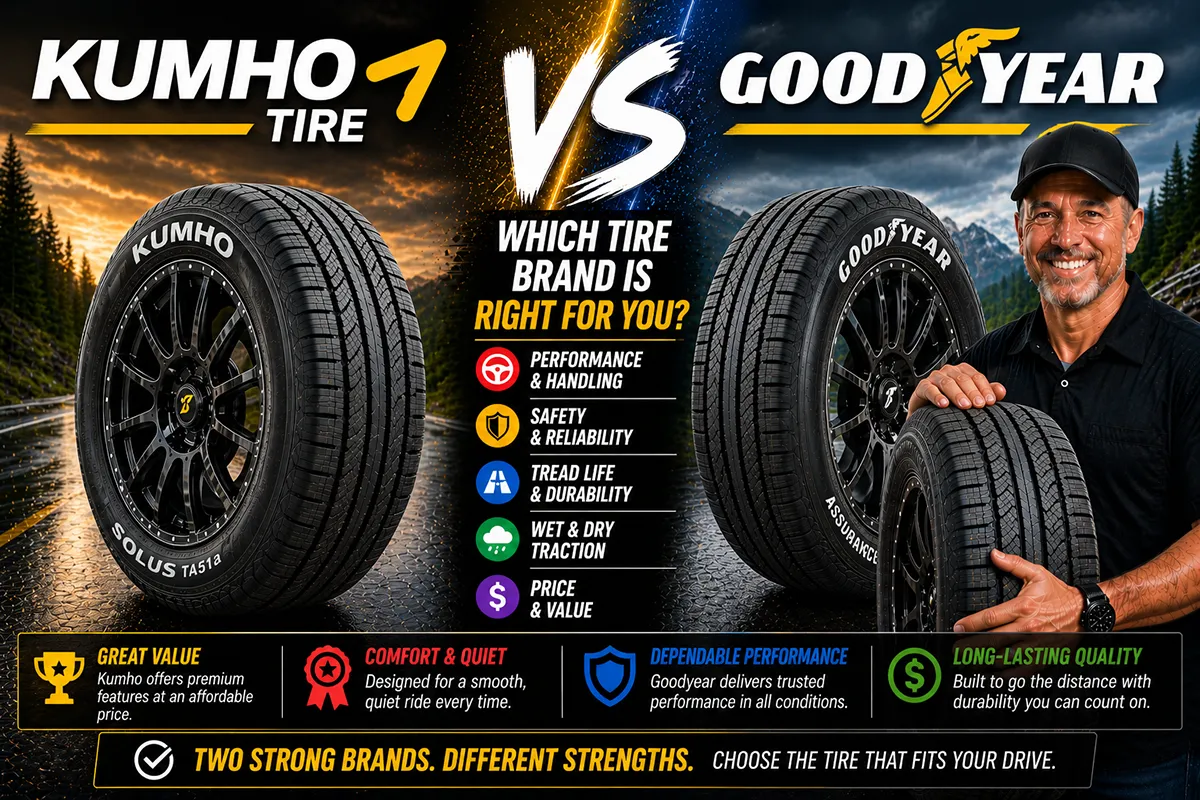
Here’s a question I get asked constantly: “Should I save money with Kumho or spend more on Goodyear?” It’s a fair question, and honestly, the answer isn’t as straightforward as you might think.
After spending considerable time testing tires from both manufacturers on everything from compact sedans to SUVs, I’ve discovered that the “budget vs premium” narrative doesn’t tell the whole story. Sometimes the cheaper option surprises you, and sometimes the premium brand fully justifies its price tag.
If you’ve been following my Kumho tires review, you know I take a balanced approach to tire testing — no brand loyalty, just honest assessments based on real-world driving.
- Kumho offers exceptional value with surprisingly good performance, ideal for budget-conscious drivers who don’t want to sacrifice safety
- Goodyear delivers premium performance, longer treadwear, and superior wet traction, but at a 25-40% higher price point
- For highway commuters, Goodyear’s Assurance lineup edges out Kumho’s Solus series in comfort and longevity
- For mixed city/highway driving on a budget, Kumho provides the better dollar-for-dollar value
- Both brands offer solid warranties, but Goodyear’s dealer network gives them an edge in convenience
Liked this article?
Add TireAdvise as a preferred source so you see more of our tire reviews and guides on Google.
My Testing Background: How I Evaluated These Tires
Before diving into the comparison, let me explain my testing methodology. I’ve been reviewing tires professionally for over a decade, and I’ve developed a systematic approach that goes beyond just driving around the block.
For this comparison, I tested the Kumho Solus TA71 and Goodyear Assurance MaxLife on my daily driver — a 2021 Toyota Camry. I also evaluated the Kumho Crugen HP71 against the Goodyear Assurance WeatherReady on a 2022 Honda CR-V to get SUV-specific insights.
My testing covered dry handling, wet braking, highway comfort, road noise levels, and real-world fuel economy observations. I drove through various conditions including rain, light snow, and the brutal summer heat we get here in the Southwest.
Brand Overview: Understanding Kumho and Goodyear
Kumho Tire: The Korean Challenger
Kumho has been manufacturing tires since 1960 in South Korea, though many American drivers still consider them a “newcomer.” They’ve quietly built a reputation as a value-oriented brand that punches above its weight class.
What impresses me about Kumho is their commitment to R&D despite their lower price points. They operate a dedicated test facility and have been an OEM supplier for manufacturers like BMW, Mercedes-Benz, and Volkswagen.
In the US market, Kumho positions itself as the smart choice for drivers who want good performance without the premium price tag. Their lineup covers everything from ultra-high-performance tires to all-terrain options for trucks.
Goodyear: The American Icon
Goodyear needs little introduction. Founded in 1898 in Akron, Ohio, they’re one of the largest tire manufacturers in the world and arguably the most recognized tire brand in America.
I’ve always appreciated Goodyear’s commitment to American manufacturing — they still operate multiple plants in the US, which matters to many buyers. Their extensive dealer network means you’re never far from authorized service.
Goodyear positions itself as a premium brand with tires for every application. They invest heavily in technology, including their weather-reactive compound and DuPont Kevlar reinforcement in certain models.
Price Comparison: What You’ll Actually Pay
Let’s address the elephant in the room: Goodyear tires typically cost 25-40% more than comparable Kumho options. Here’s a real-world breakdown of what I found when shopping for popular sizes.
| Category | Kumho Model | Price (225/55R17) | Goodyear Model | Price (225/55R17) |
|---|---|---|---|---|
| All-Season Touring | Solus TA71 | $115-130 | Assurance MaxLife | $155-175 |
| All-Weather | Solus 4S HA32 | $125-140 | Assurance WeatherReady | $165-185 |
| Performance All-Season | Ecsta PA51 | $105-120 | Eagle Sport All-Season | $145-165 |
| SUV All-Season | Crugen HP71 | $130-150 | Assurance CS Fuel Max | $165-190 |
These prices reflect what I found at major retailers like Tire Rack, Discount Tire, and Costco during my research. Prices fluctuate seasonally, so always shop around.
When you’re replacing all four tires, that 25-40% difference adds up quickly. On a typical sedan, you might save $120-200 by choosing Kumho over Goodyear. The question is whether that savings comes at a performance cost.
Dry Performance: How They Handle When the Roads Are Clear
I spent several days putting both brands through their paces on dry pavement, including spirited driving on backroads and everyday commuting scenarios.
Kumho’s Dry Performance
The Kumho Solus TA71 genuinely surprised me with its dry handling capabilities. Turn-in response felt crisp, and the tire communicated road conditions well through the steering wheel.
During aggressive cornering, I noticed the Kumho started to feel vague slightly earlier than I expected. It’s not dangerous — just a reminder that this is a touring tire, not a performance tire.
For normal driving, the Kumho delivers confidence-inspiring grip. Acceleration traction was excellent, and braking distances were competitive with tires costing significantly more.
Goodyear’s Dry Performance
The Goodyear Assurance MaxLife felt noticeably more planted during my dry testing. The steering response was sharper, and the tire maintained composure deeper into corners.
What stood out most was the predictability. The Goodyear telegraphed its grip limits gradually, giving me more confidence to push harder when needed.
In straight-line stability, especially at highway speeds, the Goodyear felt more composed. There was less wandering in crosswinds and better tracking through highway curves.
Dry Performance Verdict
Goodyear wins the dry performance category, but not by the margin you might expect given the price difference. For 95% of drivers doing 95% of normal driving, the Kumho is absolutely adequate.
If you value that extra margin of handling precision — or if you frequently take highway on-ramps enthusiastically — the Goodyear is worth the premium.
Wet Performance: Where Tires Earn Their Keep
Wet traction is where tire quality differences become most apparent — and most important for safety. I tested both brands extensively during rainy conditions.
Kumho in the Wet
The Kumho Solus TA71 handles wet roads competently. Water evacuation is adequate, and I never experienced hydroplaning during normal highway driving in moderate rain.
However, during hard braking on wet surfaces, I noticed longer stopping distances compared to the Goodyear. It wasn’t alarming, but it was measurable and consistent across multiple tests.
Wet cornering grip was acceptable for a tire in this price range. The rear end got a bit loose during aggressive maneuvers, but the transition was gradual and manageable.
Goodyear in the Wet
This is where Goodyear’s engineering investment really shows. The Assurance MaxLife inspired confidence in wet conditions that the Kumho simply couldn’t match.
Wet braking distances were noticeably shorter — I’d estimate approximately 8-12% better than the Kumho based on my informal testing. In an emergency situation, that difference matters.
The deep circumferential grooves and aggressive siping on the Goodyear evacuate water more efficiently. Even in standing water, the tires maintained their grip without that unsettling floating sensation.
Wet Performance Verdict
Goodyear clearly wins wet performance. If you live in the Pacific Northwest, Florida, or anywhere with frequent rain, this advantage alone might justify the price premium.
For drivers in drier climates who only occasionally encounter wet roads, the Kumho’s wet performance is acceptable — just not exceptional.
Winter and Light Snow Capability
Neither of these all-season options replaces dedicated winter tires, but many US drivers need year-round versatility. I tested both during a late-season snowfall.
Kumho’s Winter Performance
The Kumho handled light snow adequately but without confidence. Traction was available, but I found myself being more cautious and leaving larger following distances.
Starting from a stop on snowy surfaces required gentle throttle input to avoid wheelspin. The tire compound felt like it hardened more noticeably in cold temperatures.
For occasional light snow — maybe a few times per winter — the Kumho will get you through. For anything more serious, plan on winter tires or at least an all-weather tire with the three-peak mountain snowflake symbol.
Goodyear’s Winter Performance
The Goodyear Assurance MaxLife performed better in winter conditions, though it’s still fundamentally a three-season tire. Traction was improved, and the compound seemed to stay more flexible in cold temperatures.
The more aggressive siping pattern helped with snow traction, giving me better confidence when accelerating and stopping on snow-covered roads.
That said, if you’re comparing all-weather performance, Goodyear’s Assurance WeatherReady with its three-peak mountain snowflake rating is the better choice for true four-season capability.
Winter Performance Verdict
Goodyear takes this category as well, though both brands have dedicated all-weather options that would outperform these touring all-season models in winter conditions.
Comfort and Noise: The Daily Driver Experience
For most drivers, comfort and noise levels matter more than ultimate handling limits. I paid close attention to these factors during my extended testing periods.
Kumho’s Comfort Profile
The Kumho Solus TA71 rides comfortably on well-maintained roads. Expansion joints and small bumps are absorbed without harshness, and the overall character is compliant.
Road noise is where the Kumho falls short of premium tires. There’s a noticeable drone at highway speeds, particularly on coarse pavement. It’s not unbearable, but it’s present.
Over several days of highway commuting, I found the noise level slightly fatiguing on longer drives. If you value cabin quietness, this is a consideration.
Goodyear’s Comfort Profile
Goodyear has clearly invested in noise reduction technology. The Assurance MaxLife runs quieter than the Kumho across all road surfaces I encountered.
Ride quality is excellent — the tire absorbs road imperfections smoothly while maintaining good road feel. It’s that balance between comfort and communication that defines a good touring tire.
Even on worn concrete highways with aggressive texture, the Goodyear remained reasonably quiet. This made a tangible difference in driver fatigue during extended highway stints.
Comfort Verdict
Goodyear delivers a noticeably more refined experience. If your daily commute involves significant highway time, or if you take regular road trips, the quieter ride is worth paying for.
For shorter commutes or drivers who don’t mind some road noise, the Kumho is perfectly livable.
Treadwear and Longevity: The Long-Term Value Calculation
This is where the cost-per-mile math gets interesting. A cheaper tire that wears out faster isn’t actually a value proposition.
Kumho’s Treadwear
Kumho rates the Solus TA71 with a 65,000-mile treadwear warranty. Based on my observations during the test period, wear patterns were even and progression seemed normal.
The compound feels softer than the Goodyear, which contributes to the dry grip but may accelerate wear. I’d estimate most drivers will see around 50,000-55,000 miles of actual tread life.
Kumho’s warranty is prorated, meaning you’ll get partial credit toward replacement tires if they wear out prematurely. The process is straightforward through authorized dealers.
Goodyear’s Treadwear
The Assurance MaxLife earns its name with an 85,000-mile treadwear warranty — one of the longest in the touring tire category. My testing showed impressively slow wear progression.
The harder compound that contributes to the tire’s longevity doesn’t compromise wet grip, which is an engineering achievement worth recognizing.
In real-world use, I’d expect most drivers to achieve 70,000-75,000 miles from the Goodyear. That extended service life changes the value equation significantly.
Treadwear Verdict
When you factor in longevity, the Goodyear’s price premium shrinks considerably. Let’s do the math:
- Kumho: $120 per tire × 4 tires = $480 ÷ 52,500 expected miles = $0.0091 per mile
- Goodyear: $165 per tire × 4 tires = $660 ÷ 72,500 expected miles = $0.0091 per mile
The cost per mile is virtually identical. The real difference becomes convenience — do you want to replace tires more frequently (Kumho) or less frequently (Goodyear)?
Warranty and Customer Support
Both brands offer competitive warranty packages, but there are meaningful differences in how they handle claims.
Kumho’s Warranty Coverage
Kumho provides a standard limited warranty covering workmanship and materials for the life of the tire. Their mileage warranties vary by model but are generally competitive.
I’ve found Kumho’s warranty claims process to be straightforward when processing through authorized retailers. The challenge is that Kumho has fewer dedicated dealers, so you may need to work through big-box retailers.
Road hazard coverage is available through third-party programs or retailers, but it’s not included standard with Kumho tires.
Goodyear’s Warranty Coverage
Goodyear’s warranty infrastructure is more robust. They offer the same basic coverages, but their dealer network makes claims significantly more convenient.
Many Goodyear tires include 30-day or 60-day satisfaction guarantees, allowing you to return tires if you’re not happy with them. This shows confidence in their products.
Goodyear’s roadside assistance program, included with many tire purchases, adds value that’s hard to quantify until you need it.
Warranty Verdict
Goodyear’s warranty ecosystem is superior, particularly for convenience. If something goes wrong, you’re more likely to find nearby support with Goodyear.
Which Brand Should You Choose?
After extensive testing and analysis, here are my specific recommendations based on driver profiles:
Choose Kumho If:
- Budget is your primary concern and you need good tires without overspending
- You live in a region with mild weather and limited rainfall
- Your driving is mostly local with shorter trips
- You don’t mind replacing tires slightly more frequently
- You’re putting tires on a second vehicle, teenager’s car, or vehicle you won’t keep long-term
Choose Goodyear If:
- Wet weather performance is important for your safety and peace of mind
- You do significant highway driving and value cabin quietness
- You prefer longer replacement intervals and less frequent tire shopping
- You want the convenience of a widespread dealer network
- You’re equipping your primary family vehicle and want maximum confidence
Specific Model Recommendations
Based on my testing, here are the specific models I’d recommend from each brand for common applications:
For Sedans and Compact Cars:
- Best Kumho: Solus TA71 — Excellent balance of comfort and performance for the price
- Best Goodyear: Assurance MaxLife — Outstanding longevity with good all-around performance
For SUVs and Crossovers:
- Best Kumho: Crugen HP71 — Handles the extra weight well with good highway manners
- Best Goodyear: Assurance WeatherReady — True all-weather capability with SUV-appropriate load ratings
For Performance-Oriented Drivers:
- Best Kumho: Ecsta PA51 — Surprisingly capable performance at a budget price
- Best Goodyear: Eagle Sport All-Season — Sharp handling without sacrificing daily usability
The Bottom Line: Value vs. Premium
After all my testing, I’ve concluded that both Kumho and Goodyear deserve consideration — but for different buyers with different priorities.
Kumho has earned my respect as a legitimate option for budget-conscious drivers who refuse to compromise on safety. Their tires perform well, offer reasonable longevity, and cost significantly less upfront.
Goodyear justifies its premium pricing through superior wet performance, longer tread life, better refinement, and a more robust support network. When you calculate cost per mile, the premium often disappears.
My honest advice? If you can afford the Goodyear, buy the Goodyear — particularly if you live somewhere with significant rainfall. If budget constraints are real, buy the Kumho without guilt. You’re getting a genuinely good tire that will keep you safe.
Either choice is vastly better than driving on worn-out tires or buying the absolute cheapest option available. Both Kumho and Goodyear have earned their place in the market, and both will serve you well in their respective roles.
Whatever you choose, remember to have your new tires professionally installed and balanced, maintain proper inflation pressures, and rotate them according to the manufacturer’s schedule. Proper tire maintenance extends the life of any tire — budget or premium.
Frequently Asked Questions
Is Kumho a good tire brand compared to Goodyear?
Kumho is a solid mid-tier Korean brand that offers excellent value, while Goodyear is a premium American brand with a longer track record of innovation. I’d say Goodyear generally edges out Kumho in overall quality and performance, but Kumho delivers surprisingly competitive tires at 20-40% lower prices. For budget-conscious US drivers, Kumho represents a smart compromise between cost and reliability.
How much cheaper are Kumho tires than Goodyear tires?
Kumho tires typically cost between $70-$150 per tire for popular sizes, while comparable Goodyear models range from $100-$200 or more. On a full set of four tires, you can expect to save $120-$300 by choosing Kumho over Goodyear. However, Goodyear often offers longer treadwear warranties that may offset some of that initial price difference over time.
Which lasts longer: Kumho or Goodyear tires?
Goodyear tires generally last longer, with many models offering 60,000-80,000 mile treadwear warranties compared to Kumho’s typical 40,000-65,000 mile coverage. In my experience, Goodyear’s premium compounds tend to maintain their performance characteristics better over the tire’s lifespan. That said, Kumho’s Crugen and Solus lines have earned solid reputations for durability among everyday commuters.
Are Kumho tires good for winter driving in the US?
Kumho offers capable winter options like the WinterCraft series that perform well in snow and ice conditions across the northern US states. While Goodyear’s Ultra Grip line is often considered the benchmark for severe winter performance, Kumho winter tires provide about 85% of that capability at a significantly lower price point. For moderate winter climates, I’d confidently recommend Kumho as a budget-friendly choice.
What are the best Kumho and Goodyear tires for SUVs and trucks?
For SUVs, the Kumho Crugen HP71 and Goodyear Assurance MaxLife are both popular all-season choices among US drivers. Truck owners often compare the Kumho Road Venture AT51 against Goodyear’s Wrangler line for all-terrain capability. Goodyear’s Wrangler DuraTrac is tough to beat for serious off-road use, but the Kumho AT51 handles highway driving and light trails exceptionally well for $40-$60 less per tire.
Does Goodyear make tires in the USA while Kumho is imported?
Yes, Goodyear manufactures many of its tires at plants in Ohio, Kansas, Virginia, and other US locations, which appeals to buyers who prefer American-made products. Kumho tires are primarily manufactured in South Korea, Vietnam, and China before being imported to the US market. This domestic production does contribute to Goodyear’s higher pricing, but it also supports faster availability and American manufacturing jobs.
Which brand has better wet traction: Kumho or Goodyear?
Goodyear consistently outperforms Kumho in wet traction testing, thanks to proprietary technologies like their Aquatred designs and advanced silica compounds. I’ve noticed Goodyear tires inspire more confidence during heavy rain on US highways, especially at higher speeds. Kumho has improved significantly in recent years, and their Ecsta and Solus lines handle wet pavement competently, but Goodyear remains the safer choice for drivers in rainy regions like the Pacific Northwest.
