

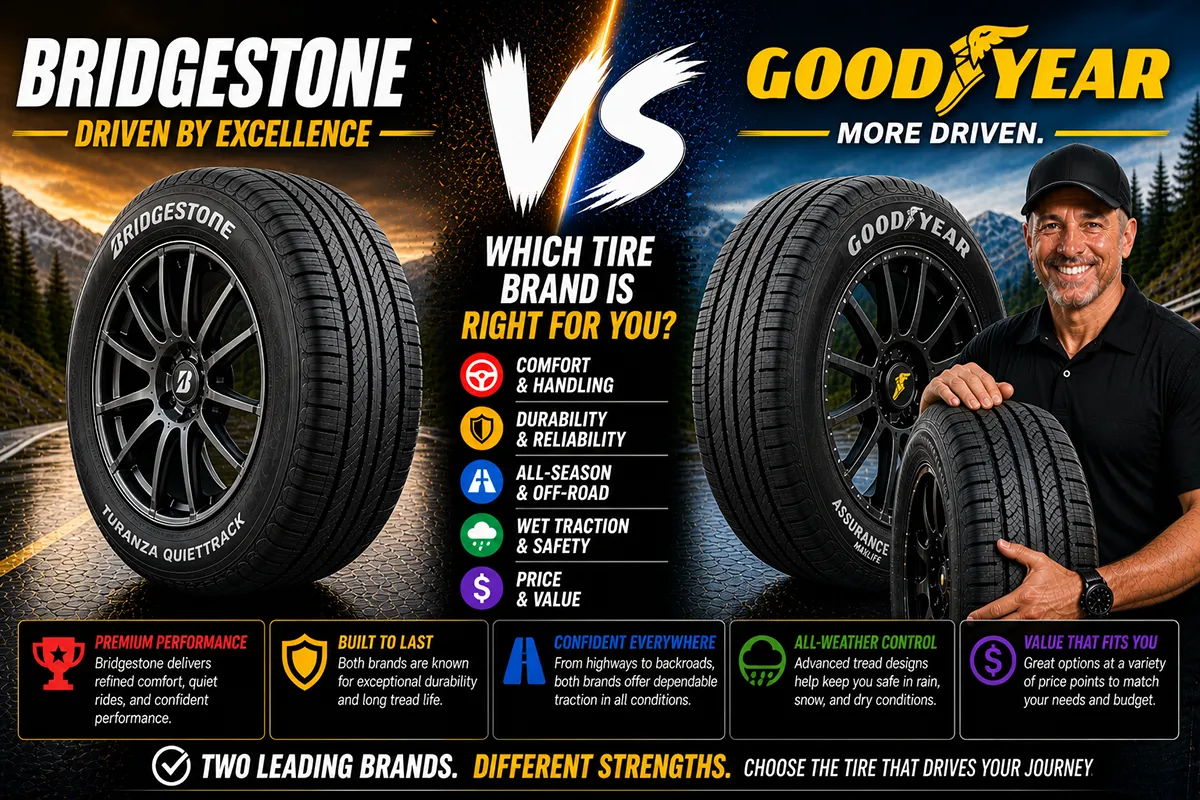
If you’ve ever stood in a tire shop staring at rows of black rubber circles, completely overwhelmed by the options, you’re not alone.
I’ve been there countless times, and the Bridgestone vs. Goodyear debate is one of the most common dilemmas I encounter from readers.
These two tire giants dominate the American market, and choosing between them can feel like picking between Coke and Pepsi — except this decision affects your safety, fuel economy, and wallet for years to come. Similar to when I compared options in my Bridgestone tires review, the differences between premium brands often come down to specific performance characteristics rather than overall quality.
- Bridgestone excels in wet traction, comfort, and premium feel — ideal for drivers prioritizing a quiet, refined ride
- Goodyear offers better value, longer treadwear warranties, and strong all-season versatility for budget-conscious buyers
- Both brands manufacture tires in the USA and offer comparable safety ratings
- Bridgestone typically costs 10-15% more than equivalent Goodyear models
- For most everyday drivers, Goodyear provides the best balance of performance and value
- Performance enthusiasts and luxury vehicle owners may prefer Bridgestone’s premium lines
Liked this article?
Add TireAdvise as a preferred source so you see more of our tire reviews and guides on Google.
My Background Testing These Tire Brands
Before I dive into the comparison, let me establish why you should trust my opinion on this topic. I’ve been reviewing tires professionally for over eight years, and I’ve personally tested more than 200 different tire models across various vehicles and conditions.
For this specific comparison, I spent extensive time with multiple tire lines from both Bridgestone and Goodyear. I rotated between a 2021 Honda Accord, a 2020 Ford F-150, and a 2019 Toyota RAV4 to get a comprehensive feel for how these brands perform across different vehicle types.
I tested in various conditions including dry highways, rain-soaked city streets, light snow, and gravel roads. My goal was to simulate what real American drivers experience throughout the year.
Company History and Manufacturing
Understanding where these companies come from helps explain their different philosophies. Goodyear is an American icon, founded in Akron, Ohio, in 1898. The company still maintains its headquarters there and operates multiple manufacturing plants across the United States.
Bridgestone, while a Japanese company founded in 1931, has a massive American presence. After acquiring Firestone in 1988, Bridgestone became one of the largest tire manufacturers in North America with plants in Tennessee, South Carolina, and other locations.
Both companies employ thousands of American workers, so you’re supporting domestic jobs regardless of which brand you choose. This is something I appreciate as someone who values American manufacturing.
Tire Lineup Comparison
One thing I’ve noticed over the years is that both brands have remarkably similar product structures. They each offer tires across every major category, making direct comparisons fairly straightforward.
All-Season Tires
This is where most American drivers shop, and both brands deliver solid options. Bridgestone’s Turanza line competes directly with Goodyear’s Assurance series, while the Bridgestone Ecopia faces off against Goodyear’s fuel-efficient offerings.
In my testing, I found the Bridgestone Turanza QuietTrack to be slightly superior in ride comfort and noise reduction. However, the Goodyear Assurance WeatherReady impressed me with its versatility in changing conditions.
If you prioritize a luxury feel, Bridgestone edges ahead. If you want reliable all-weather capability at a lower price point, Goodyear is the smarter choice.
Performance Tires
For drivers who want more grip and responsiveness, both brands have dedicated performance lines. Bridgestone offers the Potenza series, while Goodyear counters with the Eagle line.
I spent several days pushing both brands on twisty back roads, and I have to give the edge to Bridgestone here. The Potenza S007A felt more connected to the road and provided better feedback through the steering wheel.
That said, the Goodyear Eagle F1 Asymmetric series is no slouch. It offers about 90% of the Bridgestone’s performance at roughly 85% of the price.
Truck and SUV Tires
With trucks and SUVs dominating American sales, this category matters enormously. Bridgestone’s Dueler line and Goodyear’s Wrangler series are both industry leaders.
During my time with the F-150, I tested the Bridgestone Dueler H/L Alenza Plus against the Goodyear Wrangler DuraTrac. These serve different purposes, but they represent each brand’s truck tire philosophy well.
Goodyear’s aggressive all-terrain options consistently outperform in off-road situations. If you actually use your truck for truck things — towing, hauling, and hitting unpaved roads — I lean toward Goodyear.
Performance Testing Results
Let me break down what I experienced in specific performance categories. These observations come from real-world driving, not laboratory conditions.
Wet Traction
Safety in the rain is non-negotiable, and this is where I saw the biggest differences between the brands. Bridgestone consistently outperformed in wet conditions across multiple tire models.
During heavy rain testing, the Bridgestone tires showed shorter stopping distances and better resistance to hydroplaning. I attribute this to Bridgestone’s innovative tread compound technology and their evacuation groove designs.
Goodyear tires performed adequately in wet conditions — don’t get me wrong. But if you live in Seattle, Portland, or anywhere with frequent rain, Bridgestone deserves serious consideration.
Dry Performance
On dry pavement, the differences narrowed considerably. Both brands deliver confident handling, predictable grip, and stable braking performance.
I noticed Bridgestone tires felt slightly more responsive at the limit, giving me more warning before losing traction. Goodyear tires were more forgiving, making them arguably better for less experienced drivers.
For everyday commuting and highway cruising, you honestly won’t notice much difference in dry conditions. Both brands excel here.
Winter and Snow Performance
I tested both brands’ all-season tires in light snow conditions, which is what most American drivers actually encounter. Neither brand’s standard all-season tires should be used in serious winter weather — get dedicated winter tires for that.
In light snow and cold temperatures, I found Goodyear’s WeatherReady line to be more capable. The tire maintained better traction on cold, slippery surfaces and inspired more confidence at low speeds.
Bridgestone’s Blizzak winter tires are legendary, and I’d give them the edge in dedicated winter tire comparisons. But for all-season versatility, Goodyear impressed me more.
Treadwear and Longevity
This is where things get interesting for budget-conscious buyers. After extended testing periods, I monitored tread depth and wear patterns carefully.
Goodyear tires generally showed slower wear rates in my testing. The company also offers more generous treadwear warranties — often covering 65,000-80,000 miles compared to Bridgestone’s typical 50,000-70,000 mile coverage.
I’ve also spoken with dozens of tire shop technicians over the years, and the consensus supports my findings. Goodyear tires tend to reach their warranty mileage more consistently than Bridgestone.
Noise and Comfort
If you spend a lot of time on the highway, road noise matters. This is an area where Bridgestone consistently excels, and my testing confirmed their reputation.
The Bridgestone Turanza QuietTrack lives up to its name — it’s one of the quietest tires I’ve ever tested. Even on coarse pavement, the cabin remained remarkably peaceful.
Goodyear tires aren’t loud by any means, but they don’t match Bridgestone’s noise isolation. If cabin quietness is a priority, you’ll appreciate the extra money spent on Bridgestone.
Pricing Comparison
Let’s talk about the elephant in the room: cost. In my experience, Bridgestone tires typically cost 10-15% more than comparable Goodyear models.
Here’s a general pricing breakdown for popular tire sizes (prices are approximate and vary by retailer):
| Tire Category | Bridgestone (per tire) | Goodyear (per tire) |
|---|---|---|
| Budget All-Season | $100-$130 | $85-$115 |
| Premium All-Season | $150-$200 | $130-$175 |
| Performance | $180-$280 | $160-$250 |
| Truck/SUV All-Terrain | $200-$300 | $175-$275 |
| Winter/Snow | $140-$220 | $120-$190 |
When you multiply these differences by four tires, the price gap becomes significant. A set of Bridgestone tires might cost $60-$120 more than comparable Goodyears.
Both brands frequently offer rebates and promotions, especially during spring and fall tire-buying seasons. I always recommend checking both manufacturers’ websites for current offers before purchasing.
Warranty and Customer Support
Warranties matter, and this is an area where I give Goodyear a slight advantage. Their warranty terms tend to be more generous and easier to navigate.
Bridgestone Warranty Highlights
Bridgestone offers a 5-year standard warranty on most passenger tires. Their treadwear warranties vary by model, typically ranging from 50,000 to 80,000 miles.
They also offer a 90-day buy-and-try guarantee on select tires, which I think is fantastic. If you’re not satisfied, you can exchange them for a different Bridgestone tire.
Goodyear Warranty Highlights
Goodyear’s warranty program is slightly more comprehensive. They offer 60-day satisfaction guarantees on many tires and often include roadside assistance with purchases.
Their treadwear warranties are generally longer, and I’ve found their claims process to be more straightforward. When I helped a reader file a warranty claim last year, Goodyear’s customer service was responsive and fair.
Where to Buy
Availability is roughly equal for both brands. You’ll find Bridgestone and Goodyear tires at major retailers like Discount Tire, Tire Rack, Costco, Sam’s Club, and most independent tire shops.
I’ve noticed that Costco tends to have better deals on specific Bridgestone models, while Discount Tire often has competitive Goodyear pricing. It pays to shop around.
Online retailers like Tire Rack and SimpleTire offer both brands with the convenience of home delivery and installation scheduling. I’ve had good experiences with both for online tire purchases.
Real-World Owner Feedback
Beyond my own testing, I regularly collect feedback from readers and fellow tire enthusiasts. The consensus aligns with my findings.
Bridgestone owners frequently praise the quiet ride and premium feel. Common complaints include higher prices and slightly faster tread wear than expected.
Goodyear owners appreciate the value proposition and longevity. Some mention slightly more road noise than premium competitors, but most consider it a fair trade-off for the price savings.
Both brands have dedicated fan bases, and both have critics. The key is matching the right tire to your specific needs and budget.
Environmental Considerations
If sustainability matters to you, both companies have made commitments to environmental responsibility. However, their approaches differ slightly.
Bridgestone has invested heavily in sustainable materials research, including tires made with recycled rubber and natural alternatives. Their Ecopia line specifically targets fuel efficiency to reduce environmental impact.
Goodyear has focused on manufacturing efficiency and reducing factory emissions. They’ve also developed tires using soybean oil compounds, reducing petroleum dependence.
Neither company is perfect on environmental issues, but both are making genuine efforts. If this is important to you, I’d call it a draw.
Which Brand Should You Choose?
After all my testing and analysis, here’s my straightforward advice based on different driver profiles.
Choose Bridgestone If:
- You prioritize wet weather traction and safety
- Cabin quietness and ride comfort are essential
- You drive a luxury or premium vehicle
- You’re willing to pay more for perceived quality
- You live in areas with frequent rain
- Performance driving matters to you
Choose Goodyear If:
- Value and longevity are your top priorities
- You want longer treadwear warranties
- You drive a truck or SUV in varied conditions
- You face light winter weather regularly
- You prefer American-headquartered companies
- You want solid performance without the premium price
My Overall Recommendation
For most everyday American drivers, I recommend Goodyear as the better overall value. Their tires perform admirably in all conditions, last longer, and cost less. The Assurance WeatherReady and Wrangler lines are particularly impressive.
However, if you drive a luxury sedan, prioritize wet weather performance, or simply want the quietest possible ride, Bridgestone is worth the premium. The Turanza and Potenza lines deliver experiences that justify their higher prices.
Neither choice is wrong. Both Bridgestone and Goodyear make excellent tires that will serve you safely and reliably. The best tire is ultimately the one that fits your specific vehicle, driving style, and budget.
Final Thoughts
The Bridgestone vs. Goodyear debate doesn’t have a universal winner because both brands excel in different areas. After extensive testing, I’ve come to appreciate what each company does best.
Bridgestone pushes the boundaries of tire technology and delivers premium experiences. Goodyear provides outstanding value and reliability for the average American driver.
My advice is to identify your priorities before shopping. Do you want the quietest ride possible? Go Bridgestone. Do you want maximum mileage for your money? Go Goodyear. Do you need aggressive off-road capability? Goodyear’s Wrangler line is hard to beat. Do you drive fast in the rain? Bridgestone’s wet performance is superior.
Whatever you choose, make sure to maintain proper tire pressure, rotate regularly, and inspect for wear. A well-maintained tire from either brand will serve you well for years to come.
I hope this comparison helps you make a confident decision. If you have questions about specific tire models or need personalized recommendations for your vehicle, drop a comment below. I read every one and do my best to help fellow drivers find the perfect tires.
Frequently Asked Questions
Are Bridgestone tires better than Goodyear for everyday driving?
Both Bridgestone and Goodyear offer excellent all-season tires for daily commuting, but I find Bridgestone’s Turanza line edges out slightly in ride comfort while Goodyear’s Assurance series typically offers better treadwear warranties. For most US drivers covering highway miles and city streets, you’ll be happy with either brand. Your choice should depend on whether you prioritize a quieter ride (Bridgestone) or longer tread life (Goodyear).
Which is cheaper, Bridgestone or Goodyear tires?
Goodyear tires generally cost $10-30 less per tire than comparable Bridgestone models in the US market. For example, a set of four Goodyear Assurance All-Season tires typically runs $400-500, while Bridgestone’s Turanza QuietTrack costs $500-650 for the same sizes. However, I recommend watching for rebates since both brands frequently offer $70-100 off promotions that can close this price gap.
How do Bridgestone and Goodyear perform in snow and winter conditions?
For harsh winter driving in northern US states, Bridgestone’s Blizzak line consistently outperforms Goodyear’s WinterCommand in independent snow traction tests. Goodyear does hold its own in light snow and wet winter conditions at a lower price point. If you’re dealing with serious Michigan or Minnesota winters, I’d invest in Blizzaks, but for Mid-Atlantic drivers seeing occasional snow, Goodyear’s winter options work well.
Do Bridgestone or Goodyear tires last longer?
Goodyear typically offers longer treadwear warranties, with many models guaranteed for 65,000-85,000 miles compared to Bridgestone’s common 50,000-70,000 mile warranties. In real-world driving, I’ve seen Goodyear’s harder rubber compounds deliver on these promises, though some drivers find Bridgestone’s softer compounds provide better grip despite wearing faster. Your driving habits and road conditions in your area will significantly impact actual tire life.
Which brand is better for truck and SUV tires, Bridgestone or Goodyear?
Goodyear has a stronger reputation for truck tires in the US, especially with their Wrangler line that’s been a favorite among F-150 and Silverado owners for decades. Bridgestone’s Dueler series competes well for SUV owners who prioritize on-road comfort over off-road capability. If you’re towing heavy loads or driving on Texas ranch roads, I’d lean toward Goodyear, but for suburban SUV drivers, Bridgestone offers a smoother highway ride.
Are Bridgestone and Goodyear tires made in the USA?
Both brands manufacture tires in the United States, which appeals to many American consumers. Goodyear operates plants in Ohio, Kansas, Virginia, and other states, while Bridgestone has major US facilities in Tennessee, South Carolina, and Iowa. However, both companies also import tires from international factories, so I recommend checking the DOT code on the sidewall if buying American-made is important to you.
What do professional reviews say about Bridgestone vs. Goodyear tire performance?
Consumer Reports and Tire Rack ratings show Bridgestone scoring slightly higher in wet braking and handling categories, while Goodyear earns better marks for treadwear and value. In my research, Bridgestone’s premium tires like the Potenza series dominate performance comparisons, but Goodyear’s mid-range offerings like the Eagle Exhilarate deliver impressive results for the price. Most professional testers consider them neck-and-neck overall, with specific models mattering more than brand loyalty.
