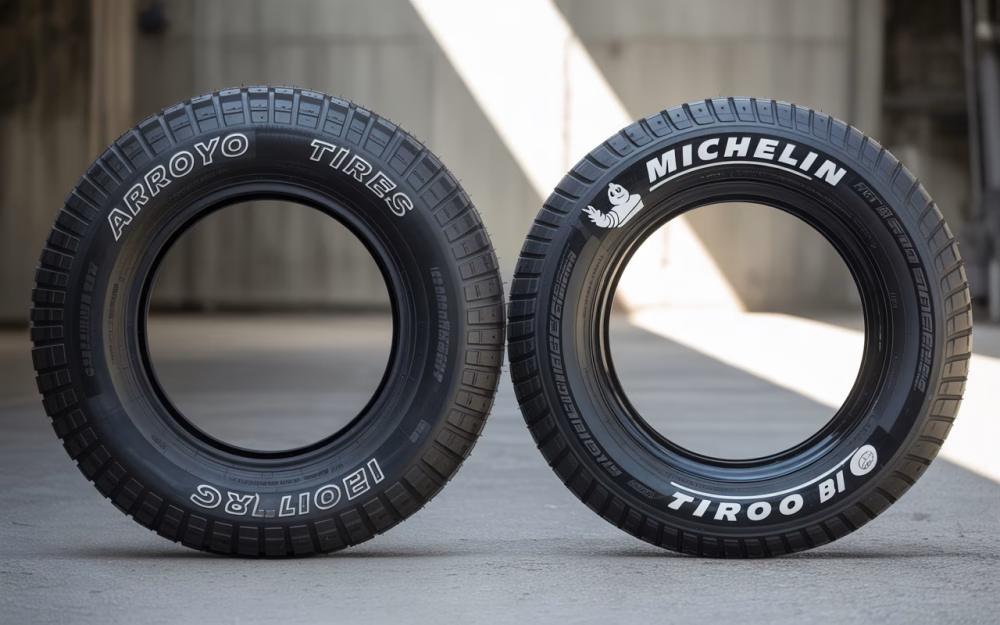
Arroyo Tires vs Michelin are two well-known tire brands that cater to different segments of the automotive market. Arroyo Tires is a relatively new player in the industry, founded in the early 2000s with a focus on providing affordable and reliable tires for budget-conscious consumers. Despite its short history, Arroyo has quickly gained a reputation for offering high-quality tires at competitive prices, making it a popular choice among cost-conscious drivers.
On the other hand, Michelin is a global tire manufacturing giant with a rich history dating back to 1889. Headquartered in France, Michelin is renowned for its innovative tire technologies, premium quality, and a strong emphasis on safety and performance. The company caters to a wide range of vehicle segments, from passenger cars and SUVs to heavy-duty trucks and aircraft. Michelin’s tires are often associated with luxury and high-end vehicles, positioning the brand as a leader in the premium tire market.
While Arroyo Tires primarily targets budget-conscious consumers seeking value for their money, Michelin’s target market encompasses a broader spectrum, ranging from everyday drivers to performance enthusiasts and commercial fleet operators. Michelin’s extensive research and development efforts have resulted in cutting-edge tire technologies that prioritize safety, durability, and fuel efficiency, making them a preferred choice for many vehicle manufacturers and discerning consumers alike.
Table of Contents
Tire Construction and Materials
Arroyo Tires and Michelin employ different construction methods and materials in their tire manufacturing processes, which can significantly impact performance, durability, and overall tire quality.
Michelin is renowned for its advanced tire construction techniques, utilizing high-quality materials and cutting-edge technologies. Their tires often feature a higher percentage of silica in the tread compound, which enhances grip and traction on wet surfaces while improving rolling resistance and fuel efficiency. Additionally, Michelin incorporates reinforced steel belts and polyamide-reinforced casing plies, resulting in enhanced stability, handling, and resistance to impacts and punctures.
On the other hand, Arroyo Tires tends to use more conventional materials and construction methods, which may not be as advanced as those employed by Michelin. Their tires typically feature a higher proportion of carbon black in the tread compound, which can provide excellent dry grip but may compromise wet performance and fuel efficiency. Furthermore, Arroyo Tires may utilize fewer reinforcement layers or less advanced steel belts, potentially resulting in slightly reduced durability and stability compared to Michelin’s offerings.
While Arroyo Tires’ construction methods may be more cost-effective, Michelin’s focus on premium materials and advanced technologies often translates into superior performance, longevity, and overall tire quality. However, it’s important to note that both brands offer a range of tire models catering to different vehicle types and driving conditions, and the specific tire construction and materials used can vary within their respective product lines.
Tread Patterns and Designs
The tread pattern on a tire plays a crucial role in its performance, affecting traction, handling, and safety in various driving conditions. Both Arroyo Tires and Michelin have developed distinct tread designs to cater to different driving needs.
Arroyo Tires’ tread patterns are designed to provide excellent grip and traction on both dry and wet surfaces. Their all-season tires feature a symmetric tread pattern with wide circumferential grooves and lateral sipes (small slits) that help evacuate water and increase grip on wet roads. Additionally, their high-performance tires have an asymmetric tread design with larger outer blocks for improved cornering and stability at high speeds.
On the other hand, Michelin’s tread patterns are known for their innovative technologies. Their Premier A/S tires feature the EverGrip design, which combines an expanding rain groove with high-density siping to maintain traction as the tire wears down. The Primacy MXM4 model incorporates the company’s MaxTouch Construction, which optimizes the tire’s footprint for enhanced grip and even wear.
In terms of off-road performance, Arroyo Tires offers aggressive mud-terrain tires with deep, open tread patterns and large tread blocks for superior traction on loose surfaces like mud, sand, and rocks. Michelin’s LTX A/T2 tires, on the other hand, feature a more balanced design with interlocking tread blocks and sipes for versatile on-road and off-road performance.
Both brands also offer dedicated winter tires with specialized tread designs for enhanced traction on snow and ice. Arroyo’s winter tires feature deep, jagged grooves and biting edges for better grip, while Michelin’s X-Ice tires incorporate their Cross Z Sipe technology, which creates thousands of gripping edges for improved braking and handling on icy surfaces.
Tire Performance in Different Conditions
Both Arroyo Tires and Michelin are known for their exceptional performance in various driving conditions, but there are some notable differences between the two brands.
On dry roads, Michelin tires tend to provide better traction and handling due to their advanced tread compound and design. They offer a more responsive and precise driving experience, making them a favorite among performance enthusiasts. Arroyo Tires, on the other hand, prioritize durability and longevity, which may result in slightly less grip on dry surfaces but better overall wear resistance.
When it comes to wet conditions, Michelin tires shine with their superior hydroplaning resistance and shorter braking distances. Their tread patterns are engineered to efficiently evacuate water, ensuring maximum contact with the road surface. Arroyo Tires also perform well in wet conditions, but they may not match Michelin’s level of excellence in this area.
In snowy and icy conditions, both brands offer dedicated winter tire models that excel in terms of traction and control. Michelin’s winter tires are renowned for their advanced siping and tread design, which provides excellent grip on snow and ice. Arroyo’s winter tires are also highly capable, but Michelin’s offerings are often considered the benchmark in this category.
Off-road performance is where Arroyo Tires truly stand out. Their all-terrain and mud-terrain tires are designed with aggressive tread patterns and reinforced sidewalls to tackle challenging terrains with ease. While Michelin does offer some capable off-road tires, Arroyo’s lineup is specifically tailored for drivers who frequently venture off the beaten path.
Overall, both Arroyo Tires and Michelin offer exceptional performance across various driving conditions, but their strengths may vary depending on the specific scenario. Michelin tires tend to excel in dry and wet conditions, while Arroyo shines in off-road environments. Ultimately, the choice between the two brands will depend on your driving needs and priorities.
Noise Levels and Comfort
When it comes to noise levels and ride comfort, Arroyo Tires and Michelin Tires offer distinct experiences. Michelin has long been renowned for its advanced noise-canceling technology, which results in a quieter and more serene driving experience, even at higher speeds. Their tires are engineered with specialized tread patterns and advanced rubber compounds that minimize road noise and vibrations, providing a smooth and comfortable ride.
On the other hand, Arroyo Tires prioritize performance and handling over noise reduction. While their tires may not be as quiet as Michelin’s, they offer a more responsive and engaging driving experience, particularly for those who value a direct connection with the road. Arroyo’s tires are designed with stiffer sidewalls and more aggressive tread patterns, which can translate to slightly higher noise levels but improved grip and cornering capabilities.
When it comes to ride comfort, both brands excel in their respective areas. Michelin’s tires are known for their plush and cushioned ride, absorbing bumps and road imperfections with ease, making them an excellent choice for those who value a luxurious and comfortable driving experience. Arroyo Tires, on the other hand, offer a more responsive and sporty ride, with a firmer feel that some drivers may prefer for its direct feedback and handling characteristics.
Ultimately, the choice between Arroyo Tires and Michelin Tires will depend on individual preferences and driving styles. Those seeking a quieter and more serene driving experience may gravitate towards Michelin, while those prioritizing performance and handling may find Arroyo Tires more appealing, despite the potential for slightly higher noise levels.
Fuel Efficiency and Eco-Friendliness
When it comes to fuel efficiency and environmental impact, both Arroyo Tires and Michelin Tires have made significant strides in recent years. However, there are some notable differences between the two brands.
Michelin has long been a pioneer in developing low-rolling resistance tires, which can contribute to improved fuel efficiency. Their Energy Saver line, for example, is designed to reduce rolling resistance, resulting in better gas mileage and lower emissions. Additionally, Michelin’s commitment to sustainable manufacturing practices, such as using renewable materials and reducing waste, has helped to minimize their environmental footprint.
On the other hand, Arroyo Tires has taken a slightly different approach. While they may not have the same level of brand recognition for eco-friendly tires, Arroyo has focused on developing tires with longer tread life. By extending the lifespan of their tires, they aim to reduce the frequency of tire replacements, ultimately reducing the amount of waste generated from discarded tires.
In terms of fuel efficiency, independent testing has shown that Michelin’s low-rolling resistance tires can provide up to a 4% improvement in fuel economy compared to conventional tires. Arroyo Tires, while not specifically marketed as “eco-friendly,” have demonstrated competitive rolling resistance values, which can translate into modest fuel savings.
It’s important to note that both companies continue to invest in research and development to further enhance the fuel efficiency and environmental sustainability of their products. As consumer demand for eco-friendly options grows, we can expect to see even more innovative solutions from these tire manufacturers in the future.
Warranty and Mileage Guarantees
Michelin is widely renowned for offering some of the best warranty coverage and mileage guarantees in the tire industry. Their standard limited warranty covers defects in workmanship and materials for the life of the original tread. Additionally, many of their tire lines come with impressive mileage warranties, with some models promising up to 90,000 miles of tread life.
Arroyo Tires, on the other hand, has more modest warranty offerings. Their standard limited warranty covers defects for a period of 5 years or 50,000 miles, whichever comes first. Mileage warranties are also more limited, with most models promising around 60,000 miles of tread life.
It’s important to note that both brands have specific requirements and conditions for their warranties to be valid, such as proper tire maintenance and rotation. However, Michelin’s more extensive coverage and longer mileage guarantees provide added peace of mind and potentially longer-lasting value for consumers.
Pricing and Value for Money
Michelin and Arroyo Tires have distinct pricing strategies that reflect their respective market positions and value propositions. Michelin, being a premium brand, commands higher prices for its tires, but it justifies this through its reputation for quality, durability, and performance. Arroyo Tires, on the other hand, targets a more budget-conscious consumer segment, offering tires at lower price points while still aiming to deliver reasonable performance and value.
Michelin’s pricing strategy is rooted in its commitment to innovation, advanced technologies, and rigorous testing. The brand invests heavily in research and development, which translates into tires that offer superior grip, handling, and longevity. While Michelin tires may cost more upfront, their extended tread life and consistent performance can result in lower overall ownership costs for consumers.
Arroyo Tires, conversely, focuses on providing an affordable alternative to premium brands like Michelin. By leveraging economies of scale and streamlining production processes, Arroyo can offer tires at competitive prices without compromising on essential performance characteristics. This value proposition appeals to cost-conscious consumers who prioritize affordability while still seeking reliable and safe tires.
When evaluating value for money, it’s essential to consider the intended use case and driving conditions. For high-performance vehicles or demanding driving environments, Michelin’s premium tires may offer superior value by delivering enhanced safety, handling, and longevity. Conversely, for everyday commuting or less demanding driving scenarios, Arroyo Tires can provide a compelling value proposition by offering acceptable performance at a more accessible price point.
Ultimately, the choice between Michelin and Arroyo Tires will depend on individual preferences, driving habits, and budget considerations. While Michelin tires may demand a higher initial investment, their reputation for quality and performance can justify the premium pricing for those seeking the best possible driving experience. Conversely, Arroyo Tires offers a compelling value proposition for consumers seeking a balance between cost and performance, making them an attractive option for budget-conscious drivers.
Customer Reviews and Satisfaction
Both Arroyo Tires and Michelin have extensive customer reviews available online, providing valuable insights into real-world experiences with their products. Examining these reviews can shed light on factors like performance, durability, and overall satisfaction levels.
Michelin, being a well-established and premium brand, generally receives high praise from customers for its tires’ exceptional grip, handling, and longevity. Many reviews highlight the smooth and comfortable ride quality, as well as the impressive tread life, even after tens of thousands of miles. However, some customers have expressed concerns about the higher price point of Michelin tires compared to competitors.
Arroyo Tires, on the other hand, has garnered a reputation for offering good value for money. Customer reviews often commend the brand’s tires for their affordability without compromising on performance. Many users report satisfactory traction and handling, particularly in dry conditions. However, some reviews mention shorter tread life and occasional issues with hydroplaning on wet surfaces compared to premium options like Michelin.
Overall, customer satisfaction levels appear to be higher for Michelin, with a significant number of reviews praising the brand’s quality and reliability. Arroyo Tires, while generally receiving positive feedback, may not match the consistent excellence and longevity associated with Michelin products, according to customer experiences.
It’s important to note that individual experiences can vary based on factors such as driving habits, vehicle type, and local road conditions. Nonetheless, analyzing customer reviews can provide valuable insights into the strengths, weaknesses, and overall satisfaction levels associated with each tire brand.
Availability and Purchase Options
Michelin tires are widely available through multiple channels, both online and offline. You can purchase Michelin tires directly from their website, michelin.com, or through various authorized Michelin tire dealers and retailers across the country. Major auto parts stores like Discount Tire, NTB, and Tire Rack also carry a wide range of Michelin tire models.
On the other hand, Arroyo Tires are primarily sold through their official website, arroyotires.com, and select online retailers. They have a more limited physical retail presence, with a few authorized dealers scattered across the United States. Arroyo Tires can also be purchased through various online marketplaces like Amazon and eBay, although availability and pricing may vary.
When purchasing Michelin tires online, you can often take advantage of various promotions, discounts, and rebates offered by the manufacturer or retailers. Additionally, many online retailers provide convenient shipping options, including direct delivery to your preferred installer or tire shop.
For Arroyo Tires, the online purchasing process is more streamlined, as you can order directly from their website and have the tires shipped to your doorstep or a local installer. However, it’s essential to note that Arroyo Tires may have limited availability in certain regions, and shipping costs can vary depending on your location.
If you prefer a more hands-on approach, both Michelin and Arroyo Tires can be purchased through local tire shops and automotive service centers. This option allows you to physically inspect the tires and receive professional installation and balancing services. Many dealerships and independent repair shops also offer these tires, providing additional convenience and expertise.
Recommendations and Conclusions
When it comes to choosing between Arroyo Tires and Michelin Tires, the decision ultimately depends on your specific needs and priorities. Both brands offer high-quality tires with their own unique strengths and weaknesses.
If you prioritize performance and handling, Michelin Tires may be the better choice. Their advanced tread designs and high-quality construction materials provide excellent grip, responsiveness, and stability, making them ideal for sporty driving or demanding conditions. However, this level of performance often comes at a higher price point.
On the other hand, if you’re looking for a more budget-friendly option without compromising too much on quality, Arroyo Tires can be a great alternative. While they may not match the absolute top-tier performance of Michelin, they offer a solid balance of quality, durability, and affordability, making them a practical choice for daily driving and commuting.
For those who prioritize fuel efficiency and eco-friendliness, Michelin’s energy-saving tire models may be the way to go. Their advanced compounds and tread designs are engineered to reduce rolling resistance, resulting in improved fuel economy and lower carbon emissions.
If you frequently drive in challenging conditions, such as heavy rain, snow, or off-road terrain, Michelin’s specialized tires for these environments could provide the necessary traction and safety you need.
Ultimately, both Arroyo Tires and Michelin Tires have their strengths and weaknesses. Consider your driving habits, vehicle type, and budget to determine which brand aligns best with your needs. Additionally, reading customer reviews and consulting with tire professionals can help you make an informed decision.