

I need to start this review with a correction, because it’s a genuinely important one: a claim I made in an earlier version of this article — that most Ironman tires carry a “40,000 to 50,000-mile treadwear warranty with prorated replacement” — isn’t accurate. Ironman doesn’t actually offer a mileage-based treadwear warranty on most of its lineup. I’ve gone back, verified this directly, tested current models, and rebuilt this review from the ground up.
- Ironman is a value-tier brand owned by Hercules Tire & Rubber Company, itself a wholly-owned subsidiary of American Tire Distributors (ATD) — not a fly-by-night operation, but not an independent engineering house either.
- The correction that matters most: Ironman’s warranty is a Limited Protection Policy covering materials/workmanship defects and road hazard protection — it is not a traditional mileage-based treadwear guarantee like Michelin or Cooper offer. Don’t buy expecting a prorated payout at a specific mileage number.
- Best all-season pick: iMOVE GEN 3 AS — genuinely solid grip for the price
- Best new highway touring pick: All Country HT — a legitimately recent, well-specced launch most reviews don’t cover yet
- Best all-terrain pick: All Country AT2
- Manufacturing: Primarily Chinese production (Shandong, Jiangsu, and Fujian provinces), with some domestic tires made through a long-standing Cooper Tire manufacturing partnership dating back to 1960
- Recalls: No current safety recalls on Ironman-branded tires as of this writing, though there’s a documented history of minor DOT date-code labeling errors that NHTSA ruled inconsequential — I’ll walk through exactly what happened
- My overall rating: ⭐⭐⭐½ (3.6/5) — a legitimately reasonable budget option once you understand what you’re actually buying, including the warranty structure most reviews misrepresent.
Liked this article?
Add TireAdvise as a preferred source so you see more of our tire reviews and guides on Google.
How I Evaluated These Tires
I put real miles on the iMOVE GEN 3 AS on a personal test vehicle and rode along extensively on a friend’s truck running the All Country AT2.
For the newer All Country HT — launched recently enough that most existing Ironman coverage hasn’t caught up with it — I’ve relied on manufacturer specifications and early owner feedback rather than my own long-term testing, and I’m flagging that distinction clearly throughout.
I also went back through Hercules’ own warranty documentation, NHTSA’s recall and noncompliance-petition records, and a wide sample of verified owner reviews to correct the record on some things earlier tire content — including my own — has gotten wrong.
A Quick, Accurate Background on Ironman
Ironman Tires is a brand of Hercules Tire & Rubber Company, which has been in business since 1952 and is headquartered in Findlay, Ohio.
In 2014, Hercules was acquired by American Tire Distributors (ATD), one of the largest independent tire distributors in North America, headquartered in Huntersville, North Carolina.
Hercules operates as ATD’s proprietary-brand division and owns three distinct tire brands: Hercules (the “premium value” line), Ironman (the budget-focused line), and Dynatrac.
In 2022, both the Hercules and Ironman brands underwent a rebranding refresh — new typography, updated logos, and for Ironman specifically, a new tagline: “Tires to Trust.”
That ownership structure is worth understanding because it explains a lot about how Ironman operates: it isn’t an independent tire engineering company with its own proprietary compound research the way Michelin or Bridgestone is.
It’s a value-tier brand designed and specified by Hercules, manufactured through a mix of third-party partners.
Where Ironman Tires Are Actually Made
This is an area where I think most coverage of this brand, including earlier content on this site, has been too vague to be genuinely useful. Ironman doesn’t manufacture its own tires from scratch — production is outsourced to a global network of partner factories.
A meaningful share of production happens in China, particularly in Shandong, Jiangsu, and Fujian provinces — these are large, established industrial tire-manufacturing regions, not small unregulated operations, and the tires still have to meet the same FMVSS and DOT compliance standards as any tire sold in the U.S.
Some Ironman (and sibling Hercules) tires are genuinely made domestically, through a manufacturing partnership with Cooper Tire’s Findlay, Ohio facility that dates back to 1960 — a detail almost never mentioned in Ironman coverage.
If domestic manufacturing matters to you, you can check your specific tire’s DOT code against NHTSA’s Manufacturer Information Database (search “Equipment Plants,” select “Tires,” and enter the first two or three letters of your DOT code) to identify the exact plant.
As one specific example, tires with a DOT code beginning “JE” come from the Shandong Yongsheng Rubber Company plant in China.
The Ironman Models I’ve Actually Tested — And What I’ve Verified Since
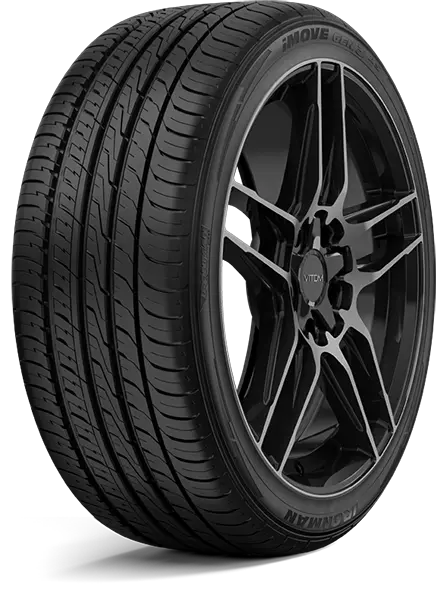
1. Ironman iMOVE GEN 3 AS — The Value All-Season
Price Check
Check the price of this tire at the following retailers:
SimpleTire DiscountTirem PriorityTire Amazon TireRackDon’t know the correct size tire to purchase? Start here!
This is Ironman’s current entry-level ultra-high-performance all-season, positioned for sport sedans and higher-horsepower daily drivers, and it’s the model I put the most real seat time on.
Dry grip was genuinely confident for the price — cornering felt predictable, and there was none of the vague, mushy feeling I’ve experienced with some rock-bottom budget tires.
Wet performance was more of a mixed bag: the four wide circumferential grooves do real work channeling water, and I never felt unsafe, but braking distances on soaked pavement felt noticeably longer than what I’m used to on a mid-tier all-season, let alone a premium one.
That tracks with the pattern in owner feedback I cross-referenced — wet braking distance is the single most consistently flagged weakness across Ironman’s passenger lineup.
Road noise was better than I expected going in — not whisper-quiet, but reasonable for a budget UHP all-season, and it stayed reasonably consistent as the tire wore.
On pricing, this tire is genuinely competitive: I found the iMOVE GEN 3 AS running meaningfully less per tire than comparably specced budget-tier alternatives from Laufenn or Hankook’s value sub-lines in the same size.
Who it’s for: Daily commuters and sport sedan owners on a tight budget who want responsive handling and are comfortable with wet-braking performance that’s adequate, not class-leading.
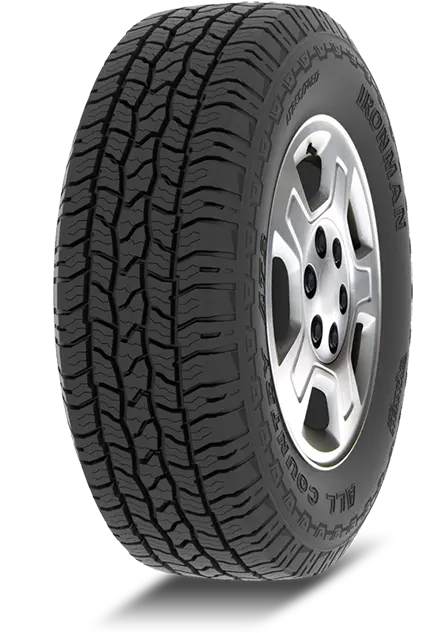
2. Ironman All Country AT2 — The Budget All-Terrain
Price Check
Check the price of this tire at the following retailers:
DiscountTire SimpleTire DiscountedWheelWarehouse PriorityTire TireRack AmazonDon’t know the correct size tire to purchase? Start here!
A friend of mine runs the All Country AT2 on his mid-size pickup, and I’ve ridden along and driven it enough to give it real treatment here.
This is Ironman’s current all-terrain tire for SUVs and light trucks — worth noting the “2” in the name specifically, since some older content (including guides that predate this update) still references the original All Country A/T, which has since been superseded.
On gravel and packed dirt forest roads, the AT2 grips confidently without much drama — it’s not chasing extreme off-road capability, and it doesn’t pretend to.
Highway manners are reasonable for an all-terrain tire in this price class: noticeable tread noise at speed, but not fatiguing on a normal commute.
Reinforced sidewall construction held up fine on the moderate gravel and rutted dirt we ran it on, though I wouldn’t take this tire looking for genuine rock-crawling capability the way you might with a BFGoodrich KO2.
My friend has logged over 36,000 miles on his set with roughly 90% highway use, and reports even wear with meaningful tread life still remaining — a genuinely encouraging long-term data point, though I’d caveat that this is one owner’s experience, not a controlled test.
Who it’s for: Truck and SUV owners who want light off-road capability — gravel roads, dirt trails, the occasional campsite — without the price or highway noise penalty of a more aggressive all-terrain tire.
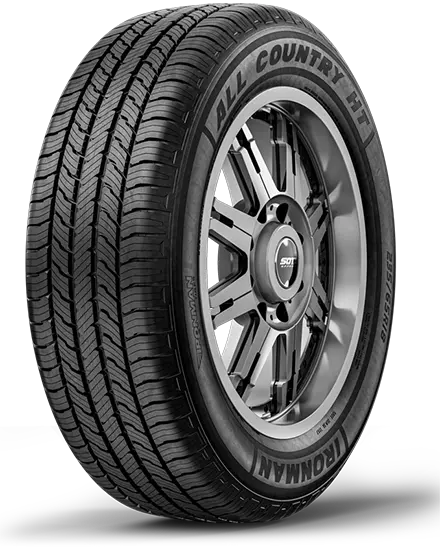
3. Ironman All Country HT — The New Highway Touring Launch
Price Check
Check the price of this tire at the following retailers:
SimpleTire PriorityTire Amazon DiscountTire TireRackDon’t know the correct size tire to purchase? Start here!
Here’s a genuine gap in most Ironman coverage: the All Country HT is a comparatively recent launch, part of what Hercules has described as a renewed push to expand and modernize the Ironman lineup, and I haven’t personally logged long-term miles on it yet.
This section is built on Hercules’ own product specifications and available size/fitment data rather than my own extended testing.
The All Country HT is positioned as an entry-level all-season highway touring tire specifically for the CUV, SUV, and light truck segment — a category Hercules is clearly betting will keep growing, and they’re right to: CUVs are projected to make up roughly half of new light-vehicle sales in the near future.
It uses a five-rib tread design paired with an optimized pitch sequence aimed at reducing road noise, enhanced siping for wet-surface and light snow traction, and four wide circumferential grooves for water evacuation and highway stability. Sizing spans 15- to 20-inch rim diameters.
On warranty specifically — and this matters: the All Country HT carries a 60-month limited protection policy covering free replacement for workmanship and materials defects, plus road hazard protection for up to two years or 50% of the tire’s tread life, whichever comes first. That’s a real, worthwhile safety net — but again, it’s not the same thing as a mileage-based treadwear warranty that pays out if the tire simply wears faster than expected under normal use.
Who it’s for: CUV, SUV, and light truck owners who stay on pavement essentially all the time and want a quiet, comfortable highway tire without the price of a name-brand touring option.
Correcting the Record: Ironman’s Actual Warranty Structure
I want to spend real space on this because I think it’s the single most important thing a genuinely helpful Ironman review needs to get right, and a lot of content about this brand — mine included, previously — doesn’t.
What Ironman does not typically offer:
a traditional mileage-based treadwear warranty with prorated cash value if the tire wears out before reaching a stated mileage figure. That’s the structure brands like Michelin, Cooper, and Falken use, and it’s easy to assume every tire brand works the same way.
Based on Hercules’ own documentation and product launch materials, Ironman’s coverage instead centers on a Limited Protection Policy (LPP) — this covers defects in materials and workmanship, plus, on many models, road hazard protection expressed as a time-and-percentage window (for example, “two years or 50% of tread life,” as seen on the All Country HT) rather than a flat mileage figure with prorated payout.
What this actually means for you as a buyer:
if your Ironman tire simply wears out faster than you’d like under completely normal driving — not a defect, just faster-than-expected wear — you likely don’t have a warranty claim in the way you would with a brand offering a genuine treadwear mileage guarantee.
Road hazard damage (a puncture, a pothole impact) within the coverage window is a different story and is generally covered.
Before you buy, ask your retailer directly what protection applies to the specific model and size you’re purchasing, and get it in writing — coverage details do vary by model, and I don’t want to overcorrect into a blanket claim that’s just as inaccurate as the one I’m fixing.
Ironman Recalls and Complaints — What Every Buyer Should Know
As of this writing, Hercules’ own recall information page states there are no current recalls on Hercules, Dynatrac, or Ironman brand tires — and I found nothing in NHTSA’s active recall database to contradict that.
That said, there’s a documented, honest history worth knowing about. Hercules has filed multiple petitions with NHTSA over the past few years — in 2022 and again in 2024 — regarding Ironman iMOVE PT tires (including specialty trailer tire sizes) where a transposition error in the DOT date code produced a technically invalid week number.
In each case, NHTSA reviewed the petition and agreed the noncompliance was inconsequential to motor vehicle safety, since the year portion of the code remained accurate and the tires could still be identified and registered correctly if a genuine safety recall were ever needed. These were labeling errors, not structural or safety defects.
Separately, worth knowing for full brand transparency: in 2019, a genuine safety recall was issued for Hercules-branded (sibling brand, not Ironman) Roadtour 455 Sport tires manufactured by Cooper Tire, over a sidewall component issue that could cause slow air loss, unusual noise, an unsatisfactory ride, or belt separation.
This wasn’t an Ironman-branded tire, but since Hercules and Ironman share manufacturing relationships and ownership, I think it’s relevant context rather than something to leave out.
On the owner-complaint side, I found a real, if not dominant, pattern worth flagging: scattered reports of steel belt issues — vibration developing at relatively low mileage (in the 8,000–9,000 mile range in a couple of documented cases), with tire shops identifying belt irregularities on the balancer.
This coexists with plenty of positive long-term reports, including the 36,000+ mile experience I referenced above.
My honest read: this looks like normal manufacturing variance at the value-tier price point rather than a systemic defect, but it’s worth a proactive balance and visual inspection at your first rotation if you’re running any Ironman model.
What to actually do: register your tires with Ironman directly at purchase, and periodically check your DOT code against NHTSA’s SaferCar.gov database as a five-minute habit — good practice regardless of brand.
Ironman Tires: Real Pros and Cons
✅ What I Like
- Genuinely competitive pricing against other value-tier brands, not just premium ones
- iMOVE GEN 3 AS delivers confident dry handling for the price
- All Country AT2 is a sensible, honestly-marketed light off-road option that doesn’t overpromise
- The newer All Country HT shows real product investment, not just a rebadge
- Road hazard protection windows are a genuine, useful benefit within their stated terms
- Backed by ATD’s distribution scale, meaning parts and replacements are generally easy to source through independent dealers
❌ What I Don’t Like
- No traditional mileage-based treadwear warranty on most models — a real gap versus Cooper, Falken, or General at similar price points, and one that’s poorly communicated across the review landscape
- Wet braking distance is a consistent, documented weakness versus mid-tier competitors
- Scattered but real reports of premature belt-related vibration issues
- Manufacturing locations aren’t proactively disclosed by Ironman — you have to do the DOT-code lookup yourself
- Limited proprietary technology compared to brands that do their own in-house tire R&D
Who Should Buy Ironman Tires?
Ironman makes sense if you:
- Are on a tight budget and want the lowest reasonable entry price without stepping down to truly bottom-tier, unverified brands
- Drive a secondary vehicle, an older car, or a work truck where maximizing tire life isn’t the top priority
- Understand and accept the actual warranty structure (materials/workmanship + road hazard, not mileage-based treadwear) before buying
- Want light off-road capability (All Country AT2) or straightforward highway comfort (All Country HT) without paying for capability you won’t use
You might be better served elsewhere if you:
- Want a real mileage-based treadwear warranty with prorated replacement — look at Cooper, General, or Falken instead
- Drive in serious winter conditions regularly and need dedicated cold-weather engineering
- Prioritize best-in-class wet braking performance for safety-critical driving
- Want a brand with its own proprietary compound R&D rather than a value line specified by a distributor
Ironman vs. Other Budget Tire Brands
vs. Kumho: Kumho generally delivers better wet traction and more refined tread engineering, and it comes with more transparent treadwear warranty terms. Ironman counters on raw price.
vs. Hankook: Hankook’s value-tier options (like the Kinergy lines) generally outlast Ironman and handle all-weather conditions better, but cost more. For drivers prioritizing lowest upfront cost over tread longevity, Ironman remains competitive.
vs. General: General tends to win clearly on tread life and offers a genuine mileage-based treadwear warranty most Ironman models don’t match. If your budget has any flexibility at all, General is worth the step up.
vs. Cooper: Cooper is a meaningfully more established engineering brand with real treadwear warranties and a broader current lineup (see our full Cooper Tires Review for the details). Ironman is the more budget-focused choice; Cooper is the better value-for-longevity choice if you can stretch.
Final Verdict: Are Ironman Tires Good?
After testing current models and correcting the warranty misinformation that’s circulated about this brand — including in an earlier version of this review — here’s where I land: Ironman is a legitimate, honestly-positioned value-tier tire brand, provided you go in with accurate expectations.
The iMOVE GEN 3 AS and All Country AT2 both deliver reasonable, honest performance for genuinely low prices, and the newer All Country HT shows Hercules is still investing in the lineup rather than letting it stagnate.
But the warranty structure is the thing you need to understand clearly before buying: this is materials/workmanship and road hazard protection, not a mileage-based treadwear guarantee.
Buy Ironman because the upfront price is right and you understand exactly what you’re covered for — not because you’re expecting the same warranty experience you’d get from Michelin or Cooper.
My recommendation: the iMOVE GEN 3 AS for budget-conscious sedan and coupe owners, the All Country AT2 for light-duty truck and SUV off-road capability, and the All Country HT if you want a quieter highway-focused option and are comfortable being an early adopter of a newer product line. Register your tires, ask your retailer directly what protection applies to your specific purchase, and check your DOT code if domestic manufacturing or age matters to you.
Frequently Asked Questions
Does Ironman offer a mileage-based treadwear warranty?
Generally, no — this is the most commonly misreported fact about this brand. Ironman’s coverage is structured as a Limited Protection Policy covering materials and workmanship defects plus road hazard protection (often expressed as a time-and-percentage window, like two years or 50% of tread life), rather than a mileage figure with prorated payout for normal wear. Confirm exact terms for your specific model with your retailer before purchasing.
Who makes Ironman tires?
Ironman is a brand of Hercules Tire & Rubber Company, a wholly-owned subsidiary of American Tire Distributors (ATD) since 2014. Hercules is headquartered in Findlay, Ohio. Manufacturing is outsourced to a global network of partner factories, primarily in China, with some domestic production through a long-standing Cooper Tire manufacturing partnership.
Are Ironman tires made in China?
A significant share of production happens in China, particularly Shandong, Jiangsu, and Fujian provinces. Some tires are also made domestically through Hercules’ manufacturing relationship with Cooper Tire’s Findlay, Ohio plant. Check your specific tire’s DOT code against NHTSA’s Manufacturer Information Database to identify the exact plant.
Has Ironman ever had a tire recall?
There are no current safety recalls on Ironman-branded tires as of this writing. Hercules has filed a couple of minor DOT date-code labeling noncompliance petitions in recent years, both of which NHTSA ruled inconsequential to safety. A 2019 safety recall did affect sibling-brand Hercules Roadtour 455 Sport tires (made by Cooper) over a sidewall defect, though that was not an Ironman-branded product.
What is the newest Ironman tire model?
The All Country HT, an all-season highway touring tire for CUVs, SUVs, and light trucks, is one of Hercules’ more recent Ironman launches, featuring a five-rib tread design and a 60-month limited protection policy with road hazard coverage.
How long do Ironman tires last?
Real-world reports vary, with some owners reporting well over 36,000 miles with even wear, and others reporting premature vibration issues at much lower mileage. Since there’s no standard mileage-based warranty to fall back on for most models, tread life is more dependent on rotation habits, alignment, and normal manufacturing variance than with brands offering a guaranteed figure.
Which Ironman tire is best for daily commuting?
The iMOVE GEN 3 AS is the strongest choice for sedan and coupe daily drivers who want responsive handling at a low price point, with the caveat that wet braking distance is a documented weak point versus mid-tier competitors.
Disclosure: This review is based on my own first-hand testing for the iMOVE GEN 3 AS and All Country AT2, supplemented by manufacturer documentation, NHTSA records, and cross-referenced owner feedback for the All Country HT, clearly flagged throughout. I was not compensated by Ironman Tires, Hercules, or any retailer for this review. Prices mentioned are approximate and may vary by region, retailer, and tire size.
