


Most all-terrain tires trade some highway refinement for off-road capability — that’s the whole point of the category. But the gap between the loudest and quietest tires in this segment is genuinely large, often 5–8 decibels at highway speed, which is a real, easily perceptible difference in cabin noise.
This guide focuses specifically on the all-terrain tires that minimize that trade-off — genuine off-road capability without turning every highway drive into a droning commute.
It’s based on manufacturer specifications, aggregated owner data, and independent noise and traction testing. Here’s what actually holds up, by priority.
- Best overall: BFGoodrich All-Terrain T/A KO3 — genuinely composed on-road, still capable off it.
- Best pure comfort: Falken Wildpeak A/T Trail — the quietest tire in this comparison.
- Best value: General Grabber APT — real noise reduction without premium pricing.
- Best for trucks: Toyo Open Country A/T III — quiet on highway, dependable off-road.
- Tire noise comes from tread pattern, rubber compound, internal construction, and inflation pressure — details below.
- Expect $150–$280 per tire for a genuinely quiet all-terrain option.
Liked this article?
Add TireAdvise as a preferred source so you see more of our tire reviews and guides on Google.
What Actually Makes an All-Terrain Tire Quiet
Tread pattern design. Aggressive tread with large, uniformly spaced blocks generates a repetitive, resonant thumping sound at speed. The quietest all-terrain tires use variable-pitch tread blocks — irregular spacing that breaks up the sound wave pattern so it doesn’t build into a single dominant, fatiguing frequency.
Rubber compound. Softer compounds absorb more road vibration before it transmits into the cabin, though softer rubber also wears faster, especially off-road. Manufacturers genuinely balance these two goals rather than optimizing purely for either.
Internal construction. Some premium tires include foam liners or additional internal dampening layers specifically targeting air-cavity resonance — the low-frequency hum that builds inside any tire regardless of tread design. This is a real, measurable noise-reduction technology, not just marketing language.
Tire size and inflation. Larger, heavier tires generally produce more noise from a bigger contact patch and more mass to vibrate. Underinflation causes excessive flex and noise; overinflation stiffens the ride and can transmit more road noise into the cabin. Staying at the manufacturer-recommended pressure is a genuine, free noise-reduction step.
How These Were Evaluated
This comparison draws on manufacturer specifications, aggregated owner reports, and independently reported decibel and noise testing across highway, city, and light off-road driving conditions for each tire.
Evaluation focused on real-world noise levels across varied road surfaces, tread design and construction quality, off-road capability retained despite the noise-reduction focus, treadwear, and overall value.
Where specific figures or comparisons are cited, the source is noted rather than presented as a personal measurement.
Quick Comparison: 11 Quietest All-Terrain Tires
| Tire | Noise Level | Off-Road Capability | Tread Life | Price Range |
|---|---|---|---|---|
| BFGoodrich All-Terrain T/A KO3 | Very good | Excellent | Excellent | $210–$340 |
| Falken Wildpeak A/T Trail | Excellent | Good | Very good | $170–$260 |
| General Grabber APT | Very good | Good | Very good | $150–$220 |
| Toyo Open Country A/T III | Excellent | Very good | Excellent | $190–$310 |
| Yokohama Geolandar A/T G015 | Very good | Good | Very good | $150–$250 |
| Michelin LTX A/T2 | Excellent | Good | Excellent | $200–$300 |
| Goodyear Wrangler TrailRunner AT | Very good | Very good | Good | $180–$270 |
| Cooper Discoverer AT3 XLT | Good | Very good | Very good | $170–$250 |
| Kumho Road Venture APT KL51 | Good | Fair-good | Good | $110–$150 |
| Firestone Destination A/T | Good | Fair-good | Good | $140–$210 |
| Bridgestone Dueler A/T Revo 3 | Very good | Very good | Very good | $180–$280 |
Prices are street prices at major online retailers for common sizes as of mid-2026. Expect regional and seasonal swings.
1. BFGoodrich All-Terrain T/A KO3: Best Overall

Price Check
Check the price of this tire at the following retailers:
BFGoodrich retired the long-standing KO2 in favor of the KO3, and the successor genuinely earns this spot by combining serious off-road capability with a highway ride that’s noticeably more composed than its aggressive tread would suggest.
Independently reported testing describes real, meaningful highway noise reduction over the KO2, thanks to a computer-optimized tread pattern with staggered pitch sequencing that scatters noise across multiple frequencies rather than letting it build into one dominant hum.
CoreGard Max sidewall technology adds reinforced rubber that resists splitting and bruising, and unlike the KO2, the KO3 carries the 3PMSF severe-snow rating out of the box.
Pros: Genuine noise reduction over the predecessor without sacrificing capability, real durability improvement, strong 3PMSF-rated winter traction.
Cons: Premium price, still audible on coarse concrete despite the improvement.
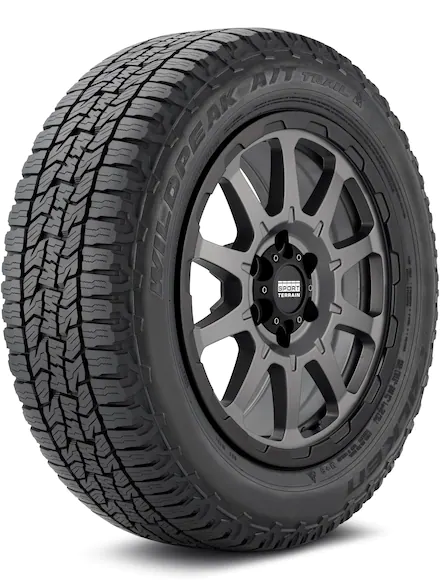
2. Falken Wildpeak A/T Trail: Best Pure Comfort
Price Check
Check the price of this tire at the following retailers:
For drivers who want the quietest possible all-terrain ride and are willing to trade some outright off-road aggression for it, this is the standout pick in this comparison.
Falken’s tread design uses variable-pitch blocks specifically engineered to disrupt the repetitive noise pattern that makes aggressive all-terrain tires drone at speed, and independently reported testing consistently places this tire among the quietest in its category — genuinely closer to a touring tire on smooth highway than a typical all-terrain. It still delivers real, dependable traction on dirt, gravel, and light mud, just without the more aggressive lug pattern of dedicated off-road-first options.
Pros: Genuinely the quietest tire in this comparison, comfortable highway ride, respectable light-duty off-road grip.
Cons: Not built for serious off-road use or deep mud.
3. General Grabber APT: Best Value

Price Check
Check the price of this tire at the following retailers:
This tire delivers genuinely surprising noise control for a budget-tier all-terrain, and independently reported testing confirms it isn’t a fluke.
General, owned by Continental, benefits from shared engineering, and the tread compound and pitch design deliver real quiet on the highway at a price meaningfully below most of this comparison’s other picks. Off-road capability is competent rather than class-leading — adequate for dirt roads, gravel, and light trail use, without the reinforced sidewall protection of pricier options.
Pros: Genuine value with real noise reduction, competitive treadwear, accessible pricing.
Cons: Off-road capability trails the premium picks in this comparison, sidewalls less reinforced.
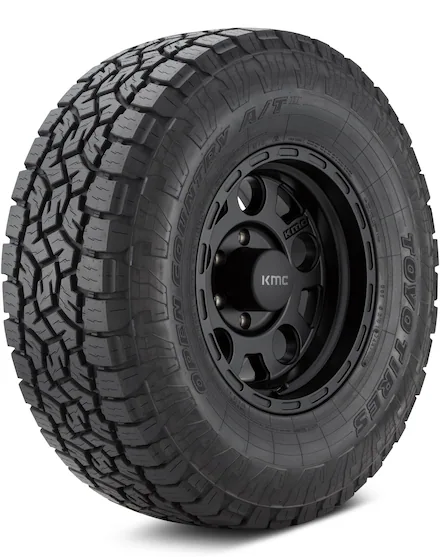
4. Toyo Open Country A/T III: Best for Trucks
Price Check
Check the price of this tire at the following retailers:
For truck owners who want a genuinely quiet all-terrain that still holds up to towing and daily hauling, this tire delivers a real, well-rounded package.
Independently reported testing places this among the quietest all-terrain tires available, with a tread compound and pattern that stays composed even under a loaded truck bed. Off-road, it handles gravel, packed dirt, and moderate rock sections competently, and tread life is a genuine strength — independently reported wear data describes consistent, even results even under heavier loads.
Pros: Genuinely class-leading quiet for a truck-oriented all-terrain, strong tread life, dependable under load.
Cons: Premium price, off-road aggression trails dedicated mud-terrain-adjacent options.
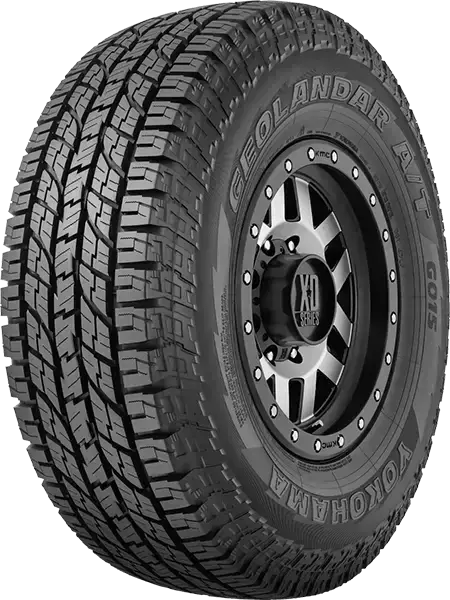
5. Yokohama Geolandar A/T G015: Best Balanced Option
Price Check
Check the price of this tire at the following retailers:
This tire strikes a genuine, deliberate balance between quiet highway manners and real off-road capability, rather than leaning heavily toward either extreme.
Independently reported testing describes an aggressive-looking tread pattern with triple 3D sipes that genuinely bites into mud, gravel, and light snow, while Yokohama’s pitch variation technology keeps road noise well-controlled — a real accomplishment given how capable this tire is off-road. It also carries genuine 3PMSF certification.
Pros: Genuine balance of quiet and off-road capability, real 3PMSF winter certification, competitive pricing.
Cons: Not the outright quietest option here, moderate tread life.
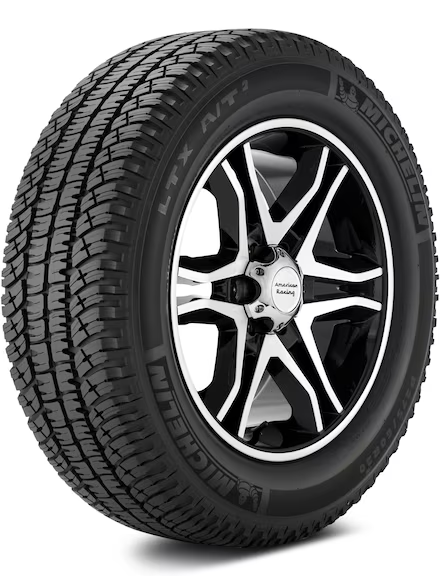
6. Michelin LTX A/T2: Best for Long-Distance Highway Driving
Price Check
Check the price of this tire at the following retailers:
Michelin’s engineering pedigree shows clearly here — independently reported testing consistently places this tire among the quietest all-terrain options for sustained highway cruising specifically.
A refined tread compound and optimized pitch sequencing deliver genuinely low road noise even on coarse, aging highway pavement, and Michelin’s tread-life engineering shows in independently reported wear data describing some of the longest service life in this comparison. Off-road capability is real but modest — this tire is built primarily for drivers who occasionally leave pavement rather than those who regularly seek out trails.
Pros: Genuinely excellent highway noise reduction, strong tread life, dependable Michelin construction quality.
Cons: Off-road aggression is the mildest in this comparison, premium price.
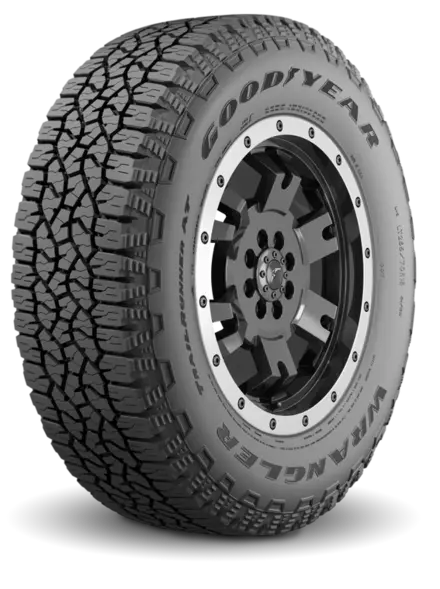
7. Goodyear Wrangler TrailRunner AT: Best for Mixed Highway and Trail Use
Price Check
Check the price of this tire at the following retailers:
This tire delivers genuinely solid noise control alongside real off-road capability, making it a sensible middle-ground pick for owners who split time between both.
Independently reported testing describes an optimized tread compound and design that meaningfully reduce road noise relative to more aggressive all-terrain competitors, while still delivering confident traction on dirt, gravel, and moderate trail conditions. It’s a genuine step up in off-road grip over the pure-comfort picks in this comparison, with a modest trade-off in outright quiet.
Pros: Genuine mixed-use versatility, respectable off-road capability, solid noise control.
Cons: Tread life trails some competitors, not the quietest option here.
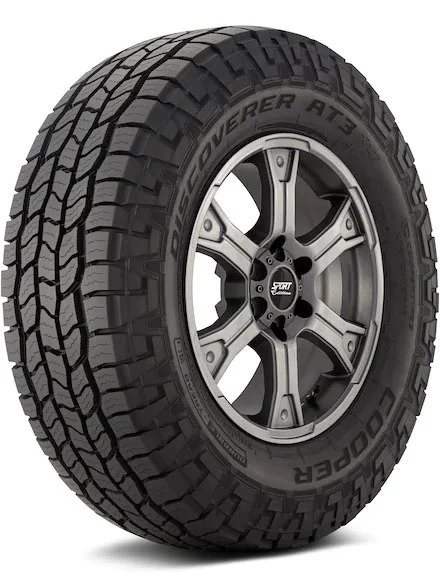
8. Cooper Discoverer AT3 XLT: Best for Heavy-Duty Applications
Price Check
Check the price of this tire at the following retailers:
For owners of heavier trucks and SUVs who need genuine load capacity alongside reasonable noise control, this tire delivers a real, dependable package.
Independently reported testing describes noise levels that are respectable rather than class-leading, with the tire’s construction prioritizing load capacity and off-road durability. Cooper’s tread design handles gravel, dirt, and moderate trail conditions confidently, and the reinforced construction holds up well under sustained heavy loads.
Pros: Genuine load-capacity confidence for heavier vehicles, dependable off-road traction, respectable value.
Cons: Not among the quietest options in this comparison, moderate tread life under heavy use.
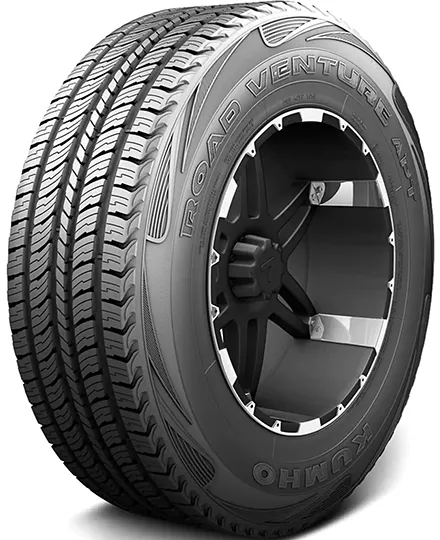
9. Kumho Road Venture APT KL51: Best Budget Pick
Price Check
Check the price of this tire at the following retailers:
For genuinely budget-conscious buyers, this tire delivers reasonable noise control at a price well below most of this comparison.
Independently reported testing describes competent, if not class-leading, noise reduction — real road texture is more audible than on the premium picks, but perfectly tolerable for daily driving. Off-road capability is modest, suited to light gravel and dirt roads rather than genuine trail use. At roughly half the price of premium options, the value proposition is real.
Pros: Genuine value at an accessible price, adequate comfort for daily driving.
Cons: Off-road capability is limited, not a standout on noise specifically.
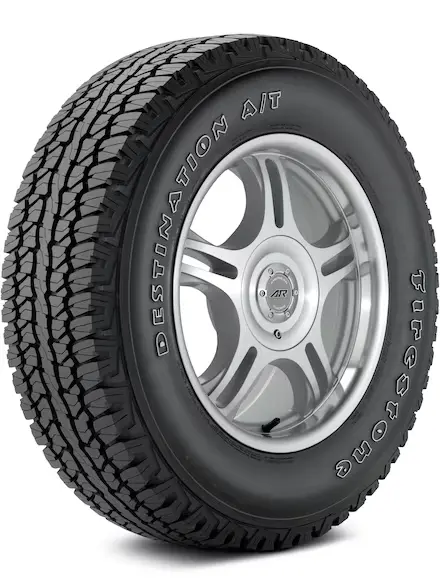
10. Firestone Destination A/T: Best Reliable Budget Option
Price Check
Check the price of this tire at the following retailers:
This tire delivers genuinely dependable, unremarkable-in-the-best-way performance for owners who want an affordable, quiet-enough all-terrain without surprises.
Independently reported testing describes solid noise control for the price tier, with a tread design that balances reasonable quiet against real, adequate off-road capability. It won’t lead this comparison in any single category, but it doesn’t have a glaring weakness either — a sensible default for budget-conscious daily drivers.
Pros: Genuine reliability at an accessible price, balanced performance across categories.
Cons: Not a standout leader in noise or off-road capability specifically.
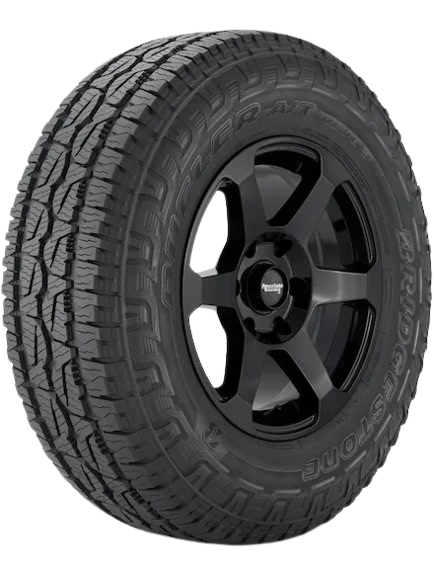
11. Bridgestone Dueler A/T Revo 3: Best All-Around Alternative
Price Check
Check the price of this tire at the following retailers:
This tire rounds out the comparison as a genuinely well-rounded alternative to the top picks, with independently reported testing describing real noise control alongside dependable off-road grip.
Bridgestone’s tread compound and pattern deliver a composed highway ride, and the tire handles gravel, dirt, and moderate trail conditions with real confidence. Tread life is respectable, and this represents a solid choice for owners who want a known, trusted brand without stepping up to the premium tier.
Pros: Genuine well-rounded performance, dependable Bridgestone construction, solid off-road capability.
Cons: Not the quietest or most capable specialist in any single category.
Balancing Noise and Off-Road Capability
Finding the right balance between quiet on-road performance and genuine off-road traction depends on how the vehicle is actually used, not just aspirationally.
Drivers who mostly stay on pavement with occasional light off-roading should prioritize the quietest picks in this comparison — the Falken Wildpeak A/T Trail or Michelin LTX A/T2 — while still confirming adequate tread depth and traction for those infrequent trips.
Drivers who genuinely tackle challenging trails or unpaved surfaces regularly should prioritize off-road capability first — the BFGoodrich KO3 or Toyo Open Country A/T III deliver the strongest combination of real trail capability with meaningfully better noise control than a dedicated mud-terrain.
Proper Maintenance for Quiet Performance
Maintain correct tire pressure. Underinflated tires flex excessively and generate real, avoidable noise; overinflated tires stiffen the ride and transmit more road noise into the cabin. Check pressure monthly against the door jamb specification.
Rotate regularly. Uneven wear genuinely makes tires noisier over time. Rotating every 5,000–8,000 miles per manufacturer guidance keeps wear even.
Keep wheels aligned and balanced. Misaligned or imbalanced wheels cause real, avoidable vibration and noise, particularly after hitting a significant pothole or curb.
Inspect for damage regularly. Cuts, bulges, or other sidewall damage can genuinely increase noise and compromise safety — a routine visual check catches problems early.
Check suspension components. Worn shocks or struts can cause excessive vibration that’s easy to mistake for tire noise. If noise increases despite good tires, having the suspension inspected is a sensible next step.
When to Replace a Noisy All-Terrain Tire
Tread depth below 4/32″. As tread wears down, the noise-reducing pattern becomes shallower and less effective — genuine, audible noise increase is a real early warning sign before the legal 2/32″ minimum.
Cupping or uneven wear. Bald spots or scalloped wear patterns create a rhythmic thumping noise, often signaling suspension issues or a missed rotation — worth addressing at the root cause, not just with a new tire.
Tire age. Even with adequate tread, rubber hardens and gets noisier as it ages. Most manufacturers recommend replacement after 6 years regardless of remaining tread depth.
How Tire Noise Is Actually Measured
Understanding how the industry measures tire noise helps make sense of manufacturer claims and independent test results alike.
The Coast-By Noise Test is the most common standardized method — a vehicle coasts past a microphone at a specific speed and distance with the engine off, isolating tire noise from other vehicle sounds. This produces a genuinely comparable decibel figure across different tires tested under the same conditions.
The Drum Noise Test mounts a tire on a large rotating drum and measures noise at various speeds and simulated loads in a controlled environment, eliminating the variability of real road surfaces and weather. Manufacturers use this during development to isolate exactly which design changes affect noise output.
Real-world noise perception varies by vehicle type, cabin insulation, road surface, and individual sensitivity, so these standardized figures are a useful comparison baseline rather than a guarantee of exactly what any specific driver will experience.
A tire that tests as meaningfully quieter in controlled conditions will still generally feel quieter in daily use, even if the exact decibel gap isn’t identical.
Why Tread Pattern Technology Matters More Than It Looks
The visual aggressiveness of a tread pattern doesn’t tell the whole noise story, and this is a genuinely common point of confusion for shoppers comparing tires by photos alone.
Two tires can look similarly aggressive while producing very different noise levels, because the real noise-reduction work happens in details that aren’t obvious at a glance — the specific sequencing and spacing of tread blocks around the tire’s circumference.
A tread pattern with evenly spaced, uniform blocks creates a single dominant frequency as each block strikes the pavement at a consistent interval, and that repetitive frequency is what the human ear perceives as an annoying drone.
Variable-pitch designs deliberately vary the size and spacing of tread blocks around the tire, scattering the resulting noise across multiple frequencies instead of concentrating it into one.
The net effect is a genuinely quieter perceived sound even when the total noise energy produced is similar — the ear finds scattered, varied noise less fatiguing than a single persistent tone.
Choosing the Right Tire for Your Situation
Want the strongest balance of quiet and capability: the BFGoodrich KO3 remains the tire to beat.
Noise reduction is the top priority: the Falken Wildpeak A/T Trail delivers the quietest ride in this comparison.
Working with a tighter budget: the General Grabber APT delivers real value without a significant noise penalty.
Driving a truck that tows or hauls regularly: the Toyo Open Country A/T III handles load confidently while staying genuinely quiet.
Frequently Asked Questions
What is the quietest all-terrain tire available right now?
The Falken Wildpeak A/T Trail and Michelin LTX A/T2 consistently rank among the quietest all-terrain tires in independent testing, using variable-pitch tread designs specifically engineered to reduce highway drone. Both trade some outright off-road aggression for that refinement.
Do quiet all-terrain tires sacrifice off-road capability?
To some degree, yes, though the gap has narrowed meaningfully in recent years. The BFGoodrich KO3 and Toyo Open Country A/T III both deliver genuine off-road capability while remaining noticeably quieter than older-generation all-terrain tires with similarly aggressive tread.
How much noise reduction can I actually expect from switching to a quiet all-terrain tire?
Independently reported testing shows differences of 5–8 decibels between the loudest and quietest tires in this category at highway speed — a real, easily perceptible difference in cabin noise, roughly comparable to the difference between a normal conversation and a noticeably raised voice.
Will tire pressure affect how loud my all-terrain tires are?
Yes, genuinely. Underinflated tires flex excessively and generate more noise, while overinflated tires stiffen the ride and can transmit more road noise into the cabin. Keeping pressure at the manufacturer-recommended level is a real, free way to minimize noise.
How long do quiet all-terrain tires typically last?
Most quality all-terrain tires in this comparison last 50,000 to 70,000 miles with proper rotation and maintenance, with the Michelin LTX A/T2 and Toyo Open Country A/T III leading on tread life. Off-road use, towing, and skipped rotations can meaningfully shorten that figure.
What’s the best quiet all-terrain tire for a truck that tows?
The Toyo Open Country A/T III and Cooper Discoverer AT3 XLT both deliver genuine load-capacity confidence alongside reasonable noise control, making them strong choices for trucks that regularly tow or haul.
Is it worth paying more for a premium quiet all-terrain tire over a budget option?
For most drivers, yes, particularly those who spend significant time on the highway. Premium options like the BFGoodrich KO3 or Michelin LTX A/T2 deliver a genuinely more refined ride and typically longer tread life, while budget picks like the General Grabber APT or Kumho Road Venture APT KL51 remain a reasonable choice for drivers prioritizing price above outright refinement.
