

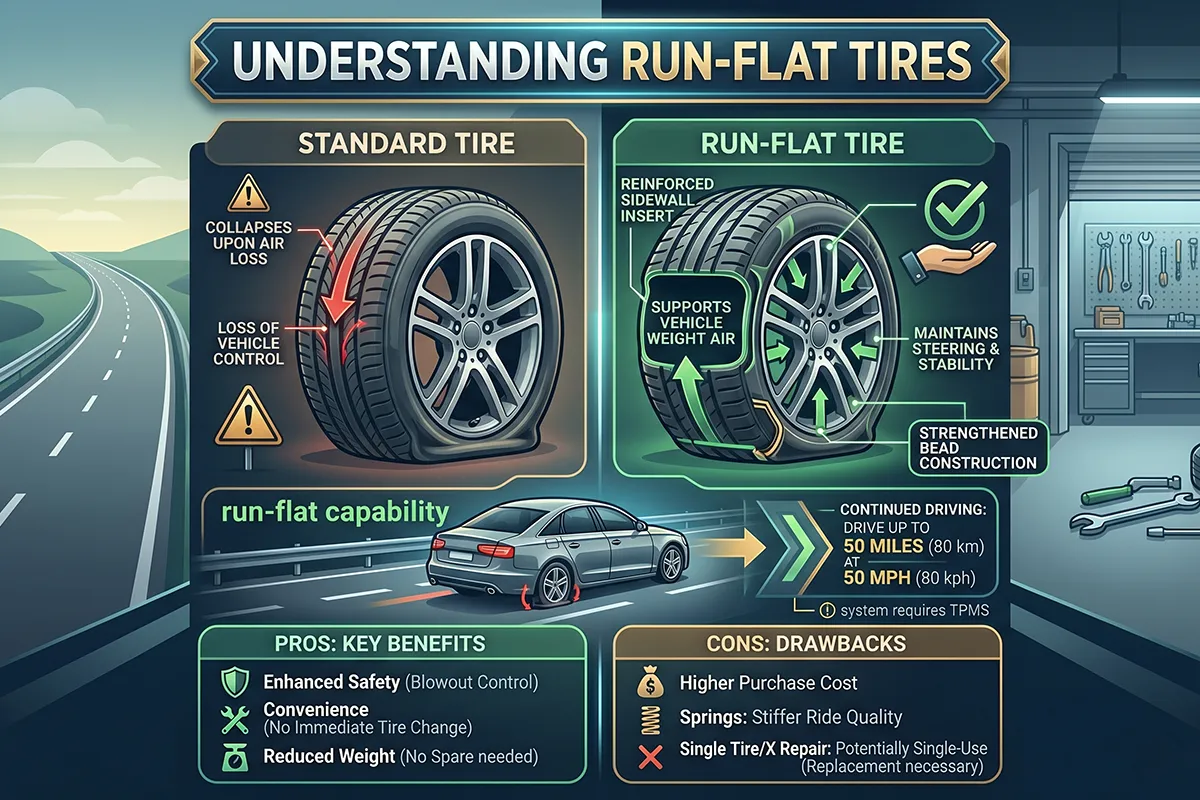
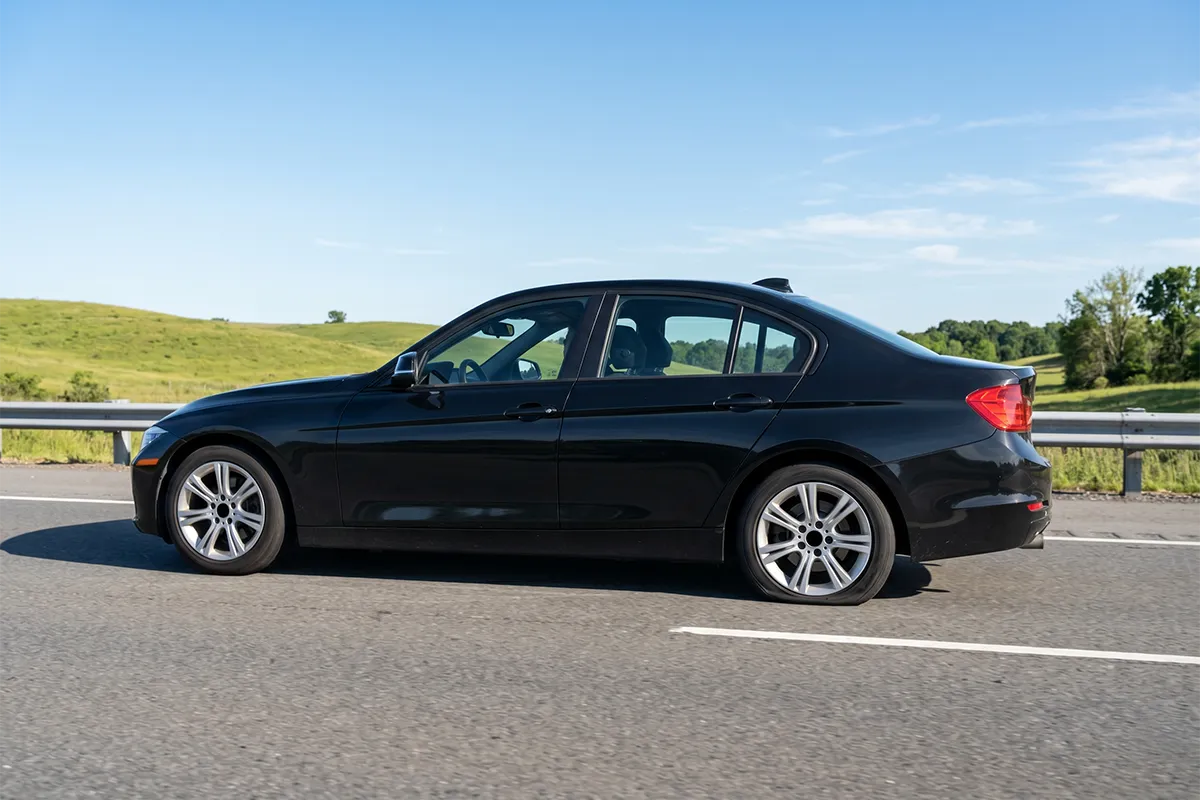
I was doing 65 mph on I-95 when I heard that unmistakable thump. By the time I pulled over, my left rear was completely flat — except I was on run flat tires, and my car hadn’t even flinched. That single moment changed how I think about tire technology forever.
Run flat tires let you keep driving for up to 50 miles at 50 mph after a complete loss of pressure. They’re standard on most BMWs and many other luxury vehicles. The tradeoff? A harsher ride, higher replacement cost, and the fact that most tire shops can’t (or won’t) repair them. If your car came with them, understand the rules before you drive on one. If you’re considering switching, read this entire guide first.
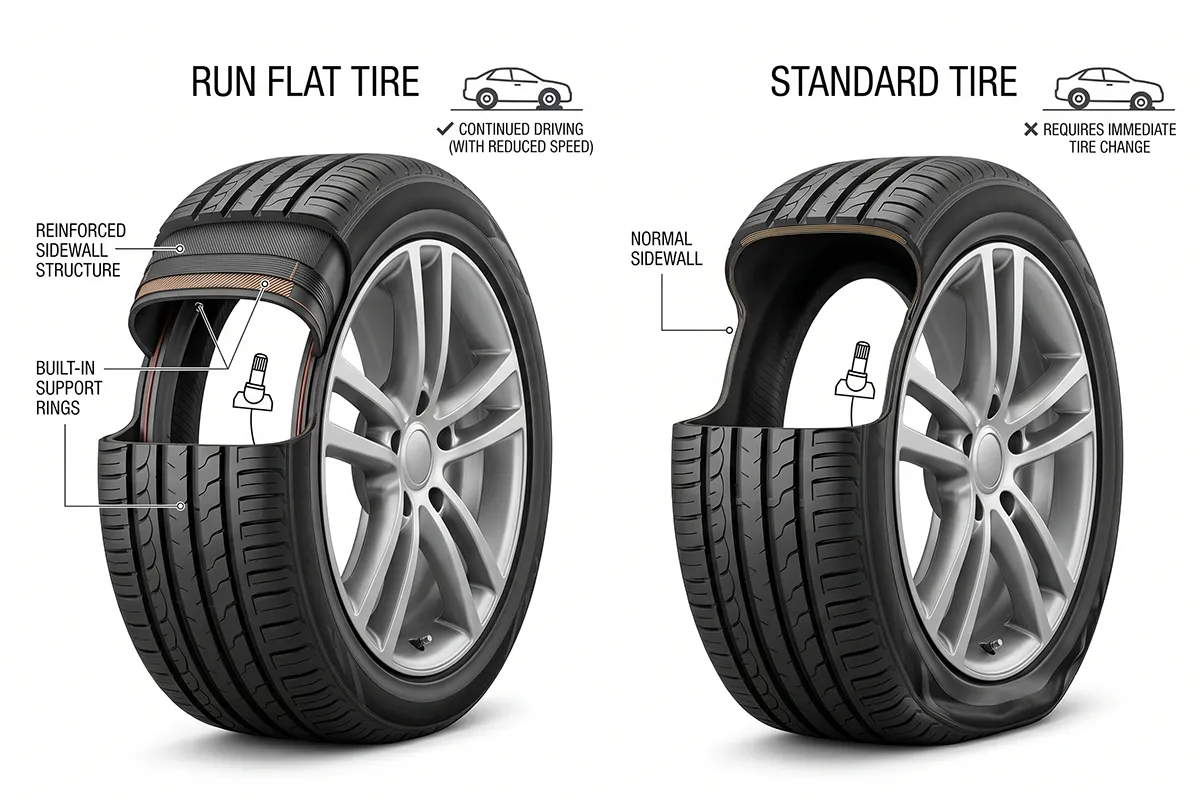
Cross-section diagram of a run flat tire showing reinforced sidewall structure compared to a standard tire
Liked this article?
Add TireAdvise as a preferred source so you see more of our tire reviews and guides on Google.
What Exactly Are Run Flat Tires?
The first time someone asked me to explain run flat tires in plain English, I said this: imagine a tire that refuses to give up even when it has every reason to.
A run flat tire is a specially engineered tire that can continue to function — hold the car up, steer correctly, and stay on the rim — even after it loses all air pressure.
This is possible because of one key design feature: reinforced sidewalls made of heat-resistant rubber compounds that are stiff enough to support the vehicle’s weight without any air inside.
Standard tires rely entirely on air pressure for their structural integrity. When that pressure disappears, the sidewall collapses almost instantly.
You’ve seen it — that terrifying wallowing, the car pulling violently, the rim grinding on the pavement. With a run flat, none of that happens. The tire stays dimensionally stable. You keep control. You keep driving.
There are actually three main types of run flat tire designs, and most people have no idea the differences exist:
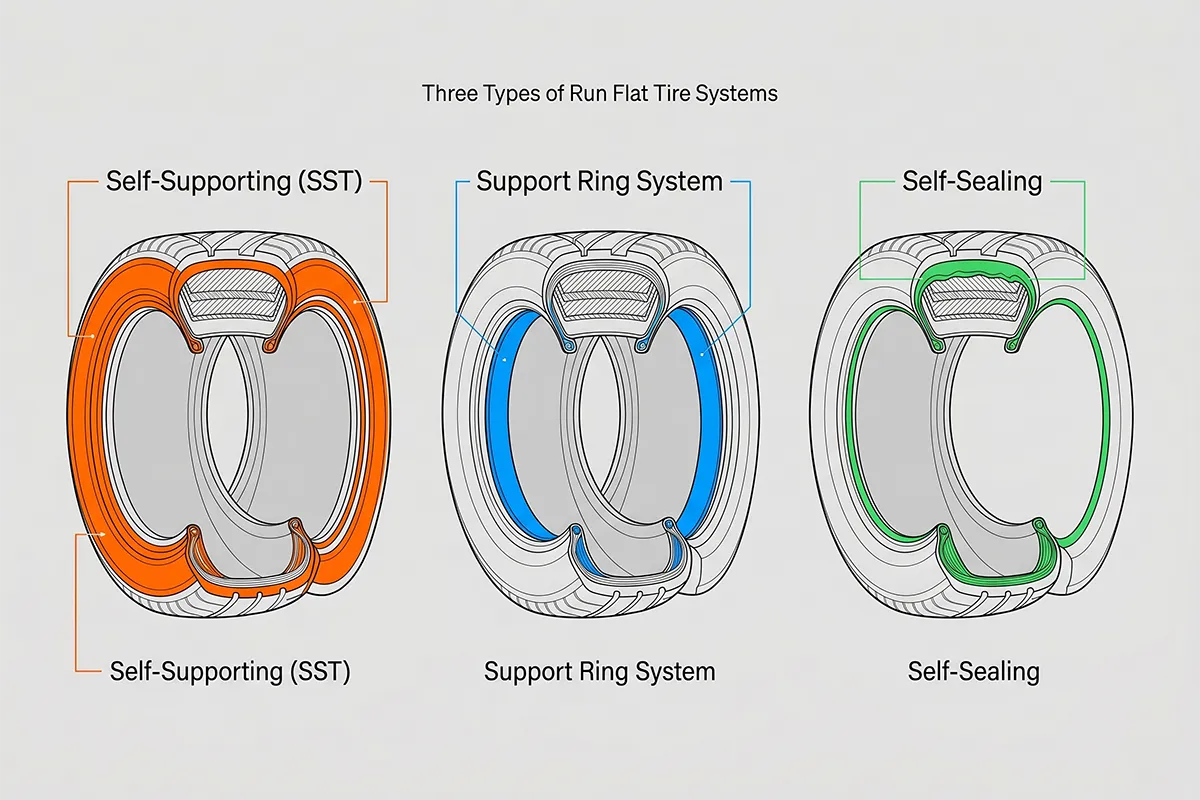
Three types of run flat tire systems: self-supporting sidewall, support ring system, and self-sealing liner” Image generation prompt: “Clean educational illustration showing three tire cross-sections side by side on a light gray background. First tire labeled ‘Self-Supporting (SST)’ with thick reinforced sidewalls highlighted in orange. Second tire labeled ‘Support Ring System’ showing an internal polymer ring highlighted in blue. Third tire labeled ‘Self-Sealing’ with a visible sticky sealant layer just inside the tread, highlighted in green. Minimal, modern diagram style with clean sans-serif labels. No people. Technical yet accessible aesthetic.
Self-Supporting Run Flats (SST) — By far the most common type you’ll encounter. The reinforced sidewall rubber is built directly into the tire construction. This is what BMW, Mini, and most other automakers use as factory equipment. When pressure drops, the sidewall bears the load.
Support Ring Systems — A rigid ring made of polymer or metal is mounted inside the wheel alongside the tire. When the tire goes flat, the ring carries the vehicle. These are far less common on passenger vehicles but show up in some military and specialty applications.
Self-Sealing Tires — These contain a sticky sealant layer just inside the tread area. Small punctures (nail, screw) get sealed automatically before significant pressure loss occurs. These technically aren’t “run flats” in the traditional sense — they prevent the flat rather than letting you drive on one.
For this guide, I’m focusing almost entirely on self-supporting run flats because those are the ones you’re most likely dealing with.
How Run Flat Tires Actually Work
Here’s what I find genuinely fascinating about the engineering: it’s not complicated in concept, it’s just difficult to execute.
When a standard tire loses pressure, the load-bearing job transfers from the air column to the sidewall. A standard sidewall isn’t designed for this. It buckles, folds, and within seconds you have a blowout situation.
A run flat sidewall is manufactured from a much denser rubber compound with internal reinforcement. When fully inflated, it behaves essentially like a normal tire — the air carries the weight, the sidewall flexes naturally to absorb bumps and provide grip. The stiffness is mostly unnoticeable.
When pressure drops to zero, the sidewall stops flexing and starts supporting. The heat-resistant compound prevents the rubber from breaking down quickly under the compression. This is what buys you those critical 50 miles.
And yes, the 50 miles / 50 mph rule is real, but let me be clear about what that actually means: it’s a maximum, not a guarantee. I’ve seen people push run flat tires to 70+ miles on zero pressure and replace them successfully.
I’ve also seen them develop internal damage after 20 miles of aggressive driving. Your speed, road conditions, vehicle weight, and the specific tire all affect how long it holds up.
The most important thing to know: your car needs a Tire Pressure Monitoring System (TPMS) if it runs run flat tires. Unlike a standard flat where you feel and hear it immediately, a run flat on zero pressure can feel surprisingly normal.
Without TPMS, you might not even realize you’ve had a puncture until you’re past the safe operating window. Every car sold in the US after 2008 is required by law to have TPMS, but if you’re buying a used vehicle or aftermarket tires, verify this.
Run Flat Tires vs. Regular Tires: The Real Comparison
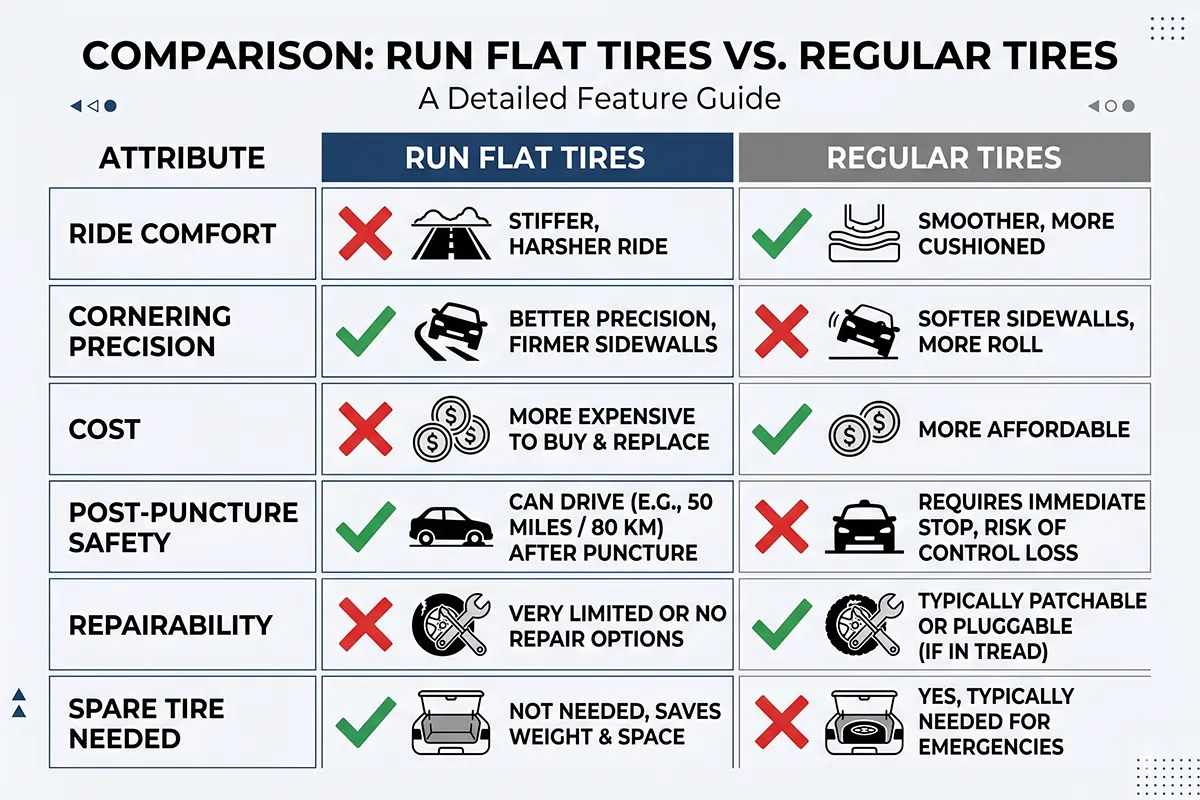
I’ve driven both extensively — on daily drivers, on spirited canyon roads, on highway road trips. Here’s what actually matters in the comparison:
Ride Quality
This is where run flats take their biggest hit in reputation, and honestly, the criticism is fair. The stiffer sidewall that makes run flats work is the same thing that transmits more road noise and harshness into the cabin.
On smooth highway pavement, the difference is subtle. On broken city streets or rough asphalt, it can be genuinely fatiguing over a long drive.
I drove the same stretch of Connecticut backroads in two identical 3-Series BMWs — one on factory run flats, one retrofitted with conventional Michelin Pilot Sport 4S tires.
The conventional tire car was noticeably more comfortable, full stop. Not dramatically so, but enough that passengers asked about it without prompting.
That said, tire manufacturers have made real progress here. Bridgestone’s DriveGuard run flat line and Michelin’s Primacy run flat series are meaningfully more comfortable than older run flat designs. The gap has narrowed considerably in the last five years.
Handling and Performance
Here’s where run flats actually hold their own, and it surprises most people. Because the sidewall is stiffer, run flat tires exhibit less lateral flex in corners. This translates to sharper, more predictable turn-in response.
Performance driving enthusiasts who’ve spent time on track sometimes prefer run flat sidewall stiffness precisely because of this.
The tradeoff is that the same stiffness reduces compliance over mid-corner bumps, which can unsettle the car. For street driving, this rarely matters. On a track, it’s noticeable.
Cost
Run flat tires are consistently more expensive than equivalent conventional tires. How much more? It varies by brand and size, but expect to pay 30–50% more per tire. For a BMW 3-Series running 225/45R18 rear tires, that difference can easily be $50–$100 per tire.
Multiply that by four tires and you’re looking at $200–$400 more per set. Over the life of your car ownership, that adds up meaningfully.
Repairability
This is where things get complicated — and where I see the most confusion and frustration from drivers.
The official answer: Most run flat tire manufacturers and automakers state that run flat tires that have been driven on at zero pressure should not be repaired and must be replaced. Period.
The practical reality: Whether a driven-flat run flat can be repaired depends entirely on the extent of internal damage. A run flat that was at zero pressure for five miles at low speed may have sustained minimal internal damage. One that was driven aggressively at high speed for 40 miles almost certainly has compromised internal structure that’s invisible from the outside.
The problem is that the only way to truly assess internal damage is to dismount the tire and inspect it thoroughly — which most shops won’t do because the liability isn’t worth it to them.
I have a dedicated post on this topic: Can You Repair, Patch, or Plug a Run Flat Tire? It goes deep on exactly what damage to look for, which shops are capable of performing the inspection, and what questions to ask.
Spare Tire
Vehicles equipped with factory run flat tires almost universally eliminate the spare tire. That’s intentional — run flats are meant to make the spare unnecessary. This saves significant weight and frees up space (especially relevant in BMW’s trunk designs).
If you switch from run flats to conventional tires on a car that was originally spec’d with run flats, you’ll need to either purchase a spare (and potentially a jack and lug wrench, which may also have been deleted) or plan accordingly with roadside assistance coverage.
Run Flat Tire Disadvantages: What the Brochures Don’t Tell You
I want to be direct here because I think this is where most guides pull their punches.
The ride quality compromise is real. I’ve already covered this, but I want to reinforce it: if you are buying a performance-oriented car that you want to enjoy on imperfect roads, the run flat ride penalty is meaningful. It’s not a deal-breaker for most people, but it’s not imaginary either.
Run flat tires have lower load ratings in some configurations. Because the sidewall structure consumes space that would otherwise hold air, some run flat tires have slightly reduced load capacity compared to their conventional equivalents. For most passenger car applications this is irrelevant. For drivers who tow, carry heavy loads, or drive with full passenger capacity regularly, verify the load rating before selecting a run flat.
Availability can be a problem. In a major metro area, you’ll find run flat tires. In rural areas or on a road trip through less-populated states, the specific size and type you need may not be stocked locally. I’ve had clients stranded for two days waiting for the correct run flat to be shipped because no shop within 100 miles carried their BMW’s specific tire.
The “50 miles” is not a guarantee. I’ve stressed this, but it bears repeating. Aggressive driving, a heavy vehicle, high ambient temperatures, or an irregular internal wound (sidewall puncture vs. tread puncture) can all reduce your actual safe operating distance dramatically.
Heat buildup is a silent killer. Run flat tires operating on zero pressure generate substantially more heat than a conventionally inflated tire. This heat accelerates internal degradation. The faster you’re going and the longer you drive, the worse it gets. I’ve seen thermographic images of zero-pressure run flats that were running hot enough to concern me from a structural standpoint.
Are Run Flat Tires Right for You?
After spending years in this, here’s how I actually think about this question:
Run flat tires make strong sense if:
- Your car came with them from the factory (BMW, Mini, Cadillac, and some Mercedes models)
- You drive alone frequently and the idea of changing a flat on a dark highway makes you uncomfortable
- You do a lot of highway driving where a sudden flat at speed is a real safety concern
- You’re comfortable with the cost premium and can plan around availability
Consider switching to conventional tires if:
- Ride quality is a priority and your car feels harsher than you’d like
- You’re in an area where run flat availability is limited
- You’ve already purchased a quality aftermarket spare and roadside assistance
- Your car’s original run flats have worn out and you’re open to alternatives
For BMW owners specifically — you’ll find this a more nuanced decision because BMW designed their suspension geometry around run flat tire stiffness.
Some drivers who switch to conventional tires find the car handles differently (sometimes better, sometimes worse) because BMW’s suspension tuning assumed a certain sidewall stiffness. I have a full breakdown in my BMW-specific guide: Run Flat Tires for BMW.
How to Tell If Your Tires Are Run Flat
This question comes up constantly, especially when someone buys a used car. The short answer: don’t guess — look for the markings.
Every tire manufacturer uses a sidewall marking to indicate run flat capability, but they don’t all use the same code. Here’s what to look for:
- Bridgestone/Firestone: RFT (Run Flat Technology) or ROF (Run on Flat)
- Continental: SSR (Self Supporting Runflat)
- Dunlop: DSST (Dunlop Self-Supporting Technology) or ROF
- Goodyear: RunOnFlat or ROF
- Michelin: ZP (Zero Pressure)
- Pirelli: r-f (run flat) — also used in the P Zero Corsa system
- Yokohama: ZPS (Zero Pressure System)
Look at the sidewall of your tire, near the size markings (like 225/45R18). The run flat designation will typically appear somewhere close to the size code or in the brand lettering area.
If the markings are worn or unclear, the second option is your owner’s manual — it will specify if the vehicle was equipped with run flat tires from the factory and what replacement specifications apply.
I have a complete visual identification guide in my dedicated post: How to Tell If Your Tires Are Run Flat
FAQ: Your Most Common Run Flat Tire Questions
Can I mix run flat and regular tires on the same car?
Technically possible, practically inadvisable. Mixing creates significant handling differences between axles because of the stiffness differential. Most manufacturers explicitly prohibit mixing. Don’t do it.
My TPMS light is on. How long can I drive on a run flat?
The moment your TPMS warning activates for low pressure, drive at or below 50 mph, head directly toward a tire shop or safe location, and don’t exceed 50 miles. Stop sooner if you feel any unusual vibration, pulling, or if the car handles oddly.
Can I use a tire plug on a run flat?
In most cases, no — especially if the tire has been driven on at zero pressure. A plug alone is never sufficient on any tire; proper repair requires an internal patch and plug combination, which requires dismounting and full internal inspection. After zero-pressure operation, internal damage assessment becomes the primary concern. See my full repair guide for details.
Do run flat tires last as long as regular tires?
Generally yes, assuming they’ve never been driven on at zero pressure. A properly maintained run flat that’s never sustained a puncture will wear at roughly the same rate as a comparable conventional tire. In fact, because drivers sometimes unconsciously maintain better tire pressure on run flat-equipped vehicles (relying on the run flat capability creates a false sense of security), neglected pressure can accelerate wear on any tire.
Are all P Zero tires run flat?
No. Pirelli’s P Zero family includes both standard and run flat versions. Run flat versions are marked with “r-f” on the sidewall. The specific models that come as OEM fitment on BMW M cars are typically run flat; after-market P Zero purchases may or may not be. Always check the sidewall marking and the product listing before purchasing.
My Honest Verdict After Years of Testing
I’ve driven on run flats in summer heat on the Eastern Seaboard, in winter on salted Minnesota highways, and on canyon roads in California where I could feel every sidewall flex. I’ve replaced them, had them evaluated post-puncture, and watched shop technicians debate their repairability.
Here’s where I land: run flat tires are genuinely excellent at the specific thing they were designed for — getting you safely to a service location after a puncture. That capability is real, meaningful, and potentially life-saving in the right circumstances.
The complaints about ride quality, cost, and repairability are also real. They’re not exaggerated by conventional tire enthusiasts trying to win an argument.
If your car came with run flats, my recommendation is to stay with them unless ride quality is actively bothering you, you’ve researched the suspension geometry implications for your specific vehicle, and you’ve made a solid plan for spare tire and roadside coverage.
Switching just to save money on replacement tires often doesn’t pencil out when you account for the full cost of conventional tire setup.
If you’re spec-ing tires on a new build or a car where you have flexibility, weigh your priorities honestly. Comfort-focused driver doing city miles? Conventional tires with a good spare setup. Solo highway commuter who dreads roadside situations? Run flats are worth the premium.
The technology has improved dramatically and it will keep improving. The ride quality gap is narrowing. As TPMS systems become more sophisticated and tire compounds continue to evolve, many of the historical objections to run flats will become less valid. We’re not there yet, but we’re closer than we were five years ago.
Did this guide help you decide? I’d love to hear what you went with and how it’s working for your car in the comments below. And if you’re dealing with a specific situation — punctured run flat, BMW OEM replacement questions, or trying to decode your sidewall markings — drop the details and I’ll do my best to give you a useful answer.
Related Guides:
- Can You Repair, Patch, or Plug a Run Flat Tire
- How to Tell If Your Tires Are Run Flat
- Run Flat Tires for BMW
Author has personally tested run flat tires across multiple vehicle platforms. No tire manufacturers paid for or influenced this review.
