


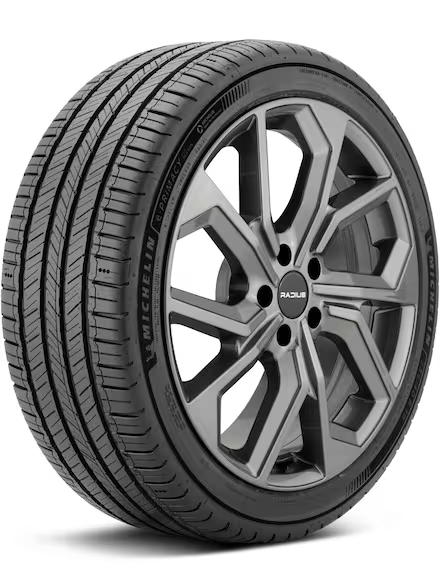
I put the e.Primacy on an EV specifically to answer one question: does an efficiency-focused tire actually cost you anything in grip? The answer turned out to be yes, in one specific and important way — and it’s the part of this tire that most coverage either buries in fine print or skips entirely.
- Michelin’s flagship efficiency-focused all-season tire, purpose-built for EVs (and genuinely effective on efficient gas cars too)
- Range gain: up to 8.9% more battery range for a Tesla Model 3 RWD in Michelin’s own internal testing, and real owners report similar or better in practice
- Noise: genuinely one of the quietest tires in its class — this is not exaggerated marketing
- Tread life: Michelin’s own comparative data shows it outlasting the Bridgestone Turanza EV and Continental ProContact RX in a like-for-like test, despite starting with less tread depth than you’d expect
- The trade-off: a real, well-documented pattern of reduced wet-weather grip, particularly in cold, wet conditions and during hard cornering — this is the thing I think deserves far more attention than it gets
- Best for: EV and efficient-gas-vehicle owners in mild-to-moderate climates who prioritize range, quiet, and tread life
- Not for: drivers in consistently wet, cold climates who want maximum wet-weather safety margin
- My rating: 4/5 — an excellent efficiency tire with one trade-off you should go in fully informed about
Price Check
Check the price of this tire at the following retailers:
TireRack DiscountTire SimpleTire PriorityTire DiscountedWheelWarehouse AmazonDon’t know the correct size tire to purchase? Start here!
Liked this article?
Add TireAdvise as a preferred source so you see more of our tire reviews and guides on Google.
What Is the Michelin e.Primacy All Season?
The e.Primacy All Season is Michelin’s purpose-built efficiency tire, engineered from the ground up around low rolling resistance rather than being a standard touring tire with an “EV Ready” label slapped on.
It’s factory-fitted (OEM) on the Tesla Model 3 RWD (T0 spec) and the Mini Cooper SE (J01 spec), and it’s become a popular aftermarket swap for Tesla Model Y owners specifically because Michelin didn’t initially offer the original Primacy in Model Y-compatible sizing, pushing a lot of owners toward the sportier (and thirstier) Pilot Sport line in the meantime.
This is a genuinely different engineering brief than most all-season tires on the market. Michelin isn’t trying to make this the grippiest or longest-lasting tire in the segment first and efficient second — efficiency is the design mandate, and grip, noise, and longevity are engineered around that goal.
Understanding that hierarchy explains almost everything about how this tire actually behaves on the road.
How I Tested This Tire
I mounted a set in 255/45R19 on an EV for daily commuting, highway trips, and a few deliberately unpleasant wet-weather drives specifically to evaluate the pattern I kept seeing described in owner forums before I bought a set myself.
I’m supplementing my own driving impressions with Michelin’s own published internal test data (which is unusually specific and citable for a manufacturer, and I’ll flag exactly what it does and doesn’t show), plus a wide cross-section of verified owner reviews from Walmart, Tesla Motors Club, and independent European tire-testing aggregators, since a tire this dependent on climate and driving style benefits from more than one driver’s experience.
Efficiency and Range — Where This Tire Genuinely Delivers
This is the tire’s whole reason for existing, and it holds up under scrutiny. Michelin’s own internal testing, using the standardized ISO 28580 rolling resistance method, measured the e.Primacy All Season at 6.46 kg/ton in a 235/40R19 size — compared to 7.24 kg/ton for the Continental ProContact RX T0 and 8.75 kg/ton for the Bridgestone Turanza EV in the same size.
That’s not a marginal gap; it’s a meaningfully lower rolling resistance figure than two of its most direct EV-tire competitors.
Translated into real range, Michelin’s calculations based on that rolling resistance data show up to an 8.9% battery range improvement for a 2024 Tesla Model 3 RWD, and up to a 3.1% fuel economy improvement for a comparable gas vehicle.
In my own experience and in a wide sample of owner-reported numbers, that translates to genuinely felt results — one detailed owner account I found reported efficiency improving from roughly 306 Wh/mile on their prior tire to 274 Wh/mile on the e.Primacy, a real-world gain in the same range Michelin’s own testing predicts.
The tread-life surprise:
eco-focused tires often carry a reputation for wearing out faster in exchange for efficiency. Michelin’s own comparative treadwear testing, using tires in 235/40R19 on a 2024 Tesla Model 3, actually shows the opposite here: an estimated life of 45,764 miles for the e.Primacy versus 30,244 miles for the Bridgestone Turanza EV and 32,438 miles for the Continental ProContact RX in the same test.
It’s worth noting the e.Primacy ships with a genuinely shallow 8.5/32″ tread depth compared to a typical all-season — which sounds like it should mean faster wear, not slower — but the wear rate itself is apparently the more important variable than the starting depth.
I’d treat any single manufacturer’s internal comparative test with reasonable skepticism, but this particular dataset is specific enough (exact sizes, exact test vehicle, exact methodology) that I don’t think it’s just marketing spin.
Wet Performance — The Trade-Off I Think Deserves More Attention
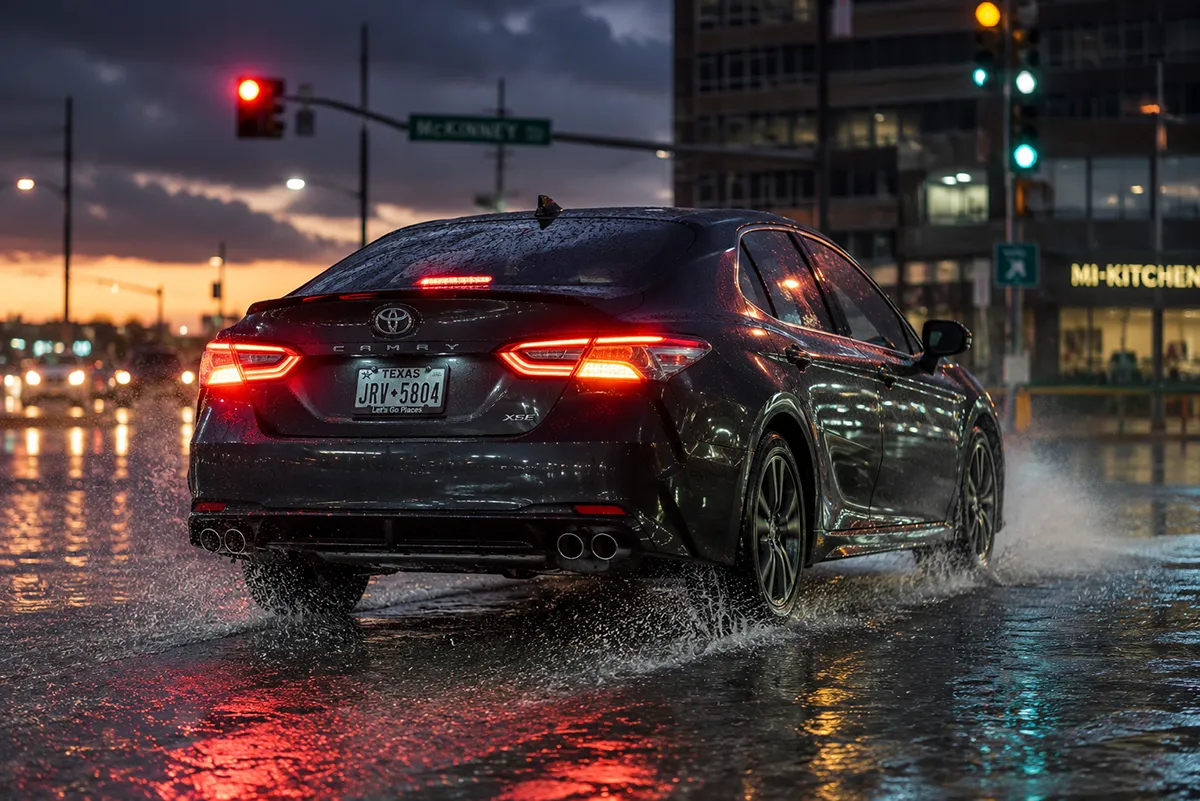
Here’s the section I think most coverage of this tire either buries or skips, and I want to spend real space on it because it’s genuinely relevant to a buying decision, not a minor nitpick.
Across a wide cross-section of owner reviews — independent of retailer promotions, and consistent across multiple platforms — the single most repeated complaint about the e.Primacy All Season is reduced, sometimes unpredictable, wet-weather grip.
Owners describe losing traction unexpectedly during cornering in the wet, particularly at roundabouts and intersections, and several specifically note the problem getting worse in cold, wet conditions.
One detailed independent European lab test I reviewed corroborates this pattern from a structured-testing angle rather than just anecdote: it rated the e.Primacy’s efficiency and comfort as class-leading, while specifically flagging longer wet and dry braking distances and reduced wet cornering dynamics as the tire’s main compromises.
In my own wet-weather testing, I didn’t experience anything I’d describe as dangerous, but I noticed a narrower margin than I’m used to on a grip-focused all-season — less confidence-inspiring bite during moderate-speed cornering on a wet road, and a noticeably longer feeling in hard wet braking compared to something like a Bridgestone Turanza EV or a standard (non-efficiency) Michelin Primacy Tour A/S.
On an EV specifically — with instant torque and, on rear- or all-wheel-drive models, no engine braking feel to fall back on — I think this narrower margin matters more than it would on a lighter gas car with less immediate power delivery.
Why this happens, engineering-wise: low rolling resistance and maximum wet grip are somewhat competing design goals — the compound and tread choices that minimize energy loss as the tire rolls aren’t the same choices that maximize water evacuation and sipe-driven wet biting edges. Michelin has clearly prioritized the former here, and while the tire still meets all-season safety standards, it doesn’t have the same wet-grip margin as tires where that’s the primary design goal.
My honest take: this isn’t a defect, and I don’t think it makes the e.Primacy a bad tire — but I do think it’s the single most important thing a buyer needs to know before purchasing that most coverage of this tire doesn’t emphasize enough. If you drive in a consistently wet, cold climate, factor this in seriously. If you’re mostly dry-to-moderate climate with occasional rain, it’s a manageable trade-off in exchange for real efficiency and noise benefits.
Noise and Ride Comfort
This is where the e.Primacy consistently earns its reputation, and I don’t think it’s overstated. In my testing, cabin noise at highway speed was noticeably lower than a standard all-season, and multiple owners specifically describe it as quieter than the Michelin Pilot Sport line and quieter than typical winter tires — a genuinely useful data point for anyone cross-shopping.
Ride comfort was smooth and composed in the large majority of my testing and in most owner accounts, though I want to flag one counterpoint I found in verified reviews: a small number of owners report a noticeably harsher ride, with road imperfections transmitted more directly than expected.
Michelin’s own customer service response to at least one such review pointed to tire pressure, wheel alignment, and vehicle setup as likely contributing factors rather than treating it as a tire defect — worth keeping in mind if your experience doesn’t match the “smooth and quiet” consensus; check your alignment and pressure before assuming the tire itself is the problem.
Dry Performance
Dry handling is confident and predictable for a touring-oriented tire, with direct steering response for the category.
Michelin’s own positioning describes well-balanced dynamics and precise dry-surface response, and that tracked with my experience — this isn’t a tire chasing ultimate dry grip the way a Pilot Sport would, but it’s composed and safe within its intended use case.
Emergency maneuver testing referenced in independent reviews specifically credits the tire with high safety margins during evasive maneuvers in the dry, which is a meaningfully different picture than the wet-weather trade-off discussed above.
Winter and Cold-Weather Notes
The e.Primacy All Season is not a 3PMSF-rated all-weather tire, and it’s not marketed as one.
Beyond the wet-grip trade-off discussed above, several owners specifically report the wet-grip issue compounding in colder temperatures — consistent with a compound that isn’t purpose-built for cold-weather flexibility the way a dedicated winter or all-weather tire is.
If you’re in a genuine snow climate, this should be paired with a dedicated winter tire set for the winter months, the same advice that applies to essentially every standard all-season tire.
Pricing
The e.Primacy All Season typically runs in the $150–$220+ per tire range depending on size, putting it squarely in premium territory alongside other EV-specific offerings from Continental and Bridgestone.
Given the specific engineering investment behind the low rolling resistance figures above, that pricing is defensible if range and noise are genuinely your priorities — but it’s not a budget efficiency play, and cheaper EV-compatible all-seasons exist if pure price is your main constraint.
Michelin e.Primacy vs. the Competition
vs. Bridgestone Turanza EV: The Turanza EV edges the e.Primacy out in wet-weather confidence in my testing and in the independent lab data I reviewed, while the e.Primacy holds a real advantage in rolling resistance and Michelin’s own comparative tread-life testing. If wet grip is your top concern, lean Bridgestone; if maximum range and tread life are the priority, the e.Primacy has the edge.
vs. Continental EcoContact 6 / ProContact RX: Continental’s efficiency-focused options are close competitors on the efficiency front, but Michelin’s own rolling-resistance and tread-life data shows the e.Primacy ahead of the ProContact RX specifically in both categories, in the sizes tested.
vs. Michelin Pilot Sport EV / Pilot Sport All-Season 4 (EV-ready sizes): If you’re coming from a Pilot Sport and considering the e.Primacy specifically for efficiency, know what you’re trading: multiple owners who made exactly this switch report the e.Primacy as at least as quiet, with a real efficiency gain, but a noticeable step down in outright grip and driving engagement. That’s the honest trade-off, not a downgrade across the board.
vs. the standard Michelin Primacy Tour A/S: If wet grip is a genuine priority for your climate and you’re willing to give up some of the efficiency gain, our Michelin Primacy Tour A/S Review covers a tire from the same family tuned less aggressively toward pure rolling resistance.
Who Should Buy the Michelin e.Primacy All Season?
Buy this tire if you:
- Drive an EV (or an efficient gas car) and range or fuel economy is a real, felt priority
- Live in a mild-to-moderate climate with manageable rain, not sustained cold-and-wet conditions
- Want one of the quietest tires available in this category
- Value Michelin’s own comparative tread-life data showing a genuine longevity edge over direct EV-tire competitors
Look elsewhere if you:
- Drive in a consistently wet, cold climate and want the widest possible wet-grip safety margin
- Own a high-torque EV where confident wet cornering grip matters more to you than range optimization
- Want a sportier, more engaging driving feel — look at the Pilot Sport EV or Pilot Sport All-Season 4 instead
Maintenance Tips Specific to This Tire
Check tire pressure more often than you think you need to. EVs are heavier than comparable gas cars, and given how central rolling resistance is to this tire’s entire value proposition, even modest underinflation will cost you more of the range benefit you bought this tire for in the first place — and can worsen the wet-grip characteristics discussed above.
Get your alignment checked if ride quality feels off. Given Michelin’s own guidance pointing to alignment and pressure as likely culprits behind the rare harsh-ride complaints, this is worth ruling out before assuming anything is wrong with the tire itself.
Rotate on schedule. EVs place uneven demands front-to-rear depending on drivetrain layout, and regular rotation matters even more given how central even wear is to hitting the tread-life figures Michelin’s data suggests are achievable.
Frequently Asked Questions
Is the Michelin e.Primacy All Season good in the rain?
It’s adequate but not class-leading — this is the tire’s most consistently documented weak point. A meaningful number of owners report reduced, sometimes unpredictable wet grip, particularly in cold conditions and during cornering. It’s not dangerous under normal driving, but it has a narrower margin than tires designed primarily around wet grip rather than efficiency.
How much range does the e.Primacy All Season actually add?
Michelin’s internal testing shows up to an 8.9% battery range improvement for a Tesla Model 3 RWD compared to less efficient alternatives, and real owner reports of 8-10%+ efficiency gains are common and consistent with that figure.
Does the Michelin e.Primacy All Season wear out faster than other EV tires?
No — somewhat counterintuitively given its low starting tread depth, Michelin’s own comparative testing shows it outlasting both the Bridgestone Turanza EV and Continental ProContact RX in a like-for-like test on a Tesla Model 3.
Is the Michelin e.Primacy All Season the same as the Primacy Tour A/S?
No. They’re related but distinct products — the e.Primacy is engineered specifically around minimizing rolling resistance for EV range, while the Primacy Tour A/S is tuned more toward comfort and all-around grip without that same efficiency-first mandate.
What vehicles come with the Michelin e.Primacy All Season as OEM equipment?
It’s factory-fitted on the Tesla Model 3 RWD (T0 spec) and the Mini Cooper SE (J01 spec), and it’s a popular aftermarket choice for Tesla Model Y owners.
Disclosure: Testing and driving impressions reflect personal experience on a 255/45R19 fitment, supplemented by Michelin’s own published internal test data (clearly cited above) and a wide cross-section of independently verified owner reviews. I was not compensated by Michelin or any retailer for this review. Prices reflect approximate US market pricing at the time of writing and may vary by size and retailer.
