

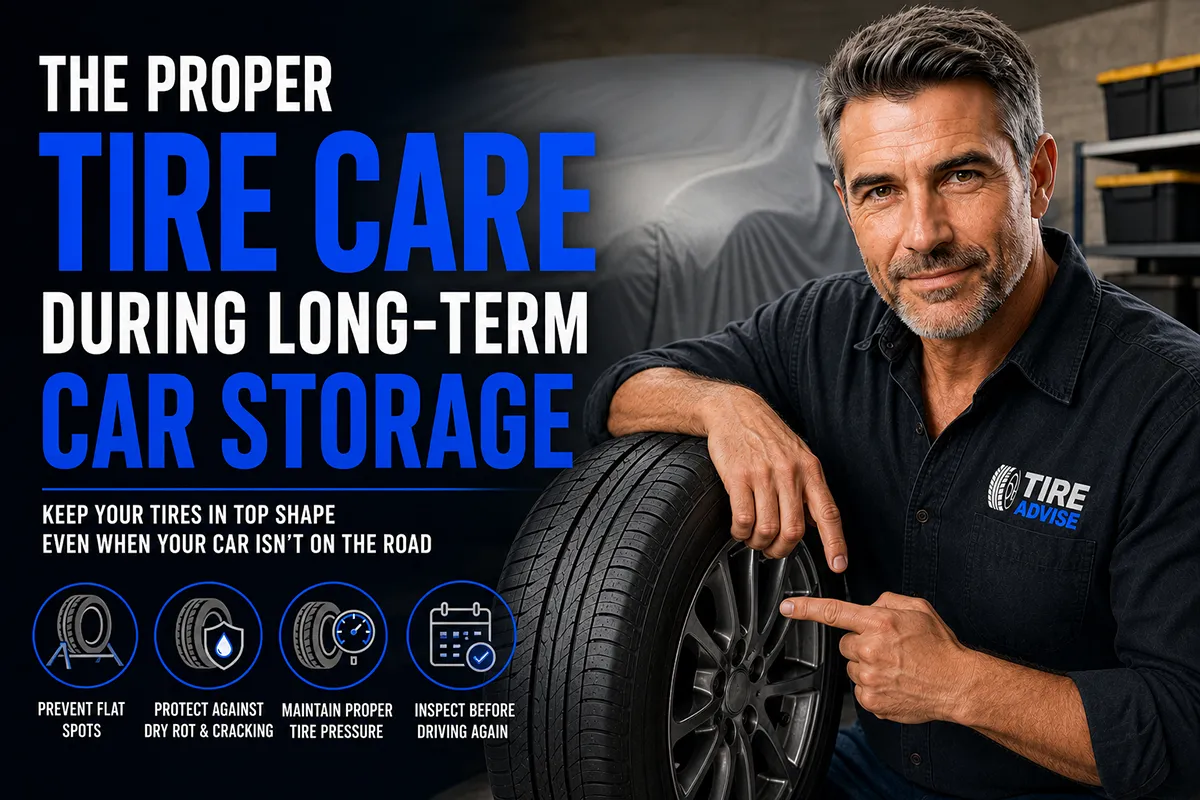
I came back from a six-month overseas assignment to find all four tires on my Camry flat-spotted, dry-cracked, and completely ruined. That single mistake cost me over $600 in replacement tires — and it was entirely preventable.
If you’re planning to store a vehicle for more than a few weeks, your tires are one of the most vulnerable components on the entire car. Most people worry about the battery or the engine oil, but nobody talks about the rubber slowly deteriorating right beneath them.
- Inflate tires to the maximum sidewall PSI (not the door sticker number) before long-term storage to prevent flat-spotting.
- Use jack stands or tire cradles if storing for more than 2-3 months — keeping weight off the tires is the single best thing you can do.
- Store in a cool, dry, dark location away from UV light and ozone-producing equipment like electric motors.
- Cover tires with opaque, UV-blocking tire covers or heavy-duty trash bags if storing outdoors.
- Apply a water-based tire protectant — skip the glossy silicone-based dressings that can actually degrade rubber.
- Check on stored tires every 3-4 weeks and re-inflate as needed.
- Upon returning, inspect for cracks, bulges, and flat spots before driving — and take the first drive slowly.
Liked this article?
Add TireAdvise as a preferred source so you see more of our tire reviews and guides on Google.
Why Tires Deteriorate During Storage (Even Without Being Driven)
Most people assume tires only wear out from driving. That’s a dangerous misconception I held for years myself. The truth is that tires degrade from the moment they’re manufactured, whether you drive on them or not.
Rubber compounds in modern tires contain anti-aging chemicals — antiozonants and antioxidants — that only work properly when the tire flexes during normal driving. When a tire sits stationary, these protective chemicals can’t migrate to the surface where they’re needed most.
On top of that, exposure to UV light, ozone, temperature swings, and the constant weight of the vehicle all conspire to accelerate deterioration. I’ve personally seen tires that looked perfectly fine on the surface but had developed deep sidewall cracks after just one winter of neglect in an unheated garage.
The Enemies of Stored Tires
Let me break down the specific threats I’ve observed over years of storing vehicles and testing tires:
- UV radiation: Sunlight breaks down the polymer chains in rubber, causing surface cracking and hardening. Even indirect sunlight through a garage window can cause damage over months.
- Ozone exposure: Electric motors, furnaces, and certain shop equipment generate ozone, which attacks the double bonds in rubber compounds. I once stored a car next to my shop compressor and noticed sidewall checking after just a few months.
- Temperature extremes: Repeated freeze-thaw cycles cause rubber to expand and contract, accelerating micro-cracking. Summer heat in states like Arizona or Texas can push garage temperatures well above 120°F.
- Static load (flat-spotting): The weight of the vehicle pressing down on the same contact patch for weeks or months causes the tire to deform. This is the most common and most frustrating storage-related tire problem.
- Moisture: Standing water or high humidity can corrode the steel belts inside the tire and degrade the rubber-to-metal bond that holds everything together.
Flat-Spotting: The Number One Killer of Stored Tires
I need to talk about flat-spotting in detail because it’s the issue I encounter most often, and it’s the one that ruined my tires during that overseas trip I mentioned.
When your car sits in one position for an extended period, the portion of the tire touching the ground gets compressed into a flat shape. The rubber essentially “remembers” that shape. When you start driving again, you feel a rhythmic thumping or vibration, almost like driving on a set of square wheels.
Temporary vs. Permanent Flat-Spotting
There are actually two types of flat-spotting, and understanding the difference has saved me from unnecessarily replacing tires more than once.
Temporary flat-spotting happens after shorter storage periods — a few weeks to a couple of months. The tire develops a mild flat spot, but after driving for 15-30 minutes at highway speeds, the heat generated softens the rubber enough for it to return to its round shape. I’ve experienced this after leaving a car parked for about six weeks during a vacation, and the vibration completely disappeared after a short highway drive.
Permanent flat-spotting occurs when the tire has been sitting under load for several months, especially in cold conditions. The rubber undergoes a structural change that no amount of driving will fix. At that point, you’re looking at buying new tires. This is exactly what happened to my Camry — those flat spots were baked in, and I could feel the vibration at every speed.
How I Prevent Flat-Spotting
After that expensive lesson, I developed a reliable system:
- Over-inflate before storage: I pump the tires up to the maximum pressure listed on the tire sidewall (not the vehicle placard on the door jamb). For most passenger tires, that’s around 44 PSI. This stiffer tire resists deformation much better. Just remember to deflate back to the recommended pressure before driving.
- Use jack stands: For any storage period beyond two months, I place the vehicle on jack stands to completely remove weight from the tires. This is the gold standard.
- Try tire cradles: If jack stands aren’t practical, flat-free tire cradles (like the ones from Race Ramps, which run about $60-$80 per pair) distribute the vehicle’s weight across a larger surface area of the tire, dramatically reducing flat-spot risk.
- Move the car periodically: If I can’t use stands or cradles, I try to roll the car forward or backward by a quarter-turn of the wheel every two weeks. This changes the contact patch and prevents the rubber from setting in one position.
Step-by-Step Tire Storage Preparation
Here’s the exact process I follow every time I put a vehicle into long-term storage. I’ve refined this over the years, and I haven’t lost a set of tires to storage damage since developing this routine.
Step 1: Clean the Tires Thoroughly
Before doing anything else, I wash each tire and wheel with warm water and a mild car wash soap. I use a stiff-bristled brush to get into the tread grooves and remove any embedded stones, road salt, or brake dust.
Road salt is especially damaging during storage because it’s hygroscopic — it attracts moisture right to the rubber surface. Brake dust contains metallic particles that can corrode both the wheel and the tire bead area. I’ve seen bead-area corrosion cause slow leaks in tires that were otherwise in perfect condition.
After washing, I dry each tire completely with a clean towel. Moisture trapped under a tire cover creates a greenhouse effect that promotes rubber degradation.
Step 2: Inspect for Existing Damage
This is the step most people skip, and it’s critically important. I give each tire a thorough visual and tactile inspection before storage.
I check for sidewall cracks, bulges, punctures, uneven wear, and any signs of dry rot. If a tire is already showing age-related cracking, storing it for months will only make things worse, and it may not be safe to drive on when you return.
I also check the tire’s DOT date code — that four-digit number on the sidewall that tells you the week and year of manufacture. If a tire is already more than six years old, I factor that into my planning because it may need replacement regardless of storage care.
Step 3: Inflate to Maximum Sidewall Pressure
As I mentioned earlier, I inflate each tire to the maximum cold inflation pressure printed on the tire’s sidewall. On most standard passenger car tires, this is between 44-51 PSI.
I want to emphasize: this is a storage-only pressure. Do not drive on tires inflated to sidewall max — it reduces your contact patch and hurts handling and braking. I always deflate back to the door placard recommendation before driving.
The higher pressure makes the tire stiffer and more resistant to flat-spotting. It also slows the natural air loss that occurs through the rubber over time, so your tires will still have reasonable pressure when you return.
Step 4: Apply a Quality Tire Protectant
Not all tire dressings are created equal, and the wrong one can actually do more harm than good during storage. I specifically use water-based tire protectants that contain UV inhibitors.
I avoid petroleum-based and silicone-based tire dressings for storage. While they make tires look shiny, they can strip away the tire’s own built-in anti-aging compounds. Over several months, this leads to accelerated drying and cracking — the exact opposite of what you want.
Products like 303 Aerospace Protectant (around $10-$15 for a 16 oz bottle) have worked well for me. I spray it on and work it into the sidewalls with a foam applicator, making sure to get full coverage.
Step 5: Cover Each Tire
I cover each tire individually with an opaque cover that blocks UV light. You don’t need to spend a fortune on this. I’ve used everything from dedicated tire covers (around $25-$40 for a set of four) to heavy-duty black trash bags secured with bungee cords.
The key is blocking all light. Even fluorescent garage lighting emits small amounts of UV that can contribute to degradation over many months.
If the car is stored outdoors, tire covers become absolutely essential. I’d also recommend investing in a full car cover with a snug fit to protect against rain, snow, and direct sunlight.
Step 6: Elevate or Support the Vehicle
For storage periods of two months or longer, I strongly recommend getting the tires off the ground. Here’s a comparison of the support options I’ve used:
| Support Method | Approximate Cost | Flat-Spot Protection | Ease of Use | Best For |
|---|---|---|---|---|
| Jack Stands (4-pack) | $40–$80 | Complete (100%) | Moderate — requires jacking at each corner | Storage over 3 months; performance tires |
| Tire Cradles (Race Ramps) | $60–$80 per pair | Excellent (90%+) | Easy — just drive onto them | Storage 1–3 months; heavy vehicles |
| Plywood Sheets Under Tires | $10–$20 | Minimal | Very easy | Short-term storage; moisture barrier only |
| Over-Inflation Only | Free | Good (for 4–6 weeks) | Very easy | Storage under 6 weeks |
| Remove Tires & Store Separately | Free (if you have storage space) | Complete (100%) | Labor-intensive | Seasonal storage; expensive tires |
In my experience, jack stands offer the best protection-to-cost ratio. A decent set of four 3-ton jack stands from brands like Pittsburgh (Harbor Freight) or Torin costs between $40-$80 and will last a lifetime. I position them at the vehicle’s designated jack points and lower the car until the tires are completely off the ground with about an inch of clearance.
Step 7: Choose the Right Storage Environment
Where you store the vehicle matters enormously. The ideal storage environment is:
- Cool: Between 50-70°F is ideal. Extreme heat accelerates rubber aging.
- Dry: Below 50% relative humidity if possible. A dehumidifier in the garage helps.
- Dark: Minimal UV exposure from windows or overhead lighting.
- Away from ozone sources: Keep the car away from electric motors, welding equipment, furnaces, and sump pumps — all of which can generate ozone.
- Clean concrete floor: Avoid storing on bare dirt or gravel, which holds moisture against the tires.
If I’m storing in a garage with windows, I cover those windows or park the car so the tires aren’t in direct sunlight paths. This small step has made a noticeable difference in sidewall condition over multi-month storage periods.
Storing Tires Off the Vehicle
Sometimes you’re not storing an entire car — maybe you’re rotating between summer and winter tire sets, or you’re keeping a spare set of tires for a project car. In those cases, storing unmounted or mounted tires requires its own set of best practices.
Mounted Tires (On Wheels)
If the tires are mounted on wheels, I store them horizontally — stacked on top of each other, four tires high maximum. I place a piece of clean cardboard between each tire to prevent wheel-to-wheel scratching.
The horizontal position is important because it distributes weight evenly across the tire. Storing mounted tires vertically can cause the weight of the wheel to deform the tire at the contact point over time.
I inflate mounted tires to about half of the maximum sidewall pressure for storage. They don’t need full pressure since they’re not bearing the weight of a vehicle, but some air helps maintain the tire’s shape.
Unmounted Tires (No Wheels)
Unmounted tires should be stored vertically — standing upright, just like they’d be on a car. I rotate them a quarter-turn every month or so to prevent flat-spotting on the bottom.
Never hang unmounted tires from hooks or nails. Without a wheel to support the bead, hanging creates stress points that can permanently deform the tire. I’ve made this mistake once with a set of all-terrain tires, and they never seated properly on the bead again.
Whether mounted or unmounted, I always place tires inside large tire storage bags (available for around $20-$30 for a set of four on Amazon). These bags block UV light, reduce ozone exposure, and keep dust and moisture away. I suck out as much air as possible before sealing, which further limits oxidation.
Seasonal and Climate Considerations for US Drivers
The US is huge, and storage conditions vary dramatically depending on where you live. Here’s what I’ve learned about regional storage challenges:
Northern States (Minnesota, Michigan, Wisconsin, etc.)
If you’re storing a vehicle through winter, the freeze-thaw cycle is your biggest enemy. Unheated garages in states like Minnesota can see temperatures drop well below zero and then spike during a midwinter thaw.
I recommend a heated or at least insulated storage space if possible. If not, over-inflation and jack stands become even more important because cold rubber is much more susceptible to permanent flat-spotting.
Also, make absolutely sure you’ve washed off all road salt before storage. Salt-belt states dump millions of tons of brine and rock salt every winter, and that residue will eat into your rubber and corrode your wheels over months of storage.
Southern and Southwestern States (Arizona, Texas, Nevada, etc.)
Heat and UV exposure are the primary threats here. I’ve seen tires in Arizona develop sidewall cracking in a fraction of the time compared to tires in the Pacific Northwest.
If you’re storing a car in a non-air-conditioned garage in Phoenix, where summer temperatures inside the garage can easily reach 130°F+, consider investing in a quality car cover even for indoor storage. The cover provides an extra layer of thermal and UV protection.
Coastal States (Florida, the Carolinas, Gulf Coast)
Humidity is the killer here. Stored tires in high-humidity environments are at risk of moisture-related degradation and mold growth. I strongly recommend running a dehumidifier in any enclosed storage space. A basic unit costs $150-$250 and will protect not just your tires but everything else in the garage.
What to Do When You Take the Car Out of Storage
The first drive after long-term storage is when you’ll discover whether your tire care routine worked. Here’s my post-storage checklist:
Pre-Drive Inspection
- Adjust tire pressure: Deflate from the storage pressure back to the manufacturer’s recommended PSI (found on the door jamb sticker). I use a quality digital gauge — the cheap pencil gauges aren’t accurate enough for this.
- Visual inspection: I get down at eye level with each tire and look for cracks in the sidewall, tread separation, bulges, blistering, or any signs of dry rot. I run my hand along the sidewall feeling for irregularities.
- Check the DOT date code: If the tire was already aging before storage, the months in storage add to its total age. The general industry recommendation is to replace tires older than six years from manufacture, regardless of tread depth.
- Check for flat spots visually: Look at the tire from the front and rear. A flat spot is sometimes visible as a slightly flattened section on the bottom of the tire.
The First Drive
I take the first drive slowly and deliberately. I keep speeds under 35-40 mph for the first 15-20 minutes and pay close attention to any vibrations, pulling, or unusual noises.
Some degree of temporary flat-spotting vibration is normal after storage of a few months, even with good preparation. This usually works itself out within 15-30 minutes of driving as the tires warm up and regain their round shape.
However, if the vibration persists after a solid 30 minutes of highway driving, you’re likely dealing with permanent flat-spotting. At that point, I’d recommend having a tire shop check the tires on a balancer — a permanently flat-spotted tire will show an obvious out-of-round condition. Unfortunately, the only fix is replacement.
Common Mistakes I See (and Have Made Myself)
Over the years, I’ve seen — and committed — plenty of tire storage mistakes. Here are the most common ones:
Mistake #1: Engaging the Parking Brake
This is counterintuitive, but I never engage the parking brake during long-term storage. The brake pads can fuse to the rotors over time, creating a dangerous situation when you try to drive. Instead, I use wheel chocks to prevent the car from rolling.
Mistake #2: Storing Near Chemicals
I once stored a car in the same bay as my lawn equipment. Gasoline vapors, oil, and solvents can penetrate rubber and cause it to swell, soften, and lose structural integrity. Keep stored tires at least several feet from any petroleum products, solvents, or household chemicals.
Mistake #3: Using Tire Shine Before Storage
That glossy tire shine you use for weekend car shows? It’s the worst thing you can apply before storage. Most spray-on tire shines contain silicone and petroleum distillates that actively strip the tire’s built-in antiozonants. After several months, the tire’s own protective chemistry is compromised, and you’ll see cracking much sooner than expected.
Mistake #4: Ignoring Tires on the Stored Vehicle Entirely
“Set it and forget it” does not apply to stored tires. I check on my stored vehicles at least once a month — specifically checking tire pressures and looking for any visible issues. Tires naturally lose 1-2 PSI per month, and catching a slow leak early can prevent a completely deflated tire from developing a permanent crease in the sidewall.
Mistake #5: Storing on Bare Concrete
Concrete can wick moisture into the tire’s contact patch. I always place a barrier between the tire and the floor — a piece of plywood, a rubber mat, or even thick cardboard. This simple step blocks moisture transfer and provides a small amount of insulation.
When Stored Tires Need to Be Replaced
Sometimes, despite your best efforts, tires don’t survive storage. Here are the signs I look for that tell me it’s time to buy new rubber:
- Visible cracking in the sidewall or tread grooves: Fine surface crazing is normal on older tires, but if cracks are deep enough to see the lighter rubber beneath the surface, the tire is compromised.
- Hardened rubber: If the tire surface feels hard and plasticky instead of having the slight give of fresh rubber, the compounds have dried out. A hardened tire offers dramatically reduced grip, especially in wet conditions.
- Persistent vibration after driving: Permanent flat-spotting is not just a comfort issue — it creates uneven contact with the road surface, reducing braking performance and handling.
- Bulges or blisters: These indicate internal structural failure — separation of the plies or belts. A tire with a bulge should never be driven on, period.
- Age over 6-10 years from manufacture date: Most tire manufacturers, including Michelin, Goodyear, and Bridgestone, recommend replacing tires that are more than 10 years old regardless of condition, with inspections beginning at 5-6 years. Storage time counts toward this total age.
If you need to replace tires after storage, I’d suggest checking out our tire reviews here on TireAdvise.com to find the best options for your vehicle and driving needs. We test and review tires from all the major brands available in the US market, so you can make an informed decision.
My Final Thoughts on Long-Term Tire Storage
After years of storing vehicles — classic cars over winter, daily drivers during extended travel, and project cars between build phases — I can tell you that tire care during storage is one of the most overlooked aspects of vehicle maintenance.
The total cost of proper tire storage preparation is minimal. We’re talking about $15 for protectant, $40-$80 for jack stands, $25 for tire covers, and about 30 minutes of your time. Compare that to the $400-$800+ you’ll spend replacing a set of prematurely damaged tires, and the math is obvious.
The single most impactful thing you can do is get the weight off the tires. If you only follow one piece of advice from this entire article, let it be that. Jack stands or tire cradles will save your tires more effectively than any spray, cover, or climate-controlled garage.
Take care of your tires during storage, and they’ll be ready to take care of you when it’s time to drive again.
Frequently Asked Questions
How should I prepare my tires before putting my car in long-term storage?
Before storing your car, inflate each tire to the maximum PSI listed on the tire sidewall (not the vehicle placard) to account for gradual air loss over weeks or months. I also recommend giving each tire a thorough cleaning with a mild soap and water to remove brake dust and road chemicals that can degrade the rubber compound during storage. Avoid applying silicone-based tire dressings, as they can actually dry out the rubber over time.
Should I leave my car on jack stands or on the tires during long-term storage?
If you’re storing your vehicle for more than 30 days, placing it on jack stands is the best way to prevent flat spots from forming on your tires. Jack stands remove the vehicle’s weight from the tires entirely, which preserves the tire’s round shape and extends tread life. A quality set of jack stands costs between $30 and $80 at most US auto parts stores and is well worth the investment if you store a car seasonally.
How long can tires sit unused before they develop flat spots or dry rot?
Tires can begin developing temporary flat spots in as little as 30 days of sitting in one position, and permanent flat spotting can occur after several months, especially in cold climates common across the northern US. Dry rot, which appears as small cracks in the sidewall, typically becomes visible after 3 to 5 years of exposure to UV light, ozone, and temperature swings, even if the tire has plenty of tread left. If you notice cracking after storage, it’s time to shop for replacement tires regardless of mileage.
What is the best surface to park on for long-term tire storage?
Always store your vehicle on a clean, flat concrete surface rather than bare asphalt, gravel, or dirt. Asphalt contains petroleum compounds that can chemically break down tire rubber over extended periods, while moisture from soil and gravel accelerates sidewall deterioration. If concrete isn’t available, placing a thick piece of plywood or a tire storage mat under each tire creates a protective barrier that helps prevent premature aging.
Do I need to replace my tires after long-term car storage?
Not necessarily, but you should carefully inspect each tire before driving again. Check for visible dry rot cracks on the sidewalls, measure remaining tread depth with a gauge (replace at 2/32″ or less), and verify the manufacture date on the DOT code — tires older than 6 years should be replaced even if they look fine. If the tires have been properly stored indoors and away from sunlight, most quality brands like Michelin, Goodyear, or Bridgestone will still be safe to drive on after a season of storage.
Should I overinflate my tires before storing my car for the winter?
You should inflate to the tire’s maximum sidewall pressure, not the vehicle’s recommended pressure, since tires naturally lose about 1-2 PSI per month even while sitting still. This isn’t technically overinflating — it’s compensating for expected air loss during storage. When you take the car out of storage, check all four tires with a reliable gauge and adjust them back down to the vehicle manufacturer’s recommended PSI found on the driver’s door jamb sticker before hitting the road.
Can storing my car in a garage protect my tires from weather damage?
Storing your car in a climate-controlled or enclosed garage is one of the single best things you can do for tire preservation during long-term storage. UV radiation from sunlight and exposure to ozone are the two biggest causes of premature tire dry rot, and a garage eliminates both. If you only have access to outdoor storage, invest in UV-resistant tire covers — they typically run $20 to $50 for a set of four and dramatically slow rubber degradation through harsh US summers and winters alike.
