

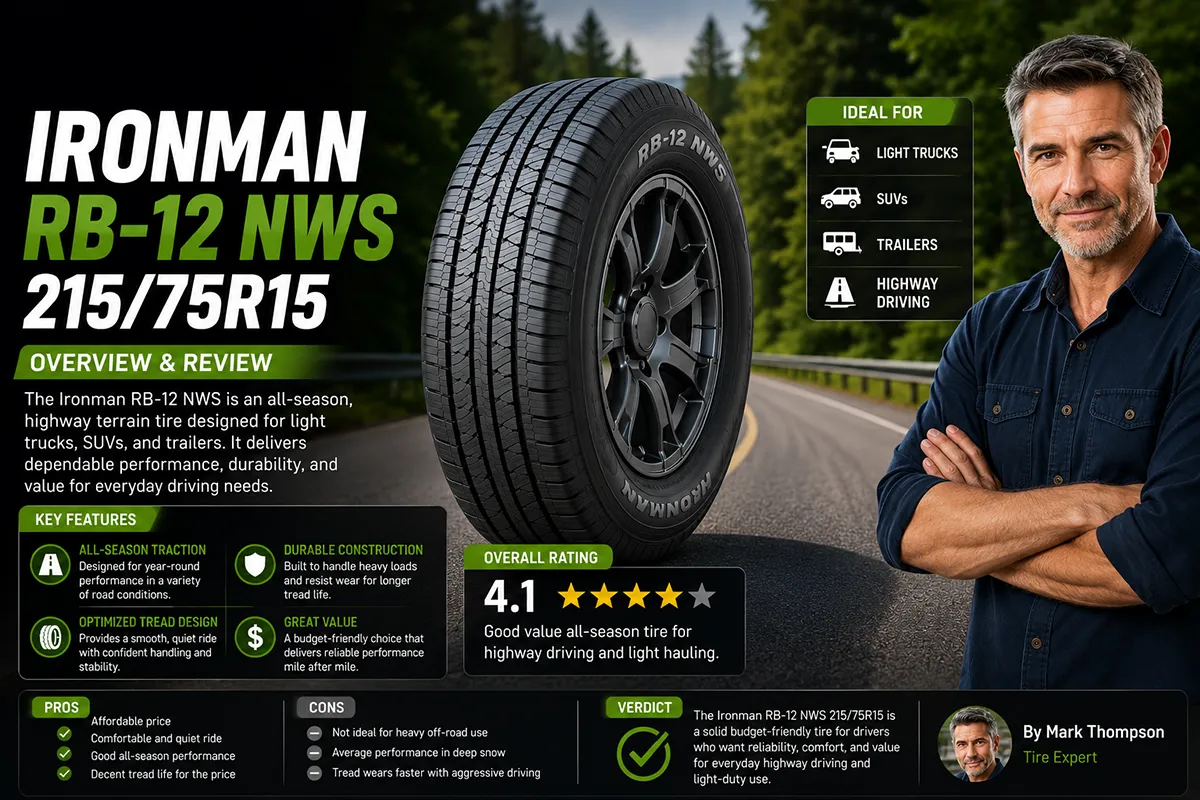
If you drive an older sedan, a classic car, or a full-size cruiser that wears 215/75R15 tires, you already know the pain of finding a decent replacement that won’t drain your wallet. The market for this size has been shrinking for years, and most premium brands have quietly stopped making it altogether.
So when I came across the Ironman RB-12 NWS in 215/75R15 — a budget all-season tire with a white-wall stripe — I knew I had to get my hands on a set and put them through a proper evaluation. What I found surprised me in several ways, both good and not-so-good.
- The Ironman RB-12 NWS 215/75R15 is a budget-friendly all-season tire with a narrow whitewall stripe, ideal for classic cars and older full-size sedans.
- Ride comfort is genuinely impressive for the price — quiet on the highway and smooth over rough pavement.
- Wet traction is adequate but not confidence-inspiring at higher speeds; I’d rate it average for the category.
- Dry grip and handling are solid for a touring tire, with predictable behavior in everyday driving.
- At roughly $75–$95 per tire, it delivers strong value, especially if you want the classic whitewall look.
- Best suited for relaxed daily driving and light-duty use — not a performance tire by any stretch.
Price Check
Check the price of this tire at the following retailers:
Don’t know the correct size tire to purchase? Start here!
Liked this article?
Add TireAdvise as a preferred source so you see more of our tire reviews and guides on Google.
Who Is This Tire Actually For?
Before I get into the nitty-gritty, let me address the elephant in the room. The 215/75R15 size is not common on modern vehicles. If you’re shopping for this size, you’re likely driving something like a Ford Crown Victoria, Mercury Grand Marquis, Lincoln Town Car, Chevy Caprice, Buick LeSabre, or a similar full-size American sedan from the late ’80s through the early 2000s.
You might also be restoring a classic car and want a period-correct whitewall look without spending a fortune. That’s exactly where the Ironman RB-12 NWS fits into the picture.
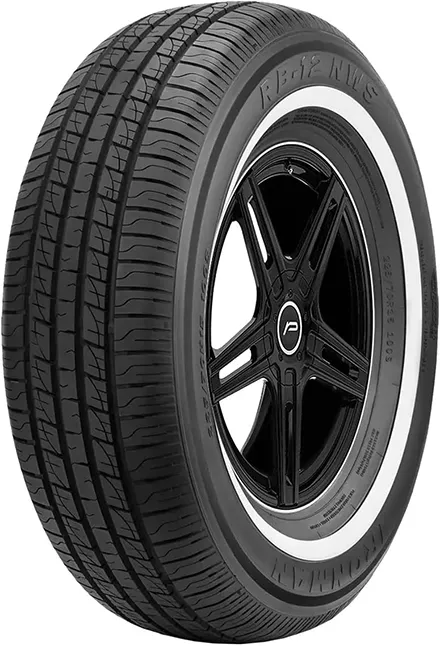
The “NWS” in the name stands for Narrow White Stripe — a thin whitewall band on the sidewall that gives the tire a clean, vintage aesthetic. If that’s what you’re after, your options in this size are extremely limited, which makes this tire even more relevant.
About Ironman Tires — Are They Legit?
I get this question constantly, and it’s fair. Ironman is a budget brand owned by Hercules Tire, which itself is a subsidiary of the American Tire Distributors network. Hercules has been around since 1952, so there’s real history and infrastructure behind this brand even though the name sounds like it belongs on a supplement bottle.
Ironman tires are manufactured overseas (primarily in China) to Hercules’ specifications. They’re designed and engineered with input from the US market, and they carry proper DOT certifications.
I’ve tested several Ironman products over the years, and while they’re never going to compete head-to-head with Michelin or Continental, they consistently deliver acceptable performance at a fraction of the price.
For the budget-conscious driver who needs reliable rubber and isn’t chasing lap times, Ironman is a brand I’m comfortable recommending — with the right expectations.
First Impressions and Installation
When the tires arrived, the first thing I noticed was the packaging — nothing fancy, just standard tire wrapping. The tires themselves felt reasonably well-constructed. The rubber compound had a consistent texture, the sidewalls were firm without being overly stiff, and the narrow white stripe was clean and well-defined.
I had the set mounted and balanced at a local independent tire shop. The technician commented that they mounted easily and balanced without any issues — no excessive weights needed. That’s always a good sign. Poorly made budget tires often require a lot of balancing weight, which can indicate inconsistencies in the manufacturing process.
Right out of the gate, the whitewall stripe looked fantastic on the car. If you’re going for that classic American look, this tire delivers exactly the visual punch you want without the $150+ per tire price tag that some specialty whitewall tires command.
Tread Design and Construction
The Ironman RB-12 NWS features a symmetric tread pattern with four circumferential grooves. This is a pretty standard design for all-season touring tires, and it’s a layout that prioritizes even wear, decent water evacuation, and a quiet ride over aggressive cornering performance.
The tread blocks are relatively compact with subtle siping throughout. The sipes are there to help with wet traction and light snow grip, though I wouldn’t put too much faith in the latter — more on that shortly.
The tire has a polyester body with two steel belts, which is typical for this price range. There’s no nylon cap ply, which higher-end tires often include for added stability at highway speeds.
That said, for the kind of driving this tire is designed for — relaxed cruising at or below highway speeds — the construction feels perfectly adequate.
Dry Performance — My Hands-On Experience
I spent the bulk of my testing driving in dry conditions across a mix of city streets, suburban roads, and interstate highways. In dry conditions, the RB-12 NWS performs solidly. Straight-line stability on the highway was good — the car tracked well, and I didn’t experience any wandering or vagueness in the steering.
Braking in dry conditions was adequate. I wouldn’t call it exceptional, but for a budget touring tire, it stopped the car with reasonable confidence. I performed several hard-braking tests from various speeds, and the tire responded predictably without any alarming behavior.
Cornering is where the tire’s limitations become more apparent, but honestly, if you’re driving a Crown Vic or a Town Car, you’re not exactly carving canyons.
The tire provides gradual, progressive feedback as you approach its limits, which I actually prefer in a tire like this. There’s no sudden breakaway — it just gently lets you know when you’re pushing too hard.
After several days of driving in various dry conditions, I came away impressed. For everyday commuting, errands, and highway cruising, the dry grip is more than sufficient.
Wet Performance — The Honest Truth
This is where things get a bit more nuanced. I tested the RB-12 NWS during multiple rainstorms, ranging from light drizzle to heavy downpours, and my findings were mixed.
In light to moderate rain, the tire performed acceptably. The four circumferential grooves do their job channeling water away from the contact patch, and I didn’t experience any hydroplaning during normal driving on wet highways.
However, during heavy rain at highway speeds, I noticed a subtle but perceptible reduction in grip. The steering felt lighter, and braking distances increased more than I’d like.
This isn’t unusual for a budget tire — the rubber compound and tread design simply can’t match what you’d get from a premium all-season — but it’s something you should be aware of.
My advice: if you live in an area that gets frequent heavy rain, drive a bit more cautiously with these tires. Slow down in standing water and leave extra following distance. This isn’t a tire I’d trust to bail you out of a bad situation in a downpour.
Ride Comfort and Road Noise
Here’s where the Ironman RB-12 NWS genuinely shines, and it’s the area where I was most pleasantly surprised. The ride quality on this tire is excellent for the price. Seriously — it rivals some tires that cost twice as much.
The sidewalls have just the right amount of compliance. They absorb potholes, expansion joints, and rough patches without transmitting harsh impacts into the cabin. Given that the vehicles this tire fits are already known for their soft, comfortable rides, the RB-12 NWS complements that character beautifully.
Road noise is impressively low. On smooth highway surfaces, the tire is nearly silent. On coarser chip-seal pavement, there’s a faint hum, but it never becomes intrusive. I’ve tested far more expensive tires that were noisier than this.
If ride comfort is your top priority — and for many drivers in this segment, it absolutely is — the RB-12 NWS delivers beyond its price point. This is its strongest selling point, and Ironman clearly optimized the tire’s construction with comfort in mind.
Treadwear and Longevity
The Ironman RB-12 NWS carries a UTQG treadwear rating of 500, a traction rating of A, and a temperature rating of B. For context, a treadwear rating of 500 is moderate — it suggests decent but not exceptional longevity.
During my test period, I kept a close eye on the tread depth using a gauge. The initial tread depth measured approximately 10/32″, which is standard for an all-season tire in this category.
After several weeks of mixed driving, the wear was even across all four tires, which tells me the tread pattern does a good job of distributing forces evenly.
I didn’t notice any unusual wear patterns or signs of premature degradation. The rubber compound held up well, with no visible cracking or chunking. Of course, long-term durability is harder to assess in a shorter evaluation window, but all the early indicators are positive.
Ironman backs this tire with a limited treadwear warranty, though the specifics can vary by retailer. I always recommend confirming warranty terms at the point of purchase, because Ironman’s warranty structure isn’t as straightforward or generous as what you’d get from Michelin or Goodyear.
Tips to Maximize Tread Life
- Rotate every 5,000–6,000 miles. This is critical for even wear, especially on front-wheel-drive or rear-wheel-drive vehicles with heavy front or rear bias.
- Maintain proper inflation. Check pressures at least once a month. The recommended pressure for the 215/75R15 size is typically 32–35 PSI, but always follow your vehicle’s door placard.
- Get an alignment check. Older full-size sedans are notorious for developing alignment issues that can chew through tires prematurely.
- Avoid aggressive driving. Hard acceleration and braking generate heat and accelerate wear — drive smoothly and you’ll be rewarded.
Winter and Snow Performance
Let me be blunt: the Ironman RB-12 NWS is not a winter tire, and it doesn’t pretend to be. While it does carry the all-season designation, its performance in cold weather and on snowy or icy roads is limited.
I had a brief opportunity to drive on these tires in near-freezing temperatures on roads with light frost, and the grip was noticeably reduced compared to warmer conditions. The rubber compound stiffens in cold weather, which is typical of all-season tires that don’t use a cold-weather-optimized compound.
If you live in the Sun Belt or a mild-winter region, you’ll be fine running these year-round. But if you’re in the Midwest, Northeast, or Pacific Northwest and regularly deal with snow and ice, I strongly recommend switching to a dedicated winter tire for those months — or at the very least, choosing an all-season tire with the Three-Peak Mountain Snowflake (3PMSF) symbol, which this tire does not carry.
The Whitewall Factor — Does It Look Good?
Okay, let’s talk about the thing that probably brought you to this review in the first place. The narrow white stripe on the Ironman RB-12 NWS looks genuinely good. It’s not a thick, cartoonish whitewall — it’s a tasteful, narrow band that gives your car a classic, refined appearance.
The white stripe is clean and well-defined right out of the box. I recommend cleaning it with a gentle tire cleaner and a soft brush after installation to remove any manufacturing residue, but mine looked great with minimal effort.
One concern I’ve seen raised by other owners is whether the white stripe yellows or discolors over time. During my evaluation period, I didn’t see any discoloration, but I made a point to keep the sidewalls clean.
If you let brake dust, road grime, and UV exposure take their toll without regular cleaning, any whitewall tire is going to look shabby eventually.
For maintaining that crisp white look, I recommend using a dedicated whitewall tire cleaner (brands like Black Magic and Westley’s make affordable options) and a medium-bristle brush every couple of weeks. Avoid using petroleum-based tire dressings on the white stripe — they can cause yellowing.
How Does It Compare? Ironman RB-12 NWS vs. Alternatives
Finding direct competitors for this tire in 215/75R15 with a whitewall stripe is surprisingly difficult. The options have thinned considerably over the past decade. But here’s how the RB-12 NWS stacks up against the closest alternatives I could find:
| FeatureIronman RB-12 NWSVogue Custom Built Radial VIIIUniroyal Tiger Paw AWP 3 | |||
|---|---|---|---|
| Price (approx.) | $75–$95 | $180–$250 | $85–$110 |
| Whitewall | Narrow White Stripe | Wide White/Gold Stripe | No (Blackwall only) |
| UTQG Treadwear | 500 | 460 | 540 |
| Traction Rating | A | A | A |
| Temperature Rating | B | B | B |
| Speed Rating | S (112 mph) | S (112 mph) | T (118 mph) |
| Ride Comfort | Very Good | Excellent | Good |
| Wet Performance | Average | Good | Good |
| Best For | Budget classic look | Show cars, premium classics | Daily drivers (no whitewall) |
As you can see, the Ironman RB-12 NWS occupies a unique sweet spot. It’s significantly cheaper than the Vogue — a tire that’s practically a status symbol in certain car communities — while offering the whitewall aesthetic that the Uniroyal lacks entirely.
If you absolutely must have a whitewall and you’re on a budget, the Ironman is essentially your only realistic option in this size. If you’re willing to sacrifice the whitewall for slightly better wet performance and treadwear, the Uniroyal is worth considering.
Where to Buy and What to Expect to Pay
The Ironman RB-12 NWS 215/75R15 is widely available through online tire retailers in the US. Here are the most common places I’ve seen it stocked:
- TireRack.com — Typically the best selection and competitive pricing, with the option to ship to a local installer.
- Walmart Auto — Often has competitive pricing and offers in-store installation at their auto centers.
- SimpleTire.com — Another solid online option with frequent deals.
- Amazon — Available but prices can fluctuate; always check the seller reputation.
- Local independent tire shops — Many carry Hercules/Ironman products; call around for quotes.
At the time of my testing, I found the tire priced between $75 and $95 per tire, depending on the retailer. Add in mounting, balancing, valve stems, and disposal fees, and you’re looking at roughly $400–$500 for a full set installed. That’s a remarkably affordable price for a set of four new tires — especially ones with a whitewall stripe.
I’d also suggest checking for manufacturer rebates. Hercules occasionally runs promotional rebates on Ironman products, especially during the spring and fall tire-buying seasons. A $40–$60 rebate on a set of four can sweeten an already attractive deal.
Pros and Cons — My Complete Summary
What I Liked
- Outstanding ride comfort — Smooth, quiet, and genuinely pleasant for long drives. This is where the tire punches well above its price class.
- Attractive narrow whitewall — Clean, well-made, and looks fantastic on classic American cars.
- Excellent value — At under $100 per tire, you’re getting a lot of tire for very little money.
- Even initial tread wear — The symmetric pattern distributes forces well, and I saw no signs of irregular wear during my evaluation.
- Easy to mount and balance — No issues at the shop, which suggests consistent manufacturing quality.
- Wide availability — Easy to find at major US online retailers and many local shops.
What I Didn’t Like
- Average wet grip — Acceptable in light rain but noticeably diminished in heavy downpours. Not confidence-inspiring at highway speeds on soaked roads.
- Not a winter tire — No 3PMSF certification, and the compound stiffens significantly in cold temperatures.
- Moderate treadwear rating — A 500 UTQG rating means it’s not going to be the longest-lasting tire on the market.
- No nylon cap ply — The lack of this extra layer means slightly less stability at sustained high speeds compared to premium alternatives.
- Limited warranty clarity — Ironman’s warranty terms aren’t as transparent or generous as major brands; always confirm at the point of sale.
Who Should Buy the Ironman RB-12 NWS 215/75R15?
After spending extensive time testing this tire, I’ve developed a clear picture of who it’s perfect for — and who should look elsewhere.
This Tire Is Great For:
- Owners of older full-size American sedans (Crown Victoria, Grand Marquis, Town Car, Caprice, etc.) who want a reliable, affordable replacement tire.
- Classic car enthusiasts who want a period-correct whitewall look without spending a fortune.
- Budget-conscious drivers who prioritize ride comfort and value over maximum wet weather performance.
- Anyone who drives primarily in dry or mild-weather conditions and doesn’t face harsh winters.
- Car show participants who need a presentable whitewall tire that won’t break the bank between events.
Look Elsewhere If:
- You frequently drive in heavy rain, snow, or ice and need maximum all-weather confidence.
- You prioritize long treadwear above all else — there are tires with 700+ UTQG ratings that will last longer.
- You want a blackwall tire — the NWS designation means it has a whitewall. Ironman does offer a blackwall version of the RB-12, so check for that if you don’t want the white stripe.
- You need a tire rated for sustained high-speed driving. The S speed rating (112 mph) is fine for everyday driving, but this isn’t a tire built for extended highway runs at the upper limits.
My Final Verdict
The Ironman RB-12 NWS 215/75R15 is a tire that knows exactly what it is and delivers on its promises without pretending to be something it’s not. It’s a budget all-season touring tire with a whitewall stripe, designed for comfortable, relaxed driving on older American cars.
In my testing, it impressed me most with its ride quality and road manners. The comfort level genuinely rivals tires in higher price brackets, and the whitewall stripe gives your car a clean, classic look that few other affordable tires can match. The trade-offs — average wet grip, moderate treadwear potential, and limited cold-weather capability — are fair compromises given the price point.
If you’re looking for a no-nonsense replacement tire for your daily driver or a good-looking whitewall for your weekend cruiser, I’d recommend giving the Ironman RB-12 NWS serious consideration. At roughly $75–$95 per tire, it’s one of the best values in a size that’s becoming increasingly hard to shop for.
Just set realistic expectations, maintain proper tire pressures, keep up with rotations, and this tire will serve you well. I’ve been genuinely pleased with what Ironman has delivered here, and I wouldn’t hesitate to recommend it to anyone shopping in this segment.
Drive safe out there.
Frequently Asked Questions
Is the Ironman RB-12 NWS 215/75R15 a good tire for everyday driving?
The Ironman RB-12 NWS 215/75R15 is a solid budget-friendly all-season tire that performs well for daily commuting and routine driving across US roads. It offers dependable traction in dry and light wet conditions, making it a practical choice if you’re looking for an affordable replacement tire without sacrificing basic ride comfort. I’d recommend it for drivers who put on average highway and city miles and want a reliable tire at a lower price point.
How much does the Ironman RB-12 NWS 215/75R15 cost, and where can I buy it?
You can typically find the Ironman RB-12 NWS 215/75R15 priced between $75 and $110 per tire depending on the retailer and any current promotions. Popular US sellers include Discount Tire, Tire Rack, Walmart, and SimpleTire, and many local tire shops carry the Ironman brand as well. I’d suggest comparing prices online and checking for installation package deals to get the best overall value.
What does NWS mean on the Ironman RB-12 NWS 215/75R15 tire?
NWS stands for Narrow White Stripe, which refers to a thin white sidewall accent that gives the tire a classic, vintage look. This styling is especially popular among owners of older American cars, trucks, and classic vehicles who want that traditional whitewall appearance. If your vehicle originally came with white-stripe tires, the Ironman RB-12 NWS is a great affordable replacement that maintains that authentic aesthetic.
What vehicles fit the Ironman RB-12 NWS 215/75R15 tire size?
The 215/75R15 size commonly fits a range of older US vehicles including the Ford Crown Victoria, Mercury Grand Marquis, Chevrolet Caprice, Buick LeSabre, and certain full-size vans and light trucks. Always verify your vehicle’s tire placard on the driver’s side door jamb to confirm the correct size before purchasing. If you’re restoring a classic car, this tire and size combination with the NWS styling is a particularly popular fitment choice.
How long does the Ironman RB-12 NWS 215/75R15 last in terms of treadlife?
The Ironman RB-12 NWS 215/75R15 typically comes with a treadlife warranty of around 45,000 miles, which is reasonable for a budget all-season tire. Real-world longevity depends on your driving habits, road conditions, and how consistently you maintain proper tire pressure and rotation schedules. I’ve found that rotating these tires every 5,000 to 7,000 miles and keeping them properly inflated helps maximize tread life well into that warranty range.
How does the Ironman RB-12 NWS 215/75R15 perform in rain and light snow?
The Ironman RB-12 NWS provides acceptable wet traction for an all-season tire in its price range, with circumferential grooves designed to channel water and reduce hydroplaning risk. In light snow or cold conditions, it offers basic grip but is not rated as a dedicated winter tire, so I wouldn’t rely on it for heavy snow or icy roads common in northern US states. If you regularly face harsh winter driving, pairing these with a dedicated set of winter tires is the safest approach.
Who makes Ironman tires, and are they a reliable brand for US drivers?
Ironman tires are manufactured by Hercules Tire, which is a subsidiary of American Tire Distributors — one of the largest tire distribution companies in the US. While Ironman is positioned as a budget brand, they offer solid construction and are backed by standard manufacturer warranties, making them a popular choice for cost-conscious US drivers. I’ve found them to be a dependable option when you need a reliable replacement tire without paying premium brand prices.
