

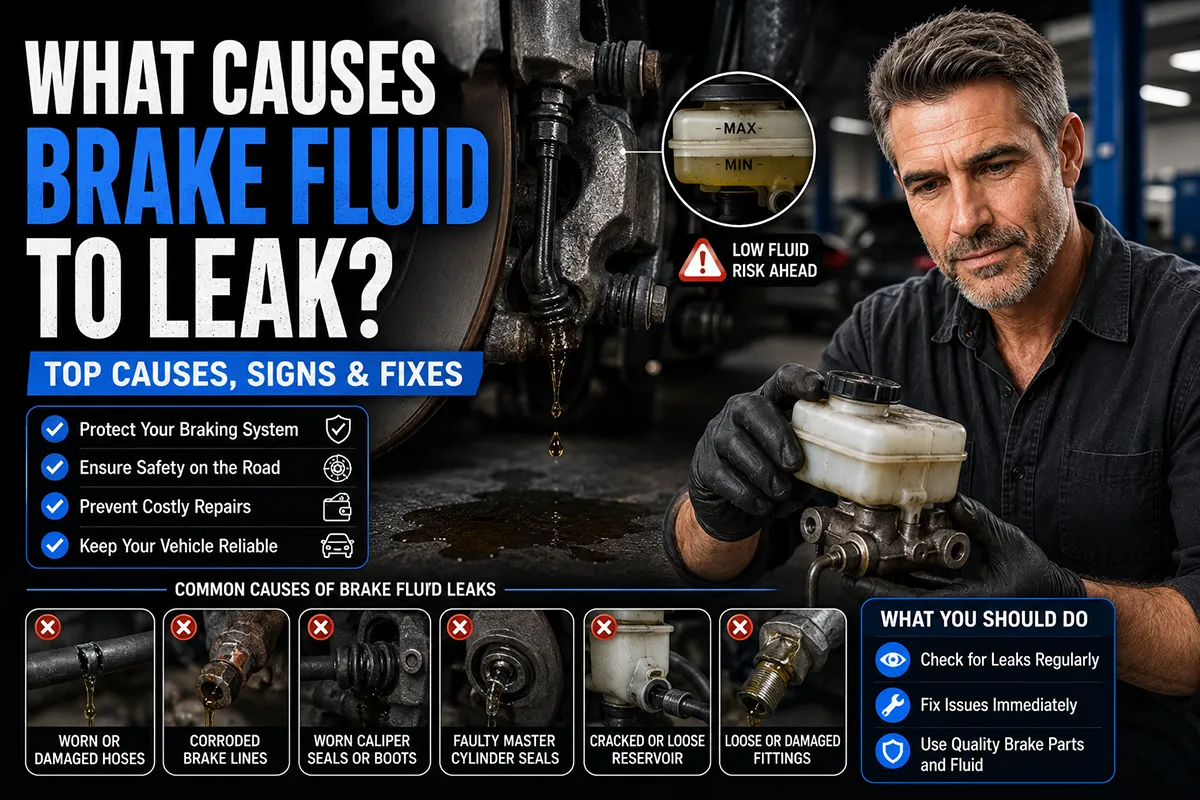
I was doing a routine tire rotation in my garage last spring when I noticed something I hadn’t expected — a small, oily puddle near my front driver-side wheel. It wasn’t engine oil. It wasn’t coolant. It was brake fluid, and it had been silently leaking for who knows how long.
That moment was a wake-up call. As someone who spends most of my time evaluating tires and helping everyday drivers make smarter buying decisions, I realized that brake fluid leaks are one of those critical issues that often fly under the radar — especially when people are focused on tire wear, tread depth, and ride comfort. But here’s the truth: your tires are only as safe as the braking system behind them.
- Brake fluid leaks are caused by corroded brake lines, worn seals, damaged calipers, a faulty master cylinder, or deteriorated brake hoses.
- Common signs include a soft or spongy brake pedal, a puddle of clear-to-yellowish fluid near your wheels, and your brake warning light turning on.
- Driving with a brake fluid leak is extremely dangerous — get it inspected immediately.
- Repair costs typically range from $100 to $600+ depending on the component that’s failed.
- Regular brake system inspections (every time you rotate your tires or swap seasonal sets) can catch leaks early.
Liked this article?
Add TireAdvise as a preferred source so you see more of our tire reviews and guides on Google.
Why Brake Fluid Matters More Than Most Drivers Realize
Let me start with the basics, because in my experience, a lot of drivers don’t fully understand what brake fluid actually does. Your braking system is hydraulic. When you press the brake pedal, you’re compressing brake fluid inside sealed lines, and that pressure is what forces your brake pads to clamp down on the rotors and stop your car.
Without adequate brake fluid — or with air in the lines from a leak — that hydraulic pressure drops. Your pedal feels mushy. Your stopping distance increases. And in a worst-case scenario, your brakes can fail entirely.
I’ve personally experienced that terrifying spongy pedal feeling on a test vehicle, and I can tell you it’s not something you ever want to encounter at highway speed. Brake fluid is the invisible link between your foot and your tires’ grip on the road. If that link breaks, nothing else matters — not your premium all-season tires, not your traction control system, nothing.
The 6 Most Common Causes of Brake Fluid Leaks
Over the years, I’ve seen brake fluid leaks caused by a range of issues. Some are age-related, some are caused by environmental factors, and a few are the result of poor maintenance. Here’s what I’ve found to be the most common culprits, based on real-world experience and conversations with mechanics I trust.
1. Corroded or Rusted Brake Lines
This is the number one cause I see, especially here in the US where road salt is heavily used during winter. If you live in the Rust Belt — think Michigan, Ohio, Pennsylvania, upstate New York — your steel brake lines are constantly exposed to salt, moisture, and road grime.
Over time, that corrosion eats through the metal. I’ve inspected vehicles where the brake lines looked like they’d been attacked with sandpaper. Once a pinhole develops, brake fluid seeps out, and the leak only gets worse from there.
In my experience, this is especially common on vehicles that are more than seven or eight years old and have spent their lives in northern states. It’s one of the reasons I always recommend a full undercarriage inspection when buying a used car in those regions.
2. Worn or Damaged Caliper Seals
Your brake calipers contain pistons that push the brake pads against the rotors. Those pistons are sealed with rubber O-rings and dust boots to keep brake fluid contained inside the caliper. Over time, those rubber seals harden, crack, and fail.
When caliper seals go bad, you’ll often notice fluid weeping around the caliper itself. I’ve seen this present as a wet, shiny area on the caliper body or brake dust that clumps together in an unusual way near the wheel.
Heat is the enemy here. Every time you brake hard, those calipers get extremely hot. Repeated thermal cycling breaks down rubber over time. If you do a lot of stop-and-go driving — commuting in Dallas traffic, navigating Atlanta’s highways, or dealing with LA congestion — your caliper seals are working overtime.
3. Faulty Master Cylinder
The master cylinder is the heart of your brake system. It’s located under the hood, typically on the driver’s side near the firewall, and it converts the mechanical force from your foot into hydraulic pressure.
Inside the master cylinder are internal seals that can wear out. When they do, brake fluid can leak externally (you’ll see it dripping near the firewall) or internally (fluid bypasses the seals inside the cylinder, which you can’t see but will feel as a slowly sinking brake pedal).
I diagnosed a master cylinder leak on my own daily driver after noticing that the brake pedal would slowly drift toward the floor when I held steady pressure at a red light. There was no visible puddle, but the fluid level in my reservoir kept dropping. That internal leak was the cause, and replacing the master cylinder resolved it completely.
4. Deteriorated Rubber Brake Hoses
While the main brake lines are typically steel, the final connections to the calipers (or wheel cylinders on drum brakes) are flexible rubber hoses. These hoses allow for suspension movement and steering articulation.
Rubber degrades over time. UV exposure, heat cycles, road debris, and just plain age cause these hoses to crack, swell, or develop weak spots. I’ve seen hoses that looked fine on the outside but had begun to deteriorate internally, causing a restriction that mimicked a caliper problem.
A visual inspection can catch obvious external cracking, but sometimes you need to feel the hose while someone presses the brake pedal. If it balloons out, it’s time for a replacement.
5. Damaged Wheel Cylinders (Drum Brake Systems)
If your vehicle has rear drum brakes — which is still common on many budget-friendly sedans and compact cars in the US market — the wheel cylinders inside those drums can leak. The internal seals in wheel cylinders are small and prone to the same age-related deterioration as caliper seals.
I’ve found wheel cylinder leaks to be sneaky because the fluid often stays inside the drum assembly where you can’t see it without removing the drum. The first sign is usually brake fluid dripping from behind the backing plate, or brake shoes that appear wet or contaminated.
On vehicles where I’ve been evaluating tire performance, a leaking wheel cylinder creates an uneven braking feel — the car pulls to one side, which can also accelerate uneven tire wear. It’s another reminder that the brake system and your tires are deeply interconnected.
6. Loose or Damaged Brake Fittings and Bleeder Valves
Every connection point in your brake system is a potential leak source. Flare nut fittings where brake lines connect, bleeder valves on calipers and wheel cylinders, and the fittings at the master cylinder can all develop leaks.
Sometimes a fitting just needs to be tightened. Other times, the flare on the brake line is damaged, or the bleeder valve has been stripped or corroded open. I’ve seen this happen after DIY brake jobs where someone over-tightened a bleeder valve and cracked it, or didn’t properly seat a brake line fitting.
If you’ve recently had brake work done and notice a new leak, this is the first thing I’d check.
How to Identify a Brake Fluid Leak
Knowing what to look for is half the battle. Here’s what I recommend based on what has worked for me over years of inspecting vehicles.
Check the Color and Consistency of Any Puddle
Brake fluid (DOT 3, DOT 4, and DOT 5.1 — the most common types in US passenger vehicles) is typically clear to light yellow when new. As it ages and absorbs moisture, it darkens to an amber or light brown color. It has a slightly oily feel and a distinctive chemical smell.
Don’t confuse it with other fluids:
- Engine oil: Dark brown or black, thicker, and usually found under the engine area.
- Coolant: Bright green, orange, or pink, and has a sweet smell.
- Power steering fluid: Reddish or light brown, similar to ATF, and usually found near the front of the engine.
- Brake fluid: Clear to amber, thin and slippery, found near wheels or under the master cylinder.
Monitor Your Brake Fluid Reservoir
Pop your hood and check the brake fluid reservoir. It’s translucent, so you can see the fluid level without opening it. There are MIN and MAX lines marked on the side. If the level is dropping over a period of days or weeks and you haven’t had any brake work done, you likely have a leak.
I make it a habit to check my fluid levels every time I check my tire pressure. It takes about ten seconds and could save your life.
Pay Attention to Pedal Feel
A spongy or soft brake pedal is one of the earliest warning signs. If you press the pedal and it feels like you’re stepping into a pillow instead of hitting a firm wall of resistance, air may have entered the system through a leak.
A pedal that slowly sinks to the floor when you hold steady pressure — like at a stoplight — often points to a master cylinder issue, as I described earlier.
Watch for the Brake Warning Light
Modern vehicles have a brake fluid level sensor in the reservoir. When the fluid drops below the minimum level, your dashboard brake warning light illuminates. Don’t ignore this. I’ve heard too many stories from drivers who assumed it was a sensor glitch and kept driving.
Brake Fluid Leak Causes: Quick Comparison
Here’s a reference table I put together to help you quickly identify the most likely cause based on where you see the leak and what symptoms you’re experiencing:
| Leak Location | Likely Cause | Symptoms | Estimated Repair Cost (US) |
|---|---|---|---|
| Under the car, along the frame | Corroded brake lines | Spongy pedal, visible dripping | $150–$400 per line |
| Near the wheel (disc brakes) | Caliper seal failure | Wet caliper, pulling to one side | $150–$350 per caliper |
| Under the hood, near the firewall | Master cylinder failure | Sinking pedal, low reservoir | $200–$600 |
| Behind the wheel (rubber line area) | Deteriorated brake hose | Soft pedal, visible cracking on hose | $100–$250 per hose |
| Inside rear drum assembly | Wheel cylinder seal failure | Pulling, wet backing plate | $100–$250 per side |
| At any fitting or bleeder valve | Loose/damaged connection | Slow drip, slight pedal softness | $50–$150 (if only tightening/replacing fitting) |
Can You Drive with a Brake Fluid Leak?
I’m going to be very direct here: no, you should not drive with a known brake fluid leak. Not even to “just get to the shop.” Not even for a short trip.
I understand the temptation. You’ve got errands, a commute, kids to pick up. But a brake fluid leak can go from minor to catastrophic without warning. If enough fluid escapes or enough air enters the system, you can lose brake function entirely. I’ve read NHTSA reports where brake system failures contributed to serious accidents, and many of those started as slow leaks that were ignored.
If you suspect a leak, have the vehicle towed or inspected on-site. Many mobile mechanics in the US now offer brake inspections at your home or workplace for under $50. It’s worth every penny.
How Brake Fluid Leaks Affect Your Tires (Yes, There’s a Connection)
This is where my world of tire testing overlaps directly with brake system health, and it’s a connection most drivers don’t think about.
Uneven Braking Causes Uneven Tire Wear
When a caliper or wheel cylinder leaks on one side, that wheel’s braking force is reduced. The opposite wheel works harder to compensate. Over time, this imbalance causes uneven tire wear — the harder-working side wears faster, especially on the inner or outer tread edges.
I’ve seen this pattern repeatedly during tire evaluations. A driver complains about one tire wearing faster than the others, and after inspection, the root cause turns out to be a brake issue on the opposite corner. Replacing the tires without fixing the brake problem means you’ll just chew through the new set, too.
Brake Fluid Damages Rubber — Including Tires
DOT 3 and DOT 4 brake fluid are glycol-based, and they’re aggressively corrosive to rubber. If brake fluid leaks onto your tire’s sidewall or tread, it can degrade the rubber compound. I’ve seen sidewall cracking accelerated by brake fluid contamination.
If you find brake fluid near your wheels, clean it off your tires immediately with soap and water. Don’t let it sit.
Contaminated Brake Components Reduce Stopping Power
Brake fluid that leaks onto your brake pads or shoes reduces their friction coefficient. This means longer stopping distances, which means your tires need to work harder to maintain grip during emergency braking. It’s a cascading failure that starts with a small leak and ends with compromised safety across the entire system.
How to Prevent Brake Fluid Leaks
Prevention is always cheaper and safer than repair. Here’s what I do and what I recommend to every driver I talk to.
Flush Your Brake Fluid on Schedule
Most vehicle manufacturers recommend a brake fluid flush every two to three years. Brake fluid is hygroscopic — it absorbs moisture from the air over time. That moisture lowers the fluid’s boiling point (making brake fade more likely) and promotes internal corrosion of your brake lines, calipers, and master cylinder.
I’ve seen vehicles with brake fluid that looked like coffee. That’s moisture-contaminated fluid actively corroding the system from the inside. A brake fluid flush at your local shop typically costs between $80 and $150, and it’s one of the most cost-effective preventive maintenance items you can do.
Inspect Brake Lines and Hoses Regularly
Every time I have a vehicle on a lift — whether for tire rotation, oil change, or tire evaluation — I take a few minutes to visually inspect the brake lines and hoses. I look for:
- Rust or corrosion on steel brake lines, especially near fittings and along the frame rails
- Cracks, swelling, or abrasion on rubber brake hoses
- Wet spots or staining near calipers, wheel cylinders, or connection points
- Any sign of fluid dripping or seeping
Ask your mechanic to do the same during routine service. A two-minute visual inspection can catch a problem before it becomes a safety emergency.
Address Small Issues Before They Become Big Ones
If your mechanic tells you a brake hose is starting to crack or a line has surface rust, don’t wait. These are relatively inexpensive repairs when done proactively. A rubber brake hose replacement might cost $100 to $250 at a shop. A brake line repair might run $150 to $400. But if that line bursts while you’re driving, the cost — both financial and personal — is immeasurably higher.
Use Quality Brake Fluid
I always use name-brand brake fluid that meets or exceeds the DOT specification listed in my owner’s manual. Brands like Prestone, Valvoline, Castrol, and ATE are widely available at US auto parts stores like AutoZone, O’Reilly, and Advance Auto Parts. A bottle of quality DOT 4 brake fluid costs less than $10 in most cases. Don’t cheap out on this.
Protect Your Undercarriage
If you live in an area where road salt is used, I highly recommend an annual undercarriage wash and inspection, ideally in the spring after salt season ends. Some car washes offer undercarriage spray options. You can also apply an undercoating or rust inhibitor to brake lines and other exposed metal components.
I’ve seen vehicles in the southern US with pristine brake lines at ten-plus years old, while vehicles of the same age in Minnesota look like they’ve been sitting in the ocean. Environment matters, and a little prevention goes a long way.
When to Call a Professional
I’m comfortable doing a lot of my own maintenance — tire swaps, brake pad replacements, fluid checks. But when it comes to brake fluid leaks, I strongly recommend having a qualified mechanic do the diagnosis and repair unless you have significant experience with hydraulic brake systems.
Here’s why: improperly repaired brake lines or improperly bled brakes can leave air in the system, which means reduced braking performance. A mistake here isn’t like putting a tire on slightly under-inflated — it can be life-threatening.
Look for an ASE-certified mechanic or a reputable independent shop. In my experience, independent brake specialists often charge less than dealerships for the same quality of work. Expect to pay $75 to $125 per hour for labor at most US shops.
If you’re getting a brake repair, it’s also a great time to have your tires inspected for the uneven wear patterns I mentioned earlier. A good shop will check for that as part of a comprehensive brake service.
My Final Thoughts on Brake Fluid Leaks
I spend most of my time thinking about tires — how they grip, how they wear, how they perform in rain, snow, and heat. But none of that matters if your braking system can’t deliver the force those tires need to stop your car.
Brake fluid leaks are one of the most serious — and most preventable — safety issues on any vehicle. The causes are well-understood: corroded lines, worn seals, aged hoses, and failing master cylinders. The warning signs are clear if you know what to look for: puddles, spongy pedals, warning lights, and dropping fluid levels.
I’ve learned to treat brake system inspections as an essential part of my tire evaluation routine. And I’d encourage every driver reading this to do the same. The next time you’re checking your tire pressure, take an extra thirty seconds to glance at your brake fluid reservoir. The next time your car is on a lift for a tire rotation, ask the technician to look at your brake lines and hoses.
Your tires are the only thing between your car and the road. Your brake fluid is the only thing that tells those tires to stop. Take care of both, and you’ll be a much safer driver for it.
Frequently Asked Questions
What are the most common causes of brake fluid leaks in cars?
The most common causes of brake fluid leaks include worn or damaged brake line fittings, corroded steel brake lines, deteriorated rubber brake hoses, and failing master cylinder seals. In US driving conditions, road salt used during winter months is a major contributor to brake line corrosion, especially in northern and midwestern states. A leaking brake caliper piston seal or a cracked brake fluid reservoir can also cause fluid to escape over time.
How do I know if my brake fluid is leaking versus another fluid?
Brake fluid is typically a clear to light yellowish color when fresh and turns darker brown as it ages, and it has a slightly oily, slippery texture that distinguishes it from other automotive fluids. You’ll usually find brake fluid leaks near the wheels, along the undercarriage brake lines, or directly under the master cylinder near the firewall. If you notice a small puddle in these areas and your brake pedal feels soft or spongy, that’s a strong indicator you’re dealing with a brake fluid leak rather than power steering fluid or engine oil.
Can worn tires or bad alignment cause brake fluid to leak?
Worn tires and bad alignment don’t directly cause brake fluid leaks, but they can contribute indirectly by placing uneven stress on your braking system. When tires are severely worn or misaligned, you may brake harder or more frequently to compensate for reduced traction, which accelerates wear on brake components like calipers and hoses. If you’re already shopping for replacement tires, it’s a smart time to have your entire braking system inspected for leaks, since many tire shops offer free brake checks with a tire purchase.
How much does it cost to fix a brake fluid leak in the US?
Repairing a brake fluid leak in the US typically costs between $100 and $600 depending on the source of the leak and your vehicle type. A simple brake hose replacement might run $150 to $250 at a local shop, while replacing a corroded brake line can cost $200 to $500 including labor. If the master cylinder is the culprit, expect to pay $300 to $600 or more at dealerships, so I’d recommend getting quotes from independent mechanics as well.
Is it safe to drive with a brake fluid leak?
Driving with a brake fluid leak is extremely dangerous and should be avoided whenever possible, as low brake fluid directly reduces your braking power and can lead to complete brake failure. Even a slow leak can cause your brake pedal to feel spongy or sink to the floor without warning, especially during emergency stops on highways or in heavy traffic. If you suspect a leak, I’d strongly recommend having your vehicle towed to a repair shop rather than risking driving it, even for short distances.
How does road salt and harsh weather cause brake lines to corrode and leak?
Road salt used across US states during winter creates a highly corrosive environment that eats away at steel brake lines, especially along the undercarriage where salt spray accumulates. Over time, this corrosion thins the brake line walls until they develop pinhole leaks or crack under hydraulic pressure. Drivers in states like Michigan, Ohio, Pennsylvania, and New York should have their brake lines inspected annually, and applying an undercoating or rust-proofing treatment can significantly extend brake line life.
How often should I check my brake fluid level to catch leaks early?
I recommend checking your brake fluid level at least once a month by visually inspecting the translucent reservoir under the hood, which has minimum and maximum markings on the side. If the fluid level drops noticeably between checks or falls below the minimum line, that’s a strong sign of a leak somewhere in the braking system. It’s also a good practice to have your brake fluid and lines inspected during every tire rotation, which most tire shops recommend every 5,000 to 7,500 miles, so you can catch small leaks before they become costly repairs.
