

I’ve spent over fifteen years in the tire industry — reviewing tires, visiting shops across the country, and consulting with shop owners who’ve built their businesses from the ground up.
One question I keep getting from readers isn’t about which tire to buy. It’s about how to *sell* them.
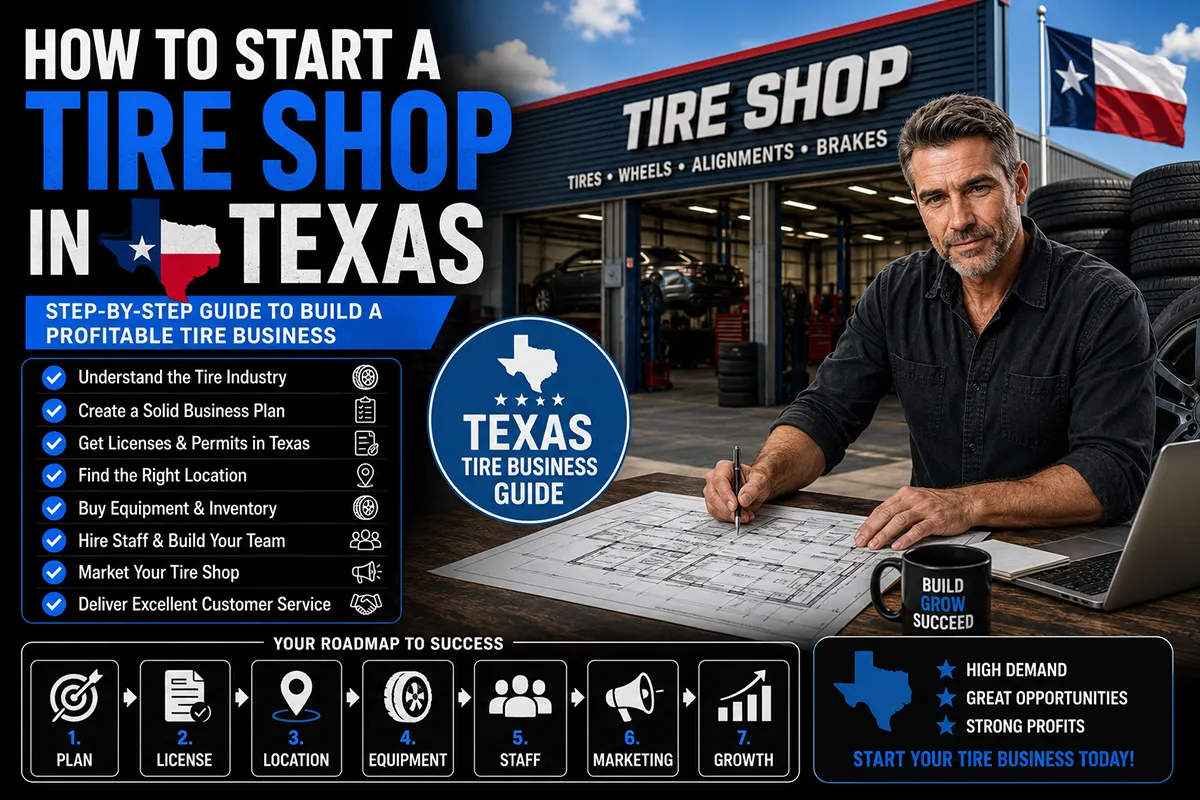
If you’re thinking about opening a tire shop in Texas, you’re looking at one of the best states in the country to do it. But there’s a lot more to it than leasing a bay and buying a tire machine. I’m going to walk you through every step based on what I’ve seen work — and what I’ve watched fail.
- Texas has no state income tax and strong demand for tire services — it’s one of the best states to open a tire shop.
- Startup costs typically range from $50,000 to $150,000+ depending on size and location.
- You’ll need a Texas sales tax permit, an EIN, business insurance, and proper environmental compliance for tire disposal.
- Location, inventory management, and customer service are the three biggest factors that determine success.
- Consider starting with used tires and basic services to minimize initial investment.
- Building relationships with tire distributors early is critical to your margins.
Liked this article?
Add TireAdvise as a preferred source so you see more of our tire reviews and guides on Google.
Why Texas Is One of the Best States to Open a Tire Shop
Let me start with the obvious: Texas is huge. It has over 29 million residents, more registered vehicles than almost any other state, and roads that stretch across every kind of terrain and climate you can imagine.
From the blistering summer heat in the Rio Grande Valley to the icy winter roads in the Panhandle, Texas drivers burn through tires. I’ve reviewed tires that barely lasted through one Texas summer because the pavement temperatures can exceed 150°F.
There’s no state income tax in Texas, which means more of your profit stays in your pocket. The regulatory environment is business-friendly compared to states like California or New York, and the cost of commercial real estate is still relatively affordable in many metro areas and suburbs.
I’ve visited tire shops in Houston, Dallas, San Antonio, Austin, and El Paso. The ones that are thriving share common traits — and I’m going to break all of them down for you.
Step 1: Write a Business Plan (Yes, You Actually Need One)
I know this sounds like generic advice, but I’ve watched too many shop owners skip this step and pay for it later. A tire shop business plan doesn’t need to be a 50-page MBA project, but it does need to answer some critical questions.
Key Questions Your Business Plan Should Answer
- Who is your target customer? (Budget shoppers, truck owners, luxury vehicle owners, fleet accounts?)
- What services will you offer beyond tire sales? (Alignments, oil changes, brakes, balancing?)
- What’s your startup budget, and where is the money coming from?
- How will you price your services compared to local competitors?
- What’s your break-even timeline?
In my experience, the most successful tire shops I’ve visited in Texas started with a very clear niche. One shop in San Antonio focused exclusively on used tires for budget-conscious drivers and built a loyal customer base within months. Another in Plano targeted lifted trucks and off-road enthusiasts, stocking brands like BFGoodrich, Nitto, and Toyo that I’ve reviewed extensively.
Your business plan is also essential if you’re seeking financing. Banks and SBA lenders want to see that you’ve thought this through.
Step 2: Choose Your Business Structure
In Texas, most tire shop owners operate as either a sole proprietorship, an LLC, or an S-Corp. I strongly recommend forming an LLC at minimum because it protects your personal assets if something goes wrong.
Filing an LLC in Texas costs $300 through the Secretary of State’s office. You can do it online, and the process takes about a week in my experience. You’ll need to choose a registered agent (this can be yourself if you have a Texas address) and file a Certificate of Formation.
After forming your LLC, you’ll want to get an EIN (Employer Identification Number) from the IRS. This is free and takes about five minutes online. You’ll need it to open a business bank account, hire employees, and file taxes.
Step 3: Get Your Texas Licenses and Permits
This is where a lot of aspiring shop owners get confused, so let me break it down clearly based on what I’ve learned from Texas shop owners I’ve worked with over the years.
Required Licenses and Permits
- Texas Sales Tax Permit: Since you’re selling physical goods (tires) and services, you need a sales tax permit from the Texas Comptroller of Public Accounts. This is free to obtain. Texas sales tax is 6.25% at the state level, plus local taxes that can bring it up to 8.25%.
- TCEQ Tire Registration: This is the one most people miss. The Texas Commission on Environmental Quality (TCEQ) requires any business that stores, transports, or processes used or scrap tires to register. There are strict rules about how many tires you can have on-site and how they must be stored.
- City Business License/Permit: Most Texas cities require a general business permit or occupancy permit. The requirements vary by city — Houston’s process is different from Dallas or Fort Worth.
- Zoning Compliance: Your property must be zoned for automotive service use. Don’t sign a lease until you’ve confirmed this with the local zoning office.
- Fire Department Inspection: Because tire shops store flammable rubber products and use compressed air systems, most municipalities require a fire inspection before you open.
I’ve seen shops get shut down within their first few months because they ignored the TCEQ registration. Texas takes tire disposal seriously — illegal tire dumping can result in fines up to $25,000 per day. Take this seriously from day one.
Step 4: Secure Financing
Let’s talk money. In my experience visiting and consulting with tire shops across Texas, here’s a realistic breakdown of startup costs.
| Expense Category | Low Estimate | Mid Estimate | High Estimate |
|---|---|---|---|
| Lease (first/last + deposit) | $3,000 | $8,000 | $15,000 |
| Tire changer machine | $2,500 (used) | $5,000 | $12,000 (new) |
| Wheel balancer | $1,500 (used) | $4,000 | $10,000 (new) |
| Air compressor | $1,000 | $2,500 | $5,000 |
| Alignment machine | $0 (skip initially) | $10,000 (used) | $30,000+ (new) |
| Initial tire inventory | $5,000 | $20,000 | $50,000+ |
| Signage and branding | $500 | $2,000 | $5,000 |
| Insurance (first year) | $3,000 | $5,000 | $10,000 |
| Tools and miscellaneous | $2,000 | $5,000 | $10,000 |
| Total | $18,500 | $61,500 | $147,000 |
Financing Options I’ve Seen Work
- SBA 7(a) Loans: These are the most common for small auto service businesses. Expect to put 10-20% down.
- Equipment Financing: Companies like Snap-on Credit, Hennessy Industries, and local equipment dealers often offer payment plans on tire machines and balancers.
- Personal Savings + Family Loans: Honestly, most of the successful small tire shop owners I know in Texas started this way.
- Texas-Specific Grants: Check the Texas Economic Development Corporation and your local Small Business Development Center (SBDC) for potential grants or low-interest loan programs.
Step 5: Find the Right Location
Location can make or break a tire shop. After visiting dozens of shops across Texas, I can tell you the patterns are clear.
What to Look For
- High-visibility corner lots or main road frontage: The best-performing shops I’ve visited are on roads where drivers can see the signage from a distance. If people can’t see you, they won’t stop.
- Easy access and ample parking: Customers need to be able to pull in and out without hassle. If your lot is hard to navigate, you’ll lose walk-in traffic.
- Proximity to residential neighborhoods or commuter routes: Tire shops near where people live or drive daily tend to outperform shops in industrial parks.
- At least 1,500-3,000 sq. ft. of indoor space: You need room for at least two service bays, tire storage, a small waiting area, and a counter/office.
In Texas, commercial lease rates vary dramatically. In small towns like Waco or Tyler, you might find a suitable space for $1,000-$2,000/month. In Houston or Dallas, expect $3,000-$6,000/month or more for a good location.
I always tell aspiring shop owners: don’t lease the cheapest space you can find. Lease the space that puts you in front of the most potential customers. The difference in rent often pays for itself within the first few weeks.
Step 6: Buy the Right Equipment
Your equipment is the backbone of your shop. I’ve tested and seen countless tire machines in action, and here’s what I recommend for a startup tire shop.
Essential Equipment
- Tire Changer: Start with a reliable mid-range machine. The Coats RC-150EX or the Ranger R980XR are solid choices that handle most passenger and light truck tires. Budget $4,000-$7,000 new.
- Wheel Balancer: The Ranger DST-2420 is a workhorse I’ve seen in many successful shops. A good balancer reduces comebacks and builds customer trust. Budget $3,000-$6,000 new.
- Air Compressor: Get at least a 60-gallon, two-stage compressor. You’ll need consistent air pressure for your tire changer, impact wrenches, and inflation. Budget $1,500-$3,000.
- Floor Jack and Jack Stands: Don’t cheap out here. A good 3-ton floor jack and a set of heavy-duty jack stands are non-negotiable for safety.
- TPMS Tools: Most modern vehicles have tire pressure monitoring systems. You’ll need a TPMS relearn tool and sensor programming tool. Budget $300-$1,000.
- Impact Wrench and Hand Tools: A quality pneumatic or cordless impact wrench (Milwaukee or Snap-on) plus a basic socket set, torque wrench, and tire repair kit.
I recommend buying your tire changer and balancer new if your budget allows — used equipment can save money upfront but may cost more in downtime and repairs. However, if you’re starting lean, reputable used equipment dealers in Texas can save you 40-60%.
Step 7: Build Your Tire Inventory
This is where my years of reviewing tires really come into play. Your inventory selection will define your business, so let me share what I’ve learned.
Inventory Strategy for a New Shop
You don’t need to stock every tire in existence. In fact, the smartest new shop owners I’ve worked with start with a focused inventory of the most common sizes for their local market.
In Texas, that typically means:
- P215/65R16 — One of the most popular sizes for sedans and crossovers
- P225/65R17 — Extremely common on mid-size SUVs
- P265/70R17 — The go-to for half-ton pickup trucks (Texas loves its trucks)
- P275/55R20 — Popular on newer full-size trucks and SUVs
- LT275/70R18 — Common on heavy-duty trucks
I recommend starting with 3-4 brands at different price points. Based on tires I’ve tested and reviewed, here’s a solid starting lineup:
- Budget tier: Westlake, Sailun, or Lexani — affordable options that offer decent value for price-conscious customers.
- Mid-range tier: Cooper, Hankook, or General Tire — these brands consistently perform well in my reviews and carry strong warranties.
- Premium tier: Michelin, Bridgestone, or Goodyear — for customers who want top performance and are willing to pay for it.
Building Distributor Relationships
Your profit margin on tires depends heavily on your wholesale pricing, and that comes down to your distributor relationships. The major tire distributors serving Texas include:
- American Tire Distributors (ATD) — The largest in the US, with warehouses throughout Texas
- Tire Rack Wholesale — Great for a wide selection
- US AutoForce — Strong regional presence
- National Tire Wholesale (NTW) — Good pricing on mid-range brands
Most distributors offer next-day delivery in Texas metro areas, which means you don’t need to stock every size. You can take the order, have the tire delivered the next morning, and install it the same day.
In my experience, the sweet spot is keeping your most popular sizes in stock for immediate service while ordering specialty sizes as needed.
Step 8: Get Proper Insurance
I can’t stress this enough — operating a tire shop without adequate insurance is reckless. One liability claim from an improperly installed tire could destroy your business.
Insurance Policies You Need
- General Liability Insurance: Covers slip-and-fall accidents, property damage, and basic liability claims. Budget $1,000-$3,000/year.
- Garage Keeper’s Insurance: This covers damage to customer vehicles while they’re in your care. Essential for any automotive service shop.
- Workers’ Compensation: Required in Texas if you have employees (though Texas is one of the few states where it’s technically optional — I still strongly recommend it).
- Commercial Property Insurance: Covers your equipment, inventory, and building contents against fire, theft, and weather damage.
- Commercial Auto Insurance: If you offer mobile tire service or use a vehicle for business purposes.
A good insurance agent who specializes in automotive businesses can bundle these policies. I’ve seen total annual premiums range from $4,000 to $12,000 depending on the size of the operation and coverage limits.
Step 9: Hire the Right People
If you’re starting as a one-person operation, you can skip this step initially. But as soon as business picks up — and in Texas, it usually does — you’ll need help.
A good tire technician in Texas earns $14-$22/hour depending on experience and location. In the Dallas-Fort Worth area and Houston metro, you’ll likely need to pay on the higher end to attract reliable workers.
Here’s what I look for when I evaluate the staff at tire shops I visit:
- Technical skill: Can they mount and balance a tire without damaging the wheel? Can they handle run-flats and low-profile tires?
- Customer service: Do they explain things clearly to customers without being condescending or pushy?
- Speed and efficiency: A skilled tech should be able to do a four-tire swap in 30-45 minutes.
- TPMS knowledge: Modern vehicles require TPMS sensor programming. This is a non-negotiable skill in 2024.
I recommend offering a simple commission or bonus structure on top of hourly pay. The best shops I’ve visited tie a small bonus to customer reviews and upsells (like road hazard warranties). It keeps the team motivated without creating a high-pressure sales environment.
Step 10: Set Your Pricing Strategy
Pricing is where many new shop owners either leave money on the table or price themselves out of the market. Let me share what I’ve observed from the most profitable shops.
Typical Texas Tire Shop Pricing
- Tire markup: Most shops mark up tires 20-40% over their wholesale cost. Budget tires often have higher percentage markups, while premium brands have slimmer margins but higher dollar profits.
- Mounting and balancing: $15-$25 per tire is standard in Texas. Some shops charge $20 per tire flat, all-inclusive.
- Flat repair: $15-$30 per tire is the going rate.
- TPMS sensor replacement: $40-$80 per sensor (including the part).
- Alignment: $80-$120 for a standard alignment. This is a high-margin service if you invest in the equipment.
- Tire disposal fee: $3-$5 per tire charged to the customer (this helps offset your TCEQ-compliant disposal costs).
I always recommend being transparent with pricing. Post your service prices clearly in the shop and on your website. The shops I’ve seen build the strongest reputations in Texas are the ones where customers never feel surprised by the bill.
Step 11: Market Your Tire Shop
You can have the best shop in Texas, but if nobody knows about it, you’re going to struggle. Here’s what actually works based on what I’ve seen.
Digital Marketing Essentials
- Google Business Profile: This is the single most important thing you can do. Set up and optimize your Google Business Profile with accurate hours, photos, and services. Ask every satisfied customer to leave a review.
- A basic website: It doesn’t need to be fancy. Just your services, prices, location, and a way to call or book an appointment. A simple WordPress site with a local SEO strategy works great.
- Facebook and Instagram: Post before-and-after photos, special deals, and customer testimonials. Texas drivers are active on social media, and local business pages get solid engagement.
- Google Local Service Ads: These pay-per-lead ads put you at the very top of local search results. I’ve seen Texas tire shops get excellent ROI from these.
Old-School Marketing That Still Works
- Roadside signage: A well-designed sign with clear pricing (like “Tires Starting at $49”) pulls in drive-by traffic.
- Flyers in apartment complexes and neighborhoods: Target areas near your shop with simple flyers offering a first-time customer discount.
- Partnerships with local mechanics: Many general repair shops don’t do tire work. Partner with them to handle their tire referrals.
- Fleet accounts: Reach out to local delivery companies, landscaping businesses, and construction companies. Fleet accounts provide steady, recurring revenue.
Step 12: Understand Texas Tire Disposal Regulations
I mentioned this earlier, but it deserves its own section because it’s one of the most common compliance issues I’ve seen with Texas tire shops.
The Texas Commission on Environmental Quality (TCEQ) regulates scrap tire management. Here’s what you need to know:
- You must register with the TCEQ if you generate, store, or transport used tires.
- You cannot store more than 500 used tires on-site without a storage site registration.
- Used tires must be transported by a TCEQ-registered transporter to an approved processing facility.
- You must maintain manifests (records) of all tire shipments.
- Tire disposal costs typically run $1-$3 per tire when using a registered hauler.
Most new shop owners contract with a scrap tire hauler who comes on a regular schedule — weekly or bi-weekly depending on volume. Companies like Liberty Tire Recycling operate throughout Texas and make this process straightforward.
Common Mistakes I’ve Seen New Tire Shop Owners Make in Texas
After years in this industry, I’ve seen the same mistakes over and over. Here’s what to avoid:
- Underestimating working capital: You need enough cash to cover at least 3-6 months of rent, utilities, payroll, and inventory replenishment before the business is self-sustaining.
- Buying too much inventory upfront: Start lean. Use distributor next-day delivery to keep your cash flexible.
- Ignoring online reviews: In Texas, a tire shop’s Google rating can make or break it. One or two bad reviews without a response can tank your traffic.
- Skipping tire disposal compliance: The TCEQ fines are severe. Don’t gamble on this.
- Trying to compete on price alone: The cheapest shop in town is usually the one with the thinnest margins and the most stress. Compete on service, speed, and trust instead.
- Not investing in a good tire changer: A cheap machine that can’t handle low-profile or run-flat tires will cost you customers and lead to damaged wheels — which you’ll be paying to replace.
Realistic Revenue Expectations for a Texas Tire Shop
Let me set realistic expectations based on what I’ve seen from shops that made it past their first year.
A small tire shop with one to two bays in a decent Texas location can typically generate $150,000-$400,000 in gross revenue in the first year. After cost of goods, labor, rent, and overhead, net profit margins usually land between 10-20%.
The shops that hit the higher end of that range typically offer alignment services (which have very high margins), sell road hazard warranties, and have at least one or two fleet accounts providing consistent volume.
By year two or three, a well-run shop in a good location can realistically generate $500,000-$800,000+ in gross revenue with strong net margins.
The key is treating every customer like they’re your only customer. In Texas especially, word of mouth travels fast — in both directions.
Should You Consider a Franchise Instead?
This is a fair question, and I’ve visited both independent and franchise tire shops across Texas. Here’s my honest take.
Franchises like Big O Tires, Tire Pros, or Midas come with brand recognition, marketing support, and established vendor relationships. But they also come with franchise fees ($20,000-$50,000+), ongoing royalties (typically 3-5% of gross revenue), and less operational freedom.
If you have limited industry experience, a franchise can provide valuable structure and training. But if you’re an experienced tire professional who knows the business, I believe you’ll build more wealth and flexibility going independent.
Many of the most successful shops I’ve visited in Texas are independent operations with strong local brands. They’ve built their reputation on personal service — something a franchise can never fully replicate.
Final Thoughts: Is Opening a Tire Shop in Texas Worth It?
In my honest assessment, opening a tire shop in Texas is one of the more accessible and potentially profitable small business opportunities in the automotive industry. The demand is there. The business environment is favorable. And the barrier to entry, while real, is manageable with proper planning.
But don’t romanticize it. Running a tire shop is physical, demanding work. You’ll be on your feet for long hours, dealing with difficult customers, managing inventory, and navigating the Texas heat. During the summer months I’ve spent visiting Texas shops, I’ve watched techs work in 100°F+ conditions with remarkable grit.
If you’re willing to put in the work, start with a solid plan, stay compliant with Texas regulations, and focus relentlessly on customer experience, you can build a tire shop that not only survives but thrives.
I’ve seen it happen dozens of times across the Lone Star State. And I believe you can do it too.
Frequently Asked Questions
How much does it cost to open a tire shop in Texas?
Starting a tire shop in Texas typically costs between $50,000 and $150,000, depending on whether you lease or buy your location, purchase new or used equipment, and carry premium brands like Goodyear or Cooper. Major expenses include tire changers ($3,000–$8,000), wheel balancers ($2,000–$6,000), initial tire inventory ($20,000–$60,000), and buildout costs. I’d recommend budgeting at least 6 months of operating expenses as a cash reserve to handle slower periods.
What licenses and permits do I need to open a tire shop in Texas?
In Texas, you’ll need a general business license, a sales tax permit from the Texas Comptroller, and a used tire dealer registration if you plan to sell used tires. You’ll also need to register your business with the Texas Secretary of State, obtain an EIN from the IRS, and check your city or county for local zoning permits and environmental compliance requirements. If you plan to handle waste tires, you must register with the Texas Commission on Environmental Quality (TCEQ) as a tire storage facility.
Is owning a tire shop profitable in Texas?
Yes, a well-run tire shop in Texas can be quite profitable, with average annual revenues ranging from $200,000 to over $500,000 depending on location and services offered. Tire markup typically ranges from 30% to 50%, and adding services like alignments, balancing, flat repairs, and oil changes significantly boosts margins. Texas’s large population, high vehicle ownership rates, and extreme summer heat that accelerates tire wear create strong year-round demand for replacement tires.
What equipment do I need to start a tire shop in Texas?
At minimum, you’ll need a tire changer, wheel balancer, air compressor, hydraulic floor jack, and a set of impact wrenches. For a competitive shop, I’d also invest in an alignment machine ($15,000–$40,000), a tire pressure monitoring system (TPMS) tool, and a brake lathe if you plan to expand into brake services. Quality equipment from brands like Hunter Engineering or Coats pays for itself through reliability and faster service times, which keeps Texas customers coming back.
How do I find the best location for a tire shop in Texas?
Look for high-traffic areas near major intersections, highways, or auto parts stores in growing Texas cities like San Antonio, Houston, Dallas, or Austin suburbs. Ideally you want a location with strong visibility, easy vehicle access, and at least 2,000–4,000 square feet of shop space with multiple service bays. I’d research local competition within a 5-mile radius and target underserved areas where drivers currently have to travel far for tire replacement services.
Should I open an independent tire shop or buy a tire franchise in Texas?
An independent tire shop gives you full control over pricing, inventory, and branding, with lower startup costs typically between $50,000 and $100,000. A franchise like Discount Tire, Big O Tires, or Meineke offers brand recognition, supplier relationships, and proven systems but requires franchise fees of $20,000–$50,000 plus ongoing royalties of 3%–8% of revenue. For first-time shop owners in Texas, a franchise can reduce risk, but experienced tire professionals often earn more going independent.
What tire brands should I stock in a Texas tire shop?
I’d recommend stocking a mix of premium, mid-range, and budget tire brands to serve all Texas drivers. Popular sellers include Goodyear, Michelin, and Bridgestone for premium buyers, Cooper Tires and Falken for mid-range customers, and Westlake or Hankook for budget-conscious shoppers. Given Texas driving conditions, prioritize all-season and highway terrain tires rated for high heat resistance, and keep a strong selection of light truck and SUV tires since trucks dominate the Texas market.
