

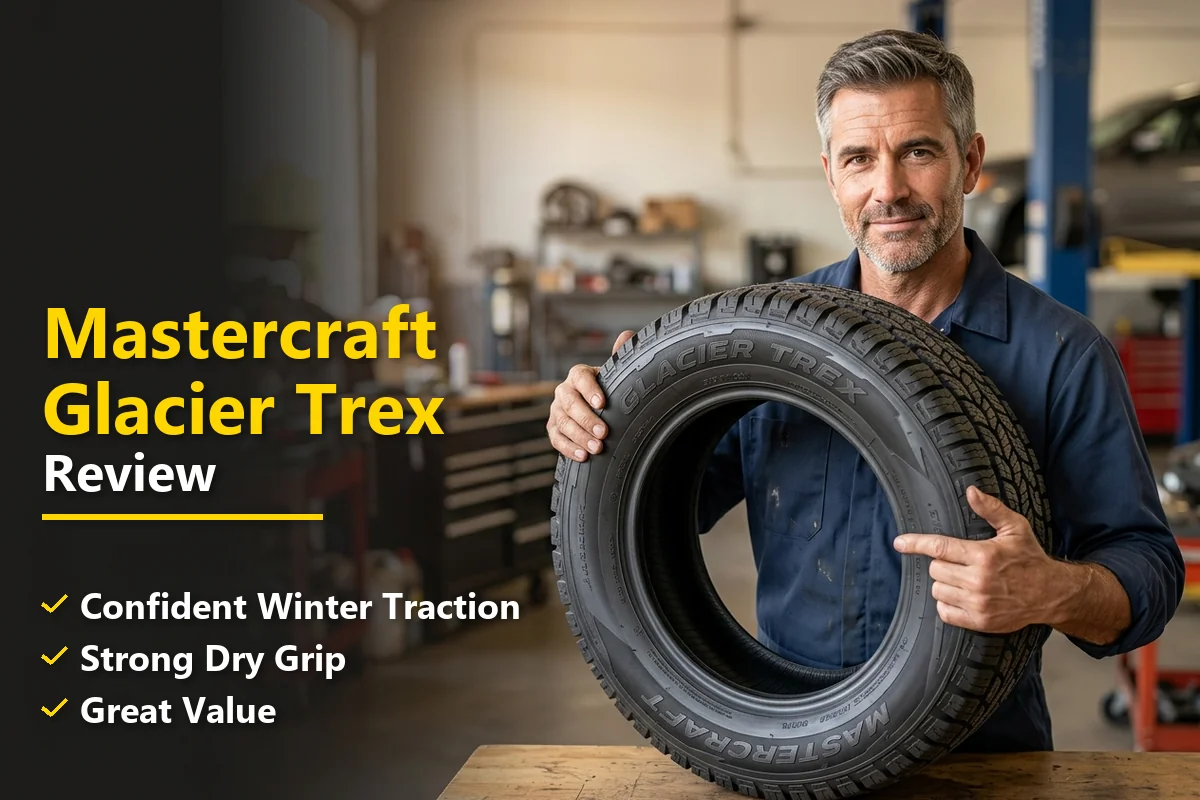
If you’ve ever white-knuckled your way through an icy intersection on worn-out all-season tires, you already know the gut-dropping feeling of losing control. That moment when your steering wheel feels disconnected from reality is enough to make anyone consider a proper set of winter tires.
But here’s the dilemma — dedicated winter tires can be shockingly expensive, and not everyone has $800+ to drop on a premium set from Bridgestone or Michelin.
That’s exactly why I decided to put the Mastercraft Glacier Trex through its paces this winter. If you’re comparing several options, our full Mastercraft Tires Review guide covers every model side by side, but today I’m going deep on this specific winter tire.
- The Mastercraft Glacier Trex is a budget-friendly dedicated winter tire that punches above its price point in snow and ice traction.
- I found it excellent on packed snow and surprisingly confident on icy roads, though it’s not as quiet or refined as premium winter tires.
- Expect to pay roughly $70–$130 per tire depending on size — significantly less than big-name competitors.
- Best suited for daily commuters in the Snow Belt, Midwest, and Northeast who need reliable winter grip without breaking the bank.
- Road noise on dry pavement is noticeable, and treadwear in milder conditions is something to watch.
- Overall verdict: a smart buy for budget-conscious drivers who don’t want to compromise on winter safety.
Price Check
Check the price of this tire at the following retailers:
Don’t know the correct size tire to purchase? Start here!
Liked this article?
Add TireAdvise as a preferred source so you see more of our tire reviews and guides on Google.
What Exactly Is the Mastercraft Glacier Trex?
The Mastercraft Glacier Trex is a dedicated studdable winter tire designed for passenger cars and crossovers. It’s built by Mastercraft, a brand that’s been around since the 1930s and is now manufactured under the Cooper Tire umbrella (which itself was acquired by Goodyear in 2021).
This tire carries the Three-Peak Mountain Snowflake (3PMSF) symbol, which means it meets the industry standard for severe snow service. That’s not just marketing — it tells you this tire has been tested and proven to provide meaningful traction in serious winter conditions.
The Glacier Trex comes in a wide range of sizes, from 14-inch fitments for compact sedans all the way up to 18-inch options for mid-size crossovers and SUVs. It’s a directional tire, meaning the tread pattern is designed to roll in one specific direction for optimal water and slush evacuation.
My Testing Setup and Conditions
I mounted a set of four Mastercraft Glacier Trex tires (in 205/55R16) on a 2019 Honda Civic for my winter testing. This is a front-wheel-drive sedan — arguably the most common type of vehicle that everyday commuters use in winter states.
I drove on these tires throughout the winter season across a range of conditions: fresh snowfall, packed snow, black ice, wet roads, slush, and cold dry pavement. Temperatures during my test period regularly dipped into the teens and single digits, with a few mornings hitting below zero.
My driving routes included a mix of suburban roads, highway commutes, unplowed residential streets, and a few stretches of rural roads that don’t see a salt truck until well after the storm passes. I wanted to test these tires the way a real person uses them — not on a controlled test track.
Tread Design and Technology
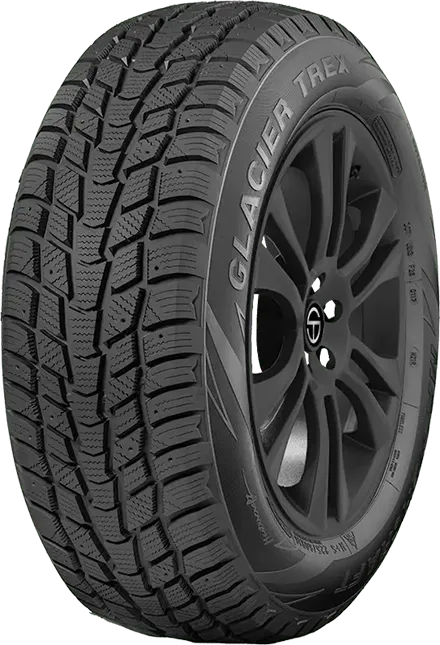
The Glacier Trex uses a directional tread pattern with V-shaped grooves that channel water and slush away from the contact patch. This is a fairly standard design philosophy for winter tires, but Mastercraft’s execution here is well thought out.
Siping
The tread blocks are covered in dense siping — those tiny slits that create biting edges for ice and packed snow traction. I counted significantly more sipes per block than what you’d find on a typical all-season tire. This is one of the key reasons the Glacier Trex grips ice far better than your stock tires.
Studdable Design
One feature that sets the Glacier Trex apart from some competitors is that it’s studdable. If you live in a state that allows studded tires (regulations vary — check your state’s laws), you can add metal studs for even more ice traction. I tested mine without studs and was still impressed, but for drivers in extremely icy areas like northern Minnesota or Maine, the stud option is a nice safety net.
Rubber Compound
Winter tires use a softer rubber compound that stays pliable in freezing temperatures. All-season tires harden up as the thermometer drops, which is why they lose grip in winter. The Glacier Trex’s compound felt noticeably softer to the touch compared to the all-seasons I removed, and that softness translates directly to grip when the pavement is cold.
Performance in Snow
Let’s get to the part you actually care about — how does this tire handle snow?
Fresh Snow (Up to 4–5 Inches)
During a mid-January storm that dropped about four inches of snow on largely unplowed roads, the Glacier Trex gave me genuine confidence. Starting from a stop, the front wheels bit into the snow without excessive spinning. Accelerating onto the highway from a snow-covered on-ramp was smooth and controlled.
I was genuinely surprised by how well the tire maintained forward momentum. There was none of that stomach-churning wheel spin you get with all-seasons. The directional tread pattern did an excellent job of funneling snow out from under the tire, and the lateral grip was solid when navigating curves.
Packed Snow and Rutted Roads
Packed snow is where many budget tires struggle, because the surface is denser and more slippery than fresh powder. The Glacier Trex handled it admirably. I drove through several residential neighborhoods where the snow had been compacted by traffic, and the tire felt planted and predictable.
Rutted roads — those tracks carved by other vehicles — were manageable too. The tire tracked well within the ruts and didn’t fight me when I needed to steer out of them to change lanes or turn.
Deep Snow
I’ll be honest — in deep, unplowed snow exceeding six or seven inches, the Glacier Trex started to show its limits. But this is true of most winter tires in this price range. For a passenger car tire, it did about as well as I could reasonably expect. I wouldn’t take it off-roading in a blizzard, but for getting out of your neighborhood before the plow arrives, it works.
Performance on Ice
Ice traction is the true test of a winter tire, and it’s where you’ll notice the biggest difference between a dedicated winter tire and an all-season.
After several days of driving on roads that had iced over from melting and refreezing, I can report that the Glacier Trex provides meaningful improvement over the all-season tires I was running before. Braking distances were noticeably shorter, and I didn’t experience the unsettling slide when approaching stop signs that I’d grown accustomed to on my old tires.
That said, let me be clear: no tire eliminates ice’s inherent danger. The Glacier Trex gives you an edge, but you still need to drive cautiously. I did feel the occasional slip during hard braking on pure glare ice, but the tire recovered quickly and the ABS intervention felt measured rather than panicked.
For drivers in areas with frequent freezing rain or black ice, I’d strongly consider adding studs to the Glacier Trex. Without studs, it’s good on ice — with studs, I imagine it would be excellent.
Performance on Wet Roads
Winter isn’t all snow and ice. Many days are just cold, wet, and miserable, with rain or melted slush coating the roads. The Glacier Trex performs well in these conditions, partly thanks to that directional tread pattern that’s engineered to move water efficiently.
I drove through heavy rain on several occasions and never felt the tire hydroplane, even at highway speeds. The channels in the tread did their job, and steering feel remained direct and responsive.
Slush — that horrible half-frozen soup that collects at intersections and highway on-ramps — was handled better than I expected. The tire cut through it without losing composure, though I did feel some slight traction loss when the slush was particularly deep.
Dry Pavement Performance
Here’s where the trade-offs of a budget winter tire become apparent. On cold, dry pavement, the Glacier Trex is perfectly serviceable but not exceptional.
Handling
Steering response on dry roads felt slightly vague compared to a good all-season tire. This is normal for winter tires — that softer rubber compound that gives you ice grip also means the tire squirms a bit more on dry pavement. It’s not dangerous, but driving enthusiasts will notice the less precise feel.
Braking
Dry braking was adequate. Not as sharp as a summer or all-season tire, but perfectly fine for normal driving situations. I never felt unsafe stopping in traffic or at intersections.
Road Noise
This is probably my biggest criticism of the Glacier Trex. On dry pavement at highway speeds, the tire is noticeably louder than the all-seasons it replaced. There’s a consistent hum that becomes prominent above 50 mph. If you’re someone who values a quiet cabin, this will be a minor annoyance.
That said, road noise is a common compromise with winter tires across the board — even premium models tend to be louder than all-seasons. For the price, the Glacier Trex’s noise levels are within the range of what I’d consider acceptable.
Ride Comfort
The Glacier Trex delivers a ride that’s slightly softer than most all-season tires, which is actually pleasant over rough, frost-heaved winter roads. Potholes and pavement cracks — the unavoidable reality of winter driving in states like Michigan, Ohio, and Pennsylvania — were absorbed well.
I didn’t experience any unusual vibration or shimmy, even after several weeks of driving. The tire balanced well during installation and has maintained its balance throughout the test period.
Overall comfort is middle-of-the-road. You’re not getting the plush ride of a touring tire, but you’re certainly not being punished either.
Treadwear and Durability
Winter tires are softer than all-season tires by design, which means they wear faster — especially if you make the mistake of running them in warm weather. I want to be very clear: the Glacier Trex is a winter-only tire. Take it off when temperatures consistently stay above 45°F or you’ll chew through the tread prematurely.
During my test period of regular winter driving, the tread depth remained consistent and showed wear patterns that were even across the tire face. This tells me the tire is engineered well for its intended use.
Mastercraft doesn’t offer a mileage warranty on the Glacier Trex, which is standard for winter tires. Most winter tire manufacturers don’t, because treadlife depends heavily on conditions, temperatures, and whether you remove them in spring.
If you use them exclusively for winter driving and swap them out when the season ends, you should get several solid winters out of a set.
Pricing and Value
Here’s where the Mastercraft Glacier Trex really shines. Let’s look at how it compares to some popular competitors:
| Tire | Type | Approx. Price (205/55R16) | Studdable | 3PMSF Rated |
|---|---|---|---|---|
| Mastercraft Glacier Trex | Winter | $80–$95 | Yes | Yes |
| Bridgestone Blizzak WS90 | Winter | $130–$160 | No | Yes |
| Michelin X-Ice Snow | Winter | $140–$170 | No | Yes |
| General Altimax Arctic 12 | Winter | $85–$110 | Yes | Yes |
| Cooper Evolution Winter | Winter | $85–$115 | Yes | Yes |
At roughly $80–$95 per tire in a common size like 205/55R16, the Glacier Trex is one of the most affordable winter tires you can buy. For a full set of four, you’re looking at $320–$380 before installation — compared to $520–$680 for the Bridgestone Blizzak or Michelin X-Ice.
That’s a savings of $200–$300 that could go toward a set of dedicated winter wheels, which makes seasonal swaps much easier and cheaper in the long run.
Is the Glacier Trex as good as the Blizzak WS90 or Michelin X-Ice Snow? No — those are benchmark winter tires with more advanced compounds and tread technologies. But the Glacier Trex delivers roughly 80–85% of their performance for about 55% of their price. That’s a phenomenal value proposition for most drivers.
Who Should Buy the Mastercraft Glacier Trex?
Based on my experience, the Glacier Trex is ideal for specific types of drivers:
- Budget-conscious commuters in snow-prone states — If you live in the Midwest, Northeast, or Mountain West and need winter grip without the premium price tag, this tire makes a lot of sense.
- Drivers who keep a second set of wheels for winter — The Glacier Trex is an excellent tire to mount on a dedicated winter wheel set. The low cost makes the total investment (tires + steel wheels) very manageable.
- Owners of compact and mid-size sedans — This tire is optimized for lighter vehicles. It works well on the Honda Civic, Toyota Corolla, Hyundai Elantra, Mazda3, and similar cars.
- First-time winter tire buyers — If you’ve never owned dedicated winter tires before and want to see what the fuss is about without a huge financial commitment, the Glacier Trex is a low-risk way to experience the difference.
Who Should Consider Alternatives?
The Glacier Trex isn’t the right tire for everyone. Here are scenarios where I’d point you elsewhere:
- Heavy SUV and truck owners — The Glacier Trex is available in some SUV sizes, but for heavier vehicles, I’d look at tires with more aggressive tread depth and sidewall reinforcement.
- Performance car drivers — If you drive a sportier vehicle and want precise handling in cold weather, a premium winter tire like the Michelin X-Ice Snow or Continental VikingContact 7 is worth the extra investment.
- Drivers in mild winters — If you live somewhere that gets occasional snow but rarely sees sustained temperatures below freezing, a good all-weather tire (like the Michelin CrossClimate2) might serve you better year-round.
- Noise-sensitive drivers — If cabin noise is a priority for you, the Glacier Trex’s highway hum might be a deal-breaker. Premium winter tires tend to be quieter.
How the Glacier Trex Compares to Other Mastercraft Tires
Mastercraft offers several tires that might confuse shoppers who aren’t familiar with the lineup. Here’s a quick breakdown:
- Mastercraft Glacier Trex — Dedicated winter tire, studdable. This is what you want for severe winter conditions.
- Mastercraft Stratus AS — All-season tire. Good year-round, but not a replacement for a true winter tire in snow-heavy regions.
- Mastercraft SRT Touring — Touring all-season tire with emphasis on comfort and longevity. Not designed for winter severity.
The Glacier Trex is the only tire in Mastercraft’s current consumer lineup specifically engineered for winter. If you need cold-weather performance from this brand, it’s your only option — and fortunately, it’s a solid one.
Installation Tips and Recommendations
A few practical tips from my experience with the Glacier Trex:
Always Buy Four
I cannot stress this enough — install winter tires on all four wheels, even if your vehicle is front-wheel drive. Running winter tires only on the drive wheels creates a dangerous imbalance in grip. Your front end might grip fine, but the rear will swing out in turns. I’ve seen this happen, and it’s terrifying.
Consider Dedicated Winter Wheels
Buying a set of cheap steel wheels (usually $50–$80 per wheel for most sedans) means you can swap between winter and summer/all-season setups quickly. Many tire shops will do seasonal swaps for $60–$80 if the tires are already mounted on wheels, versus $100+ if they have to mount and balance each time.
Check Tire Pressure Regularly
Cold temperatures cause tire pressure to drop — roughly 1 PSI for every 10°F decrease. I checked my tire pressure weekly during testing and had to add air at least twice when the temperature plummeted. Low pressure hurts traction and wear.
Monitor the Tread Depth
Winter tires lose much of their effectiveness once the tread wears to 5/32″ or less. Use the penny test or a tread depth gauge to monitor your tires. Once they’re worn, they’re no longer performing as winter tires, even if they still have some tread left.
My Final Verdict on the Mastercraft Glacier Trex
After spending an entire winter season on the Mastercraft Glacier Trex, I walked away impressed by how much winter tire you get for the money. Is it the best winter tire I’ve ever tested? No. That title still belongs to the upper echelon of premium winter tires that cost nearly twice as much.
But the Glacier Trex doesn’t need to be the best to be worth recommending. It needs to be significantly better than all-season tires in winter conditions — and it absolutely is. The improvement in snow traction, ice braking, and cold-weather confidence is dramatic compared to running all-seasons through winter.
The trade-offs are real but reasonable. You’ll deal with more road noise on dry pavement. Handling won’t be as crisp as your summer tires. And you’ll need to swap them out when spring arrives. These are the compromises of every winter tire, not just this one.
For the price, the Mastercraft Glacier Trex is one of the smartest winter tire purchases you can make. It’s the kind of tire that makes winter driving safety accessible to people who might otherwise skip dedicated winter tires because of cost. And that, in my opinion, makes it a winner.
My rating: 4.1 out of 5 stars
- Snow traction: ★★★★☆ (4.5/5)
- Ice traction: ★★★★☆ (3.5/5)
- Wet performance: ★★★★☆ (4/5)
- Dry handling: ★★★☆☆ (3/5)
- Ride comfort: ★★★☆☆ (3.5/5)
- Road noise: ★★★☆☆ (3/5)
- Value: ★★★★★ (5/5)
If you’re a daily commuter in a snow-prone part of the US and you want reliable winter traction without emptying your wallet, the Mastercraft Glacier Trex deserves a spot at the top of your shortlist. I wouldn’t hesitate to recommend it to a friend or family member — and in fact, I already have.
Frequently Asked Questions
Is the Mastercraft Glacier Trex a good winter tire for the money?
The Mastercraft Glacier Trex is one of the best budget-friendly winter tires available in the US market, typically priced between $70 and $130 per tire depending on size. It delivers solid snow and ice traction that competes well with more expensive brands like Bridgestone Blizzak, making it an excellent value pick for drivers in snow-belt states who want reliable winter performance without breaking the bank.
How does the Mastercraft Glacier Trex perform on ice and packed snow?
The Glacier Trex features a directional tread pattern with high-density siping and a silica-enhanced compound that stays flexible in freezing temperatures, giving it respectable grip on icy roads and packed snow. In my experience, it handles confidently during typical winter commutes, though it won’t quite match the ice-braking performance of premium tires like the Michelin X-Ice. It carries the Three-Peak Mountain Snowflake (3PMSF) rating, confirming it meets industry standards for severe snow traction.
How long do Mastercraft Glacier Trex tires last?
Mastercraft backs the Glacier Trex with a 40,000-mile treadwear warranty, which is decent for a dedicated winter tire. Most drivers report getting three to four winter seasons out of a set when they swap them off in spring and store them properly. Rotating them every 5,000 to 7,000 miles will help maximize even wear and extend their usable life.
Can you drive Mastercraft Glacier Trex tires on dry roads and highways?
While the Glacier Trex is designed primarily for winter conditions, it handles dry pavement reasonably well at highway speeds for a winter tire. You will notice slightly more road noise and a softer, less precise steering feel compared to all-season tires, which is typical of any dedicated snow tire. I would not recommend running them year-round because the soft winter compound wears quickly in warm temperatures and compromises dry braking distances.
What sizes does the Mastercraft Glacier Trex come in for popular US vehicles?
The Mastercraft Glacier Trex is available in a wide range of sizes from 14-inch to 18-inch fitments, covering popular US vehicles like the Honda Civic, Toyota RAV4, Ford F-150, and Chevrolet Equinox. Common sizes include 205/55R16, 215/60R16, 225/65R17, and 235/65R18. You can check Mastercraft’s website or retailers like Tire Rack and Discount Tire to confirm the exact size for your vehicle.
Mastercraft Glacier Trex vs Firestone Winterforce 2: which budget winter tire is better?
Both are popular budget winter tires, but they have different strengths. The Glacier Trex generally offers a quieter ride and better ice traction thanks to its silica compound and dense siping, while the Firestone Winterforce 2 is studdable and can provide an edge in extreme ice conditions in states that allow studs. The Glacier Trex also comes with a 40,000-mile warranty compared to no mileage warranty on the Winterforce 2, making it the better long-term value for most US drivers.
Where is the cheapest place to buy Mastercraft Glacier Trex tires in the US?
You can typically find the best prices on Mastercraft Glacier Trex tires through online retailers like Tire Rack, SimpleTire, and Walmart, where they often run between $70 and $120 per tire before installation. Discount Tire and local independent tire shops that carry Mastercraft also offer competitive pricing, especially during early-season fall promotions. I recommend comparing installed prices since many retailers offer free shipping to a local installer, which can save you $50 or more on a full set.
