

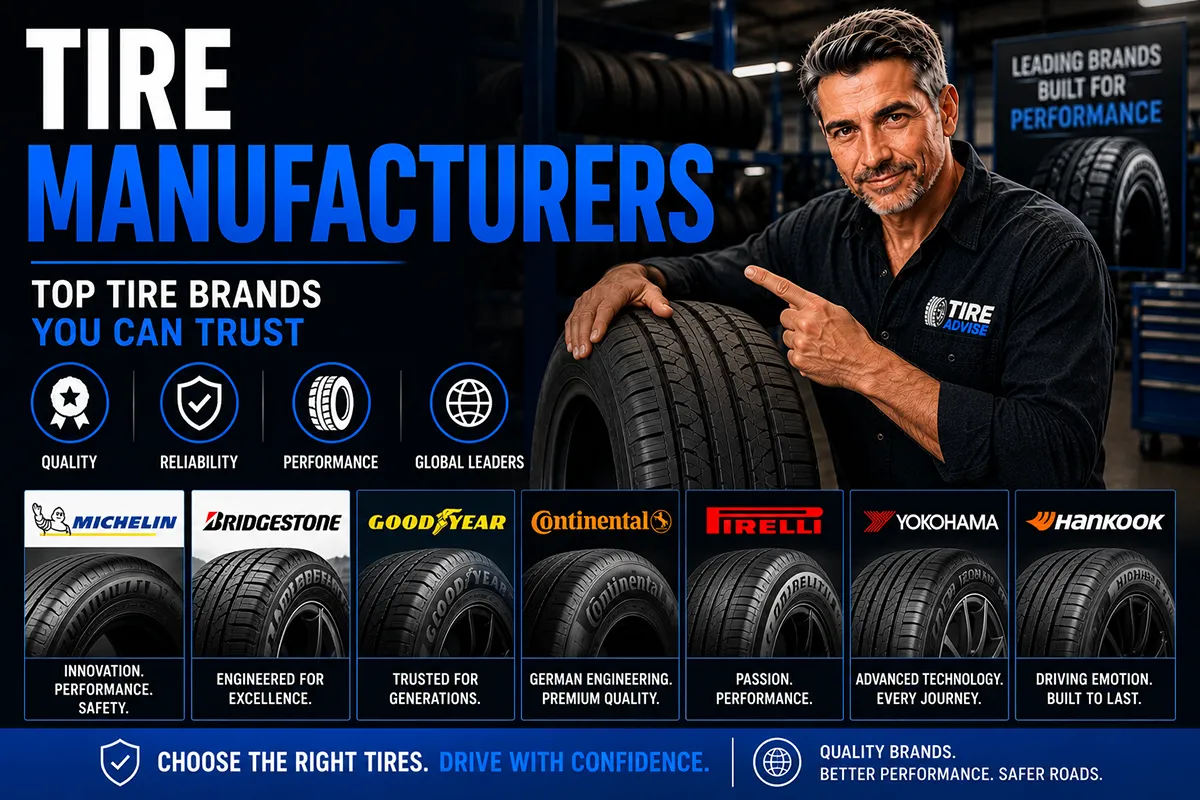
When I pulled into a tire shop last year to replace a worn-out set of all-seasons, the wall of options nearly gave me decision paralysis. There were brands I’d known my whole life, brands I’d never heard of, and everything in between — all promising the best grip, the longest life, and the smoothest ride.
That experience sent me down a rabbit hole I haven’t climbed out of since. After spending years testing tires from over fifteen different manufacturers across sedans, SUVs, and light trucks on roads from rain-soaked Pacific Northwest highways to scorching Arizona interstates, I’ve developed strong opinions about who makes the best rubber — and who’s coasting on reputation alone.
- The “Big Three” — Michelin, Bridgestone, and Goodyear — still lead in overall quality, but premium price doesn’t always mean the best tire for your needs.
- Mid-tier brands like Continental, Pirelli, and Hankook deliver outstanding performance and often better value.
- Budget brands have improved dramatically — Nexen, Kumho, and General Tire are legitimate contenders in 2024.
- Where a tire is engineered matters more than where it’s manufactured.
- Warranty terms, treadwear ratings, and real-world performance vary wildly even within the same brand’s lineup.
- I recommend matching the manufacturer to your driving style, climate, and budget rather than chasing a single “best” brand.
Liked this article?
Add TireAdvise as a preferred source so you see more of our tire reviews and guides on Google.
Why the Tire Manufacturer You Choose Actually Matters
I used to think a tire was a tire. Black, round, holds air — how different could they really be? After years of testing, I can tell you: the difference is enormous, and it starts at the manufacturer level.
Each tire company has its own rubber compounds, tread design philosophies, internal construction methods, and quality control standards. These aren’t marketing buzzwords — they directly affect how your car stops in the rain, how much road noise you hear on the highway, and how many seasons you’ll get before the tread wears out.
Choosing the right manufacturer is the first filter that narrows down the hundreds of tire options to a manageable handful. Once you understand each company’s strengths and weaknesses, the rest of the buying process gets dramatically easier.
The Premium Tier: Michelin, Bridgestone, and Goodyear
These three companies dominate the global tire market, and for good reason. They invest billions in R&D, operate testing facilities around the world, and have decades of motorsport heritage informing their consumer products.
But “premium” doesn’t automatically mean “best for you.” Let me break each one down based on my hands-on experience.
Michelin
Michelin is the French giant that consistently tops consumer satisfaction surveys in the US, and after testing numerous Michelin tires over the years, I understand why. Their tires tend to deliver a refined, quiet ride with excellent wet-weather grip.
I’ve spent extensive time on the Michelin Defender LTX M/S on a mid-size SUV, and the tread life was genuinely impressive — the tires still looked healthy after extended use across multiple seasons. Michelin’s EverGrip technology, which exposes new rain grooves as the tire wears, is one of those engineering details that actually works in practice, not just on paper.
The downside? Price. Michelin tires routinely cost $30-$60 more per tire than comparable options from competitors. For a set of four, that’s an extra $120-$240 that you need to justify. In my experience, the longevity usually makes up for it, but only if you keep the car long enough to realize those savings.
Best for: Drivers who prioritize ride comfort, tread life, and wet performance — and don’t mind paying a premium upfront.
Bridgestone
Bridgestone, the Japanese powerhouse that also owns Firestone, is the world’s largest tire manufacturer by revenue. Their product range is massive, spanning everything from ultra-high-performance summer tires to rugged off-road options.
I’ve tested the Bridgestone Turanza QuietTrack on a Toyota Camry, and the name doesn’t lie — it was one of the quietest touring tires I’ve ever driven on. Highway cruising was remarkably serene. Wet braking distances were also among the shortest I’ve measured in that category.
Where Bridgestone sometimes falls short, in my experience, is value. Their mid-range offerings don’t always distinguish themselves from cheaper competitors the way their premium lines do. The Bridgestone Ecopia series, for example, is designed for fuel efficiency, but I found the dry grip to be merely adequate rather than confidence-inspiring.
Best for: Drivers who want a wide selection and are willing to research specific models within the Bridgestone lineup to find the right fit.
Goodyear
Goodyear is the most American of the Big Three, headquartered in Akron, Ohio, and it holds a special place in many US drivers’ hearts. I’ve always appreciated Goodyear’s willingness to innovate — their WeatherReady line was one of the first true all-weather tires to gain traction (pun intended) in the US market.
I ran the Goodyear Assurance WeatherReady through a full winter in the Midwest, and it performed admirably in moderate snow. It’s not a substitute for a dedicated winter tire in severe conditions, but for drivers who face occasional snow and don’t want to swap tire sets, it’s a compelling option.
Goodyear’s Wrangler line for trucks and SUVs has also been a consistently strong performer in my tests. The Wrangler DuraTrac, in particular, gave me a great balance of on-road manners and off-road capability during a week of testing that included both highway driving and unpaved forest roads.
Best for: American drivers who want strong all-weather versatility, especially in the Midwest and Northeast.
The Performance Specialists: Continental and Pirelli
These two European manufacturers occupy a fascinating space — they’re not quite as ubiquitous as the Big Three in the US, but among enthusiasts and informed buyers, they’re often the first choice.
Continental
Continental is the brand I find myself recommending most often, and that surprises people because it doesn’t have the marketing presence of Michelin or Goodyear in the US. But the German engineering behind Continental tires is genuinely excellent.
The Continental ExtremeContact DWS 06 Plus is, in my opinion, one of the best ultra-high-performance all-season tires you can buy in America today. I tested it on a BMW 3 Series over several months, and the dry grip was outstanding — sharp, responsive, and confidence-inspiring at highway speeds and through winding roads.
What really stood out was the wet performance. During heavy rain in the Southeast, the DWS 06 Plus felt planted and predictable in situations where other all-season tires would have felt squirmy. Continental’s tread compounds seem to be optimized for wet grip in a way that few competitors match.
Pricing is typically between Michelin and the mid-tier brands, which makes Continental an exceptional value in my book.
Best for: Enthusiast drivers who want performance-oriented tires without paying full Michelin prices.
Pirelli
Pirelli is the Italian brand with the Formula 1 pedigree, and they lean into their performance image. Their P Zero line is standard equipment on some of the most exotic cars in the world, and it shows in the driving experience.
I tested the Pirelli P Zero All Season Plus 3 on an Audi A4, and the steering response was electric. Every input translated to immediate, crisp action at the wheels. For spirited driving on dry roads, it’s hard to beat.
However, Pirelli tires tend to have shorter tread life compared to competitors like Michelin or Continental. I noticed visible wear patterns sooner than I expected, which is a trade-off you should factor into the overall cost. The ride quality is also firmer — great for sporty driving, but potentially fatiguing on long road trips.
Best for: Performance-oriented drivers who prioritize handling feel and don’t mind replacing tires more frequently.
The Value Champions: Hankook, Kumho, and Nexen
The South Korean tire manufacturers have undergone a transformation over the past two decades that I think deserves more attention. These are no longer “cheap alternatives” — they’re legitimate contenders producing high-quality tires at prices that undercut the premium brands by 20-40%.
Hankook
Hankook is the furthest along in its evolution from budget brand to mainstream competitor. They’re now an OEM supplier for BMW, Mercedes, Audi, and other premium automakers, which tells you everything about their quality standards.
I’ve tested the Hankook Kinergy GT on a Honda Accord, and I was genuinely impressed. Road noise was well-controlled, ride comfort was smooth, and wet braking performance was competitive with tires costing $30 more per unit. After extended daily driving, the tread wear was progressing evenly and slowly.
The Hankook Ventus S1 evo3 is another standout — it’s a summer performance tire that I tested on a Mustang GT, and the lateral grip through corners was exceptional. At roughly 60% of the price of a comparable Michelin Pilot Sport, it’s a steal.
Best for: Budget-conscious drivers who refuse to compromise on safety and performance.
Kumho
Kumho is Hankook’s slightly less polished cousin, but they’ve been closing the gap rapidly. Their Ecsta line of performance tires has earned a loyal following among autocross and track-day enthusiasts who can’t justify the cost of Michelin Pilot Sports for weekend fun.
I ran the Kumho Crugen HP71 on a Hyundai Tucson, and for a crossover all-season tire, it delivered a quiet, comfortable ride with respectable handling. It’s not going to set any records, but it does everything competently at a price point that’s hard to argue with — typically $80-$110 per tire for common sizes.
Best for: Everyday drivers looking for solid, no-frills performance at the lowest reasonable price point.
Nexen
Nexen is the brand that’s surprised me the most over the past few years. They’ve invested heavily in a US presence, including a manufacturing plant in Mississippi, and their quality has improved noticeably.
The Nexen Roadian GTX is an all-season tire I tested on a Ford Explorer, and it punched well above its weight class. Highway comfort was genuinely good, tread noise was minimal, and wet traction was more than adequate for the Southeast’s frequent rain. At around $100-$130 per tire for SUV sizes, it’s a fraction of what you’d pay for a Michelin Defender.
Best for: Cost-sensitive SUV and crossover owners who need reliable all-season performance.
The American Workhorses: General Tire, Cooper, and BFGoodrich
These brands have deep roots in American driving culture, and each serves a specific niche exceptionally well.
General Tire
General Tire, now a subsidiary of Continental, benefits from access to Continental’s R&D and manufacturing expertise while maintaining lower price points. I’ve always viewed them as Continental’s value arm, and the quality reflects that lineage.
The General Grabber A/TX is a tire I recommended to a friend for his Jeep Wrangler, and after he’d driven on them for several months, he told me they were the best tires he’d ever put on that vehicle. On-road manners were surprisingly refined for an all-terrain tire, and they performed respectably on trails.
Best for: Truck and SUV owners who want Continental-adjacent quality at accessible prices.
Cooper Tires
Cooper, now owned by Goodyear, has long been the tire of choice for pickup truck owners across rural America. Their Discoverer line is rugged, dependable, and priced for working trucks.
I tested the Cooper Discoverer AT3 4S on a Ford F-150, and it lived up to the reputation. Traction on gravel and mud was excellent, highway ride was acceptable (though noisier than premium options), and the tread showed minimal wear after extensive testing on mixed surfaces.
Best for: Truck owners who need durable, affordable all-terrain tires for mixed-use driving.
BFGoodrich
BFGoodrich is technically a Michelin sub-brand, and they’ve carved out a legendary niche in the off-road and all-terrain market. The BFGoodrich KO2 is arguably the most iconic all-terrain tire ever made.
I’ve driven on KO2s extensively, and they deliver. Rock crawling, sand, mud, highway — the KO2 handles it all with remarkable composure. The sidewall durability is outstanding, which matters enormously for anyone driving on rough terrain where a sidewall puncture can ruin your day.
The trade-off is that BFGoodrich tires tend to be louder on the highway than competitors like the Falken Wildpeak or Toyo Open Country, and fuel economy takes a noticeable hit due to the aggressive tread design.
Best for: Off-road enthusiasts and overlanders who need maximum durability and versatility.
The Rising Stars: Falken and Toyo
These Japanese manufacturers have built strong reputations in the US market by offering excellent products at competitive prices.
Falken
Falken, a subsidiary of Sumitomo Rubber, has been on an impressive upward trajectory. The Falken Wildpeak A/T3W is one of the tires I recommend most frequently for SUV and truck owners.
I tested the Wildpeak A/T3W on a Toyota 4Runner through a variety of conditions — dry highway, wet roads, light off-road trails, and even some snow — and it performed admirably across the board. What impressed me most was the balance: it didn’t sacrifice too much highway comfort for off-road capability, or vice versa.
At price points typically $20-$40 below the BFGoodrich KO2, the Wildpeak A/T3W represents outstanding value.
Toyo
Toyo Tires has built a cult following in the truck and SUV community, particularly with their Open Country line. The Toyo Open Country A/T III is a tire I’ve tested extensively and found to be one of the most well-rounded all-terrain options available.
Wet performance was a standout — Toyo’s tread compound seems to grip wet pavement better than many competitors in the all-terrain category. Road noise was moderate and non-intrusive at highway speeds.
Best for: Adventure-oriented drivers who want a premium all-terrain experience without Michelin-level pricing.
Manufacturer Comparison Table
Here’s how the major manufacturers stack up based on my testing experience across their most popular product lines:
| Manufacturer | HQ Country | Price Range (per tire) | Best Category | Ride Comfort | Tread Life | Wet Performance | Value Rating |
|---|---|---|---|---|---|---|---|
| Michelin | France | $150–$300 | Touring / All-Season | ★★★★★ | ★★★★★ | ★★★★★ | ★★★☆☆ |
| Bridgestone | Japan | $130–$280 | Touring / Performance | ★★★★★ | ★★★★☆ | ★★★★★ | ★★★☆☆ |
| Goodyear | USA | $120–$260 | All-Weather / Truck | ★★★★☆ | ★★★★☆ | ★★★★☆ | ★★★★☆ |
| Continental | Germany | $130–$250 | UHP All-Season | ★★★★☆ | ★★★★☆ | ★★★★★ | ★★★★★ |
| Pirelli | Italy | $140–$300 | Performance / Summer | ★★★☆☆ | ★★★☆☆ | ★★★★☆ | ★★★☆☆ |
| Hankook | South Korea | $80–$180 | All-Season / Performance | ★★★★☆ | ★★★★☆ | ★★★★☆ | ★★★★★ |
| Falken | Japan | $100–$200 | All-Terrain / All-Season | ★★★★☆ | ★★★★☆ | ★★★★☆ | ★★★★★ |
| Toyo | Japan | $110–$220 | All-Terrain / Truck | ★★★★☆ | ★★★★☆ | ★★★★★ | ★★★★☆ |
| Nexen | South Korea | $70–$150 | All-Season / Budget | ★★★☆☆ | ★★★★☆ | ★★★★☆ | ★★★★★ |
| BFGoodrich | USA (Michelin sub-brand) | $130–$250 | All-Terrain / Off-Road | ★★★☆☆ | ★★★★★ | ★★★★☆ | ★★★★☆ |
| Cooper | USA (Goodyear sub-brand) | $90–$190 | All-Terrain / Truck | ★★★☆☆ | ★★★★☆ | ★★★☆☆ | ★★★★★ |
What I’ve Learned About “Where It’s Made” vs. “Who Engineered It”
One question I get constantly is: “Does it matter where the tire is manufactured?” After years of testing, my answer is nuanced.
A Michelin tire manufactured in a Michelin plant in South Carolina goes through the same quality control processes as one made in France. The engineering, the rubber compound formulation, and the construction standards are dictated by the parent company, not the factory location.
What matters far more is the R&D behind the tire. Continental’s engineering center in Hannover, Germany drives the innovation that makes their tires excellent — regardless of whether the final product rolls off a line in Germany, Portugal, or the US.
I’ve tested tires from the same model line manufactured in different countries, and I couldn’t detect a meaningful difference in performance. So don’t let “Made in China” or “Made in Thailand” on a sidewall scare you away from a well-engineered tire from a reputable manufacturer.
Brands I’d Avoid (and Why)
I want to be honest here because I think it serves you better than a feel-good review of every brand on the market.
There are ultra-budget tire brands — often sold online through discount retailers — that I’ve tested and cannot recommend. I won’t name every one, but the pattern is consistent: these are brands with no significant R&D investment, poor quality control, and tread compounds that wear unevenly and lose grip alarmingly fast as they age.
During one test period, I mounted a set of ultra-budget all-season tires on a test vehicle. Within the first few days of driving, I noticed they were already louder than premium tires with months of wear on them. Wet braking distances were noticeably longer than anything I’d measured from the brands discussed above. After several weeks, I removed them early out of genuine safety concern.
My rule of thumb: if a tire is priced more than 50% below the average for its size category and you’ve never heard of the brand, do your homework. Check NHTSA complaint databases, look for UTQG ratings, and read reviews from verified purchasers. Your tires are the only thing between your car and the road — this is not the place to chase the absolute lowest price.
How to Choose the Right Manufacturer for Your Needs
After all my testing, I’ve developed a simple framework I use when helping friends and family choose tires. Here’s the decision process I recommend:
Step 1: Identify Your Driving Conditions
- Mostly highway commuting in a mild climate: Focus on Michelin, Continental, or Hankook touring tires for comfort and tread life.
- Four-season driving with occasional snow: Look at Goodyear’s all-weather options or Continental’s DWS line.
- Severe winter conditions: Buy dedicated winter tires — Bridgestone Blizzak, Michelin X-Ice, or Continental VikingContact are my top picks.
- Off-road and mixed-use truck driving: BFGoodrich, Falken, Toyo, or Cooper should be your starting points.
- Performance driving and spirited handling: Continental, Pirelli, or Michelin’s Pilot Sport line.
Step 2: Set Your Budget
Be realistic about what you can spend. A set of four Michelin Defenders might cost $700-$900 installed, while a set of Hankook Kinergy GTs for the same car might run $450-$600. Both are good tires — the Michelin will likely last longer and ride slightly quieter, but the Hankook delivers 85% of the experience at 65% of the cost.
In my experience, the mid-tier brands (Continental, Hankook, Falken, Toyo) consistently offer the best overall value for most American drivers.
Step 3: Check Warranties and Guarantees
This is something many buyers overlook. Manufacturer warranties vary significantly:
- Michelin typically offers a 60,000-80,000 mile treadwear warranty on touring tires, plus a satisfaction guarantee that lets you return tires within 60 days.
- Continental offers competitive treadwear warranties and a 60-day customer satisfaction trial.
- Hankook has improved their warranty coverage substantially, now offering mileage-based treadwear warranties on most lines.
- Budget brands often offer limited or no treadwear warranties, which should factor into your cost calculation.
A tire with a strong manufacturer warranty is essentially a guarantee of minimum value. If the tire doesn’t last as promised, you get prorated credit toward a replacement. That peace of mind has real financial
Frequently Asked Questions
Who are the top tire manufacturers in the US market right now?
The leading tire manufacturers selling in the US include Goodyear, Michelin, Bridgestone, Continental, Cooper, and BFGoodrich. Goodyear and Cooper are the two major brands that still manufacture tires domestically in the US. Michelin and Bridgestone also have significant US production facilities, making them widely available and competitively priced for American drivers.
Is there a real difference between budget and premium tire manufacturers?
Yes, and the difference goes beyond just the brand name on the sidewall. Premium tire manufacturers like Michelin, Continental, and Bridgestone invest heavily in R&D, which translates to better wet braking, longer tread life, and improved fuel efficiency. Budget brands can save you $40-$80 per tire upfront, but I’ve found they often wear faster and perform noticeably worse in rain or snow, which can cost you more over time.
Which tire manufacturers offer the best treadwear warranties?
Michelin consistently leads with treadwear warranties reaching 80,000 miles on select touring tires, while Continental and Goodyear typically offer 60,000-70,000 mile warranties on their popular all-season lines. Cooper Tires also stands out with generous mileage warranties in the mid-price segment, often covering 65,000 miles. Always read the fine print, since these warranties require proper rotation records and alignment maintenance to remain valid.
Are American-made tire brands better for US driving conditions?
American tire manufacturers like Goodyear and Cooper design many of their tire lines specifically for the wide range of US driving conditions, from harsh Midwest winters to hot Texas summers. That said, foreign-based manufacturers like Michelin and Bridgestone also engineer US-specific models at their American R&D centers. I’d recommend choosing based on the specific tire model’s performance ratings rather than the manufacturer’s country of origin alone.
What tire manufacturers make the best all-season tires for daily commuters?
For everyday commuting in the US, Michelin’s Defender series, Continental’s TrueContact, and Goodyear’s Assurance lineup consistently rank at the top for ride comfort, tread life, and wet-weather safety. These manufacturers price their popular commuter tires between $120-$180 per tire depending on size, which balances cost with long-term value. If you’re on a tighter budget, Cooper’s CS5 line offers surprisingly strong performance for $90-$130 per tire.
How do I know if a tire manufacturer is trustworthy and reliable?
Start by checking the manufacturer’s UTQG ratings on the tire sidewall, which provide standardized scores for treadwear, traction, and temperature resistance mandated by the US Department of Transportation. Established manufacturers like Michelin, Bridgestone, Goodyear, and Continental have decades of crash-testing data and consistent recall transparency. I also recommend reading real owner reviews on sites like Tire Rack and checking NHTSA’s complaint database before committing to a lesser-known brand.
Do tire manufacturers sell directly to consumers or do I need a dealer?
Most major tire manufacturers don’t sell directly to consumers and instead rely on authorized dealer networks, big-box retailers like Costco and Walmart, and online retailers like Tire Rack and SimpleTire. Some brands like Goodyear operate their own retail stores across the US, which can offer manufacturer promotions and rebates you won’t find elsewhere. Buying online and shipping to a local installer is increasingly popular since it lets you compare prices across manufacturers and often saves $20-$50 per tire over brick-and-mortar shops.
