

I spent years thinking a quick run through the automatic car wash was “good enough” — until I noticed swirl marks eating into my clear coat and my interior smelling like a forgotten gym bag.
The truth hit me hard: I was spending hundreds on premium tires and performance upgrades but neglecting the most basic form of vehicle care that protects everything from paint to rubber.
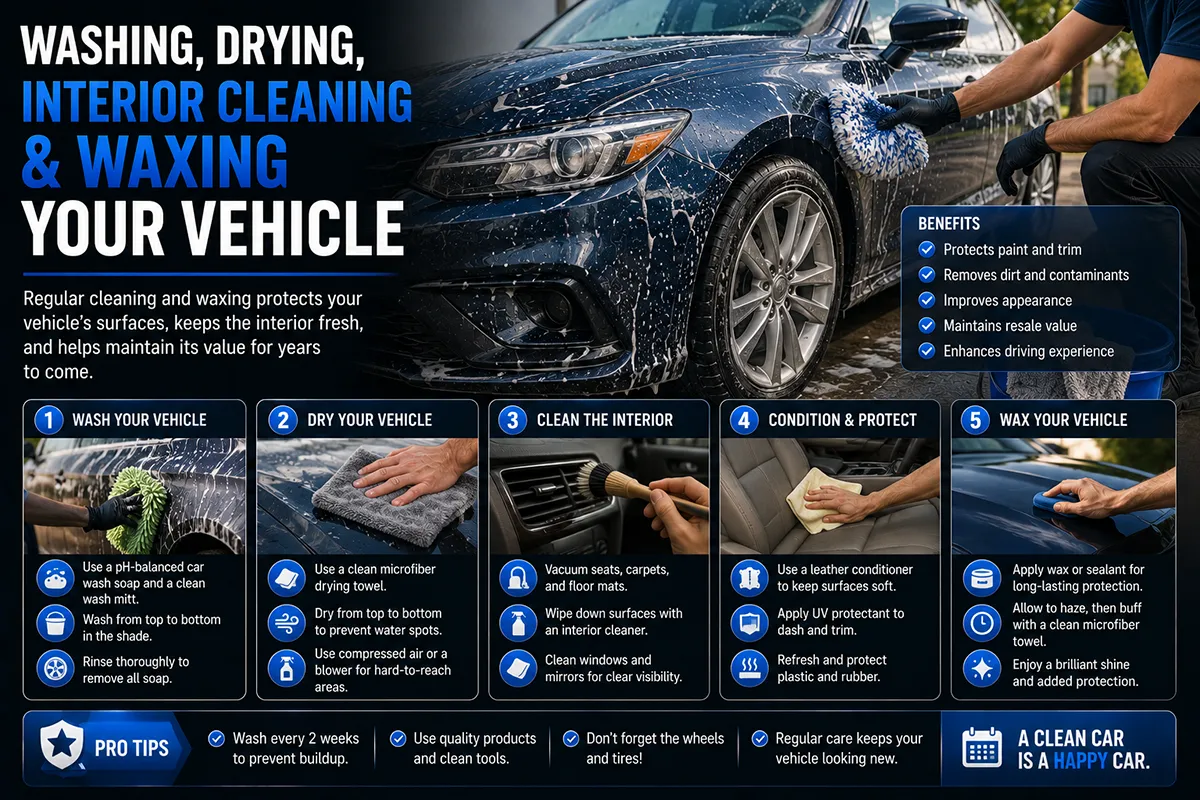
After years of trial and error — and more than a few ruined microfiber towels — I’ve dialed in a complete vehicle cleaning routine that I now follow religiously. Today, I’m sharing every step of that process with you.
- Always use the two-bucket wash method to avoid scratching your paint.
- Dry with a quality microfiber drying towel or a filtered blower — never air-dry.
- Clean your interior top-down: headliner, dash, seats, carpets, then door jambs.
- Apply wax or sealant at least every 2–3 months for lasting UV and weather protection.
- Don’t forget your tires and wheels — they’re part of your vehicle’s first impression and longevity.
- Budget around $80–$150 for a solid starter kit of quality car care products.
Liked this article?
Add TireAdvise as a preferred source so you see more of our tire reviews and guides on Google.
Why a Full Vehicle Detail Matters More Than You Think
I’ll be honest — I used to think detailing was just vanity. Then I started reviewing tires professionally, and I realized how interconnected every part of your vehicle really is.
A clean car isn’t just about looking good at the grocery store. Road grime, brake dust, bird droppings, tree sap, and UV radiation are actively degrading your paint, your trim, your rubber, and your interior surfaces every single day.
When I started taking full vehicle care seriously, I noticed my tires even looked better and lasted longer because I was actually inspecting them during every wash. That’s a hidden benefit nobody talks about — regular washing forces you to look at your tires, your brakes, and your suspension components up close.
In the US, where we deal with everything from harsh Midwest winters and road salt to blazing Arizona summers and UV bombardment, a consistent cleaning routine is one of the cheapest forms of preventive maintenance you can do.
Step 1: Gathering the Right Supplies
Before I get into the process, let me walk you through what I personally keep in my garage. I’ve tested dozens of products over the years, and I’ve settled on a reliable kit that won’t break the bank.
Exterior Washing Supplies
- Two 5-gallon buckets (one for soapy water, one for rinse water)
- Grit guards for the bottom of each bucket
- pH-neutral car wash soap (I like Meguiar’s Gold Class and Chemical Guys Honeydew Snow Foam)
- A quality wash mitt — chenille microfiber or lambswool
- A foam cannon or foam gun (optional but highly recommended)
- A garden hose with an adjustable nozzle (or a pressure washer if you have one)
- Microfiber drying towels — at least two large ones
- A dedicated wheel brush and tire brush
- Wheel cleaner (I use Sonax Full Effect — it’s incredible on brake dust)
Interior Cleaning Supplies
- A portable vacuum or shop vac with crevice attachments
- Interior all-purpose cleaner (APC) diluted appropriately
- Leather cleaner and conditioner (if applicable)
- Carpet and upholstery cleaner
- Microfiber towels — several clean ones, designated for interior use only
- Soft detailing brushes for vents, buttons, and tight spaces
- Glass cleaner (I prefer Invisible Glass — it’s streak-free and ammonia-free)
Waxing and Protection Supplies
- Carnauba paste wax or synthetic paint sealant
- Foam or microfiber applicator pads
- A clay bar kit (for decontamination before waxing)
- Tire dressing (water-based for a natural look, silicone-based for high gloss)
- Trim restorer for faded black plastics
In my experience, you can put together a solid starter kit for around $80 to $150 depending on brand choices. I’d rather you invest in quality microfiber towels and a good wash mitt than overspend on fancy soap — the technique matters far more than the brand name.
Step 2: The Pre-Wash — Setting Yourself Up for Success
This is the step most people skip entirely, and it’s the one that prevents the most damage. I never touch my car with a wash mitt until I’ve done a thorough pre-wash.
I start by rinsing the entire vehicle with a strong stream of water from top to bottom. This knocks off loose dirt, sand, and debris that would otherwise act like sandpaper under your wash mitt.
If I’m using a foam cannon (and I almost always am), I’ll coat the entire car in a thick layer of snow foam and let it dwell for about three to five minutes. The foam encapsulates dirt particles and lifts them away from the paint surface before you ever make contact.
During this dwell time, I walk around the car and mentally note any areas that need extra attention — bird droppings, bug splatter on the front bumper, heavy road grime behind the wheel wells. This is also when I take a good look at my tires for uneven wear, sidewall damage, or embedded nails.
After the foam has done its job, I rinse it off completely. You’ll be amazed at how much dirt comes off before you even touch the car.
Step 3: The Two-Bucket Wash Method
This is the core of my wash process, and I genuinely believe it’s the single most important technique for maintaining your paint.
Here’s how it works: one bucket contains your soapy water, and the other contains clean rinse water with a grit guard at the bottom. You dip your wash mitt into the soapy bucket, wash a section of the car, then rinse the mitt in the clean water bucket (rubbing it against the grit guard to release trapped dirt) before dipping it back into the soap.
My Washing Sequence
I always wash in this specific order:
- Wheels and tires first — These are the dirtiest parts of your car, and I use separate brushes and a dedicated bucket for them. I spray wheel cleaner, let it dwell, then agitate with a wheel brush. For tires, I use a stiff-bristled tire brush with some all-purpose cleaner.
- Roof — Start at the top and work down. Gravity is your friend.
- Windows and upper panels
- Hood, trunk, and upper doors
- Lower panels and bumpers — These areas collect the most road grime, so I save them for last to avoid cross-contamination.
- Rocker panels and wheel wells — The grimiest of the grim. I sometimes use a separate mitt for these.
I work in straight lines rather than circular motions. This is critical — circular motions create those dreaded swirl marks that are visible in direct sunlight. Straight, overlapping passes minimize the risk.
Each panel gets a fresh load of soapy water on the mitt. I never let the mitt go dry or drag it across the paint without lubrication.
A Note on Automatic Car Washes
I know this is going to be unpopular, but I have to say it: I strongly recommend avoiding automatic car washes with spinning brushes. In my experience, they inflict more damage on your paint in a single visit than months of normal driving.
Touchless automatic washes are better, but they use harsh chemicals to compensate for the lack of physical agitation. They’re acceptable in a pinch — like during a freezing Midwest winter when hand-washing isn’t realistic — but they shouldn’t be your regular routine.
Step 4: Drying — The Most Underrated Step
If you air-dry your car, you’re leaving water spots. Period. In areas with hard water (which includes most of the US), those mineral deposits etch into your clear coat over time.
I use a large, plush microfiber drying towel — the “waffle weave” type works incredibly well because it absorbs a tremendous amount of water. I lay it flat on the panel and gently drag it across the surface rather than rubbing.
For hard-to-reach areas like mirrors, door handles, and emblems, I use a small electric blower (a MetroVac Sidekick is what I own). It pushes water out of crevices that would otherwise drip down onto your freshly dried panels.
My drying order mirrors my wash order: roof first, then down the sides, finishing with the lower panels. I typically use two drying towels — one gets saturated about halfway through the car, and I swap to a fresh one.
Pro Tip: Use a Drying Aid
I started using a spray drying aid (sometimes called a “detail spray” or “quick detailer”) a couple of years ago, and it transformed my results. You mist it onto the wet panel right before drying, and it adds lubrication that prevents any remaining contaminants from scratching the paint. It also adds a light layer of protection and makes the towel glide effortlessly.
Products like Meguiar’s Quik Detailer or Griot’s Garage Speed Shine cost about $8 to $12 and last for months. In my opinion, it’s one of the best dollar-per-value upgrades you can add to your wash routine.
Step 5: Interior Cleaning — Top to Bottom, Front to Back
Now we move inside the cabin. A clean interior doesn’t just feel better — it actually protects surfaces from premature cracking, fading, and wear.
I follow a strict top-down approach because dust and debris fall with gravity. If you clean the carpets first and then brush out the vents, you’ve just dirtied your carpets again.
Headliner
Most people never clean their headliner, and honestly, most of the time it doesn’t need much. But if you see stains or discoloration, a light mist of upholstery cleaner and a gentle blot with a microfiber towel does the trick. Never scrub a headliner — the adhesive that holds the fabric to the backing is delicate.
Dashboard, Center Console, and Door Panels
I spray a diluted all-purpose cleaner (usually a 10:1 ratio) onto a microfiber towel — never directly onto the surface. This prevents overspray from getting on your windshield or into electronic components.
I wipe down every surface, then use soft detailing brushes to get into vents, button crevices, around the steering column, and along trim seams. You’d be shocked at how much dust and grime accumulates in these tiny spaces.
For plastic and vinyl surfaces, I follow up with a UV-protectant dressing. I personally prefer a matte or satin finish — it looks more natural than a shiny, greasy dashboard. 303 Aerospace Protectant is my go-to; it provides genuine UV protection and doesn’t attract dust the way silicone-based products do.
Seats
Your approach here depends on your seat material:
| Seat Material | Cleaning Method | Recommended Products | Estimated Cost |
|---|---|---|---|
| Leather | Wipe with dedicated leather cleaner, then apply leather conditioner | Lexol Cleaner + Conditioner, Chemical Guys Leather Complete | $15–$25 |
| Cloth/Fabric | Vacuum thoroughly, spray upholstery cleaner, agitate with brush, extract or blot | Folex Spot Remover, Blue Coral Upholstery Cleaner | $8–$15 |
| Vinyl/Leatherette | Wipe with APC, follow with a vinyl protectant | Meguiar’s APC, 303 Aerospace Protectant | $10–$20 |
In my experience, leather seats especially benefit from regular conditioning. I’ve seen leather crack and fade terribly in cars parked outdoors in Texas and Florida because the owner never applied conditioner. It takes two minutes and saves you hundreds in reupholstery costs down the road.
Carpets and Floor Mats
I pull out all floor mats and clean them separately. Rubber mats get sprayed with APC, scrubbed with a stiff brush, and rinsed. Carpet mats get vacuumed, treated with upholstery cleaner, brushed, and then hung to dry.
For the carpet in the car itself, I vacuum thoroughly — including under the seats and in every crevice where french fries go to die. For stains, I use a carpet extractor if available, or simply spray, agitate, and blot repeatedly until the stain lifts.
Glass (Interior)
Interior glass is surprisingly tricky. It develops a hazy film over time from off-gassing plastics, cigarette smoke, and general airborne oils.
I clean interior glass last to avoid getting overspray from other products on it. I use a dedicated glass cleaner (Invisible Glass is my top pick) and a clean microfiber towel folded into quarters. I wipe in one direction first, then flip the towel and buff in the other direction.
Always make sure your glass cleaner is ammonia-free, especially if you have aftermarket window tint. Ammonia destroys tint adhesive over time.
Step 6: Paint Decontamination — The Step Before Wax
Here’s where a lot of people jump straight to waxing and miss a crucial step. Before you put any protection on your paint, you need to make sure the surface is genuinely clean — not just visually clean.
Run your hand across a freshly washed panel. If it feels rough or gritty, there are bonded contaminants embedded in your clear coat. These include industrial fallout, rail dust, overspray, tree sap residue, and brake dust that has bonded at a molecular level.
The solution is a clay bar treatment. I use a traditional clay bar kit (Meguiar’s Smooth Surface Clay Kit is excellent for beginners), though synthetic clay mitts and pads have become popular alternatives that I’ve also used with great results.
You spray a clay lubricant on a small section, then gently glide the clay across the surface. It pulls out contaminants and leaves the paint feeling glass-smooth. The difference you’ll feel with your fingertips is genuinely remarkable the first time you try it.
I recommend claying your car two to four times per year, depending on your environment. If you live near an industrial area, near railroad tracks, or in a region with heavy pollen, you’ll need to do it more often.
Step 7: Waxing and Paint Protection
This is the step that seals in all your hard work. Wax and sealants create a sacrificial barrier between your paint and the elements — UV rays, acid rain, bird droppings, road salt, and everything else your car encounters.
Carnauba Wax vs. Synthetic Sealant vs. Ceramic Coating
| Protection Type | Durability | Appearance | Ease of Application | Cost |
|---|---|---|---|---|
| Carnauba Wax | 4–8 weeks | Warm, deep, “wet” glow | Easy — apply and buff | $10–$30 |
| Synthetic Sealant | 3–6 months | Sharp, glassy, reflective | Easy — very similar to wax | $15–$40 |
| Ceramic Coating | 1–5+ years | Extremely glossy, hydrophobic | Moderate to difficult — requires proper prep | $40–$100+ (DIY) or $500–$2,000 (professional) |
For most people, I recommend starting with a synthetic paint sealant. It offers the best balance of durability, ease of use, and value. Jescar Power Lock Plus and Griot’s Garage Liquid Gloss Poly Wax are two of my favorites — both go on easily, buff off without resistance, and protect for months.
If you love that deep, warm carnauba glow (especially on dark-colored cars), you can layer a carnauba wax over a sealant for the best of both worlds. This is what I do on my own daily driver, and the results are stunning.
How I Apply Wax or Sealant
I work in the shade — never in direct sunlight. Heat causes the product to flash too quickly, making it nearly impossible to buff off evenly.
I apply a thin, even layer using a foam applicator pad, working one panel at a time. More product does not mean more protection — a thin layer is all you need. I let it haze for a few minutes (check the product’s instructions), then buff it off with a clean, plush microfiber towel.
I flip the towel frequently and use a light touch. The product should wipe away effortlessly — if you’re fighting it, you either applied too much or let it sit too long.
Step 8: Tires, Wheels, and Trim — The Finishing Touches
As someone who reviews tires for a living, this step holds a special place in my heart. Nothing ruins the look of a freshly detailed car faster than brown, neglected tires and dusty wheels.
Tire Dressing
After washing and drying the tires, I apply a tire dressing to restore that deep black appearance. I strongly prefer water-based tire dressings like Chemical Guys VRP or CarPro PERL — they provide a natural satin finish that doesn’t sling onto your paint when you drive.
Silicone-based dressings give a higher gloss, but in my experience, they tend to sling more, attract dust faster, and can actually dry out the rubber over time with repeated use. That’s the opposite of what you want when you’re trying to protect a set of tires that cost you $500 to $800 for the set.
I apply tire dressing with a foam applicator pad, working it into the sidewall in even strokes. I wipe off any excess — less is more here.
Wheel Protection
If your wheels are clean and dry, consider applying a wheel sealant or wax. This makes future cleaning dramatically easier because brake dust won’t bond as aggressively to the protected surface.
I’ve been using a spray-on wheel sealant, and the difference during my next wash is night and day. Brake dust practically falls off with a rinse.
Exterior Trim
Faded black plastic trim is one of the most common eyesores I see on vehicles. UV exposure turns rich black trim into a chalky gray over time.
Products like Solution Finish or Cerakote Trim Coat restore the black and provide lasting protection. I’ve applied Cerakote to my own vehicle’s fender trim and it still looks great after several months of daily driving through sun and rain.
How Often Should You Do All This?
I get this question constantly. Here’s the schedule I follow and recommend:
- Full exterior wash: Every 1–2 weeks, depending on conditions
- Quick interior wipe-down and vacuum: Every 2 weeks
- Deep interior cleaning: Once a month or as needed
- Wax or sealant application: Every 2–3 months (or whenever water stops beading)
- Clay bar treatment: 2–4 times per year
- Tire dressing: Every wash or every other wash
- Leather conditioning: Every 4–6 weeks
I know that sounds like a lot, but once you have a system, a basic wash takes me about 30 to 45 minutes. A full detail with interior cleaning and wax takes around two to three hours. I usually do the full treatment on a Saturday morning while listening to a podcast — it’s honestly become something I look forward to.
Common Mistakes I See (And Have Made Myself)
Let me save you from learning these the hard way, because I certainly didn’t.
Using dish soap to wash your car. I did this for years. Dawn and similar dish soaps strip wax, dry out rubber and plastic trim, and leave your paint completely unprotected. Use a pH-neutral car wash soap — it costs about $10 and lasts for dozens of washes.
Using a single bucket. You’re just washing your car with dirty water. The two-bucket method exists for a reason.
Drying with a bath towel or chamois. Bath towels are abrasive on automotive paint. Old-school chamois leathers can drag contaminants across the surface. Invest in quality microfiber drying towels — a two-pack costs around $15 and will last for years.
Waxing a dirty car. If you wax over contaminants, you’re just sealing them in. Always wash and clay before applying any protection.
Neglecting your tires during cleaning. Your tires are literally the only part of your car that touches the road. While you’re down there cleaning them, take 30 seconds to check tread depth, look for cracking, and inspect for embedded objects. This simple habit has saved me from blowouts more than once.
Cleaning in direct sunlight. I’ve made this mistake in a Texas summer. Products dry too fast, leave streaks, and become almost impossible to buff off. Work in shade or in your garage.
The Connection Between Vehicle Care and Tire Longevity
I want to close with something that ties directly back to what we do here at TireAdvise.com. Regular vehicle washing and detailing isn’t just about aesthetics — it genuinely extends the life of your tires.
Road salt, brake dust, and petroleum-based road grime degrade rubber over time. When you’re down at wheel level washing your tires every week or two, you’re removing those harmful substances before they cause long-term damage.
More importantly, you’re inspecting your tires regularly. I can’t tell you how many times during a routine wash I’ve spotted a nail in my tread, noticed the beginnings of uneven wear that told me I needed an alignment, or caught sidewall cracking that would have gone unnoticed until it became dangerous.
A set of quality all-season tires typically costs between $400 and $900 for most sedans and SUVs. Protecting that investment with $10 worth of tire dressing and five minutes of inspection during each wash is the easiest return on investment in automotive maintenance.
Your car is likely the second most expensive thing you own. Treat it that way. A consistent washing, drying, interior cleaning, and waxing routine doesn’t require professional tools or expert knowledge — just a little time, the right products, and a system you can stick with.
I promise you, once you see and feel the difference on your own vehicle, you’ll never go back to the drive-through car wash again.
Frequently Asked Questions
What is the best order to wash, dry, and wax your car to avoid scratching the paint?
I always start by rinsing the entire vehicle to remove loose dirt, then wash from top to bottom using the two-bucket method with a microfiber wash mitt. After drying with a clean microfiber towel or air blower, I clean the interior, and finish with a coat of wax. This order prevents you from dragging grit across the paint, which is especially important if you drive on dusty or salt-treated US roads.
How often should you wash and wax your car to protect the paint and tires?
For most US drivers, washing every two weeks and waxing every three months is a solid schedule, though you may need to wash more often if you deal with road salt in winter or heavy pollen in spring. Regular washing also keeps brake dust and road grime off your wheels and tire sidewalls, which can cause premature cracking. A consistent routine protects both your paint and your tire investment.
Can I use dish soap to wash my car or will it damage the wax and trim?
I’d avoid using dish soap like Dawn because it strips existing wax, sealant, and can dry out rubber trim and tire sidewalls over time. Instead, use a pH-balanced car wash shampoo, which typically costs $8 to $15 at stores like AutoZone or O’Reilly and is specifically formulated to clean without stripping protection. Your tires and paint will thank you in the long run.
What is the best way to dry your car after washing without leaving water spots?
The best method I’ve found is using a large waffle-weave microfiber drying towel or a filtered car dryer blower, working from the roof down. Water spots form when minerals in tap water evaporate on the surface, so drying quickly is key—especially in hot US climates like Arizona or Texas. If you’re in a hard-water area, consider using a deionized water rinse as a final step before drying.
How do I clean my car interior without damaging the dashboard and seats?
For fabric seats, a dedicated upholstery cleaner and a stiff brush work well, while leather interiors need a pH-balanced leather cleaner followed by a conditioner to prevent cracking. I use a soft detailing brush and interior spray for the dashboard and vents, avoiding silicone-heavy products like Armor All that can leave a greasy film and attract dust. A thorough interior clean every month keeps your cabin fresh, especially after long road trips or commuting in humid southern states.
Should I wax my car by hand or use a dual-action polisher for better results?
Hand waxing works fine for beginners and is great for maintaining an already-clean finish, but a dual-action polisher like the Porter-Cable 7424XP or Griot’s Garage G9 ($100–$180) gives more even coverage and can lightly correct minor swirl marks. I recommend starting by hand to learn how your paint reacts, then upgrading to a DA polisher when you’re comfortable. Either way, apply wax in thin, even layers and avoid waxing in direct sunlight.
Does washing and waxing your car regularly help protect your tires and wheels too?
Absolutely—when I wash my car, I always clean the wheels and tire sidewalls with a dedicated wheel cleaner to remove brake dust and road salt that can corrode alloy wheels and degrade tire rubber. Applying a tire dressing with UV protection after washing helps prevent sidewall dry rot and cracking, which is a real concern in sunny states like Florida and California. Since replacement tires can cost $400 to $1,000+ per set, a few minutes of tire care during each wash is well worth the effort to extend their lifespan.
