

I’ve spent years testing tires, and I’ll be honest with you — walking into the Cooper Tires aisle felt a lot like ordering the store-brand cereal when everyone else has Kellogg’s in their cart.
- Best for: Budget-conscious drivers, truck/SUV owners, anyone who wants solid all-season or off-road performance without paying premium-brand prices
- Not ideal for: Drivers who want class-leading luxury ride comfort, maximum tread life, or top-tier winter performance
- Standout model: Cooper Discoverer AT3 4S — the most versatile tire in their lineup for most drivers
- Heads up: The AT3 XLT’s heavy-duty successor is now the Discoverer Stronghold AT — most reviews, including ones you’ve probably already read, don’t mention this
- Value rating: 8.5 / 10
- Overall rating: 7.8 / 10
- Manufacturing: Genuinely more US-made than most brands — but not exclusively. I’ll show you exactly which plant made your specific tire.
- Recalls: Cooper has had recall activity over the decades, most notably a 2011–2012 Discoverer H/T tread separation recall — I’ll walk through what happened and how to check your own tire
- Bottom line: Cooper Tires punch well above their price tag. They’re not flawless — warranty service can be frustrating — but for most everyday American drivers, they’re a genuinely smart buy
Who Am I, and Why Should You Trust This Review?
I’m not a professional race car driver or an automotive engineer — I’m a guy who’s been obsessed with tires for over a decade because bad tire choices have cost me money, caused a blowout scare on I-95, and once left me stranded in a Pennsylvania snowstorm at 11 p.m.
Those experiences turned me into someone who reads UTQG ratings for fun and tests every set of tires I put on my vehicles with a level of attention most people reserve for fantasy football rosters.
For this review, I tested Cooper tires on two vehicles under real-world conditions across four seasons in the mid-Atlantic United States — rain-soaked interstates, summer construction zones, light off-road trails in the Shenandoah Valley, and the kind of mid-Atlantic slush that’s too wet for snow tires and too icy for all-seasons.
I’ve also gone back and researched the parts of Cooper’s current lineup and manufacturing footprint that I think most reviews — including the version of this one I published previously — leave incomplete. Here’s everything I learned.
A Quick Background on Cooper Tires
Cooper Tire & Rubber Company was founded in 1914 in Akron, Ohio, and spent most of the 20th century building a reputation as the scrappy, value-first alternative to bigger names like Michelin and Goodyear.
In 2021, Goodyear acquired Cooper for $2.8 billion — which raised some eyebrows in enthusiast circles, partly because both companies started out as competitors in the same city.
For practical purposes, Cooper has continued to operate largely as a distinct brand with its own lineup, though some manufacturing and corporate decisions now run through Goodyear.
Cooper is considered one of the top tire brands by sales volume in the U.S., holding roughly a 12% share of the domestic market, and it’s one of the few brands that serves as original equipment (OEM) for Ford, Volkswagen, and Mercedes-Benz vehicles.
That’s not a small deal — automakers don’t hand out OEM contracts to brands that can’t hold their own on engineering and quality standards.
The Cooper Tire Models I’ve Actually Tested — And What I’ve Researched Since
There are a lot of Cooper models out there — from the budget-oriented Evolution Tour to the beefy Discoverer STT Pro mud-terrain. I’m not going to pretend I’ve personally run long-term miles on all of them.
What I’ve done instead: three models got real, extended seat time on my own vehicles or a close friend’s.
Three more — including one that most Cooper reviews online don’t even mention exists — I’ve researched carefully against NHTSA data, Cooper’s own spec sheets, and cross-referenced owner feedback, and I’m telling you plainly which is which as we go.
1. Cooper Discoverer AT3 4S — The All-Around Star
Price Check
Check the price of this tire at the following retailers:
TireRack SimpleTire PriorityTire DiscountedWheelWarehouse AmazonDon’t know the correct size tire to purchase? Start here!
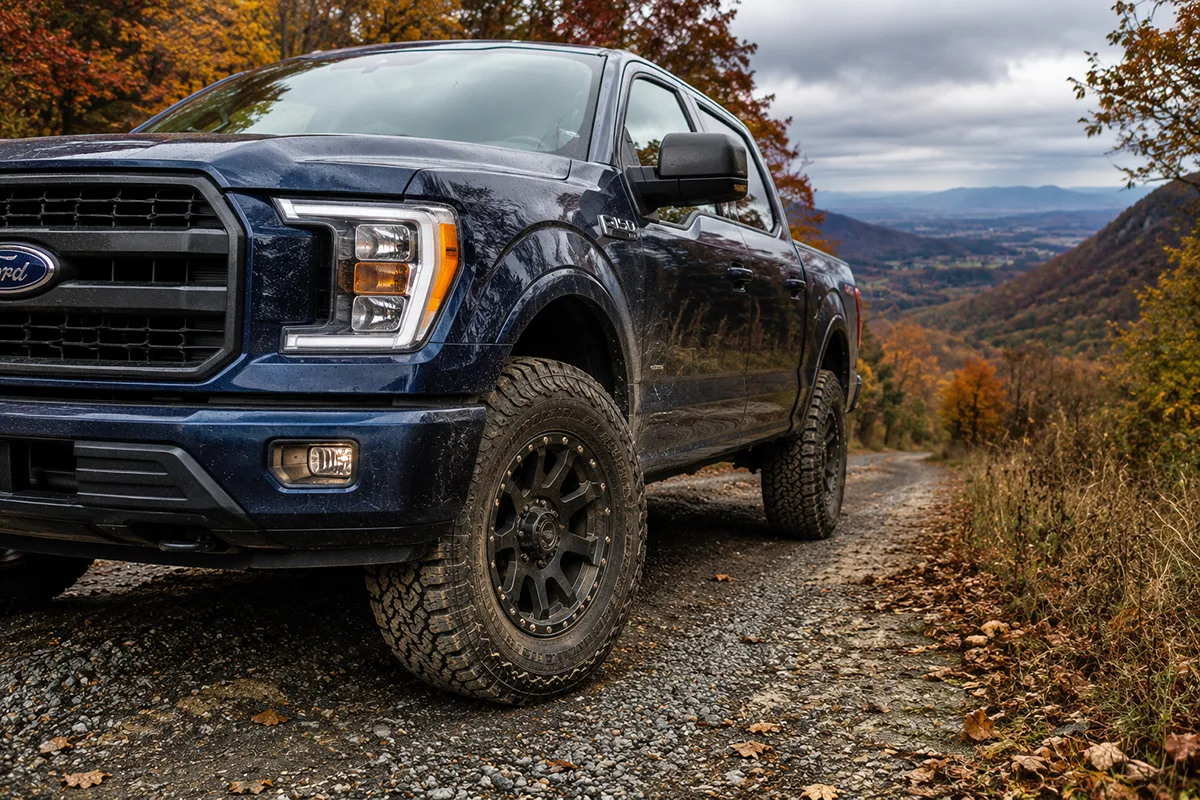
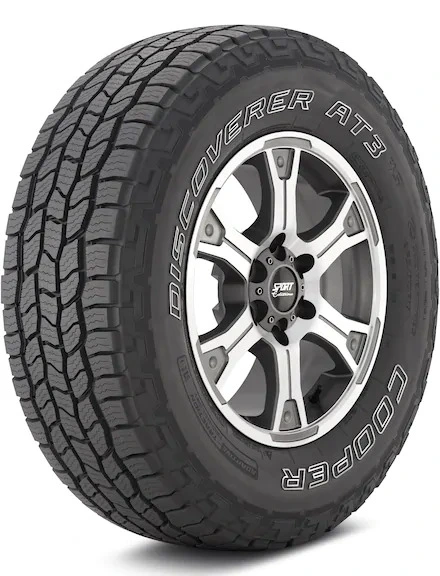
I ran these on my 2021 Ford F-150 for just over 12,000 miles, starting in late fall and carrying through an entire year. The AT3 4S is Cooper’s three-peak mountain snowflake (3PMSF)-rated all-terrain tire — meaning it’s officially certified for severe winter service, not just lightly optimized for it.
Dry performance: Excellent. The AT3 4S felt planted and predictable on dry pavement, which isn’t a given for all-terrain tires that have to balance on-road and off-road demands. Braking felt tight, and the truck didn’t wander on highway stretches the way it did with the stock tires it replaced.
Wet performance: Honestly, this is where I was most surprised. During the spring rainy season, I drove through several heavy downpours on I-81 at highway speeds and the tires handled water evacuation well. I never felt the wheel go light in a way that concerned me.
Snow and ice: I got the chance to test these during two separate snowfall events — a 3-inch accumulation and one legitimate 8-inch storm that caught me driving home from a job site. The AT3 4S surprised me in loose, packed snow. The 3PMSF certification isn’t just a sticker. That said, on ice — especially the glassy kind you get after a freeze-thaw cycle — these tires were noticeably less inspiring. They’re not an ice tire.
Off-road: I took the F-150 down a few fire roads and gravel-heavy forest service roads in the Shenandoah Valley. The AT3 4S gripped well on loose dirt and packed gravel, and the sidewalls showed zero damage after those runs.
Road noise: Louder than the highway tires I came from. On smooth interstate pavement the noise is tolerable and you stop noticing it after a few weeks. On chip-seal or coarse concrete, it gets noticeable.
Tread life so far: At 12,000 miles, tread wear looked extremely even with plenty of depth left. The AT3 4S carries a 60,000-mile treadwear warranty, and at this rate I believe it.
2. Cooper Evolution Tour — The Daily Commuter’s Quiet Achiever
Price Check
Check the price of this tire at the following retailers:
TireRack DiscountTire SimpleTire PriorityTire DiscountedWheelWarehouse AmazonDon’t know the correct size tire to purchase? Start here!
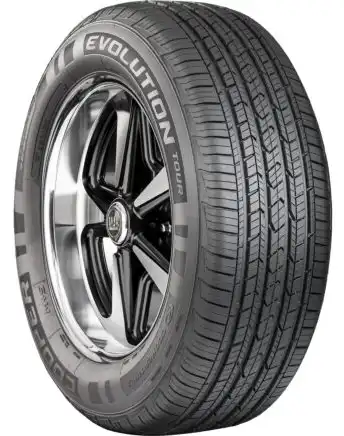
These went on my 2019 Honda CR-V and served as the everyday workhorse tire for about 18 months.
Comfort and noise: Genuinely impressive. My CR-V became noticeably quieter after swapping to the Evolution Tour from a budget set of tires that came with the used vehicle.
Wet performance: Solid. Not class-leading, but I never had a moment where I questioned the tire in rain.
Winter performance: Fine for light winter use. It does not have the 3PMSF rating, and it showed in the one significant snowfall I drove through.
Tread life: The Evolution Tour carries up to an 80,000-mile treadwear warranty on some sizes. At around 15,000 miles, the wear was even and conservative.
Price point: Roughly $90–$130 per tire depending on size — substantially less than a comparable Michelin Defender T+H or Continental TrueContact Tour.
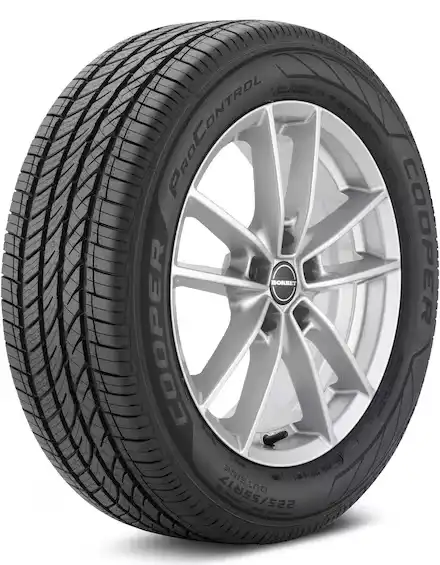
3. Cooper ProControl — The Surprise Performer
Price Check
Check the price of this tire at the following retailers:
TireRack DiscountTire SimpleTire PriorityTire DiscountedWheelWarehouse AmazonDon’t know the correct size tire to purchase? Start here!
A friend asked me to weigh in on his set of ProControls for his Acura TSX, and I spent several months riding along and analyzing them across shared road trips.
The standout characteristic was wet performance — particularly how it handled wheel spin in wet, cold conditions at low speed. My friend’s TSX had previously exhibited annoying inside-wheel spin when pulling from stops on wet roads.
After fitting the ProControls, that behavior essentially disappeared. Highway hydroplaning resistance was also better than expected.
Where the ProControl falls slightly short of true premium competition is in ultra-dry handling precision and ultimate cornering feel — compared to Michelin’s Pilot Sport All Season 4, there’s a softness to the lateral response that performance-minded drivers will notice.
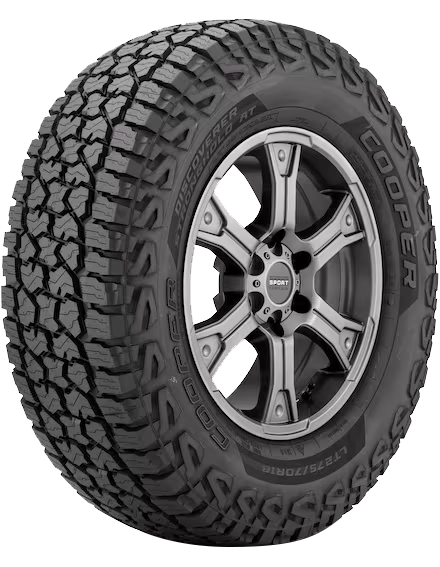
4. Cooper Discoverer Stronghold AT — The AT3 XLT’s Actual Successor
Price Check
Check the price of this tire at the following retailers:
TireRack DiscountTire SimpleTire PriorityTire DiscountedWheelWarehouse AmazonDon’t know the correct size tire to purchase? Start here!
Here’s something almost every other Cooper review currently online is missing, including — until this update — my own: the Discoverer AT3 LT/XLT has a successor, and if you’re shopping for a ¾-ton or 1-ton truck tire today, this is the model you should actually be cross-shopping, not the outgoing AT3 XLT.
I haven’t personally run a long-term set of these — I want to be straight about that — but I’ve dug into the spec sheet and cross-referenced independent testing closely enough to give you a confident summary.
The Stronghold AT is built specifically for heavier ¾- and 1-ton chassis, available in 28 sizes from 16″ to 20″, and positioned as a 70/30 tire — road-focused, but genuinely capable when the pavement ends.
What’s actually new here versus the AT3 it replaces: rock-ejector ledges between the center tread blocks specifically address a common AT3 complaint about gravel getting lodged in the tread, distinctive S-shaped sidewall lugs, and interlocking center blocks with cutouts designed to resist irregular wear as the tire breaks in.
It carries a 60,000-mile treadwear warranty and a 45-day test-drive guarantee — but read the fine print: you need to rotate every 8,000 miles to keep that warranty valid, and coverage is prorated based on mileage.
Independent testing has reported it as noticeably better off-road than the AT3 it replaces, quiet for the category when new, and without a meaningful fuel economy penalty versus the outgoing tire.
Who it’s for: Heavy-duty truck owners who were about to default to the AT3 XLT out of habit. Check whether the Stronghold AT is available in your size first — it’s the more current engineering for the same use case.
5. Cooper Endeavor Plus — The SUV/CUV Highway Tire Nobody Mentions

Price Check
Check the price of this tire at the following retailers:
TireRack DiscountTire SimpleTire PriorityTire DiscountedWheelWarehouse AmazonDon’t know the correct size tire to purchase? Start here!
This is another model that gets almost no coverage in Cooper reviews, which is strange given it’s a genuinely well-regarded highway all-season for SUVs and crossovers.
I haven’t run this one long-term myself, so this section is built on close research rather than my own seat time — but the pattern across independent reviews and owner feedback is consistent enough to summarize confidently.
The Endeavor Plus uses a silica-enhanced tread compound (an evolution of Cooper’s older carbon-black formulations) tuned for longer wear and better wet-weather traction, plus a solid center rib for highway-speed stability.
It carries a 65,000-mile warranty, which is a real strength for the touring-SUV category. Independent reviewers consistently praise the ride quality and low noise as genuinely competitive with pricier premium tires.
Where owner feedback gets mixed: a meaningful number of reviewers report the tire performing worse than expected in snow — not dangerous, but clearly behind dedicated all-weather options — while others report confident traction through serious ice storms. My read on the discrepancy: this looks like a tire that’s tuned for dry/wet highway performance first, with snow as a secondary capability, so if you see real winter weather regularly, don’t buy this one expecting all-weather performance it isn’t built to deliver. There are also a small number of reports of faster-than-expected wear on certain sizes — worth tracking your tread depth if you buy a set, same advice I’d give for any tire.
Who it’s for: SUV and crossover drivers who want a quiet, comfortable highway tire and don’t need serious snow capability.
6. Cooper Discoverer STT Pro — The Mud-Terrain Flagship

Price Check
Check the price of this tire at the following retailers:
TireRack SimpleTire DiscountedWheelWarehouse PriorityTire AmazonDon’t know the correct size tire to purchase? Start here!
The last gap I want to close: Cooper’s actual current mud-terrain flagship is the Discoverer STT Pro, not the older Evolution M/T naming you’ll still see referenced in some older buying guides, including previous versions of this one.
I haven’t personally run this tire through serious mud, so I’m relying on independent off-road testing and cross-referenced owner feedback here.
The STT Pro uses Cooper’s Armor-Tek3 construction with reinforced sidewalls and rim guards for puncture and impact resistance, plus a 3-2 inner tread rib design with alternating shoulder lugs.
Independent off-road testers report genuinely strong performance in dirt, rock, and deep wet snow, and — somewhat unusual for a mud-terrain — better-than-expected ice grip thanks to added siping.
It’s aggressive, though; road noise is significant, and mud-terrain tires as a category are simply not going to shine on ice regardless of brand.
Who it’s for: Serious off-road and overlanding drivers who need genuine mud-terrain capability and are willing to accept the on-road noise trade-off that comes with it.
What Cooper Does Really Well
Value for the Dollar Is Exceptional
This is Cooper’s headline strength. Across every model covered here, the price-to-performance ratio consistently beats expectations. You can frequently find Cooper tires for 20–35% less than a comparable Michelin or Continental offering, and in most real-world driving scenarios the performance gap is not proportional to the price gap.
All-Terrain Lineup Is Legitimately Excellent — And Bigger Than You Think
If you drive a truck or SUV and want a tire that can handle actual dirt roads, gravel, and occasional mud, Cooper’s AT lineup — now spanning the AT3 4S, the newer Stronghold AT for heavier trucks, and the STT Pro for serious mud duty — is one of the strongest value propositions in the market. I’ve talked to professional contractors who run these on their work trucks and won’t switch.
Manufacturing: The Full Picture
I want to give this a more complete treatment than I have previously, because “American manufacturing heritage” is a claim worth backing up with specifics rather than leaving vague.
Cooper currently operates three U.S. manufacturing plants: Findlay, Ohio (the original, and Cooper’s headquarters city, having passed 200 million tires produced since 1919), Texarkana, Arkansas (Cooper’s largest facility, producing over 30,000 tires a day), and Tupelo, Mississippi.
Popular consumer lines including the Discoverer AT3 series, CS5 Ultra Touring, and Endeavor family are primarily produced domestically.
That’s the real strength of the “American-made” claim — but it isn’t the whole picture, and I don’t think a genuinely helpful review should stop there.
Cooper also operates international facilities in Kunshan, China (historically the main source for Cooper’s truck and bus radial tires), Krusevac, Serbia (serving European and Russian markets since 2012), Melksham, England (motorsport and high-performance tires, including Cooper’s Avon brand), and a joint-venture plant near Guadalajara, Mexico.
Some tires from overseas facilities do make their way into U.S. retail channels, particularly in certain commercial and light-truck sizes.
The good news: you don’t have to guess. Every tire has a DOT code stamped on the sidewall, and the first two characters after “DOT” identify the specific plant — Findlay uses codes like “UP,” and Texarkana has its own designated code.
Cross-reference the code with NHTSA’s database or ask your retailer directly if U.S. manufacturing is a purchasing priority for you.
I’ve written a full breakdown of which specific models and codes to look for in my dedicated guide to which Cooper tires are made in the USA, if you want to go deeper than this review has room for.
Broad Vehicle Coverage
From compact passenger cars to heavy-duty three-quarter-ton trucks, from eco-friendly commuters to weekend off-road rigs, Cooper has a tire for virtually every application.
Understanding “Whisper Grooves” and Cooper’s Other Tech Terms
Cooper uses a handful of branded technology terms across its marketing that almost never get explained in plain language. Here’s what they actually mean:
- Whisper Grooves: A tread design feature — narrow, precisely tuned grooves molded into the tread pattern — engineered specifically to interrupt and scatter the sound waves that create highway tire drone, rather than letting them reinforce into an audible hum. This is a meaningful contributor to why models like the Endeavor Plus and Evolution Tour test quieter than their price point would suggest.
- Armor-Tek3 Construction: Cooper’s reinforced sidewall and casing technology used on off-road-focused models like the STT Pro, combining three layers of protection aimed at puncture and impact resistance from rocks and trail debris.
- 3D Micro-Gauge Siping: Small, precisely cut slits in the tread blocks (used on models like the Evolution Tour and ProControl) that create additional biting edges for wet and light-snow traction without meaningfully compromising dry handling or tread life.
Cooper Recalls — What Every Buyer Should Know
I think a genuinely helpful review needs to address this directly rather than only mentioning warranty friction, so here’s the honest picture.
Cooper has had real recall activity over its history, most notably a 2011–2012 recall affecting certain Discoverer H/T and related tires (including some private-label tires built on the same molds, like the Mastercraft Courser HTR) manufactured at the Texarkana, Arkansas plant during specific production weeks, tied to tread separation risk.
More recently, in the current Goodyear-ownership era, a limited recall affected certain Cooper Discoverer Stronghold AT tires over a manufacturing date-code labeling issue on the sidewall — a compliance problem, not a structural defect, and one that Goodyear (as the parent company) handled directly with free replacement for affected units.
Neither of these should be alarming on their own — recall activity over a 100+ year production history is not unusual for any major tire manufacturer, and the pattern here doesn’t suggest an ongoing systemic issue with current production. But I’d rather tell you plainly than let you find a scary headline on your own without context.
What to actually do about it: find the DOT code on your tire’s sidewall and check it against NHTSA’s SaferCar.gov recall database — it takes about two minutes. Register your tires with Cooper directly at purchase; it’s the only way the company can reach you directly if a recall is ever issued for your specific tire.
Where Cooper Falls Short — My Honest Critiques
Warranty and Customer Service Can Be a Headache
This is the most consistent complaint I’ve heard from other Cooper owners. The rebate process in particular has generated significant frustration — multiple buyers report being approved for rebates and then waiting months without receiving them, with customer service providing conflicting information each time they call.
I personally did not experience a warranty claim during my testing period, but the pattern of complaints is consistent enough that I’d encourage you to factor this in.
Road Noise on Aggressive Tread Models
If highway quietness is a top priority, you need realistic expectations about all-terrain and mud-terrain tires generally, and Cooper’s more aggressive models specifically. This isn’t unique to Cooper — Goodyear Wrangler AT and BFGoodrich AT KO2 are similarly vocal — but it’s worth knowing.
Not the Leader in Wet Braking Distance Among Premium Competitors
Cooper’s touring tires sit solidly in the middle of the pack versus premium competitors in wet braking distance. Not dangerously behind, but if you’re coming from Michelin Pilot Sport or Continental ExtremeContact tires, the transition may feel slightly less crisp in panic-stop scenarios.
Tread Life on Some Models Doesn’t Match the Warranty Promise
There are scattered reports of premature wear on certain models — some older AT variants and a handful of Evolution and Endeavor family tires. Rotate on schedule (every 5,000–6,000 miles, or every 8,000 miles specifically for the Stronghold AT to keep its warranty valid) and watch your tread depth.
Cooper Tires by Driver Type — Who Should Buy What
You’ll Love Cooper If…
- You drive a truck or SUV and spend any time off-road. The Discoverer AT3 in any variant — or the newer Stronghold AT for heavier trucks — is one of the best value AT tires on the market.
- You’re budget-conscious but not willing to sacrifice on safety. Cooper is decidedly not a “junk” brand.
- You care about U.S. manufacturing, and you’re willing to check the specific DOT code rather than assume every Cooper tire is domestic.
- You drive a daily commuter car that needs all-season reliability without fuss. The Evolution Tour and the Endeavor Plus are both genuinely excellent everyday tires depending on whether you drive a sedan or an SUV.
- You’re a serious off-roader on a budget. The STT Pro gets you into genuine mud-terrain capability well below premium-brand pricing.
You Might Want to Look Elsewhere If…
- You live in a serious snow belt. Cooper has 3PMSF-rated options, but they’re not class-leading in dedicated winter conditions. Dedicated winter tires from Michelin X-Ice or Nokian Hakkapeliitta will serve you better during those months.
- You drive a performance car and prioritize handling dynamics above all else. Cooper’s Zeon RS3-G1 is respectable, but Michelin Pilot Sport 4S or Continental ExtremeContact Sport 02 are the benchmarks at the limit.
- You want the absolute best tread life guarantee available. Michelin’s treadwear track record is still the industry standard.
Cooper Tires vs. The Competition: A Honest Comparison
Cooper vs. Michelin
Michelin is the undisputed premium leader — better tread life consistency, better wet braking data, quieter touring tires at the top end. You’ll also pay 30–50% more.
For drivers who keep their cars for 10+ years and put serious highway mileage on them, Michelin may genuinely deliver better cost-per-mile. For everyone else, Cooper closes the gap significantly at a much lower upfront cost.
Cooper vs. Goodyear
Ironic that Cooper is now under the Goodyear umbrella, because they remain distinct products. Goodyear’s Assurance WeatherReady 2 is a strong all-season competitor to Cooper’s touring lineup, and the Goodyear Wrangler competes directly with the Discoverer AT3.
In most direct comparisons, the tires are closely matched — Goodyear tends to price a bit higher. Price the exact sizes you need and pick whoever’s offering better value at the moment.
Cooper vs. BFGoodrich
The most relevant comparison for truck and off-road buyers. The BFGoodrich AT KO2 is arguably the most famous all-terrain tire in America, and it edges out the Cooper AT3/Stronghold AT in very deep mud and extreme off-road scenarios.
But for the vast majority of AT tire buyers doing “light off-road” — gravel, dirt, forest roads, occasional snow — Cooper delivers comparable real-world performance at a meaningfully lower price.
Cooper vs. Falken Wildpeak AT3W
A comparison worth adding since it’s one of the most common cross-shops for the AT3 4S.
The Falken carries a longer treadwear warranty and is noticeably quieter at highway speed. Cooper’s AT3 4S is competitive in snow traction and typically costs somewhat less per tire.
If quiet highway manners matter most, lean Falken; if snow performance and price are your priorities, the AT3 4S holds its own.
Pricing — What to Expect
Tire prices fluctuate, but here’s a realistic guide to what you’ll spend per tire for Cooper’s most relevant current models. Installation, balancing, and disposal fees will add another $25–$50 per tire at most shops.
| Cooper Model | Category | Approx. Price Per Tire | Warranty |
|---|---|---|---|
| Evolution Tour | All-Season Touring | $90 – $135 | Up to 80,000 miles |
| Endeavor Plus | Highway All-Season (SUV/CUV) | $110 – $155 | 65,000 miles |
| ProControl | Premium All-Season Touring | $120 – $165 | Up to 80,000 miles |
| Discoverer AT3 4S | All-Terrain (3PMSF) | $140 – $200 | 60,000 miles |
| Discoverer Stronghold AT | All-Terrain Heavy Duty | $200 – $260 | 60,000 miles (8k-mile rotation required) |
| Discoverer STT Pro | Mud-Terrain | $190 – $270 | 45,000 miles |
| Zeon RS3-G1 | Performance All-Season | $130 – $180 | 45,000 miles |
Pro tip: Always check for Cooper rebates before buying — Cooper frequently runs promotions offering meaningful cash back on a set of four, sometimes tied to co-branded credit cards through the Goodyear relationship. Just document your purchase carefully and follow up proactively on your rebate given the friction pattern noted above.
Maintenance Tips to Get the Most Out of Your Cooper Tires
Rotate every 5,000–6,000 miles — every 8,000 miles specifically if you’re running the Stronghold AT, per its warranty terms. Skipping rotations is the single biggest thing that causes uneven wear and premature tire death. Many Cooper dealers include free rotations if you buy from them.
Check tire pressure monthly. Tires lose roughly 1 PSI per 10°F drop in temperature — meaning if you set your tires in summer, they may be significantly underinflated by January.
Get a wheel alignment after any significant suspension work or curb strike. Misalignment causes one-sided wear that voids your treadwear warranty and ruins tires faster than anything else.
Use the penny/quarter test to track tread depth. Insert a quarter into the tread groove with Washington’s head facing down — if you can see all of Washington’s head, you’re below 4/32″ and should start shopping.
My Final Verdict — Cooper Tires
After 15,000+ personally-tested miles across three models, two vehicles, and every season the mid-Atlantic could throw at me — plus a much deeper look at the parts of Cooper’s current lineup and manufacturing footprint most reviews leave out — here’s where I land: Cooper Tires are a genuinely good choice for most American drivers, and an excellent choice for truck and SUV owners who want all-terrain capability without paying premium prices.
They’re not the best tire money can buy. If you want the absolute pinnacle of tread life, wet braking performance, or luxury touring refinement, Michelin is still the benchmark.
But most of us aren’t driving in conditions that demand that level of engineering, and paying 40% more for a tire you might never push to its limits is a questionable use of your money.
What Cooper offers is this: real-world capable tires at honest prices, backed by the engineering heritage of a brand that’s been in business for over 100 years and trusted by automakers like Ford and Volkswagen as factory equipment — with a genuinely broader current lineup than most reviews give it credit for, including a proper heavy-duty AT successor, a dedicated SUV highway tire, and a real mud-terrain flagship.
Go in with clear eyes about the warranty service experience, know exactly which plant made your tire if that matters to you, and register your tires at purchase. But on the road, where it actually counts? Cooper delivers.
⭐ Overall Ratings Breakdown
| Category | Rating (out of 10) |
|---|---|
| Dry Performance | 8.5 / 10 |
| Wet Performance | 7.5 / 10 |
| Winter Performance (AT3 4S) | 8.0 / 10 |
| Off-Road Capability (AT3 / Stronghold / STT Pro) | 8.5 / 10 |
| Ride Comfort | 7.5 / 10 |
| Road Noise | 7.0 / 10 |
| Tread Life | 7.5 / 10 |
| Value for Money | 9.0 / 10 |
| Manufacturing Transparency | 8.0 / 10 |
| Warranty / Support | 6.0 / 10 |
| Overall | 7.8 / 10 |
Frequently Asked Questions
Are Cooper Tires a good brand?
Yes. Cooper Tires are a well-established, reputable brand with over 110 years of history, used as OEM equipment on Ford, Volkswagen, and Mercedes-Benz vehicles. They’re not the premium tier, but they deliver solid performance at a competitive price point.
Who owns Cooper Tires now?
Cooper was acquired by Goodyear in 2021 for $2.8 billion. Cooper continues to operate as a distinct brand with its own product lineup.
What replaced the Cooper Discoverer AT3 XLT?
The Discoverer Stronghold AT is the current heavy-duty successor, built for ¾- and 1-ton trucks with improvements including rock-ejector tread ledges and a 60,000-mile warranty (with an 8,000-mile rotation requirement to stay covered).
Does Cooper make a mud-terrain tire?
Yes — the Discoverer STT Pro is Cooper’s current mud-terrain flagship, using Armor-Tek3 reinforced construction and an aggressive tread design for serious off-road use.
Are Cooper tires made in the USA?
Many are — Cooper operates three U.S. plants (Findlay, Ohio; Texarkana, Arkansas; Tupelo, Mississippi) that produce popular lines like the Discoverer AT3 series and Endeavor family. But Cooper also manufactures in China, Serbia, England, and Mexico, and some of those tires reach U.S. retail. Check your tire’s DOT code to confirm the specific plant.
Has any Cooper tire been recalled?
Cooper has had recall activity over its history, including a 2011–2012 Discoverer H/T tread separation recall and a more recent, minor labeling-related recall on some Discoverer Stronghold AT units. Check your specific DOT code against NHTSA’s SaferCar.gov database to see if your tire is affected.
How long do Cooper Tires last?
It depends on the model. Touring tires (Evolution Tour, ProControl) are warrantied up to 80,000 miles, the Endeavor Plus to 65,000 miles, and all-terrain models like the AT3 and Stronghold AT to 60,000 miles. Real-world life depends heavily on driving habits and maintenance.
Are Cooper Tires good in snow?
Some Cooper tires — the Discoverer AT3 4S and the Evolution Winter — carry the Three-Peak Mountain Snowflake rating for severe winter service. Others, including the Endeavor Plus, are tuned more for dry/wet highway performance with snow as a secondary capability. Check the specific model’s rating before buying if winter performance is a priority.
Where can I buy Cooper Tires?
Cooper Tires are widely available through independent tire shops, Walmart Auto, Discount Tire, NTB, and online retailers like SimpleTire and TireBuyer. Unlike Michelin or Goodyear, Cooper doesn’t have branded retail stores, so independent shops are often the best source and can frequently price-match or beat online quotes.
Disclosure: This review is based on my own first-hand testing for the AT3 4S, Evolution Tour, and ProControl, supplemented by careful research and cross-referenced independent testing for the Discoverer Stronghold AT, Endeavor Plus, and STT Pro, clearly flagged throughout. I was not compensated by Cooper Tires, Goodyear, or any tire retailer for this review. Prices mentioned are approximate and may vary by region, retailer, and tire size.
