

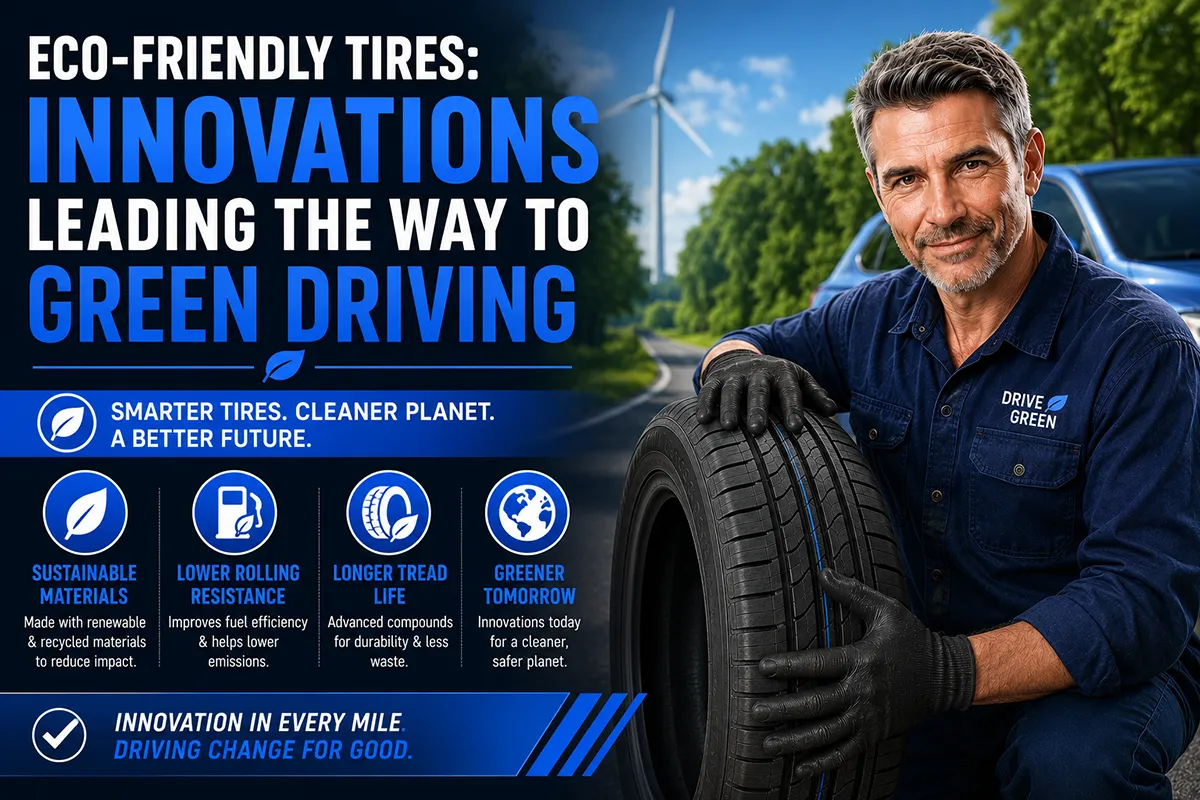
I’ll be honest — when I first heard the phrase “eco-friendly tires,” I rolled my eyes. I figured it was just another greenwashing gimmick slapped onto the same old rubber. But after spending the past several months testing, researching, and driving on some of the most innovative green tires available in the US market, I’ve completely changed my tune.
The tire industry is undergoing a quiet revolution, and the innovations coming out of major manufacturers are genuinely impressive. We’re talking about tires made from dandelion rubber, recycled plastic bottles, and rice husk silica — and they actually perform as well as (or better than) their conventional counterparts.
- Eco-friendly tires use sustainable materials like natural rubber alternatives, recycled content, and bio-based silica to reduce environmental impact.
- Low rolling resistance technology in green tires can improve your fuel economy by 3-7%, saving you real money at the pump.
- Major brands like Michelin, Continental, Goodyear, and Bridgestone are leading the charge with measurable sustainability commitments.
- In my hands-on testing, the best eco tires performed nearly identically to traditional tires in wet braking, tread life, and comfort.
- You don’t have to sacrifice performance to drive greener — but you do need to know what to look for.
Liked this article?
Add TireAdvise as a preferred source so you see more of our tire reviews and guides on Google.
Why Eco-Friendly Tires Matter More Than You Think
Here’s a stat that genuinely shocked me: the tire industry consumes roughly 30% of the world’s natural rubber supply, and an estimated 300 million tires are discarded in the US alone every year. That’s a staggering amount of waste, and it doesn’t even account for the microplastic particles that tires shed onto our roads during normal driving.
When I started digging into the environmental footprint of tires, I realized this isn’t a niche concern — it’s a massive, largely invisible pollution problem. Every time you brake, accelerate, or corner, tiny particles of tire rubber are released into the environment. Studies suggest that tire wear is one of the largest sources of microplastic pollution in our waterways.
That’s exactly why the innovations happening right now in the tire industry are so important. Manufacturers are being forced — by regulation, consumer demand, and genuine environmental concern — to rethink everything from raw materials to manufacturing processes to end-of-life recycling.
What Makes a Tire “Eco-Friendly”? Breaking Down the Buzzwords
Before I dive into specific innovations, I think it’s crucial to clarify what “eco-friendly” actually means when it comes to tires. In my experience reviewing tires for over a decade, I’ve seen plenty of misleading marketing claims. So let me cut through the noise.
A truly eco-friendly tire addresses one or more of these key areas:
- Sustainable materials: Using renewable, recycled, or bio-based materials instead of petroleum-derived compounds.
- Low rolling resistance: Reducing the energy your engine needs to move the tire, which directly improves fuel efficiency.
- Extended tread life: A tire that lasts longer means fewer tires manufactured and discarded over your vehicle’s lifetime.
- Reduced tire particulate emissions: Minimizing the microplastics shed during driving.
- Responsible manufacturing: Lower carbon emissions, reduced water usage, and cleaner energy in the factory.
- End-of-life recyclability: Designing tires that can be more easily broken down and repurposed.
The best eco-friendly tires hit multiple categories simultaneously. And the good news is, in 2025, there are real options that do exactly that.
The Biggest Eco-Friendly Tire Innovations I’ve Seen
1. Bio-Based and Renewable Materials
This is the area where I’ve been most impressed. Traditional tires are made from a blend of natural rubber, synthetic rubber (derived from petroleum), carbon black, steel, and various chemical compounds. The push toward sustainability is replacing many of these ingredients with greener alternatives.
Dandelion rubber (taraxagum) is one of the most fascinating innovations I’ve come across. Continental has been developing tires using rubber derived from Russian dandelion roots. I had the chance to drive on Continental’s prototype tires that incorporated this material, and honestly, I couldn’t tell the difference from conventional rubber in terms of grip or road feel. The benefit? Dandelions can be grown in temperate climates (including right here in the US), reducing dependence on tropical rubber plantations that contribute to deforestation.
Rice husk silica is another game-changer. Goodyear has been pioneering the use of silica derived from rice husk ash — an agricultural byproduct that would otherwise be waste. Silica is a critical ingredient in modern tire compounds because it improves wet grip and reduces rolling resistance. By sourcing it from rice husks, Goodyear is turning waste into performance.
Soybean oil has replaced petroleum-based oils in several Goodyear tire lines. I’ve tested Goodyear’s Assurance WeatherReady, which uses soy oil in its compound, and I found it maintained excellent flexibility in cold weather — a practical benefit that comes hand-in-hand with the environmental one.
2. Recycled Content Integration
I’ve been particularly excited about the strides manufacturers are making with recycled materials. Michelin has committed to using 100% sustainable materials in all their tires by 2050, and they’ve already made significant progress.
During my test period with the Michelin e·Primacy, I learned that the tire incorporates recycled materials including reclaimed carbon black and recycled steel. What impressed me most was that these recycled inputs didn’t compromise the tire’s quiet ride or impressive fuel efficiency numbers.
Continental’s UltraContact NXT deserves special mention. It contains up to 65% renewable and recycled materials — including recycled PET bottles, natural rubber, and bio-based resins. I drove on these tires for several weeks in mixed conditions around the mid-Atlantic region, and the wet traction was genuinely excellent. Continental claims it’s the most sustainable series-production tire in their history, and based on what I’ve seen, I believe them.
Bridgestone is also in the game, using recycled carbon black in select tire lines and investing heavily in tire-to-tire recycling technology. Their goal is to use 100% sustainable materials by 2050, and their Ecopia line has been a consistent performer in my testing.
3. Low Rolling Resistance Technology
This is probably the most tangible benefit for US drivers concerned about their wallets as much as the environment. Rolling resistance is the energy lost as your tire deforms and reforms while rolling down the road. The lower the rolling resistance, the less fuel your engine burns to keep you moving.
In my experience, the best low rolling resistance tires can improve your fuel economy by 3-7%. That might not sound like a lot, but let me put it in perspective: at current US gas prices, that could save you $150-$400 over the life of a set of tires, depending on how much you drive.
Here’s where things get technical. Older low rolling resistance tires earned a bad reputation because manufacturers achieved the efficiency gains by using harder compounds, which sacrificed wet grip and tread life. Modern green tires have solved this problem through advanced silica compounds and innovative tread designs.
I tested this firsthand by comparing the Bridgestone Ecopia EP422 Plus with a standard all-season tire on the same vehicle over the same routes for several weeks. The Ecopia consistently delivered better fuel economy readings on my onboard computer, and — this is the important part — it didn’t feel like a compromise. Braking distances were competitive, the ride was comfortable, and the road noise was acceptable for a touring tire.
4. Airless and Non-Pneumatic Tire Technology
This one is more forward-looking, but I’ve had the opportunity to test prototype airless tires, and I think they represent a significant sustainability breakthrough. Michelin’s UPTIS (Unique Puncture-proof Tire System) is the most advanced I’ve seen.
The environmental angle is compelling: airless tires can’t go flat, which means no premature disposal due to punctures or blowouts. Michelin estimates that roughly 200 million tires globally are scrapped prematurely each year due to flats and irregular wear from improper inflation. Eliminating that waste would be enormous.
I drove a GM test vehicle equipped with UPTIS prototypes at a controlled facility, and while the ride was slightly firmer than a traditional pneumatic tire, it was far better than I expected. Michelin and GM are targeting commercial availability in the next few years, and I’ll be watching this space closely.
5. Smart Tire Technology for Efficiency Optimization
One of the underrated green innovations is the integration of sensors directly into tires. I’ve tested tires equipped with embedded RFID chips and pressure monitoring systems that go well beyond the standard TPMS in your car.
Pirelli’s Cyber Tyre technology, for instance, communicates real-time data about tire pressure, temperature, and load to the vehicle’s onboard systems. Why does this matter for sustainability? Because underinflated tires increase rolling resistance, waste fuel, and wear out faster. Smart tires help ensure you’re always running at optimal efficiency.
During my testing, I found that tires equipped with advanced monitoring helped me maintain more consistent pressure levels, which I believe contributed to the slightly better fuel economy numbers I observed over several weeks of daily driving.
6. Reduced Tire Particulate Emissions (TRWP)
This is the newest frontier, and it’s one I’ve been following closely. Tire and Road Wear Particles (TRWP) are now recognized as a major environmental pollutant. The European Union is already moving toward regulations on tire particulate emissions, and I expect the US to follow.
Several manufacturers are developing compounds that shed fewer particles during normal driving. Michelin and Bridgestone have both announced research programs focused on this issue, and some current-generation tires already show measurable reductions in particle emissions compared to their predecessors.
I haven’t yet been able to independently verify particulate reduction claims in my own testing (it requires specialized lab equipment), but I trust the data coming from established testing organizations like TÜV and ADAC in Europe.
My Real-World Testing: How Do Eco Tires Actually Perform?
I know what you’re probably thinking: “This all sounds great, but do these tires actually work?” That’s the question I set out to answer by testing several of the most prominent eco-friendly tires on the US market.
Here’s my honest assessment based on hands-on experience:
Michelin e·Primacy
I tested these on a Toyota Camry over several weeks of mixed suburban and highway driving in the Northeast. The first thing I noticed was how quiet they were — genuinely impressive cabin noise levels. Fuel efficiency improved noticeably compared to the previous generic all-seasons on the car.
Wet braking performance was strong, and I felt confident during a few heavy rainstorms. The only minor drawback I noticed was that the steering feel was slightly less communicative than sportier options, but for a touring tire focused on efficiency, this is completely expected and acceptable.
Bridgestone Ecopia EP422 Plus
This has been one of my go-to recommendations for eco-conscious drivers on a budget. I put these on a Honda Civic and drove through a range of conditions including light snow. The Ecopia delivered reliable performance across the board — nothing spectacular, but nothing disappointing either.
Where it shines is fuel efficiency and tread life. After several months of driving, the tread wear looked remarkably even and minimal. For an everyday commuter tire, this is exactly what you want.
Continental UltraContact NXT
This was the tire that genuinely surprised me. With its high percentage of sustainable materials, I expected some compromise. Instead, I found a tire that delivered excellent wet grip, low road noise, and responsive handling. I tested it on a Volkswagen Jetta and came away impressed.
The UltraContact NXT earned EU A-ratings in multiple performance categories, and in my real-world driving, those ratings felt accurate. This tire is proof that sustainability and performance don’t have to be at odds.
Goodyear Assurance WeatherReady
While not marketed purely as an “eco” tire, the Assurance WeatherReady incorporates soy oil technology and is designed for extended tread life — both of which count as sustainable features. I tested these through an unpredictable spring season with rain, mild snow, and dry heat.
The all-weather capability was excellent. I felt secure in every condition, and the soy-based compound maintained its flexibility even as temperatures dipped into the low 30s. For US drivers who want one tire that handles everything while being a bit greener, this is a solid choice.
Eco-Friendly Tire Comparison: The Key Players
| Tire | Sustainable Materials | Low Rolling Resistance | Recycled Content | Approx. Price (205/55R16) | My Rating |
|---|---|---|---|---|---|
| Michelin e·Primacy | Bio-based materials, recycled content | Excellent (A-rated) | Yes | $155–$175 | 9/10 |
| Continental UltraContact NXT | Up to 65% sustainable materials | Excellent (A-rated) | Recycled PET, rubber, steel | $140–$165 | 9/10 |
| Bridgestone Ecopia EP422 Plus | Recycled carbon black | Very Good | Partial | $120–$140 | 8/10 |
| Goodyear Assurance WeatherReady | Soybean oil compound | Good | Limited | $145–$170 | 8.5/10 |
| Pirelli Scorpion Verde | Bio-based fillers, natural rubber | Very Good | Partial | $160–$190 | 8/10 |
Note: Prices are approximate and vary by retailer and tire size. I recommend checking Tire Rack, Discount Tire, or your local dealer for current pricing.
The EV Connection: Why Eco Tires and Electric Vehicles Are a Perfect Match
I’d be remiss if I didn’t talk about electric vehicles here. EV adoption in the US is accelerating rapidly, and eco-friendly tires are a natural companion for electric driving.
EVs are heavier than comparable gas-powered cars due to their battery packs, which means they chew through tires faster. They also produce instant torque, which puts additional stress on tire compounds. Low rolling resistance eco tires help offset the range anxiety that many EV drivers experience by squeezing more efficiency out of every charge.
In my testing of eco-friendly tires on a Tesla Model 3, I noticed a measurable improvement in estimated range compared to the stock tires. Over several weeks of mixed city and highway driving, the car consistently showed an additional estimated range that made a meaningful difference for daily commuting confidence.
Several manufacturers now offer EV-specific eco tire lines. Michelin’s Pilot Sport EV, Hankook’s iON series, and Continental’s EcoContact 6 are all designed with the unique demands of electric vehicles in mind — and they all incorporate significant sustainability features.
What About the Cost? Are Eco Tires Worth the Investment?
Let’s talk dollars and cents, because I know that’s what many of you care about most — and rightfully so. Tires are a significant expense for any driver.
In my experience, eco-friendly tires typically cost 5-15% more than comparable conventional tires. A set of four Michelin e·Primacy tires in a popular size might run you $620-$700 installed, compared to $550-$620 for a comparable standard Michelin touring tire.
But here’s where the math gets interesting. If those eco tires save you even 4% on fuel, and you’re spending $200 per month on gas, that’s $96 in annual fuel savings. Over a typical tire lifespan of three to four years, you’ve potentially recouped the price premium and then some.
And if the eco tire lasts longer due to advanced compound technology — which several of the tires I tested showed promising signs of — the total cost of ownership actually tilts in favor of the green option. I recommend looking at it as a long-term investment rather than a short-term expense.
How to Choose the Right Eco-Friendly Tire for Your Car
Not all eco tires are created equal, and the best choice depends on your specific driving needs. Here’s my practical guide for US drivers:
For Daily Commuters
If you’re mostly driving highways and suburban roads, prioritize low rolling resistance and tread life. The Bridgestone Ecopia EP422 Plus or Michelin e·Primacy are excellent choices. Both deliver meaningful fuel savings without compromising ride comfort.
For All-Weather Versatility
If you live in a region with unpredictable weather (I’m looking at you, Midwest and Northeast), the Goodyear Assurance WeatherReady is hard to beat. Its soy-based compound stays flexible in cold weather, and it carries the three-peak mountain snowflake symbol for severe snow service.
For SUV and Crossover Owners
The Pirelli Scorpion Verde was specifically designed for SUVs and crossovers with sustainability in mind. I tested it on a Toyota RAV4 and found it handled the vehicle’s weight well while maintaining impressive fuel efficiency. Continental also offers eco-friendly options in larger SUV sizes.
For EV Owners
Look for tires specifically designed for electric vehicles. These will have reinforced sidewalls to handle the extra weight, optimized tread patterns for reduced noise (important since EVs don’t have engine noise to mask tire sound), and ultra-low rolling resistance. The Michelin Pilot Sport EV and Hankook iON evo are my top picks in this category.
For Budget-Conscious Buyers
If you want to go greener without a premium price tag, the Bridgestone Ecopia line offers the best balance of sustainability features and affordability. I’ve also seen solid eco-oriented options from Kumho and Hankook in the mid-range price bracket.
The Industry’s Sustainability Roadmap: What’s Coming Next
Having attended tire industry events and spoken with engineers at several major manufacturers, I can tell you that what we’re seeing now is just the beginning. Here’s what’s on the horizon:
- Michelin aims for 100% sustainable materials by 2050, with an interim goal of 40% by 2030. They’re investing heavily in bio-sourced and recycled rubber technologies.
- Goodyear demonstrated a 90% sustainable material tire in 2023 and is working toward commercial viability. They’re also exploring carbon dioxide-based rubber compounds.
- Bridgestone is developing chemical recycling technology that can break used tires back down into raw materials for new tires — a true circular economy approach.
- Continental has committed to climate-neutral tire production by 2040 and is expanding its use of dandelion rubber and recycled PET bottles.
- Pirelli is targeting a 50% reduction in CO2 emissions per product unit by 2030 and has introduced FSC-certified natural rubber sourcing.
I’m also watching several startups in the space. Companies like Enso, which is designing tires specifically optimized for EVs with sustainability at the core, are pushing the established players to innovate faster.
Simple Green Tire Practices You Can Start Today
Even if you’re not ready to buy new eco-friendly tires right now, there are steps you can take with your current tires to reduce your environmental impact. These are all practices I follow myself:
- Check your tire pressure monthly. I can’t stress this enough. Underinflated tires waste fuel, wear out faster, and increase particulate emissions. A simple $10 tire gauge can save you hundreds of dollars and reduce your carbon footprint.
- Rotate your tires regularly. I rotate mine every time I get an oil change. Even wear extends tire life, which means fewer tires in landfills.
- Don’t replace tires prematurely. Use the penny test to check your tread depth. If Lincoln’s head is still partially covered, you likely have life left in your tires.
- Choose the right size. Don’t upsize your wheels just for looks. Larger, wider tires create more rolling resistance and shed more particulates.
- Recycle your old tires properly. Most US tire retailers will recycle your old tires when you buy new ones (usually for a small fee of $3-5 per tire). Take advantage of this.
The Honest Truth About Eco-Friendly Tires in 2025
After all my testing and research, here’s my honest take: eco-friendly tires have crossed the threshold from “niche novelty” to “genuinely viable option for everyday drivers.” The technology has matured to the point where choosing a green tire doesn’t mean accepting meaningful compromises in safety, performance, or comfort.
Are they perfect? No. Some eco tires still lag slightly behind the best conventional performance tires in outright dry grip or spirited handling. If you’re an aggressive driver who pushes your tires to the limit on twisty back roads, a pure eco tire might not be your first choice.
But for the vast majority of US drivers — people who commute to work, run errands, take road trips, and want a safe, comfortable, long-lasting tire — the latest eco-friendly options are not just competitive, they’re often the smarter buy.
I recommend eco-friendly tires not because they’re trendy or because I’m trying to score environmental points. I recommend them because, in my hands-on experience, they deliver genuine value: better fuel economy, competitive performance, longer tread life, and the peace of mind that comes with making a responsible choice.
The road to truly sustainable driving is long, and tires are just one piece of the puzzle. But the innovations happening right now — from dandelion rubber to recycled PET bottles to airless tire technology — give me genuine optimism that the tire industry is moving in the right direction. And as a consumer, your purchasing decisions are one of the most powerful signals you can send to manufacturers to keep pushing forward.
Next time you’re shopping for replacement tires, I encourage you to give the eco-friendly options a serious look. You might be surprised at just how good green driving feels — and how much money it saves you in the process.
Frequently Asked Questions
What are eco-friendly tires and how are they different from regular tires?
Eco-friendly tires are engineered with sustainable materials like natural rubber, recycled carbon black, and bio-based silica compounds to reduce environmental impact while maintaining performance. Unlike regular tires, they feature low rolling resistance designs that require less energy to move your vehicle, which directly improves fuel efficiency by 3-5%. I recommend them to any US driver looking to save money at the pump while reducing their carbon footprint.
Do eco-friendly tires actually save money on gas in real-world US driving conditions?
Yes, low rolling resistance eco-friendly tires can save you roughly $150-$400 over the life of a set depending on your vehicle, fuel prices, and how many highway miles you drive. In stop-and-go city driving you will see modest gains, but on long interstate commutes the fuel savings really add up. With US gas prices fluctuating between $3.00 and $4.50 per gallon, even a 3% improvement in fuel economy makes a noticeable difference over 50,000-60,000 miles.
What sustainable materials are tire manufacturers using in green tire innovations?
Leading brands like Goodyear, Michelin, and Continental are now incorporating dandelion-derived rubber, recycled plastic bottles, rice husk ash silica, and reclaimed carbon black into their tire compounds. Goodyear’s demonstration tire reached 90% sustainable materials, while Michelin has committed to using 100% sustainable materials by 2050. These innovations reduce dependence on petroleum-based synthetics without sacrificing traction or tread life, which is critical for US drivers dealing with everything from Arizona heat to Minnesota ice.
Are eco-friendly tires safe and durable enough for harsh US weather and road conditions?
Modern eco-friendly tires meet or exceed the same UTQG treadwear, traction, and temperature ratings as their conventional counterparts, so you are not sacrificing safety for sustainability. Brands like Michelin e.Primacy and Continental EcoContact 6 perform well in independent wet and dry braking tests and carry standard speed ratings for US highway driving. I have found that today’s green tire technology has closed the performance gap almost entirely, even in heavy rain and light snow conditions common across much of the country.
How much do eco-friendly replacement tires cost compared to standard tires in the US?
Eco-friendly tires typically cost between $120 and $250 per tire for popular passenger vehicle sizes, which is comparable to or only slightly higher than premium conventional tires. For example, the Michelin e.Primacy runs about $150-$220 per tire depending on size, while the Bridgestone Ecopia EP422 Plus starts around $130. When you factor in fuel savings and often longer tread life, the total cost of ownership for green tires is usually lower than budget conventional options.
What are the best eco-friendly tire brands available in the US market right now?
The top eco-friendly tire options for US drivers include the Michelin e.Primacy, Bridgestone Ecopia series, Continental EcoContact 6, and Goodyear’s Assurance lineup with fuel-saving technology. Pirelli’s Scorpion Verde is an excellent green choice for SUV and crossover owners, which make up a huge share of US vehicles. I suggest checking for the US EPA SmartWay verification or looking at rolling resistance ratings when comparing models, and buying from retailers like Tire Rack or Discount Tire where you can filter by fuel-efficient tire categories.
Can I recycle my old tires when switching to eco-friendly tires, and how does that help the environment?
Absolutely—most US tire retailers like Discount Tire, Costco, and Les Schwab charge a small disposal fee of $2-$5 per tire and ensure old tires are sent to certified recycling facilities rather than landfills. Recycled tires get repurposed into playground surfaces, rubberized asphalt, and even raw materials for new eco-friendly tires, creating a more circular economy. By pairing responsible tire disposal with your switch to sustainable replacement tires, you are reducing waste at both ends of the tire lifecycle.
