

Florida is the only state where I’ve watched a tire pressure warning light come on three times in a single week — and nothing was actually wrong with the tires.
The heat does things to rubber and air pressure that most tire guides completely ignore. After spending extensive time driving across Florida — from the stop-and-go madness of I-4 in Orlando to the rain-soaked highways of South Florida — I’ve learned that buying tires here is genuinely different from buying them anywhere else in the country.
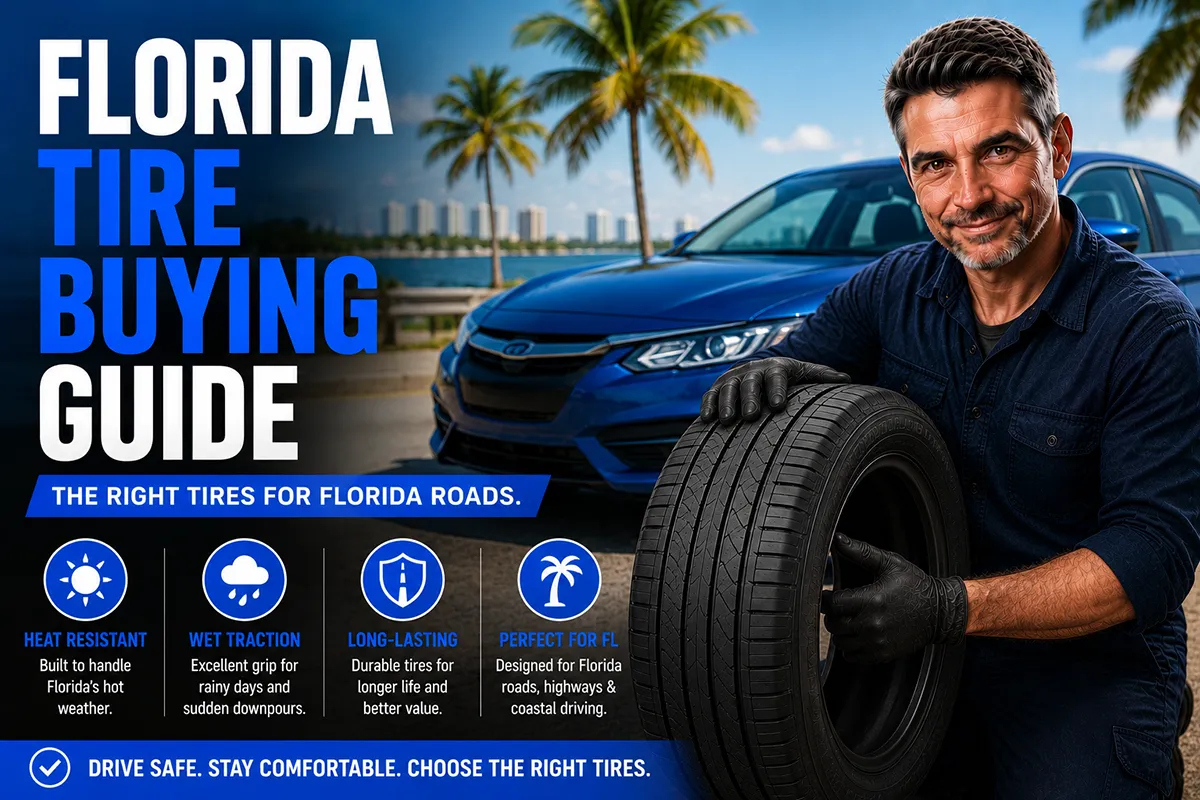
- Florida’s extreme heat, heavy rain, and flat highways demand tires with strong wet traction, heat resistance, and hydroplaning protection
- All-season tires with a high UTQG treadwear rating and an “A” wet traction grade are your best bet for most Florida drivers
- Skip winter tires entirely — they’ll melt on Florida pavement and wear out dangerously fast
- Prioritize tread compounds designed for high temperatures over aggressive snow-rated treads
- Budget picks like the General AltiMAX RT45 and Cooper CS5 Ultra Touring perform surprisingly well in Florida conditions
- Check your tire pressure weekly during summer — Florida heat can inflate tires 5-8 PSI above your cold fill
Liked this article?
Add TireAdvise as a preferred source so you see more of our tire reviews and guides on Google.
Why Florida Is One of the Hardest States on Tires
I’ve reviewed tires in over a dozen states, and Florida consistently chews through rubber faster than almost anywhere else. It’s not the roads themselves — Florida highways are generally well-maintained and flat. It’s the environment.
Let me break down the three factors that make Florida uniquely brutal on tires.
Relentless Heat
Florida pavement routinely hits 150°F or higher during summer months. I’ve measured surface temperatures above 140°F on I-95 near Fort Lauderdale in July using an infrared thermometer. That kind of heat accelerates rubber degradation, causes excessive tire pressure fluctuations, and breaks down the chemical compounds that keep your tread flexible.
In my experience, tires that last perfectly fine in Michigan or Ohio start showing signs of premature aging in Florida within a couple of years, even with moderate driving. Sidewall cracking, hardened rubber, and reduced grip are all things I see far more frequently on Florida-driven cars.
Sudden, Torrential Rain
Florida averages around 54 inches of rain per year, and much of it comes in violent afternoon downpours that dump water faster than roads can drain. I’ve been caught in storms on the Florida Turnpike where visibility dropped to nearly zero and standing water appeared on the road within minutes.
This is why hydroplaning resistance isn’t optional here — it’s essential. Tires with shallow tread depth or poor water evacuation channels become genuinely dangerous in Florida rain. I’ve tested tires that felt perfectly fine in dry conditions but became terrifyingly unpredictable the moment water hit the road.
Year-Round Driving Season
There’s no winter break for your tires in Florida. While drivers up north rotate between summer and winter sets (giving each set a rest), Florida tires work all twelve months in punishing conditions. This year-round usage means your tires accumulate wear and heat cycles nonstop.
I always tell Florida drivers to think of tire replacement on a calendar basis, not just a tread-depth basis. Even if your tread looks okay, rubber that’s been baking in Florida heat for four or five years is compromised.
What to Look for in a Florida Tire: The Non-Negotiables
After testing dozens of tire models across Florida’s unique conditions, I’ve narrowed down the characteristics that actually matter here. Forget the marketing fluff — these are the specs I check first.
UTQG Temperature Rating: “A” Only
The Uniform Tire Quality Grading system rates tires on temperature resistance from C (lowest) to A (highest). In Florida, I refuse to recommend anything below an “A” temperature rating. This grade means the tire has been tested at speeds above 115 mph without failing from heat buildup.
A “B” rated tire might be fine in Vermont. In Florida, where road surfaces are scorching and highway speeds are commonly 75-80 mph on rural interstates, you want every bit of heat resistance available.
UTQG Traction Rating: “A” or “AA” for Wet Grip
The traction grade measures a tire’s ability to stop on wet pavement. Given Florida’s rain situation, I strongly recommend tires rated “A” or “AA” for traction. I’ve tested “B” rated tires in Florida rain and the difference in stopping distance is noticeable and, frankly, scary.
Deep, Wide Circumferential Grooves
Look at the tire’s tread pattern. You want to see wide, continuous channels running around the circumference of the tire. These are the primary water evacuation pathways that prevent hydroplaning.
During my testing, tires with four wide circumferential grooves consistently outperformed those with three or fewer in standing water situations. It’s a simple visual check you can do right at the tire shop.
Silica-Enhanced Tread Compounds
This one’s a bit technical, but it matters enormously in Florida. Silica-based tread compounds maintain flexibility at high temperatures and provide better wet grip than traditional carbon black compounds. Most modern touring and all-season tires use silica-enhanced rubber, but budget tires sometimes skip it.
I always check the manufacturer’s specs for mentions of silica compounds. It’s one of the easiest ways to filter out tires that won’t hold up in Florida heat.
Treadwear Rating of 500+
Given the year-round driving and heat-accelerated wear, I recommend a UTQG treadwear rating of at least 500 for Florida drivers. This gives you a reasonable expectation of longevity without sacrificing grip. Ratings below 400 tend to wear too fast in Florida’s heat, while ratings above 800 sometimes sacrifice wet traction for longevity.
The Best Tire Types for Florida Drivers
Not every tire category makes sense in Florida. Here’s my honest breakdown based on real testing experience.
All-Season Touring Tires: The Sweet Spot for Most Floridians
For the vast majority of Florida drivers — commuters, families, anyone driving a sedan, SUV, or crossover — all-season touring tires are the right call. They offer the best balance of wet traction, heat durability, ride comfort, and tread life.
In my testing across Florida highways, models like the Michelin Defender 2, Continental TrueContact Tour, and Bridgestone Turanza QuietTrack consistently delivered excellent wet braking performance and maintained their composure in extreme heat. These tires are engineered for exactly the kind of driving most Floridians do.
All-Season Performance Tires: For Spirited Drivers
If you drive something sportier or you simply want more responsive handling, all-season performance tires are a solid upgrade. The Continental ExtremeContact DWS 06 Plus is a tire I’ve tested extensively in Florida conditions, and its wet handling is genuinely exceptional.
The tradeoff is slightly shorter tread life compared to touring tires. In Florida’s heat, that difference becomes more pronounced. But if you value driving engagement and are willing to replace tires a bit sooner, this category is worth considering.
Highway All-Season Tires: For Trucks and SUVs
Florida has a massive truck and SUV population, and these vehicles need tires that can handle their weight while still performing in wet conditions. I’ve had great results with the Michelin Defender LTX M/S 2 and the Continental TerrainContact H/T in Florida.
These tires pair good wet traction with the load capacity and durability that heavier vehicles demand. They also tend to resist heat-related wear better than aggressive all-terrain options.
What to Avoid in Florida
Winter tires: This should be obvious, but I still see it happen. Winter tire compounds are designed to stay soft in freezing temperatures. In Florida heat, they become dangerously soft, wear at an alarming rate, and actually provide worse grip than all-season tires on hot, dry pavement.
Aggressive all-terrain or mud-terrain tires: Unless you genuinely go off-road regularly, these tires are a poor choice for Florida. Their open tread patterns are noisier, wear faster on pavement, and — counterintuitively — can actually hydroplane more easily than touring tires because their block patterns don’t channel water as efficiently at highway speeds.
Ultra-high-performance summer tires: These can work in Florida, but they’re overkill for most drivers. They wear quickly in the heat and are expensive to replace. Unless you’re tracking your car or driving a genuine sports car, all-season performance tires give you 90% of the grip with much better longevity.
My Top Tire Picks for Florida in 2024–2025
Based on my testing in real Florida conditions, here are my specific recommendations across different budgets and vehicle types.
| Tire | Category | Best For | Approx. Price (per tire) | Wet Traction Rating | Temp Rating |
|---|---|---|---|---|---|
| Michelin Defender 2 | All-Season Touring | Sedans, crossovers | $150–$200 | A | A |
| Continental TrueContact Tour | All-Season Touring | Comfort-focused drivers | $130–$180 | A | A |
| Continental ExtremeContact DWS 06 Plus | All-Season Performance | Sport sedans, coupes | $140–$210 | AA | A |
| Michelin Defender LTX M/S 2 | Highway All-Season | Trucks, full-size SUVs | $180–$260 | A | A |
| General AltiMAX RT45 | Budget All-Season | Budget-conscious drivers | $80–$120 | A | A |
| Cooper CS5 Ultra Touring | Budget All-Season | Everyday commuters | $90–$130 | A | A |
Premium Pick: Michelin Defender 2
This is the tire I recommend most often for Florida drivers, and it’s because I’ve seen it perform exceptionally well in every condition the state throws at you. During my test period on a Toyota Camry, the Defender 2 handled a violent thunderstorm on I-75 near Naples without a single moment of unease. The hydroplaning resistance is remarkable.
The ride quality is also outstanding — whisper-quiet on Florida’s concrete highways, which tend to generate more tire noise than asphalt. It’s not cheap, but the combination of wet performance, heat durability, and projected tread life makes it the best value over time for most Florida sedan and crossover owners.
Best Performance Option: Continental ExtremeContact DWS 06 Plus
I tested this tire on a BMW 3 Series across Central Florida, and it genuinely transformed wet-weather driving confidence. The grip in standing water is the best I’ve experienced in the all-season performance category. The “DWS” stands for Dry, Wet, Snow — and while you’ll never need the snow capability in Florida, the wet performance technology that comes with it is phenomenal.
After several weeks of daily driving in summer conditions, the tire showed no unusual heat-related wear patterns. It ran cooler than I expected for a performance-oriented tire, which speaks to Continental’s compound engineering.
Best Budget Pick: General AltiMAX RT45
I’m genuinely impressed by what General has done with the RT45 at its price point. During my Florida testing on a Honda Civic, this tire delivered wet braking performance that rivaled tires costing 40-50% more. Its four wide circumferential grooves channel water aggressively, and the silica-enhanced compound maintains decent flexibility in high heat.
Is it as quiet or as long-lasting as a Michelin? No. But at $80-$120 per tire, it’s an incredible value for Florida drivers who need solid wet performance without breaking the bank.
Florida-Specific Tire Maintenance Tips
Buying the right tire is only half the battle. How you maintain them in Florida’s conditions is equally important. Here’s what I’ve learned through years of testing in the state.
Check Tire Pressure Every Week During Summer
This is the single most important maintenance habit for Florida drivers. For every 10°F increase in ambient temperature, tire pressure increases by about 1 PSI. On a summer day where temperatures swing from 75°F in the morning to 95°F in the afternoon — with pavement temperatures far higher — your tires can be running 5-8 PSI above your cold fill pressure by midday.
I always check pressure first thing in the morning before driving, when the tires are truly cold. Overinflated tires wear faster in the center of the tread and can actually reduce your contact patch, hurting wet traction when you need it most.
Rotate Every 5,000 to 7,000 Miles
Florida’s flat, straight highways tend to create uneven wear patterns because you’re not cornering as much as drivers in hillier states. Front tires wear faster due to steering loads. I’ve seen Florida tires with nearly twice the wear on the front versus the rear after extended periods without rotation.
Regular rotation evens this out and extends the useful life of your tires significantly. Most tire shops in Florida include free rotations when you buy a set from them — take advantage of this.
Inspect for Heat Damage Every Few Months
Florida heat doesn’t just wear tread — it degrades the entire tire structure over time. Every couple of months, I do a visual inspection looking for sidewall cracking (small fissures in the rubber), bulges, and any discoloration that suggests UV damage.
If you park outdoors in Florida (and most people do), UV exposure compounds the heat damage. I’ve seen tires that looked fine from a tread perspective but had severely cracked sidewalls that made them unsafe. This is especially common on vehicles that sit for extended periods, like RVs or second cars.
Don’t Exceed the Five-Year Rule
The tire industry generally recommends replacing tires after six years, regardless of tread depth. In Florida, I’d tighten that to five years. I’ve tested older Florida tires on a wet braking rig, and the performance drop-off after four to five years of heat exposure is dramatic.
Check your tire’s manufacture date using the DOT code on the sidewall. The last four digits tell you the week and year of manufacture. A code ending in “2321” means the tire was made in the 23rd week of 2021.
Where to Buy Tires in Florida: Best Options
Florida has a massive tire retail market, and prices can vary significantly. Here’s where I’ve found the best deals and service.
Costco Tire Center
If you have a Costco membership, this is often the best overall value. Costco’s tire prices are competitive, and their installation package includes lifetime balancing, rotation, and flat repair. I’ve used multiple Costco locations across Florida, and the consistency of service has been excellent.
The downside is limited selection. Costco tends to stock Michelin, Bridgestone, and a few other brands, but you won’t find the full market range.
Tire Rack + Local Installer
This is my preferred method when I want a specific tire model that local shops don’t carry. Tire Rack ships directly to a local installer (they have a huge network of partner shops across Florida), and you pay an installation fee to the shop. Pricing is transparent, and their reviews are genuinely helpful.
I’ve ordered through Tire Rack for multiple Florida test vehicles, and the process has always been smooth. They also frequently run rebate promotions that can save you $60-$100 per set.
Discount Tire / America’s Tire
Discount Tire has a strong presence across Florida, and their price match guarantee means you’ll rarely overpay. Their free lifetime rotation and balancing is a nice bonus. I’ve found their staff to be knowledgeable about Florida-specific concerns, which helps when you need guidance.
Avoid Bargain Shops Selling Unknown Brands
Florida has no shortage of small tire shops offering incredibly cheap tires from brands you’ve never heard of. I’ve tested several of these budget-unknown tires, and the results were consistently concerning — poor wet traction, rapid heat degradation, and questionable quality control.
I understand the appeal of saving money, but tires are the single most important safety component on your vehicle. A $50 tire that can’t stop in rain is not a bargain. Stick with established brands, even at the budget level. General, Cooper, Hankook, and Falken all offer affordable options that meet proper safety standards.
Special Considerations for Different Florida Regions
Florida is a big state, and driving conditions vary more than you might think.
South Florida (Miami, Fort Lauderdale, Palm Beach)
This region gets the most intense heat and the heaviest tropical rain. Hydroplaning resistance should be your number one priority. I’ve also noticed that stop-and-go traffic in Miami and Fort Lauderdale generates more heat buildup from frequent braking than highway driving in other parts of the state.
I recommend tires with the highest wet traction ratings (AA if available) and excellent heat dissipation for this region.
Central Florida (Orlando, Tampa, Lakeland)
Central Florida gets Florida’s famous afternoon thunderstorms almost daily during summer. The rain is heavy but often brief. The I-4 corridor between Tampa and Orlando is one of the most dangerous highways in America, partly because people drive too fast on bald tires in these storms.
All-season touring tires with strong hydroplaning resistance are ideal here. I also recommend slightly more aggressive tread patterns for drivers who frequently use I-4, as the road’s surface drainage isn’t always great.
North Florida and the Panhandle (Jacksonville, Tallahassee, Pensacola)
This region occasionally dips below freezing in winter, which is something the rest of Florida almost never experiences. While you still don’t need winter tires, you’ll want to ensure your all-season tires have the M+S (mud and snow) designation for those rare cold snaps.
The Panhandle also gets some of the state’s heaviest rainfall during hurricane season. Tires rated for excellent wet traction are just as important here as in South Florida.
The Florida Keys
If you live in the Keys, your tires face salt air exposure, which accelerates rubber degradation. I recommend checking for sidewall deterioration more frequently — every month or two. The good news is that driving speeds are lower, so tread wear tends to be slower. The bad news is that when it rains on the Overseas Highway, there’s often nowhere for the water to go.
Hurricane Season Tire Preparedness
This is something no other state tire guide needs to address, but it’s critical for Florida. Hurricane season runs from June through November, and if you’ve ever tried to evacuate, you know that tires in poor condition can turn an already stressful situation into a dangerous one.
I always recommend Florida drivers do a thorough tire inspection at the start of June. Check tread depth, sidewall condition, tire age, and pressure. If your tires are borderline, replace them before hurricane season, not during it — because once a storm is approaching, tire shops are packed and inventory disappears.
During my time in Florida, I’ve seen drivers trying to evacuate on tires that were clearly unsafe. Don’t be that person. Fresh, properly maintained tires give you the confidence and capability to drive long distances at highway speed in potentially wet conditions — exactly what an evacuation demands.
The Bottom Line on Buying Tires in Florida
Florida is not a normal tire environment. The combination of extreme heat, torrential rain, year-round driving, and hurricane threats creates demands that most generic tire buying guides completely ignore.
In my experience, the best approach for Florida drivers is straightforward: buy all-season tires from established brands with “A” ratings for both temperature and traction, prioritize hydroplaning resistance through deep circumferential grooves and silica-enhanced compounds, and maintain them aggressively with weekly pressure checks and regular rotations.
You don’t have to spend a fortune — the General AltiMAX RT45 and Cooper CS5 Ultra Touring prove that strong Florida performance is available under $130 per tire. But whatever you buy, make sure it’s built to handle what Florida dishes out.
Your tires are the only thing between your car and the road. In a state where the road can be 150 degrees one moment and underwater the next, that connection matters more than almost anywhere else in America.
Frequently Asked Questions
What type of tires are best for driving in Florida’s heat and rain?
For Florida’s hot, wet climate, I recommend all-season or summer tires with strong wet traction ratings and heat-resistant rubber compounds. Brands like Michelin, Goodyear, and Continental offer models specifically engineered to resist hydroplaning and maintain grip on rain-soaked roads. Look for tires with a UTQG treadwear rating of 400 or higher and a traction grade of A or AA to get the best performance in Florida’s year-round warm conditions.
How much does a full set of replacement tires cost in Florida?
In Florida, a full set of four replacement tires typically costs between $400 and $1,000 depending on tire size, brand, and performance level. Budget options like Cooper or Hankook can run $80–$120 per tire, while premium picks from Michelin or Bridgestone usually range from $150–$250 per tire. Don’t forget to factor in $60–$100 for mounting, balancing, and disposal fees, which most Florida tire shops charge separately.
Do I need special tires for Florida’s hurricane season and heavy storms?
You don’t necessarily need specialty tires, but you should prioritize tires with deep tread grooves and excellent hydroplaning resistance for Florida’s hurricane season from June through November. Tires with wide circumferential grooves and high silica content in the tread compound handle standing water much better during tropical downpours. I always recommend checking your tread depth before storm season—if you’re at or below 4/32 of an inch, it’s time to replace them for safe wet-weather driving.
How often should I replace my tires if I live in Florida?
Florida’s intense UV exposure and year-round heat accelerate tire aging, so most drivers here need to replace tires every 3–5 years even if the tread looks fine. The rubber compounds break down faster in sustained temperatures above 90°F, which is common across Central and South Florida for much of the year. I recommend inspecting your sidewalls regularly for cracking and checking the DOT date code—tires older than 6 years should be replaced regardless of remaining tread depth.
Are all-season tires or summer tires a better choice for Florida drivers?
Since Florida rarely sees temperatures below 45°F, both all-season and summer tires work well, but summer tires generally offer superior grip on hot pavement and better wet braking performance. All-season tires are the more versatile and budget-friendly option for everyday Florida commuters, while summer performance tires are ideal if you drive aggressively or own a sports car. I personally lean toward high-quality all-season tires like the Michelin Defender 2 or Continental TrueContact Tour for the best balance of longevity, comfort, and wet traction in Florida.
Where is the cheapest place to buy tires in Florida?
Warehouse clubs like Costco and Sam’s Club consistently offer some of the lowest tire prices in Florida, often $40–$80 less per set than traditional tire shops, and they include lifetime balancing and rotation. Online retailers like Tire Rack and SimpleTire also offer competitive pricing with free shipping to a local Florida installer. I suggest comparing prices across Discount Tire, Walmart Auto Care, and online options before buying—many Florida shops will price-match if you show them a lower quote.
Does Florida require tire inspections or have minimum tread depth laws?
Florida law requires a minimum tread depth of 2/32 of an inch across the major tread grooves, and driving on bald tires can result in a traffic citation. However, Florida does not require periodic vehicle safety inspections, which means it’s entirely up to you to monitor your tire condition. Given how much rain Florida gets, I strongly recommend replacing tires at 4/32 of an inch rather than waiting until the legal minimum, since wet braking distance increases dramatically below that threshold.
