

I’ve been reviewing tires for over a decade, and one question keeps popping up in my inbox more than almost any other: “How much can I get for my used tires?” or its flip side, “Should I buy used tires to save money?”
It’s a fair question. New tires aren’t cheap — a full set of quality all-season tires can easily run $600 to $1,200 installed. So naturally, people wonder whether the used tire market is a smart shortcut.
After years of buying, selling, inspecting, and testing used tires — both as a reviewer and as someone who’s helped friends and family make budget-conscious decisions — I’ve got a lot to say about this topic. Let me break down exactly what used tires sell for, what drives those prices, and whether you should participate in this market at all.
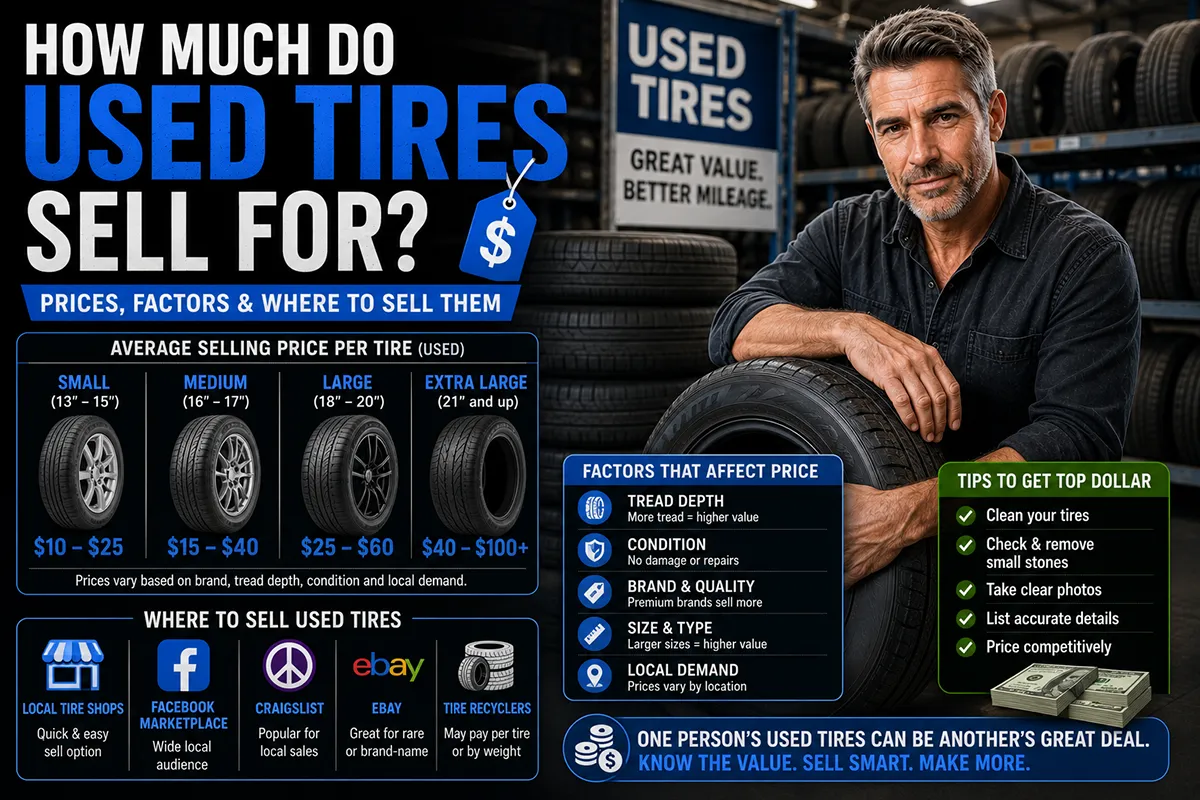
- Used tires typically sell for $25 to $160 per tire depending on brand, size, and remaining tread depth.
- Budget brands with moderate wear sell for $25–$50; premium brands like Michelin or Bridgestone with good tread can fetch $80–$160.
- Tread depth is the single biggest factor — tires with 6/32″ or more tread command significantly higher prices.
- You can sell used tires on Facebook Marketplace, Craigslist, to local used tire shops, or through consignment.
- Buying used tires can save 50–70% off new prices, but you need to inspect carefully for safety issues like sidewall damage, dry rot, and age.
- I generally recommend used tires only as a short-term solution — not as a long-term strategy for your daily driver.
Liked this article?
Add TireAdvise as a preferred source so you see more of our tire reviews and guides on Google.
What Do Used Tires Actually Sell For? Real Price Ranges
Let me cut straight to the numbers because that’s why you’re here. I’ve tracked used tire pricing across dozens of transactions — my own and those of people I’ve advised — and here’s what the market looks like right now in the US.
The price of a used tire depends primarily on three things: the brand, the tire size, and how much tread is left. A fourth factor — the age of the tire — also matters, but most buyers don’t check it (more on that later).
Budget and Economy Brand Used Tires ($25–$50 each)
If you’re selling a set of Westlake, Hankook Kinergy, Cooper CS5, or similar budget-to-midrange tires, expect to get $25 to $50 per tire with moderate tread remaining. I’ve seen plenty of these move on Facebook Marketplace for $100 to $150 for a full set.
The reality is that buyers shopping for used tires are already budget-conscious, so they’re not willing to pay much for a brand that was already affordable when new. If your budget tires have less than 5/32″ of tread, you might struggle to sell them at all.
Midrange Brand Used Tires ($40–$90 each)
Brands like Continental, General, Firestone, Yokohama, and Cooper (higher-tier models) land in this sweet spot. I’ve personally sold sets of Continental TrueContact tires with about 60% tread life remaining for $70 per tire, and they went fast.
This is the range where you’ll find the most activity in the used tire market. Buyers feel like they’re getting a quality tire at a significant discount, and sellers feel like they’re recouping a fair portion of their investment.
Premium Brand Used Tires ($60–$160 each)
Michelin, Bridgestone, Goodyear (premium lines), and Pirelli tires hold their value the best on the used market. I’ve seen Michelin Pilot Sport 4S tires with healthy tread sell for $120 to $160 each — and buyers jump on them quickly.
In my experience, premium tires with 7/32″ or more of remaining tread can sell for 40–50% of their original retail price. That’s a remarkable resale value compared to budget brands, which might fetch only 20–30% of their new price.
Used Tire Pricing Comparison Table
| Tire Category | Brand Examples | Price Per Tire (Used) | Tread Depth Expected | How Fast They Sell |
|---|---|---|---|---|
| Budget | Westlake, Lexani, Sentury | $25–$50 | 5/32″–7/32″ | Slow (1–3 weeks) |
| Midrange | Continental, General, Cooper | $40–$90 | 5/32″–8/32″ | Moderate (3–10 days) |
| Premium | Michelin, Bridgestone, Pirelli | $60–$160 | 6/32″–9/32″ | Fast (1–5 days) |
| Truck/SUV (All Terrain) | BFGoodrich, Toyo, Falken | $50–$140 | 6/32″–10/32″ | Fast (1–7 days) |
| Performance/Specialty | Michelin PS4S, Continental EC | $80–$160+ | 5/32″–7/32″ | Varies by size |
What Factors Determine Used Tire Prices?
In my years of dealing with the used tire market, I’ve identified the key factors that make or break a used tire’s value. Understanding these will help you price your tires correctly if you’re selling — or know whether you’re getting a fair deal if you’re buying.
1. Remaining Tread Depth Is King
This is the single most important factor, and it’s not even close. A tire with 8/32″ of tread remaining is worth dramatically more than the same tire with 4/32″. Most new tires start with 10/32″ to 11/32″ of tread (truck and all-terrain tires sometimes start with 12/32″ or more).
I use a simple tread depth gauge I bought for $5 at AutoZone, and I recommend every buyer and seller do the same. The penny test works in a pinch, but a gauge gives you an exact number you can use to justify your asking price.
In my experience, tires with less than 4/32″ of tread are essentially unsellable on the private market. Most buyers know that’s approaching the end of a tire’s useful life, and they’re not worth the risk.
2. Brand Reputation Matters Enormously
I’ve watched identical-sized tires sell for wildly different prices based purely on the name stamped on the sidewall. A used Michelin Defender with 50% tread life will sell for more — and faster — than a used Westlake tire with 70% tread life.
That’s just market reality. Buyers associate premium brands with better performance, longer remaining life, and safer construction. And honestly? They’re usually right. In my testing, premium tires tend to deliver better wet braking, lower road noise, and more predictable handling even as they wear down.
3. Tire Size and Fitment
Common sizes like 225/65R17, 235/55R18, and 215/60R16 are easier to sell because they fit popular vehicles like the Toyota RAV4, Honda CR-V, and Ford Escape. I’ve listed these sizes and had buyers reach out within hours.
Oddball sizes — like a 275/40R22 or 305/30R20 — can be harder to move because the buyer pool is smaller. However, when they do sell, they often command higher prices because those sizes are expensive to buy new.
4. Tire Age (the DOT Date Code)
This is the factor that too many people overlook, and it concerns me from a safety standpoint. Every tire has a DOT date code stamped on the sidewall — a four-digit number where the first two digits are the week of manufacture and the last two are the year.
I won’t buy or recommend buying any used tire that’s more than six years old, regardless of how much tread is left. Rubber degrades over time due to UV exposure, ozone, and heat. I’ve personally seen tires with plenty of tread that had visible dry rot cracking in the sidewall. That’s a blowout waiting to happen.
If you’re selling tires that are five or six years old, be transparent about the date code. If they’re older than that, I’d honestly recommend recycling them rather than selling.
5. Even Wear vs. Uneven Wear
Tires that wore evenly across the tread surface are worth significantly more than tires with cupping, feathering, or one-sided wear. In my experience, uneven wear is one of the first things savvy buyers look for, and it’s an immediate red flag.
If your tires show signs of uneven wear, it often indicates alignment, suspension, or inflation issues on the vehicle they came off. A buyer might question whether the tire’s structural integrity has been compromised — and rightfully so.
Where to Sell Used Tires (and What I’ve Had the Most Success With)
I’ve sold used tires through just about every channel available, and the results vary wildly. Here’s my honest breakdown.
Facebook Marketplace — My Top Pick
Facebook Marketplace is where I’ve had the most success, hands down. The local nature of the platform means buyers can come inspect the tires in person, and there’s no shipping hassle. I’ve sold over a dozen sets of tires this way over the years.
My tips for selling on Facebook Marketplace: take clear photos in natural light showing the tread, sidewalls, and DOT codes. Measure the tread depth and include the numbers in your listing. Price fairly — check what similar tires are going for in your area — and be responsive to messages.
Craigslist — Still Works, but Slower
Craigslist was my go-to platform before Facebook Marketplace took over, and it still works well in certain metro areas. I find it tends to attract more haggling, though, so I usually price my tires about 10–15% above my target price to leave room for negotiation.
Local Used Tire Shops
Many cities have shops that specialize in selling used tires. I’ve visited several in my area, and they’ll typically offer you $15 to $40 per tire depending on the brand and condition. That’s less than you’d get selling privately, but the convenience factor is real — you drop them off and walk away with cash.
Some shops work on consignment, where they sell the tires for you and take a percentage. I’ve seen 30–50% commission rates, which can still work out better than selling to them outright if you have premium tires.
eBay and Online Marketplaces
Selling tires on eBay can work, especially for hard-to-find sizes or premium brands. However, the cost of shipping tires is significant — usually $30 to $60 per tire depending on size and distance. I’ve done this a few times and found it only makes sense for high-value tires where the margin can absorb shipping costs.
Tire Rack and Other Trade-In Programs
Some retailers and websites have experimented with used tire trade-in programs, but in my experience, the payouts are minimal. You’re better off selling privately unless the convenience is worth more to you than the money.
How to Price Your Used Tires to Sell
After years of doing this, I’ve developed a simple pricing formula that works well for most situations. It’s not scientific, but it’s based on real-world results.
Step 1: Look up the current retail price of the tire when new. Use TireRack.com, Discount Tire’s website, or any major retailer.
Step 2: Determine the remaining tread percentage. If the tire started with 10/32″ and has 7/32″ left, that’s roughly 70% tread remaining (I subtract 2/32″ as the minimum safe tread, so I’d calculate it as 7 minus 2 divided by 10 minus 2, which gives about 62.5% usable tread).
Step 3: Multiply the new price by the remaining tread percentage, then discount by 20–30% to account for the fact that it’s a used tire.
Here’s a real example from my own experience: I had a set of Michelin Defender LTX M/S tires in 265/70R17. New price was about $210 each. They had approximately 7/32″ of tread left. Using my formula: ($210 × 0.625) × 0.75 = roughly $98 per tire. I listed them at $100 each and sold the set of four for $375 after a bit of negotiation. Everyone walked away happy.
Buying Used Tires: Is It Worth the Risk?
Now let’s flip the script. If you’re reading this because you’re considering buying used tires, I want to give you my honest assessment based on years of firsthand experience.
When Buying Used Tires Makes Sense
I think buying used tires is reasonable in a few specific situations:
- You’re selling a car soon and just need to pass inspection or get through another season. Spending $100–$200 on a pair of decent used tires makes more sense than $400+ on new ones you’ll never wear out.
- You need a single replacement tire and your other three tires are a discontinued model. Finding a matching used tire can be cheaper and smarter than replacing all four.
- You’re on an extremely tight budget and the alternative is driving on dangerously worn tires. Used tires with good tread are safer than bald tires — that’s just math.
- You’re buying for a spare or a vehicle that sees very limited use, like a farm truck or weekend project car.
When You Should Buy New Instead
In my professional opinion, you should buy new tires if:
- This is your daily driver and you’re counting on it in all weather conditions.
- You do a lot of highway driving. The consequences of a tire failure at 70 mph on I-95 are catastrophic.
- You have a family vehicle. I don’t take safety shortcuts when kids are in the car, and I don’t recommend anyone else does either.
- You can afford new budget tires. A new set of quality budget tires (like the General Altimax RT45 or Cooper CS5 Ultra Touring) can cost as little as $80–$100 per tire installed, which isn’t much more than a used premium tire.
How to Inspect a Used Tire Before Buying
If you do decide to buy used, please do a thorough inspection. I’ve walked away from deals that looked great in photos but told a different story in person. Here’s my checklist:
- Check the DOT date code. I won’t buy anything manufactured more than five years ago, and I prefer tires within three years.
- Measure tread depth at multiple points. Check the center, inner shoulder, and outer shoulder. If the numbers vary by more than 2/32″, the tire wore unevenly and may have structural issues.
- Inspect both sidewalls. Look for bulges, cuts, scuffs, cracks, and any signs of repair. A sidewall bulge means the internal structure is compromised — walk away immediately.
- Check for patches and plugs. A single professional plug repair in the tread area is generally fine. Multiple repairs or any sidewall repair is a deal-breaker for me.
- Look for dry rot. Small cracks in the rubber, especially in the sidewall grooves, indicate the rubber is degrading. Mild surface cracking might be acceptable on a very short-term tire, but significant cracking is dangerous.
- Run your hand across the tread. Feel for bumps, flat spots, or areas where the rubber feels different. This can reveal issues that aren’t visible to the eye.
Used Tire Shops vs. Private Sellers: Price Comparison
I’ve bought from both, and the price difference is notable. Here’s what I’ve consistently found across multiple markets.
Used tire shops typically charge $40 to $100 per tire installed (mounting and balancing included). They add a markup of 50–100% over what they paid for the tire, but they also typically offer a short warranty (usually 30 days) and handle the mounting themselves.
Private sellers on Facebook Marketplace or Craigslist typically ask $25 to $120 per tire, unmounted. You’ll then need to pay $15 to $25 per tire for mounting and balancing at a local shop. So the total cost can be similar, but you have more negotiating room with private sellers.
In my experience, used tire shops are the safer bet for less experienced buyers because the shop has inspected the tires (in theory) and will handle installation. But I’ve also seen some sketchy used tire shops selling marginal tires, so a shop’s reputation matters. Check Google reviews before you commit.
The Hidden Costs of Used Tires
Something I don’t see discussed enough is the hidden costs that can eat into your savings when buying used.
Mounting and balancing: If you buy from a private seller, you’ll spend $60 to $100 for a set of four. Some shops charge extra to mount tires you didn’t buy from them.
Shorter lifespan: A used tire with 50% tread life won’t last as long as a new tire, obviously. But in my experience, the “last 50%” of a tire’s life often goes faster than the “first 50%” because the rubber compound hardens and the remaining tread wears more quickly. I’ve noticed this pattern consistently over the years.
Reduced performance: Used tires have hardened rubber compared to fresh tires. During my testing, I’ve noticed that even lightly used tires don’t grip as well in wet conditions as brand-new equivalents. The difference is measurable on a braking test, and it’s noticeable behind the wheel during spirited driving.
No warranty: New tires typically come with treadwear warranties and road hazard protection. Used tires come with nothing — if you hit a pothole on the way home and damage the tire, you’re out of luck.
How Much Can You Realistically Make Selling a Full Set?
Let me share some real numbers from my own experience and from transactions I’ve directly observed in my local market.
Budget all-season set (e.g., Hankook Kinergy PT): I helped a friend sell his takeoff set with about 70% tread remaining. He listed them at $200 for the set and ultimately sold for $160. Not a huge payday, but better than throwing them away.
Midrange all-season set (e.g., Continental TrueContact Tour): I sold my own set with roughly 60% tread remaining for $280 for all four. They sold within a week on Facebook Marketplace.
Premium tire set (e.g., Michelin Defender LTX M/S): As I mentioned earlier, I sold these for $375 for the set. Michelin tires consistently fetch the best prices in the used market.
Truck all-terrain set (e.g., BFGoodrich KO2): These are absolute gold on the used market. I’ve seen sets with good tread sell for $400 to $600. The KO2 specifically has a huge following, and demand always outpaces supply.
Winter tire set (e.g., Bridgestone Blizzak WS90): Seasonal tires are interesting because timing matters enormously. I’ve seen winter tires sell for 30% more in October than in March. If you’re selling, list them in early fall when buyers are thinking ahead.
Should You Sell Your Used Tires or Trade Them In?
Most tire shops will take your old tires when you buy new ones — but they’re typically not paying you for them. They charge a disposal fee ($3 to $5 per tire) and then either resell the good ones or recycle the rest.
If your old tires have 4/32″ or more of tread remaining and are less than five years old, I strongly recommend pulling them off and selling them privately before your appointment. The effort involved is minimal — take some photos, create a listing, and you could pocket $100 to $500 depending on the tires.
I’ve made this a standard part of my tire replacement routine. Over the past several years, I’ve recouped hundreds of dollars that would have otherwise gone into the shop’s pocket. It takes maybe 30 minutes of effort to create a listing, and the tires usually sell within a week or two.
Tips for Getting Top Dollar When Selling Used Tires
After doing this many times, I’ve identified the tactics that consistently help me get higher prices.
- Clean them up. A quick scrub with tire cleaner and a brush makes used tires look dramatically better in photos. I spend about 10 minutes cleaning a set, and I believe it adds $20–$40 to the selling price.
- Take great photos. Shoot in natural light. Include a photo of the overall tire, the tread with a depth gauge visible, the sidewall showing the brand and model name, and the DOT code. I take at least six photos per listing.
- Include measurements. List the tread depth in 32nds at multiple points. This builds trust and attracts serious buyers rather than tire-kickers.
- Price competitively from the start. I check what similar tires are listed for in my area and price mine within the market range. Overpricing leads to stale listings, which buyers distrust.
- Sell as a set when possible. Sets of four sell faster and at a slight premium per tire compared to selling individually. Pairs also sell well for buyers who need to replace just two tires.
- Be honest about flaws. If there’s a repaired puncture or a scuff, mention it upfront. Buyers who discover issues in person will either walk away or lowball you aggressively.
The Safety Question: My Honest Take
I’d be doing you a disservice if I didn’t address the elephant in the room. Are used tires safe?
The honest answer: it depends entirely on the condition of the specific tire. A two-year-old Michelin with 7/32″ of tread and no damage is every bit as safe as the day it was taken off the car. A six-year-old no-name tire with a sidewall patch and 4/32″ of tread is a liability.
I’ve driven on used tires myself in situations where it made financial sense. During my test periods with various used sets, I’ve monitored braking distances, wet handling, and highway stability. Quality used tires from reputable brands performed well — not as crisply as fresh rubber, but perfectly adequate for normal driving.
However, I’ve also inspected used tires that scared me. Tires with hidden belt separation, aged rubber that looked fine on the surface but was dangerously brittle, and tires with improper repairs that could fail at any moment. This is why inspection is non-negotiable.
Final Thoughts: The Used Tire Market in 2026
The used tire market in the US is thriving, driven by rising new tire prices and a growing awareness that tires pulled from lease vehicles, totaled cars, and seasonal swaps still have real value.
If you’re selling, you can realistically expect to get 25–50% of the original retail price for tires in good condition with decent tread remaining. Premium brands, popular sizes, and proper presentation will help you land on the higher end of that range.
If you’re buying, used tires can be a smart short-term solution that saves you 50–70% off new prices. But please — inspect thoroughly, verify the age, and don’t compromise on safety to save a few bucks. Your tires are the only thing connecting your car to the road, and that’s not where I’d recommend cutting corners.
I hope this guide helps you navigate the used tire market with confidence, whether you’re buying or selling. If you have specific questions about pricing tires you’re looking to sell, feel free to drop a comment below — I’m happy to help you figure out a fair asking price.
Frequently Asked Questions
How much do used tires sell for on average in the US?
Used tires typically sell for $25 to $75 each depending on tread depth, brand, and size. Premium brands like Michelin, Goodyear, and Bridgestone with over 50% tread life remaining can fetch $80 to $160 per tire. I’ve seen budget-brand used tires in common sizes like 205/55R16 go for as low as $20 apiece at local tire shops.
Are used tires worth buying to save money on replacements?
Used tires can absolutely be worth it if you inspect them carefully for even tread wear, sidewall damage, and proper age—tires older than six years should be avoided regardless of tread depth. You can save 30% to 60% compared to buying new, which is significant when replacing all four tires. I recommend buying from reputable used tire shops that offer a short-term warranty rather than purchasing from random sellers on Craigslist or Facebook Marketplace.
How much tread should a used tire have to be a good deal?
A used tire worth buying should have at least 5/32 of an inch of tread depth remaining, since 2/32 is the legal minimum in most US states. Tires with 6/32 to 8/32 of tread still have roughly 50% to 70% of their usable life left and offer the best value for the price. I always use a tread depth gauge rather than the penny test because it gives a more precise reading across all grooves.
Where can I sell or buy used tires near me for the best price?
The most common places to buy and sell used tires include local tire shops, salvage yards, Facebook Marketplace, OfferUp, and Craigslist. Dedicated used tire shops typically charge a bit more but often include mounting, balancing, and a 30-day guarantee. If you’re selling, listing a matching set of four tires together usually gets you 20% to 30% more per tire than selling them individually.
How much do used truck and SUV tires cost compared to sedan tires?
Used truck and SUV tires generally cost $50 to $150 each due to their larger size and higher demand, especially popular sizes like 275/55R20 and 265/70R17. By comparison, standard sedan tires in sizes like 215/60R16 typically run $25 to $60 used. All-terrain and mud-terrain truck tires from brands like BFGoodrich and Nitto hold their resale value especially well in the US market because of strong off-road demand.
What factors affect the resale price of used tires the most?
The three biggest factors are remaining tread depth, tire brand, and age of the tire based on the DOT date code stamped on the sidewall. A set of name-brand tires with 7/32 tread that are less than three years old can sell for nearly double what a lesser-known brand with the same tread goes for. Uniform wear patterns also matter—tires with cupping, feathering, or uneven wear sell for significantly less because buyers worry about underlying suspension or alignment issues.
Is it safe to buy used tires for highway driving in the US?
Used tires can be perfectly safe for highway driving as long as they have adequate tread depth, no sidewall bulges or cracks, and are less than six years old based on the DOT manufacture date. I always recommend having a tire professional inspect used tires before installation, especially if you regularly drive at interstate speeds or in heavy rain where hydroplaning risk increases. Avoid any used tire that has been previously repaired near the sidewall or shows signs of uneven wear, as these are red flags for safety on high-speed roads.
