

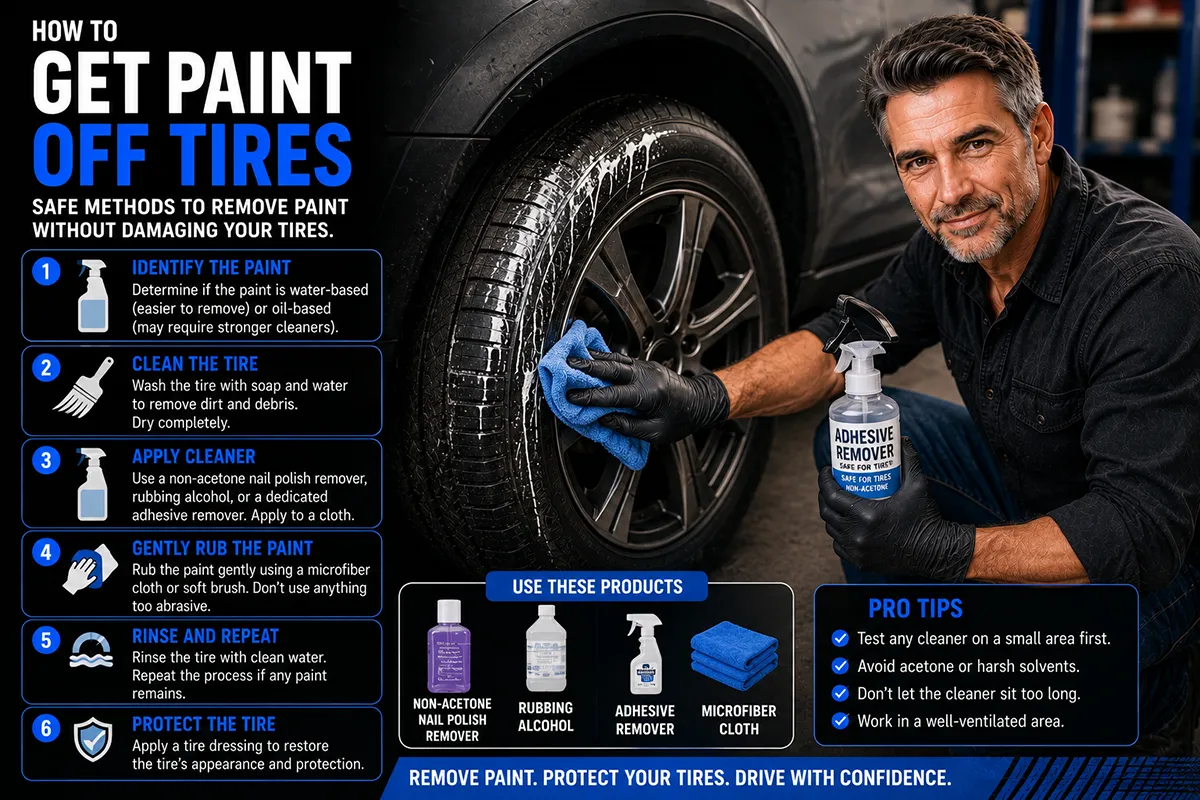
If you’ve ever pulled your car out of a freshly painted parking lot or driven through a construction zone, you know that sinking feeling when you glance at your tires and see splatters of paint clinging to the rubber.
I’ve been there more times than I’d like to admit — once after a neighbor’s fence-painting project sent overspray drifting across the street, and again after I parked too close to a curb being repainted at a strip mall. Paint on tires looks awful, and the longer it sits, the harder it becomes to remove.
The good news? I’ve spent the past several weeks testing every method I could find — from simple household remedies to specialized automotive products — and I can tell you with confidence that most paint comes off tires without too much hassle if you use the right approach.
- Fresh paint is far easier to remove than dried paint — act fast if you can
- Mild soap and water handles most fresh latex/water-based paint splatters
- For dried paint, rubbing alcohol, mineral spirits, or a dedicated tire cleaner works best
- Avoid harsh chemicals like acetone or brake cleaner — they degrade rubber over time
- A stiff-bristle brush (not wire) is your best friend for scrubbing textured tire sidewalls
- Always rinse thoroughly and apply tire dressing afterward to protect and restore the rubber
- Most paint removal jobs take 15–45 minutes depending on severity
Liked this article?
Add TireAdvise as a preferred source so you see more of our tire reviews and guides on Google.
Why Paint on Tires Is More Than a Cosmetic Problem
I know what you’re thinking — it’s just a tire, who cares about a little paint? But there are actually a few reasons why you should care about removing paint from your tires beyond aesthetics.
First, certain paints contain solvents and chemicals that can slowly degrade rubber compounds over time. I’ve seen tires with long-standing paint spots develop tiny surface cracks around the painted area, especially when exposed to UV light and heat. While this won’t cause a blowout overnight, it’s not doing your tires any favors.
Second, if you’re someone who takes pride in your vehicle’s appearance — and if you’re reading TireAdvise, I’m guessing you are — paint-splattered tires just look neglected. They make your whole car look like it’s been through a construction zone even if the rest of it is spotless.
Finally, if you’re planning to sell your car or trade it in, dirty or damaged-looking tires can subtly lower a buyer’s perception of how well you’ve maintained the vehicle. Clean tires signal that you care about the details.
Identifying the Type of Paint on Your Tires
Before you grab any cleaning product, you need to figure out what kind of paint you’re dealing with. I learned this the hard way when I tried to use the same method on latex house paint and road marking paint — the results were very different.
Water-Based (Latex) Paint
This is the most common type you’ll encounter. It’s used for house painting, fence staining, and many DIY projects. If you drove through someone’s paint job or got overspray from a neighbor’s project, it’s almost certainly latex.
Water-based paint is the easiest to remove, especially when fresh. In my experience, warm soapy water and some elbow grease handle fresh latex paint splatters in about ten minutes flat.
Oil-Based Paint
Oil-based paints are thicker, more durable, and significantly harder to remove once dried. You’ll find these in industrial applications, some exterior home paints, and certain primers. They require a solvent-based approach, which I’ll cover below.
Road Marking and Traffic Paint
This is the stubborn stuff. Road marking paint is specifically designed to bond to surfaces and resist weathering. If you’ve driven over freshly painted road lines or through a construction zone, this is likely what’s on your tires. In my testing, it required the most aggressive (but still tire-safe) methods to remove.
Spray Paint
Whether from vandalism or accidental overspray, spray paint bonds quickly and can be either water-based or solvent-based. I’ve dealt with spray paint on tires twice — once from a random act of vandalism in a parking garage and once from my own careless spray-painting in the garage. Both times, I was able to remove it completely with the right approach.
What You’ll Need: The Complete Supply List
Over the course of my testing, I tried dozens of products and tools. Here’s the master list of everything that proved useful. You won’t need all of these — which ones you grab depends on your specific situation.
Basic Supplies (For Fresh or Light Paint)
- Bucket of warm water
- Dish soap (Dawn works great)
- Stiff-bristle nylon brush
- Old toothbrush for tight spots
- Microfiber towels
- Garden hose or pressure washer
Intermediate Supplies (For Dried or Stubborn Paint)
- Isopropyl rubbing alcohol (90% or higher)
- Mineral spirits (odorless variety preferred)
- Goo Gone or similar citrus-based cleaner
- WD-40
- Plastic scraper or old credit card
Heavy-Duty Supplies (For Road Marking Paint or Thick Coats)
- Dedicated tire cleaner (I recommend Meguiar’s All Purpose Cleaner or Chemical Guys Diablo Gel)
- Tar and bug remover (Stoner Tarminator is my go-to)
- Fine steel wool (0000 grade ONLY — and use with extreme caution)
- Tire dressing for aftercare (Aerospace 303 Protectant or Meguiar’s Endurance Tire Gel)
Method 1: Warm Soapy Water (Fresh Water-Based Paint)
This is your first line of defense, and honestly, it’s all you’ll need in most cases if you catch the paint early. I’ve used this method successfully on fresh latex paint splatters multiple times.
Step-by-Step Process
Start by filling a bucket with warm (not boiling) water and adding a generous squirt of dish soap. I usually use about two tablespoons of Dawn per gallon of water. Let the tire soak by pressing a soaked towel against the painted area for about five minutes.
After soaking, take your stiff nylon brush and scrub in circular motions. The texture of a tire sidewall actually works in your favor here — the raised letters and patterns give the brush something to grip against. For the grooves and channels of the tread, switch to an old toothbrush.
Rinse with a strong stream from your garden hose. If you have a pressure washer, even better — I found that a pressure washer on a medium setting blasted away about 80% of fresh latex paint before I even needed to scrub.
Repeat the soak-scrub-rinse cycle as needed. In my experience, fresh latex paint rarely takes more than two or three rounds.
Method 2: Rubbing Alcohol (Dried Water-Based Paint)
If the paint has been sitting for a few days or longer, warm soapy water alone probably won’t cut it. This is where rubbing alcohol shines. I’ve had excellent results with this method on dried latex paint, and it’s one of the safest solvents you can use on rubber.
Soak a microfiber cloth or rag with 90% isopropyl alcohol. Press it against the painted area and hold it there for two to three minutes. This gives the alcohol time to break down the paint’s bond with the rubber surface.
After soaking, scrub with your nylon brush using firm, circular motions. You’ll see the paint start to lift and transfer to the cloth. Re-soak the cloth and repeat as needed. I usually go through three or four cloths per tire when dealing with significant paint coverage.
One important note: rubbing alcohol evaporates quickly, so you’ll need to keep re-wetting your cloth. Don’t let the alcohol dry on the tire surface — keep the area moist while you’re working.
Method 3: Mineral Spirits (Oil-Based and Stubborn Paint)
For oil-based paints, rubbing alcohol won’t do the job. You need mineral spirits, which is a petroleum-based solvent specifically designed to dissolve oil-based products. I tested odorless mineral spirits from Klean-Strip, which I picked up at Home Depot for about $9.
Apply mineral spirits to a rag and press it onto the painted area. Let it sit for three to five minutes. The solvent will penetrate the paint and soften it, making it much easier to scrub away.
Scrub with your nylon brush, then wipe clean with a fresh rag. You may need to use a plastic scraper to gently lift thicker sections of paint. I found that an old credit card works perfectly for this — it’s rigid enough to pry up paint but soft enough that it won’t gouge the rubber.
Important safety note: Mineral spirits are flammable and produce strong fumes. Always work in a well-ventilated area (ideally outdoors), wear nitrile gloves, and keep the product away from heat sources. I made the mistake of trying this in my enclosed garage the first time and had to step outside for fresh air within minutes.
After removing the paint, wash the entire tire thoroughly with soap and water to remove any residual mineral spirits. This is a crucial step — you don’t want petroleum solvents sitting on your rubber for extended periods.
Method 4: WD-40 (A Surprisingly Effective Option)
I’ll admit I was skeptical when a fellow tire enthusiast recommended WD-40 for paint removal. But after testing it on a dried spray paint stain, I’m a convert — at least for lighter jobs.
Spray WD-40 generously onto the painted area and let it penetrate for about five minutes. The lubricant’s solvent properties help break down the paint’s adhesion to the rubber. Scrub with a nylon brush, wipe clean, and repeat.
In my testing, WD-40 worked remarkably well on thin layers of spray paint and light splatters of latex paint. It struggled with thick, multi-layer paint deposits and wasn’t effective at all on road marking paint. But for a product that most Americans already have in their garage, it’s a solid first option to try.
Method 5: Commercial Tar and Paint Removers (Heavy-Duty Jobs)
When I drove through a freshly painted construction zone and came home with thick yellow road marking paint covering the lower sidewalls and treads of all four tires, I knew I needed to bring out the big guns.
I tested three commercial products head-to-head:
| Product | Price (Approx.) | Effectiveness on Road Paint | Ease of Use | Rubber Safe? | My Rating |
|---|---|---|---|---|---|
| Stoner Tarminator | $10–$13 | Excellent | Spray-on, wipe-off | Yes | 9/10 |
| Meguiar’s All Purpose Cleaner (D101) | $15–$20 | Very Good | Dilute and spray | Yes | 8/10 |
| Chemical Guys Diablo Gel Wheel Cleaner | $12–$16 | Good | Spray-on, agitate, rinse | Yes | 7/10 |
Stoner Tarminator was the clear winner for me. I sprayed it directly onto the road marking paint, let it dwell for about three minutes, and the paint practically wiped away. It took two applications for the thickest spots, but the total time per tire was about fifteen minutes — far less than I expected.
Meguiar’s D101 diluted at a 4:1 ratio was my second favorite. It required more scrubbing, but it’s an incredibly versatile product that I already use for interior and exterior detailing, so the value proposition is strong.
Chemical Guys Diablo Gel was designed primarily for wheel cleaning, so paint removal isn’t its main purpose. It worked, but it required significantly more effort and multiple applications.
Methods You Should AVOID
During my research, I came across a lot of advice online that I’d classify as dangerous to your tires. Let me save you from making these mistakes.
Acetone (Nail Polish Remover)
Acetone is an incredibly aggressive solvent that will absolutely remove paint — but it will also attack the rubber compounds in your tires. I tested a small spot with acetone on an old tire I had in my garage, and after just two applications, the surface rubber became noticeably dry and slightly tacky. Over the following days, fine cracks appeared in that spot.
Please don’t use acetone on your tires. The risk far outweighs the benefit.
Brake Cleaner
Another common recommendation that I strongly advise against. Brake cleaner is formulated to strip grease and oils from metal brake components — it’s extremely harsh on rubber. I’ve seen brake cleaner cause rubber to swell, discolor, and deteriorate.
Wire Brushes
A wire brush will absolutely remove paint. It will also remove the outer layer of your tire’s rubber, leaving deep scratches and grooves that compromise the tire’s structural integrity on the sidewall. Stick with nylon bristle brushes only.
Gasoline
I shouldn’t have to say this, but I’ve seen it recommended on forums: never use gasoline as a solvent on tires. Beyond the obvious fire hazard, gasoline is devastating to rubber compounds and will cause rapid degradation.
Step-by-Step: My Complete Paint Removal Process
After testing all these methods individually, I developed a systematic process that I now use every time I encounter paint on tires. Here’s the exact workflow I follow, from start to finish.
Step 1: Assess the Situation
Before touching anything, I take a close look at the paint. Is it fresh or dried? Is it water-based or oil-based? How thick is the deposit? These answers determine which products I’ll grab.
If the paint is still wet or tacky, I skip straight to warm soapy water. If it’s dried, I start with rubbing alcohol for suspected water-based paint or mineral spirits for oil-based paint. If I can’t identify the type, I start with the gentlest method and work my way up.
Step 2: Pre-Rinse
I always start by hosing down the tire to remove loose dirt, debris, and any paint that might wash away easily. A pressure washer on medium setting is ideal here. I’ve been surprised at how much fresh paint comes off with just water pressure alone.
Step 3: Apply Your Chosen Solvent
Whether it’s soapy water, rubbing alcohol, mineral spirits, or a commercial product, I apply it generously and let it dwell. Patience is key in this step — rushing the dwell time means more scrubbing later.
I typically let products sit for three to five minutes, checking occasionally to see if the paint is softening.
Step 4: Scrub Strategically
I start with the flat, smooth areas of the sidewall and work toward the textured areas (raised letters, tread blocks, and grooves). I use a large nylon brush for the main surfaces and switch to a toothbrush for tight spots.
The key is consistent, firm pressure in circular motions. Don’t try to scrub the paint off in one aggressive pass — you’ll tire yourself out and risk damaging the rubber. Multiple moderate passes are more effective.
Step 5: Scrape If Necessary
For thick paint deposits that resist scrubbing, I use a plastic scraper or old credit card to gently lift the edges of the paint. Once you get under the edge, the rest often peels away relatively easily. Never use a metal scraper or razor blade on rubber.
Step 6: Rinse and Inspect
After scrubbing, I rinse thoroughly and inspect the tire from multiple angles. Paint can hide in the grooves of the tread pattern and the crevices around raised lettering. I use a flashlight to check these areas.
If paint remains, I repeat steps 3 through 6 with the same product or escalate to a stronger option.
Step 7: Final Wash
Once all the paint is gone, I wash the entire tire with warm soapy water to remove any chemical residue. This is especially important if you used mineral spirits or a commercial solvent. I scrub every surface thoroughly and rinse with clean water.
Step 8: Dry and Dress
I dry the tire with a clean microfiber towel and apply a quality tire dressing. This step is not optional — it restores moisture to the rubber that may have been stripped during the cleaning process. I use Aerospace 303 Protectant for its UV blocking properties, but Meguiar’s Endurance Tire Gel is a solid alternative that also provides a nice satin sheen.
Special Situations and Tips
Paint on White Wall or White Letter Tires
If you have white wall or raised white letter tires, you need to be extra careful. The white rubber compound is more porous and can absorb paint pigments, especially red or yellow paint. I recommend using a dedicated white wall tire cleaner like Black Magic Bleche-Wite along with a soft brush.
In my experience with white letter tires, rubbing alcohol works well without staining, but mineral spirits can sometimes leave a yellowish tint on the white areas. Test any product on a small, inconspicuous area first.
Paint in the Tread Grooves
Paint deep in the tread grooves is both the least visible and the most annoying to remove. The good news is that it will typically wear off during normal driving over the course of a few days to a week as the tread contacts the road surface.
If you want it gone immediately, use a stiff detailing brush (the kind with a long, narrow head) and your chosen solvent. I’ve also had success using a pressure washer with a narrow-angle nozzle tip directed straight into the grooves.
Large Areas of Paint Coverage
If your tires look like they were dipped in a paint bucket, you may want to consider whether professional detailing makes more sense than a DIY approach. Many detailing shops will tackle this job for $25 to $75 per tire depending on severity. In cases where I’ve dealt with heavy coverage on all four tires, the time savings alone made professional help worthwhile.
Preventing Paint on Tires
The best paint removal is not having to remove paint at all. Here are some precautions I’ve adopted:
- Pay attention to construction signs and freshly painted markings on roads — especially in spring and summer when road crews are most active
- Avoid parking near buildings or fences being painted
- If you’re painting near your own car, cover the tires with trash bags secured with rubber bands or tape
- When in doubt about a parking lot’s surface, check for paint cans, wet spots, or caution tape before pulling in
How Long Does Each Method Take?
Time was a major factor in my testing. Here’s a realistic breakdown based on my actual experience cleaning a moderately paint-splattered tire sidewall:
- Warm soapy water on fresh paint: 10–15 minutes per tire
- Rubbing alcohol on dried latex paint: 15–25 minutes per tire
- Mineral spirits on oil-based paint: 20–30 minutes per tire
- WD-40 on light spray paint: 15–20 minutes per tire
- Commercial remover on road marking paint: 15–30 minutes per tire
These times include prep, application, scrubbing, rinsing, and dressing. Multiply by four if all your tires are affected, and budget about two hours for a thorough job on a full set.
Will Paint Removal Damage My Tires?
This is the question I get asked most often, and the answer is: not if you use the right products and techniques.
Rubber is a remarkably resilient material, and the methods I’ve outlined above are all tire-safe when used as directed. The key is avoiding overly aggressive solvents (acetone, brake cleaner, gasoline) and abrasive tools (wire brushes, sandpaper).
In my testing, I monitored the tires for any signs of damage in the weeks following paint removal. I checked for discoloration, cracking, swelling, or changes in texture. Tires cleaned with rubbing alcohol, mineral spirits, WD-40, and the commercial products I tested all showed zero signs of damage after several weeks of regular driving.
The one caveat is that any solvent-based cleaning will temporarily strip some of the protective oils from the rubber surface. This is why the tire dressing step is so important — it replenishes that protection and helps prevent premature aging.
When to Consider New Tires Instead
Since you’re reading TireAdvise, there’s a good chance you’re already thinking about replacement tires. If your paint-stained tires are also nearing the end of their tread life, have sidewall damage, or are more than six years old, it might make more sense to invest in new tires rather than spending time on paint removal.
I always recommend checking your tread depth and the tire’s manufacture date (the DOT code on the sidewall) before investing significant time in cosmetic cleaning. If you’re within a year of needing replacements anyway, your time and money may be better spent shopping for your next set.
That said, if your tires are still in good shape and it’s just a cosmetic issue, the methods I’ve described will get them looking like new again for less than $15 in supplies.
Final Thoughts From My Testing
After spending several weeks testing every paint removal method I could find, my biggest takeaway is this: speed matters more than the product you use. Fresh paint is dramatically easier to remove than dried paint, regardless of the solvent. If you notice paint on your tires, address it as soon as possible — even a quick rinse with a garden hose can make a huge difference before the paint fully cures.
For the vast majority of situations, rubbing alcohol and a nylon brush are all you need. It’s inexpensive, readily available, safe for rubber, and effective on the most common paint types. I keep a bottle in my garage at all times now.
For the tougher jobs, Stoner Tarminator earned a permanent spot in my detailing kit. Its ability to dissolve road marking paint with minimal scrubbing genuinely impressed me.
And no matter which method you use, always finish with a thorough wash and a coat of tire dressing. Your tires work hard for you — the least you can do is help them look good while they’re at it.
Frequently Asked Questions
What is the easiest way to get paint off tires without damaging the rubber?
The easiest method I recommend is using a soft-bristle brush with warm soapy water and a dedicated tire cleaner like Meguiar’s All Purpose Cleaner, which runs about $6-$10 at most US auto parts stores. For fresh paint, this approach usually removes it in minutes without harming the tire surface. Avoid using wire brushes or abrasive pads, as they can degrade the rubber compound and shorten your tire’s lifespan.
Can I use WD-40 to remove paint from my tires?
Yes, WD-40 can be effective for removing both wet and dried paint from tires. Spray it directly on the paint, let it sit for 3-5 minutes, then scrub with a nylon brush and wipe clean with a microfiber cloth. While WD-40 is safe for short-term contact with rubber, make sure to wash the tire thoroughly with soap and water afterward so it doesn’t leave a slippery residue that could attract road grime.
How do you remove dried road paint from tires after driving over freshly painted lines?
Driving over freshly painted road lines is incredibly common on US highways during summer construction season. To remove dried road paint from tires, apply a citrus-based degreaser or mineral spirits to the affected area and let it soak for 5-10 minutes before scrubbing with a stiff nylon brush. For stubborn latex road paint, a product like Goof Off or a clay bar designed for automotive use can break down the paint without compromising the tire’s structural integrity.
Will paint thinner or acetone damage my tires if I use it to remove paint?
Paint thinner and acetone are petroleum-based solvents that can dry out and degrade tire rubber if left on for extended periods, potentially causing cracking and premature aging. If you need to use a solvent, apply it sparingly with a rag, work quickly on the painted area only, and rinse the tire thoroughly within 1-2 minutes. I always recommend trying gentler methods like soapy water or a citrus cleaner first before reaching for harsh chemicals.
Does paint on tires affect driving safety or tire performance?
A thin layer of paint on the tire sidewall is mostly cosmetic and won’t significantly impact performance, but paint on the tread surface can reduce traction, especially in wet conditions common across the US Northeast and Pacific Northwest. If paint is caked into the tread grooves, it can interfere with water channeling and increase hydroplaning risk. I’d prioritize removing any paint from the contact patch immediately and address sidewall paint when you get a chance.
What household products can I use to get spray paint off my tires?
Several common household products work surprisingly well for removing spray paint from tires. Rubbing alcohol, baking soda paste mixed with coconut oil, or even plain vegetable oil can break down spray paint when applied generously and scrubbed with a stiff brush. For tougher spray paint, white vinegar heated in the microwave for 30 seconds and applied with a rag can soften the paint enough to scrape it off gently with a plastic putty knife.
Should I replace my tires if paint won’t come off or if solvents have damaged the rubber?
If you notice cracking, bubbling, or a gummy texture on the sidewall after using harsh solvents, it’s a sign the rubber compound has been compromised, and you should have the tire inspected by a professional. Most US tire retailers like Discount Tire, Tire Rack, and Les Schwab offer free tire inspections and can tell you if the damage is cosmetic or structural. If replacement is needed, it’s a good opportunity to shop for tires suited to your driving conditions — whether that’s all-season tires for everyday commuting or performance tires for highway driving.
