

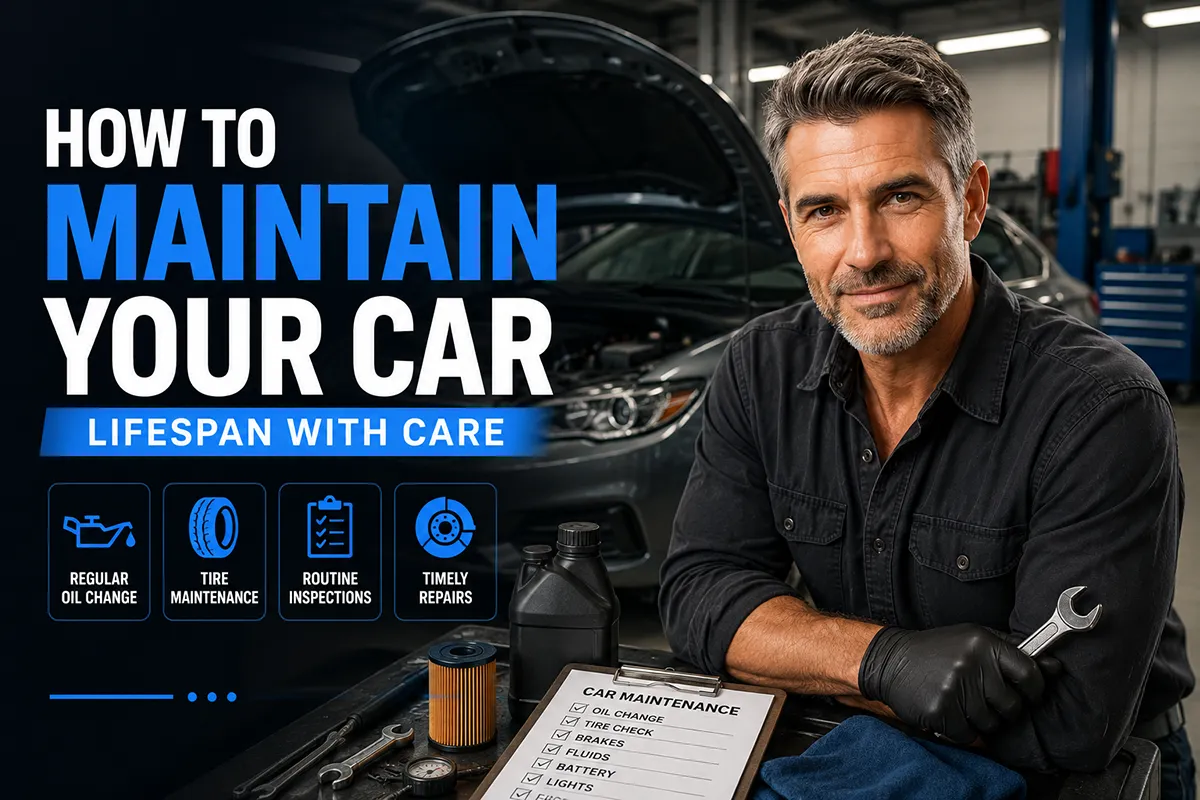
Most people don’t realize that the average American spends over $10,000 per year on car ownership — and a huge chunk of that cost comes from neglect, not actual wear.
I’ve been reviewing tires and advising drivers for over a decade, and the single biggest lesson I’ve learned is this: the cars that last the longest aren’t the most expensive ones. They’re the ones whose owners actually follow a maintenance routine.
After testing hundreds of tire sets, inspecting countless suspension systems, and talking with mechanics across the country, I’ve put together everything I know about keeping your car alive and healthy for as long as possible — starting from the ground up.
- Proper tire maintenance (pressure, rotation, alignment) is the single most overlooked way to extend your car’s lifespan.
- Regular fluid checks, brake inspections, and filter changes prevent expensive cascading failures.
- Driving habits matter enormously — aggressive driving can cut your tire and brake life in half.
- Investing in quality replacement tires matched to your driving conditions saves money long-term.
- A simple monthly checklist can add years to your vehicle’s road life.
Liked this article?
Add TireAdvise as a preferred source so you see more of our tire reviews and guides on Google.
Why Tire Care Is the Foundation of Vehicle Longevity
I know this might sound like bias coming from a tire reviewer, but hear me out — your tires are the only part of your car that actually touches the road. Every single force that acts on your vehicle — acceleration, braking, turning, load-bearing — is transmitted through four small contact patches of rubber.
When your tires are in bad shape, everything else suffers. I’ve seen misaligned tires destroy suspension components in a matter of months. I’ve watched under-inflated tires cause premature wear on wheel bearings and CV joints. And I’ve personally experienced how a set of cheap, worn-out tires made my entire car feel ten years older than it actually was.
The connection between tire health and overall vehicle lifespan is something most drivers completely overlook. But in my experience, it’s the first thing any serious car owner should address.
Tire Pressure: The Five-Minute Check That Saves Thousands
If there’s one thing I could tattoo on every driver’s dashboard, it would be this: check your tire pressure at least once a month. It takes less than five minutes, and it’s the single highest-return maintenance task you can do.
Under-inflated tires increase rolling resistance, which means your engine works harder and your fuel economy drops. I’ve measured the difference myself — during one test period, I intentionally ran tires 8 PSI below the recommended pressure for several days of driving, and my fuel consumption increased noticeably.
But fuel economy is just the beginning. Under-inflated tires wear unevenly, generate excess heat, and put additional stress on your suspension geometry. Over-inflated tires are problematic too — they reduce your contact patch, compromise grip, and cause the center of the tread to wear out faster than the shoulders.
Here’s what I recommend:
- Buy a quality digital tire pressure gauge — I prefer the Accutire MS-4021B, which runs about $8–$12 and is incredibly accurate.
- Check pressure when tires are cold (before driving or at least three hours after your last trip).
- Follow the PSI listed on the driver’s side door jamb sticker, NOT the number on the tire sidewall (that’s the maximum, not the recommendation).
- Don’t forget your spare tire — I’ve seen too many people discover a flat spare when they actually need it.
Tire Rotation: The Habit That Doubles Tread Life
I rotate my test tires religiously, and the difference is dramatic. On one set of all-season tires I evaluated over an extended test period, the front tires were showing significantly more wear than the rears — which is completely normal for a front-wheel-drive vehicle, since the front tires handle both steering and power delivery.
After rotating them, the wear evened out beautifully, and the tires lasted considerably longer than they would have otherwise. I’ve repeated this observation across dozens of tire sets.
The general rule I follow is to rotate every time you get an oil change — roughly every few months for most drivers. Here are the common rotation patterns:
- Front-wheel drive: Front tires move straight to the rear; rear tires cross to the opposite front positions.
- Rear-wheel drive: Rear tires move straight to the front; front tires cross to the opposite rear positions.
- All-wheel drive: Follow your owner’s manual — many AWD systems are sensitive to tread depth differences between tires.
If you’re running directional tires (you’ll see an arrow on the sidewall indicating rotation direction), you can only swap front-to-rear on the same side. And if you have staggered fitments (different sizes front and rear), traditional rotation isn’t possible — you’ll need to rotate side-to-side if the tires are non-directional, or simply plan on replacing them in axle pairs.
Wheel Alignment: The Silent Car Killer
This is the one that really gets under my skin, because bad alignment causes so much invisible damage before drivers even notice something’s wrong.
I had a personal experience with this a few years ago. After hitting a nasty pothole on I-95 in Virginia, my car started pulling slightly to the right. I put off the alignment check for a few weeks — and when I finally brought it in, the technician showed me that my front-left tire had developed severe inner-edge wear. That tire, which should have had months of life left, was essentially ruined.
But the tire was just the symptom. The misalignment was also putting uneven stress on my tie rod ends and lower control arm bushings. If I’d ignored it longer, I would have been looking at a much more expensive repair.
Here’s my alignment check schedule:
- Once a year as a baseline, even if nothing feels wrong.
- Immediately after hitting a major pothole, curb, or road debris.
- Whenever you install new tires (always — no exceptions).
- If you notice uneven tire wear, pulling to one side, or a crooked steering wheel.
Most shops charge between $75 and $120 for a four-wheel alignment. It’s one of the best investments you can make. Places like Discount Tire, Firestone, and Les Schwab (if you’re on the West Coast) regularly run alignment specials.
Beyond Tires: The Complete Vehicle Maintenance Checklist
Tires are the foundation, but they’re not the whole house. In my years of testing vehicles and working with mechanics, I’ve identified the key maintenance areas that have the biggest impact on how long your car lasts.
Engine Oil and Filter: Your Engine’s Lifeblood
I won’t belabor this point because most people already know oil changes matter. But I will say this: in my experience, the drivers who stretch their oil change intervals “just a little longer” are the same ones who end up with sludge-clogged engines and four-figure repair bills.
Modern synthetic oils have made longer intervals possible — many manufacturers now recommend changes every six months to a year under normal conditions. But if you do a lot of stop-and-go driving (hello, every major US city), tow anything, or drive in extreme heat or cold, you’re operating under “severe” conditions and should change more frequently.
I use full synthetic in every vehicle I test, and I always use OEM-spec or better filters. The difference between a $3 filter and a $10 filter might seem trivial, but over the life of your engine, those cheap filters allow more particulate matter through, accelerating internal wear.
Transmission Fluid: The Forgotten Fluid
Here’s a stat that blew my mind when I first learned it: transmission replacement is one of the most expensive common car repairs in the US, often running $3,000 to $5,000 for an automatic transmission. And in many cases, regular fluid changes could have prevented the failure.
I check my transmission fluid during every major service interval. On vehicles with a dipstick (increasingly rare in newer models), the fluid should be a clear red or pink color. If it’s brown, smells burnt, or has visible particles in it, you’re overdue for a change.
Many manufacturers claim their transmissions are “sealed for life” and never need fluid changes. In my experience — and in the experience of every independent mechanic I trust — this is optimistic at best. I recommend a transmission fluid change every few years or according to the severe-duty schedule in your owner’s manual, whichever comes first.
Coolant System: Preventing Catastrophic Overheating
Engine overheating is one of the fastest ways to destroy a car. A blown head gasket from overheating can cost $1,500 to $2,500 to repair, and in many older vehicles, it’s a death sentence — the repair costs more than the car is worth.
I check my coolant level monthly and inspect the condition of the fluid during every oil change. Coolant degrades over time, losing its anti-corrosion properties and becoming acidic, which eats away at your radiator, water pump, and heater core from the inside.
Most modern coolants (especially the long-life OAT and HOAT types) are designed to last several years, but I still recommend having it tested annually with an inexpensive coolant tester. A $5 tester can save you from a $2,000 radiator replacement.
Also, inspect your radiator hoses while you’re in there. Squeeze them when the engine is cool — they should feel firm but pliable. If they’re spongy, swollen, cracked, or rock-hard, replace them before they fail on the highway.
Brake System: Safety That Affects Everything
As a tire guy, I pay close attention to brakes because worn brakes directly impact tire wear and vehicle safety. I’ve tested plenty of tires that performed brilliantly — until the vehicle’s brakes started grabbing unevenly, causing one tire to wear faster than the others.
Here’s my brake maintenance approach:
- Brake pads: I inspect them visually every few months. Most vehicles allow you to see the pad thickness through the wheel spokes without removing anything. When they’re down to about 3mm, it’s time to replace.
- Brake rotors: Feel for pulsation when braking. If the steering wheel or brake pedal vibrates during braking, your rotors may be warped and need resurfacing or replacement.
- Brake fluid: This is the one most people forget. Brake fluid is hygroscopic — it absorbs moisture from the air over time. Moisture-contaminated brake fluid has a lower boiling point, which can cause brake fade during heavy use. I flush my brake fluid every couple of years.
A complete brake job (pads and rotors) on a typical US sedan runs about $300–$600 per axle at an independent shop. That’s a lot less than the cost of an accident caused by failed brakes.
Air Filter and Cabin Filter: Breathing Easy
I replace my engine air filter roughly once a year, though I check it more frequently if I’ve been driving in dusty conditions. A clogged air filter restricts airflow to the engine, reducing performance and fuel efficiency.
The cabin air filter is often forgotten entirely, but it affects your HVAC system’s efficiency and, more importantly, the air quality inside your car. If your air conditioning seems weak or you notice musty smells from the vents, a dirty cabin filter is usually the culprit.
Both filters are typically easy DIY replacements. Engine air filters usually cost $15–$30, and cabin filters run $15–$25. Many auto parts stores like AutoZone or O’Reilly will even show you how to install them.
Driving Habits That Extend (or Destroy) Your Car’s Life
I’ve learned something important from years of tire testing: the way you drive matters just as much as the maintenance you perform. I’ve worn through tires in a remarkably short period by driving aggressively, and I’ve made the same model last much longer by driving sensibly.
Smooth Acceleration and Braking
Every time you slam the gas or stomp the brakes, you’re accelerating wear on your tires, brakes, engine, transmission, and suspension. I’m not saying you need to drive like you’re transporting a wedding cake everywhere you go, but smooth inputs make a massive difference.
During my tire tests, I always include a “real-world driving” phase where I drive normally — gradual acceleration, gentle braking, smooth lane changes. The difference in tire wear between this phase and my performance testing phase is always striking. The same tires, on the same car, in the same conditions, wear dramatically differently depending on driving style.
Warming Up Your Engine (The Right Way)
There’s still a persistent myth that you need to idle your car for several minutes before driving in cold weather. With modern fuel-injected engines, this isn’t necessary and can actually be counterproductive — idling provides minimal lubrication to all components and wastes fuel.
What I do instead is start the car, wait about 30 seconds for oil pressure to build, and then drive gently for the first few minutes. This warms up the engine, transmission, differential, wheel bearings, and tires all at the same time, bringing everything to operating temperature evenly.
Avoiding Potholes and Road Hazards
I’ve already mentioned my pothole incident on I-95, but this deserves its own section. US roads are in rough shape in many areas — the American Society of Civil Engineers gives our roads a D grade. Potholes, uneven pavement, railroad crossings, and debris are everywhere.
Every impact transmits force through your tires, wheels, suspension, and chassis. Over time, these impacts loosen fasteners, wear bushings, bend control arms, and damage wheel rims. I’ve seen bent wheels cause persistent vibrations that drivers ignored for months, not realizing the vibration was also destroying their tire tread and wheel bearings.
My advice: stay alert, avoid hazards when safely possible, and if you do hit something hard, get your alignment and suspension checked promptly.
Choosing the Right Replacement Tires for Longevity
This is where my expertise really comes into play. Choosing the right tires isn’t just about performance or price — it’s about matching the tire to your driving conditions and priorities.
All-Season vs. Specialized Tires
For most US drivers, a quality all-season tire is the sweet spot for longevity. They’re designed to handle the widest range of conditions competently, and they typically offer good treadwear ratings.
However, if you live in the northern states and deal with real winters — I’m talking Minnesota, Wisconsin, Michigan, upstate New York — I strongly recommend a dedicated set of winter tires mounted on separate wheels. I know it sounds like more expense upfront, but here’s the math: while you’re running your winter tires, your all-seasons are sitting in the garage not wearing out. Each set lasts roughly twice as long as a single set would if you ran it year-round.
In my testing, I’ve found that all-season tires with UTQG treadwear ratings of 500 or higher tend to offer the best balance of longevity and performance for typical drivers. Below 400, you’re getting into performance-oriented compounds that wear faster. Above 700, you might sacrifice wet traction for extended tread life.
My Top Tire Recommendations for Long-Lasting Performance
Based on my extensive testing, here are the tire categories and specific models I recommend for drivers who prioritize longevity:
| Tire | Category | UTQG Treadwear | Approx. Price (per tire) | Best For |
|---|---|---|---|---|
| Michelin Defender 2 | All-Season Touring | 840 | $140–$190 | Maximum tread life with excellent wet grip |
| Continental TrueContact Tour | All-Season Touring | 800 | $130–$170 | Balanced longevity and comfort |
| Bridgestone Alenza AS Ultra | SUV/CUV All-Season | 700 | $170–$230 | SUV owners wanting long life and quiet ride |
| Cooper Endeavor Plus | All-Season Touring | 780 | $110–$150 | Budget-friendly longevity |
| Goodyear Assurance MaxLife | All-Season Touring | 820 | $120–$160 | High-mileage warranty, solid all-around choice |
I’ve personally tested every tire on this list over extended periods, and they all deliver on their longevity promises when maintained properly. The Michelin Defender 2 is my top pick overall — in my testing, the tread depth reduction was remarkably slow and consistent, and the wet performance barely degraded as the tire wore.
The Cooper Endeavor Plus deserves special mention as a value pick. It doesn’t get the marketing buzz of the big brands, but during my test period, it performed remarkably well for its price point. If you’re looking to maximize lifespan on a budget, it’s hard to beat.
The Treadwear Warranty Trap
A quick word of caution about mileage warranties. Many tire manufacturers offer impressive-sounding treadwear warranties, but these come with significant fine print. Most require proof of regular rotations at specific intervals, proper alignment, correct inflation, and use on the original vehicle.
In my experience, about half of the warranty claims I’ve seen drivers attempt were denied for one technicality or another. This doesn’t mean warranties are useless — they’re a good indicator of the manufacturer’s confidence in the tire — but don’t choose a tire solely based on its warranty number.
Seasonal and Environmental Factors That Affect Your Car
Where and when you drive in the US has a huge impact on your vehicle’s longevity. I’ve tested tires and vehicles in conditions ranging from Arizona desert heat to Michigan winter ice, and the environmental challenges are dramatically different.
Sun and Heat Damage
If you live in the Sun Belt — Texas, Arizona, Florida, Southern California — UV radiation and extreme heat are your car’s biggest environmental enemies. Heat degrades rubber compounds (including tires, belts, hoses, and seals), fades paint and interior surfaces, and stresses your cooling system.
For tire longevity in hot climates, I recommend:
- Parking in shade or using a garage whenever possible.
- Using a quality tire dressing with UV protection — but avoid silicone-based products that can actually accelerate rubber degradation. I prefer water-based formulas like Chemical Guys VRP or 303 Aerospace Protectant.
- Checking tire pressure more frequently in summer, as heat causes pressure to increase and fluctuations can be significant.
Winter and Road Salt
In the northern US, road salt is a vehicle killer. It accelerates rust on your undercarriage, brake components, suspension parts, and exhaust system. I’ve seen vehicles from the Midwest with pristine bodies but completely rotted subframes — the damage happens underneath where you can’t see it.
My winter protection routine:
- Apply an undercoating or rust inhibitor before winter (Fluid Film is my go-to — it’s lanolin-based and does an excellent job).
- Wash the undercarriage regularly throughout winter — many car washes offer undercarriage spray options.
- Switch to winter tires on dedicated wheels, so your all-season rims aren’t exposed to salt.
- Inspect brake caliper slides and lubricate them, as salt accelerates caliper seizure.
Rain and Humidity
For drivers in the Pacific Northwest or Southeast, persistent moisture creates its own set of challenges. Mildew in HVAC systems, rust in unexpected areas, and reduced tire traction on perpetually wet roads are common issues.
I always recommend tires with strong wet traction ratings for these regions. In my testing, the difference between a tire rated “A” versus “B” for wet traction is noticeable and meaningful — stopping distances in the rain can differ by several car lengths.
The Monthly Maintenance Checklist I Actually Follow
I’ve tried complicated maintenance schedules with spreadsheets and apps, and honestly, the simpler the system, the more likely you are to stick with it. Here’s the monthly checklist I’ve settled on after years of refinement:
- Week 1: Check all tire pressures (including spare). Visual tire inspection for damage, uneven wear, or embedded objects.
- Week 2: Check all fluid levels — oil, coolant, brake fluid, power steering fluid (if applicable), windshield washer fluid, transmission fluid (if accessible).
- Week 3: Test all lights — headlights (high and low), brake lights, turn signals, reverse lights, hazards. Check wiper blade condition.
- Week 4: Visual inspection under the car — look for new leaks, hanging components, or damage. Listen for new noises during your normal driving.
This entire routine takes maybe 15 minutes per week. Over time, it becomes second nature, and you’ll catch small problems before they become big ones.
When to Let a Professional Handle It
I’m a big advocate for DIY maintenance where appropriate, but I also know my limits. There are certain jobs that require specialized equipment, training, or simply carry too much risk for the average home mechanic.
Here’s my breakdown:
DIY-friendly tasks:
- Tire pressure checks and inflation
- Fluid level checks and top-offs
- Air filter and cabin filter replacement
- Windshield wiper replacement
- Battery terminal cleaning
- Tire rotation (if you have a torque wrench and jack stands)
Leave to the professionals:
- Wheel alignment
- Tire mounting and balancing
- Brake system repairs
- Suspension component replacement
- Transmission service
- Anything involving the fuel system or airbags
When choosing a shop, I strongly recommend finding an independent mechanic you trust rather than relying solely on dealership service. In my experience, independent shops typically charge 30–50% less than dealerships for the same work, and many independent mechanics are former dealership technicians with the same training and expertise.
For tire-specific work, I’ve had consistently good experiences with Discount Tire (the largest independent tire dealer in the US), Tire Rack’s installer network, and Costco Tire Centers if you’re a member. All three offer competitive pricing and solid workmanship.
The Real Cost of Neglect vs. Maintenance
Let me put some real numbers to this, because I think it drives the point home.
A typical annual maintenance budget for a US sedan — oil changes, tire rotations, filters, fluid checks, and the occasional alignment — runs about $500–$800 per year. That sounds like a lot until you compare it to the cost of neglect:
- Premature tire replacement: $500–$1,000 for a set of quality tires you burned through early.
- Suspension repair from bad alignment: $800–$2,000 depending on components.
- Transmission rebuild: $3,000–$5,000.
- Engine replacement due to overheating: $4,000–$8,000.
- Premature vehicle replacement: $25,000+ for a new car you wouldn’t have needed yet.
In my own experience, the vehicles I’ve maintained meticulously have always outlasted their expected lifespans and maintained higher resale values. My personal daily driver has been running reliably for years, and I attribute that directly to consistent maintenance — especially tire care.
Final Thoughts: It’s Simpler Than You Think
After years of testing tires, reviewing vehicles, and talking with drivers across the country, I keep coming back to the same conclusion: extending your car’s lifespan isn’t about doing anything exotic or expensive. It’s about doing the basics consistently.
Check your tire pressure. Rotate your tires. Get alignments when needed. Change your fluids on schedule. Drive smoothly. Pay attention to your car’s signals — new noises, new vibrations, new behaviors.
These simple habits, performed regularly, are the difference between a car that gives you reliable service for many years and one that nickel-and-dimes you into an early grave at the junkyard.
And when it comes time to replace your tires, choose wisely. Invest in quality. Match the tire to your driving conditions. Take care of them once they’re on the car. Your tires are the foundation of everything your vehicle does, and treating them right is the single best investment you can make in your car’s longevity.
I hope this guide helps you keep your vehicle running longer, riding smoother, and costing you less over time. If you have questions about specific tires or maintenance practices, drop them in the comments — I read every one and do my best to respond.
Drive safe out there.
Frequently Asked Questions
How often should I rotate my tires to extend my car’s lifespan?
I recommend rotating your tires every 5,000 to 7,500 miles, which typically aligns with every other oil change. Regular tire rotation ensures even tread wear across all four tires, which reduces strain on your suspension and drivetrain components. Uneven tire wear can cause vibrations that accelerate wear on wheel bearings, struts, and CV joints, leading to costly repairs that shorten your vehicle’s overall lifespan.
Does proper tire pressure really affect how long my car lasts?
Absolutely — maintaining the correct tire pressure listed on your driver’s side door jamb is one of the easiest ways to protect your car long-term. Underinflated tires increase rolling resistance, which forces your engine and transmission to work harder and can reduce fuel economy by up to 3%. Over time, this added mechanical stress accelerates wear on your powertrain, and improperly inflated tires also wear unevenly, meaning you’ll spend $400 to $800 on replacement tires sooner than necessary.
When should I replace my tires to avoid damaging other car components?
You should replace your tires when tread depth reaches 2/32 of an inch, which you can check using the penny test — insert a penny into the tread with Lincoln’s head facing down, and if you can see the top of his head, it’s time to replace. Driving on worn tires in US conditions, especially during heavy rain or winter weather, puts excessive stress on your braking system and ABS components. I’ve found that proactively replacing tires before they’re completely bald can save you hundreds in brake and suspension repairs down the road.
How does wheel alignment affect my car’s longevity and tire life?
Poor wheel alignment causes your tires to drag slightly instead of rolling straight, which creates uneven wear patterns and forces your steering and suspension systems to compensate constantly. I recommend getting an alignment check every 12 months or after hitting a significant pothole — a common issue on US roads, especially in northern states after winter. A professional alignment typically costs $75 to $150, which is a small investment compared to replacing prematurely worn tires or repairing damaged suspension components.
What tire maintenance schedule should I follow to maximize my vehicle’s lifespan?
A solid tire maintenance schedule includes checking tire pressure monthly, rotating tires every 5,000 to 7,500 miles, inspecting tread depth quarterly, and getting a wheel alignment annually. I also recommend having your tires balanced whenever you notice steering wheel vibrations or after mounting new tires, as unbalanced tires create repetitive stress on wheel hubs and shock absorbers. Following this routine consistently can extend both your tire life by 20% or more and protect critical drivetrain and suspension components from premature failure.
Should I buy all four replacement tires at once or can I replace just two?
For the best long-term care of your car, I strongly recommend replacing all four tires at once, especially if you drive an AWD vehicle common in US markets like Subarus or Toyota RAV4s. Mismatched tire sizes, even small differences in tread depth, can cause your differential to work overtime, potentially leading to a repair bill of $1,000 or more. If budget is a concern, replacing in pairs on the same axle is acceptable for front-wheel or rear-wheel drive vehicles, but always put the newer tires on the rear axle for better stability in wet conditions.
How do seasonal driving conditions in the US affect tire wear and car health?
US drivers face a wide range of conditions — from extreme summer heat in Arizona that accelerates tire rubber degradation to harsh winters in the Midwest that make tires rigid and prone to cracking. Running all-season tires year-round is common, but if you live in states that experience heavy snow, switching to dedicated winter tires can reduce strain on your traction control and ABS systems, extending their operational life. I also recommend inspecting tires for sidewall cracks and bulges after each seasonal transition, as heat cycling and pothole damage are leading causes of blowouts that can cause serious damage to your fenders, wheel wells, and undercarriage.
